
I am an Evangelical.
Alas, it is harder to say this now in the West, not least because much (white) Evangelicalism has been hijacked politically and ideologically in America, and American influence is felt around the world, for better and for worse. Nevertheless, I remain proud to be an Evangelical. When I was on the staff of Tyndale House as the Director of KLICE, I felt as though I was standing on the shoulders of great ones like Donald Wiseman, Jim Packer, F.F. Bruce, I. Howard Marshall, John Wenham and so many more. Last year, we celebrated the 250th anniversary of the founding of the SPCA in London, overwhelmingly by Evangelicals and largely the same group – the Clapham Sect – that fought for the abolition of slavery. This is a rich and distinguished tradition and one to celebrate, to retrieve and to renew in our day.
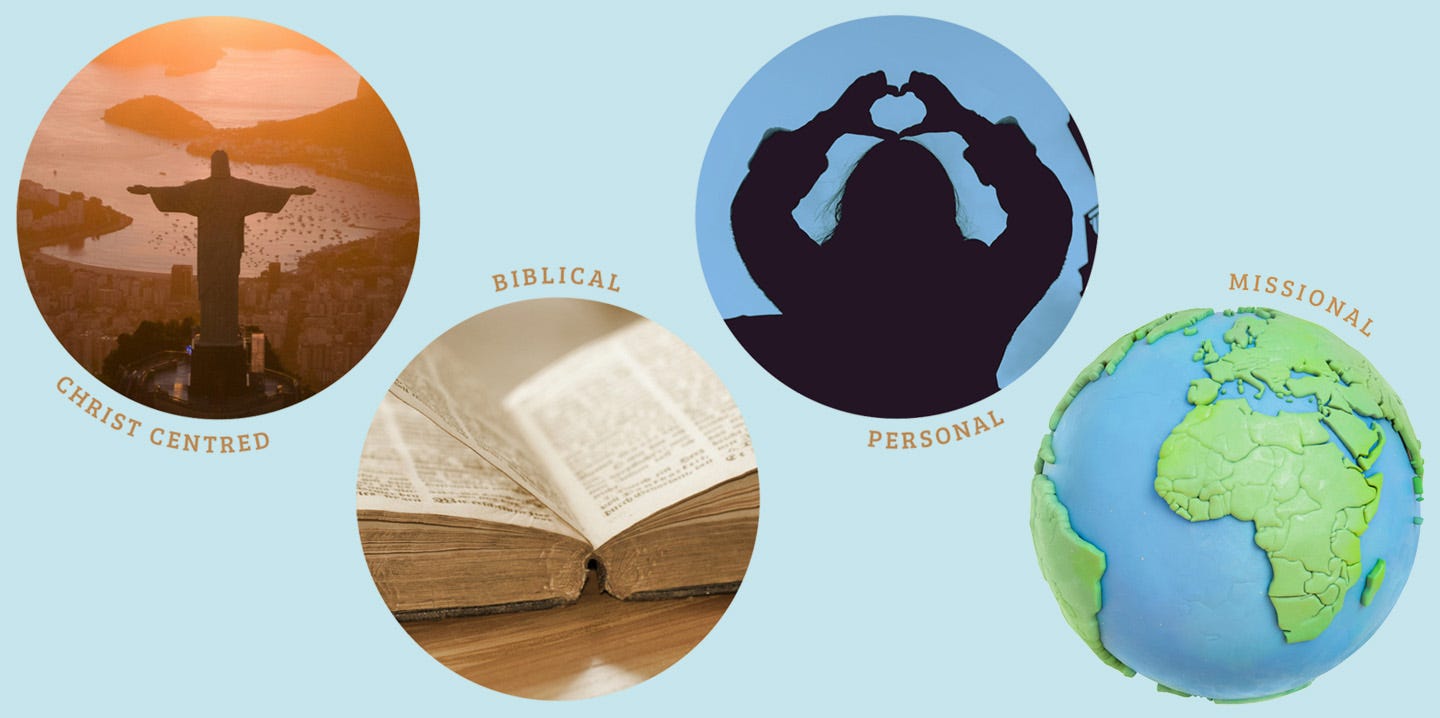
KLC has hosted and participated in a number of discussions about Evangelicalism. For one, we were each asked to formulate our version of the four marks of Evangelicalism with due homage to David Bebbington’s original work in this area. I developed the following:
Evangelicalism is Christ Centred.
This is a glorious characteristic and one that we can never linger on for too long. Close attention to Jesus is the one thing necessary. Karl Barth evocatively says that the Father sent his Son into the far country in order that we might come home. While incarnational theology is clearly present in the OT, especially in relation to the tabernacle and the Temple, something wholly new occurs in the Christ event. The Word becomes flesh and dwells among us. In the process, as John goes on to say in the Prologue to his Gospel, Jesus made known the Father to us. Christ shows us the Father and opens the door through his life, death and resurrection, for us to return home. And what a vision he gives us of the Father. Reflect on Jesus calling the first disciples, of reaching out and touching the leper before he heals him, of welcoming prostitutes and tax collectors among his followers, of teaching and performing miracles, of denouncing hypocrisy, of setting his face firmly towards Jerusalem as he embarks on the Via Dolorosa. In all of this, and far, far more, Jesus shows us the Father.
It is attention to Jesus that leads to the mysterious but rich doctrine of the Trinity, one God in three persons, Father, Son and Holy Spirit. The data for this doctrine is clearly present in the NT but the doctrine itself was developed by the church. In this respect Evangelicalism is orthodox and takes seriously doctrinal development in the bosom of the one, holy, catholic and apostolic church. The late twentieth century witnessed a remarkable flowering of trinitarian theology from which we continue to benefit.
Evangelicalism is Biblical.
The centrality of the Bible to Evangelicalism is well known. The Bible is God’s fully trustworthy, written word and authoritative for all of life. I like to think of the Bible as the field in which is hid the pearl of great price. This reminds us that the Bible is not a magical book but authoritative because it witnesses authoritatively to God. The trinitarian God is the one we worship, not the Bible, but we take the Bible with utmost seriousness because as a whole it shows God to us, and ourselves to ourselves, and our world to us as God’s good but fallen and being redeemed creation.
Our doctrine of Scripture’s infallibility must fit with the nature of the book God has given us. In Eugene Peterson’s words it is a sprawling, capacious metanarrative. Mike Goheen and I have endeavoured to take this seriously in our The Drama of Scripture: Finding Our Place in the Biblical Story by telling the story of the Bible as a great drama in six acts. Approached in this way the Bible not only tells us the true story of the whole world but shows us where we fit in that story, namely in Act 5, and calls on us to utilise the clues from all six Acts in order to work out how to think and live today.
As God’s Word, Scripture is authoritative for all of life. This does not mean that it is a physics textbook or a cookbook, but it does mean, as Lesslie Newbigin alerted us, that Christ is the clue to all that is, and we need to pursue that clue into all areas of life as God has made it.
Evangelicalism is Personal.
God, as C.S. Lewis says, is at least personal if not more than personal. In the incarnation God has shown himself to us in the most personal way. In his revelation of himself God offers himself! A great strength of Evangelicalism is its stress on coming into a personal relationship with God through Christ by the work of the Spirit. As a teenager, I thought that I was a Christian but I came to the realisation that I lacked this personal knowledge of God. This began my conversion and I reached assurance through reading a book of sermons by the great Martyn Lloyd-Jones, lent to me by my youth pastor. In the Bible God certainly tells us about himself, but he also invites us into relationship with him. This is achieved through our response of repentance and faith.
Conversion is the beginning and we are invited to nurture our relationship with God into ever greater depths through the rest of our lives. In this way Christianity is intensely personal but not individualistic. Once converted we become part of the one holy, catholic and apostolic church, part of the body of Christ. Expression of this is given through our involvement in the local church.
Evangelicalism is Missional.
As we come home to God through Christ, we come home to ourselves, to our neighbour, and to the world as God’s creation. As we are formed in these ways, God sends us out again into the world to bear witness to him in word and deed. This certainly includes evangelism, telling others the good news, but it is broader and richer than that. We are called to embody the good news in all areas of our lives as God’s fulltime servants. Indeed, it is this very embodiment of the good news that provides the only adequate basis for evangelism.
Lausanne in 1974 was pivotal for Evangelicalism in this respect, recognising as it did that our witness cannot be reduced to evangelism. Another way of putting this is to say that Evangelicalism must recognise that orthopraxy is as fundamental as orthodoxy. Especially among Reformed Evangelicals, orthodoxy has too often been the major emphasis and orthopraxy has been neglected. The Lausanne movement remains a major element of worldwide Evangelicalism. Thus, it was with dismay that, unable to attend its meeting in Korea in 2025, I heard of the negative public reaction from the Lausanne leadership to Ruth Padilla DeBorst’s inclusion of Palestinian suffering in Gaza and in Israel’s prisons along with the plight of Israeli hostages in Gaza, in her concise but wide-ranging address on “Justice”, and the anger and pain on her behalf among many participants, not only from the Arab world, that followed.
In his searing Christ in the Rubble: Faith, the Bible, and the Genocide in Gaza (Eerdmans, 2025), Munther Isaac has a profoundly disturbing chapter on “Theology of Genocide” which documents ways in which Christians, including Evangelicals, have failed to address the genocide, and even defend it. Such lapses are not new. In apartheid South Africa most white Evangelicals supported apartheid or remained quiet about it. Thus, a failure to address Israel’s war crimes in Gaza may not be new but it is scandalous and brings the good news into disrepute, especially when our own governments are making it possible. If such items cannot even be discussed among a gathering of global Evangelicals, then we have lost sight of orthopraxy. I learnt from the great John Stott, in many ways the theologian of Lausanne in 1974, that being conservative doctrinally, in the sense of conserving the Christian tradition, does not equate with being conservative socially and politically. The gospel, and not political parties or ideologies, must determine our stance on the myriad challenging issues that face us today.
The best way to respond to the hijacking of Evangelicalism by the right in the US is to retrieve the Evangelical tradition with all its depth and richness today. We need to do that together and thus we welcome this edition of The Big Picture. Rightly understood, Evangelicalism is a wonderful thing. These are waters in which one can swim and it opens out on the whole of God’s creation, inviting us to explore, enjoy, lament and enhance the reputation of Christ in his creation.
Rev Dr Craig Bartholomew is the Director of the Kirby Laing Centre. A South African by birth he has a longstanding interest in the comprehensive witness of the church. In 2003, he published The Futures of Evangelicalism, co-edited with Robin Parry and Andrew West. This book contains important chapters by important thinkers and remains useful today.
No posts
Comments
Nothing yet. Say the first thing.
Sign in to join the conversation.