
One of the questions many people ask me when I’m teaching memoir is how much of the truth do I tell.
It’s important not to get writing memoir confused with giving evidence in court. You are not telling the truth, the whole truth and nothing but the truth because that would be impossible. Who of us could tell the whole truth about our life, every interaction and event and thought? Who of us could describe something in our lives that was wholly true in the legal sense in terms of date and time and weather and age and who was there and who wasn’t and what was said - in detail - and what was thought.
I worked in criminal law for over 15 years and I have been in police interviews when people are giving their statements and then seen them months later in the witness box giving evidence and there is always a difference between what they said in interview and what they remembered later on. There is, in fact, a difference between their evidence even thirty minutes after the offence they witnessed or committed - even ten minutes.
Many things come into play in memory recall - time, weather, age, health, desire, fear, trauma, new/old information, stress, sleep, drugs, alcohol, context, prompting and so forth. When witnesses give evidence in Court it is tested under cross-examination and it often changes or at least doubt is cast on whether or not their evidence means what it first implied. Having been cross-examined twice in my life when I was definitely telling the truth, I know what it is like to question your own memory, your own recall and have to admit that there is, after all, an alternative explanation.
And what about telling ‘nothing but the truth’ when writing memoir? Our opinions are not ‘the truth’ because there are many truths. My sister has a different truth about our parents because she was nine years younger than me and experienced a different childhood. I might say my father was always angry but by the time she came to know him she would say he was mild. Both opinion. Both true. And all of our memoir is our opinion and we bring into it the context of our truth - poverty, immigration, politics, social structures, racism, isolation or whatever to give a rounded out picture about why things happened the way they did.
And then there is the question of the whole truth. You have a choice when you tell your story about what you include and what you leave out. You do not owe anyone the whole truth. There are some things that happened to you that can remain private, that do not go into the memoir, that you keep close to your heart and do not divulge. Ask yourself what you have to gain by writing about that traumatic, shaming, ugly, scarring, private, upsetting, still-raw event in your life? Can it be summarised? Can it be left out without unbalancing or misleading? Can it be glossed over? Should it be glossed over? How do I feel about that memory of mine being out in the world? What will I feel when people pick up the paperback of my life and read it there, strangers and lovers and sisters and brothers? I often say to my students, some things are worth more than £10.99.
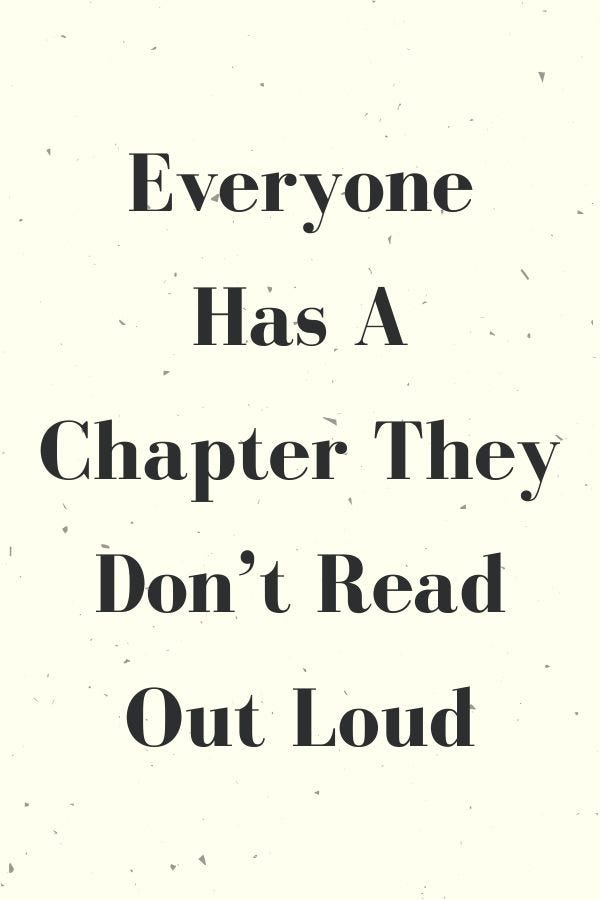
There is a place for your deepest private things and it might be with your partner or your family or your therapist or your doctor or simply with yourself. As the saying goes, everyone has a chapter they don’t read out loud.
Go well.
Kit
No posts
Comments
Nothing yet. Say the first thing.
Sign in to join the conversation.