
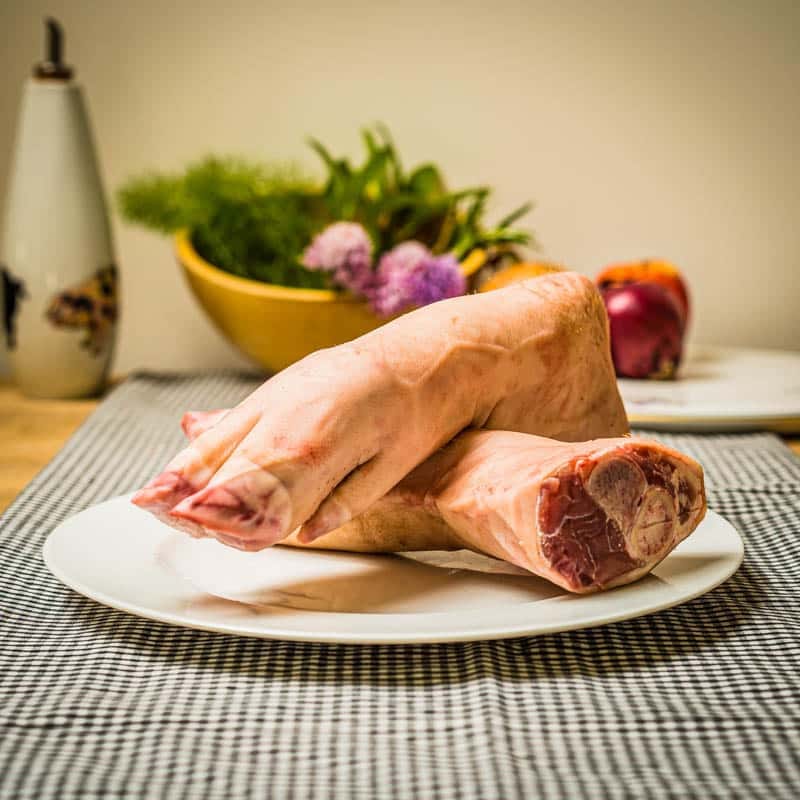
I once tried to recreate one of my favourite childhood dishes, Souse aka pig’s feet pickled in lemon and garlic. I was working off a combination of You Tube videos, my sister’s memory and what my tongue could recollect; the slippery give of thick, soft skin, the unctuous jelly, the bounce of sinuous tendons that slid between the teeth. I didn’t fancy asking for trotters at the hip, artisan butcher in my spa town that sells organic burgers at the price of an MOT. I didn’t fancy trying to claim they were for the dog, (I don’t possess one and couldn’t withstand even the smallest degree of interrogation on that point), I couldn’t imagine Sainsbury’s slaughtering their own pigs out back, but I knew I’d find the trotters where immigrants live, still making food from back home, one of the last connections to the past when dress and language have all but gone.
My father celebrated every Christmas by making West Indian fruitcake. Heavy with plump, rum-soaked fruit, blackened with treacle and burnt sugar, the smell permeated the very fabric of the house, you could smell it on the sheets and cushions, taste it on your skin. He actually started baking mid December, hours he’d be at it, but not a slice was cut until Christmas Eve after it had had time to mature or ‘cook again’, as my father called it.
When he was at home, my father made what he’d been brought up on; stewed chicken, soup with dumplings, curried lamb, cornmeal porridge that dropped like a stone in your belly, Johnnie cakes fried in lard, broiled pork steaks with oily rice, a strange sweet coconut pudding wrapped in banana leaves called ‘kanki’, the type of slow-cooked humble fare appropriated by millionaire celebrity chefs who call it, without a trace of irony, ‘peasant food.’
Real ‘peasant’ food is something quite different to the ‘cuisine bourgeoise’ of cassoulets and casseroles with hunks of meat, polenta with truffle oil, pies of salmon and oysters, buttery tarts of summer fruits, puddings with jam and cream. Until the potato, European peasant food consisted overwhelmingly of bread, and terrible bread at that often containing chaff, grass, bark and sawdust, and in times of famine, people ate lichens, moss, dirt, dogs, cats, frogs and in extreme cases (The Ukraine Genocide for one), each other.
Historically, the working poor would eat only one meal each day after a long spell in the field or factory, meals made with cheap, seasonal, easily accessible ingredients, off-cuts and tough meat, offal, stale bread, old vegetables, wild herbs, meals that had to nourish, sustain, appease, and on special occasions celebrate, excite and delight. The cook, often a woman on a ridiculous budget had to be clever and inventive, cooking everything from scratch with skills passed down over generations, stretching one dish across multiple days refashioned by adding vegetables, pastry, beans, oats, stock or bread. My Irish grandmother was mistress of the stretch. I often eavesdropped on her version of a heart to heart with my mother which was no more than a lecture on the virtues and secrets of food rejuvenation.
The man that sold the pigs trotters to me on Soho Road in Birmingham was blacker than black, a deep and beautiful black we called ‘navy’ when we were children. As he folded them in newspaper he looked at me hard. ‘Six is a lot,’ he said. I realized that my children, raised by Waitrose, wouldn’t be joining me at the table that night but I brassed it out. Six it was.
At home, unwrapped, the trotters looked sad and obscene, long, cold and pink. Only a few days before, a pig-and-a-half walked around on those feet. I examined them closer. A dollop of something (shit?) clung to one toe, a sprinkle of fine hairs on another. I felt like throwing them away, deep into the green recycling bin and becoming vegetarian there and then. Once upon a time, my ancestors, slaves on a sugar plantation enjoying what the big house couldn’t use, would have considered these feet a luxury. But things felt very different in Leamington Spa.
I lit a gas ring and burnt the hairs off the hirsute trotter. I nestled them together in my biggest saucepan and boiled them in salted water, changing it twice. How to describe the smell? It smelt foreign, earthy, primitive; it smelt of our house in 1965.
Meals from home are one of the first things immigrants will try to recreate when they arrive in a foreign country but back then this was no easy thing. There was nowhere that sold the green bananas, plaintain, yam, cassava or sweet potatoes that would have been the staple diet of my father in St. Kitts. Even the rice he first ate was the pudding variety, not the long grained stuff he was used to. Garlic, chilli, spices only appeared in our neck of the woods in the early 70’s when the first Asian corner shop opened.
This yearning for original meals isn’t just down to palate and nostalgia. When everything else is far away – or taken away – food represents culture, history, identity, pride, status. Preparing food together and sharing is an opportunity to remind, remember, reinforce and helps immigrants cope with dislocation and disorientation. Both of my grandmother’s, White Nana and Black Nana complained bitterly about the quality of the food they found in England, bad butter, unripe fruit, fatty bacon, dry herbs. Although their complaints were probably justified, by making comparisons they were also remembering home, stretching a hand back across the water to the things they missed, the kitchen they left behind.
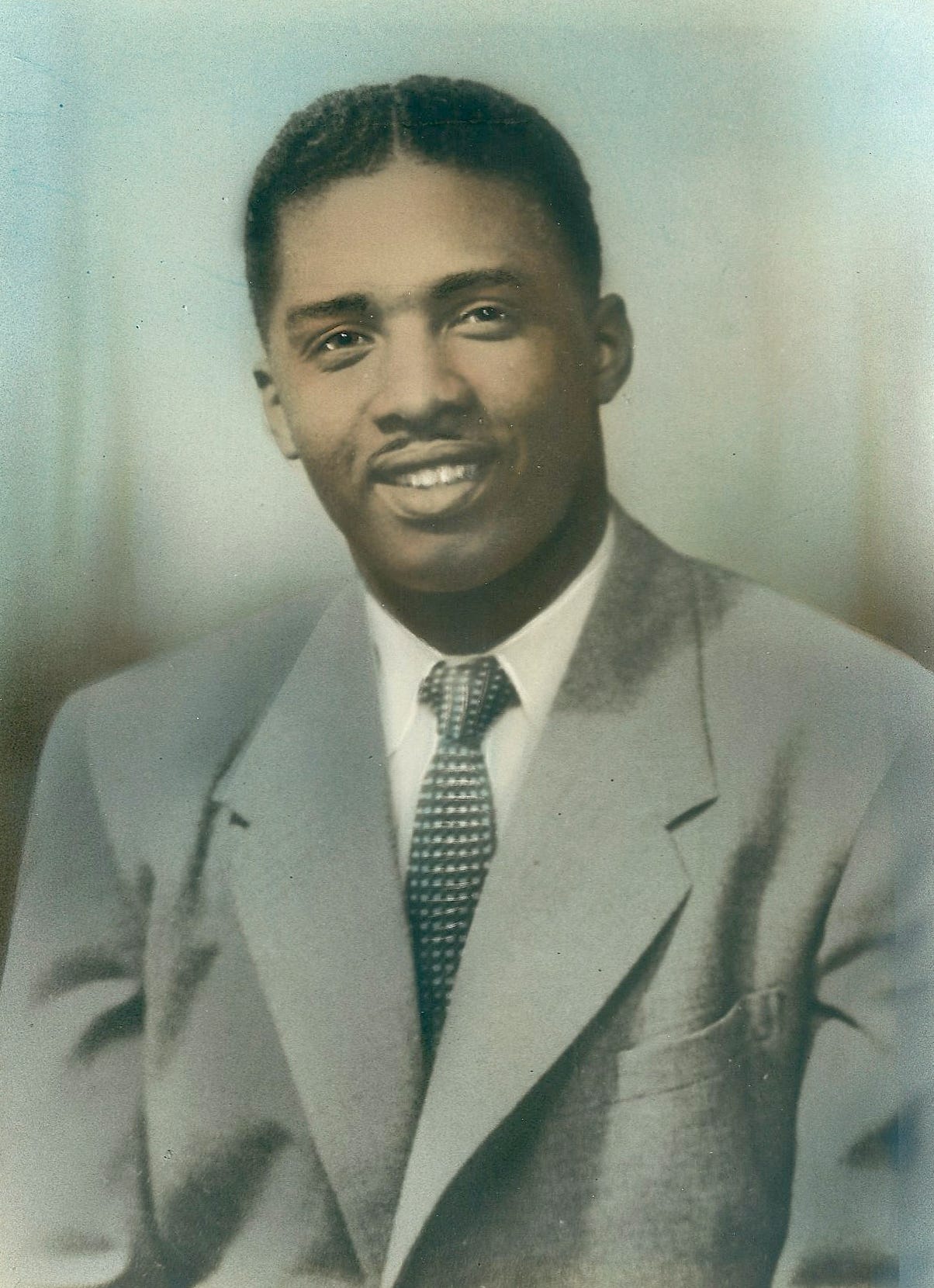
(My father in 1956 shortly after he arrived in England)
When the trotters were cooked (it smelt like hours), I squeezed fresh lemons and limes over smashed garlic with thyme, finely sliced onions and a fresh chilli in half of the stock. The water had begun to jellify (if that’s even a verb) and where the skin had come away from the bone, there were shards of meat and fat begging to be picked at. I resisted. In more delicate households, the flesh would have been stripped from the trotter and served cold with cucumber and anonymity. Not in ours. The whole thing, or as much as you could get at, was dumped in your bowl and you sucked the marrow from the bones. There was no shame in it then and I feel none now although there have been times in my life when I wouldn’t have felt so bold.
There’s considerable snobbery and moral judgement about food, what we eat and where we shop. I’ve heard well-heeled friends talk in hushed tones about their brave visits to Lidl or Aldi ‘for the excellent wine’ and the Milleniums’ avocado and coffee obsession continues to fill column inches in newspapers.
Food, how much we spend on it and whether we spend it judiciously is also used as a barometer of good parenting with the most savage accusations reserved for the working class or those on benefits. In 2018 a tweet from Bath Conservatives said that parents who can’t feed their children on £10 a week were ‘indolent or dysfunctional’ and ‘don’t feed their children well.’ The answer came from the outspoken activist, Jack Munroe in the article, ‘My Ready Meal is None Of Your Fucking Business’, in which she says ‘Some people are working two or three zero hour contracts and barely have time to change from their supermarket checkout uniform to their cleaning tabard, let alone knock up a vegetable gratin from scratch and make their own granola.’
It’s not easy to eat well on benefits or minimum wage as researchers from the Cambridge University’s Centre for Diet and Activity Research proved in 2012 when they found that 1,000 calories made up from healthy items, such as lean salmon, yoghurts and tomatoes, cost an average of £7.49. The same calorie intake from less healthy items, such as pizza, beef burgers, and doughnuts, could be purchased for an average of £2.50. And things have become significantly worse since then. That same year food banks gave three-day emergency food supplies to £128,000 people. In 2017 it was well over a million, last year it was 2.6 million according to House of Commons Library Data.
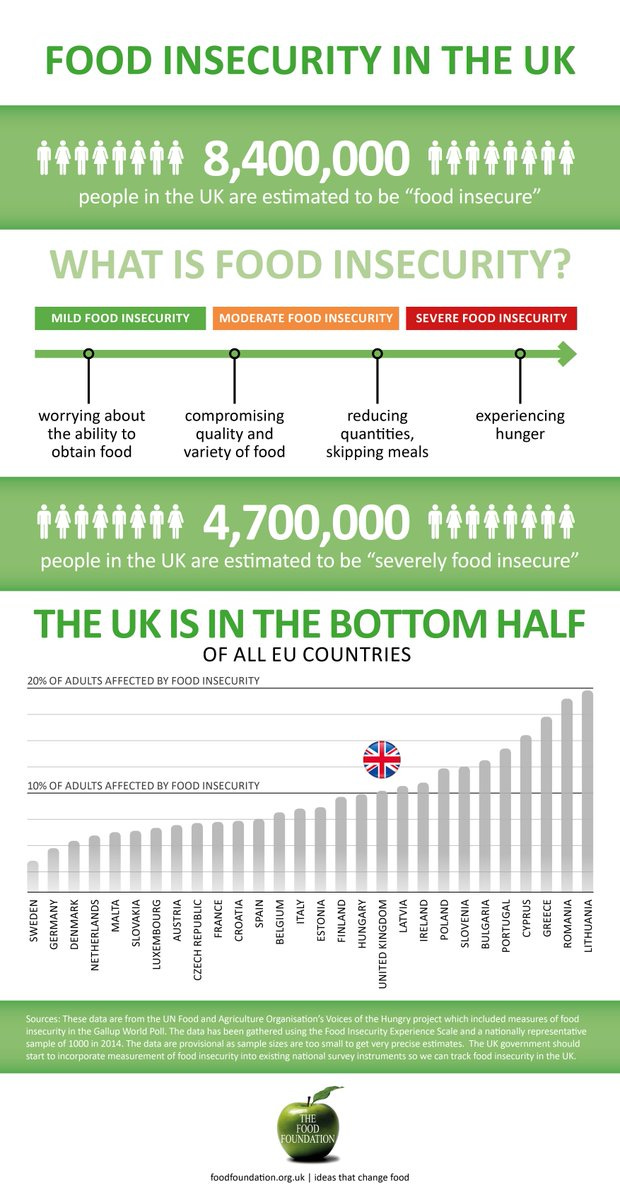
And yet Jacob Rees-Mogg, the aristocrat and MP for North East Somerset managed to find a silver lining in those statistics. He said that the rise in food bank use was ‘rather uplifting’, allowing us the opportunity to demonstrate British generosity and compassion. This from a man who clearly identifies with the giver not the receiver, (though I doubt that he became one of the wealthiest men in Britain by giving much of it away), a man who has never queued in the cold, worried for the nutritional health of his children or felt the lurch of shame as a bag of unearned food is handed over.
Anyway, I was making souse. I had my trotters, all six in a thick but transparent, lemony sauce, I had my napkin on my lap and I had absolutely no appetite. My father, long dead, stood at my shoulder saying ‘Go on! It taste good! Nothing wrong with it!’ But, I hadn’t the stomach for gnawing at the poor animals’ feet. Over the years, I had acquired the unrealistic, clean-hands and blind-eye of the supermarket shopper who wants their meat blood and fur free, prime cuts chopped quietly, cleanly elsewhere, wrapped in cling film on a polystyrene tray, labeled ‘Free Range’ and urging me to ‘Taste The Difference.’
I apologized to the pigs and made beans on toast.
Go well,
Kit
No posts
Comments
Nothing yet. Say the first thing.
Sign in to join the conversation.