
Hello,
Welcome to today’s edition of Kitchen Projects. Thank you so much for being here.
Today, I’m so thrilled that the very talented Cissy Difford, pastry chef, writer and recipe developer, is back here with us on Kitchen Projects for another brilliant investigation. This time, it’s all about Torta Di Riso, the Italian Rice Pudding Cake of our dreams.
On KP+, Cissy is sharing a second Torta Di Riso recipe ft. Cherry and Almond, complete with a sour cherry compote and brulee’d top as well as a recipe for Amaretto Cherry Sours. How lucky are we?! Click here for the recipe.
What’s KP+? Well, it’s the level-up version of this newsletter. By joining KP+, you will support the writing and research that goes into the newsletter (including the commissioning - and fair payment - of all the writers), join a growing community, access extra content (inc., the entire archive with 450+ recipes) and more. Subscribing is easy and only costs £6 per month or just £50 per year (equivalent to about £4.00 per month). Why not give it a go? Come and join the gang!
Love,
Nicola
One afternoon in Spring, I scurried through the maze of porticoes that connect Bologna’s streets in search of the best Torta di Riso (or ‘Rice Cake’).
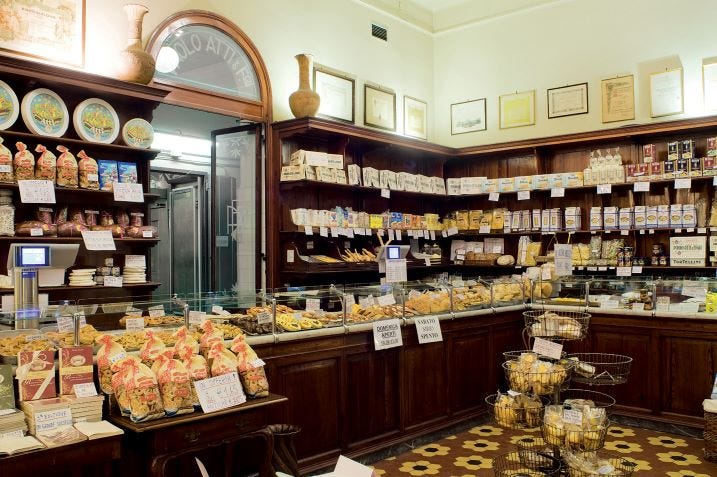
After some research, reviews suggested I go to Paolo Atti e Figili, a family-run bakery founded in 1868.The dark wood-framed shop entices you in from the corner where Piazza della Mercanzia meets Via Caprarie. Large glass windows flood the shop with sunlight, drenching the display with light; shining slices of fat polka-dotted mortadella, boxes of freshly made stuffed tortellini, and monster-shaped bolognese bread. Inside, the floor is laid with black, white and rust-coloured tiles that shape themselves into flowers, and wooden shelves overflow with different types of bread: crisp rosetta bread rolls, golden ciabatta, and crusty Biove rolls. I can only assume the decor hasn’t changed much since its opening, as I’m immediately transported back to the 1900s. The only exception being the swarms of eager tourists (like myself) queuing for their slice of Bologna’s history.
Bologna’s nickname is “la grassa” (meaning the fat one), and how could you not want a slice of it? The city oozes famous dishes from every corner; gelato, tortellini en brodo, mortadella, ragu alla bolognese, balsamic vinegar and Parmigiano Reggiano too, which are from Parma and Modena (only a short train ride away in the outer Emilia-Romagna region).
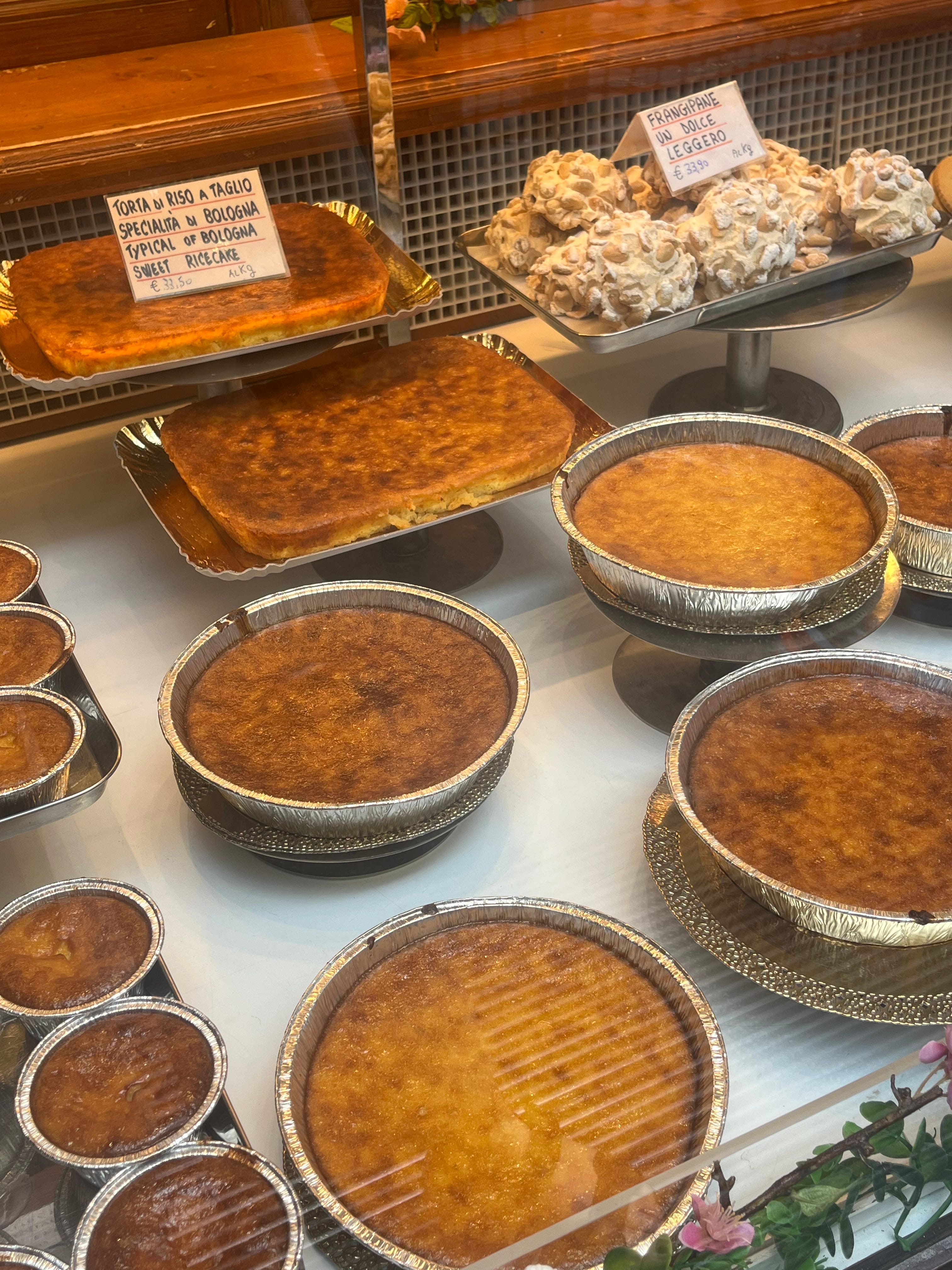
Naturally, then, inside the bakery-deli, I’m overwhelmed with temptation. I want to buy everything. Including the yellow rigatoni-shaped keychain, even though I know it’ll probably fall apart in seconds.
Keychain in hand, I also buy a torta di riso baked in a small foil case. (The thing I’d really come for). The lady behind the counter hands me a plastic spoon and a napkin. A few strides away, I sit on a warm plinth, where I can just peek a glimpse of the two towers (Garisenda and Asinelli). I spoon the rice cake into my mouth, savouring each bite. It’s not how I imagined. For some reason, I thought it might have the texture of a soufflé. Instead, it’s heavy with ground almonds and floral with candied peel. It’s firm but also light and moist, almost as if it’s been steamed.
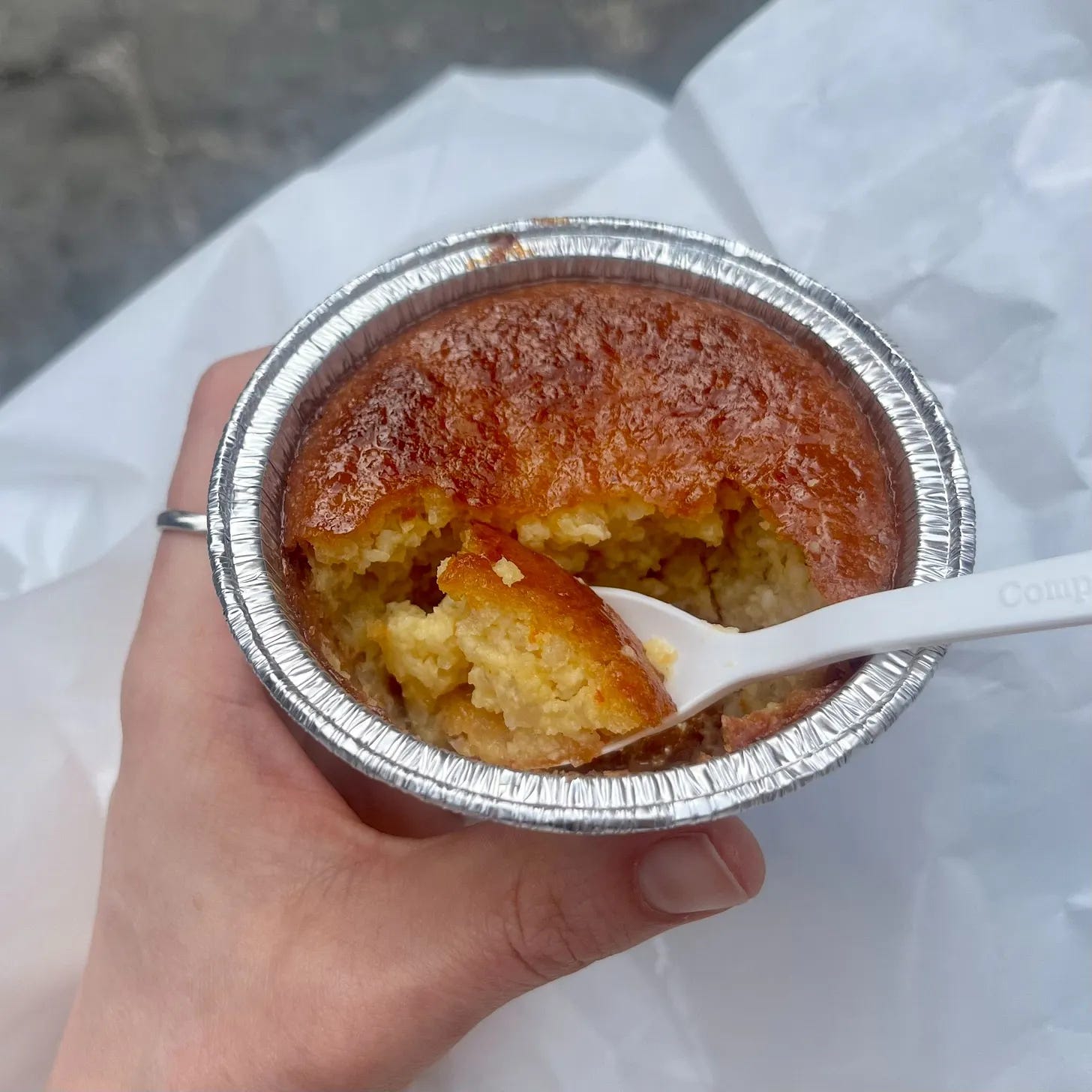
After a few more spoonfuls, it was gone. I walked straight back into the shop, wanting to explain to the women working there how delicious it was, but my courage (and my lack of Italian) failed me. Instead, I found a stack of the bakery’s cookbooks neatly arranged beside the till. The volumes on the right were in Italian and thick with pages; on the left sat a much slimmer English translation. I rifled through both like a detective hunting for clues, trying to work out which recipes had been considered worthy of translation. Thankfully, torta di riso made the cut. So I bought the book.
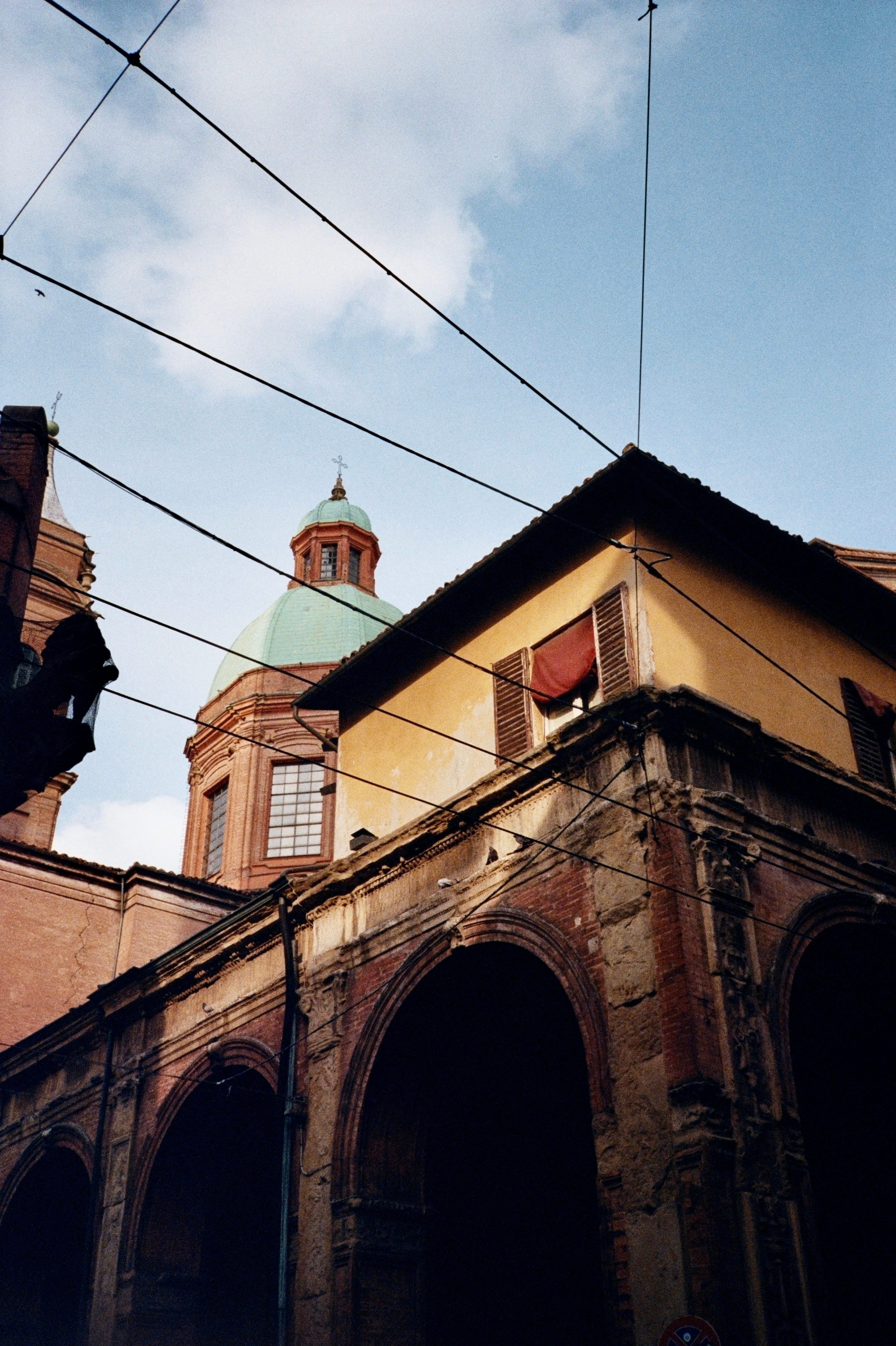
Torta di riso makes perfect sense in Emilia-Romagna; rice has long been grown across the fertile plains of Northern Italy. Back home, this cake makes sense too. Rice pudding, after all, is one of Britain’s ultimate comfort foods. Yet somehow, between the rice, the milk, and the plane ride home, I discovered one small problem: following a late nineteenth-century Italian recipe requires a little imagination. There are no tin sizes, baking temperatures or timings, and very little instruction beyond a list of ingredients. Instead, I’ve had to use those spoonfuls I ate beneath Bologna’s towers as my guide - an insane exercise in palate recall, with a little bit of creative licence thrown in too.
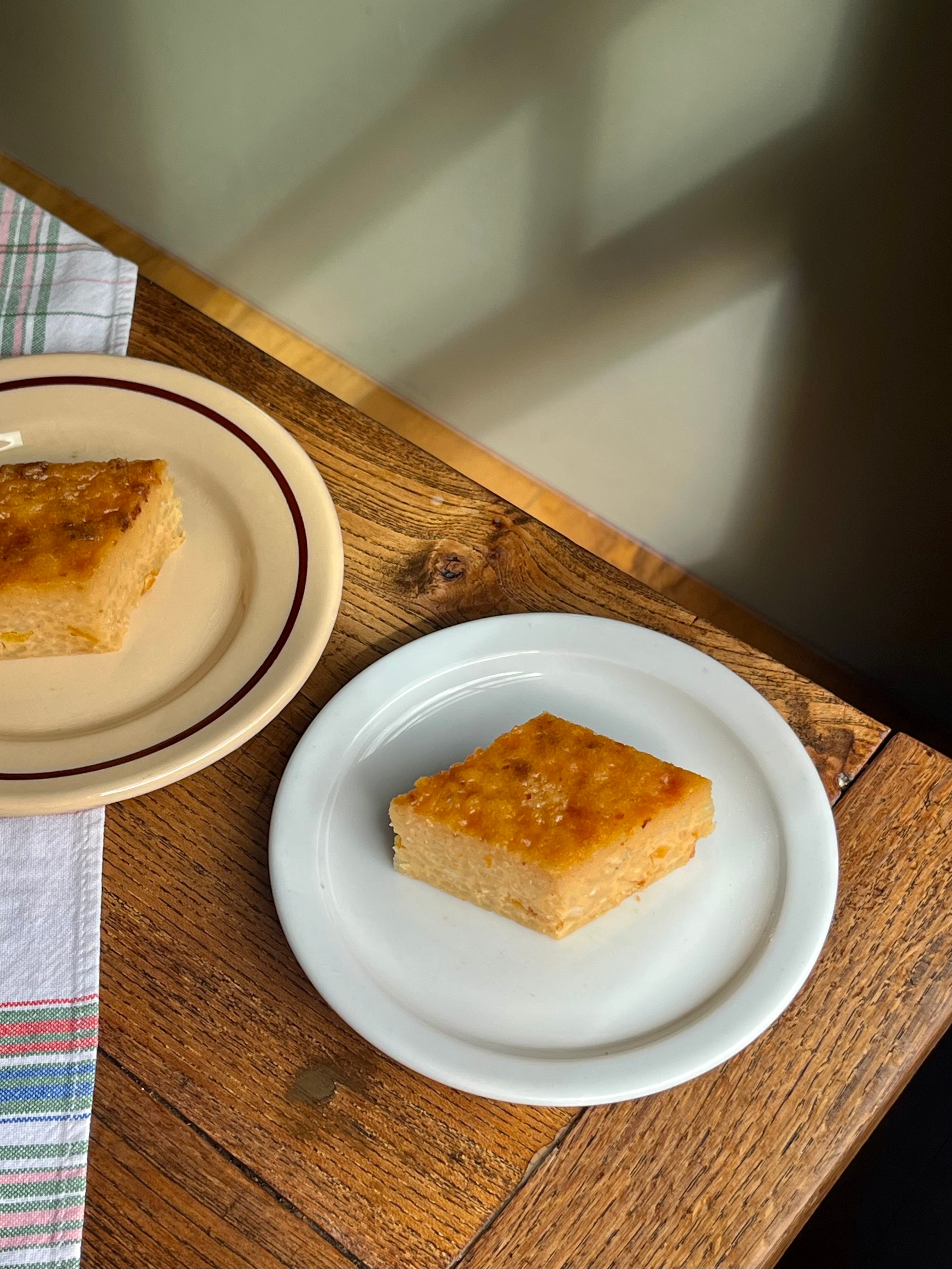
Traditionally, torta di riso is said to have emerged in the fifteenth century in connection with Bologna’s Festa degli Addobbi (Festival of Decorations), when streets, porticoes and homes were draped in colourful fabrics, garlands and religious displays in honour of the local parish. Held in late spring and early summer, the celebrations brought neighbours and relatives together, with food (of course) playing a central role.
Like a lot of familiar Italian bakes, torta di riso was a dish primarily made for this occasion. Today, it’s easily found on a bakery counter and enjoyed as an afternoon treat. However, to understand why the cake is the way it is and contains the ingredients it does, we need to step back in time. To modern eyes, the combination of everyday staples like rice and milk with almonds, candied citrus, and other once-costly ingredients might seem unusual, especially to us plain rice pudding-eating Brits. Yet this is exactly what makes this a celebration cake - a dessert that transforms pantry ingredients into something worthy of a feast, something the Italians know all too well how to do.
Rice flourishes in the wetlands of the Po Valley in Northern Italy, and during the Renaissance, the region became one of Europe’s most important rice-growing regions (and still is today). For locals, rice went from being an imported luxury to a locally grown staple crop, perfect for storing and feeding a crowd.
Most importantly, though, long before modern gelatin or cornflour, bakers and cooks had to rely on natural thickeners to bind their dishes. Rice is full of starch, which when heated becomes viscous. When combined with milk and eggs then, it binds together even more firmly, to create a cake with a self-supporting structure.
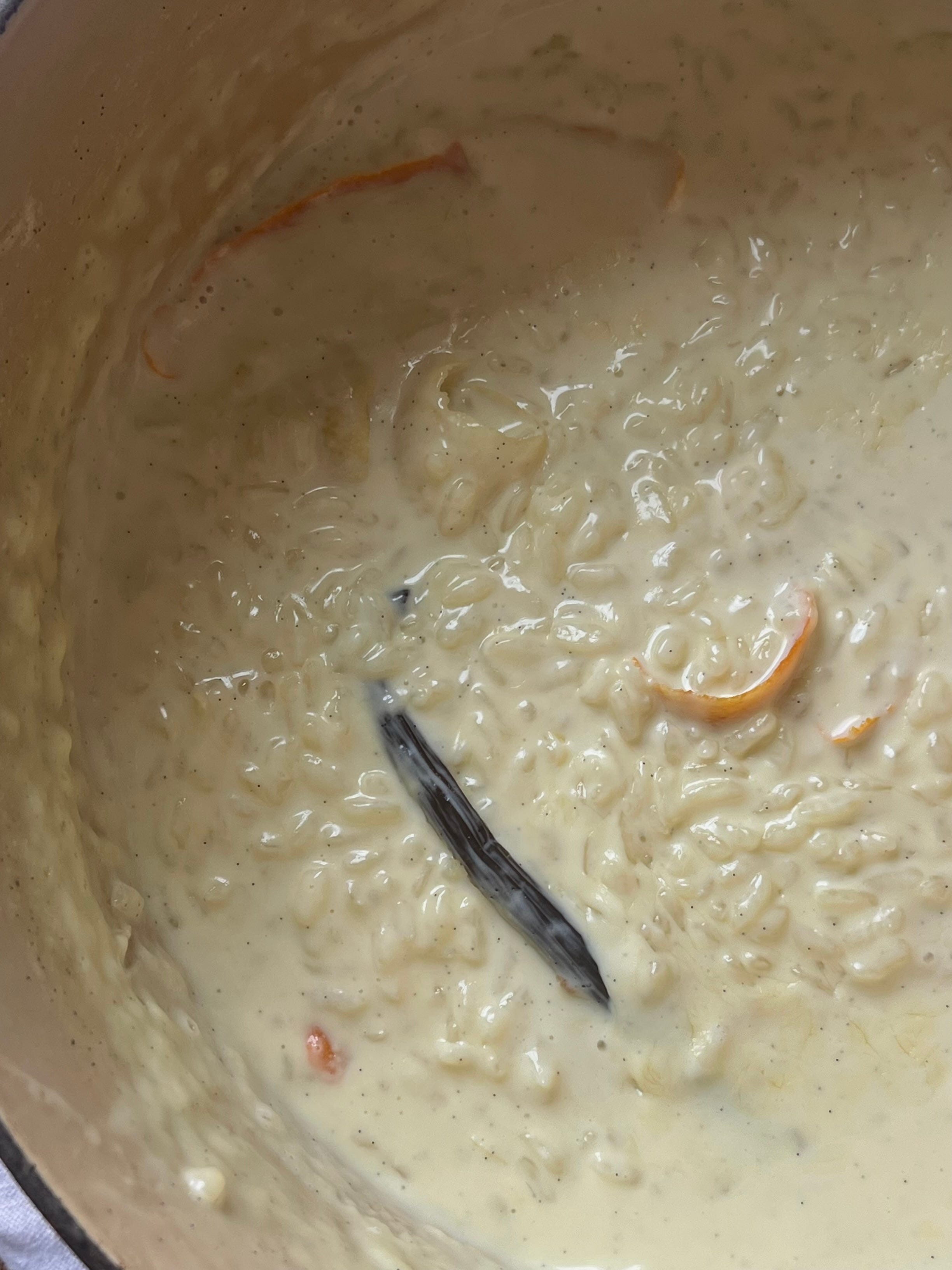
A note for this recipe - we don’t want too much starch. Excessive whisking and stirring while the rice cooks on the hob will break down the delicate grains, releasing excess starch, making for a heavier, less velvety custard.
The type of rice you use matters too. In this recipe, I’ve given the option of using either arborio or pudding rice. Although they can be interchanged in sweet dishes, they aren’t exactly the same; pudding rice is sometimes easier to find in the UK.
Arborio is a short-grain rice best known for risottos. It has a pearly appearance and is chalky inside, and despite plumping up in liquid, it’ll tend to hold its bite, which I personally prefer for this dish. Pudding rice is generally less uniform in appearance and breaks down more rapidly during cooking, creating a softer, creamier texture. Both work in the cake, but just bear in mind that this might affect liquid absorption and overall cooking time.
Bologna isn’t an almond-growing region. Almonds would’ve had to be transported to the north from the south, which was often challenging and expensive. This meant they were an ingredient reserved for the wealthy, or used only for celebration.
From a baking perspective, almonds serve an equally important purpose as rice. There’s no flour in this recipe; instead, ground almonds help provide much of the cake’s structure. They absorb excess moisture from the loose rice pudding, helping it set. At the same time, they contribute a richness and subtle marzipan-like flavour.
Many original recipes, including the one from Paolo Atti e Figili call for both ‘sweet’ and ‘bitter’ almonds as ingredients. The distinction here is between the sweet almonds we commonly eat today, and bitter almonds, a closely related variety prized for, as the name suggests, a bitter and intensely aromatic flavour.
Bitter almonds aren’t particularly easy to source these days because they contain compounds that can release cyanamide when digested in large quantities. Historically, however, they were valued for the distinct fragrant, marzipan-like flavour. For pastry enthusiasts, you might have encountered the same flavour from the soft seed found inside the kernels of apricot or peach stones when making noyaux, or infusing into dairy for custards.
I’ve replaced the bitter almonds with almond extract. It delivers similar notes and is easy to find.
Many recipes also include crushed amaretti biscuits. This was a particularly resourceful way from Italian bakers to boost the almond flavour profile of the cake without relying on expensive ground almonds. They’re also often used interchangeably with breadcrumbs to line the cake tin, helping to prevent it from sticking while also creating a crust.
The use of candied peel (particularly candied cedro in Italy) speaks directly to the celebratory nature of this cake. In Renaissance kitchens, candying fruits required large quantities of sugar, a highly expensive ingredient. Candying fruits then, wasn’t for the everyday baker, but reserved for wealthy households and special occasions.
Beyond its historical significance, candied peel adds textural jewels to the torta di riso. Little bursts of acidity suspended through the cake help balance the otherwise rich ingredients.
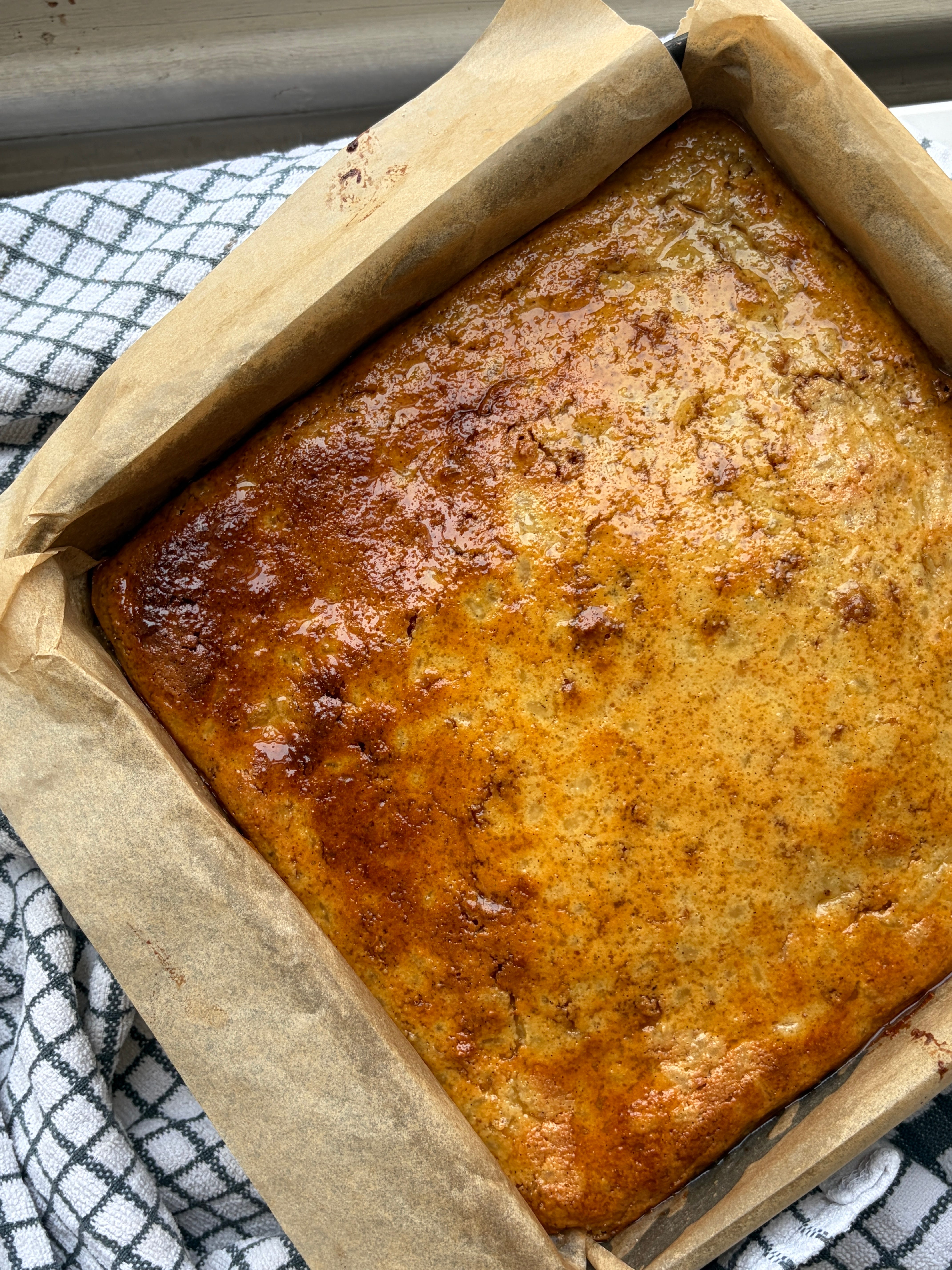
This cake is, in many ways, a lesson in preservation. In a pre-fridge era, it wasn’t only essential to make something that would last a long time sitting out ambient, but made for cakes that actually got better with age.
Alongside preserving ingredients like sugar and cooked rice, torta di riso is traditionally finished with a generous soaking of syrup or alcohol as soon as it comes out of the oven. This helps prevent the cake from drying out as it sits, but also improves the texture. The liquid is absorbed giving it that moist, almost-steamed quality I described earlier. It also importantly carries flavour deep into the rice, perfuming it with aromats.
Typically, Alchermes would’ve been used by Italian bakers, a vivid post-box red liquor, infused with cloves, cinnamon and vanilla (you might have seen it in dishes like zuppa inglese). However, it’s much easier to find Amaretto, which works beautifully here to accentuate that nutty caramel flavour profile. If you prefer not to include alcohol in this dessert, simply leave it out.
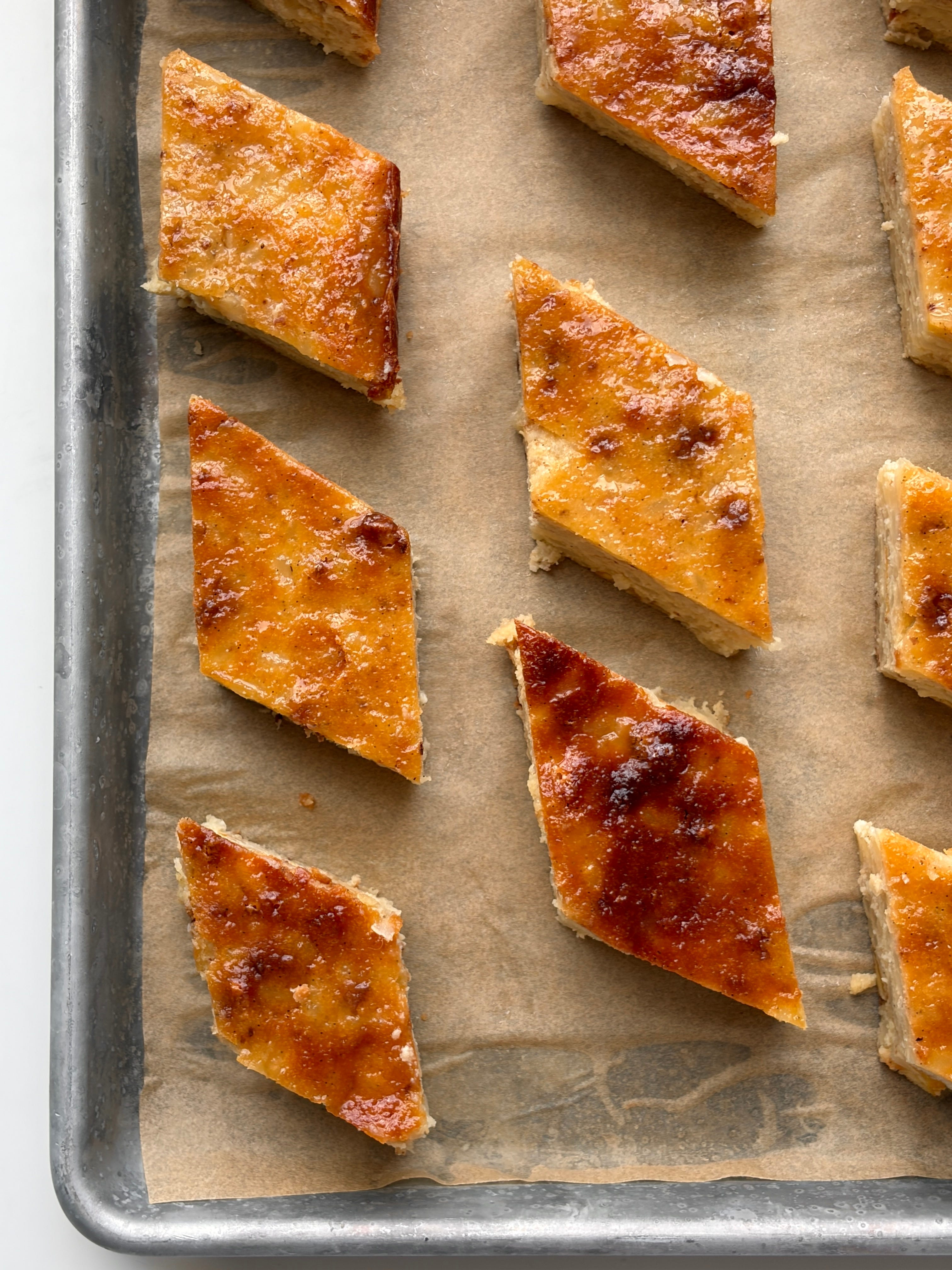
Although torta di riso and British rice pudding share some of the same ingredients, torta di riso is a far cry from the soft, spoonable pudding we serve with a dollop of strawberry jam. Instead, it’s an elegant baked custard built with layers of aromatic ingredients.
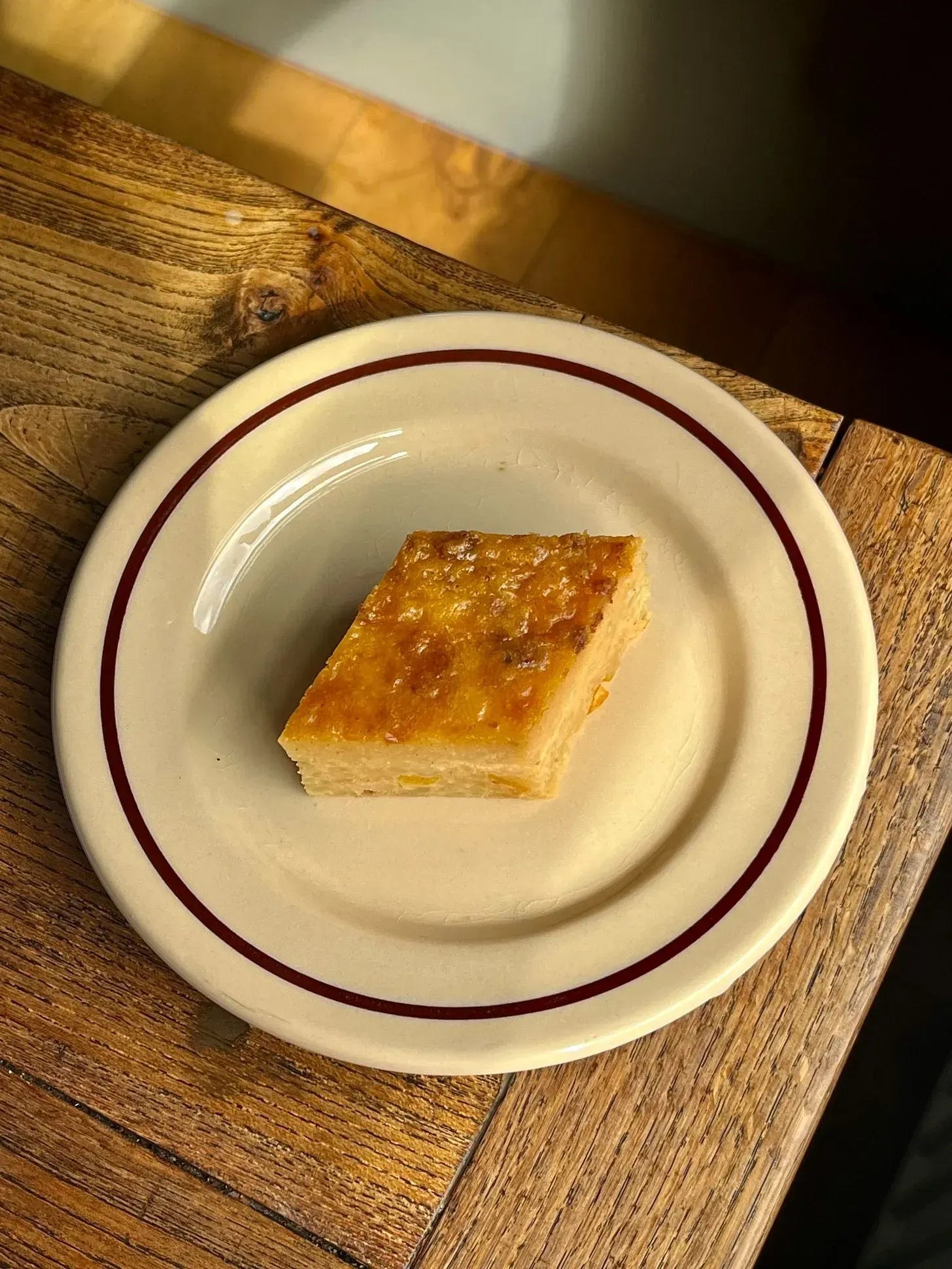
I’ve written two versions of this recipe. The first stays close to the torta di riso I ate in Bologna. Simple, almondy and comforting, cut into diamonds and best enjoyed alongside an espresso.
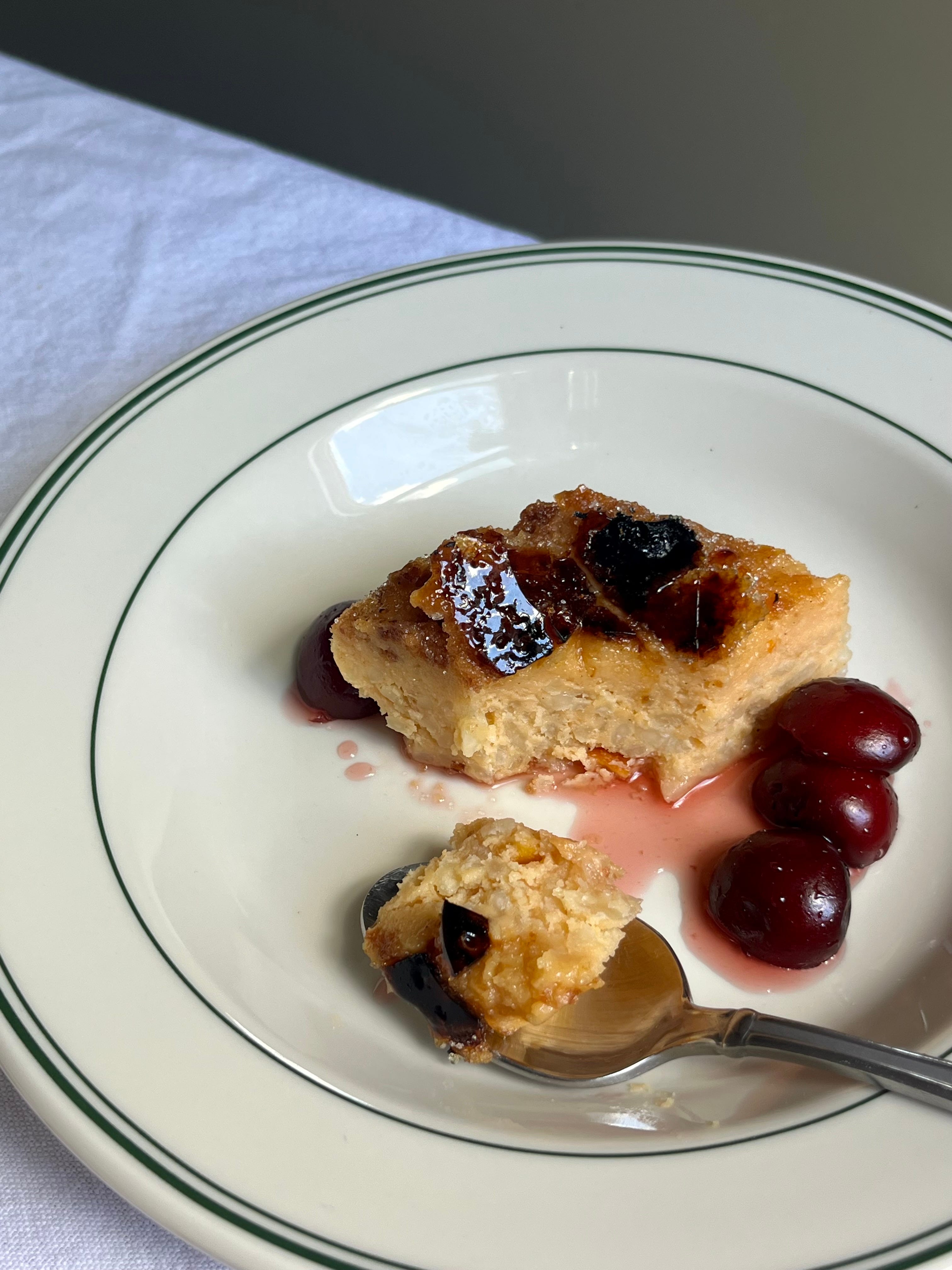
The second requires a little extra effort, but shows how much flavour can be coaxed from pretty much the same ingredients. The almonds are toasted to intensify their nuttiness, while a sour cherry compote cuts through the richness with bursts of sharpness. A bruleed sugar top adds a touch of drama, and introduces a smoky caramel note that crunches against the soft, creamy cake. The result is a little more dinner-party-worthy, but with the same spirit.
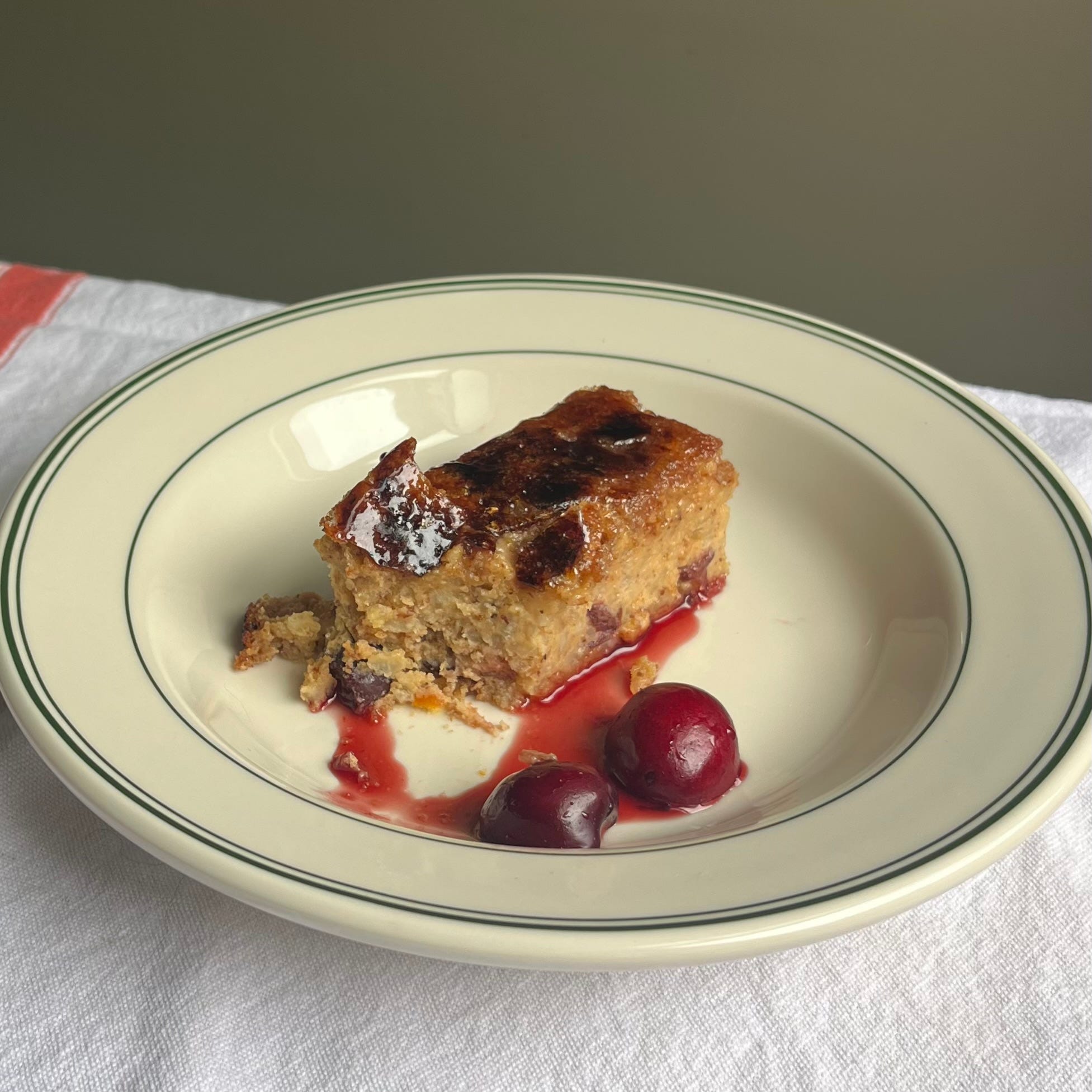
I’ve also included an amaretto cherry sour, because you now have all the ingredients for it! Consider it a perfect chef’s treat, something that can be sipped while the cake cools.

I’m certainly no authority on Bolognese baking, so if there are any Italian readers out there, I’d love to hear about your own experiences with torta di riso and the traditions surrounding it.
And if you’ve enjoyed this journey through Bologna, I’ve documented more of my travels through Italy on my newsletter, Roll With It. I’d love for you to join me there.
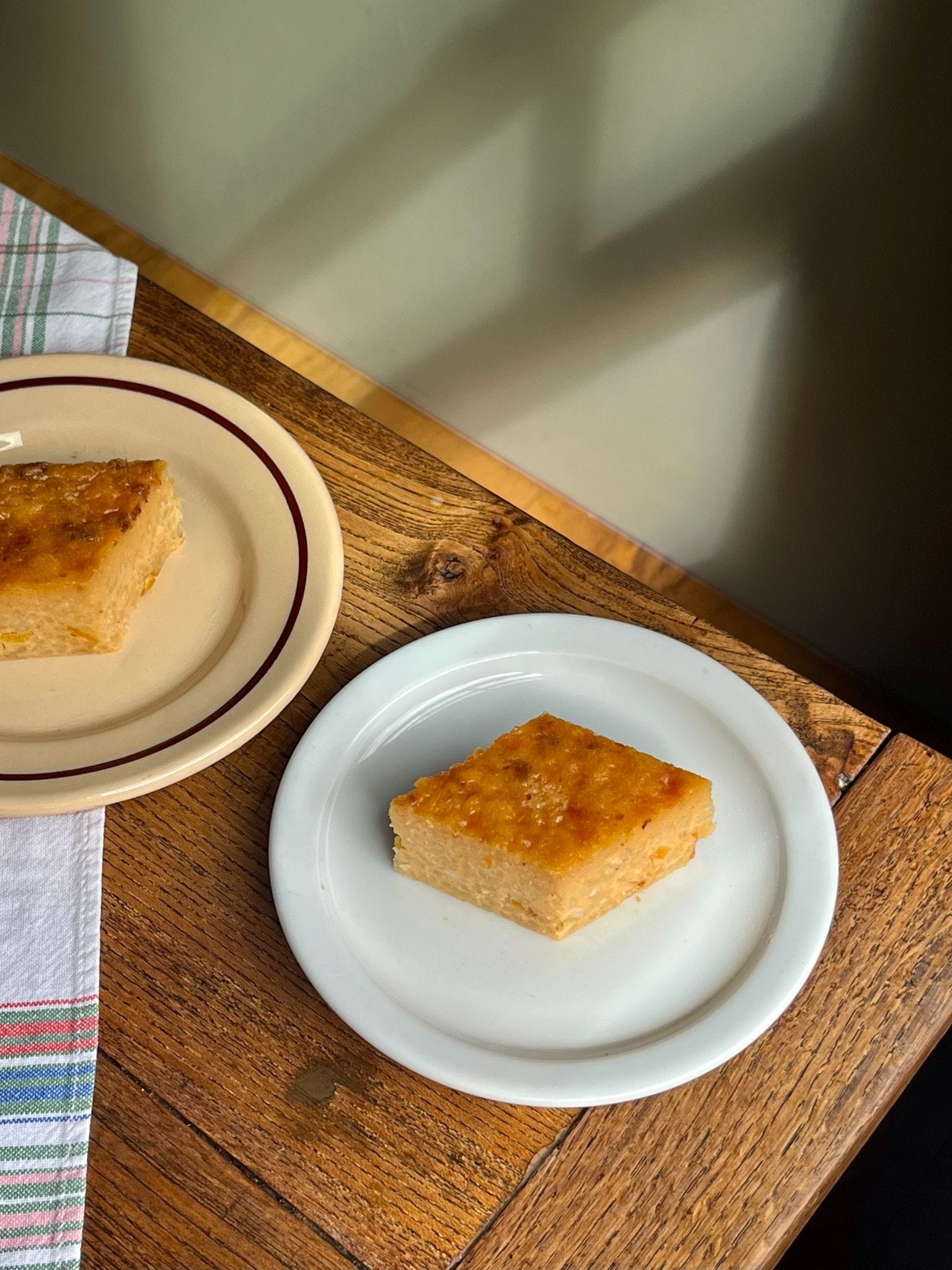
Makes 16 slices
Equipment
20cm/8-inch square cake tin
Ingredients
700ml whole milk
300ml double cream
150g Arborio or pudding rice
50g golden caster sugar
1/2 vanilla pod, split lengthways and seeds scraped
Peel of ½ an unwaxed lemon
Peel of ½ an orange
150g golden caster sugar
4 medium eggs, beaten
100g ground almonds
50g crushed amaretti biscuits (by hand is fine)
½ tsp fine sea salt
45g candied peel, diced
1 tsp almond extract
75ml amaretto liqueur
plus butter for greasing
Method
Warm 700ml milk, 300ml double cream, ½ vanilla pod with the seeds scraped out, the peel of ½ unwaxed lemon, the peel of ½ orange and 50g caster sugar in a medium saucepan and bring almost to the boil.
Add 150g pudding rice and reduce to a simmer, whisking occasionally to prevent the rice from sticking. The rice is cooked when it has a tender bite and most of the liquid has been absorbed, around 25 to 30 minutes. If the mixture becomes too thick and the rice isn’t fully cooked, add a splash more milk and continue cooking.
When the rice is cooked, turn off the heat and leave it to cool by pouring the rice puddig into a shallow container and pressing baking paper or clingfilm to the surface to prevent a skin from forming, moving to the fridge as soon as it reaches room temperature to finsh cooling. You can make this in advance and refrigerate the rice pudding overnight before proceeding to the next step.
Once cool, remove the citrus peel and vanilla pod, squeezing out any excess liquid, then discard them.
Preheat the oven to 150c fan.
Whisk together 150g caster sugar and 4 eggs until frothy, about 1 minute of vigorous whisking.
Stir the egg mixture into the cooled rice, followed by 100g ground almonds, 50g crushed amaretti biscuits, ½ tsp fine salt, 45g candied peel and 1 tsp almond extract.
Grease the tin with butter, then line it with baking paper.
Pour the batter into the tin and bake for 40-45 minutes, or until the cake is dark on top and firm to the touch.
Slowly pour 75ml of amaretto liqueur over the entire surface of the hot cake.
Allow to cool to room temp before refrigerating overnight.
Remove from the tin, then, using a hot knife, cut the cake into diamonds, as is traditional, or however you wish. If cutting diamonds, start by cutting the cake into 4 equal vertical strips. Then cut diagonally across the strips at a 45-degree angle. You’ll have a few offcuts which make great snacks.
Storage & Notes
Keep refrigerated for up to 3 days.
If you prefer not to include alcohol in this dessert, simply leave it out.
No posts
Comments
Nothing yet. Say the first thing.
Sign in to join the conversation.