
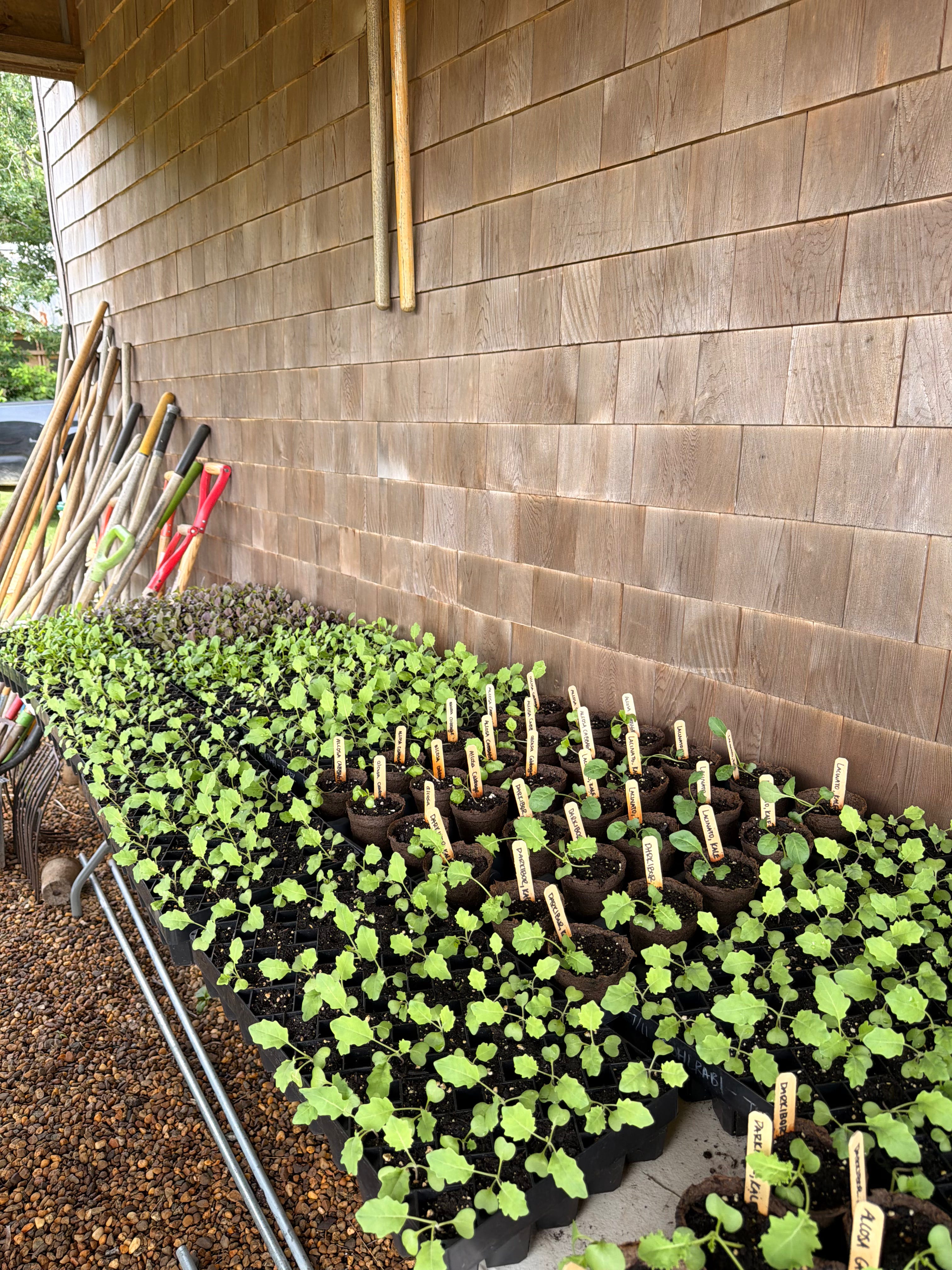
Late Season planting, as we call it at KGMV, is how we keep refreshing vegetable gardens with new crops for late summer and fall harvest. Starting after summer solstice and ending by early September, a late season planting schedule is less straightforward than it was for spring-sown crops with their wider window of time suitable for sowing and ample space open in the garden.
For a general overview of what seeds we are planting in the summer:
Last successions of warm season plants like zucchini, bush beans, sunflowers, and basil.
Salad greens
Spinach
Carrots
Chicories
Radishes and turnips
Beets
Scallions
Fennel
All leafy brassicas (except Brussels sprouts, which need a spring start to reach mature size)
Cilantro and dill
Fall planted flowers
Cover crops
WHEN to plant is highly dependent on site-specific factors:
Your schedule. When will you stop harvesting? If you only have a few weeks, plant baby greens and radishes anywhere you can find space. Here into October? Add a few more flowers. Still eating from the garden at Thanksgiving? Plant carrots, beets, and kale. Ambitious to harvest greens all winter? Schedule planting so they’re 90% mature by the end of October. Done by Labor Day? Finish harvesting what you have, then clear your beds and sow a cover crop.
Space in your garden. You will need planting space ready in time to grow fall crops. A friendly reminder to factor this into your planning for next year. Even in a single bed where I’m growing many different crops, I like to group blocks of plants together that will come out of the garden at the same time. That way I have a whole block opening up for the next round of planting.
Watering challenges. The water requirements of your new direct sown crops may not match the established plants growing nearby. For example: overhead irrigation (i.e. sprinklers) is good for germinating carrots, but not good for tomato vines prone to fungal disease. Manage risk with careful observation and spot watering by hand as consistently as you can. For seedlings in trays outdoors, make sure you have a way to protect them from heavy summer rains when needed.
Summer heat. July and August are too hot for most cool season fall plants to thrive, but they still need to get started with enough runway to reach maturity. When and how to plant them is a tricky dance. You might lose some trays of lettuce that bolt before transplanting, or see delayed germination in crops like radicchio that prefer cool soil. I sometimes use shade cloth (burlap in our case, for a cheaper and less plasticky solution) on a nursery table until we’re ready to bring plants to a client’s garden. Good news: if your first row of carrots got cooked, there’s probably still time to plant another.
Light conditions. You may have already noticed the days getting shorter, and it happens very quickly. Fewer hours of daylight = slower plant growth. Sunlight is usually the first limiting factor I see for late season harvests here on Martha’s Vineyard. Especially in residential gardens where it is common to have trees nearby. A garden that got sun in July may be in shade by September. This means you may need to add 2+ weeks on top of the expected days to maturity and plant those Thanksgiving carrots earlier.
Pro tip: Sun Seeker is a great app for assessing light conditions.
As always, observe what is happening in your garden and don’t be afraid to give late season planting a try.
No posts
Comments
Nothing yet. Say the first thing.
Sign in to join the conversation.