
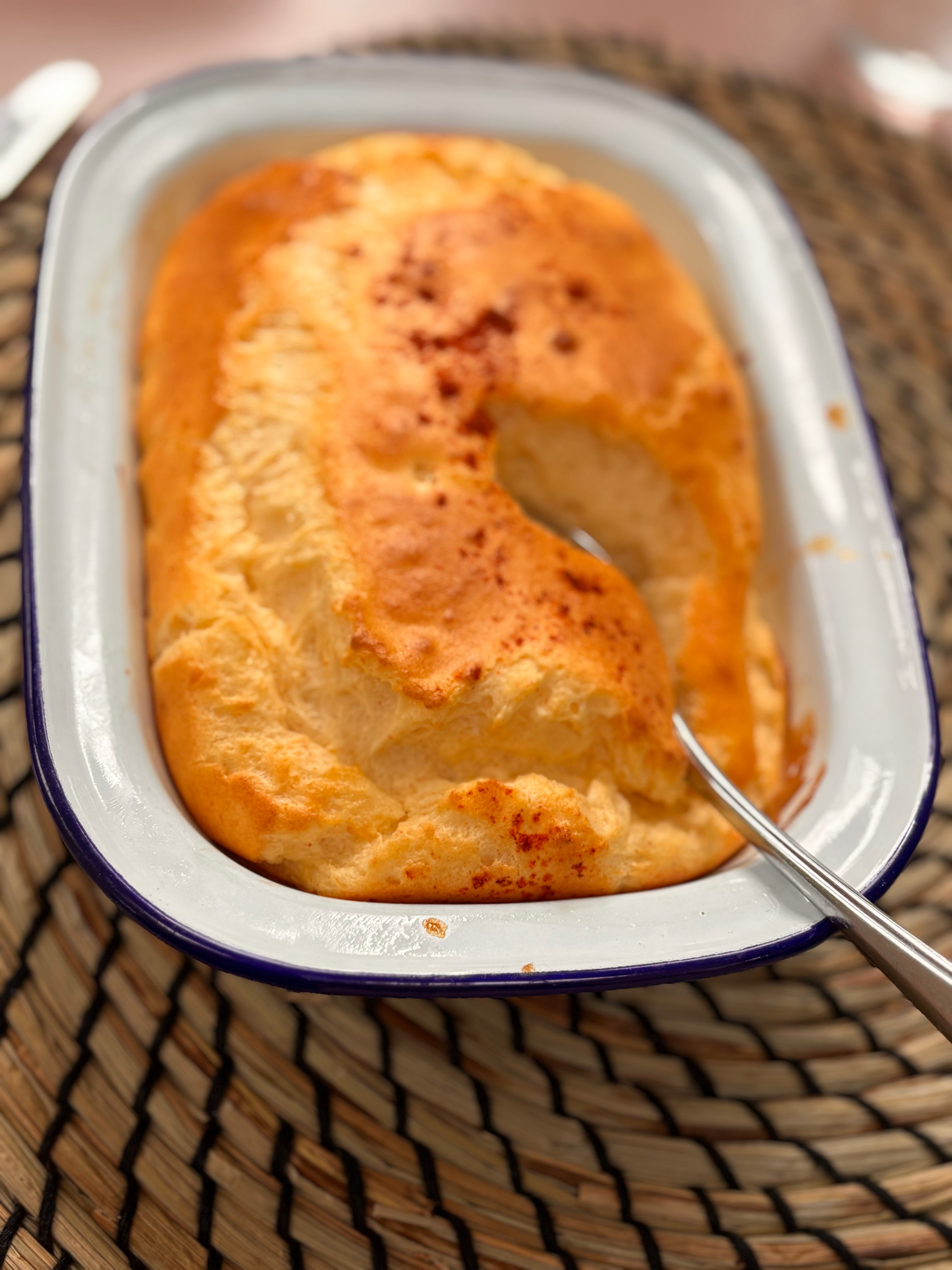
How often do you ever eat a soufflé? Not often enough, if you are anything like most people I know. For some reason, soufflés have a reputation for being difficult or expensive when actually, they are neither.
Cheese soufflé was the recipe my sister and I learned to cook with so I’ve never thought of it as anything tricky. Our mother taught us to make it the slow way with her trusty rotary whisk. Everyone at the table competed to eat the crusty bits at the edges. It’s only looking back that I realise it was a frugal family dinner which she had rustled up from a few eggs and some cheap supermarket cheddar.
For very little effort, a soufflé can bring a sense of joy and celebration to any meal. You don’t need a soufflé dish or ramekins for most soufflés. Any oven-proof container will do. In some laidback versions of soufflé - which I’ll return to in a future post - you don’t even separate the eggs or whisk the whites. For anyone who eats eggs, adding soufflés to your life will remind you that everyday cooking doesn’t have to be drab. It can be spectacular.
There’s a notion that soufflés are only something for dinner parties (does anyone even talk of dinner parties any more, let alone throw them?) But I am a great believer in making soufflés for solitary meals. A soufflé is like an omelette, only better and more celebratory (and I speak as someone who adores omelettes). It doesn’t take long or cost much. It changes the whole atmosphere of your evening to know that you bothered to make something so puffy and magnificent just for yourself.
I do hope you’ll try my recipe for golden cheese soufflé for one which was one of the most heavenly things I’ve eaten this week: melty and airy and so savoury. Yes, you will have to make a teeny-tiny quantity of bechamel, but this is no problem (and you can easily make it gluten-free). In a way, soufflé for one is a more satisfying thing to make than soufflé for four or for eight in that you get to eat it at the point of maximum puffiness straight from the oven. There is no sitting around waiting for that annoying person who pops out of the room just as the soufflé emerges from the oven.
It was after my divorce that I first discovered the healing power of a soufflé for one. For the first time, my two younger children were going off and having dinners without me at their Dad’s place. After so many years of cooking for other people, this felt both liberating and slightly desolate. I found myself searching for treats to cook which could help these evenings shake off their potential for sadness, without taking too long or requiring elaborate shopping.
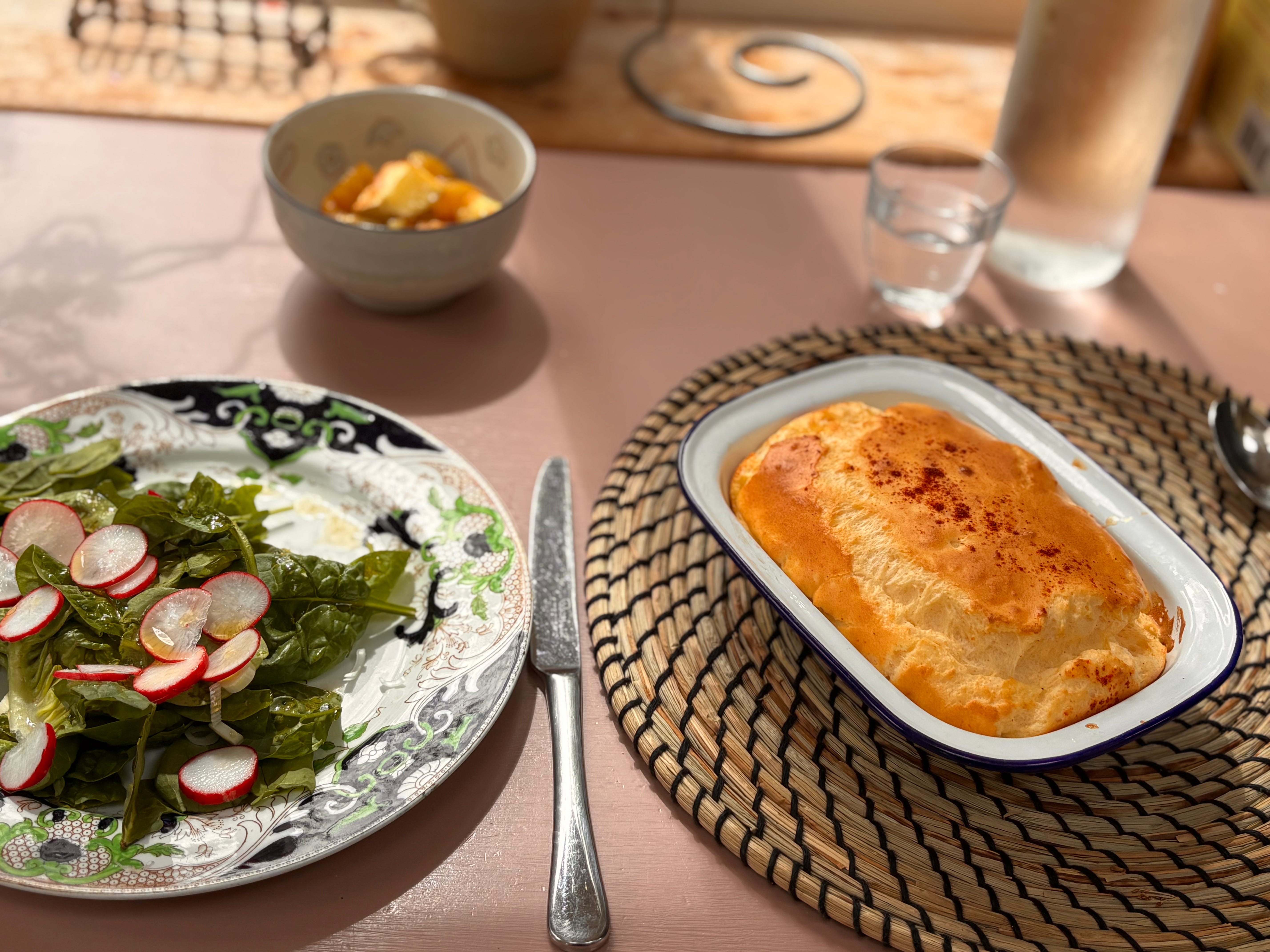
Soufflé was one of my top answers. You feel positively swanky serving yourself a soufflé from its own little dish. With a green salad (I like to add radishes for crunch), some potatoes crisped in the oven alongside the souffle and a glass of wine or just some chilled water, as here, it is a perfect lowkey meal.
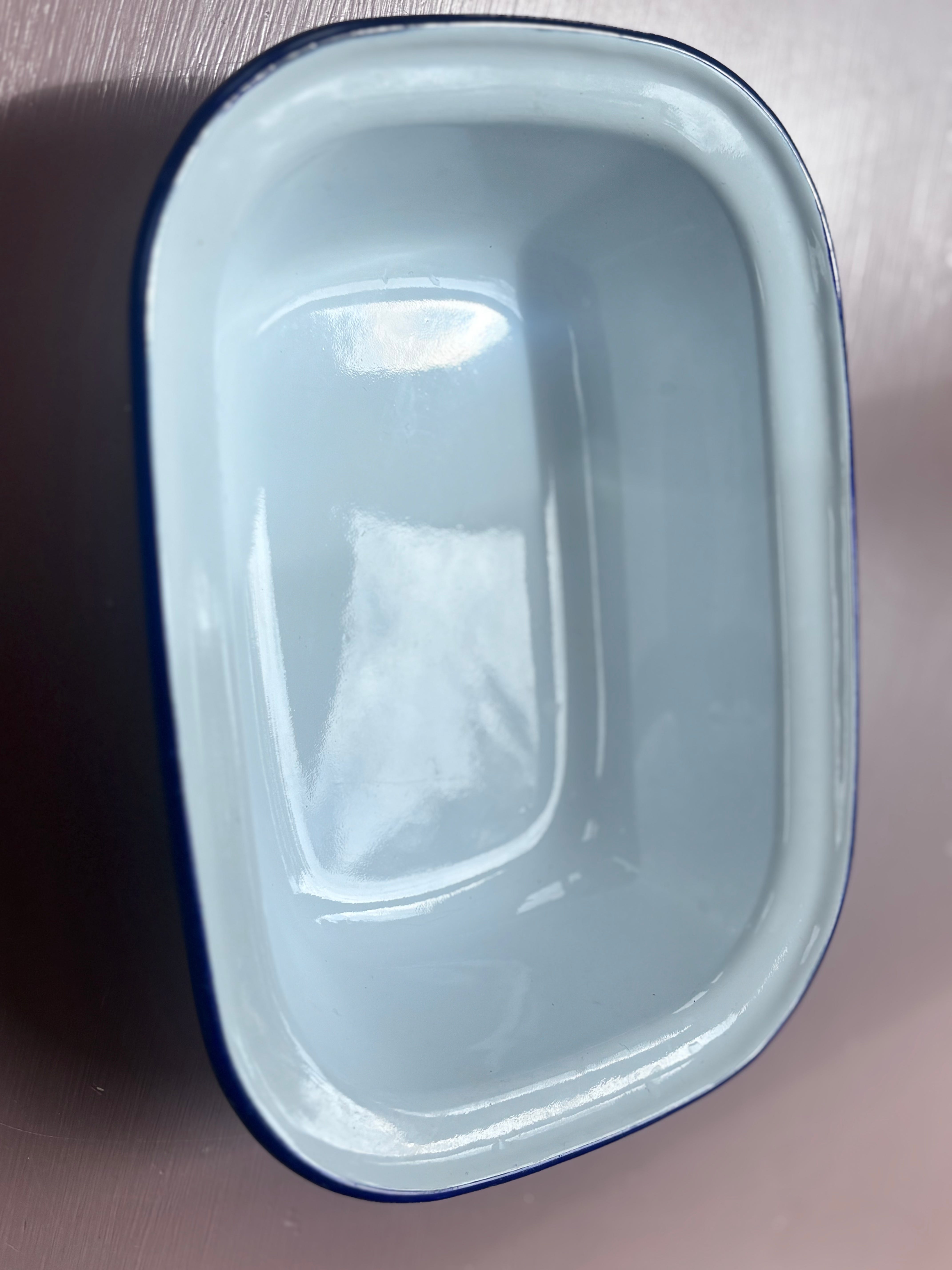
While talking about my book The Heart-Shaped Tin at David’s bookshop in Letchworth recently, someone asked me if I had any kitchen objects which symbolised my life post-divorce. I instantly thought of this little blue-and-white enamel pie dish in which I started making soufflés for myself after my ex-husband left, to lift my spirits on the nights when my children were gone.
I realised how grateful I felt to this small metal object. It didn’t just keep me company when I needed it most. This dish and the soufflés it held made me feel that my new life, whatever it was, could still contain magic, even if I hadn’t chosen to be alone. The dish was just for me.
So often, as cooks (or as parents or as people) we treat our own pleasure in eating as if it were very unimportant; or even something forbidden. Making individual soufflé is a small but significant gesture. It is self-hospitality.
To serve yourself a soufflé-for-one from its own little dish is to feel taken care of in a deep way. The same amount of egg and cheese turned into an omelette might feel like nothing much. But in soufflé form, one and a half eggs are a feast: enough for second helpings. You are mostly eating air. To eat a one-person soufflé is to marvel at the astonishing power of egg white proteins to create and hold a stable and voluminous foam.
The whisking of egg whites for a soufflé has been the subject of a lot of unecessary angst over the years. It’s a wonder anyone has ever been brave enough to make one given how many warnings of FAILURE there used to be in soufflé recipes. DON’T slam the oven door! DON’T open the oven to check if it is done. DON’T make soufflé on a draughty day. And DON’T let the tiniest drop of yolk get in your whites!
These soufflé warnings have been absurdly overdone. A soufflé positively wants to rise, on account of the large amount of egg white in the mix. Last year, Daniel Gritzer did some excellent soufflé fact checking for the Serious Eats website. He made two cheese soufflés back to back and found that opening the oven door and slamming it repeatedly every five minutes actually made no difference to the rise. Gritzer has also demonstrated that you can get egg whites with stiff peaks even with a drop of yolk or a slightly greasy bowl. This is a useful reminder not to panic and chuck out perfectly good egg whites just because of a drop of yolk (though larger amounts of yolk really can prevent you from getting snowy peaks in which case you can repurpose the whites in a cake or an omelette).
Egg white cookery doesn’t deserve its reputation for being difficult. Whipping egg whites and using them to make things rise is actually one of the easier things you can do in the kitchen because those whites contain a large array of different proteins which work in tandem to create a fluffy and stable foam. As you whisk the whites, the proteins unfold and gradually bond with one another to create a delicate but strong lattice network containing thousands of air bubbles.
Overwhipping egg whites is actually more of a problem for soufflé than underwhipping. Old recipes used to advise whisking the whites to the max but as the great Harold McGee has observed, the ‘optimum stage’ for whites ‘comes before the maximum volume is reached’. If in doubt, whisk them to somewhere between soft and stiff peaks. Soft peaks will continue to gain volume in the oven. You will know if you have overwhisked your whites because they go grainy and start to leak liquid. If this happens, gently whisk in another white and you should be able to get them back to nice glossy peaks.
If you still feel nervous about attempting a soufflé, starting with soufflé for one is the way to go because it feels so much more relaxing to experiment in private. I promise you that if you follow all the steps of my recipe below, it is basically impossible for your soufflé not to rise. I have a feeling you will be stunned by how high your soufflé rises even on the first try. But even if it does deflate (as all soufflés do in the end) no one will be judging you.
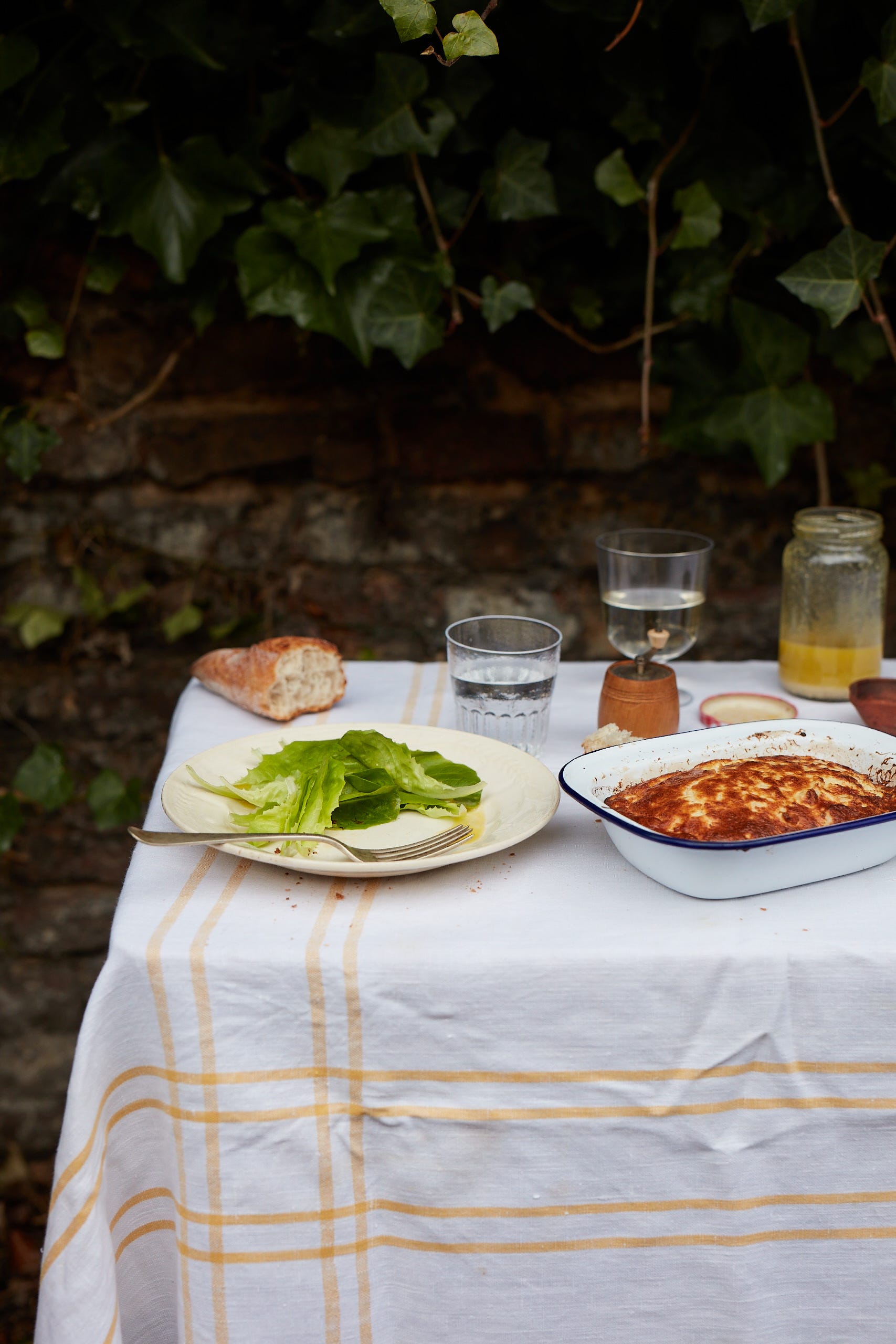
Photo by Matt Russell of Cauliflower Cheese Soufflé from The Secret of Cooking. The soufflé had actually risen a lot more but by the time we rushed it to the table, it was already going down!
My original version of soufflé - In my book The Secret of Cooking - contained cauliflower as well as cheese. It was one of three cauliflower recipes designed for using up a whole cauliflower on three successive nights when cooking alone. And I’m very fond of this version. You can make excellent souffles from almost any cooked vegetables that are hanging around in your fridge so long as they are fairly dry; just mash or puree the boiled or roasted veg and add to the bechamel, seasoning well. For a one person soufflé with the quantities here, aim for about 100g cooked vegetables. Other than the cauliflower version, I like it with grated courgettes cooked until soft in a pan with a little olive oil and salt. Below is the courgette version waiting for the oven.
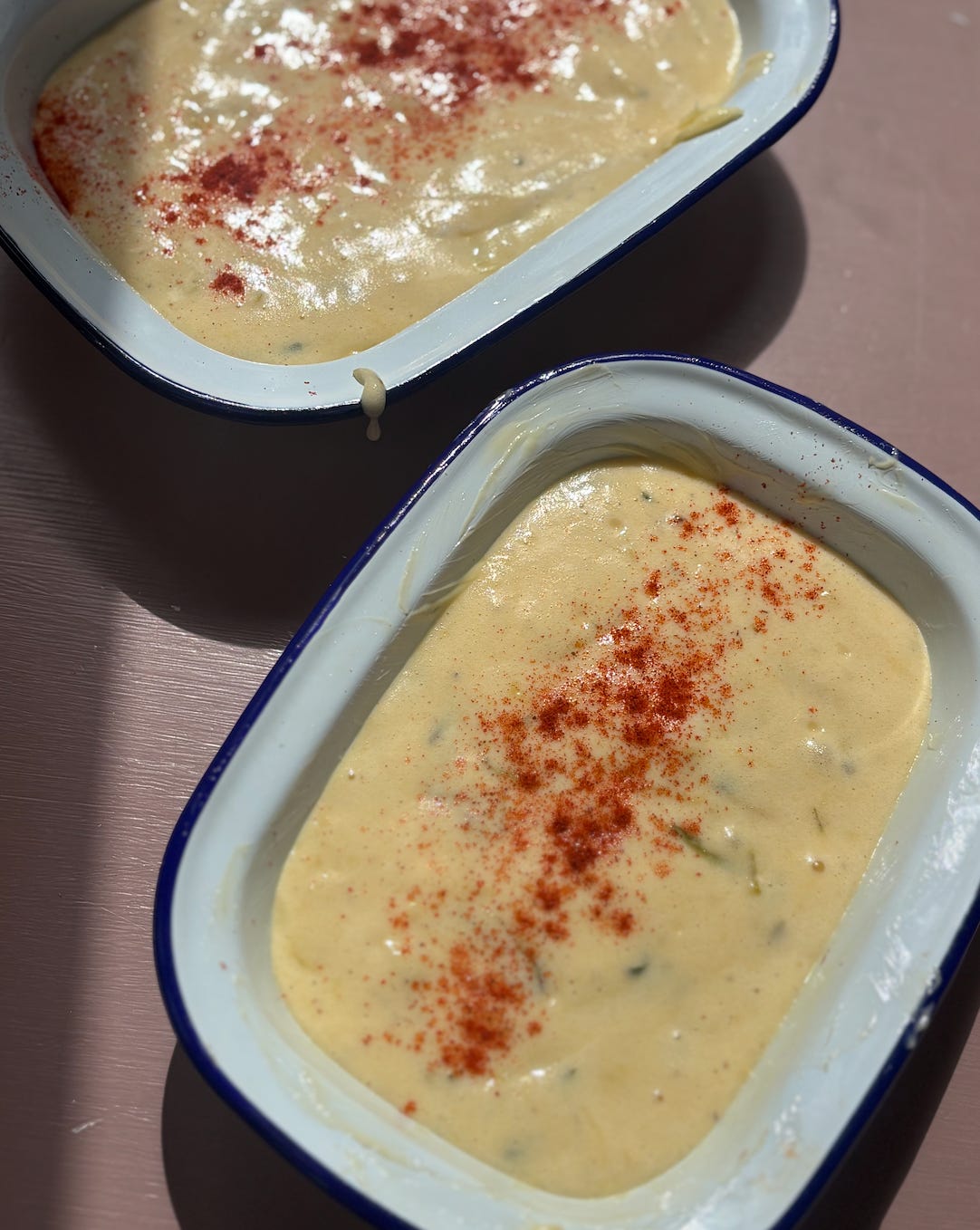
But someone I spoke to in Letchworth told me that she really wanted a recipe for a straight cheese soufflé. Which reminded me that actually, this classic version is unimprovable. You can always have your vegetables or salad on the side. I season this cheese one with just a bit of paprika and cayenne but add any herbs you like – about half a tablespoon, finely chopped (chives are the classic but I also like tarragon).
As for the cheese, I favour Gruyère or Comté, both for flavour and for melting properties, but I also make it with Cheddar, in memory of my mother’s soufflés. Use any cheese you have and know that from the moment it goes in the oven, you are just fifteen minutes away from a dish of crusty golden airy cheesy wobbly melting bliss.
Double the recipe if cooking for two or if you’d like to have a second one for the next day – reheat for 10 minutes. It won’t rise as high the next day but will still be delicious.
Comments
Nothing yet. Say the first thing.
Sign in to join the conversation.