
In the not-so-distant echoes of the past, where currency notes danced to a slow rhythm and queues whispered tales of sighs, India's payment landscape resembled a leisurely stroll, marked by delays and dreams of real-time transactions. Then, as if summoned by the digital cosmos, a disruptor emerged, adorned with the name Unified Payments Interface (UPI). Launched in India by the National Payments Corporation of India (NPCI), an umbrella organization that operates and manages retail payments and settlement systems in the country. “UPI” in India is an innovation that didn't just rewrite rules but orchestrated an entire symphony in the static corridors of financial transactions.
This isn't just a story; it's the crescendo of innovation reverberating through the veins of India's payment landscape. Imagine a time when the exchange of value involved a dance with cash or a convoluted digital waltz confined within the restrictive hours of banking temples. UPI stepped onto the stage, transforming the mundane act of transactions into a seamless sonnet, liberating digital dealings from the chains of delayed payments and the distant shimmer of real-time transfers.

Image: People in bank que for depositing money or filling a receipt of cheque deposit
The clunky, paper-laden past was swept aside by the seamless dance of digits, orchestrated by a technology that married innovation with utility. UPI wasn't content with merely changing the tempo; it orchestrated a revolution, ushering in an era where payments danced through the fingertips of a mobile generation.
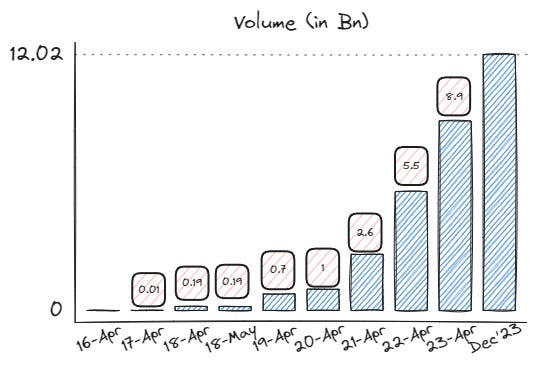
Image: Graph of per day UPI users in India since 2016 or some data points which indicates the volume growth. Source: NPCI Website : UPI Product Statistics
From a utility standpoint, UPI became the virtuoso of convenience, offering a real-time experience that transcended the limitations of banking hours. Imagine a world where the ticking clock didn't dictate the rhythm of financial transactions; where the orchestra played 24/7, including weekends and holidays. UPI not only broke the shackles of time but also linked multiple bank accounts, allowing users to conduct financial symphonies with their preferred instruments.
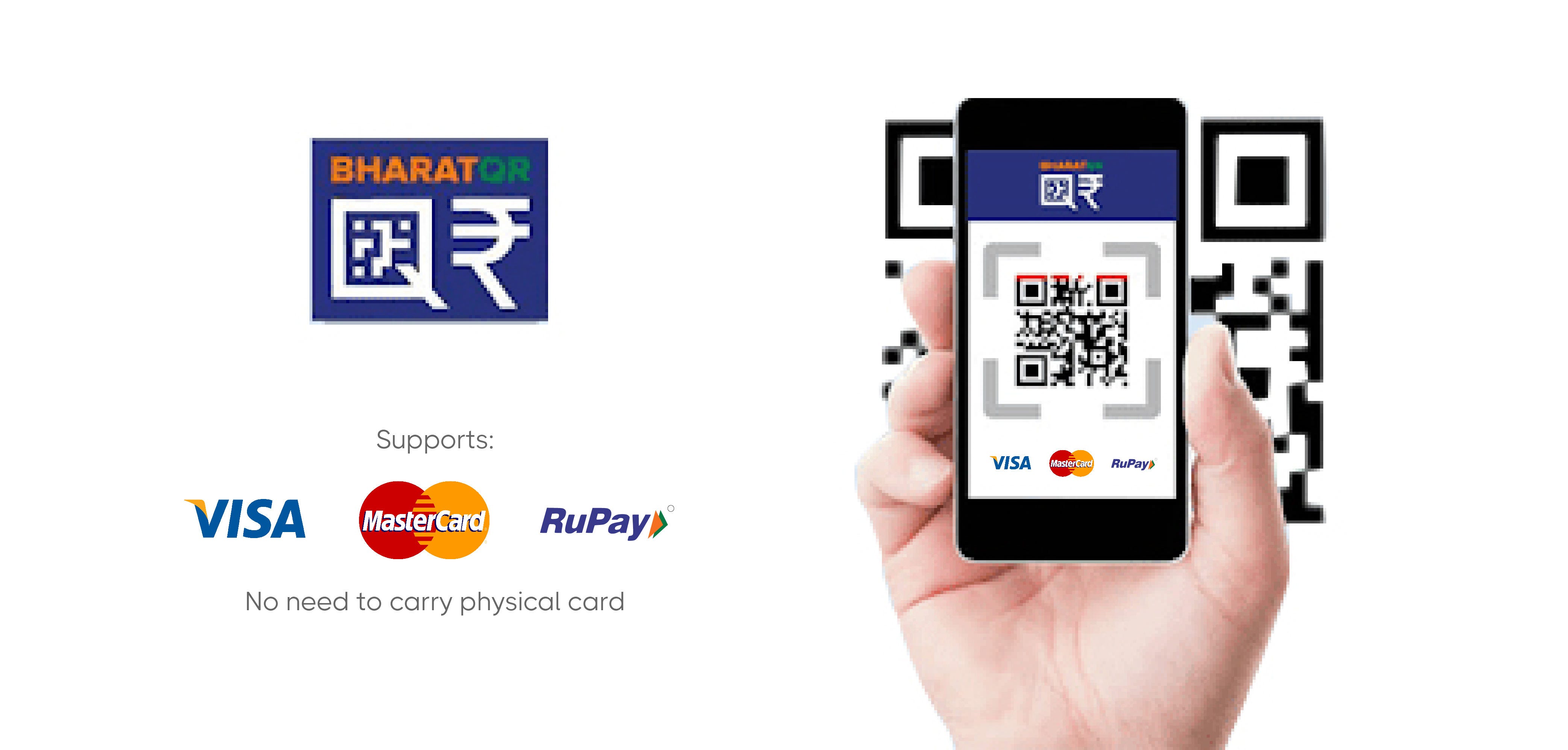
Image: A UPI scanner which indicates accepted payment from visa, MC, Wallet, Bank etc.
UPI’s innovation lay not just in its design but in its very DNA — an interoperable maestro harmonizing banks and financial institutions, orchestrating transactions like notes in a perfect melody. In the blink of an eye, UPI transformed payments from a cumbersome concerto into a seamless sonata.
What's truly mesmerizing is the rapid ascent of UPI. In the blink of an eye, it reached the last mile, where cash was king, and banks were deemed inaccessible. This wasn't just innovation; it was an ode to financial inclusion. UPI became the bridge, connecting those excluded from the financial chorus, not merely changing transactions but rewriting lives.

Image: UPI QR Scanner in a tuck shop. Source : Office Chai Article
This article embarks on a journey, unraveling the narrative of UPI — the maestro conducting a symphony of innovation in India's payment landscape. From the sluggish movements of the past to the nimble, real-time choreography of today, we explore how UPI emerged as the torchbearer of convenience, scalability, and unparalleled utility, redefining the very essence of financial transactions in the Indian story of transformation.
Why Does Digital Payment Matters?
To truly grasp the significance of digital payments, let's embark on an analogy that paints cash as flowing river water and digital money as diffusing gas, providing a refreshing perspective on their transformative impact.
Cash Payments: The River of Finance Constrained by Physical Banks
Envision cash as a steady river coursing through the financial landscape, much like a river constrained by its banks. In this analogy, cash transactions find their banks—physical institutions that act as barriers and constraints, dictating the flow of financial waters. While these banking structures are indispensable, they inherently possess limitations, curbing access to remote areas and underserved markets. This portrayal mirrors the restrictions inherent in cash-based transactions, akin to the boundaries delineating a river's course.

Image: River Bank (Water flows) Vs Cash Bank ( Cash Flows)
Digital Payments: The Liberating Gas of Finance
In contrast, digital payments take on the characteristics of a liberated gas, unbound by physical barriers. Breaking free from the riverbanks, they symbolize the emancipation from the constraints of traditional banking systems. Much like energized water molecules becoming water vapor, digital payment systems are energized by technology, functioning as dynamic money molecules ready to occupy any space where there's demand.
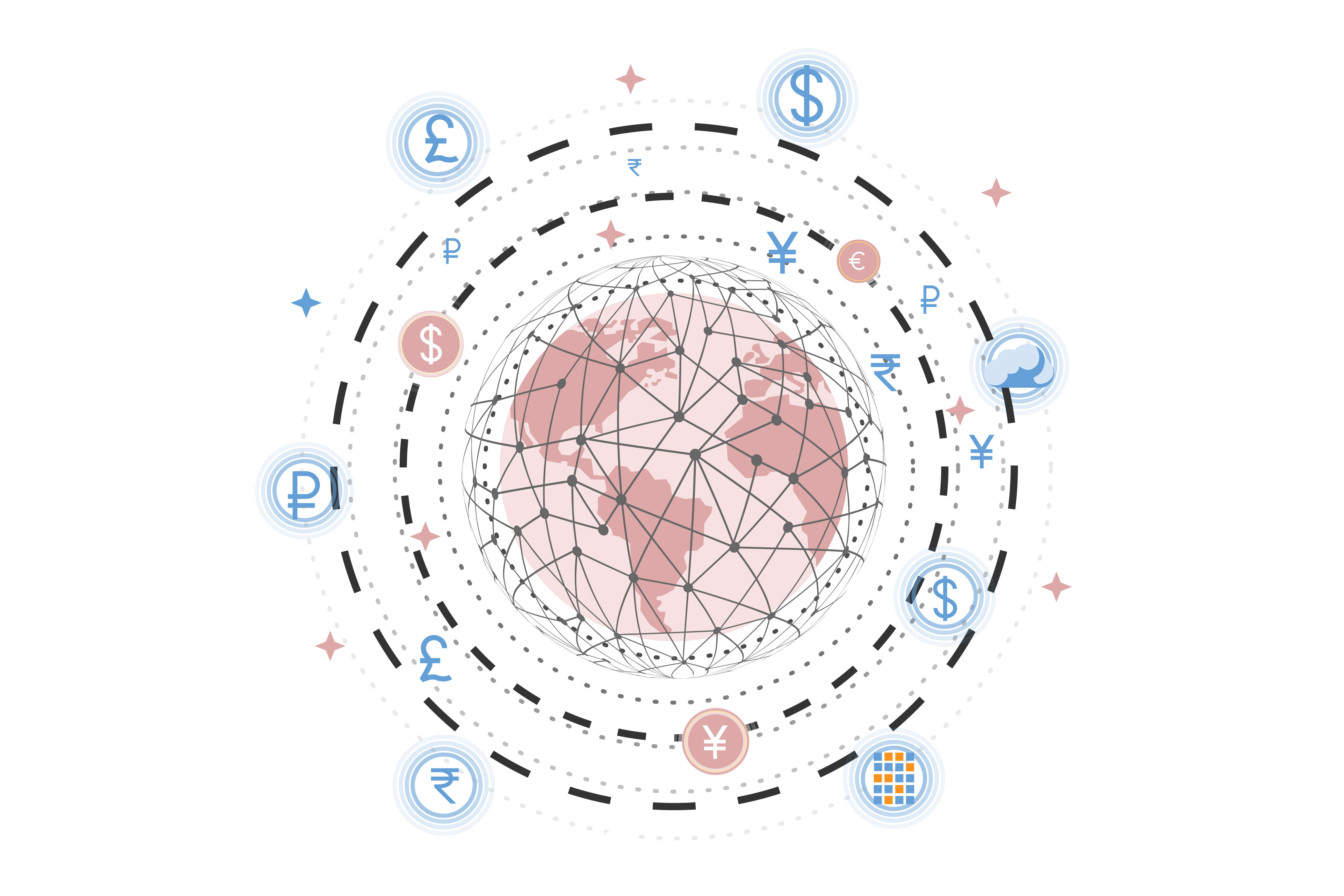
Image: Digital Currency: The Boundless Wind of Global Finance
Through the process of diffusion, digital payments can permeate any space, catering to the financial needs of individuals irrespective of their location or financial status. Analogous to gas particles dispersing freely, digital payments provide an efficient, borderless method of transaction, adhering to the principle of diffusion. No longer restricted to the predefined path of the river, they can instantaneously fill empty spaces, signifying underserved markets. The potential to service these markets is akin to gas promptly occupying vacant areas, closing the gap—a gap increasingly narrowing with the rise of digital banks unbound by physical locations.
Time and Reach: The Catalysts of Change
Considering the time it takes for water to traverse from point A to B in a river, cash flows in the financial world similarly experience delays. The river adheres to a set course, leading to limitations in meeting people's financial needs promptly. Digital money, operating like gas, significantly reduces this time gap. It can instantaneously fill empty spaces, representing underserved markets where financial penetration is vital.
The reduced transaction settlement time and the ability to cater to a broader market are two pivotal reasons why digital payments matter. They disrupt the traditional flow of financial transactions, transforming the landscape and providing a swifter, more inclusive, and efficient means to address the financial needs of individuals and businesses alike. In this analogy, digital payments emerge as a liberating force, transcending the limitations of the past, and ensuring financial access and empowerment for all.
Pre-UPI Era in India's Digital Payment Landscape
In the annals of India's financial history, the journey towards digital payments has been a gradual evolution, marked by various milestones and technological advancements. Before the advent of the Unified Payments Interface (UPI), the landscape of digital payment systems in India was shaped by a series of initiatives that paved the way for the transformative innovations witnessed today.
The Dawn of Digital Payments:
The early 2000s witnessed the initiation of digital payment systems in India, with the introduction of electronic fund transfers and online banking. However, these systems were somewhat limited in scope and accessibility. Online transactions were often characterized by lengthy processes and were predominantly restricted to electronic fund transfers within the same bank.
Debit and Credit Cards:
The proliferation of debit and credit cards marked a significant leap in India's digital payment journey. Cards became synonymous with convenience, enabling users to make purchases both online and offline. The establishment of card payment networks like Visa and MasterCard laid the foundation for a broader acceptance of digital payments. Yet, the adoption of cards faced challenges, including concerns about security and the need for point-of-sale (POS) infrastructure.
Mobile Wallets and Pre-UPI Era:
The emergence of mobile wallets marked a notable shift towards more accessible digital transactions. Start-ups and several consumer facing tech companies introduced mobile wallet solutions that allowed users to store money digitally and make payments through their smartphones. These wallets aimed to bridge the gap for users who didn't possess a bank account. There were limitations and lack of interoperability, which meant that users were often confined to transactions within the ecosystem of a specific wallet provider. This limitation hindered the seamless flow of funds between different platforms.
Net Banking and NEFT/RTGS:
During this era, net banking gained traction as banks introduced online platforms for their customers. National Electronic Funds Transfer (NEFT) and Real-Time Gross Settlement (RTGS) systems were also introduced, providing a means for electronic fund transfers between banks. While these systems offered convenience, they were constrained by the limited operating hours of banks and were not conducive to real-time transactions.
Emergence of UPI as a Game Changer
UPI, an acronym that resonates with Unified Payments Interface, unfolded its wings in 2016, a creation of visionary ingenuity by the National Payments Corporation of India (NPCI).
At its core, UPI dismantled the barriers that had long constrained digital payments. It introduced a standardized, interoperable platform that seamlessly linked user bank accounts, shattering the silos that had confined transactions within individual banking realms. A single UPI ID became the golden key, unlocking a realm of banking services and enabling transactions across multiple banks, all with the ease of a well-composed symphony.
The technical architecture of UPI served as the backbone of its transformative prowess. Built upon a robust foundation, UPI's architecture is characterized by its simplicity and scalability. At its essence, the structure of UPI is designed to ensure that it can effortlessly handle a vast volume of transactions in real-time.
The brilliance of UPI's architecture lies in its distributed model. Instead of relying on a centralized database, UPI's system is decentralized, with individual banks managing their nodes. This decentralized structure not only enhances security but also contributes significantly to its scalability. As the number of users and transactions increases, UPI can seamlessly scale its operations by adding more nodes to the network.
Moreover, UPI employs a unique identifier, the UPI ID, which simplifies the complexity of digital transactions. This identifier is linked to the user's bank account, making it a universal tag for financial interactions. The combination of this identifier and the decentralized architecture ensures that UPI transactions can be processed swiftly, securely, and on a massive scale.
The real-time, peer-to-peer (P2P) payment capabilities of UPI are a game-changer in the financial landscape. Transactions occur instantly, transcending the constraints of time and providing users with unparalleled convenience. The architecture's ability to facilitate real-time transactions is a testament to its efficiency and responsiveness.
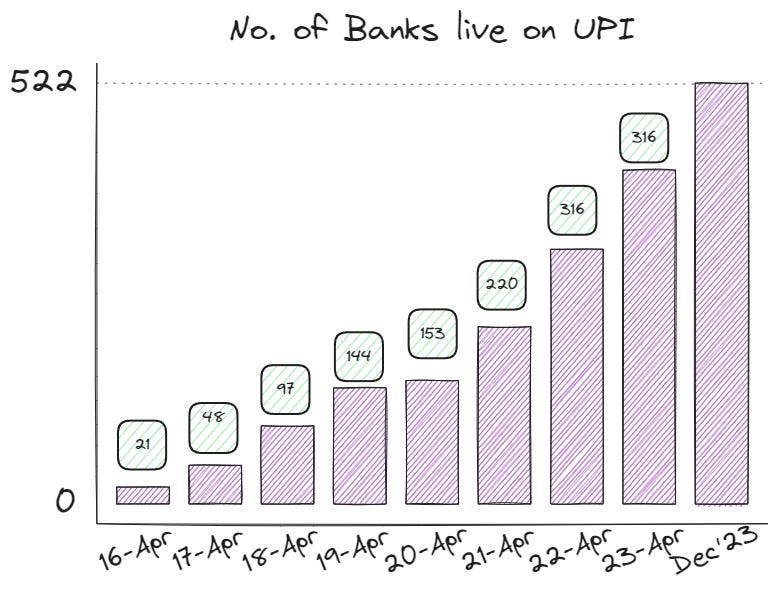
Source: NPCI Website: UPI Product Statistics
The above graph illustrates the significant value that banks have in the UPI platform, as we see that over the years a large number of banks have chosen to integrate themselves into this platform. The value proposition that UPI brings to table in terms of 24/7 accessibility to banking services has significantly bolstered the banking sector operations.
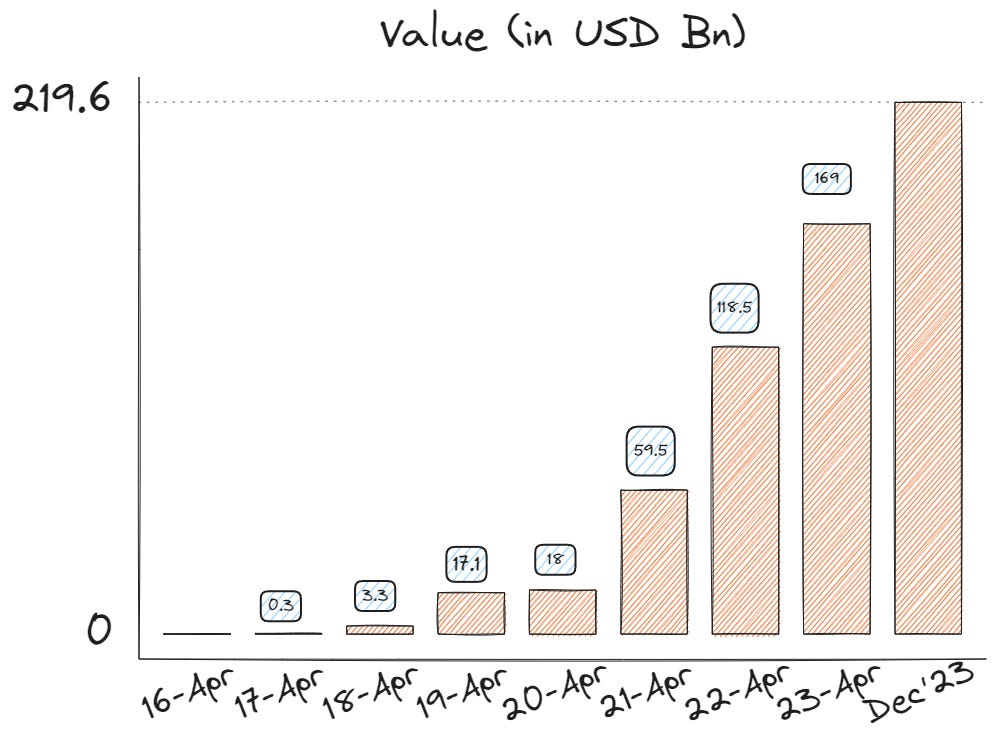
The Value of transactions
Source: NPCI Website : UPI Product Statistics
We see the rise in the volume of transactions over the years, this rise in volume is paralleled by the wide scale adoption of UPI platform enabled transactions across the banks of the country.
UPI transactions have surged in volume, painting a clear picture of increasing acceptance and reliance among users. It started as a small ripple in the vast ocean of digital payments but rapidly grew into a tidal wave, reshaping the landscape of how we transact.
The above graph isn't just a set of numbers; it's a testament to how a simple, user-friendly technology can revolutionize our daily financial transactions, making them as swift and effortless as sending a text message. The ascent of UPI transactions is not just a financial phenomenon but a story of technological triumph and mass adoption.
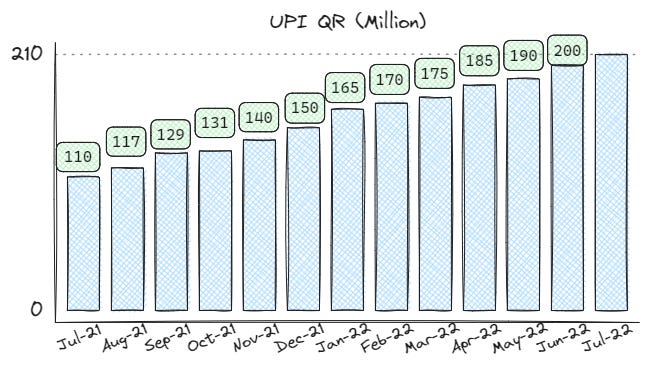
Number of Unique UPI IDs
Source: Times of India Article
The above graphs show the rise in the number of users within the span of a year. COVID-19 played a huge role in terms of accelerating this paradigm shift towards digitization and that is reflected in the graph. A Forbes report notes that, within seven years of its launch, UPI had attracted 260 million users in India alone, indicating a significant shift towards cashless payments, particularly in the Asia-Pacific region. Moreover, a staggering 93% of people are likely to have made cashless payments in the past year, further emphasizing the widespread acceptance of UPI
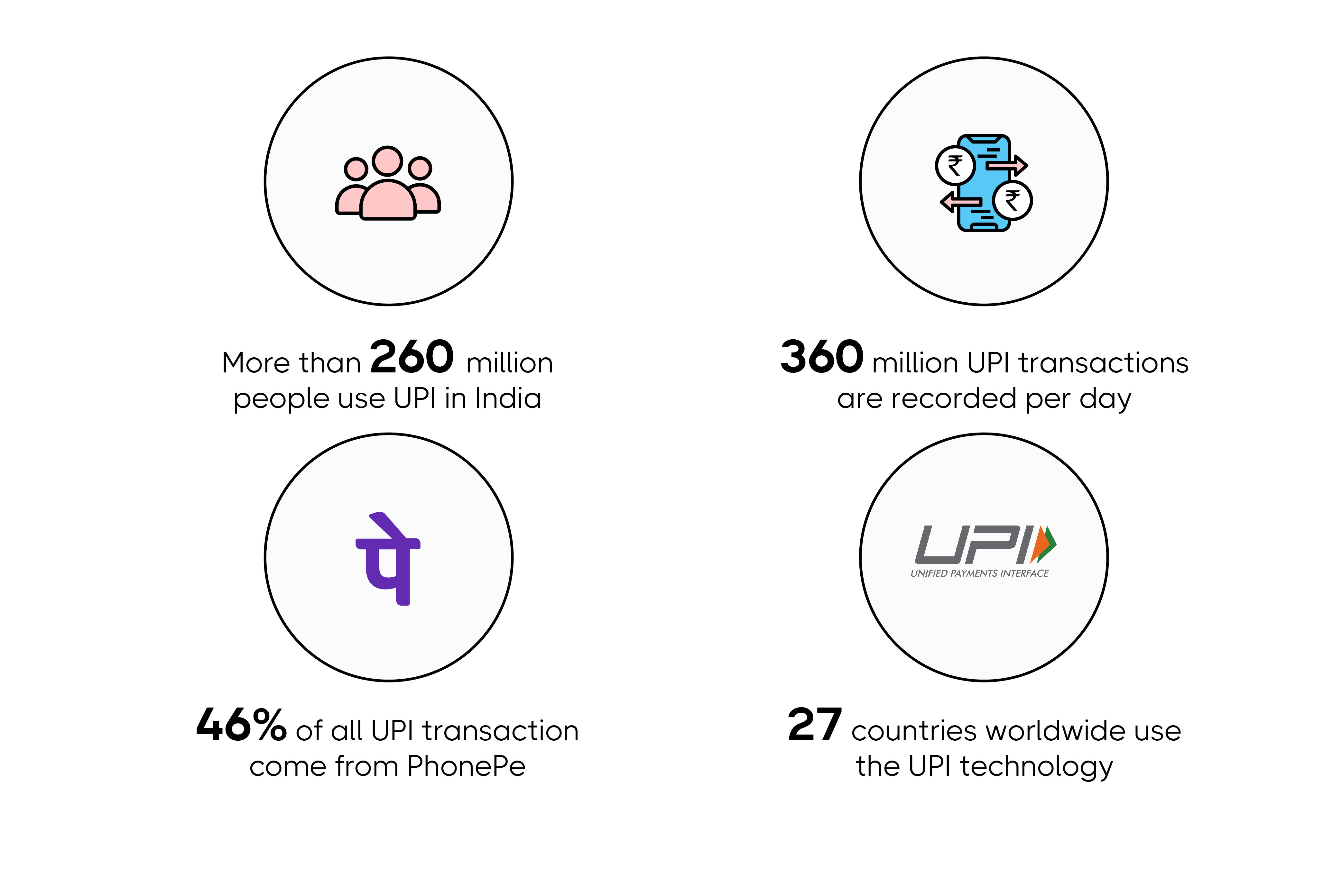
UPI Statistics 2024: Top Picks
In 2024, UPI's impact on India's digital payment landscape is profound, with over 260 million users. Daily, a remarkable 360 million UPI transactions are processed, showcasing its reliability and popularity. The final quarter of 2023 alone saw an astonishing 11.23 billion transactions, reflecting UPI's growing global reach, now extended to 27 countries.
UPI Lite, a newer addition, processes over 10 million transactions monthly, catering to smaller, quicker payments. Notably, PhonePe dominates the UPI space, accounting for 46% of all transactions.
Source : Demand Sage
Stakeholders Involved the UPI Ecosystem
The Unified Payments Interface (UPI) payment system in India is a collaborative effort involving various stakeholders, each playing a crucial role in the success and evolution of digital payments. Here's an overview of the roles played by key stakeholders:
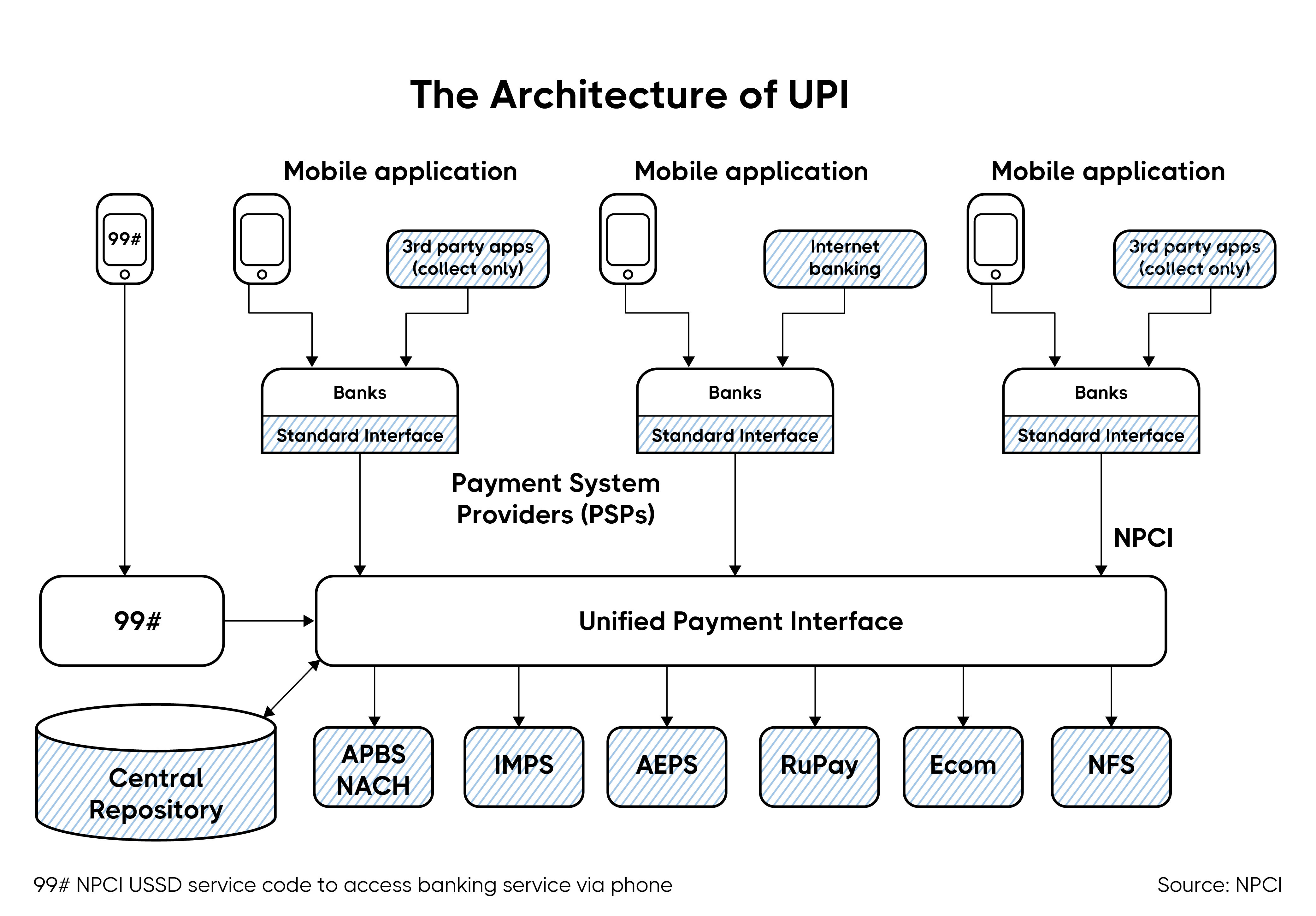
Image: Stakeholders
Government and Regulators:
The government plays a supportive role in promoting digital payments and financial inclusion. Initiatives like Digital India and demonetization have encouraged the adoption of UPI.
The government owned National Payments Corporation of India (NPCI) is the umbrella organization responsible for the design, development, and operation of UPI. It plays a central role in providing a robust technology platform and governance framework for UPI transactions. NPCI oversees the interoperability and seamless integration of UPI across multiple banks and payment service providers. It sets the technical standards, security protocols, and operational guidelines for UPI transactions.
Reserve Bank of India, the central bank of the country, plays a regulatory role in overseeing the overall functioning of the payments ecosystem.RBI sets the regulatory framework, monitors compliance, and ensures the stability and security of the financial system. It collaborates with NPCI to formulate policies that govern UPI operations.
Banks:
Banks act as the backbone of the UPI system, providing the infrastructure for transactions and facilitating the linkage of customer accounts. Banks integrate UPI into their mobile banking apps, allowing customers to link their accounts and make seamless transactions. They ensure compliance with regulatory guidelines and work closely with NPCI to maintain the integrity of the UPI network.
Wallet Providers (e.g., Google Pay, PhonePe, Paytm):
Wallet providers act as intermediaries between users and their bank accounts, offering a user-friendly interface for digital transactions. These providers integrate UPI into their platforms, enabling users to link their bank accounts for direct transactions. They also enhance the user experience by offering additional features such as rewards, cashback, and value-added services.
Merchant Acquirers and Payment Gateways:
Various Fintech startup companies provide the technology infrastructure that enables merchants to accept UPI payments. They facilitate the integration of UPI into point-of-sale systems, e-commerce platforms, and other merchant services. Their role is crucial in expanding the acceptance of UPI payments across various retail channels.
Users:
Users are the consumers who adopt and utilize the UPI system for making digital payments. Users download UPI-enabled apps, link their bank accounts, and leverage the convenience of making real-time transactions. Their engagement and adoption are critical for the success and sustainability of the UPI ecosystem.
Future Outlook
As the curtains rise on the UPI era in India's digital payment symphony, the future outlook gleams with promises of unparalleled reach, continuous innovation, and a kaleidoscope of new possibilities. UPI, having established itself as a game-changer, is poised to transcend its own achievements, orchestrating a symphony of financial inclusion that resonates far and wide.
Scale of Reach: Expanding the Melody
The UPI saga is far from reaching its crescendo. In the future, UPI is set to expand its reach to even more remote corners of the country, ensuring that the melody of digital transactions reverberates across urban landscapes and rural vistas alike. The mission is to bridge any lingering gaps in financial access, bringing the harmonious tune of UPI to every corner, creating a truly inclusive financial ecosystem.
Continuous Innovation: Composing New Harmonies
In the ever-evolving landscape of digital payments, UPI is not content to rest on its laurels. The future promises a continuous cadence of innovation, introducing new harmonies that enhance the user experience and address emerging needs. Whether it's through the integration of cutting-edge technologies or the introduction of novel features, UPI aims to stay ahead of the curve, setting the standard for the next generation of digital transactions.
New Use Cases: Expanding the Repertoire
The UPI repertoire is set to expand, embracing new use cases that go beyond the traditional realms of payments. From healthcare to education, entertainment to e-commerce, UPI envisions itself as a versatile virtuoso capable of facilitating transactions in every facet of life. The future holds the promise of UPI becoming the universal enabler, seamlessly integrating into various aspects of daily living.
The National Payments Corporation of India (NPCI) has been working on several new use cases, particularly focusing on enhancing the utility and convenience of UPI (Unified Payments Interface) transactions. Two significant areas of development include:
Deactivation of Inactive UPI IDs: To streamline UPI services and ensure active usage, NPCI has directed payment apps like Paytm, Google Pay, PhonePe, and banks to deactivate UPI IDs and numbers that have not been used for more than a year. If a UPI ID or the linked mobile number isn't used for transactions for over a year, it will be deactivated.
UPI AutoPay for BNPL and Recurring Payments:
Collaboration with BNPL Platforms: In a notable move, Capital Float, a BNPL (Buy Now Pay Later) and credit platform, collaborated with NPCI to introduce UPI-enabled EMI auto-repayments for its BNPL offering, Walnut 369. This feature is designed to automate repayments, thus enhancing customer convenience.
Auto Debit Facility: UPI AutoPay, launched by NPCI, is a feature that allows users to set an e-mandate through their UPI ID or QR Scan for transactions up to Rs 2,000. For transactions above Rs 2,000, customers still require their UPI PIN to authenticate the transaction. This facility is particularly useful for managing recurring payments like subscriptions and bills.
Versatile Use Cases: UPI AutoPay enables customers to set up electronic payment mandates for a variety of use cases, ranging from paying utility bills to managing various subscriptions. This flexibility makes UPI AutoPay a significant step towards furthering the convenience of recurring payments in India.
These initiatives by NPCI demonstrate a commitment to enhancing the efficiency and user-friendliness of UPI transactions, particularly in the domains of regular payments and the burgeoning BNPL sector.
Innovation Expansion: Beyond Conventional Boundaries
Beyond the conventional boundaries of financial transactions, UPI sees itself as a catalyst for innovation in diverse sectors. The integration of UPI into emerging technologies, such as Internet of Things (IoT) and artificial intelligence, could open new frontiers. UPI aims to be at the forefront of this digital revolution, expanding its innovation footprint beyond the expected.
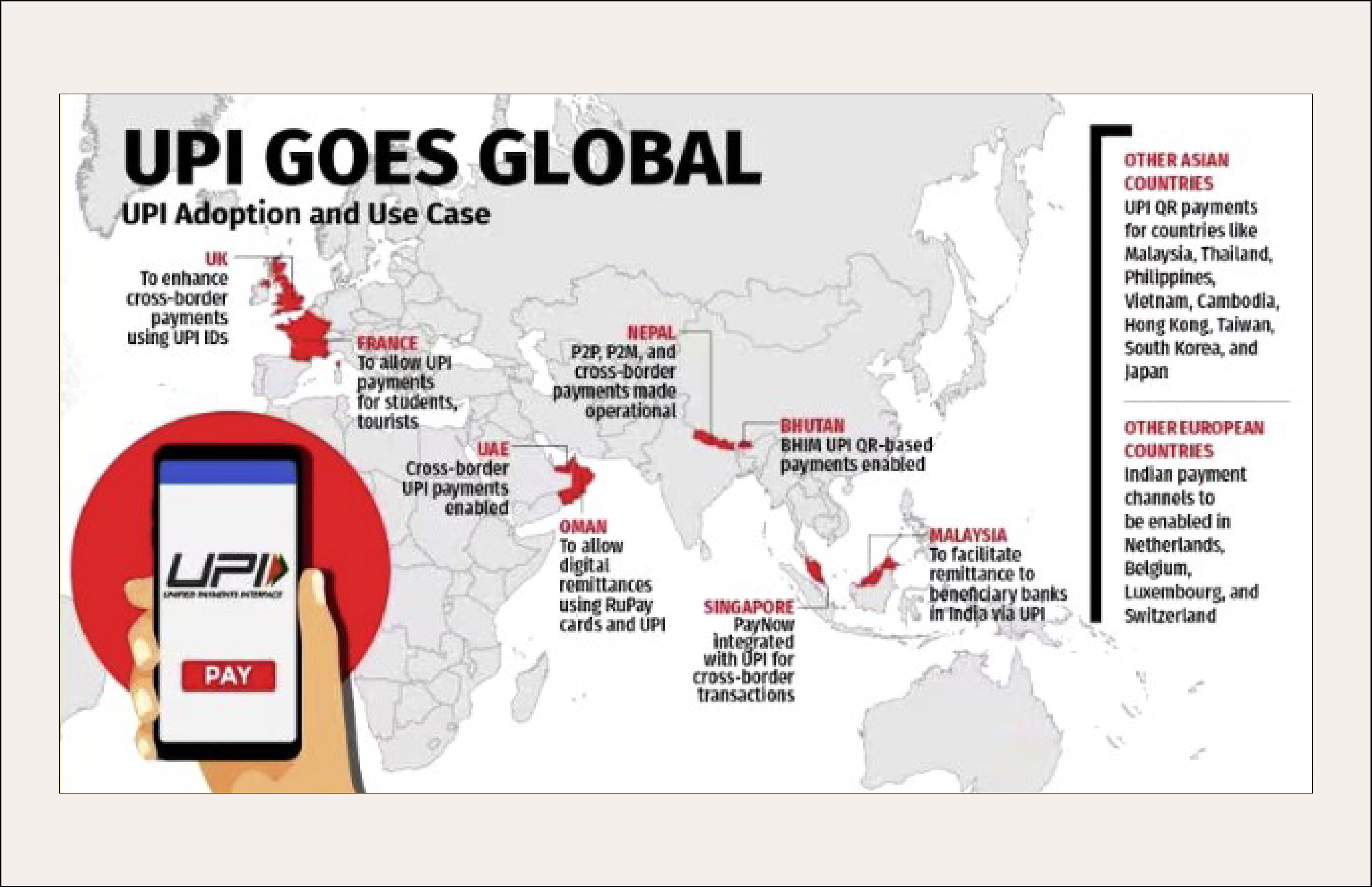
Government Bearing Transaction Costs: A Unique Note
A distinctive challenge in the UPI model is the current scenario where the government bears the transaction costs. While this has been instrumental in driving UPI adoption, sustaining this model over the long term poses financial challenges. The government's role as a facilitator in covering transaction costs requires careful consideration and perhaps a transition toward a self-sustainable model in the future.
Companies Waiving Transaction Fees
Adding complexity to the UPI score is the participation of companies like PhonePe and Google Pay, who, at present, do not charge any transaction fees. This altruistic move, while beneficial for users, poses challenges in terms of the sustainability of these platforms. The delicate balance between user benefits and the financial viability of these companies adds another layer to the challenges faced by the UPI model.
In the unfolding chapters of the Indian story of transformation, UPI emerges not just as a chapter but as the very essence of a harmonious journey towards a digitally inclusive future. The future outlook is not merely promising; it is an ever-expanding canvas, where UPI, as the conductor, continues to compose a symphony that resonates with the aspirations and needs of every individual, weaving a tapestry of financial empowerment for all. The road ahead is one of innovation, education, and resilience—where each challenge becomes an opportunity to compose a more refined and inclusive melody in the continuing Indian story of UPI.
No posts
Comments
Nothing yet. Say the first thing.
Sign in to join the conversation.