
Listen now on YouTube, Apple, or Spotify.
Christie Marchese is the founder and CEO of Kinema, a global distribution and exhibition platform centered on storytellers. She’s also the host of this pod. In this episode she shares a presentation she gave at the Media Impact Forum. Just before Christie took the stage, the Shorenstein Fellow, Felipe Estefan, shared his research delving into the three major gaps for storytellers:
Capital (e.g, access to $$$)
Information (e.g, audience intelligence and data is often held by platforms)
Technology (e.g., algorithms controlling what we see)
Christie used that framing to talk about what it looks like to work on these challenges and she shares how Kinema is one of the solutions. Her opening prompt was, “We asked ourselves at the company what happens when filmmakers can retain ownership, audiences become participants and distribution becomes infrastructure.” From there she gets into case studies, insights, and tips for filmmakers and funders alike. A few screenshots of her slides are shared below. To see the full presentation, watch the video.
In this presentation, Christie covers:
Why the problem isn’t always lack of funding
How five films broke traditional distribution windows to great results
Audience attention vs. audience ownership
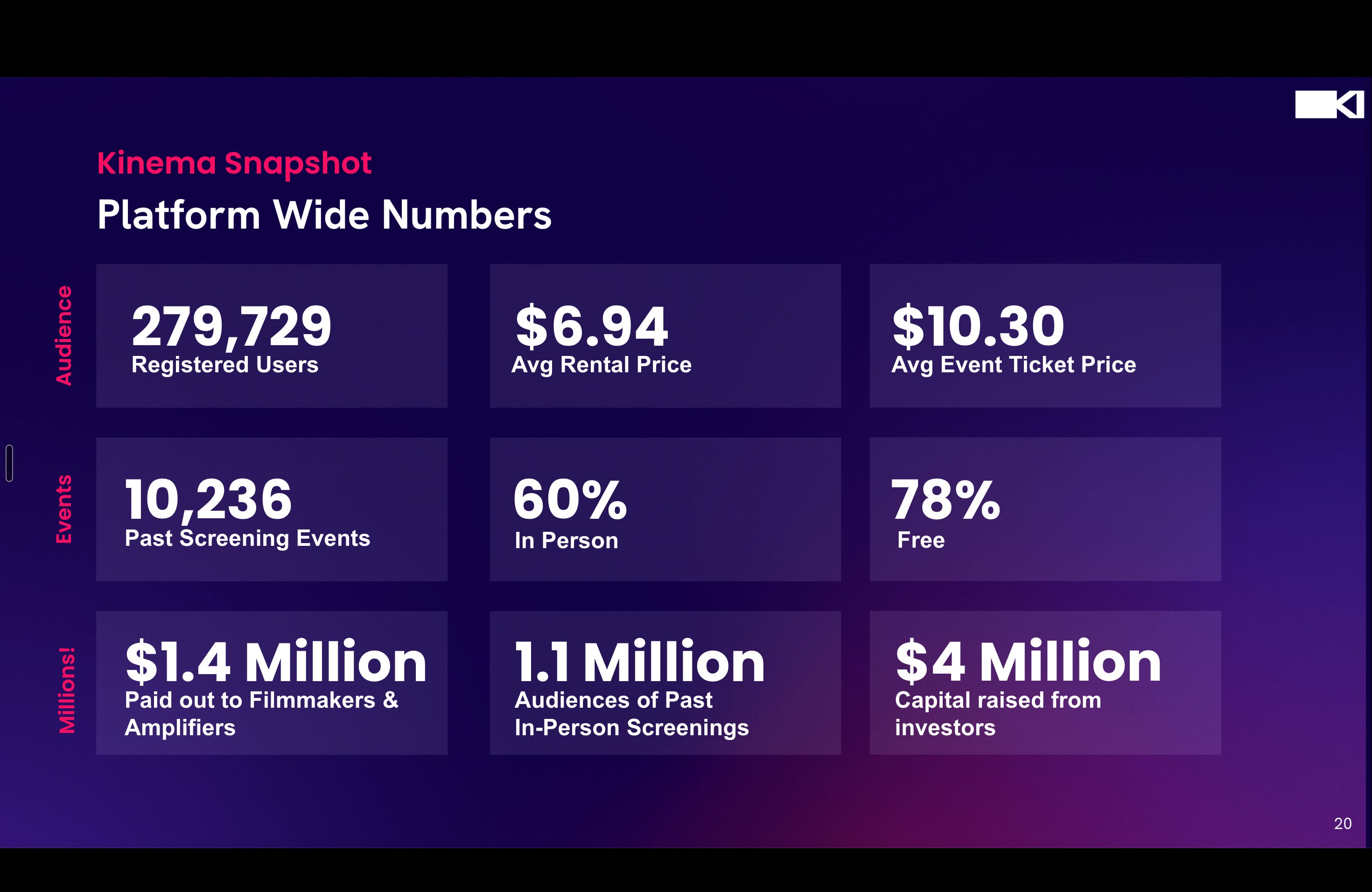
What Kinema actually does (and the latest numbers)
How Kinema thinks about trust, alignment, and avoiding becoming an extractive platform
And more!
Kinema for Filmmakers is a newsletter about creative film distribution. This is a recap of our latest podcast episode.
Key Takeaways:
Money isn’t the problem. It’s where money is allocated.
“The one thing we’ve learned is that the problem isn’t always lack of funding. It’s a lack of flexibility to enable funds to flow back — funds that can create a return that can fund marketing, impact, and distribution, or compensate creators and their investors.”
“In traditional film distribution structures, there is a prescribed timeline of releasing a film and a belief that doing one part too early will undoubtedly compromise others.”
“That strategy should really fit the film, the filmmaker’s goals, and the audience. In the traditional format you’re kind of stuck in those windows. We break those formats. You have more control to deliver the film in a way that makes sense for your audience.”
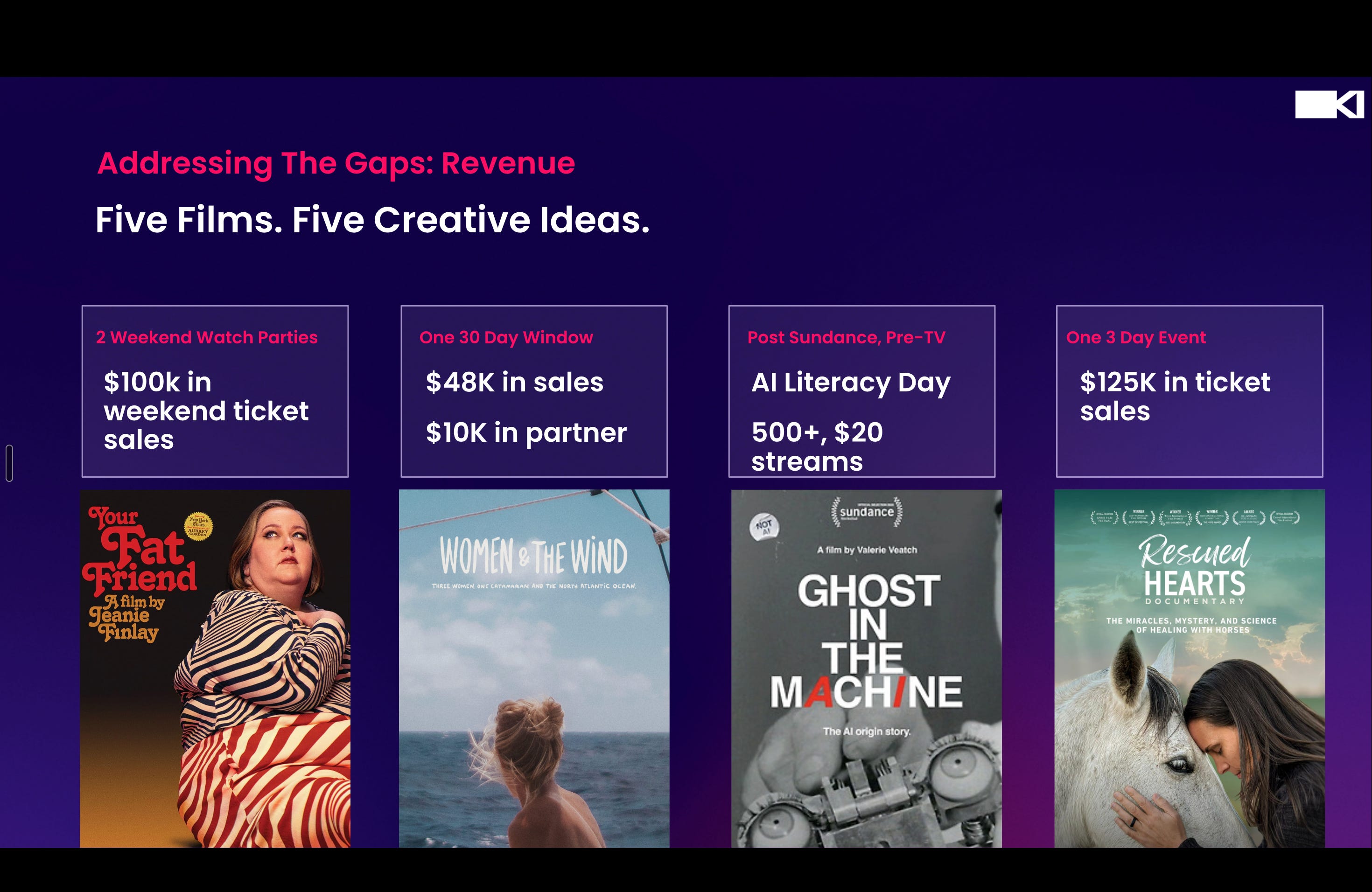
On the capital gap — five films that broke traditional windows:
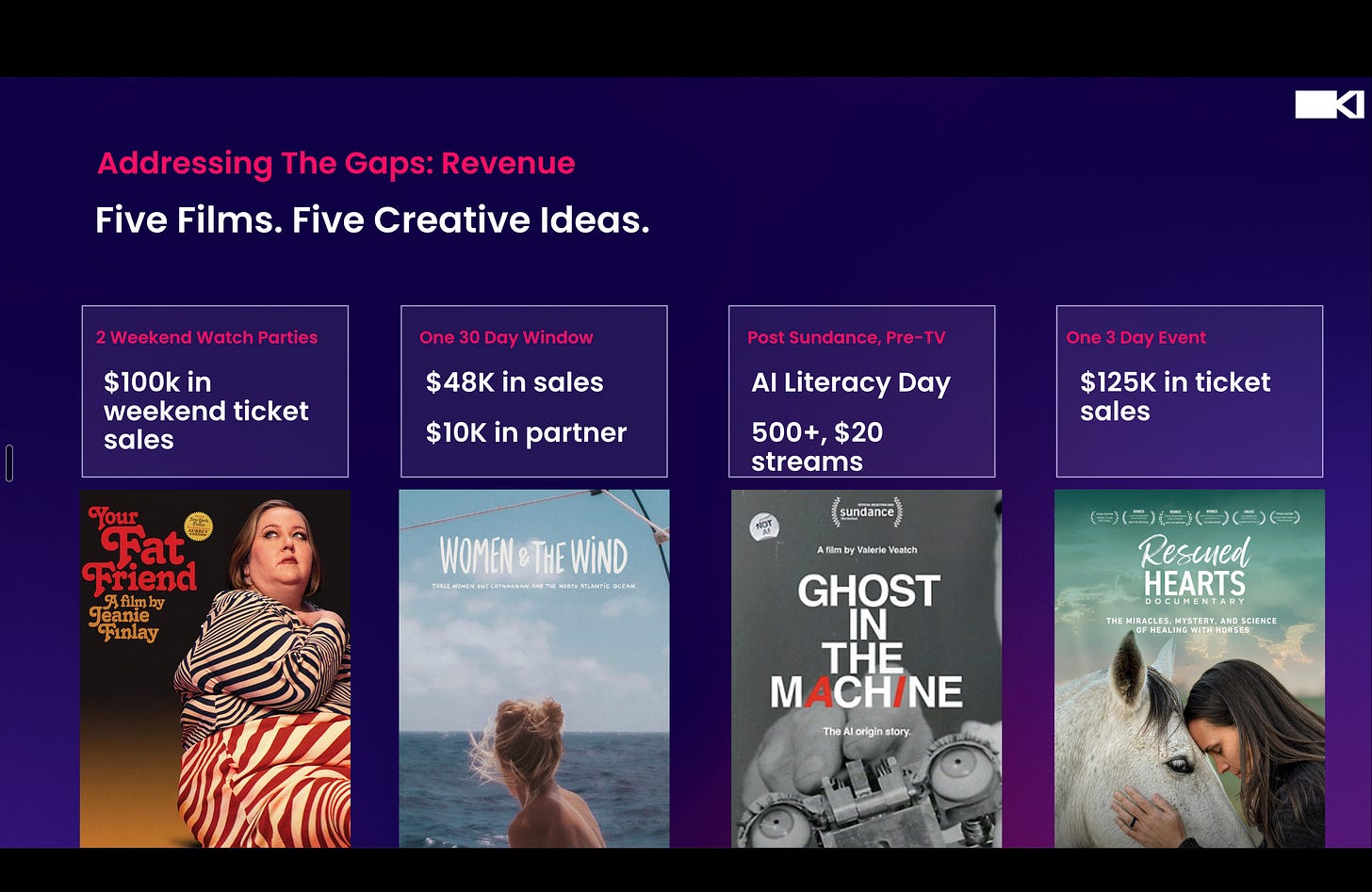
Your Fat Friend: Jeannie Finlay used two premium online watch party weekends to fund her theatrical release. “She knew her audience. She had the great messaging that her audience would show up for this film despite what a distributor would say. And so she sold thousands of tickets over two weekends and this largely funded her theatrical release.”
Women in the Wind: “Instead of waiting for a festival premiere, the film team launched a 30-day only viewing window. They limited the time. They had a strong audience. They generated about $50K directly from audiences in just a month.”
Ghost in the Machine: “Right after their Sundance premiere, Valerie Veatch, the director, and months before her broadcast, did a three-day streaming window and then opened it up for community screenings... She knew it was important to talk about AI now. And so by communicating with her distribution partner, she was able to do a limited streaming window.”
Rescued Hearts: “The film team released clips of the film through a pay what you wish model over the course of a year on different platforms and then opened a 3-day release window on Kinema and they generated more than $125,000 just from that one event because they’ve been building that relationship and because they weren’t waiting for distribution to be handed to them.”
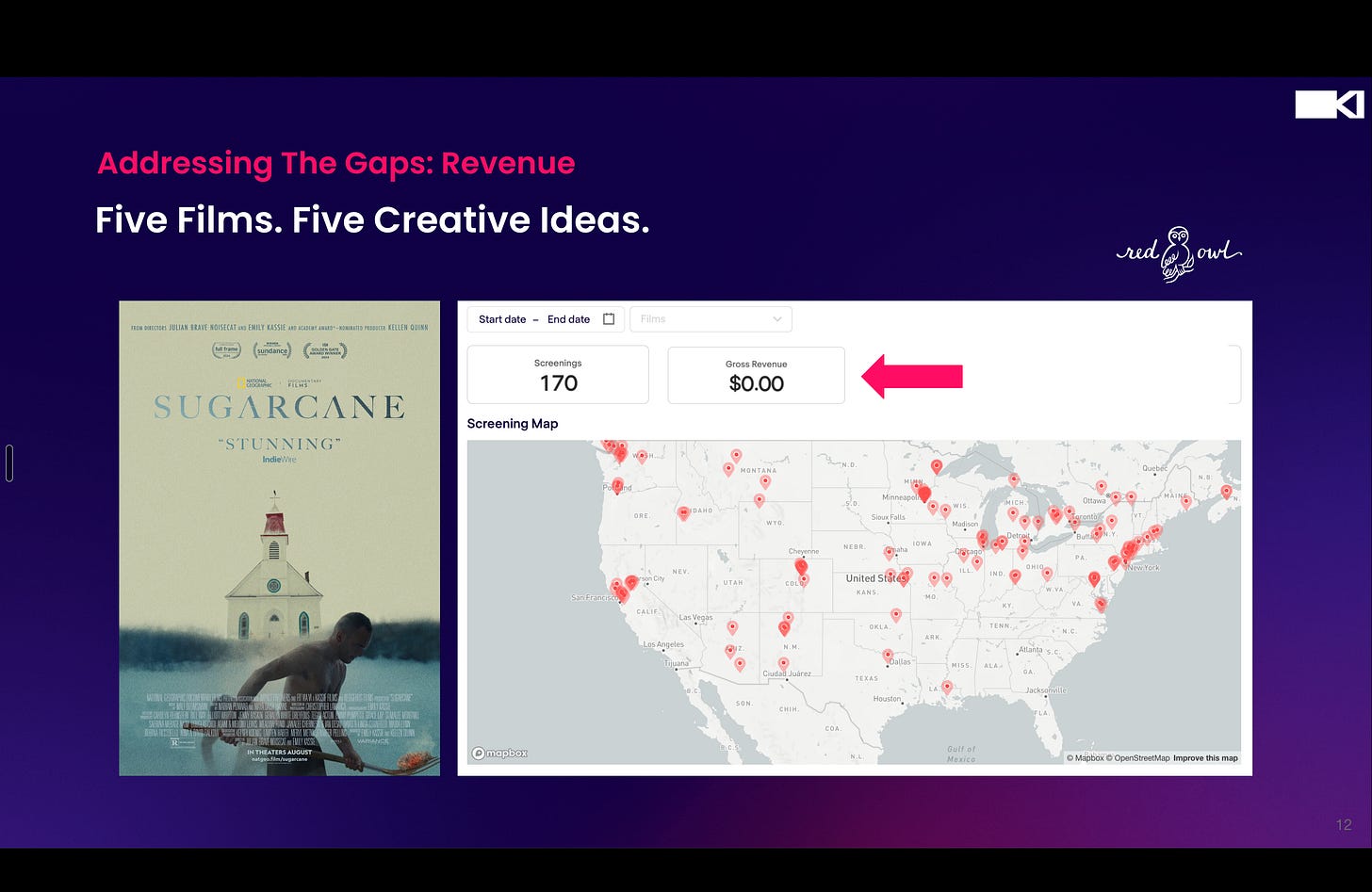
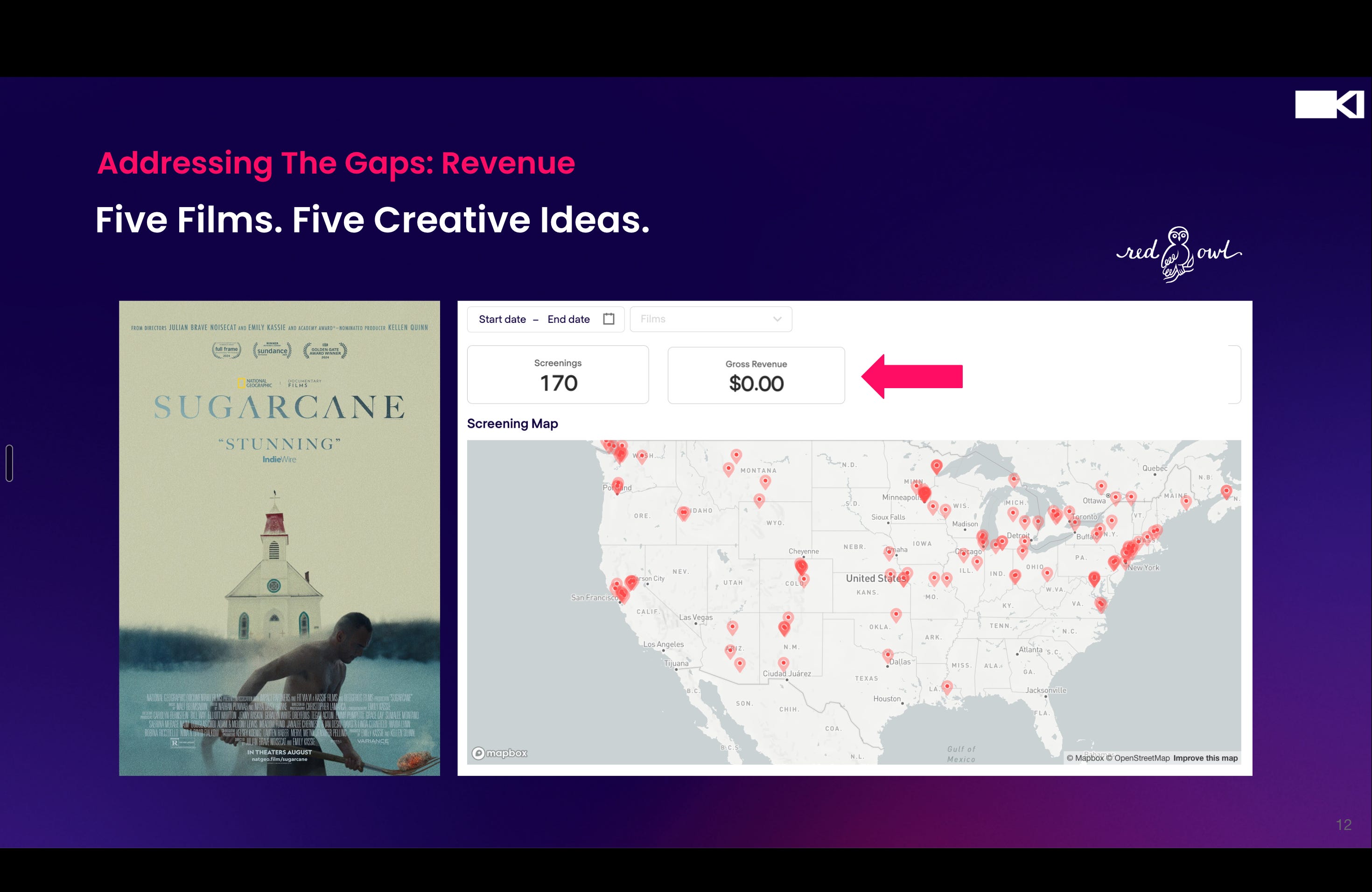
Sugarcane: Had distribution with National Geographic and a theatrical release in 2024, but held on to community screening rights for impact. “Two years later, they were doing hundreds of screenings. These screenings were free and subsidized.”
On the information gap — audience attention and audience ownership are not the same thing.
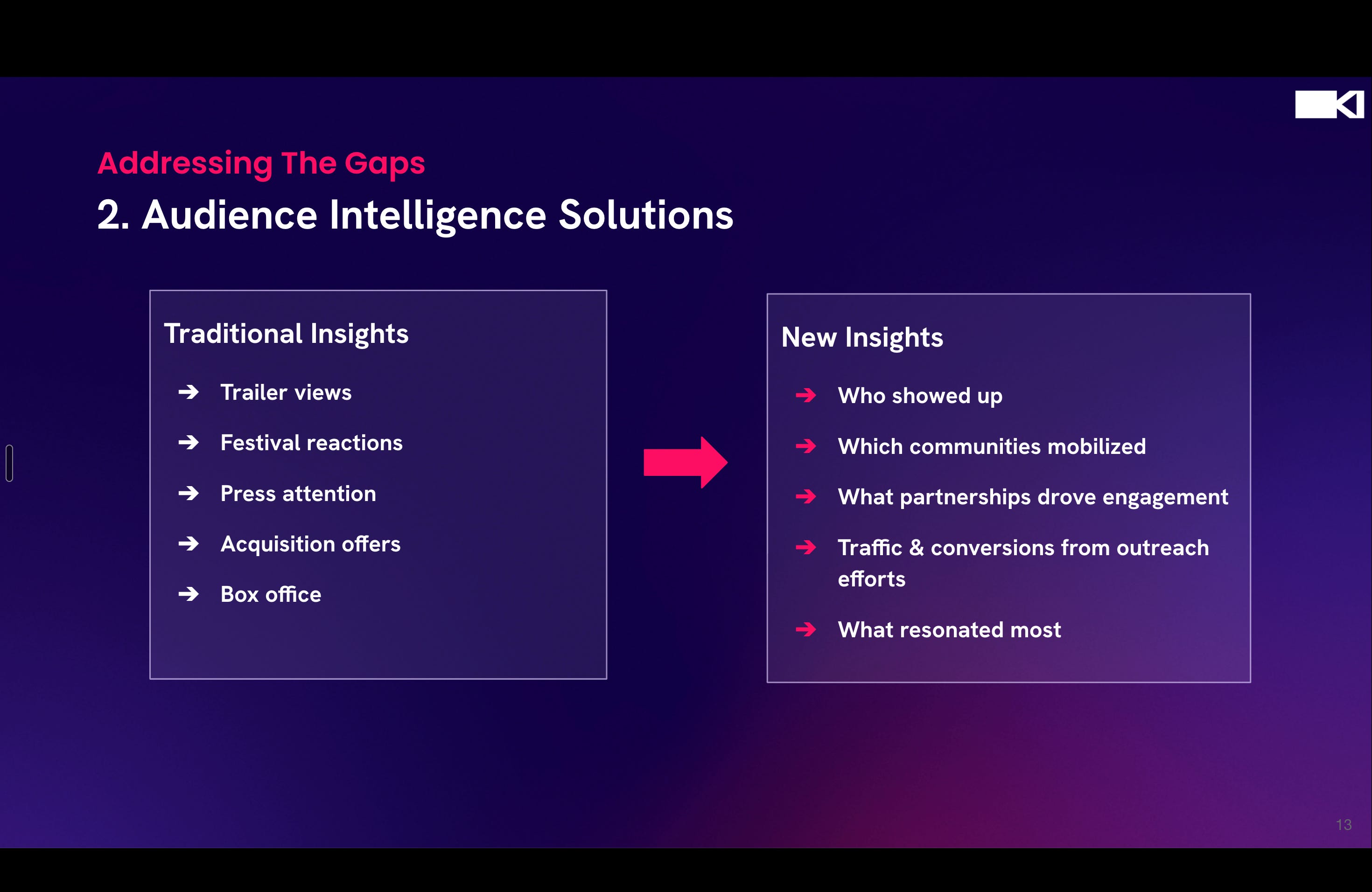
“Many of us in the industry have historically only thought about audience after the film is completed. Even as the film begins to show for audiences, film teams can’t get insight into who’s showing up.”
“In most of media today, audience relationships are rented and not owned. And this isn’t just a challenge for documentary filmmakers. Creators have this issue too.”
On Markiplier and Iron Lung: “Markiplier had built an audience of 38 million followers on YouTube and that audience mobilized to help get his film made and help drive theatrical box office to $50 million. And when he went to bring the film back to his audience for them to rent and watch on YouTube, he could not.”
“Even the most successful creators are building on rented land. Audience attention and audience ownership are not the same thing.”
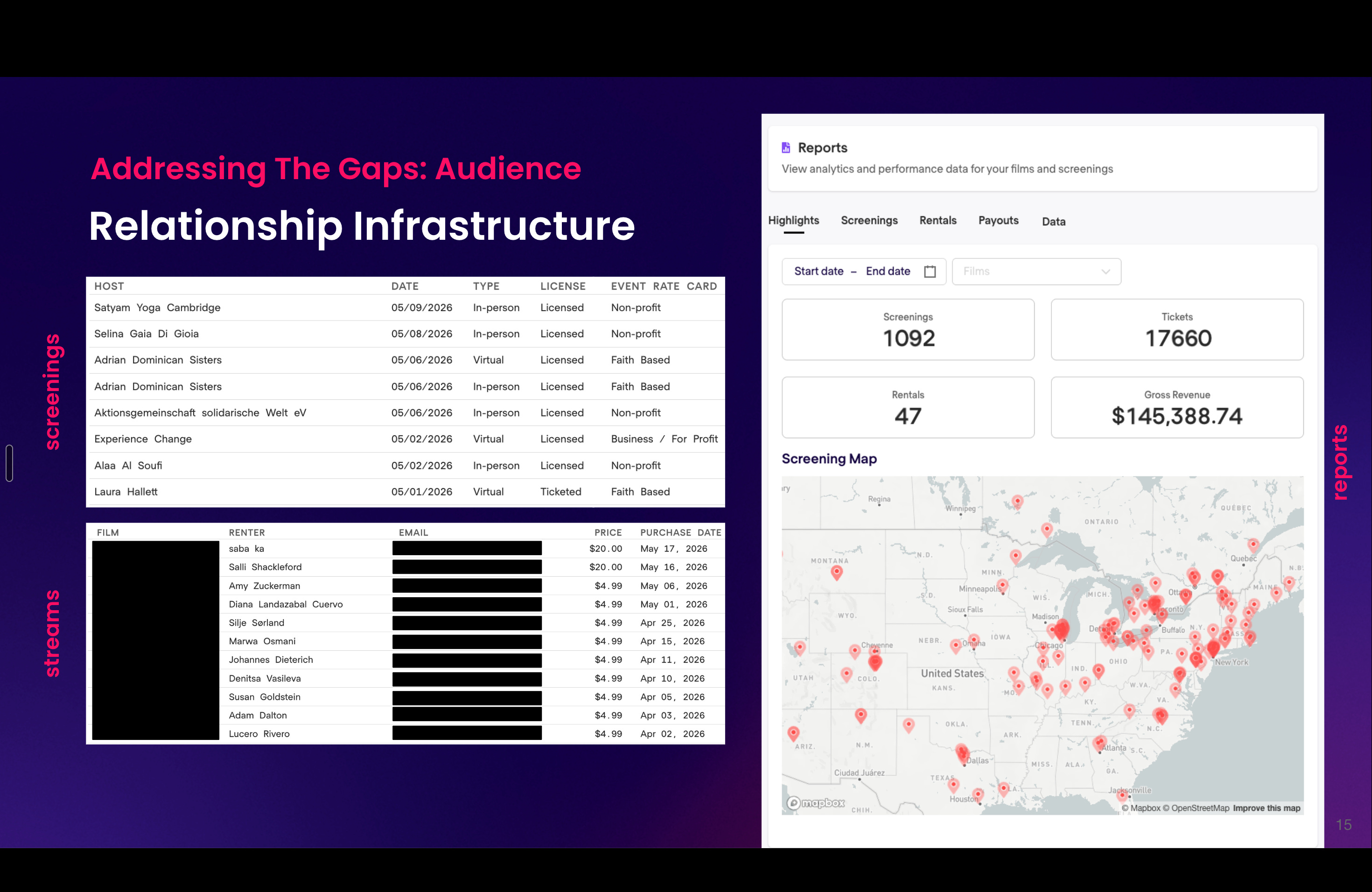
On what Kinema does differently: “We don’t want filmmakers to be platform dependent. We provide flexibility. We do what we need to to give back as much data as we legally can. So this includes real-time data on screenings and video on demand, audience host location data and exportable contact information, all with audience approval.”
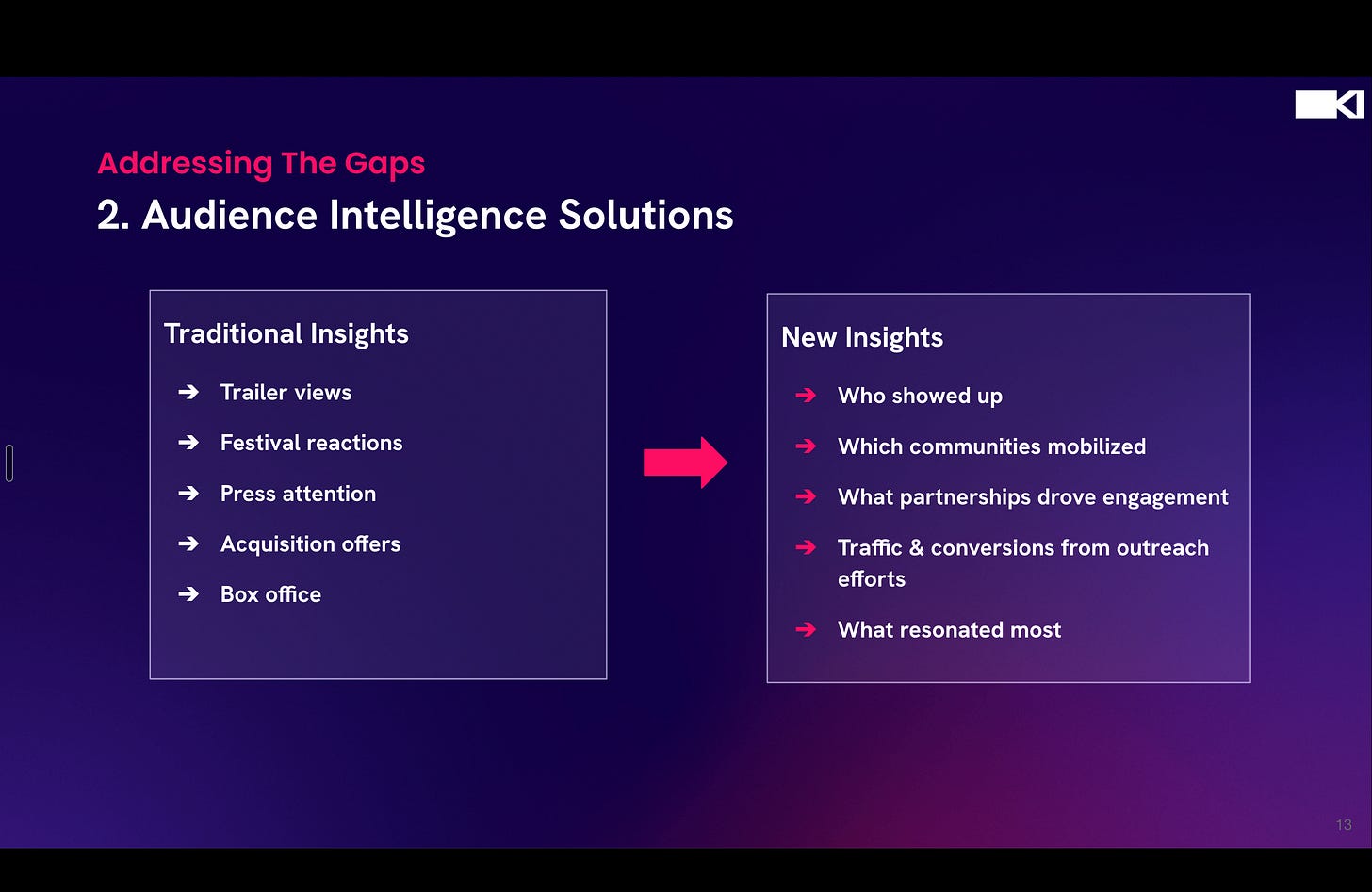
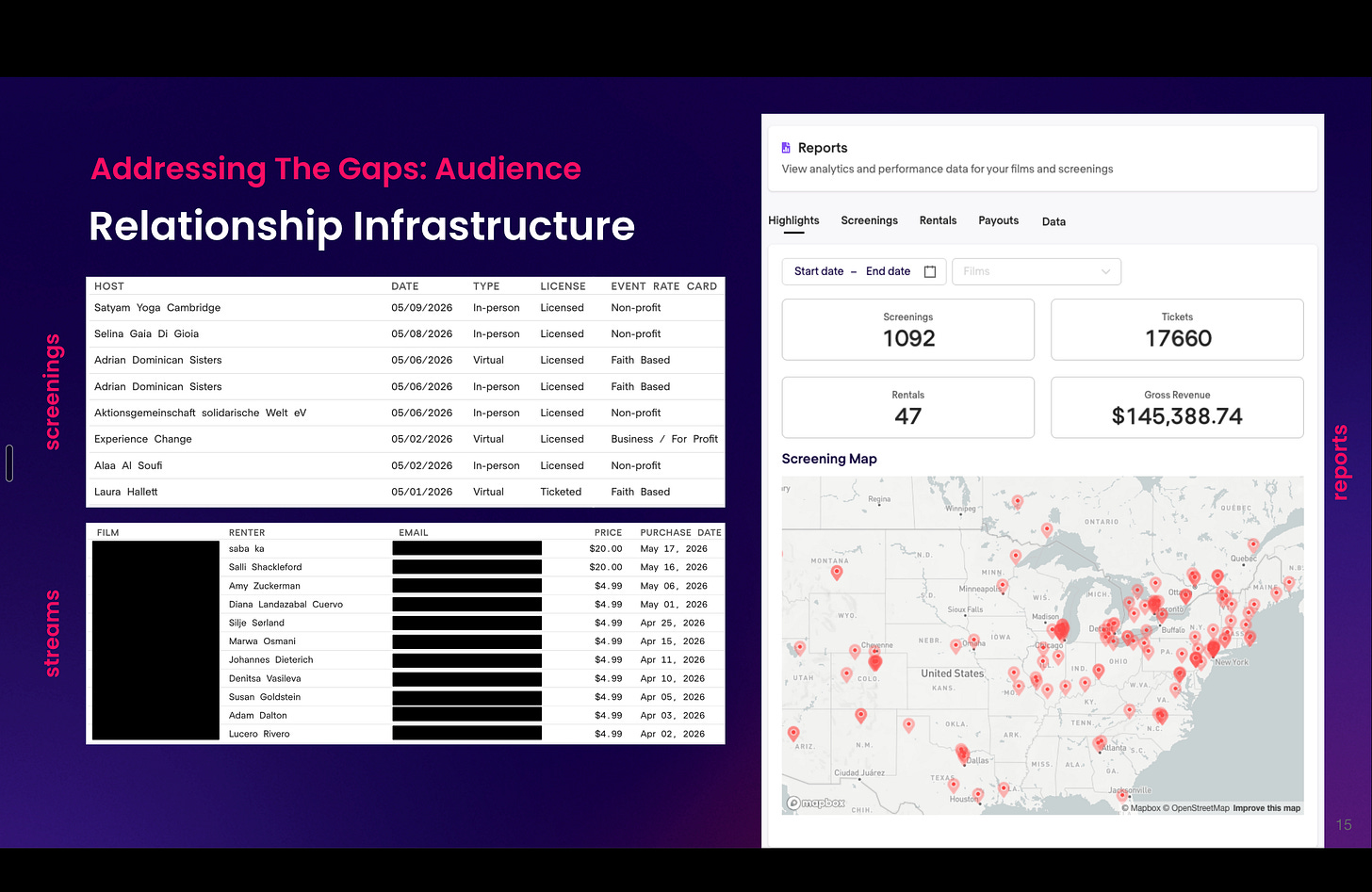
“Information empowerment is when we can understand where momentum is building around a film, who is showing up and what kind of partnerships are actually moving audiences.”
In an era when AI can do almost everything, relationships are what will set filmmakers apart.
“When all things are equal and anyone can have a platform and anyone can do that work, what’s going to stand out are relationships. So relationships matter more than ever.”
“The filmmakers that take the time to build real relationships with partners and audiences will succeed.”
Trust doesn’t come from leadership promises. It comes from aligned incentive structures.
“Trust doesn’t come from leadership promises and platitudes. Trust comes from us having aligned incentive structures.”
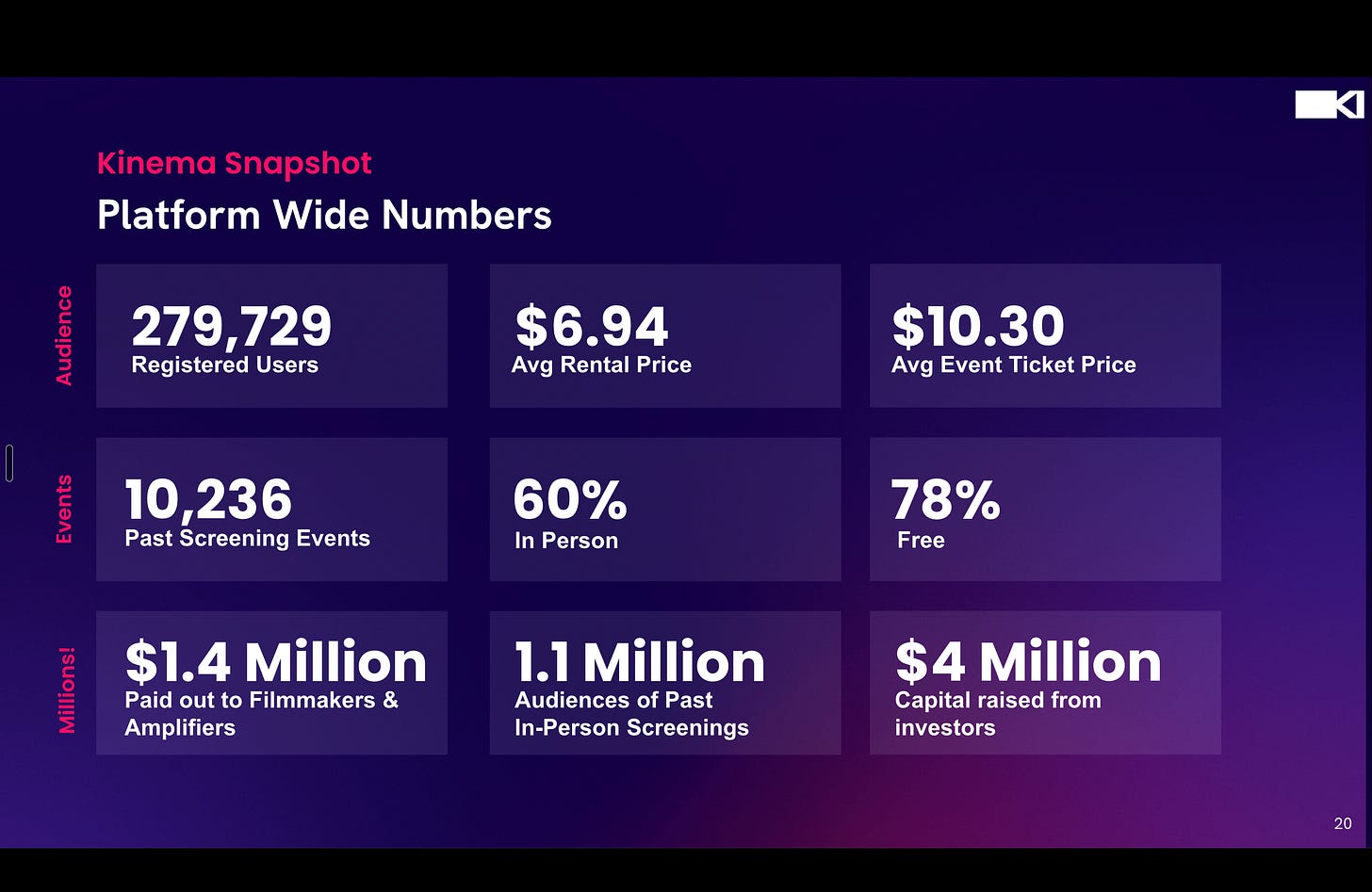
“Kinema only succeeds financially if filmmakers succeed. We are a revenue share model. This means if we don’t work for filmmakers and media organizations then we don’t work at all.”
“We don’t monetize through advertising because brand dollars require a lot of eyeballs. That drives a company to then focus on attention extraction.”
“We fundamentally believe that we are financially stronger through collaboration. If our goal were platform dominance, then we’d be approaching partnerships very differently or not at all.”
“Our investors are mission aligned. We have an incredible mix of backers that are venture capitalists and philanthropists and operators and filmmakers and film funders and they want us to financially succeed, yes, but not at the expense of our mission.”
“We [at Kinema] don’t go fast and break things. We go slow and we build things.”
The strongest ecosystems are built on collaboration, not consolidation.
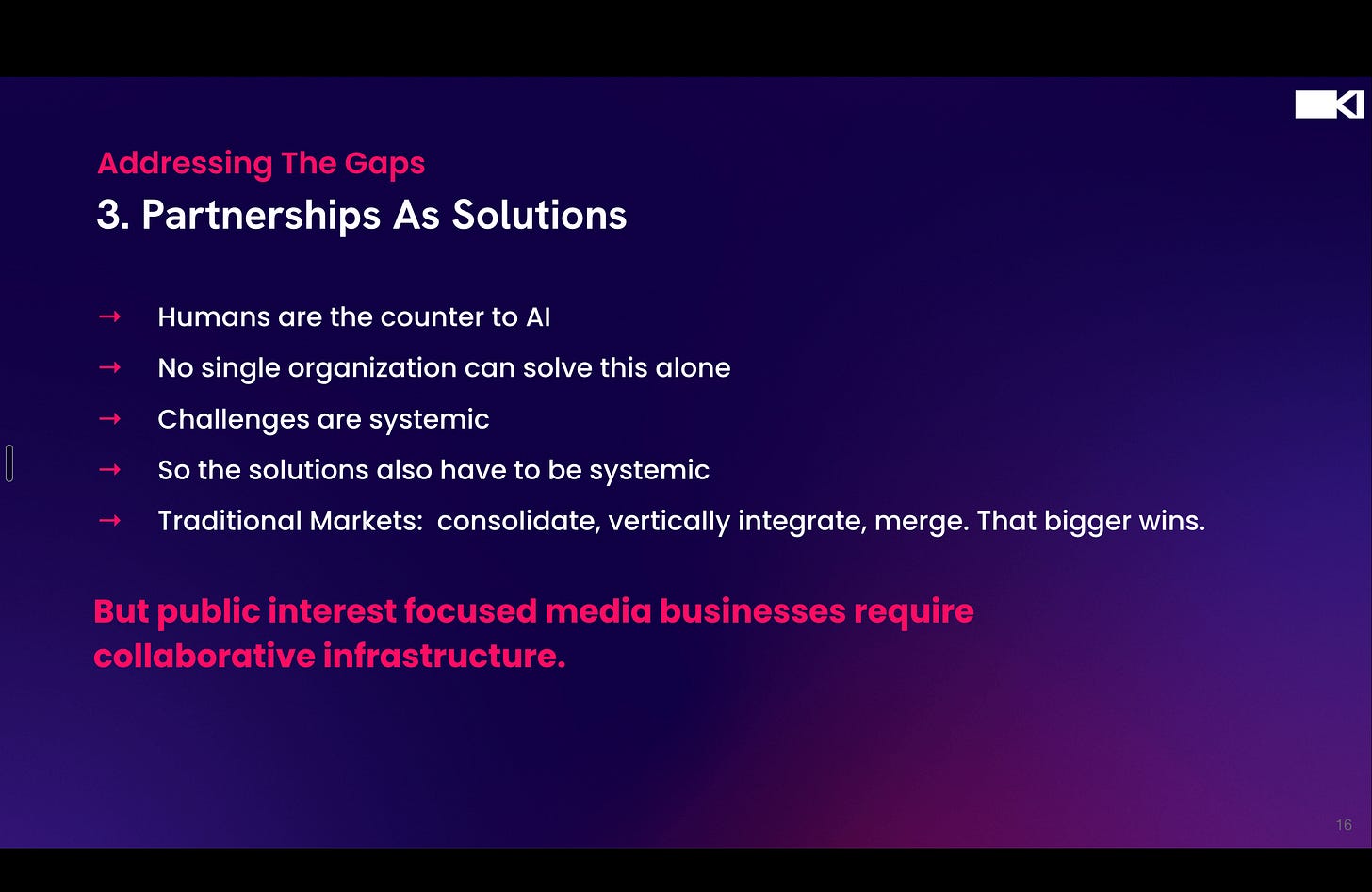
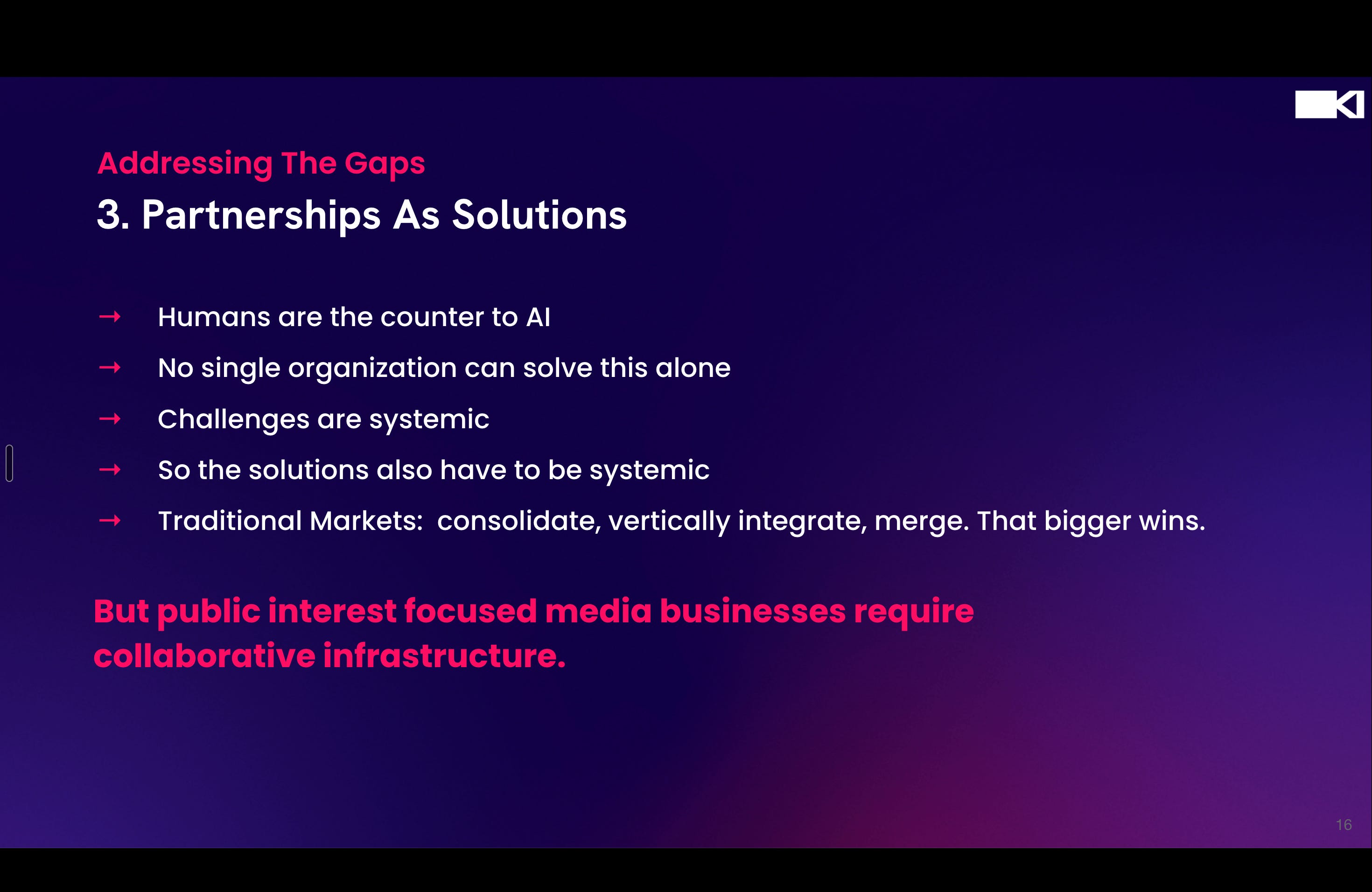
“Traditional media businesses believe in domination, consolidation, vertical integration, merging, and that bigger wins. But public interest focused media businesses require a collaborative infrastructure.”
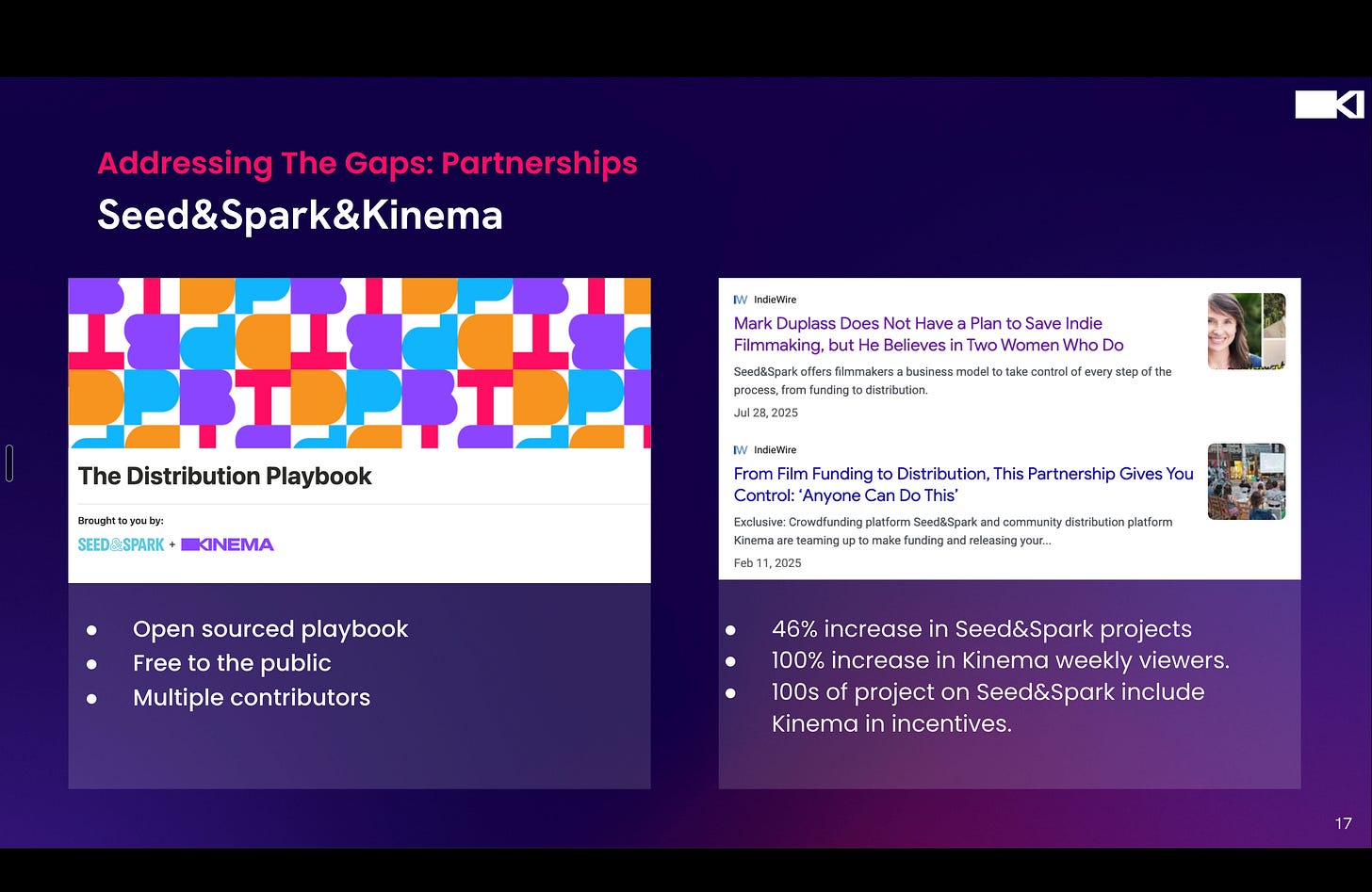
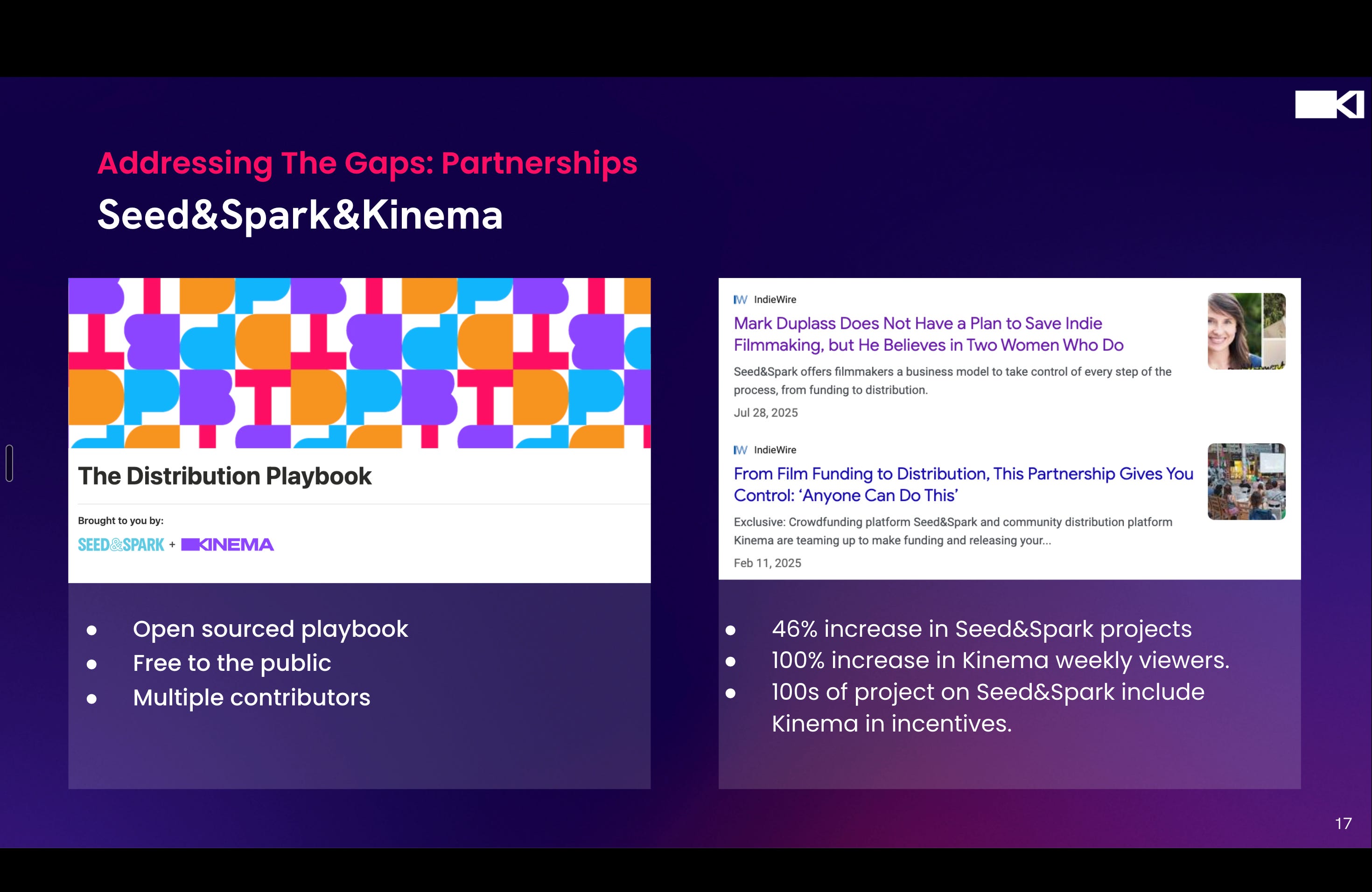
On the Seed&Spark partnership: “What proved even more powerful was a partnership — just a straight-up partnership committing to strengthening each other’s companies and the wider ecosystem together.” The results: a 46% increase in new Seed&Spark projects, 100% increase in Kinema weekly viewers.
“We are absolutely not doing it alone. And the strongest ecosystems are built with different players contributing their different strengths.”
Three things you can do right now.
“Support systems that empower not extract. When you support storytellers using platforms like Kinema you contribute to the infrastructure that can help the next storyteller.”
“Look for aligned incentives. Support organizations and platforms whose incentives align creators and audiences. The systems that centralize power, hoard information, or have over-raised venture capital will always struggle to align with public interest storytelling.”
“Strengthen partnerships between infrastructure organizations. Look for opportunities to strengthen the mesh between all of our solutions.”
Where to Find Christie:
LinkedIn: https://www.linkedin.com/in/christiem/
Instagram: https://www.instagram.com/christiemarchese/
In this episode, we cover:
(0:12) Intro
(0:53) Media Impact Forum
(1:51) Christie’s background
(3:15) What is Kinema?
(6:11) Four core values: ownership, control, transparency, and cash flow
(7:38) Addressing the capital challenge
(10:44) Addressing the information gap
(11:25) Markiplier and Iron Lung
(12:05) What Kinema does differently
(12:57) Why relationships matter more than ever
(14:06) Collaborative infrastructure vs. platform dominance
(14:40) The Seed&Spark partnership (and results)
(15:32) Other ecosystem partnerships
(17:09) Kinema’s numbers
(17:27) How Kinema thinks about investment capital
(19:04) Three calls to action
Referenced:
Media Impact Forum: https://mediaimpactfunders.org/what-we-do/the-media-impact-forum/
Felipe Estefan: https://shorensteincenter.org/person/felipe-estefan/
And his research:
Markiplier x YouTube: https://www.indiewire.com/news/analysis/markiplier-cant-sell-iron-lung-youtube-in-development-1235191638/
The Independence Partnership deck: https://docsend.com/view/a2mx64983dkjy65d
If you’re finding this newsletter valuable, share it with a friend, and consider subscribing if you haven’t already.
Comments
Nothing yet. Say the first thing.
Sign in to join the conversation.