
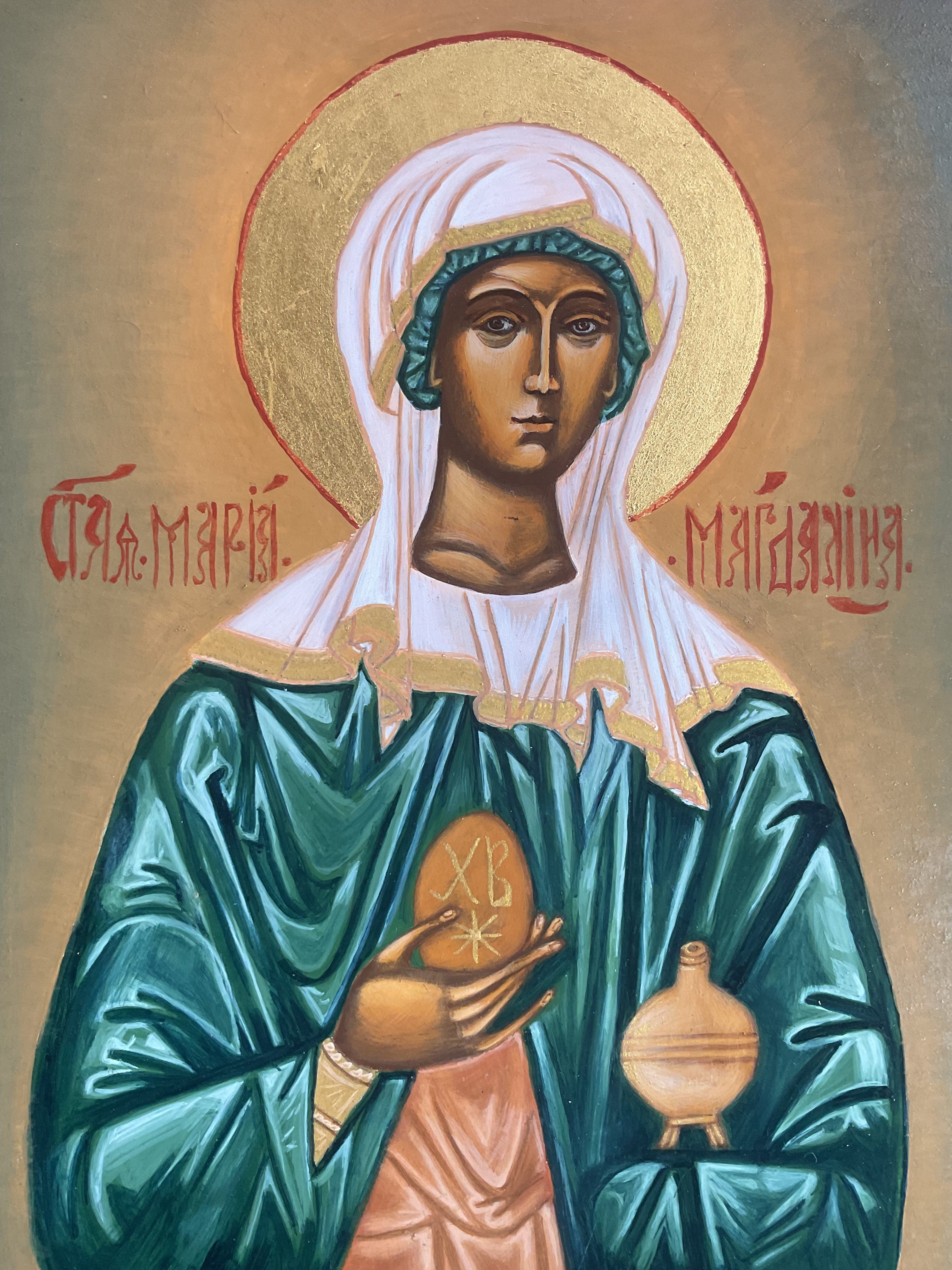
The Catholic Church celebrates the Feast Day of Saint Mary Magdalene on the 22nd July. As I listened to the daily prayers for that day on an app, it was the passage about Mary Magdalene arriving at an empty tomb only to be greeted by two angels and then Jesus himself. Both the angels and Jesus asked her: “woman, why are you weeping?”, “woman, why are you weeping?”
First she met the angels, sitting in the grave of Jesus, perhaps watching over what seemed gone. Then behind her, Jesus, whom she mistakenly took for a gardener, not recognising him until he called her name.
I was wondering about disappearances in my own life. Things that expire. Things that need letting go of. Things that change form and are reborn as something new. Things that just fade or things which I consciously choose to throw out.
What if there were two angels standing over all of these things? Angels of encouragement. Fierce angels holding the empty space. Compassionate angels. Angels of joy. Angels who knew that something greater is yet to come? Angels who recognise that letting go is a necessary part of living the good life?
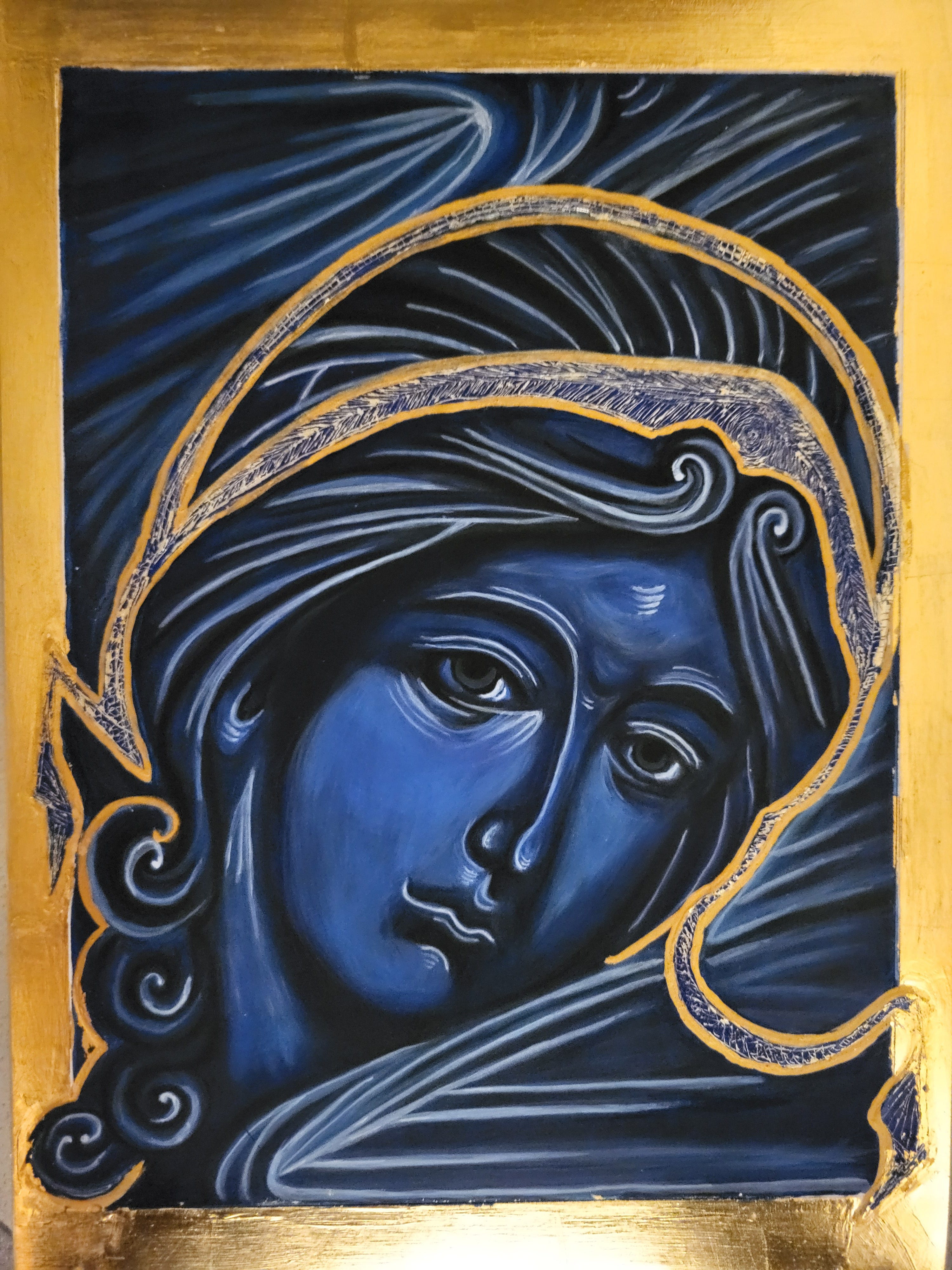
Mary must turn around to face the exit. She cannot stay staring at an empty tomb. Often we stay staring at the empty tomb, hoping that a miracle will appear in front of us. But what if the miracle is behind us? Like Jesus was behind Mary? What if turning around is the most courageous step we can take?
We gaze ahead but perhaps sometimes we need to look behind us.
Jesus called Mary by name and then she recognised him. But I think there have been times when my name has been called by something or someone, but I refused to recognise it was for me.
Sometimes we don’t know how to listen. Amidst the noise of daily life, there are so many distractions that our dreams and passions become part of the background din. And sometimes we have genuine duties and responsibilities to which we must attend. The Ignatian Spiritual Exercises make this clear. In processes of discernment we are called upon to reflect wisely on what is ours to do and what is not. Where we have commitments, we commit and do not run away. And where there are areas of over-commitment, areas in life where our commitments may be for the wrong reasons, we take our time, patiently reflecting and praying for that still small voice to guide us.
The Buddha spoke of the Five Remembrances. Five things he told his followers to remember each day.
The Five Remembrances (https://plumvillage.org/library/dharma-talks/the-five-remembrances-sr-thuan-nghiem-spring-retreat-2018-05-17)
Aging: I am of the nature to grow old; I cannot escape old age.
Sickness: I am of the nature to get sick; I cannot escape sickness.
Death: I am of the nature to die; I cannot escape death.
Change and Loss: All that is dear to me and everyone I love are of the nature to change. I cannot escape being separated from them.
Karma (Actions): My actions are my only true belongings. I cannot escape the consequences of my actions. My actions are the ground upon which I stand.
I believe these are excellent reflections. Remembrances on impermanence are vital in my view, accompanied by moment-by-moment awareness that change and loss and death are happening all the time in each person’s life.
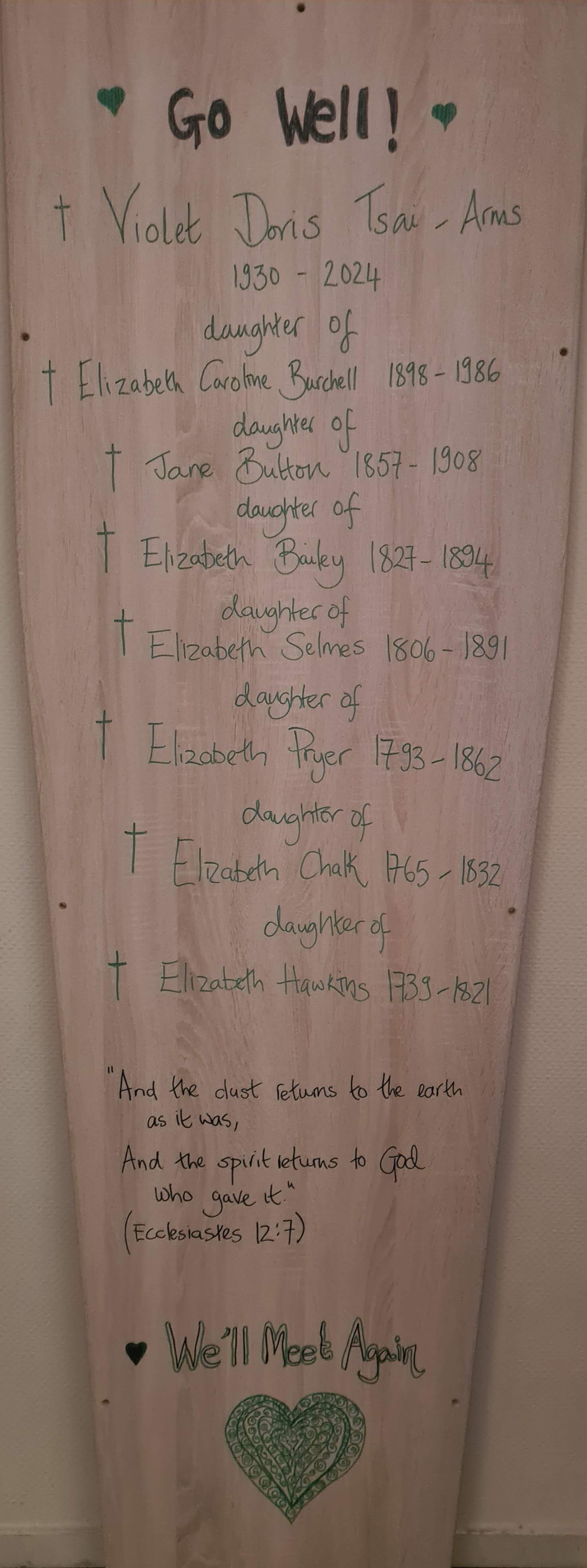
We all face the loss of loved ones at some point in our lives. We may face the loss of our own health and mobility. Friendships fade out. We are no longer attractive on the labour market. Or our financial situations leave us vulnerable. Our parents die. We feel deflated and lost.
Yet often we stand too long in the tomb of something that has died or is dying. We stay long past the expiration date. Regret. Resentment. Fear. Shame. Uncertainty. Anguish. Anxiety. Lack of perspective. The past often feels more comfortable than the unknown future. We want someone to blame. Ofttimes we actually don’t want to hear our name being called elsewhere.
We are products of the times and culture in which we live. Modern western culture is individualistic, full of distractions, likes to psychologise every action or event (often employing the label “traumatic”) and likes to appoint blame figures. We believe that regular human suffering and loss should not be happening to us. And we place extraordinary expectations on our parents, particularly our mothers, whose normal human faults are these days likely to be collapsed with parental abuse. What this does, is overuse the language of trauma and toxicity, shifting too much responsibility onto parents and too little onto adult children.
As we are regularly reminded in both the Buddhist suttas and the Christian Bible, impermanence might be the only lasting feature of the human experience. We cannot escape loss and pain. This does not mean that abuse of any sort is acceptable, but it does mean that all lives will meet disappointment, regret and hurt at some point or another. This is entirely normal.
I do believe, however, that certain forms of therapy encourage us to stay staring at the empty grave, stuck in a tomb of the past. They sustain the search for why things are as they are, rather than helping us to simply see things as they are and to turn around.
I have recently joined a walking group to help prepare for the Camino, which I will walk in September, from Porto to Santiago de Compostela, with a friend. Whilst not sure that this particular group is actually supporting my training, it is providing me an opportunity to meet old-aged pensioners and to hear some interesting stories.
A couple of days ago I had a conversation with a fellow walker, a retired priest. We talked about the decline in church attendance he has witnessed in more ‘liberal’ churches and the lack of resilience of young folk. Dogmatic and evangelical church attendance is nevertheless growing. We surmised that this is due to the fact that people want certainty. They like black and white systems of right and wrong. They don’t want a religion that sees questioning and doubt as healthy components: they want fewer questions and more certainties.
Much of the therapy and coaching world is offering solutions to problems. Nothing wrong with solutions. But sometimes the answers we gain become solidified into yet more rigid stories.
Presence and awareness can help us leave the empty tomb. They can help to increase our bandwidth of affective tolerance. I’m not saying stop searching for answers. I’m saying perhaps the answers aren’t always as straightforward as we would like or perhaps there are no (comprehensible) answers.
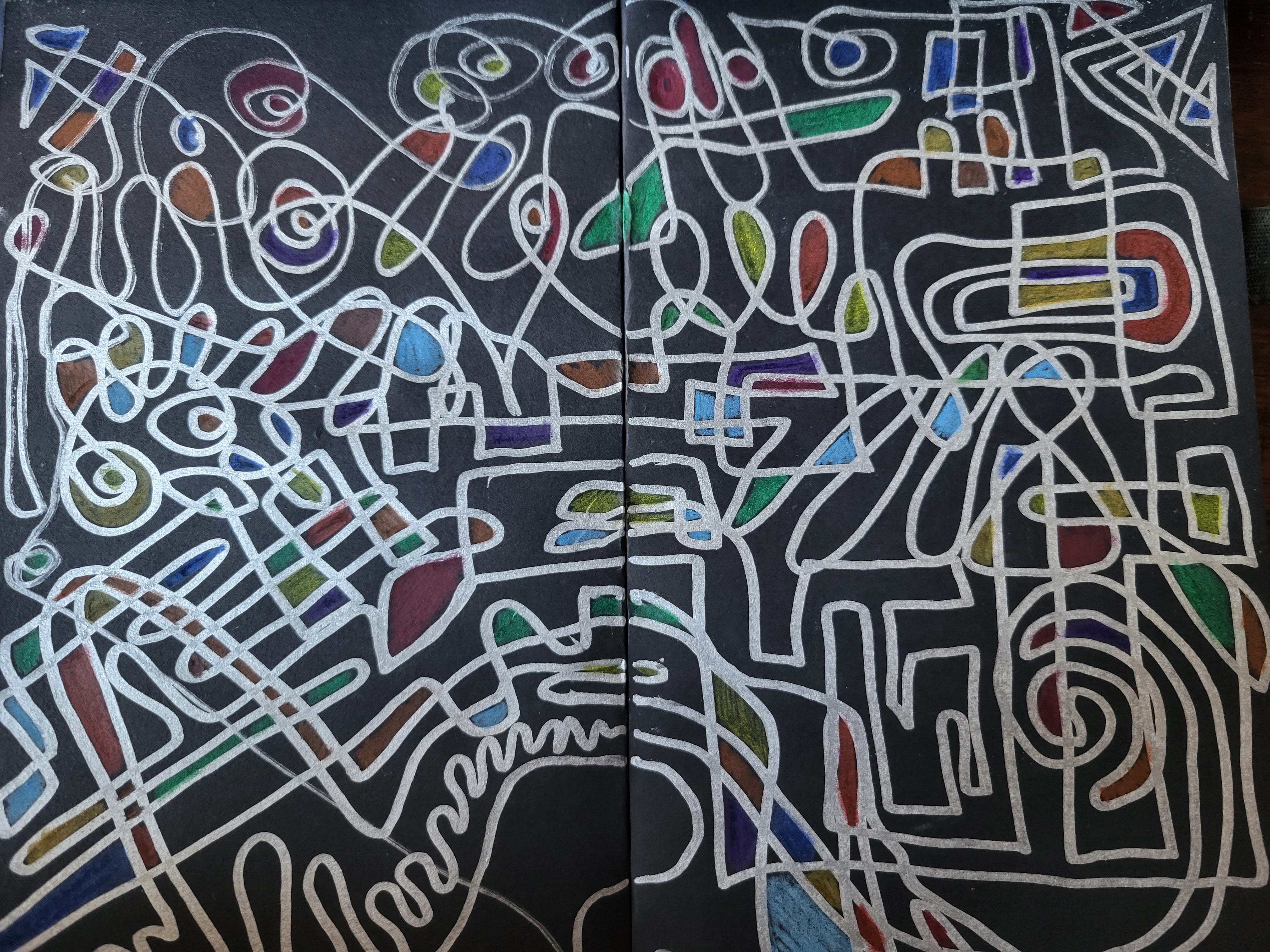
The ecology of affect invites us to consider that our emotions do not exist in isolation. They are part of a wider landscape of relationships, memories, histories, cultures and stories. Just as an ecosystem can become depleted when one species dominates everything else, so too can our inner and collective worlds become impoverished when one affective story takes over: I am a victim, someone must be blamed, someone must be wrong, someone must fix what has been broken.
The empty tomb is not only a place of loss. It is also a place of possibility. Mary Magdalene initially sees only absence. She sees what is gone. She does not yet see what is emerging. It is only when she turns, when she becomes available to another encounter, that she recognises the presence of new life standing behind her.
Spiritual maturity is not the absence of suffering, nor the achievement of a life without wounds. It is the widening of our capacity to hold many realities at once: grief and gratitude, responsibility and compassion, injustice and forgiveness, endings and beginnings. It is the capacity to remain present when life refuses to give us simple explanations.
The angels at the tomb do not explain why Jesus died. They do not offer Mary a psychological analysis of her grief. They ask a simple question: “Woman, why are you weeping?” They invite awareness. They invite her to notice where she is standing and what she is facing.
In the same way, the call of discernment, contemplation and presence is not necessarily to find a final explanation for every loss or wound, but to become attentive to the movements of life within and around us. To recognise which affects lead us toward greater freedom, love and compassion, and which ones keep us imprisoned in old stories.
Perhaps the question is not only what happened to me? but also what is being asked of me now?
Not only who is to blame? but also where is life calling me? What brings me life?
The Camino is, in many ways, a physical enactment of this turning. I will be leaving behind what Icannot carry. I will walk with uncertainty. I will meet strangers who might become companions, knowing that the path is not only a route toward a destination, but a practice of becoming attentive to what appears along the way.
To leave the tomb does not mean denying what happened there. Mary does not forget Jesus’ death. She carries its meaning differently. The empty tomb remains part of her story, but it is no longer the place where she lives.
This is the invitation before all of us: to honour what has died, to grieve what has been lost, let go of what no longer serves, and to listen for the voice that calls our name and invites us to turn around.
Comments
Nothing yet. Say the first thing.
Sign in to join the conversation.