
Hello all! Happy Sunday!
As a teacher, I had the privilege of witnessing a lot of different kinds of souls.
Perched at my desk, I had a bird’s eye view of relationships forming and breaking, social circles pulsing and dying, and every so often, if I got lucky, I witnessed pure magic.
Once I observed a Muslim student, Christian student, Agnostic student, Straight student, and Queer student sitting together, quietly discussing their different beliefs and experiences in the world. I watched in awe, wishing everyone could see this — the future of us!
Even though we live in such an integrated, diverse world, there is still messaging that goes like this: “I just don’t understand people who think ________. It’s immoral to associate with people who believe _________. I could never be friends with someone who thinks ___________.”
I’ve been in situations before where I’ve seen a friend post this on social media and I think, “Yes, you can! Because you’re friends with me!!!”
In the times that I’ve jumped to judgment before curiosity, I’ve also unknowingly isolated people in my life. In my rush to share what I think, I never stopped to consider what they think, and view it with compassion and a basis of respect.
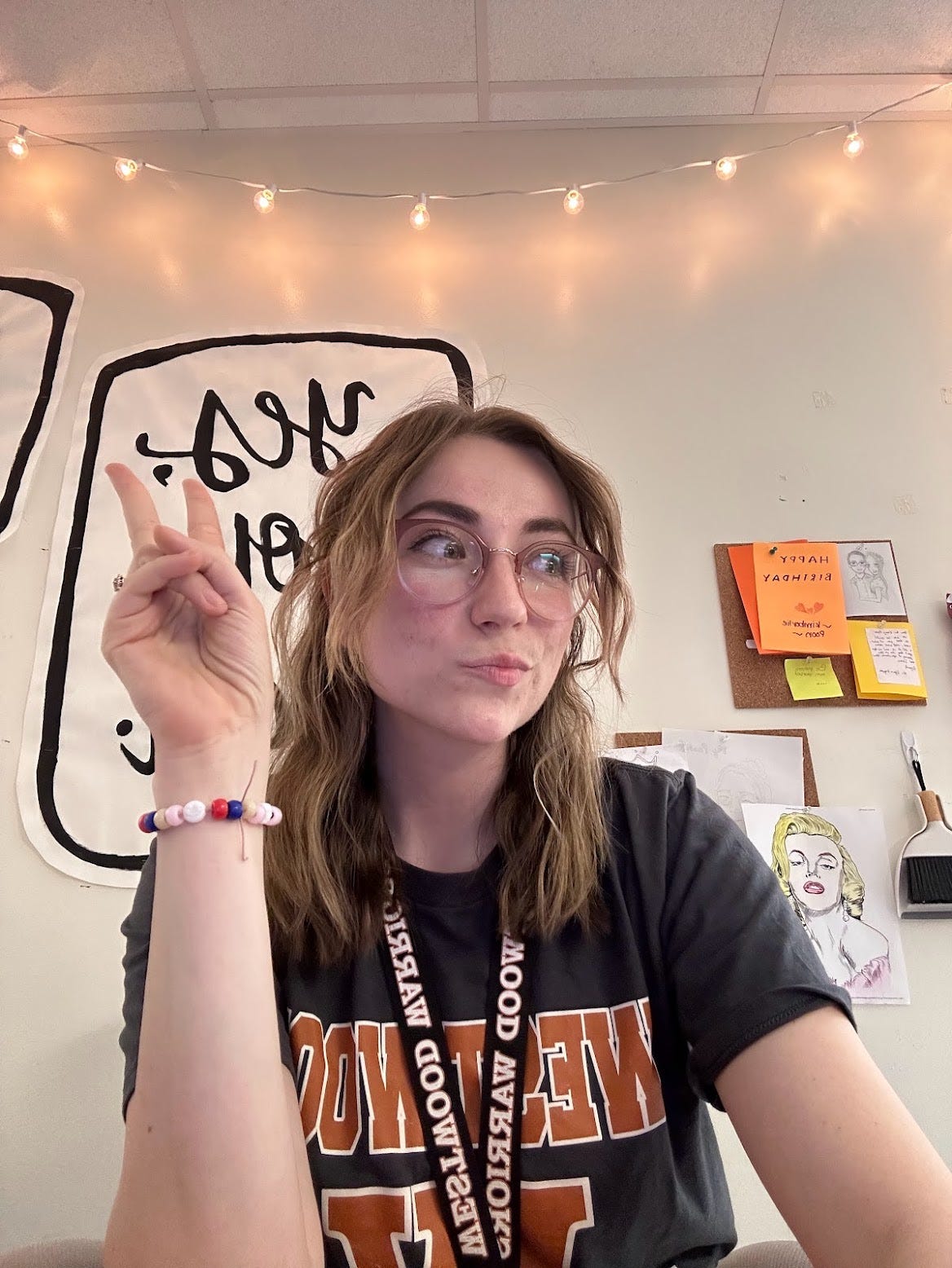

Three years ago, I posted an essay here on Substack for people in my life so they could know what was going on in Kimber-land. I didn’t realize at that time that the post would be interpreted as me “leaving the church” — I just wanted to share my thoughts and feelings about this crisis of faith that I was experiencing.
To my surprise, several family members, friends, acquaintances, and strangers reached out to me. Mostly sharing their love and support… which was so cool! As message after message came in, I felt held and loved and understood.
AND… I noticed that many of the people who reached out to me were people who I had *shudder* previously judged for their beliefs.
Suddenly, in an unexpected turn of events, I found myself in company with people who I’d thought had “taken the easy way out” or “loved the world more than God” or had “lost their testimony”… and I realized those things could not be farther from the truth.
I had to reckon with the realization that I had been wrong.
A family member who decided to leave the church years prior shared with me that leaving was the loneliest, hardest time of their life. I didn’t know that. I hadn’t been there for them during that time. I realized I had never asked any of my family members why they had decided to leave — I had just built up stories of my own assumptions. When I had heard they were leaving, I had taken it personally, and thought they wanted nothing to do with me or my family anymore.
Now, I was in their shoes. My whole world had been flipped upside down — wrong was right, up was down, black was white. I saw that they were hurt, sad, and brave, just like I was.
It can be tempting to keep the black-and-white mindset and place yourself in the “correct” side and others in the “erroneous” side. I see this tendency in LDS circles and ExMormon Reddit threads alike. I see it in politics, with sports teams, and assumptions about geographical places on a map.
History, geography, genetics, and culture inform people’s experiences which inform their beliefs which inform their viewpoints… it all ends up in a layered and complicated identity. If I don’t even try to get to the root of it all, and don’t give myself the opportunity to learn their point of view, am I not offering the nuance that I so desperately want others to have for me?
Humans have existed in tribes since the beginning of time. By recognizing who was a part of their clan, they would make sure that they had adequate access to resources — like shelter, food, protection from danger… you know, the things we need to survive.
Although we live in a more “civilized” society now, some of these instinctual fears are still engrained in us. Humans want to know that they “fit in” and are surrounded by people who won’t hurt them. Although we generally have access to the natural resources needed to survive, the underlying fear of not having a clan to protect us is engrained into the collective human psyche.
In the end, humans just want to feel SAFE. And it seems easier to feel safe when everyone agrees with you.
I wish it wouldn’t have taken the earth-shattering experience of going through a ‘faith crisis’ that opened me up to genuine compassion, respect, and understanding of the “other” — but I am glad I got here, anyway.

Interestingly, this reminds me of the story of Peter in Acts 10 and 11.
I’ve taken up reading the New Testament again. Scripture reading is a habit that has stuck with me from Mormonism, and something I still genuinely enjoy. I realize that I really don’t know the Bible too well — most of my study in the LDS Church was of the Book of Mormon. I especially do not know much about the New Testament aside from the four gospels. So I’m taking my time to learn the messages and stories of the New Testament, and hopefully take on the Old Testament later!
In Acts 10, Peter sees a vision of several kinds of animals and reptiles and birds of the air. The Lord tells him to eat, and Peter tells the Lord that he will not eat, because he has “never eaten anything that is common or unclean”. To this, the Lord replies, “What God has made clean, do not call common.”
Just then, three Roman men came to Peter and invited him to come to another Roman man’s home to teach his family and friends their message about Jesus. Although it was unlawful for a Jew to associate with anyone of another nation, Peter now suddenly understood his vision: “God has shown me that I should not call any person common or unclean.”
For first-century Jews, the issue was not merely ethnic prejudice. It involved deeply held convictions about covenant identity. Circumcision, dietary laws, Sabbath observance, and purity regulations kept the Jewish people socially separate to preserve the Jewish identity.
With all this in mind, Peter still went and taught these men and their families, saying, “In every nation, anyone who fears [God] and does what is right is acceptable to him.”
As he taught about Jesus of Nazareth, he was amazed because the gift of the Holy Ghost came to these people. He baptized them and stayed with them for several days.
When Peter came back to the apostles and other disciples of Jesus, they criticized him for his association and friendliness with the Gentiles.
Peter tells them:
“When I began to speak, the Holy Spirit fell on them just as on us at the beginning… If then God gave the same gift to them as he gave to us when we believed in the Lord Jesus Christ, who was I that I could stand in God’s way?”
I really love the distinction here — the difference between human understanding of God’s preferences and God’s actual preferences. How often do we think we speak for God when God’s will is something else entirely?
As humans, we look to categorize, to divide, to see boxes and tribes.
God in this story does something different — offering free gifts to all.
When I read this story, I see a God who is faithful to humanity — a God who doesn’t see social status or titles or riches, but who looks at our hearts.
Seeking to understand people who are different from us can make you feel vulnerable and exposed. It opens you up to the possibility of discovering ignorance in your cherished view of the world. And it’s not something that is done once — it’s a spiritual practice of curiosity, of generosity, of compassion.
As I saw with my students, as I see with my family, and as I read in ancient texts, there is so much to gain when we open ourselves up to people who are different than us, and so much to lose when we don’t.
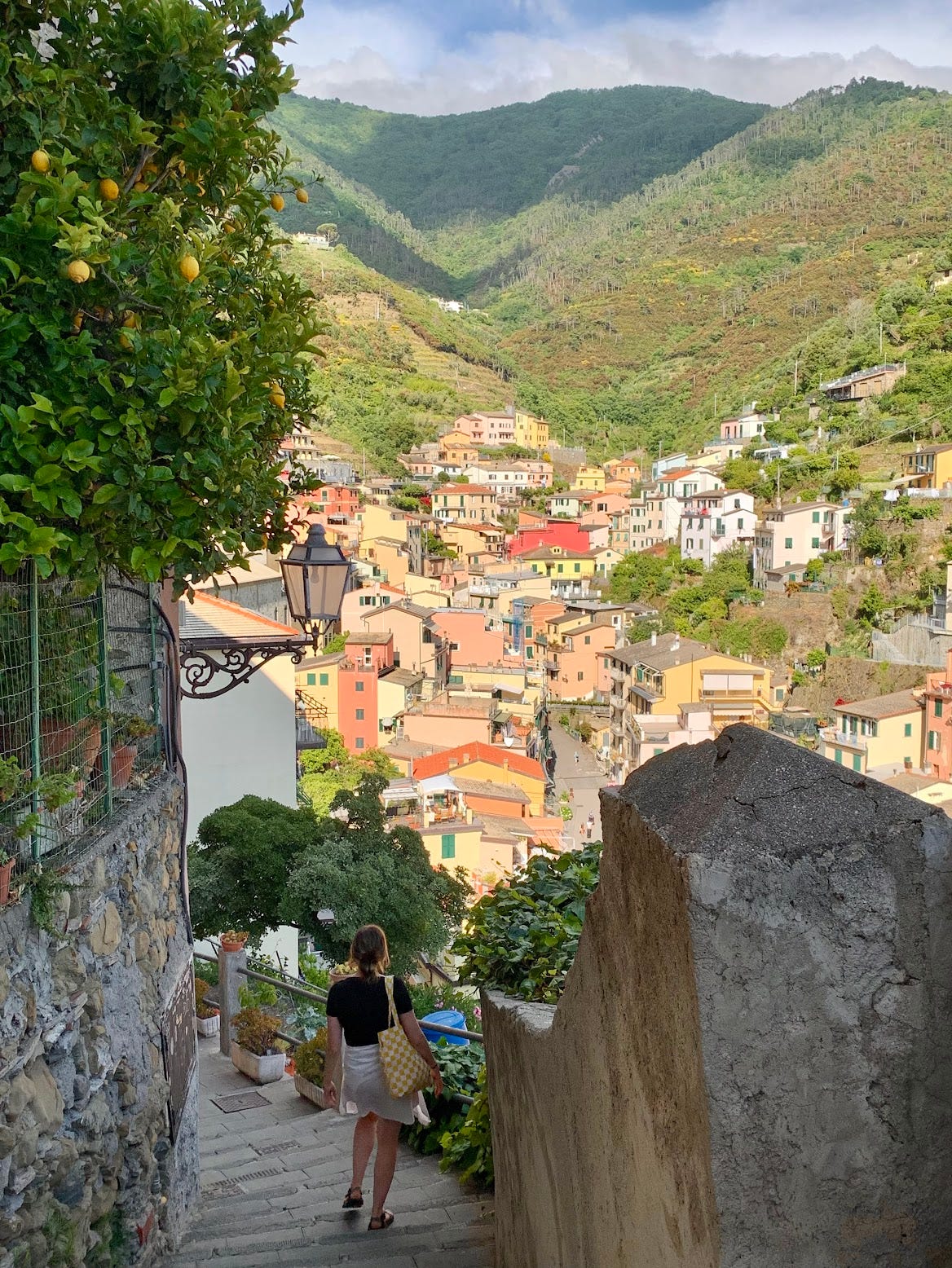
May we open ourselves to the world this week,

Below, you will find this week’s Sunday Somethings. This is where I share my recommendations, insights, and favorites for the week. Have something you’d like to share, too? I’d love to hear from you in the comments and in the community chat!


Text within this block will maintain its original spacing when published
From T. S. Eliot’s Little Gidding
We shall not cease from exploration
And the end of all our exploring
Will be to arrive where we started
And know the place for the first time.
**TRIGGER WARNING: THIS HAS TO DO WITH AI**
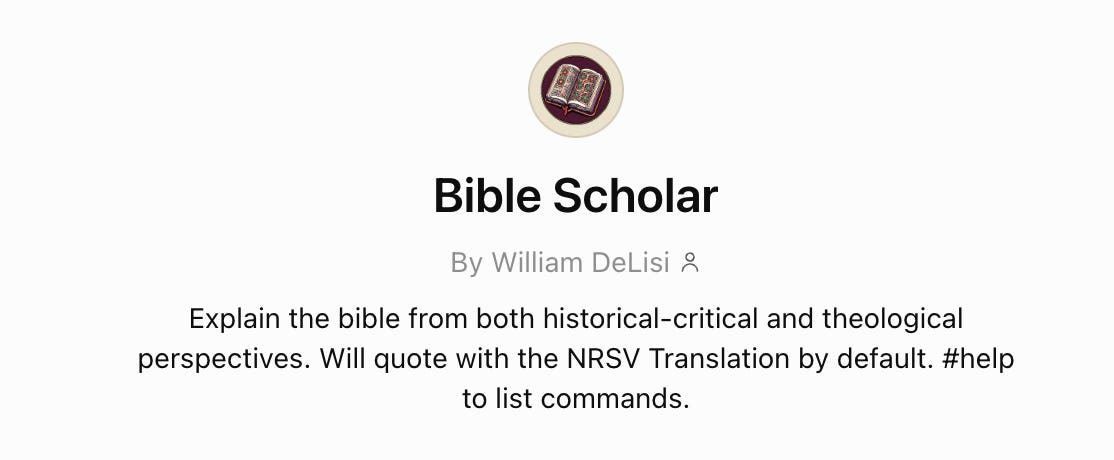
A tool I have enjoyed using when I’ve been studying the Bible is the Bible Scholar GPT — It explains passages from both a theological and historical-critical perspective. For me, it’s a great starting point to understanding the cultural and historical context around stories and passages. I have used this GPT for a few years now, and have gained many valuable insights!
Before anyone gets mad, of course it’s necessary to double-check important information. But this has saved me a lot of time googling and looking through books to get my Bible questions answered!
Speaking of AI… how are you all feeling about AI? I have an essay brewing in my mind about the intersection of AI and religion… but I’m still trying to sort out my thoughts about it all. I’d love to know what you all think about it! You can reply to this email or leave a comment :)

Some Substack articles I’ve enjoyed:
I found Lindsay Holifield from Notes on Substack, and her writing is so beautiful. She has an interesting story about growing up in a strict Christian environment, deconstructing, and now has come back to Christianity. She has a complex and interesting story, and I really like some of the posts she has looking at Bible stories more closely.
Today’s essay from Jim Palmer on the World Cup, titled “When the World Remembers Itself” is a great reflection on humanity at its best — here is a part that stuck out to me:
The World Cup will end. The stadiums will empty. The songs will fade, the flags will be folded away, and our attention will once again scatter into millions of personalized realities.
But for one brief month, humanity practiced something we desperately need. We remembered how to inhabit the same world.
Thank you, thank you for reading Something for Sundays! If you enjoyed this post, please share with someone you know who might enjoy it too! ♥
An essay I wrote when I started to question my beliefs
My thoughts about cults
Different ways of praying
30 years worth of life lessons that nobody asked for
Seeing the sacred in the ordinary
Learning to trust (because what other choice do we have, really?)
Why some things will never be the same post faith deconstruction
No posts
Comments
Nothing yet. Say the first thing.
Sign in to join the conversation.