
Before we dive in: tap that little heart at the bottom of this post so new readers find their way here. I know. The algorithm is a whole thing. I don’t make the rules. I just cooperate with them 💛.
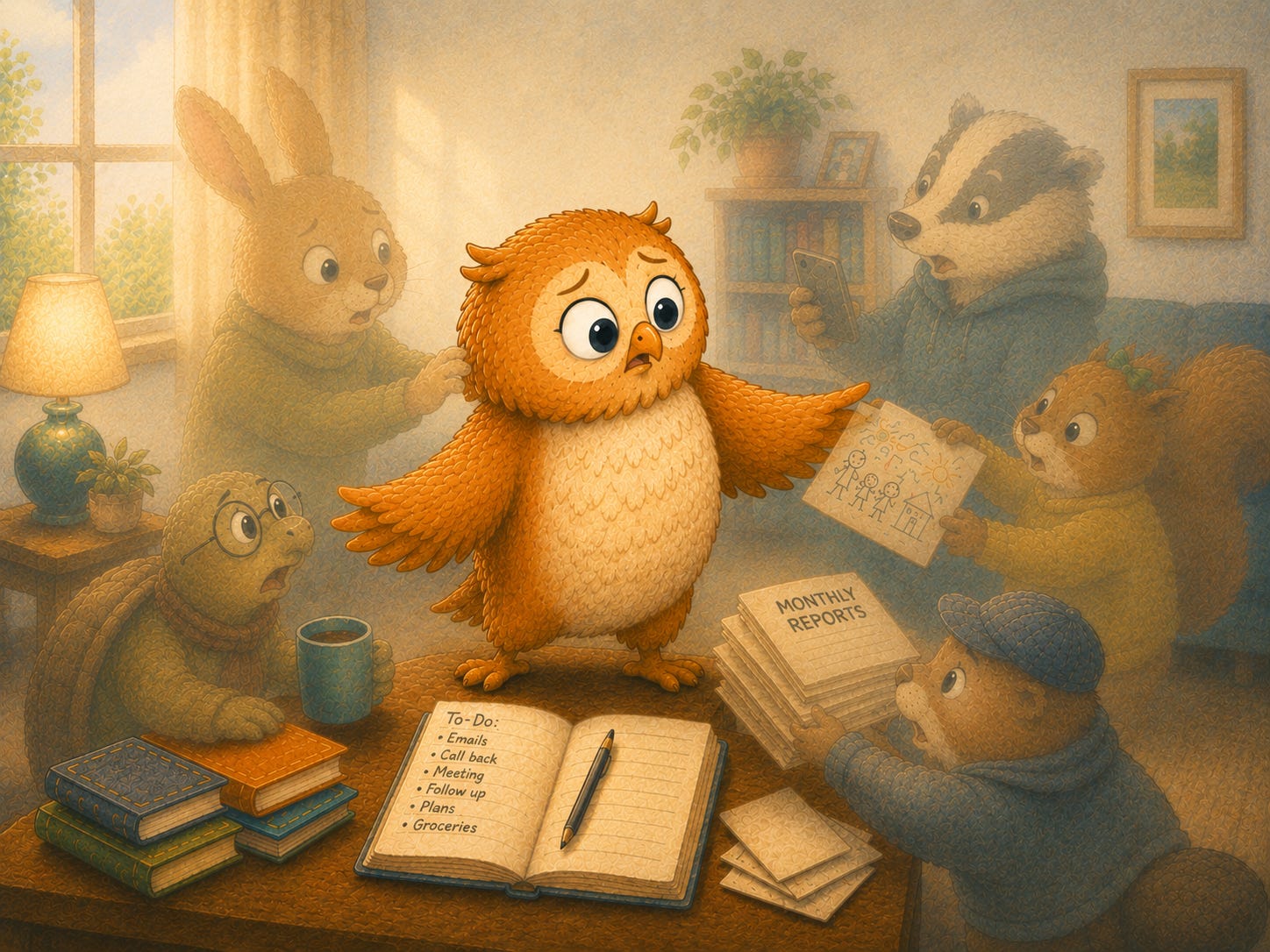
There is a specific kind of exhaustion that we don’t talk about enough. It's the exhaustion of being the person who handles things. I'm not just talking about logistics. I'm talking about handling people and tension and things that would have blown up if you hadn't quietly absorbed them first.
You’re the one who reads the room’s emotional temperature before entering. You’re a pro at immediately clocking everyone’s mood, so you shrink a little bit each time your partner is quiet, and you decide to skip the thing you needed to talk about.
Maybe your kid’s frustrated, so you adjust your tone and avoid talking about the way you expect to be treated. Or your mom piles one more thing on your already full plate, and you agree to just do it because it’s easier than setting a boundary.
You probably know exactly what this looks like in practice because you’ve spent your life studying the emotional temperature of everyone and everything around you before you say or do the thing you really want to say or do. The trick you learned early on is to read what the moment needs and adjust to become that before anyone even has to ask.
So you got fluent in making yourself easier to be around by softening your frustration with humor and turning your certainty into a question instead. The room stays calmer when your needs stay quiet, and the capable, low-maintenance one who holds everything together doesn’t look like they need anything.
You look fine. You look like you have it handled.
The ones who fall apart get the calls and the casseroles and the “how are you really doing.”
The ones who hold it together get told they’re so strong.
The cruel irony is that you don't get the care you need, AND your not-needing somehow gets misread as not-caring. The assumed lack of caring becomes your fault, too. Fall apart, and you're finally seen; hold it together, and you're the one making other people feel left out.
The difficulty is that survival strategies don’t stay confined to the situations that made them necessary.
The anxiety of disappointing people is loud.
The resentment of managing a life around their comfort is quiet.
The quite one does more damage.
At some point — and there’s rarely a specific moment you can point to — the calibration stopped being something you did consciously and started being something you just were. The part of you that dimmed your needs to avoid rejection got so good at its job that you stopped noticing it.
But you never stopped having needs. You simply stopped trusting that you were allowed to express them.
I think some of this starts in childhood, when you realize there’s no room for your emotional reality if it conflicts with someone else’s.
In my case, there was no room for my emotional reality if it conflicted with my mom’s.
My mom never really got over my parents’ divorce, and her feelings of anger and resentment dominated our atmosphere. If she was hurt, disappointed, overwhelmed, or upset, the emotional temperature of every room was reorganized around her experience.
She became the victim of her circumstance, and without consciously deciding to, I started managing her stress and her moods. Instead of simply being allowed to need something, I learned that my feelings create problems when they weren’t in line with hers. I made parts of myself smaller so I wouldn’t be consumed by her emotional gravity.
If my mom was the victim, I became the anti-victim. I wanted to be the opposite of the victim to stay psychologically separate from her. So I learned to be self-sufficient and highly responsible. And hyper-aware of everyone else’s emotional states.
For a young kid, that’s a lot of responsibility. And I think that’s where a lot of my anger comes from. It’s hiding the grief of always assuming that my needs are inconvenient and that it’s up to me to manage everyone else’s.
At some point I just stopped allowing myself to fully need, fully grieve, or fully receive support.
I never had a way to name this specific type of vigilance until after my first husband died and my grief got buried again. I internalized that my needs are a burden, so I became the hyper-capable widow. I did everything myself. I took over running my husband’s business, I solo-parented my kids, and I created and managed a website for widows, all while avoiding asking for the one thing I needed most: a little bit of help, please.
I was so busy being the one who was “strong enough” to endure the shit show I was living that my needs took a backseat again. I pushed through for years until I hit the proverbial wall that made me stop and turn around.
When I couldn’t move forward, I was forced to look behind me and finally see the trail of collective grief I had buried for decades.
Holy crap.
I never needed too much. I realized I never let myself need anything at all.
Unearthing the grief of so many buried emotions has been a work in progress. It’s been brutal, I’m not going to lie.
Because the scariest thing for me to admit was that I needed things.
Now that I have, it’s also been the most liberating.
What makes this particularly hard to see is that the person who holds everything together doesn't look like someone who's struggling. They look like someone who's thriving.
Because what you’ve buried isn't the loud stuff. You don’t always bury your intensity, ambition, or directness. What gets exiled is quieter and, in some ways, more dangerous: your need for care and assistance. You don’t believe you have permission to not be okay. You don’t understand the ability to receive care without immediately redirecting it toward someone else.
Carl Jung wrote about the shadow or the parts of ourselves we exile because we learned they were unacceptable. For a lot of people, the shadow holds things that feel too big or too much. But for the person who holds everything together, the shadow holds something that feels too inconvenient.
Asking for help.
I’m not talking about the practical kind. Like, you’re fine asking for help moving furniture. The kind of help that’s harder to ask for is: I am not okay. I am carrying more than I should be. I need someone to actually show up for me.
You buried that need so thoroughly, and so long ago, that you stopped recognizing it as a need. What it looks like instead is low-grade chronic exhaustion. A simmering resentment with no clear target. And the specific loneliness of being surrounded by people who love you and still feeling like no one really sees what you're carrying.
The shadow holds what's been exiled. And what you've exiled isn't dramatic. It's just the simple, human thing you were never allowed to ask for.
There’s a question underneath the over-functioning label that’s worth getting specific about.
Not am I too needy? But who taught you that needing things was dangerous — and who benefited from you never finding out.
This isn’t about assigning blame. It’s about noticing that the people who relied on your capability often did so precisely because it cost them nothing. You managed, absorbed, and delivered. They didn’t have to show up. Your competence made their absence invisible.
What’s genuinely hard about this is that understanding it doesn’t automatically undo it.
You can read every word of this, agree with all of it, and still find yourself absorbing the thing you should have said no to. You can justify skipping what you needed to say because the timing felt wrong. And be left waiting to be asked how you're doing by someone who assumes you're fine.
Understanding is not the same as inhabiting.
There’s still some work to do.
Asking yourself the question "Are my needs too much?" assumes there’s an acceptable limit and you’ve exceeded it.
The more useful question is who set the limit and benefited from you staying below it.
FOR PAID SUBSCRIBERS
Reading about this can bring clarity. Practicing it is what creates relief.
I created a Practice Tape Script for this piece as a love letter to yourself, the one who learned to calibrate. It’s a chance to actually feel what it’s like to begin accepting your needs again.
Not as a pep talk.
As a way to use your own voice to speak directly into what’s happening, so you’re not stuck inside it.
Paid subscribers can find it here.
If this hit a nerve, click the circle-arrow icon inside the app to restack with a note and share why it matters
Comments
Nothing yet. Say the first thing.
Sign in to join the conversation.