
A quick note about AI: I use AI as a writing partner. It helps me brainstorm, challenge ideas, and even tells me when I’m making a terrible analogy.
But it can’t live my life, form my opinions, or tell my stories.
That’s still my job.
Sometimes you find yourself in a position you don’t want to be in and you rack your brain trying to figure out how you got there.
This place you don’t want to be in has lasted months, years, or even decades of your life. It could be a literal place like a location. Or it could be a job, relationship, or even a coping mechanism.
Either way, you’re uncomfortable in this place and figure something must be off or wrong for it to feel so unnatural. But you stay because you don’t know how to change it. Or even if you do know how, you can’t make yourself do it.
So now you think something is wrong with you because you’re doing something you don’t want to do or staying somewhere you don’t want to stay like your feet were poured into cement blocks.
You start believing that if you just work harder, love them better, or stay busy enough to outrun the doubt, you'll eventually become the kind of person who fits the role.
The uncomfortable feeling makes sense, but the conclusion doesn’t.
Feeling stuck is less of a moral failure and more about that part of you that believes effort creates belonging.
I was stuck big time after my first husband died and I inherited his business.
He sold chemicals to the metal processing industry in Detroit and when he was diagnosed with a terminal brain cancer, I took over running all operations. After his death a year later, I kept the business going because I felt like it was somehow keeping his memory and his legacy alive.
I hated every minute of it.
But I told myself it was the right thing to do.
I told myself that for eight years.
The problem wasn’t just that I knew nothing about the business. It was that every part of it still felt like his. Even though preserving his legacy was a noble idea, I was also reminded every day that he was dead. And I was left with a business I didn’t want.
I’m a writer.
I don’t sell things.
I especially don’t sell chemicals I can’t pronounce to men who had spent decades in an industry I barely knew existed.
Every sales call felt like an audition for a role I was never meant to play. I'd sit in the parking lot before walking into a shop, rehearsing what I was going to say. Then someone would ask me a question about the chemistry of a product I didn’t understand and I'd silently pray it was one I could muddle through.
Every day I wondered how much longer I could keep pretending I knew what I was doing.
Somewhere around year two, a friend who was good at sales listened to me complain about how much I hated the sales aspect of the job, how unqualified I felt, and how I didn’t understand the customers or the chemistry or the schmoozing.
She shrugged and said “there’s no real secret to sales. Half the battle is just showing up.”
I’ll admit I was really pissed at first. Like, are you freaking kidding me? You’re going to reduce everything I’d been thrust into with a “meh…just show up and it gets better?'“
At the time, I thought she was just talking about sales.
Now I think it was actually about something much bigger.
For years, I assumed those eight years were about learning to run a business. I thought I was learning how to become better at sales or proving to myself that I could learn a new skill, no matter how difficult.
Looking back, I don’t think they were about any of those things.
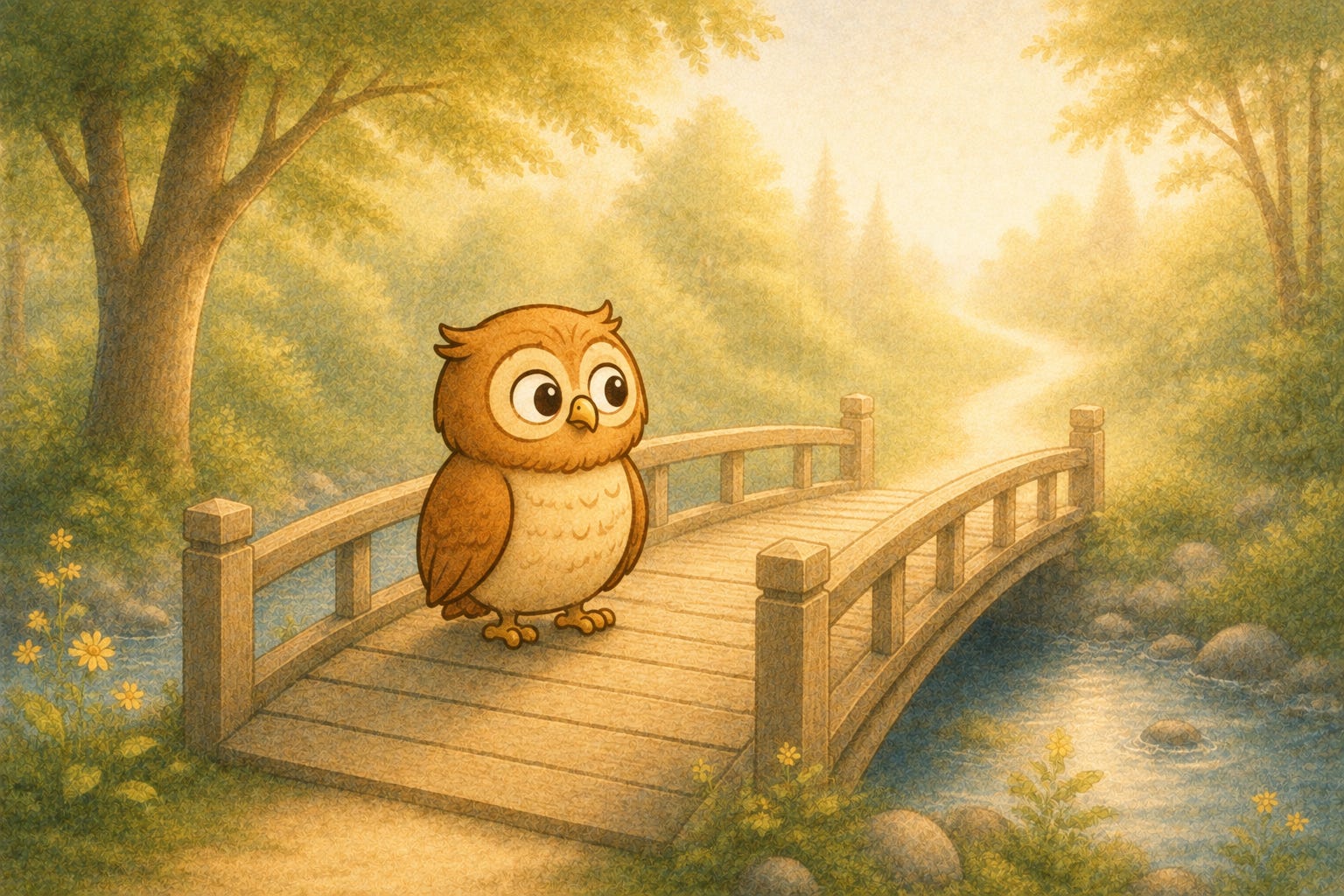
They were about crossing a bridge I couldn’t recognize while I was standing on it.
I kept trying to become someone who fit the role. What I didn’t understand was that I didn’t have to. Some roles are simply the shape life asks us to take for a while.
The mistake is believing the role has to last forever.
Carl Jung called this individuation. We think the problem is figuring out how to fit into a role or get better at relationship dynamics or learn better coping mechanisms. Jung would probably say the work was something else entirely. Not becoming someone different, but becoming more fully yourself by realizing your unique potential. That happens through integrating your inner truth—what you’ve felt, needed, feared, and wanted but may have learned to hide or ignore.
I had treated the mismatch between who I was and what I was doing like it was a problem to solve. Get better at sales. Feel less like a fraud. Decide whether I was a businesswoman or just a writer wearing a business suit.
What I learned was that I could be both, without needing either one to cancel the other out.
I never became a great salesperson or woke up excited to learn more about industrial chemicals. And I never stopped feeling more like a writer than a business owner.
And maybe that’s the point.
I never stopped being a writer.
While I was running my dead husband’s business, I started writing more about grief.
There were parts of my sadness and confusion and overwhelm I could only get at on the page.
One essay became another. Eventually those essays became an online educational platform I built for widows.
I created the business I wanted to run while I was running the one that I didn’t.
The writing that felt most like “me” continued underneath the role that felt least like me.
I spent years trying to reconcile those two identities.
Now I understand that they didn’t need reconciling.
One was who I was.
The other was simply the chapter I was living.
Eventually the chemical industry changed. Lots of the little businesses like mine were getting stomped out by the big guys. I could see the end was near for my participation in this crazy experiment. And one day I realized something that really surprised me.
Keeping the business running wasn’t keeping my husband alive in my mind anymore.
Maybe it never had.
Maybe it had been keeping me alive by giving me something to hold onto until I was ready to let go.
So I sold it.
The bridge had done its job.
A few years after that I sold the widow business.
I don't think I could have imagined selling the widow business if I hadn’t sold the chemical business first.
We spend so much time trying to decide whether we belong where we are.
If the role feels awkward or unnatural, we assume we’ve taken a wrong turn or stayed too long in the current situation.
But what if staying longer than you planned isn’t always a mistake?
The thing most of us miss is that you can't know what a thing is teaching you while you're still inside it.
I spent eight years doing something I never became good at.
What I became good at was facing uncertainty in a way I never had to before. My husband’s death was just the beginning. It was also running a business, showing up for sales calls, not knowing the answer to a question, and living through it all anyway.
And turning a lot of that into the self-trust writing I do now.
If you’re questioning your place right now, whether it’s a job or a relationship or something else, the thing that doesn’t fit you might still be shaping you in ways you can't see yet.
Paid subscribers get the part that comes after the insight: practical tools, workbooks, exercises, and other ways to actually do something with what you're reading.
Like this: Questioning Everything You Already Decided, a Self-Trust Script for those moments when your brain starts reopening a decision you've already made.
See what else is in the ➡️ Premium Content Library for paid subscribers.
Thanks for reading Ancient Wisdom for Anxious Minds! This post is public, so feel free to share it.
Comments
Nothing yet. Say the first thing.
Sign in to join the conversation.