
Watermill
I’m sitting on a plain wooden bench, just a plank parallel to the ground, with a perpendicular slab of wood supporting my back. It’s simple and eloquent and purposeful, like a Shaker design remade by a Memphis designer. It’s on the grounds of Robert Wilson’s Watermill Center on Long Island, and if it wasn’t designed by Wilson himself, it is an expression of his most fundamental values.
I’m sipping two fingers of bourbon out of a plastic cup. I don’t really like bourbon, but it’s courtesy of Van Cleef and Arpels and who am I—an impoverished freelance critic—to turn down such generous hospitality. That hospitality is one of the features of this year’s summer festival at the center, “limitless time,” the first since Wilson died last July 31, and also the 50th anniversary of the premiere of Einstein on the Beach (July 25, 1976). It’s mind-boggling to me that for fifty years now we’ve had an opera world and a larger world of performance struggling to catch up to the space-time continuum Einstein opened up, with barely anyone getting within sight of it.
I think about Andy Warhol saying “New things are always better than old things,” and how that’s been taken out of context of his work and positioned as a slogan about the creative arts and a fetish for newness. There’s a barely hidden anxiety about new ideas, if they’re even a possibilty anymore, and shiny new facades often hide stale, ordinary contents (and not just in art; the constant rebranding of old ideas with new euphemisms and every single human impulse and experience into a theoretical framework is the most tiresome feature of contemporary society, from the monetization of everything that used to be part of the fabric of a working society to the brown-noise of online “discourse,” as if social media was some kind of stoa). This is a massive problem in the world of fine arts, which has always been inseperable from commodification and acquisition, and more closely tied to the toxic nexus of wealth and celebrity than even pop music.
This being a gala event in the art world, at a center founded by one of the few revolutionary, cross-medium artists of the last half-century, with one of the most desirable and competitive residency programs for young artists—and in the Hamptons, during summer!—celebrity is inescapable. That’s not all bad, as Isabelle Hupert was there to read, with light-footed dignity, from Orlando and other works, and the wealthy, social-pages crowd were attentive, only a few bent on collecting Instagram assets. Then again, I was harangued by another arts writer who insisted that the presence of an absolutely Grade Z “celebrity” was an essential part of the story.
Except, as I unsuccessfully tried to explain, I wasn’t there for a story. I was there to see, and react, and understand those reactions. And sip bourbon, while an often marvelous and also punishing sound of massed cymbals rose from the courtyard, where Yamantaka Eye was leading his performance work, Air Record Cir (Arc). Noise, first as thrilling signal, the novelty wearing off through reptition, decaying into Boredom. At the end of a long, fun afternoon with sun and stimulus, it seemed to defeat the crowd one by one. But then I missed the afterparty.
The Chairs
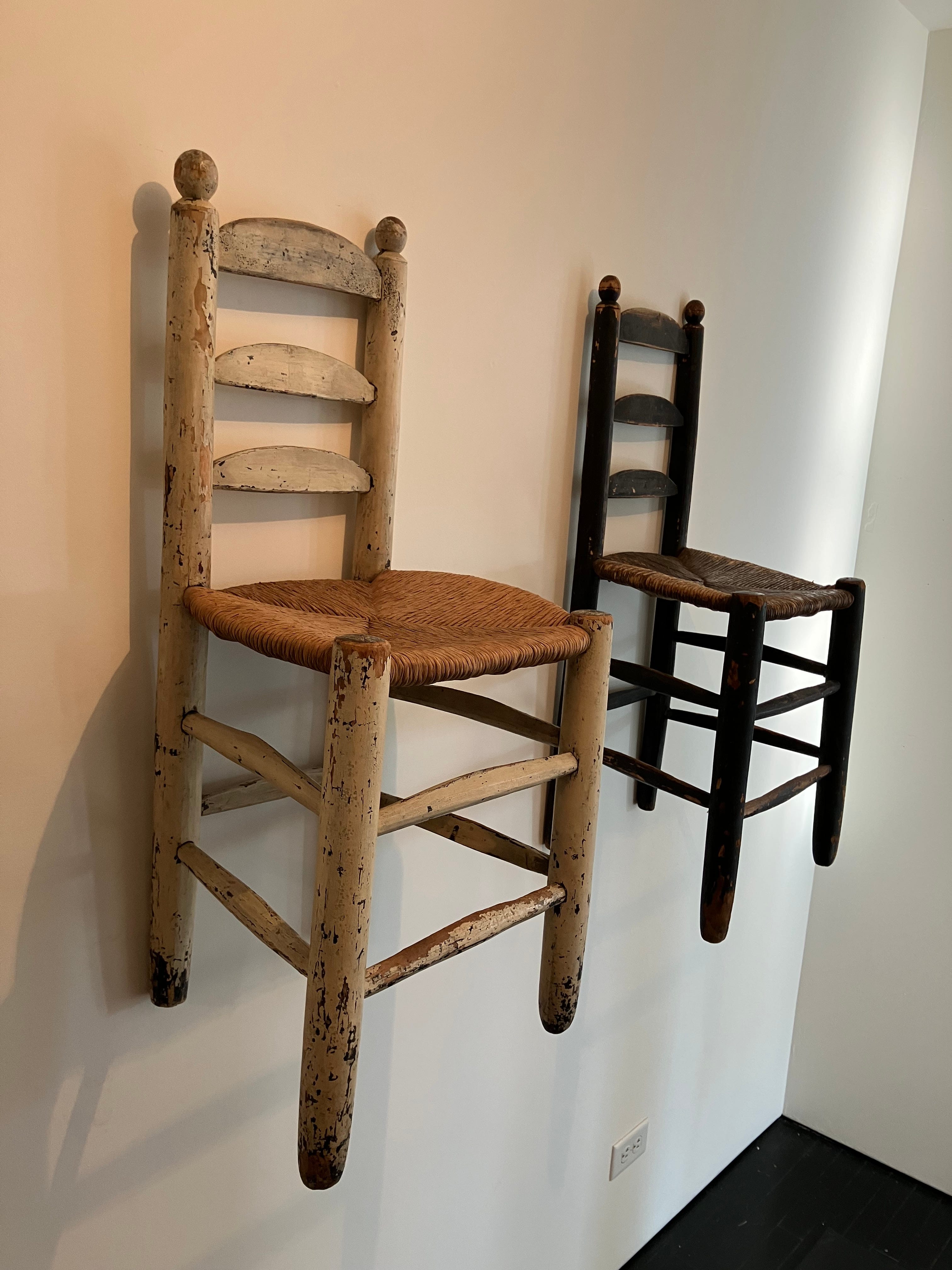
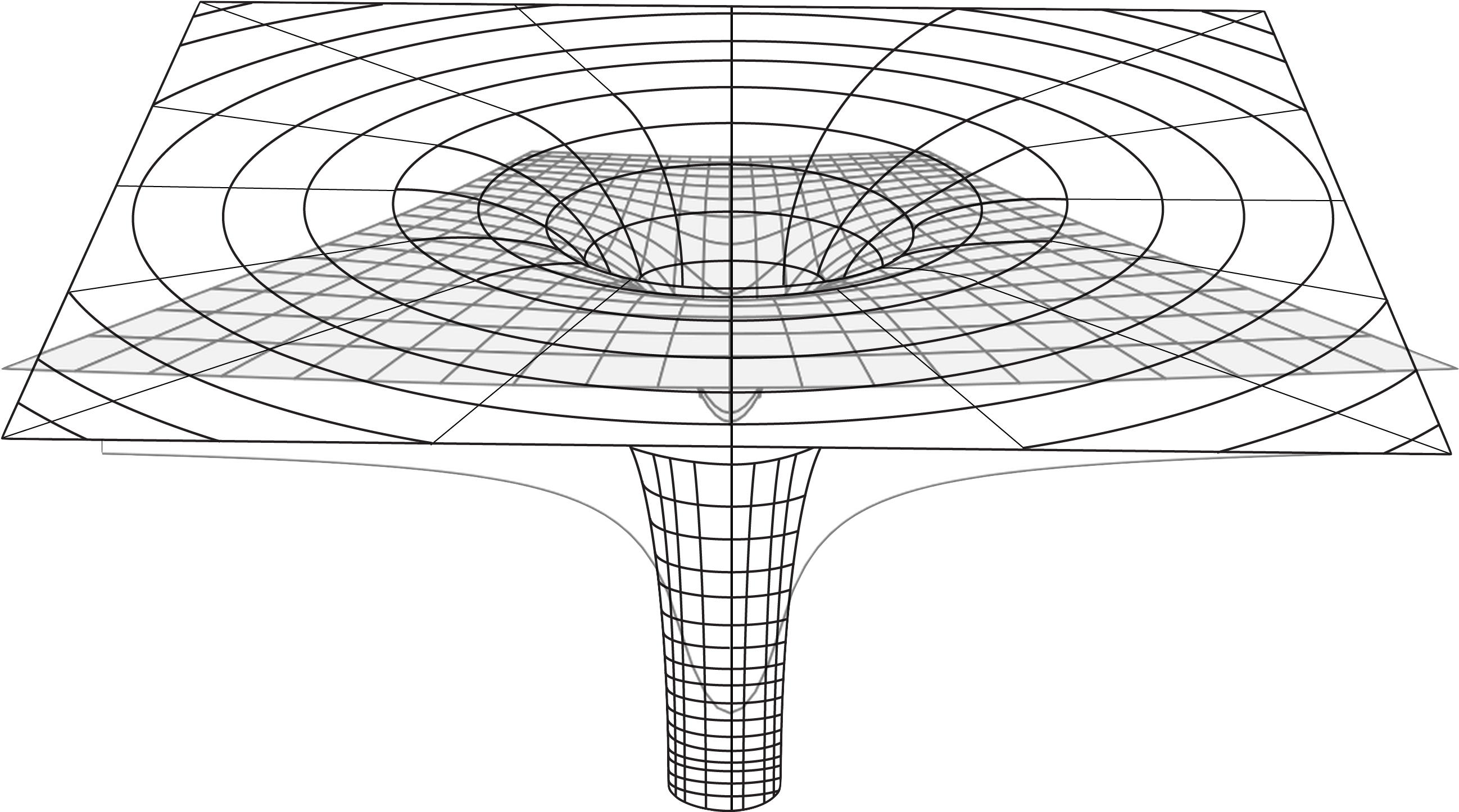
The gallery show was “Robert Wilson DiAlogs: Designed & Found Objects, 1960s-202s,” curated by Noah Khoshbin and Fisher Bradford. At the entrance, there were two miniature, plain wicker chairs nailed to the wall. Fifty years of past and future thought in modest objects, one of the stage features of Einstein, the simplist thing extended and repurposed into the unexpected. The plain lines and right angles, the seat for the violinist (Einstein) in the “Knee Plays,” take a chair and spin it around a gravity well and you have an image of the General Theory of Relativity. And Einstein on the Beach is a little about Einstein, centered in the cultural space for science, and at the core a music drama about time, Einstein’s revolution and that of minimalist music (read more about that here). Wilson always grasped that, unfolding in sequence and experience, time was the essential medium on stage, after that length, height, and width. A chair.
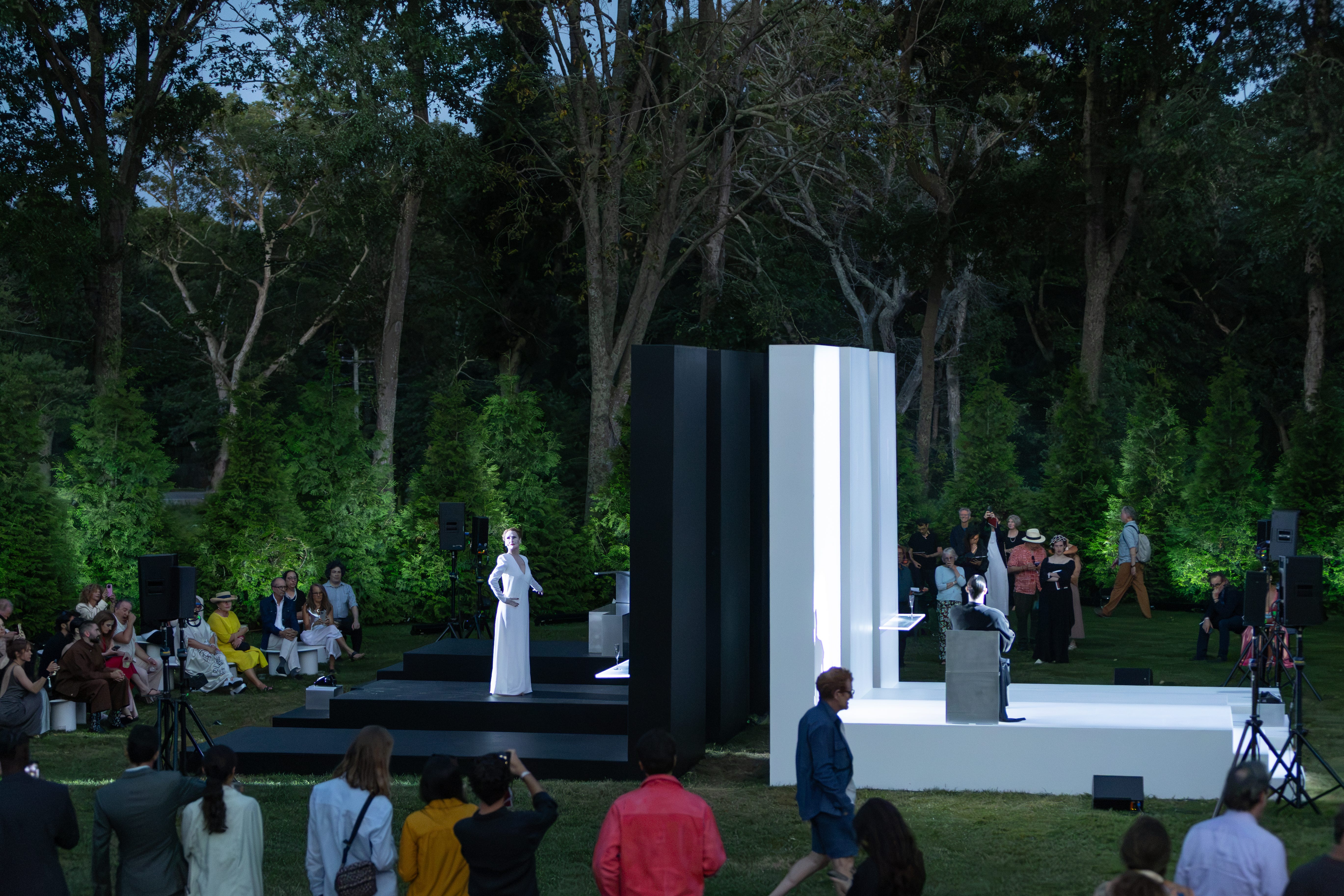
Being avant-garde means taking an idea and pushing it as far and wide as possible, until it breaks through to someplace new or gets broken. It is single-minded and simple, meaning complexity can follow. There was a production of his play I Was Sitting on my Patio, “reimagined” by Charles Chemin, on a double-sided stage, Christopher Nell on one back-to-back with Julie Shanahan on the other. With Wilson’s post-Brecht/post-expressionist stage aesethetic, already spare and with some of his constructed angles, the performance was first amusing, then disorienting, then clarifying. The weakness in the gallery was the collection of objects Wilson found—a toy dinosaur, a destroyed bucket—that were simple but also crap, garbage. Putting them into the context of a gallery space didn’t elevate them into art, it diminished the gallery.
I Was Sitting on my Patio came from the same place in that the play is a series of cliched lines from bad dramas and genre movies, a string of non-sequiturs.
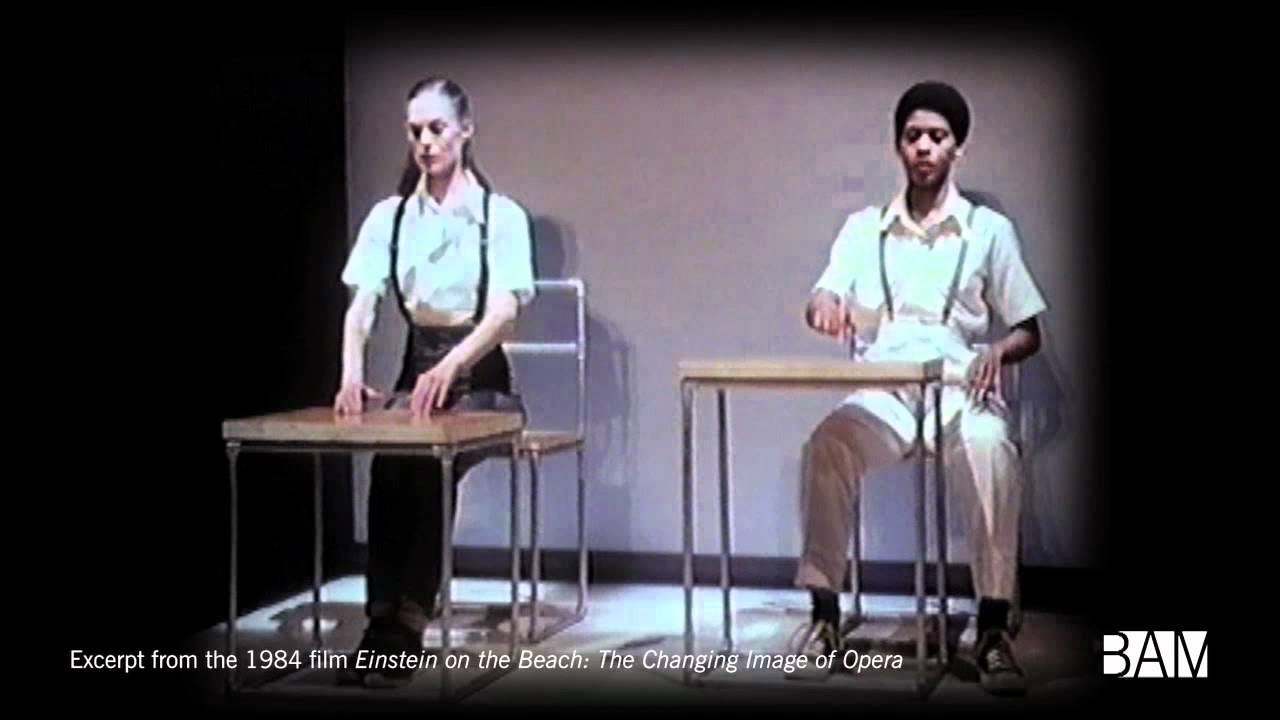
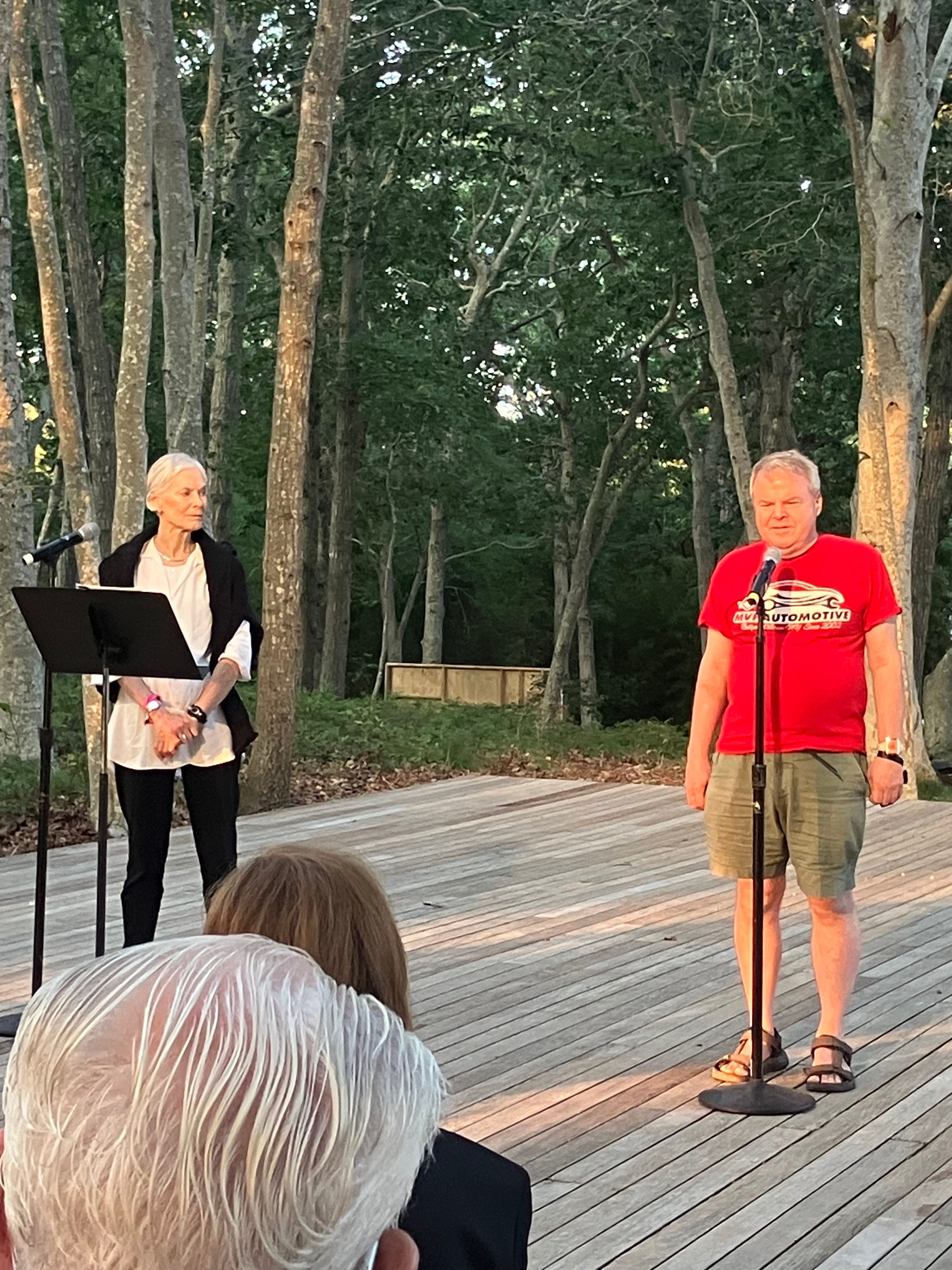
But they didn’t just sit there, Wilson gave them purpose with his intentions and the actors gave them life. It’s the difference between object and performance, material and humanity. This play, the chairs, all a decoder ring leading to the moving appearance of Lucinda Childs and Christopher Knowles, reading from their Einstein libretto. The back story is that Glass heard some of then thirteen-year-old Knowles’ poetry, the reptitions and randomness coming out of Knowles personal condition which seems to be on a continuum of autism and/or possible developmental handicaps, and it became another key to Einstein:
Would it get some wind for the sailboat. And it could get for it is.
It could get the railroad for these workers. And it could be were it is.
It could Franky it could be Franky it could be very fresh and clean.
It could be a balloon.It could be a balloon.
All these are the days my friends and these are the days my friends.
It could get some wind for the sailboat. And it could get for it is.
It could get the railroad for these workers. And it could get for it is were.
It could be a balloon. It could be Franky. It could be very fresh and clean.
It could be those ways.
Childs choreographed Einstein, and in the courtyward a group of dancers took turns on a platform performing Madeline Hollander’s Parallel Diagonals. Although there was no music, this seemed to remembrance of Childs’ work, the dancers in costumes that recalled the opera, like Hollander saw it, dreamt about it, and woke up with her own ideas about it.
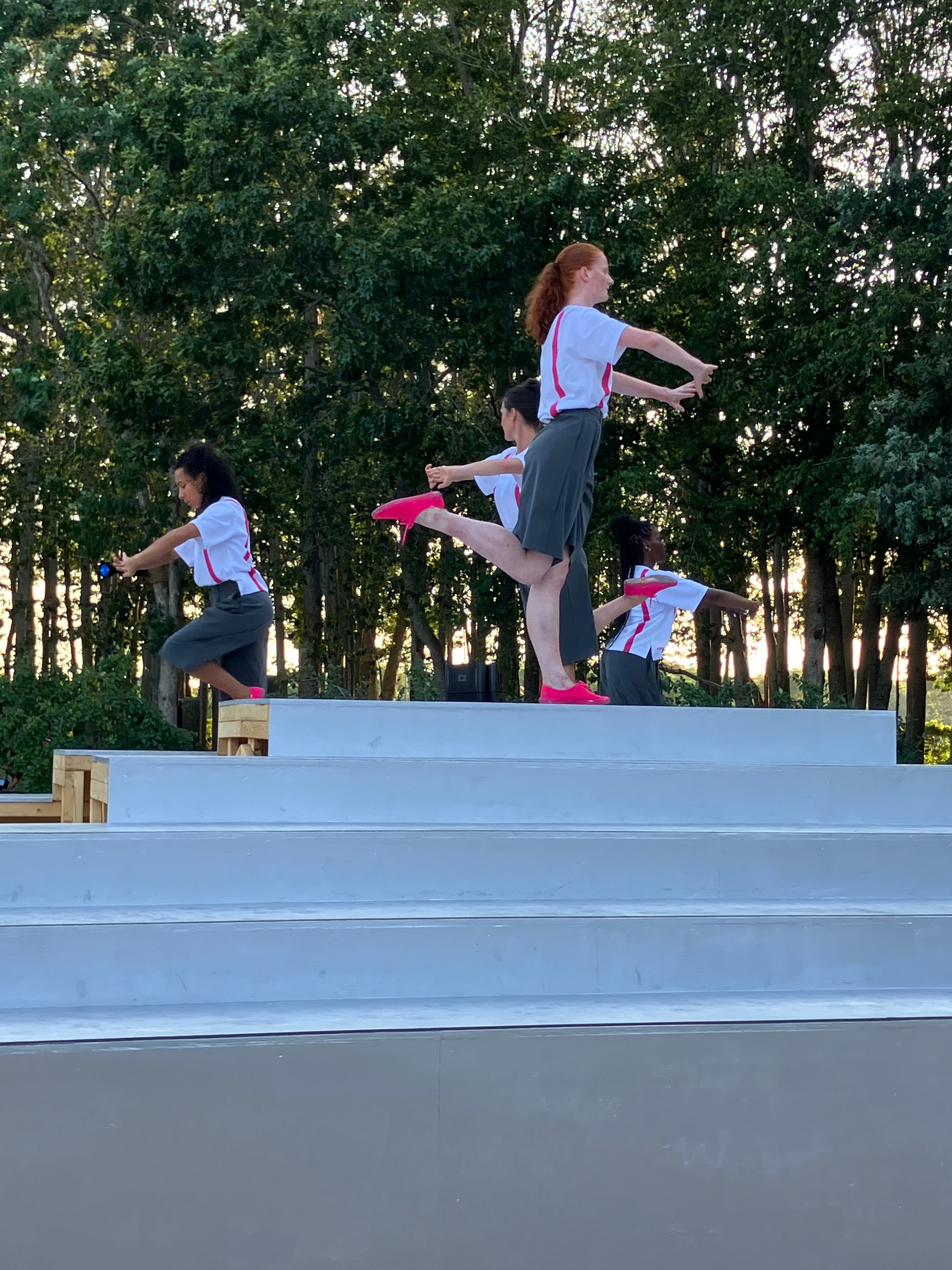
All this was clear, pure, light-footed, sincere, and a great pleasure.
The Unimportance of Being Earnest
There was a clear, blunt gap between old and new. That’s not unexpected—one of the underlying qualities of older things that stay around and return is that they have the power to be fresh and relevant and intriguing, even after the exposure fifty years brings. Well thought and well made things remain. But there was an enormous difference in attitude between, let’s call them revivals, and the work presented by the resident fellows. The former pieces were inquisitive and irreverent, delivering thoughful questions without determing any answers for the audiance. The latter were incredibly earnest.
Not a bad thing in itself, earnestness is a danger in the arts—and is an established stylistic trademark among Gen Z artists. It’s an understandable reaction to what they see as the detached irony of Gen X, and oppressive and destructive nihilism of our ruling political and media class, and of course the barbarism of the political right. Everyone even one lean to the left of the centrists is part of a fight for civilization. And it’s fucking hard and demands emotional and intellectual endurance.
Earnestness helps, but earnestness is bad raw material for art, it takes ideas and turns them into slogans, or mere propaganda. The contemporary style, yoked to the language of watered down theory and pop psychology, frames everything as some sort of social pathology or political ideology. The resident fellows’ work presented itself as critique, but the targets are now long familiar: exploitation, racism, misogyny, xenophobia. Processing this through earnestness meant that, no matter how polished or clever, what came out to the viewer could not be radical in any way, and in fact was prosaic—let the discourse describe the problems, artists have the responsibility to go beyond.
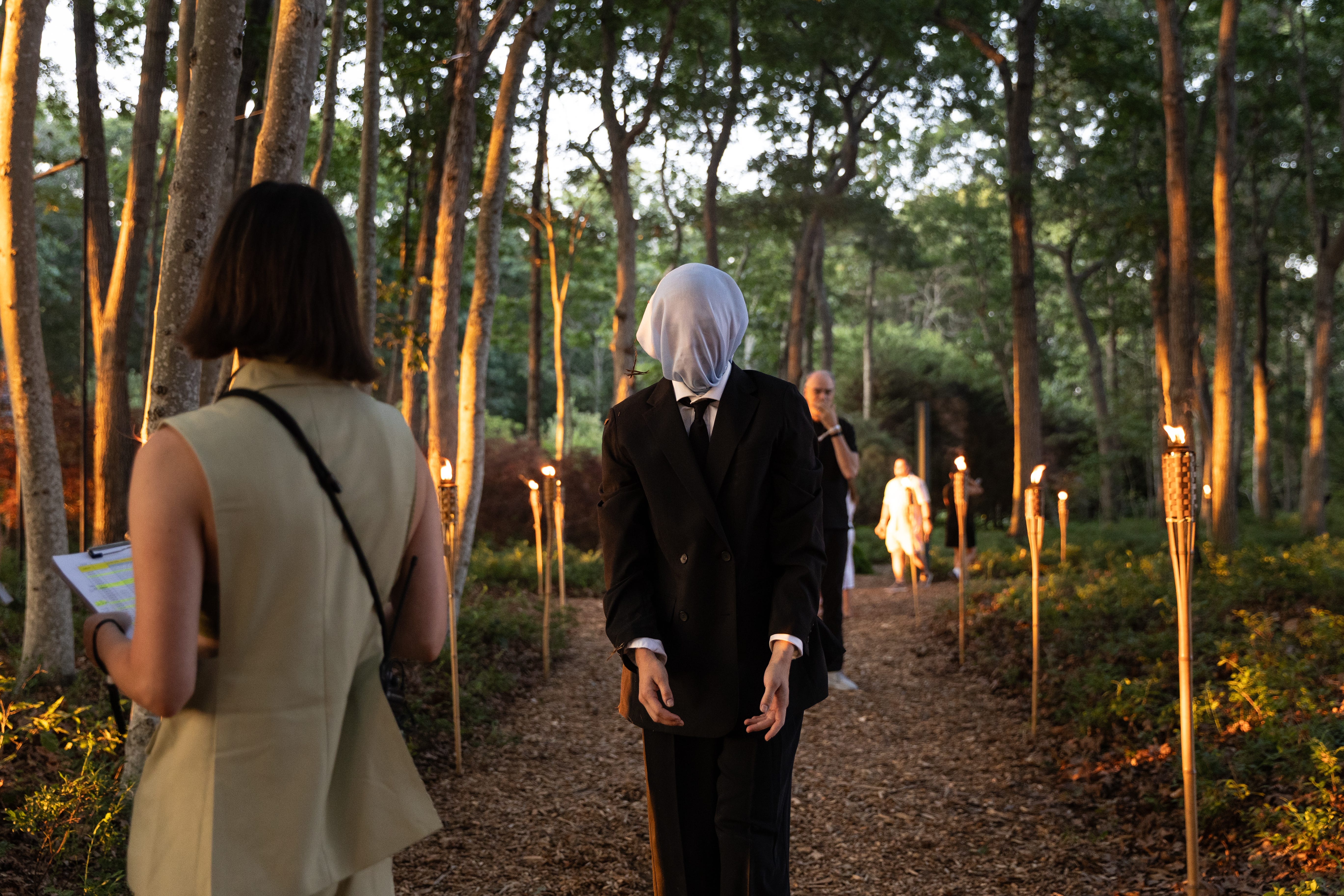
For his all days are farm days, a shirtless Peter Treiber Jr. chopped wood; Miradonna Sirkka tried to give “material form to invisible emotional weight” by literally breaking rocks—perhaps they both need to find out what a chain gang is; Maximiliano Siñani blew into the sucking tube of a vacuum cleaner. Leo De Paula’s Your English is Very Good, in a tiny shed, had a nice claustraphobic threat; Augustin Lignier’s Step and Repeat, directing the crowd in portrait photographs, was humorous up until you read the argument for it. Around the grounds, Salma Kiuhan, head shrouded, walked and fell and got up and walk some more in their “you learn to walk by walking.” Nothing much happened.
The biggest disappointment, though, came from Laurie Anderson and Shane Weeks. They phoned it in with A Hole in the Sky. With members of the Shinnecock Nation, Anderson played long tones on her electric violin, Weeks chanted, everyone in their same space but disconnected, ostensibly honoring Wilson but producing no effect. The soporific performance seemed driven by the laziness of the conception.
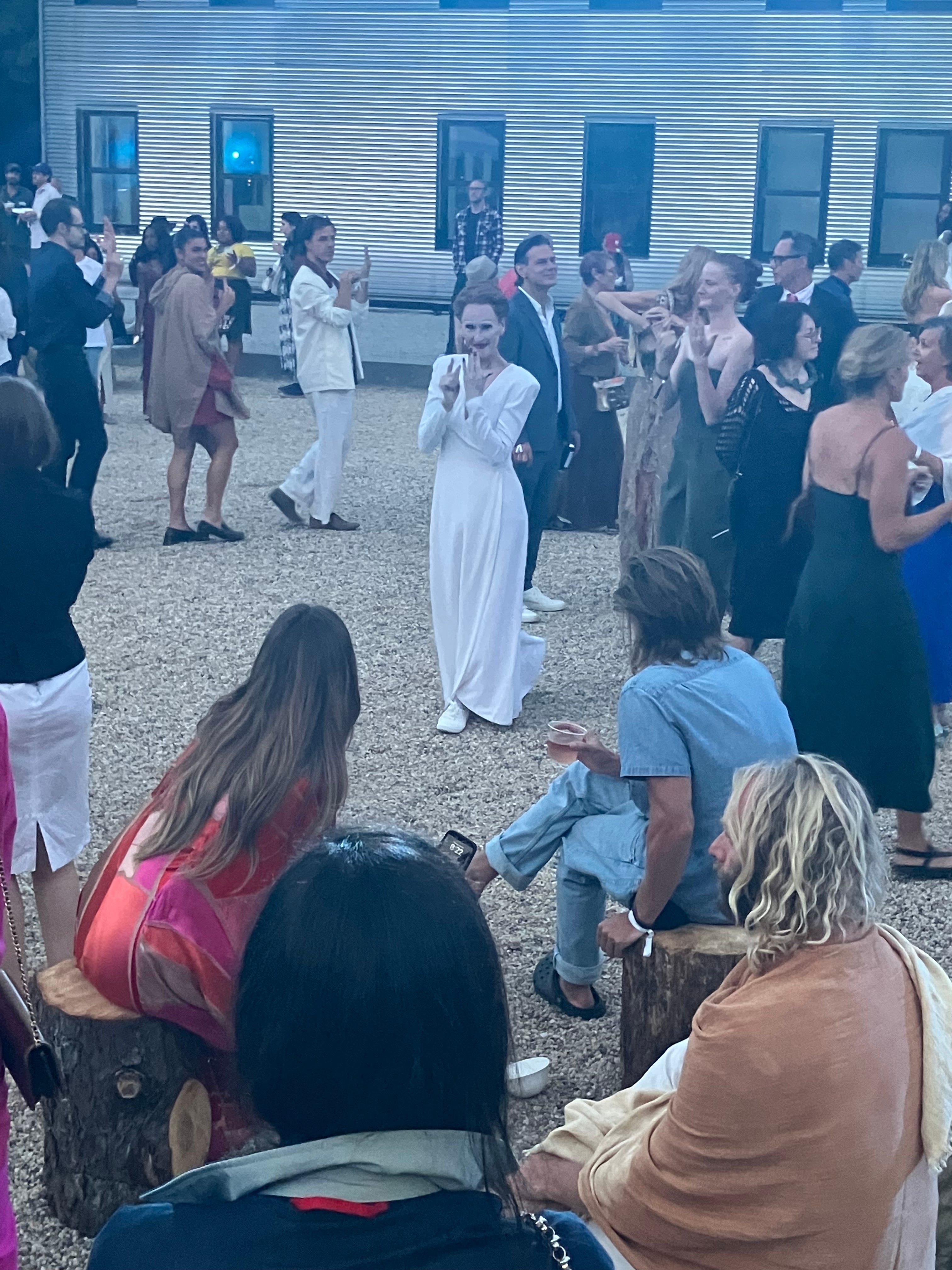
Everything that endured to be here was everything, though. Outside of Wilson’s orbit was a performance of Pina Bausch’s The Nelken Line, led by Shanahan. This is a marvelous single file performance that anyone can join, people snaking through the crowd will performing a sequence of four gestures, each representing one of the seasons. Louis Armstrong’s “West End Blues” played on the PA, everyone smiled, in love with life. When the barbarians try and keep you down, be calm, keep a warm heart, and listen to some Louis. That’s how culture endures.
Comments
Nothing yet. Say the first thing.
Sign in to join the conversation.