
I have told this story to everyone.
Friends. Family. The neighbors. My partner, twice. I’ve told it in that half-breathless way you tell a story when you’re not trying to impress anyone, just trying to understand why it won’t leave you alone.
It’s a small story. A classroom story. The kind you’d normally tuck away as a “proud teacher moment” and move on.
But I can’t.
Last week, my students played Jeopardy.
This is not a metaphor. This is a literal classroom review game, with dry-erase boards, whispered debates, and a prize so coveted it should probably be illegal in public education: an “I Don’t Feel Like It” pass. Forty-five minutes of choice time instead of structured learning. A golden ticket.
What happened next felt funny at first, then impressive, then quietly devastating in the best way.
Without telling me, the kids made a plan. In the final round, every team wagered exactly the number of points they’d need to lose in order to tie. Then they intentionally answered the question wrong. Every team landed on the same score. Eight hundred points across the board.
Which meant I had no choice but to give everyone the prize.
I stood there, stunned, watching ten-year-olds smile like they’d just pulled off the world’s most wholesome heist. It was clever. It was coordinated. It was deeply justice-minded.
And it felt like the exact opposite of the way the rest of the country has been behaving.
On the same week my students were quietly collaborating their way into collective joy, the national rhetoric felt louder, harsher, and more fractured than ever. Every headline another line in the sand. Every conversation daring you to pick a side immediately or be accused of something unforgivable.
And then there’s Minnesota.
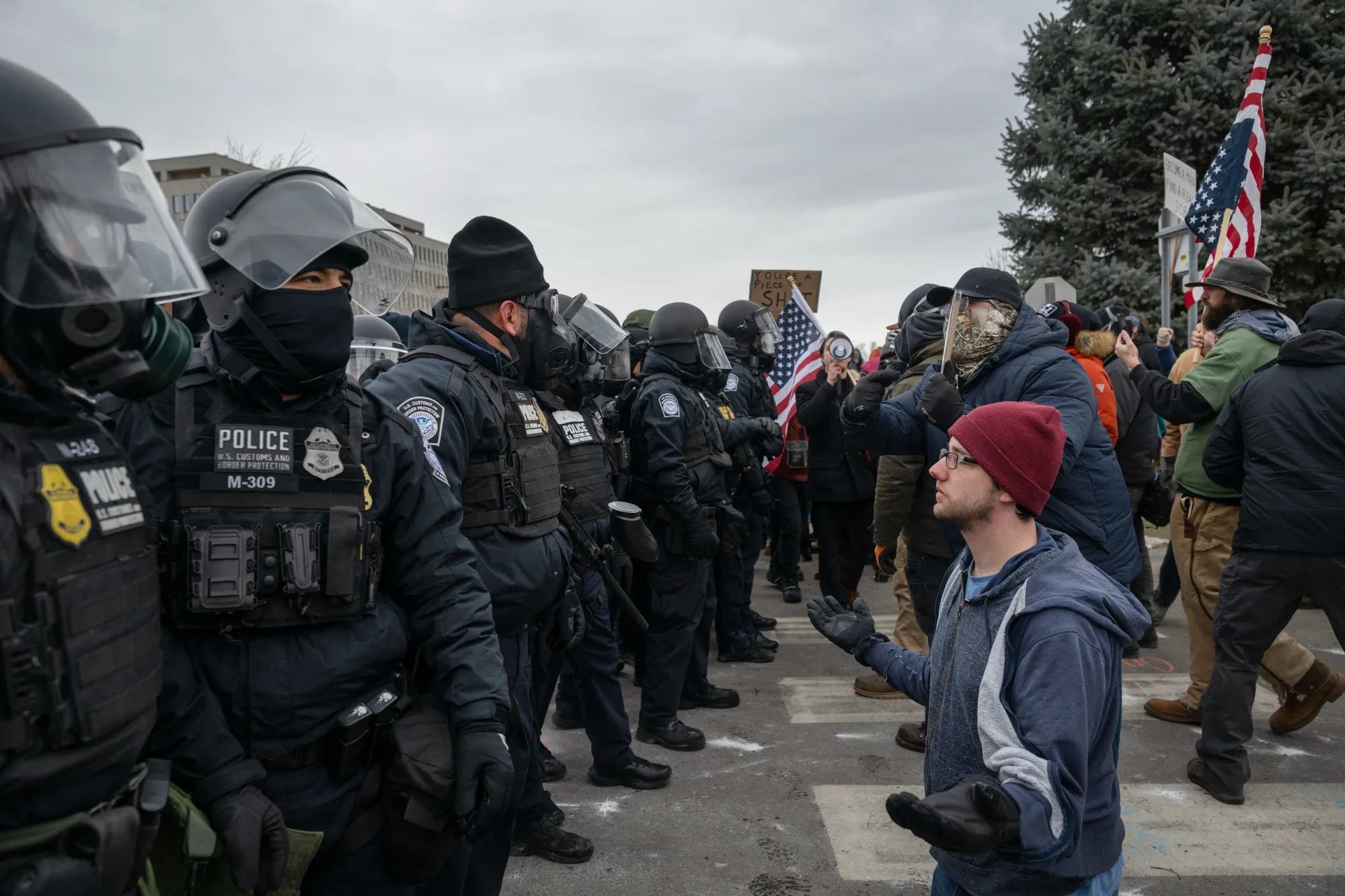
My in-laws live there. My brother-in-law has been on the front lines of the protests following the killing of Renee Nicole Good, a woman shot by a federal ICE agent in Minneapolis. The details are horrifying. The aftermath even more so. People standing in sub-zero temperatures with whistles and signs. Militarized responses. Conflicting narratives. A widening gap between what people are seeing with their own eyes and what they’re being told to believe.
The stories he’s been recounting aren’t neat or easily digestible. They don’t fit into Instagram slides or cable news chyrons. They sound like fear, confusion, rage, grief, and exhaustion layered on top of one another.
Which is maybe the most honest description of this moment in our country.
Here’s where I need to be unequivocally clear.
I do not support the orange man currently in charge. Not politically, not morally, not spiritually, not in the “let’s see how this plays out” sense. If there were a Jeopardy category called “Humans Who Actively Make Things Worse,” I wouldn’t even wait for Ken Jennings to finish the question.
But this piece isn’t about him. Not really.
It’s about what we’re becoming while arguing about him.
Today is MLK Day. And every year, we reduce Martin Luther King Jr. to quotes that make us comfortable. We post about dreams. We avoid the parts where he was unpopular, surveilled, jailed, criticized by moderates, and brutally honest about the violence of the systems we still live inside.
King didn’t call for politeness. He called for a beloved community. One rooted in justice, dignity, and the radical idea that our liberation is bound up together.
“Injustice anywhere is a threat to justice everywhere” isn’t a slogan. It’s a diagnosis.
And if we’re honest, the symptoms are everywhere.
Here’s the part I can’t shake.
My students didn’t ask who deserved the prize. They didn’t debate who worked hardest or who followed the rules best. They didn’t argue about whether fairness meant equality or equity or some abstract principle they half-remembered from a lesson.
They just decided that no one should lose.
That’s it. That was the logic.
And I keep thinking about how many adults would call that naïve or manipulative or unrealistic or socialist or whatever word helps them sleep better at night while explaining why cruelty is just how things are.
But what if it isn’t naïve?
What if it’s actually developmentally appropriate wisdom…the kind we spend our adult lives unlearning?
I’m not interested in pretending everything is fine. It isn’t. People are being harmed. Language is being weaponized. Protestors are being met with force instead of listening. And the distance between us feels vast some days.
But I also refuse to believe that the answer is louder shouting, tighter camps, or performative righteousness dressed up as moral clarity.
My students didn’t win Jeopardy by screaming at each other.
They won by noticing one another.
By coordinating.
By deciding, quietly, that collective good mattered more than individual victory.
So on this MLK Day, that’s what I’m holding onto.
Not false unity. Not forced civility. Not pretending we all agree.
But the harder, braver work of asking:
Who is being left out?
Who is being harmed?
And what would it look like if we stopped trying to win and started trying to belong?
I don’t think ten-year-olds fixed America with a game show. But they reminded me that justice isn’t abstract. It’s practiced, often quietly and imperfectly.
Sometimes, it starts with kids who decide that no one should lose.
And sometimes, that’s enough to remind me why this work still matters.
No posts
Comments
Nothing yet. Say the first thing.
Sign in to join the conversation.