
With the Super Bowl less than a week away, sports betting is dominating headlines again–but not for the reason you think. A new study by Common Sense Media paints a troubling picture of just how common gambling has become among adolescent boys: Spurred on by gaming apps that mirror betting and by widespread TV and social media advertising for gambling apps, more than a third of boys are now gambling before they’re even old enough to vote.
Gambling today has undergone a significant transformation from what it was even a decade ago. Researchers who conducted the study looked at three distinct types of gambling and gambling-related activities—many of which did not even exist in 2018 when the Supreme Court ruled that states could legalize online sports betting.
First, online gaming-related gambling, such as betting using in-game items or paying real money for random, chance-based rewards in games. Second, traditional gambling (both in person and online) such as poker played with friends/family and games of chance like dice or digital lottery apps. Third, sports-related gambling across a wide variety of formats including March Madness brackets, fantasy football leagues, and in-game betting for real money.
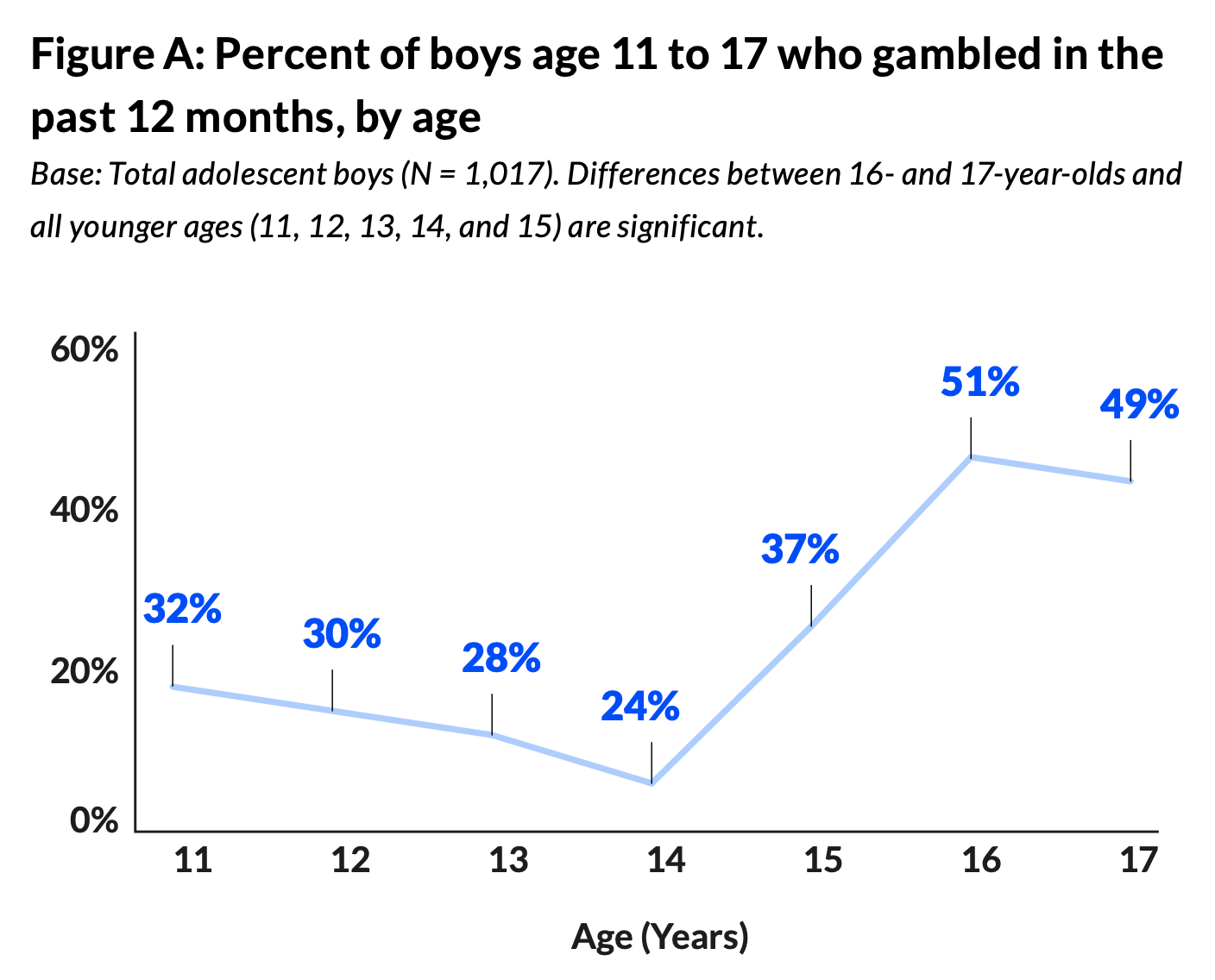
The researchers found that the media environment plays an overwhelming role in perceptions about gambling. It has become standard practice to show betting odds during media coverage of just about every sporting event in America. Fully 60% of the kids included in the survey said that they see ads for gambling on YouTube or social media and 12% of respondents said they have placed sports bets—the same percentage who said they gambled the old fashioned way, through poker, dice games, or online gambling sites.
By far the most pervasive type of gambling in the study involved online gaming platforms, which have decided in recent years to incorporate more and more gambling-like features, including exchanging real money for random rewards (such as “loot boxes” and “gacha pulls”) or using in-game items purchased with real money for trading or betting. These behaviors are increasingly commonplace on platforms like Fortnite or Roblox and nearly a quarter of all boys surveyed said they participated in online gaming-related gambling. Nearly 54% of them said they spent real money on those apps.
Boys who gamble spend an average of $54 per year. Boys who see gambling content more frequently end up spending more on gambling than kids who don’t, by an average of $72 to $33. In a Today Show feature segment on the new report, Ben Affleck said that his son had asked him for $100 to bet on sports.
This study is the second in a series of deep dive investigations about the way that adolescent boys live online today. The survey represents a wake-up call that parents and families cannot afford to overlook. We can scarcely afford to sit idly by and let young boys develop a gambling addiction before their brains are fully matured. Doing so risks setting them up for a lifetime of financial troubles and problematic behaviors.
Rather than encouraging kids to bet with their friends or family members, parents should talk to their kids about the risks of gambling. They can check their credit card bills to see if their kids have been making purchases in gaming apps. They can also push for robust age assurance technologies on the social media apps their kids are using.
This week, as you watch the cultural celebration of betting that takes place alongside every Super Bowl, one thing is for sure: the risks of gambling are now too well-defined to ignore. Now gambling is not just an adult problem, but a formative part of boys’ digital experience—trouble with a capital G that no longer stands for grown-up.
Thanks for reading Kids and Tech in the AI Era!
No posts
Comments
Nothing yet. Say the first thing.
Sign in to join the conversation.