
Continung from Part I, here we look at Education and Corruption in the different types of government.
You decide where we are as a country; democracy, monarchy, or despotic. Consider too, what is being proposed for our system of education.
I would remind you that this was first published in 1748 and translated to English in 1750. It was the second most quoted book after the Bible during the formation of our country.
BOOK IV
THAT THE LAWS OF EDUCATION OUGHT TO BE RELATIVE TO THE PRINCIPLES OF GOVERNMENT
CHAP. I—Of The Laws Of Education.
THE laws of education are the first impressions we receive; and, as they prepare us for civil life, every private family ought to be governed by the plan of that great household which comprehends them all.
If the people in general have a principle, their constituent parts, that is, the several families, will have one also. The laws of education will be therefore different in each species of government: in monarchies, they will have honour for their object; in republics, virtue; in despotic governments, fear.
CHAP. II—Of Education In Monarchies.
IN monarchies the principal branch of education is not taught in colleges or academies: it commences, in some measure, at our setting out in the world; for this is the school of what we call honour, that universal preceptor, which ought every where to be our guide.
Here it is that we constantly hear three rules or maxims; viz. that we should have a certain nobleness in our virtues, a kind of frankness in our morals, and a particular politeness in our behaviour.
The virtues we are here taught are less what we owe to others than to ourselves; they are not so much what draws us towards society, as what distinguishes us from our fellow-citizens.
Here the actions of men are judged, not as virtuous, but as shining; not as just, but as great; not as reasonable, but as extraordinary.
…
In fine, the education of monarchies requires a certain politeness of behaviour. Man, a social animal, is formed to please in society; and a person that would break through the rules of decency, so as to shock those he conversed with, would lose the public esteem, and become incapable of doing any good.
But politeness, generally speaking, does not derive its original from so pure a source: it rises from a desire of distinguishing ourselves. It is pride that renders us polite: we are flattered with being taken notice of for a behaviour that shews we are not of a mean condition, and that we have not been bred up with those who in all ages are considered as the scum of the people.
Politeness, in monarchies, is naturalised at court. One man excessively great renders every body else little. Hence that regard which is paid to our fellow-subjects: hence that politeness, equally pleasing to those by whom, as to those towards whom, it is practised; because it gives people to understand that a person actually belongs, or at least deserves to belong, to the court.
A court air consists in quitting a real for a borrowed greatness. The latter pleases the courtier more than the former. It inspires him with a certain disdainful modesty, which shews itself externally, but whose pride insensibly diminishes in proportion to its distance from the source of this greatness.
At court we find a delicacy of taste in every thing; a delicacy arising from the constant use of the superfluities of life; from the variety, and especially the satiety, of pleasures; from the multiplicity, and even confusion, of fancies; which, if they are but agreeable, are sure of being well received.
These are the things which properly fall within the province of education, in order to form what we call a man of honour, a man possessed of all the qualities and virtues requisite in this kind of government.
…
There is nothing so strongly inculcated, in monarchies, by the laws, by religion, and honour, as submission to the prince’s will: but this very honour tells us, that the prince never ought to command a dishonourable action; because this would render us incapable of serving him.
…
Honour therefore has its supreme laws, to which education is obliged to conform. The chief of these are, that we are permitted to set a value upon our fortune, but are absolutely forbidden to set any upon our lives.
The second is, that, when we are raised to a post or preferment, we should never do or permit any thing which may seem to imply that we look upon ourselves as inferior to the rank we hold.
The third is, that those things which honour forbids are more rigorously forbidden when the laws do not concur in the prohibition; and those it commands are more strongly insisted upon when they happen not to be commanded by law.
There is nothing so strongly inculcated, in monarchies, by the laws, by religion, and honour, as submission to the prince’s will: but this very honour tells us, that the prince never ought to command a dishonourable action; because this would render us incapable of serving him.
To me, the deportation—and subsequent refusal to retrieve—a citizen without due process, is clearly a dishonourable action.
CHAP. III—Of Education In A Despotic Government.
AS education in monarchies tends to raise and ennoble the mind, in despotic governments its only aim is to debase it. Here it must necessarily be servile: even in power such an education will be an advantage, because every tyrant is at the same time a slave.
Excessive obedience supposes ignorance in the person that obeys. The same it supposes in him that commands; for he has no occasion to deliberate, to doubt, to reason; he has only to will.
In despotic states each house is a separate government. As education, therefore, consists chiefly in social converse, it must be here very much limited: all it does is to strike the heart with fear, and to imprint on the understanding a very simple notion of a few principles of religion.
Learning here proves dangerous, emulation fatal; and, as to virtue, Aristotle cannot think there is any one virtue belonging to slaves: if so, education in despotic countries is confined within a very narrow compass.
Here therefore education is in some measure needless: to give something, one must take away every thing; and begin with making a bad subject, in order to make a good slave.
For why should education take pains in forming a good citizen, only to make him share in the public misery? If he loves his country, he will strive to relax the springs of government: if he miscarries, he will be undone: if he succeeds, he must expose himself, the prince, and his country, to ruin.
Here therefore education is in some measure needless… For why should education take pains in forming a good citizen, only to make him share in the public misery?
As a former professor of mathematics, it pains me to see what is happening to colleges and universities. Withholding funding, restricting research, harassing students, suppressing protests etc. are not in keeping with the spirit of academia nor consistent with our Constitutional rights.
We need people working in trades—no question—but who will design the next generation of technology if we quash research?
Pardon me if I think an education system driven by Christian-Nationalists and relaxed accreditation standards which allow them to grant degrees, is a bad idea.
For more information regarding what Project 2025 proposes for the Department of Education you can read my post from 23 Nov 2024 here.
Project 2025: Chapter 11 Department of Education-New Links Added
I published a 3-part series from Democracy in America by Alexis de Tocqueville 1835 on the tyranny of the majority which you can access from the links below.
Unlimited Power of the Majority 1
Unlimited Power of the Majority 2
Unlimited Power of the Majority 3
Now back to Montesquieu and a look at how each type of government can be corrupted.
BOOK VIII
OF THE CORRUPTION OF THE PRINCIPLES OF THE THREE GOVERNMENTS.
CHAP. I—General Idea Of This Book.
THE corruption of each government generally begins with that of the principles
CHAP. II—Of The Corruption Of The Principles Of Democracy.
THE principle of democracy is corrupted, not only when the spirit of equality is extinct, but likewise when they fall into a spirit of extreme equality, and when each citizen would fain be upon a level with those whom he has chosen to command him.
Then the people, incapable of bearing the very power they have delegated, want to manage every thing themselves, to debate for the senate, to execute for the magistrate, and to decide for the judges.
When this is the case virtue can no longer subsist in the republic. The people are desirous of exercising the functions of the magistrates; who cease to be revered. The deliberations of the senate are slighted: all respect is then laid aside for the senators, and consequently for old age. If there is no more respect for old age, there will be none presently for parents: deference to husbands will be likewise thrown off, and submission to masters. This licentiousness will soon become general, and the trouble of command be as fatiguing as that of obedience. Wives, children, slaves, will shake off all subjection. No longer will there be any such things as manners, order, or virtue.
…
The people fall into this misfortune when those in whom they confide, desirous of concealing their own corruption, endeavour to corrupt them. To disguise their own ambition, they speak to them only of the grandeur of the state; to conceal their own avarice, they incessantly flatter theirs.
The corruption will increase among the corrupters, and likewise among those who are already corrupted. The people will divide the public money among themselves, and, having added the administration of affairs to their indolence, will be for blending their poverty with the amusements of luxury. But, with their indolence and luxury, nothing but the public treasure will be able to satisfy their demands.
We must not be surprized to see their suffrages given for money. It is impossible to make great largesses to the people without great extortion: and, to compass this, the state must be subverted. The greater the advantages they seem to derive from their liberty, the nearer they approach towards the critical moment of losing it. Petty tyrants arise, who have all the vices of a single tyrant. The small remains of liberty soon become insupportable; a single tyrant starts up, and the people are stripped of every thing, even of the profits of their corruption.
The people fall into this misfortune when those in whom they confide, desirous of concealing their own corruption, endeavour to corrupt them. To disguise their own ambition, they speak to them only of the grandeur of the state; to conceal their own avarice, they incessantly flatter theirs.
Hey Congress, are your ears burning?
We must not be surprized to see their suffrages given for money. It is impossible to make great largesses to the people without great extortion: and, to compass this, the state must be subverted.
That sure sounds like our current Congress. They trade stocks using information from the committees on which they serve.
Isn’t that the definition of insider trading?
SCOTUS, he’s also talking about you. You’ve shown us your vote and you can be bought whether for a cool motorhome Clarence Thomas—Harlan Crow—or a cool fishing trip Samuel Alito—Paul Singer—the list goes on.
But, with their indolence and luxury, nothing but the public treasure will be able to satisfy their demands.
Of course Trump, with his pump-and-dump stock market, cryptocurrency and other self-enriching enterprises, his lies about…everything, covers all three.
Now back to Montesquieu.
Democracy hath, therefore, two excesses to avoid; the spirit of inequality, which leads to aristocracy or monarchy; and the spirit of extreme equality, which leads to despotic power, as the latter is completed by conquest.
That sounds like we were doomed from the outset. Remember, the framers of our Constitution knew about this, but were too busy protecting their land holdings and slaves.
Montesquieu elaborates on that last sentence.
CHAP. III—Of The Spirit Of Extreme Equality.
AS distant as heaven is from earth, so is the true spirit of equality from that of extreme equality. The former does not imply that every body should command, or that no one should be commanded, but that we obey or command our equals. It endeavours not to shake off the authority of a master, but that its masters should be none but its equals.
In the state of nature, indeed, all men are born equal; but they cannot continue in this equality: society makes them lose it, and they recover it only by the protection of the laws.
Such is the difference between a well–regulated democracy and one that is not so, that, in the former, men are equal only as citizens, but, in the latter, they are equal also as magistrates, as senators, as judges, as fathers, as husbands, or as masters.
The natural place of virtue is near to liberty; but it is not nearer to excessive liberty than to servitude.
CHAP. IV—Particular Cause Of The Corruption Of The People.
GREAT success, especially when chiefly owing to the people, intoxicates them to such a degree that it is impossible to contain them within bounds. Jealous of their magistrates, they soon become jealous likewise of the magistracy; enemies to those who govern, they soon prove enemies also to the constitution.
…
…enemies to those who govern, they soon prove enemies also to the constitution.
CHAP. V—Of The Corruption Of The Principle Of Aristocracy.
ARISTOCRACY is corrupted if the power of the nobles becomes arbitrary: when this is the case, there can no longer be any virtue either in the governors or the governed.
If the reigning families observe the laws, it is a monarchy with several monarchs, and, in its own nature, one of the most excellent; for almost all these monarchs are tied down by the laws. But, when they do not observe them, it is a despotic state, swayed by a great many despotic princes.
In the latter case, the republic consists only in the nobles: the body governing is the republic; and the body governed is the despotic state; which form two of the most heterogeneous bodies in the world.
…
In the latter case, the republic consists only in the nobles: the body governing is the republic; and the body governed is the despotic state;
Sounds a lot like where this country is headed right now.
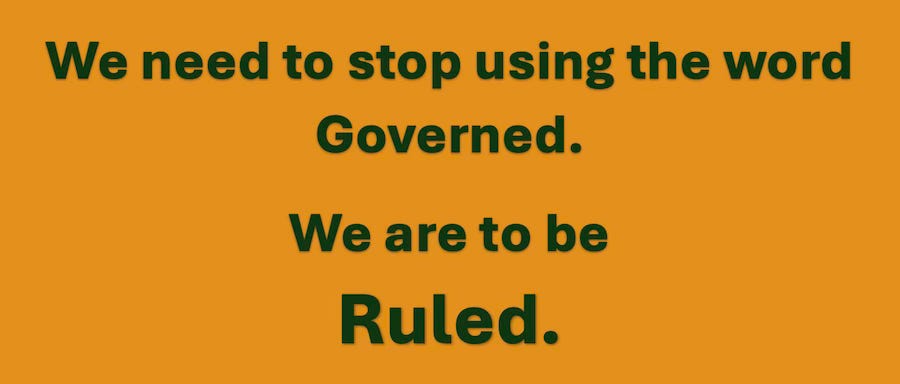
Continuing from above;
An aristocracy may maintain the full vigour of its constitution, if the laws be such as are apt to render the nobles more sensible of the perils and fatigues, than of the pleasure, of command; and if the government be in such a situation as to have something to dread, while security shelters under its protection, and uncertainty threatens from abroad.
As a certain kind of confidence forms the glory and stability of monarchies, republics, on the contrary, must have something to apprehend. A fear of the Persians supported the laws of Greece. Carthage and Rome were alarmed and strengthened by each other. Strange, that, the greater security those states enjoyed, the more, like stagnated waters, they were subject to corruption!
CHAP. VI—Of The Corruption Of The Principle Of Monarchy.
AS democracies are subverted when the people despoil the senate, the magistrates, and judges, of their functions, so monarchies are corrupted when the prince insensibly deprives societies or cities of their privileges. In the former case, the multitude usurps the power, in the latter, it is usurped by a single person.
…
Monarchy is destroyed, when a prince thinks he shews a greater exertion of power in changing, than in conforming to, the order of things; when he deprives some of his subjects of their hereditary employments to bestow them arbitrarily upon others; and when he is fonder of being guided by fancy than judgement.
Again, it is destroyed, when the prince, directing every thing entirely to himself, calls the state to his capital, the capital to his court, and the court to his own person.
It is destroyed, in fine, when the prince mistakes his authority, his situation, and the love of his people; and when he is not fully persuaded that a monarch ought to think himself secure, as a despotic prince ought to think himself in danger.
CHAP. VIII—Danger Of The Corruption Of The Principle Of Monarchical Government.
THE danger is not when the state passes from one moderate to another moderate government, (as from a republic to a monarchy, or from a monarchy to a republic,) but when it precipitates from a moderate to a despotic government.
…
THE danger is not when the state passes from one moderate to another moderate government, (as from a republic to a monarchy, or from a monarchy to a republic,) but when it precipitates from a moderate to a despotic government.
This is the whole point of this article; we’re not headed towards a benign Monarchy like Norway or Denmark, we are headed for despotism.
CHAP. X—Of The Corruption Of The Principle Of Despotic Government.
THE principle of despotic government is subject to a continual corruption, because it is, even in its nature, corrupt. Other governments are destroyed by particular accidents, which do violence to the principles of each constitution; this is ruined by its own intrinsic imperfections, when some accidental causes do not prevent the corrupting of its principles. It maintains itself, therefore, only when circumstances, drawn from the climate, religion, situation, or genius of the people, oblige it to conform to order, and to admit of some rule. By these things its nature is forced, without being changed; its ferocity remains; and it is made tame and tractable only for a time.
…
CHAP. XVI—Distinctive Properties Of A Republic.
IT is natural for a republic to have only a small territory; otherwise it cannot long subsist. In an extensive republic there are men of large fortunes, and consequently of less moderation: there are trusts too considerable to be placed in any single subject; he has interests of his own; he soon begins to think that he may be happy and glorious by oppressing his fellow-citizens; and that he may raise himself to grandeur on the ruins of his country.
In an extensive republic, the public good is sacrificed to a thousand private views; it is subordinate to exceptions, and depends on accidents. In a small one, the interest of the public is more obvious, better understood, and more within the reach of every citizen; abuses have less extent, and of course are less protected.
In an extensive republic, the public good is sacrificed to a thousand private views; it is subordinate to exceptions, and depends on accidents. In a small one, the interest of the public is more obvious, better understood, and more within the reach of every citizen; abuses have less extent, and of course are less protected.
…
Maybe that’s our problem, one third of the population didn’t even vote. We’re so big people don’t feel like their vote counts, or even matters.
Let’s continue, letting Montesquieu speak for himself.
CHAP. XVII—Distinctive Properties Of A Monarchy.
A monarchical state ought to be of a moderate extent. Were it small, it would form itself into a republic; were it very large, the nobility, possessed of great estates, far from the eye of the prince, with a private court of their own, and secure moreover from sudden executions, by the laws and manners of the country, such a nobility, I say, might throw off their allegiance, having nothing to fear from too slow and too distant a punishment.
Thus, Charlemagne had scarce founded his empire when he was obliged to divide it: whether the governors of the provinces refused to obey; or whether, in order to keep them more under subjection, there was a necessity of parcelling the empire into several kingdoms.
After the decease of Alexander, his empire was divided. How was it possible for those Greek and Macedonian chiefs, who were each of them free and independent, or commanders at least of the victorious bands dispersed throughout that vast extent of conquered land, how was it possible, I say, for them to obey?
Attila’s empire was dissolved soon after his death; such a number of kings, who were no longer under restraint, could not resume their fetters.
The sudden establishment of unlimited power is a remedy, which, in those cases, may prevent a dissolution. But how dreadful the remedy, which, after the enlargement of dominion, opens a new scene of misery!
The rivers hasten to mingle their waters with the sea; and monarchies lose themselves in despotic power.
…
CHAP. XIX—Distinctive Properties Of A Despotic Government.
A large empire supposes a despotic authority in the person who governs. It is necessary that the quickness of the prince’s resolutions should supply the distance of the places they are sent to; that fear should prevent the remissness of the distant governor or magistrate; that the law should be derived from a single person, and should shift continually, according to the accidents which incessantly multiply in a state in proportion to its extent.
CHAP. XX—Consequence Of The Preceding Chapters.
IF it be therefore the natural property of small states to be governed as a republic; of middling ones, to be subject to a monarch; and of large empires, to be swayed by a despotic prince; the consequence is, that, in order to preserve the principles of the established government, the state must be supported in the extent it has acquired, and that the spirit of this state will alter in proportion as it contracts or extends its limits.
Thanks for reading.
Bob
Comments
Nothing yet. Say the first thing.
Sign in to join the conversation.