
Affirming the Separation of Powers.
Federal courts have jurisdiction to deal with a wide array of issues in law and equity in the United States. The increasingly aggressive posture of federal courts does not change one constitutionally immutable fact: All three branches of the federal government retain not just the right, but the obligation to assess constitutionality. It is this obligation that is the foundation of the separation of powers.
The next conservative Administration should embrace the Constitution and understand the obligation of the executive branch to use its independent resources and authorities to restrain the excesses of both the legislative and judicial branches.
Show me where “…restrain the excesses…” occurs in Article 2 of the Constitution.
This will mean ensuring that the leadership of the Department of Justice and its components understand the separation of powers, that pushback among the branches is a positive feature and not a defect of our system, and that the federal system is strengthened, not weakened, by disagreement among the branches.
One example includes potentially seeking the overruling of Humphrey’s Executor v. United States. This case approved so-called independent agencies whose directors are not removable by the President at will. The Supreme Court has chipped away at Humphrey’s Executor in cases like Seila Law v. Consumer Financial Protection Bureau, but the precedent remains.
The next conservative Administration should formally take the position that Humphrey’s Executor violates the Constitution’s separation of powers.
Zealously Guarding Other Constitutional Protections.
When I see that statement I know someone’s rights are about to be violated.
The next conservative Administration must ensure that the DOJ zealously guards the constitutional rights of all Americans in all that it does. This extends not only to rights implicated in the department’s criminal activities, but to all rights enjoyed by the American people—such as the First Amendment. The department should reject any invitation to limit these fundamental promises based on the political ideology of the speech at issue.
A recent Supreme Court case illustrates the problems that arise when the DOJ takes a cramped interpretation of the First Amendment in service of a political ideology. In 303 Creative LLC v. Elenis, the department argued in favor of the government’s ability to coerce and compel what the lower courts all found to be pure speech. The oral argument made clear the department’s view that it was the viewpoint expressed that gave the government power to censor and compel speech. During oral argument, the United States took the remarkable position that government can compel a Christian website designer to imagine, create, and publish a custom website celebrating same-sex marriage but cannot compel an LGBT person to design a similar website celebrating opposite-sex marriage. In the government’s view, declining to create the latter website was based on an objection to the message, while the former was based on status rather than message, but this argument inevitably turns on the viewpoint expressed. It means that the government gets to decide which viewpoints are protected and which are not—a frightening and blatantly unconstitutional proposition.
Just as troubling, the government’s arguments against free speech are not limited to the facts of 303 Creative. As Colorado admitted to the lower courts, all sorts of artists and speakers like speechwriters, photographers, and videographers can be compelled to design custom messages that violate their most fundamental convictions as long as it serves a certain viewpoint that the government wants to promote.
In fact, it was only a few years ago, in Masterpiece Cakeshop, that the government acknowledged the constitutional problems involved in compelling artists to speak government-favored messages. In that case, the United States acknowledged “a basic First Amendment principle that ‘freedom of speech prohibits the government from telling people what they must say.’” The department had it right when it argued that the government may not “compel the dissemination of its own preferred message,” because the First Amendment protects the “individual freedom of mind.” It was also correct when it argued that “[a]n artist cannot be forced to paint, a musician cannot be forced to play, and a poet cannot be forced to write.” The United States’ directly contrary position in 303 Creative is hard to explain based on anything other than its support for the message the State of Colorado was attempting to compel.
It is black letter law that no official “can prescribe what shall be orthodox…or force citizens to confess by word or act their faith therein.” Rather, the First Amendment places “the decision as to what views shall be voiced largely into the hands of each of us, in the hope that use of such freedom will ultimately produce a more capable citizenry and more perfect polity.” As the Supreme Court has noted, government officials have frequently sought to “coerce uniformity of sentiment in support of some end thought essential to their time and country.” In the face of such attempts to coerce orthodoxy, the DOJ should maintain its commitment to upholding the Constitution’s neutral principles of free speech, which commit the government “to preserve an uninhibited marketplace of ideas in which truth will ultimately prevail.”
This isn’t about free speech or Christian values, it’s about hating LBTQ .
Pursuing Equal Protection for All Americans by Vigorously Enforcing Applicable Federal Civil Rights Laws in Government, Education, and the Private Sector.
Entities across the private and public sectors in the United States have been besieged in recent years by an unholy alliance of special interests, radicals in government, and the far Left. This unholy alliance speaks in platitudes about advancing the interests of certain segments of American society, but that advancement comes at the expense of other Americans and in nearly all cases violates long-standing federal law.
Unholy alliance member here; Fuck all the way off.
Even though numerous federal laws prohibit discrimination based on notable immutable characteristics such as race and sex, the Biden Administration— through the DOJ’s Civil Rights Division and other federal entities—has enshrined affirmative discrimination in all aspects of its operations under the guise of “equity.” Federal agencies and their components have established so-called diversity, equity, and inclusion (DEI) offices that have become the vehicles for this unlawful discrimination, and all departments and agencies have created “equity” plans to carry out these invidious schemes. To reverse this trend, the next conservative Administration should:
Ensure that the DOJ spearheads an initiative demonstrating the federal government’s commitment to nondiscrimination.
The department should also lead a whole-of-government recommitment to nondiscrimination and should be working with all other federal agencies, boards, and commissions to ensure that they are both complying with constitutional and legal requirements and using their authorities and funding to prevent discrimination not only internally, but also at the state, local, and private-sector levels. This will require particularly close coordination with several key agencies, including such obvious candidates as the Equal Employment Opportunity Commission, the Department of Defense, Education, and Housing and Urban Development, and the Securities and Exchange Commission. It will also require enforcing contractual requirements that prohibit discrimination on federal contractors.
Reorganize and refocus the DOJ’s Civil Rights Division to serve as the vanguard for this return to lawfulness.
The Attorney General and other DOJ political leadership should provide the resources and moral support needed for these efforts. The Civil Rights Division should spend its first year under the next Administration using the full force of federal prosecutorial resources to investigate and prosecute all state and local governments, institutions of higher education, corporations, and any other private employers who are engaged in discrimination in violation of constitutional and legal requirements.
Using a mail ordinace to circumvent Dobbs is pure chickenshit.
Announcing a Campaign to Enforce the Criminal Prohibitions in 18 U.S. Code §§ 1461 and 1462 Against Providers and Distributors of Abortion Pills That Use the Mail.
Federal law prohibits mailing “[e]very article, instrument, substance, drug, medicine, or thing which is advertised or described in a manner calculated to lead another to use or apply it for producing abortion.” Following the Supreme Court’s decision in Dobbs, there is now no federal prohibition on the enforcement of this statute.
The Department of Justice in the next conservative Administration should therefore announce its intent to enforce federal law against providers and distributors of such pills.
Nothing says Get Out The Vote quite like saying Criminal Division.
Reassigning Responsibility for Prosecuting Election-Related Offenses from the Civil Rights Division to the Criminal Division.
The Attorney General in the next conservative Administration should reassign responsibility for prosecuting violations of 18 U.S. Code § 241 from the Civil Rights Division to the Criminal Division where it belongs. Otherwise, voter registration fraud and unlawful ballot correction will remain federal election offenses that are never appropriately investigated and prosecuted. Voter fraud includes unlawful practices concerning voter registration and ballot correction. When state legislatures are silent as to procedures for absentee ballot curing or provide specific rules governing that curing, neither counties nor courts may create a cure right where one does not exist, may not modify the law on curing, and certainly cannot engage in creating consent orders with the force of law that are inconsistent with the orders of other similarly situated counties.
The DOJ has ceded substantial discretion concerning voter suppression to the Civil Rights Division. Since the Bush Administration, DOJ leadership has determined that using the Election Crimes Branch to prosecute fraudulent voter registration, including mail-in ballot fraud, was too politically costly. The Criminal Division’s Federal Prosecution of Election Offenses handbook advised that schemes that violated equal protection constituted “voter suppression” prosecutable under 18 U.S. Code § 241 as part of the guidelines for which the department’s criminal prosecutors were trained. State-based investigations of election crimes are supposed to be referred to the Public Integrity Section for review. Historically, 18 U.S. Code § 241 (conspiracy against rights) was used as a basis for investigating state officials whose statements or orders violated the equal protection rights of voters or deliberately misinformed voters concerning the eligibility of their ballots.
Nevertheless, the Department of Justice has formalized the Civil Rights Division’s (as opposed to the Criminal Division’s) jurisdiction over 18 U.S. Code § 241 investigations and prosecutions. The Criminal Division is no longer involved in consultation or review of 18 U.S. Code § 241 investigations. The Criminal Division has accordingly advised states that “[i]n the case of a crime of violence or intimidation,” they should “call 911 immediately and before contacting federal authorities” because “[s]tate and local police have primary jurisdiction over polling places,” despite clearly applicable federal law.
This is a mistake. With respect to the 2020 presidential election, there were no DOJ investigations of the appropriateness or lawfulness of state election guidance. Consider the state of Pennsylvania. The Secretary of State sent guidance to the counties stating that: This revised guidance addresses the issuance, voting and examination of provisional ballots under the Election Code. Provisional ballots were originally mandated by section 302 of the Help America Vote Act of 2002 (HAVA). Provisional ballot amendments included in Act 77 of 2019 went into effect for the 2020 Primary election. Provisional ballot amendments included in Act 12 of 2020 go into effect for the first time on November 3, 2020.
Now comes the attack on mail-in voting.
HAVA, however, mandates provisional ballots only for eligible voters who were not on a state’s voter registration list. It does not apply to those who registered for mail-in voting but whose ballots were rejected due to some form of spoliation.
Pennsylvania Act 12 (amended in 2020) does not authorize curing by providing provisional ballots for mail-in voters whose ballots were rejected. Act 12 requires, as part of the mail-in application process, an affidavit that: [The elector] shall not be eligible to vote at a polling place on election day unless the elector brings the elector’s mail-in ballot to the elector’s polling place, remits the ballot and the envelope containing the declaration of the elector to the judge of elections to be spoiled and signs a statement subject to the penalties under 18 Pa.C.S. § 4904 (relating to unsworn falsification to authorities) to the same effect.
The law in Pennsylvania clearly states that no county may affirmatively provide provisional ballots: The mail-in voter must vote in person and sign a new affidavit. In the 2020 election, the Pennsylvania Supreme Court recognized that “the Election Code contains no requirement that voters whose ballots are deemed inadequately verified be apprised of this fact. Thus, unlike in-person voters, mail-in or absentee voters are not provided any opportunity to cure perceived defects in a timely manner.” Given the Pennsylvania Secretary of State’s use of guidance to circumvent state law, the Pennsylvania Secretary of State should have been (and still should be) investigated and prosecuted for potential violations of 18 U.S. Code § 241.Investigations and prosecutions under 18 U.S. Code § 241 are currently within the jurisdictional oversight of the Civil Rights Division, not the Criminal Division. Only by moving authority for 18 U.S. Code § 241 investigations and prosecutions back to the Criminal Division will the rule of law be appropriately enforced.
Rejecting Third-Party Requests for Politically Motivated Investigations or Prosecutions.
The DOJ should reject demands from third-party groups that ask it to threaten politically motivated investigation or prosecution of those engaging in lawful and, in many cases, constitutionally protected activity. By acceding to such demands, the department risks diminishing its credibility with the American public. This risk is exacerbated by the fact that communications between government officials and third-party groups are generally unprotected by privilege and subject to disclosure, whether via subpoena to the third-party group or via request made pursuant to the Freedom of Information Act. These communications can even be made public voluntarily by the third-party group.
A recent example illustrates the risks posed by such activity. On October 4, 2021, Attorney General Merrick Garland issued a memorandum to the Director of the FBI, the Executive Office for U.S. Attorneys, and the Assistant Attorney General, Criminal Division, calling on the FBI to work with each U.S. Attorney to “convene meetings with federal, state, local, Tribal, and territorial leaders” to discuss strategies for addressing “threats against school administrators, board members, teachers, and staff.” Subsequent reporting and investigation revealed that the memorandum was prompted by a September 29, 2021, letter sent by the National School Boards Association (NSBA) to President Biden demanding a federal law enforcement response to perceived threats to school board members and public–school employees.
The NSBA letter made outlandish demands in response to protests that were then occurring at school board meetings in response to COVID policies and revelations about the use of critical race theory–infused curricula in classrooms. Among the letter’s demands was a call for a federal investigation into parents’ actions (“heinous actions” that “could be the equivalent to a form of domestic terrorism and hate crimes”) under a variety of federal laws including the “Gun-Free Zones Act, the PATRIOT Act in regards to domestic terrorism, the Matthew Shepard and James Byrd Jr. Hate Crimes and Prevention Act, the Violent Interference with Federally Protected Rights statute, and the Conspiracy Against Rights statute” and “an Executive Order to enforce all applicable federal laws for the protection of students and public school district personnel, and any related measure.”
Both the Attorney General’s memorandum and the NSBA letter drew swift public condemnation, including from 14 sitting state Attorneys General. A subsequent internal investigation commissioned by the NSBA revealed that officials at the White House had been in discussions with NSBA officials about the contents of the letter weeks before it was issued. The investigation also revealed that White House officials indicated they planned to raise the contents of the draft letter with DOJ officials a full week before the NSBA’s letter was issued.
This cooperation by a third-party group, the White House, and the DOJ to craft and coordinate a response to an ill-advised and politically motivated letter undermines the department’s credibility as an impartial law enforcement agency. In the words of the 14 state Attorneys General who wrote to oppose the department’s memorandum, “potential collusion between the White House, the Department, and the NSBA in the actual creation of the September 29 letter—as a pretext for threats against parents—raises serious concerns.” The DOJ should carefully scrutinize all requests for law enforcement assistance and reject requests by third parties to engage in political grandstanding that ignores the department’s traditional jurisdictional limits and that would trample politically controversial but constitutionally protected.
I’ll never understand the resistance to medical advice during a pandemic.
Ensuring Proper Distribution of DOJ Grant Funds.
DOJ grants are an underutilized asset in most conservative Administrations. When used properly, they can be highly effective in implementing the President’s priorities. The Office of Justice Programs (OJP) is comprised of six components and is responsible for most DOJ grants to local law enforcement, juvenile justice, and victims of crime as well as for criminal justice research and statistics. The opportunity to support a President’s agenda may be greater through OJP grant funding than it is through any of the federal government’s other grant-making components.
Consistent with appropriations from Congress, the OJP dispenses approximately $7 billion in various grants. Block grants are given to a state to be awarded pursuant to federal regulations. Some funds to support law enforcement and victims of crime are awarded pursuant to block grants. But most OJP funds are awarded through discretionary grants—specific programs written into the budget by Congress.
Although Congress dictates the way in which many grant awards are to be made, federal staff enjoy a tremendous amount of discretion in adding “conditions” and “priority points.” Grants operate with a carrot and a stick. To receive grant funding, a recipient must agree to certain conditions, which in many instances include the President’s priorities. For instance, under an anti–human trafficking grant during the Obama Administration (approximately $110 million in 2020), an awardee had to show a partnership with an LGBTQ organization and always have an interpreter on site. These conditions worked to change culture and overlayed President Obama’s priorities: support for the LGBTQ community and for more of the funding to go to areas with large immigrant populations.
Don’t forget to target those pesky sanctuary cities.
During the Trump Administration, a condition added to grants stated that an awardee had to comply with all federal law (stock language), including federal law regarding the exchange of information between federal and local authorities about an individual’s immigration status. This condition prevented law enforcement in “sanctuary cities” from receiving grant awards. While the Trump Administration suffered a series of setbacks from several hostile courts, it obtained from the Second Circuit Court of Appeals a decision upholding the department’s authority to impose these conditions. To ensure that taxpayer-funded grants are prioritized and distributed properly, the next conservative Administration should:
Conduct an immediate, comprehensive review of all federal grant disbursals to ensure not only that the programs are being properly administered by the department, but also that the grant funding is being received and used properly by recipients.
Order an overhaul of the DOJ grant application process, to include more rigorous vetting of state, local, and private grant applicants and inclusion of more pre-application criteria to ensure baseline fitness and eligibility for federal grant dollars.
This long-overdue enhancement of the grant application and issuance process will ensure that hard-earned taxpayer dollars are going only to lawful actors who support federal law enforcement and demonstrate the ability and willingness to engage in lawful activities.
Ensuring Proper Enforcement and Administration of Our Immigration Laws.
Although its role has changed over the years, most notably following the passage of the Homeland Security Act of 2002, the Department of Justice plays a crucial role in the enforcement and adjudication of our immigration laws.94 Its leadership and energy, however, have not always reflected the importance placed by Congress on the execution of that crucial mission. With a few notable exceptions, successful fulfillment of the department’s responsibilities with respect to immigration was largely neglected until the Trump Administration. The Department of Homeland Security may be the largest federal department with immigration responsibilities, but successful fulfillment of the responsibilities prescribed by the immigration laws is not possible without bold and dedicated action by the Department of Justice.
The DOJ and its leadership must intentionally prioritize fulfillment of the department’s immigration-related responsibilities in the next conservative Administration. This will be no small task, as these responsibilities play out across nearly every DOJ office and component. If they hope to fulfill their responsibilities as assigned by Congress and deliver results for the American people, the department and the Attorney General should:
Issue guidance to all U.S. Attorneys emphasizing the importance of prosecuting immigration offenses, and immigration-related offenses.
The brunt of these offenses is born by districts along the southwestern border with Mexico, but the simple fact remains that immigration and immigration-related offenses are present in every district across the country. Successfully pursuing the priorities outlined in this chapter will require creative use of the various immigration and immigration-related authorities in close partnership with the Department of Homeland Security, the Department of State, and other appropriate federal entities depending on the situation.
Pursue appropriate steps to assist the Department of Homeland Security in obtaining information about criminal aliens in jurisdictions across the United States, particularly those inside “sanctuary” jurisdictions.
Obtaining information about “criminal aliens” and everyone else just for fun.
Examine and consider the appropriateness of withdrawing or overturning every immigration decision rendered by Attorney General Garland (and any successor Attorney General during President Biden’s term).
The Attorney General should pick up where the Attorneys General under President Trump left off and exercise his or her authority to adjudicate cases and provide guidance in appropriate cases to correct erroneous decisions, provide clarity, and align Executive Office for Immigration Review (EOIR) decisions with the law.
At a minimum, pursue through rulemaking—and in partnership with the Department of Homeland Security where appropriate—the promulgation of every rule related to immigration that was issued during the Trump Administration.
Such rulemakings include guidance on continuances in immigration court cases, eligibility for asylum, and other related matters. However, the DOJ should not stop there: It should continually evaluate its authorities and operational reality within the immigration court system and promulgate regulations accordingly.
Commit sufficient resources to the adjudication of cases in the immigration court system in different environments (for example, in the context of the Migrant Protection Protocols).
Pursue proactive litigation to advance the federal government’s interests in areas where erroneous precedent curtails authorities provided by Congress (for example, by pursuing the overturning of the Flores Settlement Agreement).
Pursue aggressive enforcement of the immigration laws within the Immigrant and Employee Rights Section of the Civil Rights Division to ensure that no American citizen is discriminated against in the employment context in favor of a temporary or foreign worker.
Ensure the deployment and use of appointees throughout the department who are committed to successful achievement of the department’s immigration-related missions.
Enough with the political appointees already. Yeesh.
This includes personnel in or overseeing not only the EOIR, but also the Office of the Attorney General, Office of the Deputy Attorney General, Office of the Associate Attorney General, Office of the Solicitor General, and nearly every other component/ office throughout the department.
Pursue a more vigorous anti-fraud program within the EOIR.
In perhaps no other area of law are there more attorneys who commit acts of fraud against their clients—advancing completely meritless arguments in exchange for exorbitant fees—than there are in the area of immigration. Fraud and unethical behavior are rampant in the immigration system and must be addressed—not only to ensure that the federal government is operating in a proper manner, but also for the sake of the aliens involved in the process as well as the integrity/credibility of the members of the private immigration bar who do not engage in such conduct.
Going after the immigration lawyers is another pure chickenshit move.
ADDITIONAL ESSENTIAL REFORMS
Aligning Departmental Resources with Leadership Priorities Across All Components and U.S. Attorneys’ Offices.
As the next Administration pursues its objectives, it should use the department’s resources efficiently in a manner that delivers results for the American people. To accomplish this goal, it will be necessary to:
Ensure the assignment of sufficient political appointees throughout the department.
Nothing smooths out a process like an abundance of political appointees.
Ensuring adequate accountability throughout the DOJ requires the intentional devotion of sufficient resources by the Administration—not simply replicating what was done under prior Administrations and reflected in the Plum Book. The number of appointees serving throughout the department in prior Administrations—particularly during the Trump Administration—has not been sufficient either to stop bad things from happening through proper management or to promote the President’s agenda.
It is not enough for political appointees to serve in obvious offices like the Office of the Attorney General or the Office of the Deputy Attorney General. The next conservative Administration must make every effort to obtain the resources to support a vast expansion of the number of appointees in every office and component across the department—especially in the Civil Rights Division, the FBI, and the EOIR.
Fuck, put ‘em everywhere. Use ‘em for door stops.
End all nonessential details of department personnel—particularly those detailed to congressional offices—until the department can conduct a thorough review of its personnel needs.
Considering all of the many challenges facing the DOJ, the next conservative Administration should terminate and recall all details of DOJ personnel shortly after the President’s inauguration. After a thorough analysis of the department’s resources and priorities is completed, details to other portions of the executive branch and to Congress can resume.
Ensure accountability for personnel sanctioned or referred for discipline after a finding of misconduct.
The next conservative Administration should complete a thorough review of any sanctions or findings of misconduct issued over the four years preceding the inauguration to ensure that the Biden Administration acted appropriately in response to any such sanctions or finding.
Undertake a comprehensive review of DOJ hiring practices.
The next conservative Administration should conduct a holistic review of hiring practices employed across all DOJ offices and components to ensure that those practices comply with applicable law and policy. All hiring committees associated with hiring for career positions across the department should be assessed for impartiality to ensure that individuals are hired based on merit, aptitude, and legal skill and not based on association with or membership in certain ideologically aligned groups or based on illegal considerations such as race, religion, or sex.
Eliminating Redundant Offices and Consolidating Functions to Increase Efficiencies.
The next conservative Administration should explore the possibility of consolidating and aligning the functions of the DOJ’s various components and offices in human resources, legal counsel, public relations, and other related areas. While local access to appropriate personnel and resources is important, there are inefficiencies and redundancies across the department that result in a bureaucratic, Rube Goldberg–style design that ultimately hinders the department’s mission. From IT infrastructure to management functions to public relations, DOJ leadership should explore consolidation and intradepartmental efficiencies to obtain the best possible support for its critical missions.
For example, the Department of Public Affairs has a dual structure of public information officers in which there are some political appointees who lead the office and provide support, but also career appointees who serve as public information officers for individual divisions (Criminal Division, National Security Division, etc.). The career officials handle the day-to-day work of the division, which entails monitoring important cases, assisting in editing, and distributing press releases, and the political appointees will step in for larger issues that advance the Administration’s initiatives. This could be made more efficient by having political appointees for each division under the supervision of the Director of Public Affairs. Additionally, given the interplay of function between the Office of Legislative Affairs (OLA) and the Office of Public Affairs, as well as the fact that the Assistant Attorney General for the OLA is a Senate-confirmed position, the two offices should be folded into one for more efficiency and proper coordination. Under an Office of Public and Legislative Affairs, the Assistant Attorney General’s portfolio would encompass both, with one Director/Deputy for Public Affairs and one Director/ Deputy for Legislative Affairs.
Pursuing Other Changes in Reporting Chains to Ensure Consistency with the Law and Administration Priorities.
The next conservative Administration should undertake a comprehensive review of the DOJ’s current organizational chart and make decisions about its structure—consistent with any authority to do so outside of congressional action—to ensure the most efficient accomplishment of the department’s missions. For example: Is the current reporting structure for the Associate Attorney General’s Office the best and optimal for the achievement of the department’s mission?Should all of the Deputy Attorney General’s direct reports continue to be direct reports, or would a different structure achieve a better, more efficient outcome in fulfilling the department’s mission? What should the Office of Legal Policy’s role be in the next conservative Administration? Should it continue to be responsible for assisting with judicial nominations, or should that function be assigned to the Office of Legislative Affairs, which interacts with Congress on a daily basis?
Pursuing Legislative Changes for Assistant United States Attorneys’ Compensation.
To ensure that the department can attract and retain top legal talent away from Washington, D.C., the next conservative Administration should seek congressional reform of the pay scale used for Assistant United States Attorneys in the field. At a minimum, that reform should include a proposal to compensate Assistant United States Attorneys on at least the same basis as attorneys employed by Main Justice who are compensated under the GS scale. Ensuring that the department can attract and retain top legal talent outside of the D.C. market is essential and will help to emphasize the importance of the field’s work in achieving the department’s various missions.
Statistics can be made to support any thesis if you have the database.
Protecting the Integrity of the Bureau of Justice Statistics and the National Institute of Justice.
The DOJ’s statistical and research arms should serve the American people and not special interests. The Director of the Bureau of Justice Statistics should focus the BJS on producing the statistics of greatest interest to everyday Americans, and hence of policymakers, rather than those of particular interest to criminal-justice academics. The Director should insist that such statistics be as accurate as possible and presented as clearly as possible. The intellectually engaged, everyday American citizen should be able to read and understand the BJS’s published statistics and reports rather than having to trust “experts” because the statistics are not clear.
The BJS should focus on the core statistics involving crime and punishment, such as those relating to serious crimes committed, imprisonment, time served, recidivism, and the like. It should not pursue the niche political agendas of academics or advocates. Moreover, a clear line should be maintained between official government statistics and third-party contractor reports. There should be no reports that look like official BJS reports but are authored by private entities such as the Urban Institute as happened under the Obama Administration Research funded by the National Institute of Justice should follow similar principles. The NIJ should fund high-quality, unbiased research on the topics of greatest interest to everyday Americans and policymakers rather than agenda-driven research desired by advocates or academics.
Whoa, I’m an academic, and a Marine. Listen up folks, they just came after me.

The National Crime Victimization Survey, which is the nation’s largest crime survey and predates the BJS (it dates to the Nixon Administration), is of particular importance, and the department should prioritize and sufficiently fund it. This survey provides the only comprehensive and credible alternative to police reports for showing who commits crimes. The demographic information that crime victims provide through the survey about who commits crimes against them enables such reports as “Race and Ethnicity of Violent Crime Offenders and Arrestees, 2018,” which was published in January 2021 and finds that police are arresting those who, according to victims, actually commit crime.
And let’s not forget some bigotry, ‘cause racism is his thing man. He’s good at it.
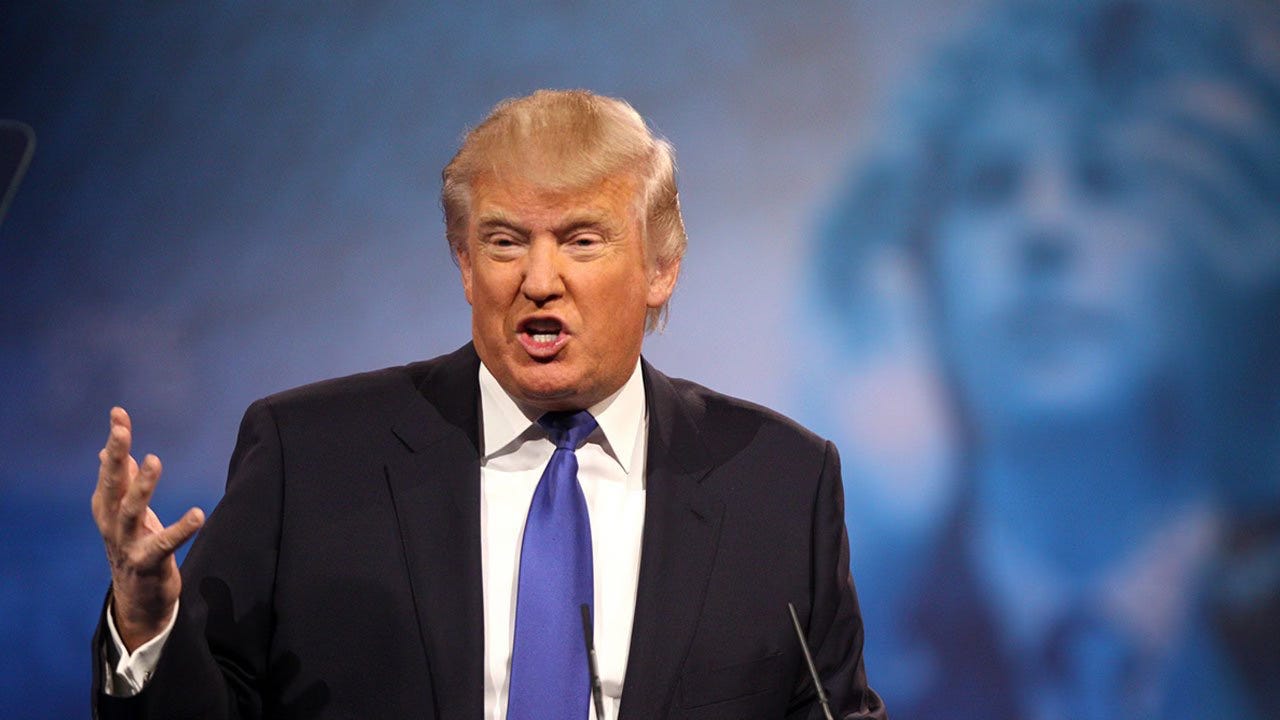
Nothing to see here folks, just your run-of-the-mill autocratic regime apparatus being installed for the safety of the pedo-in-chief. Gotta’ hide those files.
I know I’m tired of this shit and you probably are too. That is part of their strategy. Take care of yourselves and look out for each other.
We the people have always been the instrument of change. We’re a It’s up to us.
Thanks for reading
Bob
Glossary of Acronyms in Project 2025
And check out civ.works
Comments
Nothing yet. Say the first thing.
Sign in to join the conversation.