
We are told the deficit doesn’t matter, the national debt is just a number, and rising interest costs are manageable because America borrows in its own currency. And those people are correct. It doesn’t matter today because Treasury auctions still clear, the dollar remains dominant, and the government can always create more dollars. It doesn’t matter, until it does.
Washington discovered the greatest financial cheat code in history: spend more than you collect, borrow the difference, refinance the old debt, and repeat. Wars, recessions, pandemics, stimulus programs, entitlement expansions — everything gets financed with more debt. Nobody receives an immediate bill, so nobody feels compelled to stop. That works spectacularly well right up until the accumulated interest becomes a major part of the federal budget.
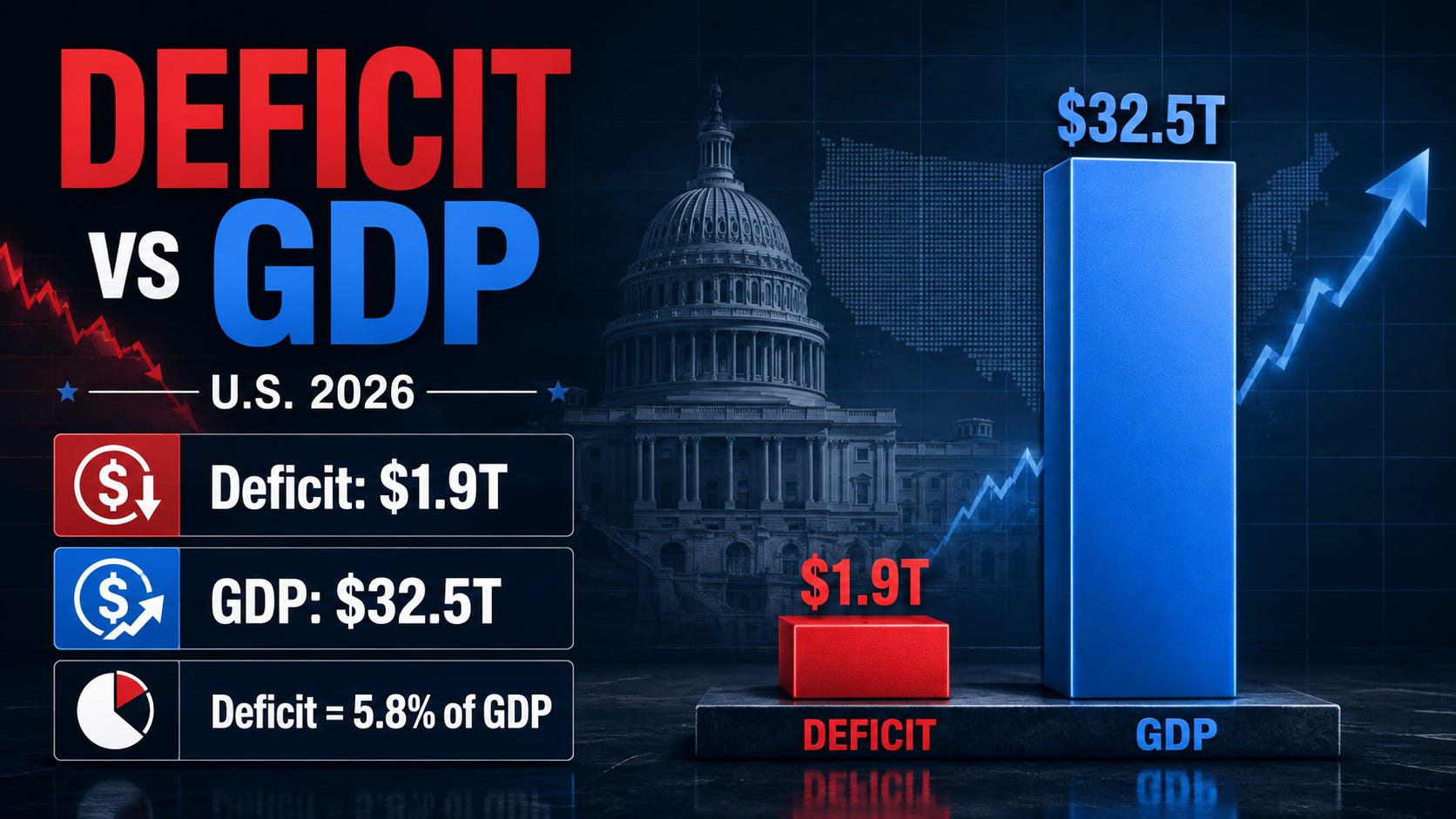
We are now operating around $40 trillion in gross federal debt, a number so large that it has almost lost meaning. The problem isn’t merely the headline figure; Washington must constantly refinance existing debt while borrowing trillions more to fund new deficits. CBO projects deficits continuing at roughly $2 trillion annually and climbing significantly over the next decade. We are not discussing how to repay $40 trillion — we are discussing how quickly to borrow the next $10 trillion.
The interest bill is where the problem becomes impossible to ignore. Federal net interest expense has climbed above $1 trillion annually and now rivals or exceeds major categories of government spending, including defense. Interest produces no roads, aircraft carriers, Social Security checks, laboratories or border agents. It is simply the price of spending decisions made years ago.
Still, the bond market has not revolted, and that is why deficit defenders can claim victory. Treasury debt remains the deepest and most liquid sovereign debt market in the world, while banks, pension funds, insurers and foreign governments continue buying it. America also owes its debts in dollars, a currency the Federal Reserve can create. That means outright default is unlikely to be the primary danger.
The greater danger is devaluation. Governments rarely want to tell creditors they will not be paid, because outright default creates immediate political and financial chaos. It is much easier to repay every promised dollar while quietly reducing what those dollars can buy. That is how a debt problem gradually becomes a currency problem.
As interest expense consumes more of the budget, political pressure for lower borrowing costs becomes enormous. If markets will not voluntarily provide sufficiently low rates, governments and central banks have plenty of tools available: bond purchases, liquidity programs, regulatory incentives and various forms of yield management. The terminology changes, but the objective does not. Keep the government financing machine functioning.
The arithmetic then begins working against you. Higher debt creates higher interest expense, higher interest expense creates larger deficits, larger deficits require more borrowing, and more borrowing creates still higher interest expense. Politicians are eventually forced to choose among higher taxes, major spending cuts, permanently high debt-service costs or currency depreciation. History suggests they usually prefer the option voters notice last.
That is why wealthy people tend to view inflation differently. Owners of businesses, real estate, stocks, commodities and precious metals own assets whose nominal values can adjust when the currency loses purchasing power. Cash does not enjoy that protection because $100,000 remains $100,000 even when it buys substantially less. Inflation therefore becomes an extraordinarily effective tax that Congress never has to formally vote for.
The eventual debt crisis probably will not arrive with a flashing red warning light. It will show up through weaker Treasury demand, higher long-term yields, persistent inflation, greater government intervention in bond markets and increasing political pressure on the Federal Reserve. Eventually investors stop asking whether Washington can repay its debts and start asking what the dollars they receive will actually be worth. That is when the game changes.
There is no magic debt number where everything suddenly collapses. America might reach $45 trillion, $50 trillion or considerably more before markets finally object, because confidence can survive financial excess for an extraordinarily long time. But confidence is not unlimited, and reserve-currency status is not a permanent license to borrow without consequence. We are moving toward the boundary rather than away from it.
So yes, the deficit doesn’t matter. The national debt doesn’t matter. Forty trillion dollars doesn’t matter. Until the day everybody realizes that it does.
No posts
Comments
Nothing yet. Say the first thing.
Sign in to join the conversation.