
In September 1988, Bidar, a place of long-standing reverence by Deccan Sikhs and association with Guru Nanak, became the scene of the worst anti-Sikh violence since November 1984.1 Over several days, mobs had killed 6 Sikh students, along with injuring many more and had burnt and looted every Sikh-owned home and business. Contemporary estimates placed property damage at more than one crore rupees, with Sikh homes, businesses and other properties destroyed, looted or damaged, while historic Sikh shrines, including the gurdwara associated with Mai Bhago, were desecrated and attacked.2 After an informal media blackout, the events largely faded from public memory, even among many Sikhs and had been eclipsed by other anti-Sikh tragedies.
What exactly occurred has still not been fully established. Through the available independent accounts of the Nagrik Ekta Manch, the Punjab Human Rights Organisation (PHRO), India Today, Economic and Political Weekly and other contemporary reporting, it is nevertheless possible to reconstruct a general outline of events while recognising where individual accounts diverge in detail.
Bidar has long held a special place in Sikh history. During one of his udasis, Guru Nanak passed through the region and established the spring that later became known as Nanak Jhira Sahib, among one of the most important Sikh shrines in southern India.3 The site was later visited by Mai Bhago and remained under Muslim custodianship until 1948, when its administration passed into Sikh hands.4 Despite this historical significance, Bidar’s Sikh population remained exceptionally small. According to the 1971 Karnataka census, only 126 Sikhs lived in the entire district. By 1988, there were just eleven established Sikh households and nine Sikh-owned businesses within the town itself.5
The Sikh community’s presence increased dramatically after Hyderabad-based Sikh entrepreneur Joga Singh established various institutions in Bidar. This had began with a hospital in 1969, he subsequently founded schools, an engineering college, a polytechnic, a pharmaceutical college, a nursing college and other institutions that attracted students from Punjab, Haryana, Delhi and Rajasthan.6 Hundreds of Sikh students came to Bidar each year and lived in rented accommodation throughout the town’s newer residential colonies.7
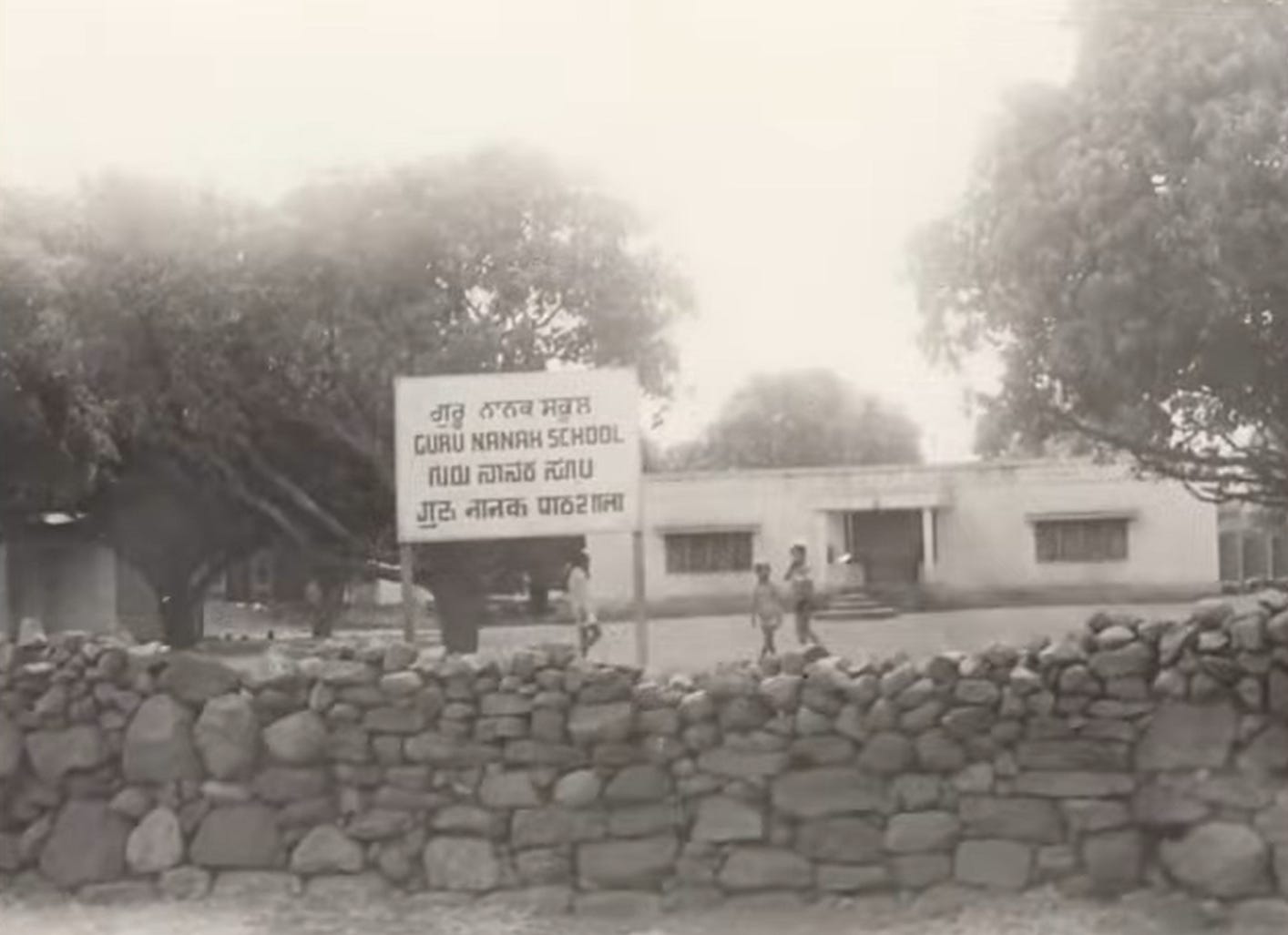
Their arrival transformed sections of the local economy. This increased demand for housing by students had raised rents and property values, while the comparatively affluent backgrounds of many students contrasted sharply with surrounding neighbourhoods. One contemporary observer described the Sikh educational enclave as “an island of affluence in the midst of an ocean of poverty”, reflecting perceptions that economic disparity had become a source of resentment among sections of the local population.8
Joga Singh’s growing institutional influence also attracted organised opposition. The Rashtriya Rachanatmak Karya Samithi, led by Kashinath Rao Belure and allegedly supported by local Congress politicians, had previously circulated hostile pamphlets directed against him.9 Rumours also spread that Sikhs intended eventually to establish an independent Sikh state in Bidar should their educational and economic influence continue to expand.10
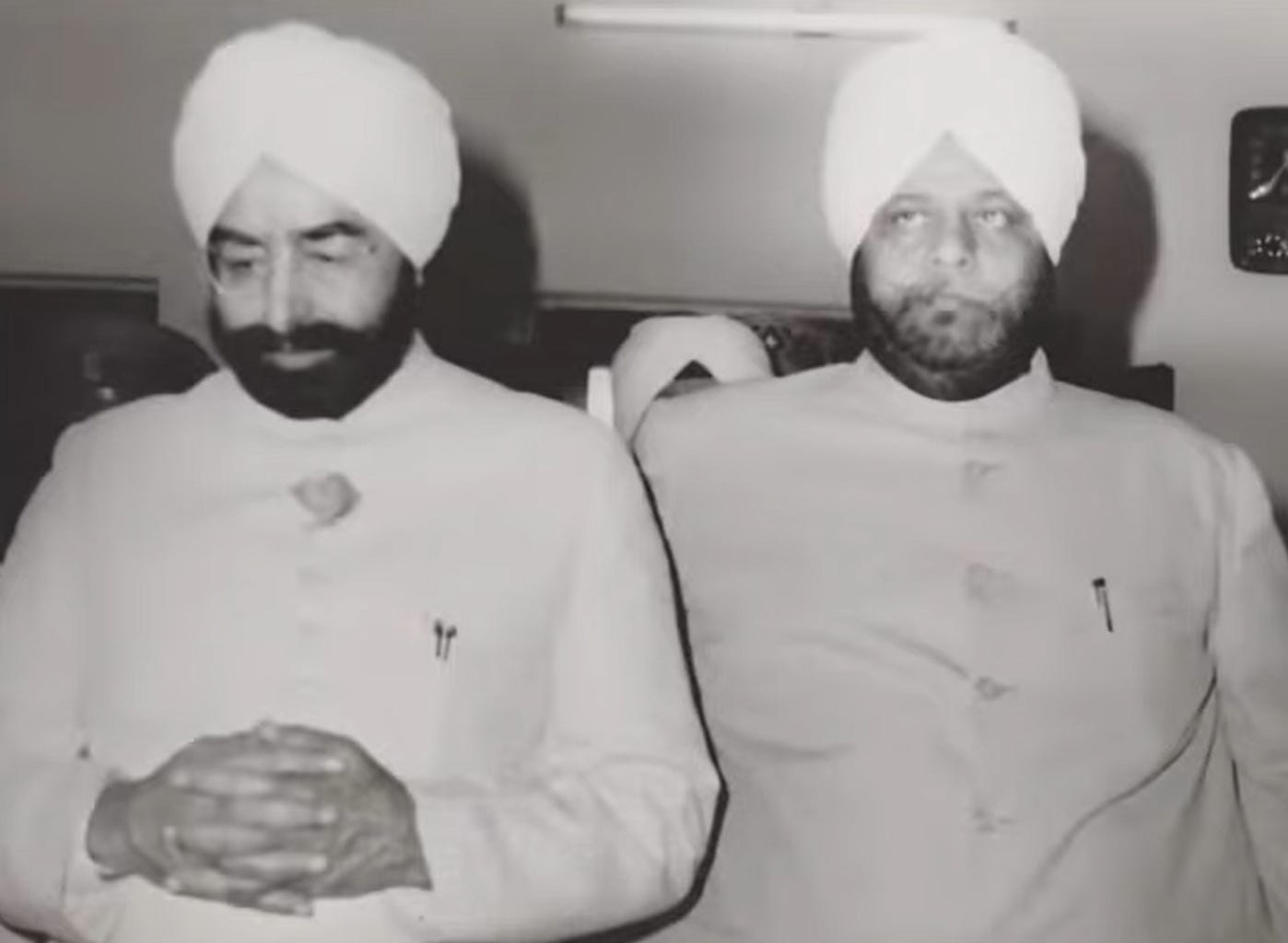
According to the later recollections of Gurinder Singh’s mother, Kuldip Kaur, hostility towards the Sikh community had become visible well before September 1988. She recalled learning after the violence that Shiv Sena activists had already caused disturbances in Bidar during 1987 and that increasing resentment had accompanied the expansion of Joga Singh’s educational institutions. As she later understood events, opponents believed that Sikhs were acquiring excessive local influence through these institutions. Whether coincidental or deliberate, these transfers later became part of the community’s understanding of the events that followed.11
A combination of all these factors: economic rivalry, political hostility, rumours regarding Sikh ambitions and the growing prominence of Sikh educational institutions formed an important background to the violence that erupted in September 1988.
By every contemporary account the immediate trigger was trivial. On the evening of the 14th of September 1988, a group of Sikh students returning from dinner encountered local youths collecting donations for Ganesh Chaturthi celebrations. The students replied that they had already contributed and declined to pay again. A confrontation followed in which the Sikh students were outnumbered and assaulted. According to later accounts, these students were subsequently hunted down during the violence that followed.1213
Initially believed to be a local altercation, it became clear that this was a coordinated anti-Sikh attack. During the night, Sikh students’ residences came under assault. By the morning of the 15th of September, organised mobs had assembled outside Guru Nanak Engineering College, Sikh homes, educational institutions, gurdwaras and Sikh-owned businesses across Bidar.14
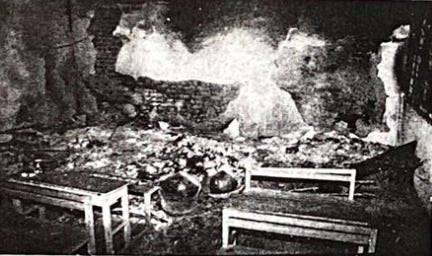
Multiple contemporary accounts point towards prior organisation rather than spontaneous mob violence. Witnesses referred to meetings preceding the attacks, targeted looting, selective arson and carefully coordinated attacks on Sikh businesses.15 Every Sikh-owned business in Bidar was either looted or burned. Sikh homes across several residential colonies were attacked and ransacked. Historic gurdwaras, including the Mai Bhago Gurdwara, were desecrated.16 Contemporary estimates placed total property losses at more than one crore rupees.17
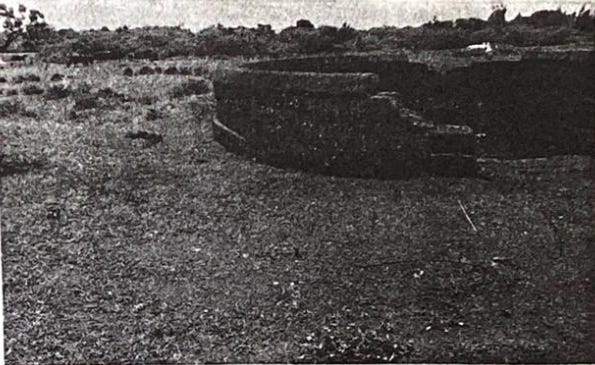
The most horrific incident involved four Sikh students who were intercepted roughly a mile from their residence. After being beaten and repeatedly stabbed, they were thrown into a well close to the residence of the district Superintendent of Police. Their decomposed bodies were recovered three days later. Two additional Sikh students died from stab wounds sustained in separate attacks, bringing the death toll to six.1819
The number of injured varies considerably between investigations. India Today20 reported around thirty injuries, the CPDR-affiliated Economic and Political Weekly21 investigation estimated approximately fifty, while both the PHRO22 and the Nagrik Ekta Manch23 placed the number at well over one hundred.
Even the identities of the four students recovered from the well weren’t consistent. The PHRO report lists Gurinder Singh, Harvinder Singh, Amarjit Singh and Balvinder Singh Bawra.24 The Economic and Political Weekly investigation instead identifies Kanwaljeet S. Bedi, K. S. Walia, Bir Singh and Balwinder S. Babra. Only one name appears in both lists.25
Every investigating body reached the same verdict regarding the conduct of the local administration: the authorities had received ample warning that communal violence was a possibility yet failed to take preventive action. Sikh community leaders had written to the Superintendent of Police as early as October 1987 warning that tensions surrounding the following year’s religious festivities could erupt into anti-Sikh violence.26 According to the PHRO, Central intelligence agencies had likewise reported increasing anti-Sikh sentiment in Bidar by May 1988. Despite these warnings, no meaningful precautionary measures were implemented. On the night the violence began, both the District Magistrate and the Sub-Divisional Magistrate were absent from the station.27
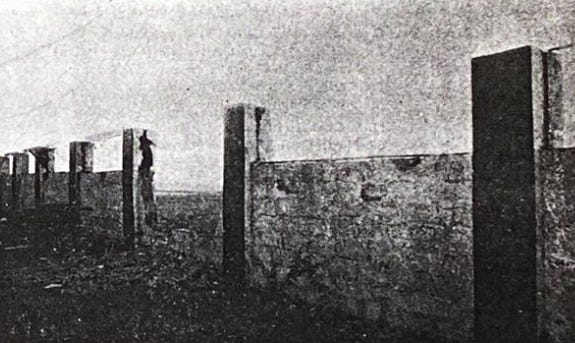
Once the attacks commenced, numerous eyewitnesses and investigators described the police as passive and, in several instances, actively complicit. Sikh students later recounted that when they attempted to defend the Guru Nanak Engineering College campus against a mob attempting to demolish its boundary wall, the police fired tear gas shells at the students rather than dispersing the attackers.28
As one contemporary report in The Indian Express observed:
“Police contingent not only allowed the mob which attacked the college to pull down a wall, it also fired tear gas shells at the students, not the mob. To make it quite clear which side they were on, police arrested Sikh students.” 29
Fourty-one Sikh students were subsequently taken into what the police initially described as protective custody. The authorities later denied that they were being detained until the Deputy Inspector General intervened several days afterwards.30
The district Superintendent of Police, Dr B. E. Umapathy, defended the force’s conduct in an interview with India Today, stating that the police had been caught unprepared by the scale of the violence and claiming that he had fractured his hand while attempting to prevent an arsonist from setting fire to property with an iron rod.31 Other contemporary accounts alleged that Sikh detainees were assaulted while in police custody and that Umapathy himself condoned such treatment. During the Chief Minister’s subsequent visit, Sikh representatives demanded his immediate removal.32
Justice Ajit Singh Bains, who led the PHRO investigation, reached one of the strongest conclusions of any inquiry. His report argued that the police had done virtually nothing to prevent the attacks despite repeated warnings and, in several instances, had facilitated the violence through their inaction and treatment of Sikh victims.33
The violence was accompanied by what amounted to an informal media blackout. Kuldip Nayar, writing in The Tribune 3 weeks after the riots, noted that national newspapers that had extensively covered protests in remote areas that failed to report the events in Bidar, until Sikh students who’d fled reached Delhi and recounted their experiences.34 All India Radio and Doordarshan remained silent for even longer. The PHRO concluded that the suppression of reporting appeared deliberate rather than accidental.35
The explanation advanced immediately after the violence centred upon allegations that Sikh students had behaved arrogantly, harassed local women or otherwise antagonised sections of the local population. These claims were examined by several independent investigations.
The PHRO found no evidence that formal complaints regarding harassment had ever been lodged with either the police or the educational authorities. It also noted that the established Sikh community in Bidar consisted largely of modest shopkeepers rather than the wealthy elite portrayed by local rumours.36
India Today accepted that genuine tensions existed between local residents and the influx of comparatively affluent students from northern India. Rising rents, increased living costs and social resentment undoubtedly contributed to hostility. The magazine nevertheless recorded the view of Sikh students themselves, one of whom argued that local resentment stemmed primarily from jealousy towards Sikhs whom many perceived as “living a good life.”37
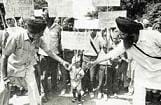
Most contemporary investigators reached a broader conclusion. The Nagrik Ekta Manch38, India Today39 and the CPDR-affiliated Economic and Political Weekly40 report all suggested that the September violence was considerably more organised than an ordinary communal riot. They concluded that commercial rivalry surrounding Joga Singh’s expanding institutions became intertwined with organised political mobilisation. According to these investigations, organisations including NAVY, Swagat and the newly formed New Shiv Sena exploited existing tensions in an attempt to weaken Joga Singh’s institutional influence by using Sikh students as leverage.
Survivors and later investigations further identified local RSS and Shiv Sena activists as principal organisers and leaders of the attacking mobs.41 The PHRO accepted that commercial rivalry contributed significantly to the unrest but ultimately advanced a broader political explanation. It argued that following the anti-Sikh massacres of November 1984, sections of the Congress Party had recognised that anti-Sikh mobilisation could continue to serve as an effective electoral strategy.42
The Nagrik Ekta Manch investigation went further. It alleged that local BJP and Congress leaders actively obstructed attempts to conduct independent investigations by portraying Sikh students as extremists. According to the report, efforts were also made to divert public attention towards allegations against the victims while shielding individuals identified by survivors as organisers of the attacks.43
These competing explanations need not be regarded as mutually exclusive. All these factors: economic rivalry, political opportunism, communal mobilisation and longstanding resentment appear instead to have reinforced one another, culminating in one of the most severe outbreaks of anti-Sikh violence after 1984.
The Karnataka Government’s eventual response came only after the violence had largely subsided. Initially, the administration announced a magisterial inquiry but pressure from Sikh organisations resulted in the investigation being upgraded to one headed by a High Court judge. Compensation of Rs 20,000 was announced for the family of each deceased student and Rs 5,000 for those injured, while public assurances were given that those responsible would be brought to justice.44
Neither did the violence end with the restoration of order in Bidar itself. On the 25th of September, mobs attacked the gurdwara at nearby Janawada, approximately fifteen kilometres from Bidar. The Nishan Sahib was torn down, burnt and desecrated before the mob dispersed. Although further arrests were made following these attacks, no successful prosecutions resulted.45
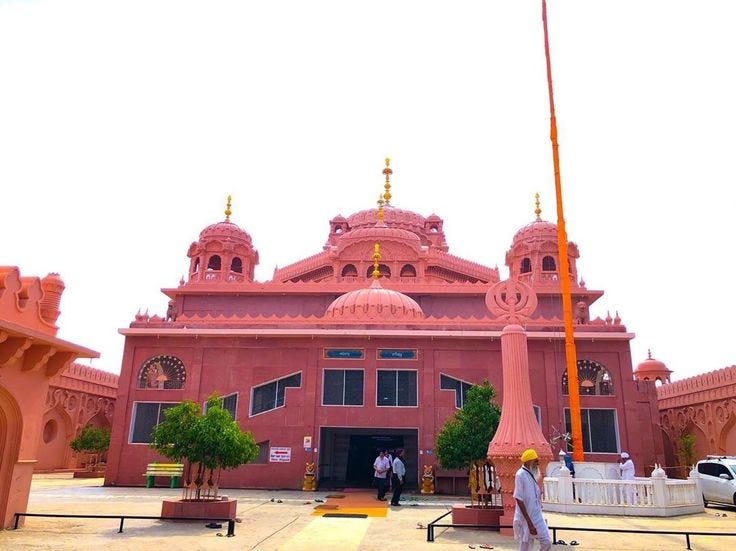
Large numbers of arrests followed the restoration of order. Contemporary reports indicate that approximately two hundred people were detained during and after the disturbances, while more than one hundred arrests were also made following subsequent violence elsewhere in the district. Despite these arrests, no one was ultimately convicted or held legally accountable for the anti-Sikh pogrom. The promised accountability never materialised and the inquiry itself remained unresolved well into October 1988.46
Among the six students killed was Gurinder Singh, known as Ginnu, a fourth-year engineering student from South Delhi. His family had survived the anti-Sikh massacres of November 1984 and believed that a Sikh educational institution in southern India would provide greater security than Delhi, had sent him to continue his studies at Bidar. Instead, they found themselves mourning another son of the same cycle of anti-Sikh violence only four years later.47
His mother, Kuldip Kaur, later recalled that the family remained unaware of the attacks, until receiving word through an acquaintance at Bidar airport several days after the violence had begun. Travelling to Karnataka, she identified her son’s body only by his clothing after it had lain for three days in a well situated barely one hundred metres from the residence of the district Superintendent of Police.48
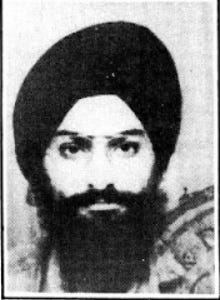
Kuldip Kaur later stated that Sikh homes had been marked before the attacks commenced and believed that bodies had been thrown into wells in an attempt to conceal the true scale of the killings. She also came to believe that the violence had been preceded by months of organised hostility, recalling that Shiv Sena activists had already caused disturbances during 1987 and that increasing resentment had accompanied the rapid expansion of Joga Singh’s educational institutions.49
According to her understanding of events, influential Sikh government officers had been transferred away from Bidar before September 1988, leaving only a Sikh officer posted at the airport while others had been removed from positions where they might have exercised influence during the crisis. Gurinder Singh’s father, Dr Mohinder Singh, personally financed the Nagrik Ekta Manch investigation because he wanted an inquiry that could not be dismissed as communally partisan.50
According to Kuldip Kaur, one former Sikh student who had witnessed the violence came to hold Joga Singh personally responsible for failing to protect the students under his care. That student, also named Mohinder Singh, subsequently killed Joga Singh before taking his own life during a police pursuit.5152
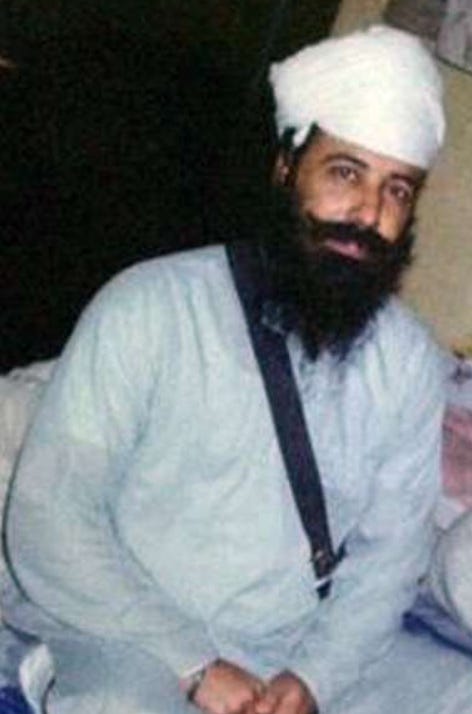
The Bidar violence also left a lasting political legacy. A small number of those who experienced the pogrom later joined the Punjab insurgency. One notable example was Bhai Navneet Singh Qadian, who had studied civil engineering in Bidar and emerged as a leader of a coalition of Khalistan Liberation Force splinter organisations.53 For a few survivors, Bidar became another formative experience reinforcing the belief that peaceful avenues for justice had failed.
Nearly four decades later, the Bidar pogrom remains one of the least remembered episodes of anti-Sikh violence in independent India. Almost everything known about the events survives because of the efforts of lawyers, individual journalists, civil liberties organisations and human rights investigators who documented the violence despite an effective national media blackout. Although, contemporary accounts differ regarding the precise casualty figures and even the identities of those murdered, they converge on several fundamental conclusions: that the attacks were organised; that the police were, at best, wilfully negligent and, at worst, actively complicit; that economic rivalry and organised political mobilisation combined to create the conditions for the violence; and that meaningful accountability never followed. The families of those murdered in Bidar in September 1988 continue to await the justice that was promised but wasn’t ever delivered.
Nagrik Ekta Manch, A Warning from Bidar: A Report on the Anti-Sikh Disturbances. 1988.
Bains, A.S. and Gurtej Singh, Bidar: Nail in the Coffin of Indian Unity. 1988.
H.S. Singh, The Encyclopedia of Sikhism: Over 1000 entries. 2000. Page 37.
Karnataka State Gazetteer: Bidar District. Page 112.
Nagrik Ekta Manch, A Warning from Bidar: A Report on the Anti-Sikh Disturbances. 1988.
R. Nayar & Vrijendra, Anti-Sikh Riot in Bidar, Economic and Political Weekly. Vol. 23, No. 44. 1988. Page 2262-2264.
Nagrik Ekta Manch, A Warning from Bidar: A Report on the Anti-Sikh Disturbances. 1988.
R. Nayar & Vrijendra, Anti-Sikh Riot in Bidar, Economic and Political Weekly. Vol. 23, No. 44. 1988. Page 2262-2264.
Nagrik Ekta Manch, A Warning from Bidar: A Report on the Anti-Sikh Disturbances. 1988.
Bains, A.S. and Gurtej Singh, Bidar: Nail in the Coffin of Indian Unity. 1988.
Bains, A.S. and Gurtej Singh, Bidar: Nail in the Coffin of Indian Unity. 1988.
Nagrik Ekta Manch, A Warning from Bidar: A Report on the Anti-Sikh Disturbances. 1988.
Bains, A.S. and Gurtej Singh, Bidar: Nail in the Coffin of Indian Unity. 1988.
Bains, A.S. and Gurtej Singh. Bidar: Nail in the Coffin of Indian Unity. 1988.
Bains, A.S. and Gurtej Singh, Bidar: Nail in the Coffin of Indian Unity. 1988.
Nagrik Ekta Manch, A Warning from Bidar: A Report on the Anti-Sikh Disturbances. 1988.
R. Nayar & Vrijendra, Anti-Sikh Riot in Bidar, Economic and Political Weekly. Vol. 23, No. 44. 1988. Page 2262-2264.
Bains, A.S. and Gurtej Singh, Bidar: Nail in the Coffin of Indian Unity. 1988.
Nagrik Ekta Manch, A Warning from Bidar: A Report on the Anti-Sikh Disturbances. 1988.
Bains, A.S. and Gurtej Singh. Bidar: Nail in the Coffin of Indian Unity. 1988.
R. Nayar & Vrijendra, Anti-Sikh Riot in Bidar, Economic and Political Weekly. Vol. 23, No. 44. 1988. Page 2262-2264.
Bains, A.S. and Gurtej Singh, Bidar: Nail in the Coffin of Indian Unity. 1988.
Bains, A.S. and Gurtej Singh, Bidar: Nail in the Coffin of Indian Unity. 1988.
Nagrik Ekta Manch, A Warning from Bidar: A Report on the Anti-Sikh Disturbances. 1988.
World Sikh News, Bloodbath in Bidar, 28 October 1988; quoting a contemporary report in The Indian Express.
Nagrik Ekta Manch, A Warning from Bidar: A Report on the Anti-Sikh Disturbances. 1988.
R. Nayar & Vrijendra, Anti-Sikh Riot in Bidar, Economic and Political Weekly. Vol. 23, No. 44. 1988. Page 2262-2264.
Bains, A.S. and Gurtej Singh, Bidar: Nail in the Coffin of Indian Unity. 1988.
Nayar, K, The Lessons from Bidar. The Tribune, October 6, 1988.
Bains, A.S. and Gurtej Singh, Bidar: Nail in the Coffin of Indian Unity. 1988.
Bains, A.S. and Gurtej Singh, Bidar: Nail in the Coffin of Indian Unity. 1988.
Nagrik Ekta Manch, A Warning from Bidar: A Report on the Anti-Sikh Disturbances. 1988.
R. Nayar & Vrijendra, Anti-Sikh Riot in Bidar, Economic and Political Weekly. Vol. 23, No. 44. 1988. Page 2262-2264.
Bains, A.S. and Gurtej Singh, Bidar: Nail in the Coffin of Indian Unity. 1988.
Nagrik Ekta Manch, A Warning from Bidar: A Report on the Anti-Sikh Disturbances. 1988.
R. Nayar & Vrijendra, Anti-Sikh Riot in Bidar, Economic and Political Weekly. Vol. 23, No. 44. 1988. Page 2262-2264.
Nagrik Ekta Manch, A Warning from Bidar: A Report on the Anti-Sikh Disturbances. 1988.
Nagrik Ekta Manch, A Warning from Bidar: A Report on the Anti-Sikh Disturbances. 1988.
Comments
Nothing yet. Say the first thing.
Sign in to join the conversation.