
Walk into almost any bookstore in America and you’ll find Jalal al-Din Rumi sitting comfortably among self-help books, mindfulness guides, and collections of inspirational quotes.
His words appear in wedding speeches, Instagram captions, yoga studios, and motivational posters. He is often presented as a poet of universal love, personal growth, and spirituality beyond religion.
Yet ask someone in Iran, Turkey, Afghanistan, Pakistan, or India who Rumi was, and you’ll likely receive a very different answer. He was not simply a poet. He was Mawlana, “Our Master.”
A jurist. A Quran scholar. A theologian. A Sufi master. A man whose poetry flowed directly from his devotion to Allah, the Quran, and the Prophet Muhammad ﷺ.
The difference is not merely one of translation. It reflects two entirely different ways of understanding both Rumi and Islam itself.
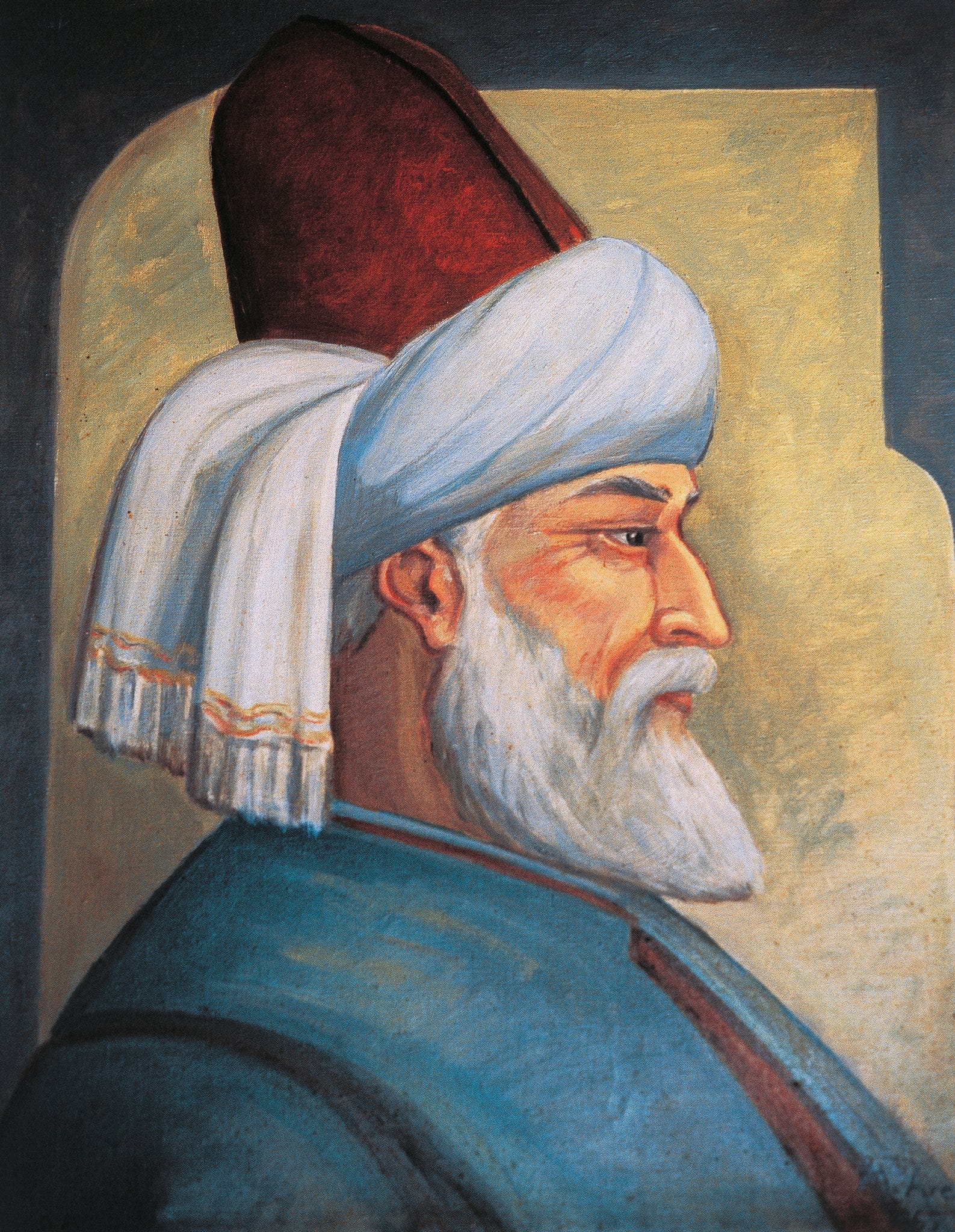
In much of the West, Rumi has become a symbol of spirituality detached from religion.
Many of his most famous English quotations come from loose translations that intentionally remove explicit references to Islam. The result is a version of Rumi that feels universally accessible. Readers encounter love without Shariah, spirituality without theology, and mysticism without the Quran.
Across much of the Muslim world, such a separation would seem impossible.
His masterpiece, the Masnavi, has long been described by scholars as “the Quran in Persian,” not because Muslims considered it revelation, but because it explains Quranic teachings through stories, parables, and poetry. Every page points back to God, revelation, purification of the soul, and obedience to divine guidance.
His poetry is not an escape from Islam. It is an invitation deeper into it.
Rumi’s influence throughout the Muslim world extends far beyond literature.
In Iran, generations of students memorize his verses in school. His poetry shapes Persian literature and classical music, and many people quote his couplets as naturally as English speakers quote Shakespeare.
In Turkey, his resting place in Konya remains one of the country’s most significant cultural and spiritual landmarks. The Mevlevi Order, founded by his followers, preserved his teachings through the famous whirling ceremony centered on remembrance of Allah.
In Afghanistan, his birthplace of Balkh remains a source of immense national pride, and his works continue to occupy an important place in Afghan literary and spiritual traditions.
Throughout South Asia, his themes echo through Qawwali and centuries of Islamic scholarship. He is not simply admired. He is woven into the civilization itself.
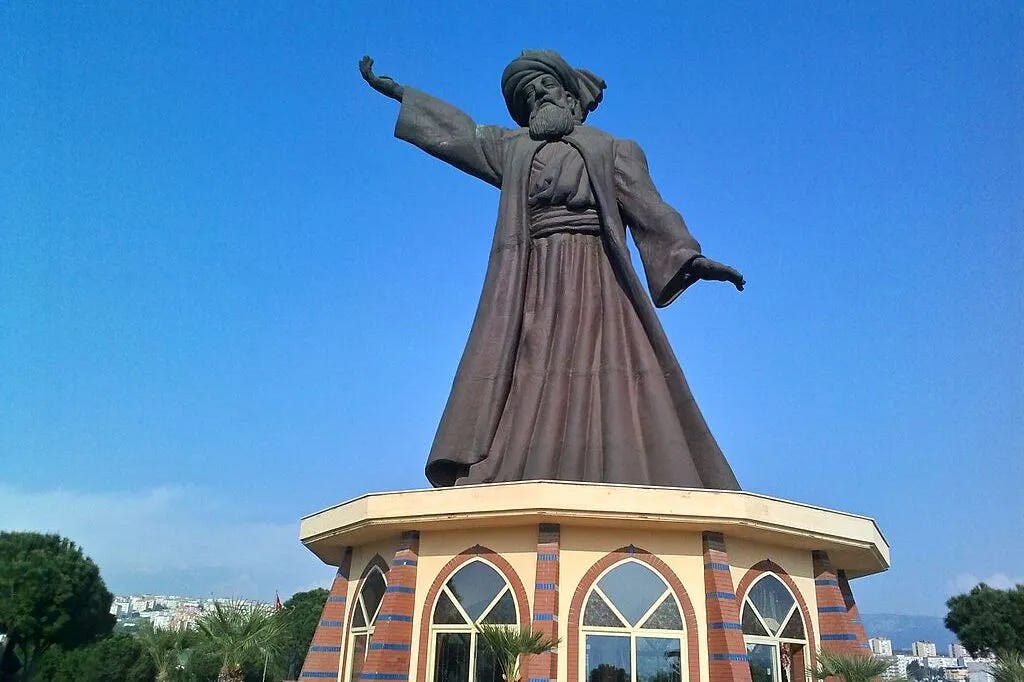
This is where something fascinating happens. When Rumi entered Western culture, much of his explicitly Islamic identity stayed behind. His references to the Quran became generalized spirituality. His devotion to Prophet Muhammad ﷺ became abstract love. His discussions of Islamic law became discussions of personal authenticity. The poetry survived. The framework that produced it often disappeared.
Many Muslims have described this as appreciating the fruit while ignoring the tree that produced it.
This creates an interesting situation for Muslims living in the West. For many young Muslims, especially those raised in Europe or North America, religion often carries social baggage. Islam is frequently discussed through terrorism, extremism, politics, women’s rights, or cultural conflict.
Quoting a classical legal text may make a conversation uncomfortable. Discussing Islamic theology can immediately become defensive. Quoting Rumi rarely does. Instead, people smile. They agree. They share the quote.
In this sense, Rumi becomes what sociologists might call safe cultural currency. He allows Muslims to introduce part of their religious heritage in a form that has already been accepted by the surrounding culture.
A young Muslim may post a verse by Rumi not because they are avoiding Islam, but because it is one of the few expressions of Islamic civilization that requires no explanation. It becomes an easier starting point. A bridge instead of a barrier. For Muslims trying to reconcile multiple identities, Rumi can feel like common ground where both worlds meet.
Rumi’s popularity has also created another phenomenon among some Muslims in the West. Instead of serving as a bridge back to the broader Islamic tradition, the Western image of Rumi can become a substitute for it.
In this version, Islam is reduced to feelings rather than obligations. Prayer becomes optional because “God knows my heart.” Fasting becomes symbolic rather than practiced. Religious law is viewed as less important than personal spirituality. The Quran becomes secondary to inspirational poetry.
Rumi’s language of love and mercy is embraced, while the very practices that shaped his own life are quietly left behind. Ironically, this would have puzzled Rumi himself.
He did not see divine love as an alternative to worship. He saw worship as one of its highest expressions. The man whose verses are quoted at yoga retreats also spent his life studying Islamic jurisprudence, teaching the Quran, remembering Allah, and following the Sunnah of the Prophet Muhammad ﷺ. His poetry flowed from that life of discipline, not in spite of it.
For some Muslims, then, Rumi becomes a comfortable form of Islam that is more easily accepted in secular society. It is an Islam of beautiful quotes without difficult commitments, of spirituality without structure, and of inspiration without obligation.
Whether intentional or not, this mirrors the way Rumi himself has often been presented in the West.
Not every Western Muslim embraces Rumi for this reason. Many are frustrated by the very way he has been presented. They see a civilization celebrating one of Islam’s greatest scholars while simultaneously removing the faith that inspired every page he wrote. For them, reclaiming Rumi means restoring his context. When someone shares a beautiful Rumi quote, they respond by pointing out that its author was a Quran scholar. When people describe him as “beyond religion,” they explain that his understanding of love began with love of Allah and His Messenger ﷺ.
Their goal is not to make Rumi more exclusive. It is to make him more historically honest.
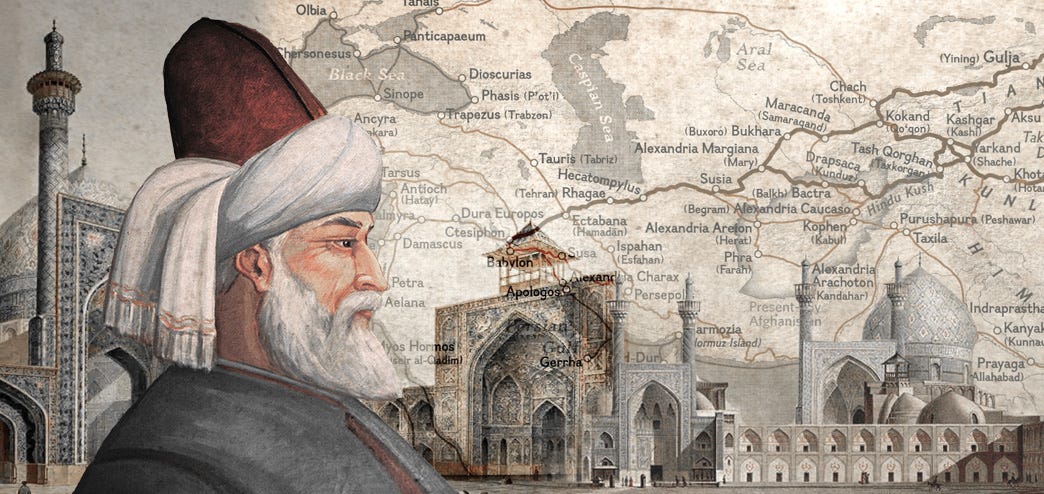
Perhaps this explains why Rumi remains so powerful for Western Muslims.
For some, he is a bridge. For some, he is an excuse. For others, he is a defense.
Some discover him in English translations and eventually become curious enough to study the Quran, Persian literature, and Islamic spirituality. Some use him as an example to make Islam spiritual, not ritual.
Others use him to challenge misconceptions about Islamic civilization, asking an uncomfortable question: If the world loves Rumi’s wisdom, why is it so reluctant to acknowledge where that wisdom came from?
The popularity of Rumi demonstrates something larger than one man’s poetry. It shows how cultures adopt, reshape, and sometimes reinvent historical figures to fit contemporary needs. The West largely embraced Rumi as a universal spiritual teacher. The Muslim world never stopped seeing him as an Islamic one. Neither observation fully captures the whole picture.
To understand Rumi completely requires both his poetry and his faith, both his beauty and his beliefs. For Rumi himself never saw those as separate. The love he wrote about was never detached from God. The journey he described always began with revelation.
And the poetry that has inspired millions for nearly eight centuries was, in his own understanding, simply another path leading the heart back to Allah.
Masnavi
Jalal al-Din Rumi
UNESCO (2007 International Rumi Year)
Mevlana Museum
Mevlevi Order
Thanks for reading The Muslim Observer! This post is public so feel free to share it.
No posts
Comments
Nothing yet. Say the first thing.
Sign in to join the conversation.