
A few years ago, a woman who tends a bird sanctuary visited All You Need and approached our chicken coop. She began doting on each one of the chickens individually, cooing and pointing, petting those who let her near. What were their names? Oh uh, they don’t really have any…
I could tell she was a bit concerned?—-about my chicken’s quarters, or maybe my lack of affection for the birds I tended to. Her seemingly unconditional love for my anonymous chickens became a splinter in my toe.
At first I judged her—how could she be so overly precious, to care so much about the lives of chickens that she wasn’t even responsible for? But then I turned the questioning on to me. How had I become so callous to my chickens as to hardly regard them as individuals? Why didn’t I seem to…feel anything for them?
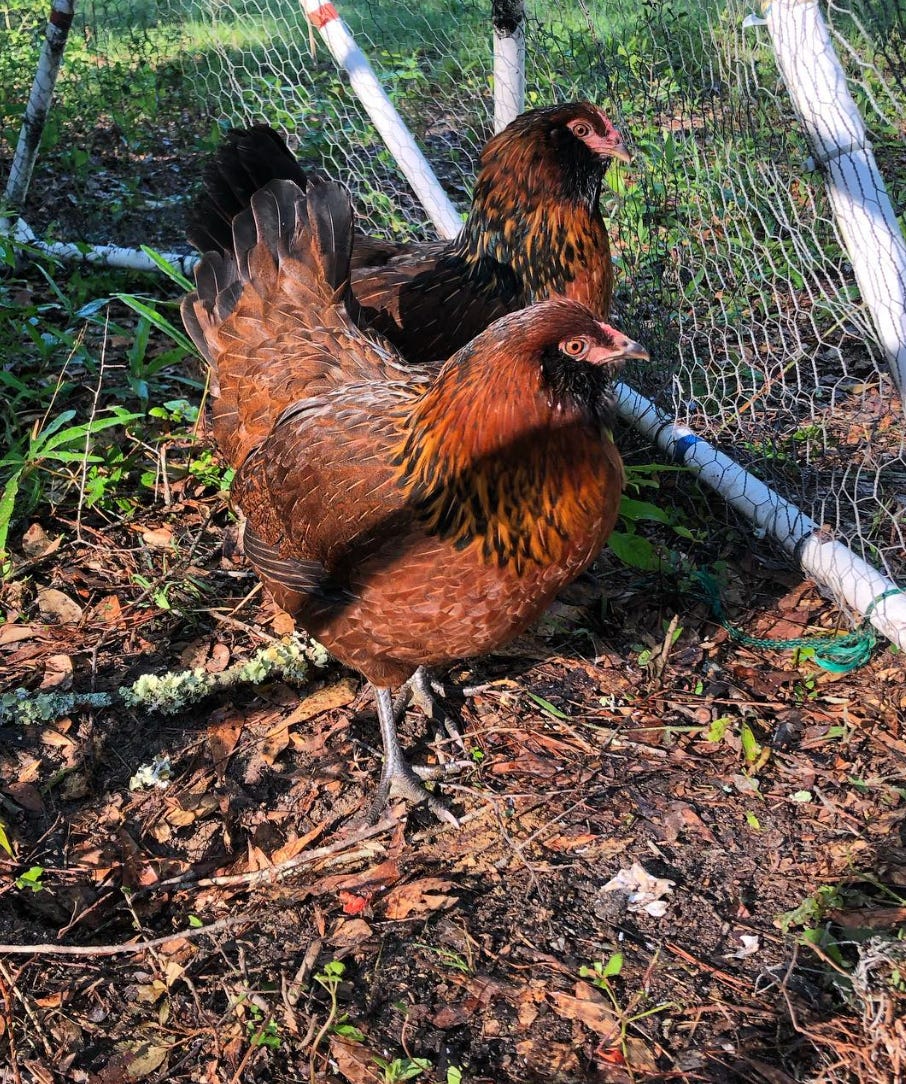
I got my first flock of chickens a couple weeks into the pandemic lockdown. 8 beautiful Ameraucanas, vast in their variety of feathered coats and blue or brown or white or speckled eggs. And one Ayam Cemani, an entirely black breed, including a black comb, black organs, and lays dark eggs.
Immediately the Ameraucanas bullied the black chicken. Eventually, they heckled and pecked and ostracized her into sickness. This was just the first of many examples of how chickens can embody some of our basest human instincts with profound, imagistic symbolisms.
She died quickly after. I was a bit shocked. I didn’t know the birds could go from well to sick to dead so fast. I didn’t know what signs to look for. But I also brushed it off—it was a rare breed of chicken, they were known to be sensitive and prone to illness. Paired with being bullied, she was a goner to start. I resolved to pay better attention to my birds. Another chicken wouldn’t die like that on my watch.
I had no idea the gruesome massacres that would reveal themselves in the years to come.
It is hard to capture into words the degree and scope of struggle, displacement, illness, familial disruption, poverty, addiction and mental illness that can be traced back to August 29, 2005, when Hurricane Katrina made landfall as a Category 3 storm on the LA/MS border. So many wounds still seething with pus today on our streets can be traced back to that blunt force trauma.
I’ve known a lot of young folks who have died in those following years from drug overdoses. I don’t know if there has been a year since 2005 that I haven’t known someone to die from suicide or overdose. In one particularly tragic episode three people that were in my greater social network died from the same “bad batch” of drugs that was sold and consumed over a 2-3 month period. I don’t know what to make of the pain I feel about these deaths.
No one in my inner circle has died. No one that I communicated with on a regular basis. These were people I went to the same parties as, shows, festivals. Some I knew better than others. But no one super close. And still sometimes when I walk the streets of New Orleans I remember these people, the last interactions I had with them, the lives of the people they were closest to that I still intersect with today, the ongoing impacts of their deaths.
And then I wonder, how much should I feel about their deaths? How much of the grief of their deaths is really mine? Is there something pathological in me that I think about them so much? Are their deaths just a symptom of the slow death of a place, New Orleans, my birthplace, my home?
My mind always brings me back to the ones I’m close with right now, the ones who feel like they are holding on by loose and fraying threads. The ones living on a cliff’s edge of life and death, mired in chronic illness, substance/addiction issues, grief, despair, economic instability—is that person ok? Are they going to make it? Is there anything more I could do, or should do, to keep them alive?
With the chickens it was more clear cut. I bring chickens onto the land I live on, and so I am responsible for them, for keeping them alive. If one of them dies, it’s on my watch. I should done more. But what do we owe each other? How close do we have to be, for me to care whether you live or die? Is everyone who went to the same high school parties that I went to one of my flock? Does it mean something still that we all experienced Katrina at a young age together? Is this all a trauma bond and we are going down with the ship? Or is this love?
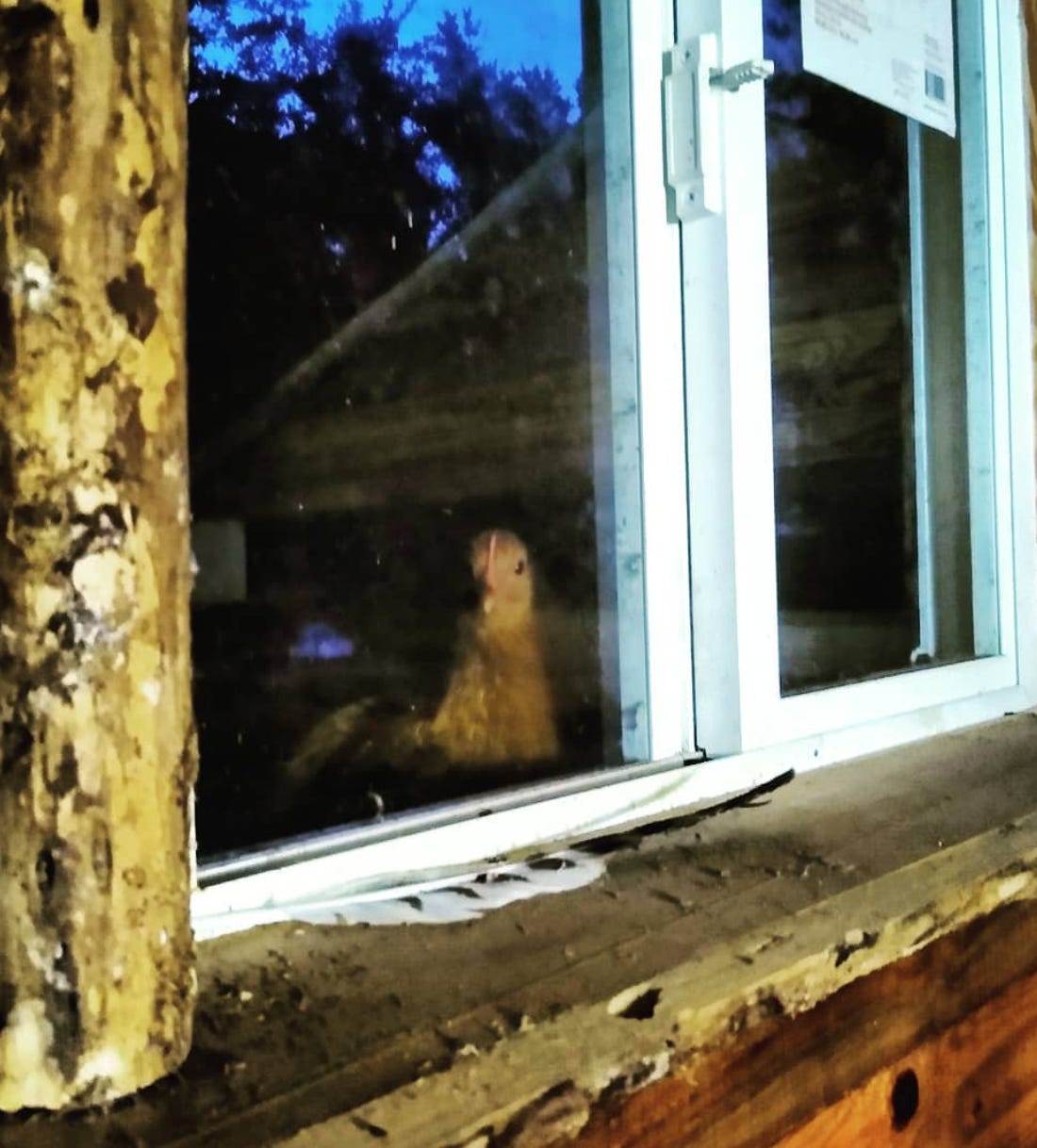
The first Americaunas were stable after the Ayam Cemani died. They started laying sweet little blue eggs that tasted good. But they started getting sick, listless, dirty vents. We tried natural methods. We got them medicine from the vet. They wouldn’t die, or basically each one got sick like one at a time, and when they were sick, they just stayed alive, but ill, for a long time before they died. It was hard to know if the interventions were helping.
A few of them did die, and then we had 5 that were happy for a while. And then they got sick again.
It was around this time that my partner and I decided to start trying to have a baby. I got pregnant right away, which was thrilling but also shocking. I had thought it was going to take longer. I was very scared. It was still 2020, the year that lasted decades, passing like an epic movie I watched with subtitles in a language vaguely familiar.
But it was May 2020. Maybe June. I was only 8 weeks along when I miscarried. My partner couldn’t come to the hospital with me because of covid restrictions. The hospital was cold and empty, a semi-rural hospital on the outskirts of Slidell on a random day in July. A small ER, maybe 5-10 beds? I lay on the examination table quite cold to my bones as one does when it’s 90 degrees outside and you walk into some public place where the ac is being blasted to high heaven.
The sonogram revealed an empty womb. I held back silent tears that rolled slowly across my face as the nurse who seemed to be actively ignoring my tears was also holding my hand in her blue latex glove, her gaze fixed on a poster about Hep C symptoms. It was confusing, I don’t blame the nurse. It was officially over. I felt wronged by this event, but more than angry, I was sad.
I was surprisingly, surprising to me, sad for this living being that just got so close to birth only to be turned back around, back into the black abyss from which all things come. I felt this big empty hole sitting on my pelvic floor as a transcendental portal for life and death. I ate snacks like Cheeto puffs and nutter butter cookies and felt both numb, relaxed, and very sorry for myself.
And then I felt very, very low for a while, like I couldn’t see light if I wanted to. I got shamed in my yurt for doing white lady bullshit. I got in a bad fight with my sister. I told my mom I needed help—I think maybe for the first or second time in my life? And I started nursing one of my sick chickens.
She looked sicker than the others. There were about four left at this point. I listened to a podcast where a woman had 14 miscarriages before she had her son. The three other chickens that had seemed perfectly healthy just two days before died within two days of seeming sick, while the one I was nursing held on, but barely. I wasn’t necessarily curing her, but I knew I was keeping her alive. It was enough to give me a reason to live.
I made her yogurt smoothies that contained all the nutrients and medicines and plants that were recommended to heal a sick chicken and watched her eat it. Eventually she got too sick to eat it, but was still laying there, breathing, wheezing, so I would take a small plastic syringe and force the food and water down her throat.
It feels sick to write that. She was barely moving by the end. But I would still wake up, going to the little healing nest I had created for her, check if she looked any better or worse. At times, it felt like she was making progress. Would this chicken be a miracle? Would she come back to health? But then the next day she would be back on her belly, neck craned in an unnatural way, breath uneven and heaving.
Looking back, I can feel how badly I wanted a win right then. Forget a human child, could I even keep a chicken alive? Live chicken, damnit, live! My capacity to keep her alive became the sole expression of my worth as a human. I wondered if this was what motherhood felt like. It was torturous. I pried her beak open with my fingers as I forced the “medicine” down her throat. And she did live, in that half-dead, half-alive state, for what felt like forever.
When she finally died I can’t remember if I grieved really. What I remember is being overcome with a horrified guilt that I had prolonged this chicken’s life for egoic reasons that were shallow in the light of death. Why hadn’t I let her just die earlier if that’s how it was going to end anyway? It was a jarring about face. When something is alive, it felt obvious to try and keep it alive, but when it dies, especially after great suffering, the effort appears felt more self-centered than selfless.
Everything alive dies, people die, people give up on life and slide into death sometimes way before their bodies actually stop, people die by suicide, and it’s really really hard to know how much we or when or how or in what ways we are “supposed” to intervene.
I never had any remains of the embryo I had in my womb that went back into death. But when the chicken died, I did have the dead chicken’s body. I composted it. I slowly started to feel my own body again. Things changed. Many months later I harvested that compost and retrieved that chicken’s bones. I wish I’d cherished them like the sacred objects that they are.
Just a few months ago I woke up and in doing my morning visit to the chickens I found a gruesome sight. One of my chicken’s heads was lodged in the chicken wire of our coop, an animal on the outside having grabbed her comb and tried to pull her through the wire, managing to get her neck partially through a small hole. She died that way, half way in and out. I don’t know how long it took.
Through all of my chicken’s deaths, I had relegated the task of cleaning up the dead chicken’s carcasses to my partner. But when I mentioned it to him and he couldn’t do it right away, I felt a sudden sense of strength and determination. I completed the task without fuss, carefully removing the chicken wire lodged in her wings and breast. I dropped her body into a plastic 5-gal bucket to be put onto one of our compost piles. I repaired the hole in the fence and beefed up security. I’m getting more comfortable with death, but it’s never easy.
I still struggle to feel affection for my birds. My heart is still somewhat closed. They are just going to die. It’s so scary and painful to love things that die. That much harder to watch it happen over and over again. I’m still afraid of the pain of attachment.
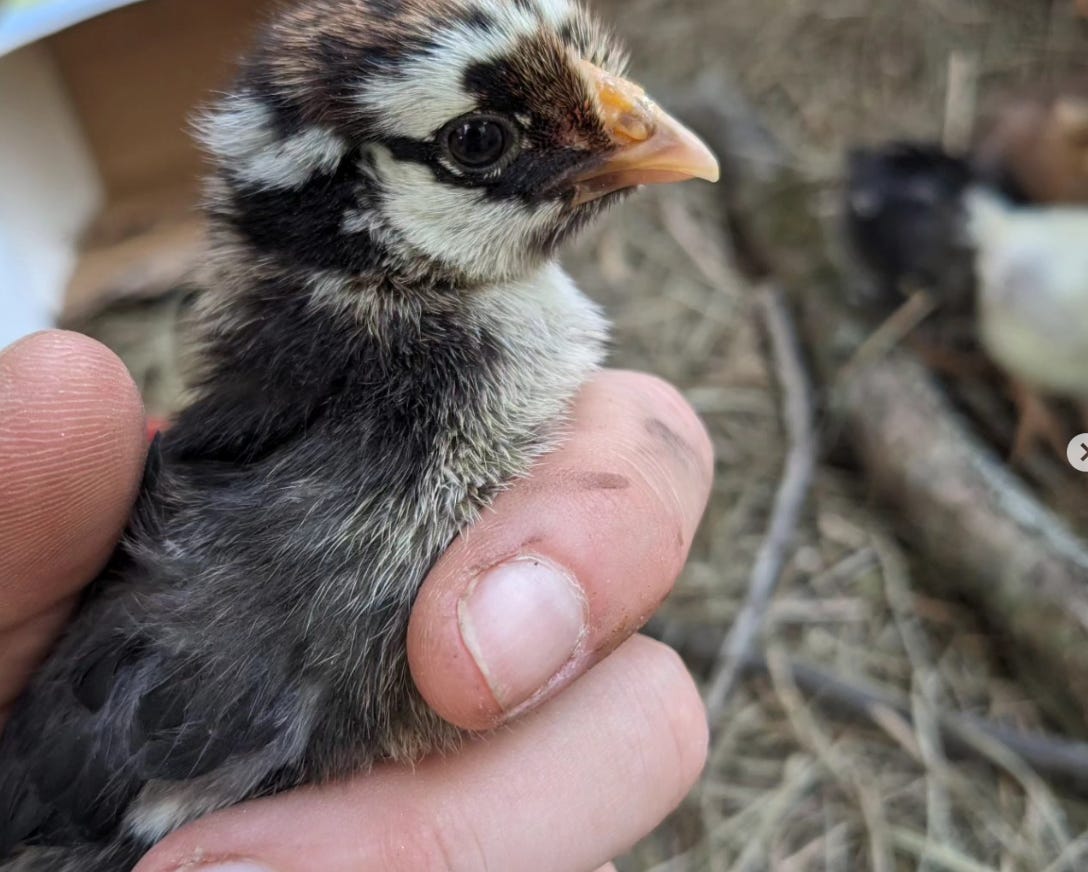
This year I bought 10 chicks who were only two weeks old. It changes something, to see something grow from such a young age. I’m softer with this flock. They are olive eggers—they are all so beautiful, truly. Many have black feathers with mallard green iridescence; some have deep reddish browns, or brownish oranges, some are mottled, some are splashed. It’s a beautiful variety born on a neighbors homestead about 45 miles away. A couple are just a sweet muted grey.
One of them has already died. She was left out by mistake and attacked—but she survived and I was nursing her back to health. She seemed like she was on the mend. But I had to go out of town one night and she still needed extra attention and I didn’t make that clear to her caretakers. She died the night I left. Maybe that’s just a story I’m telling myself so I can feel some sense of control over when these birds will live or die. Maybe the way to keep my heart open is to know I have literally no control, and because of that, no responsibility. Maybe I can remember that all I have is love.
These young birds are charming me. I’m feeling how if I can love them for their vulnerability, I can find the courage to risk the pain of loss. This is the same risk that every mother takes embarking on the journey off the cliff that is hosting a human life.
But damn, if you love something alive, aren’t you supposed to keep it alive? If I can’t do that, is it even love? Haven’t you failed, if they die too soon on your watch? Or was that all that I was meant to do, shepherd that embryo right over the brims of death’s abyss, only to be sucked right back in? What do we owe each other? What do we owe our chickens?
I still don’t have the answers to any of these questions, and they continue to engage my mind. The mind makes this seem complicated, confusing. It is at the boundary of life and death that rationality no longer applies. It is at this threshold we are beholden to the logic of love. It is here we can feel love as the eternal, infinite force, love as the source of truth. In the logic of the heart, regardless of anything, I should love, and love now.
Love deeply, in all the follies of responsibility and care that calls me to. Keep loving, even when what I thought was love was actually force and control. Keep loving, even when what I thought was love was an effort to prove my worth and value. Keep loving even when I am misunderstood and judged through the eyes of fear and hatred. Keep loving things that are dying, things that are living in spite of their best efforts. Keep loving even when they tell you to walk away, stay loving, even without interaction, without any words exchanged, permeate a silent, enduring love through the veil of complete rejection, whisper sweet nothings of adoration even in the face of death.
Death is never a reason not to love, it is the reminder to love now, to not waste even one moment without it. I am learning about this right now. I am learning how to love things that are so incredibly vulnerable, like the waters of the rivers and the lakes and the seas, like the moss and the lichens, like the bark and leaves of trees, like the butterflies and the wasps, the fungi, the salamanders, all amphibians, the things I don’t even know yet, that I will never know, that are dying, that are already dead.
As I’m finishing this essay, two more of these chickens have died from a possum attack. One was still alive after the attack, but she had lost both of her eyes and damaged her beak in her encounter with the possum, making it impossible for her to eat or drink. It seemed only a matter of time, so we decided to end her life early. I’d like to say we did it gracefully and with a lot of intention and beauty. It wasn’t quite like that, but that’s a different story.
So many chickens have died and will die. But everyday I am remembering how to love them, and how that brings me joy. All I have is love.
Comments
Nothing yet. Say the first thing.
Sign in to join the conversation.