
As we mosey through this last gasp of August, I keep attributing various things to our being in the dog days of summer. In Maine, despite a little rain today, we’re experiencing a “flash drought.” The grass is brown, the flowers are thirsty. The crickets are crepitating. My actual dog demands to go out, flops on his side in the sun to pant for a couple minutes, and then plods back up the steps. It’s not that hot, but there’s a sluggishness to the last week of August. Weird shit keeps happening—like, bedroom-door-smashed-open, car-totaled weird. Something about astronomical alignments? Sirius, or Orion’s Dog, “the star of harvest, brightest of stars in the dark of night,” per Homer, has shown up in the sky, “glittering brightly yet boding ill, bringing fever to wretched mortals.” Dog days.
The actual Dog Days, it turns out, according to the Old Farmer’s Almanac, ran from July 3 to August 11—though Merriam Webster defines them as “the period between early July and early September when the hot sultry weather of summer usually occurs in the northern hemisphere,” so we can go with that. We’re almost out of them.
But for now, my story about Coco Chanel’s house in this summer’s Vanity Fair dwells in that mood. La Pausa, her only building project, is a 15,000 square foot Cistercian abbey-inspired manor home in Roquebrune-Cap-Martin on the French Riviera—the latter being, according to W. Somerset Maugham, “a sunny place for shady people.” Enigmatic Chanel arrived and, evidently, felt right at home.
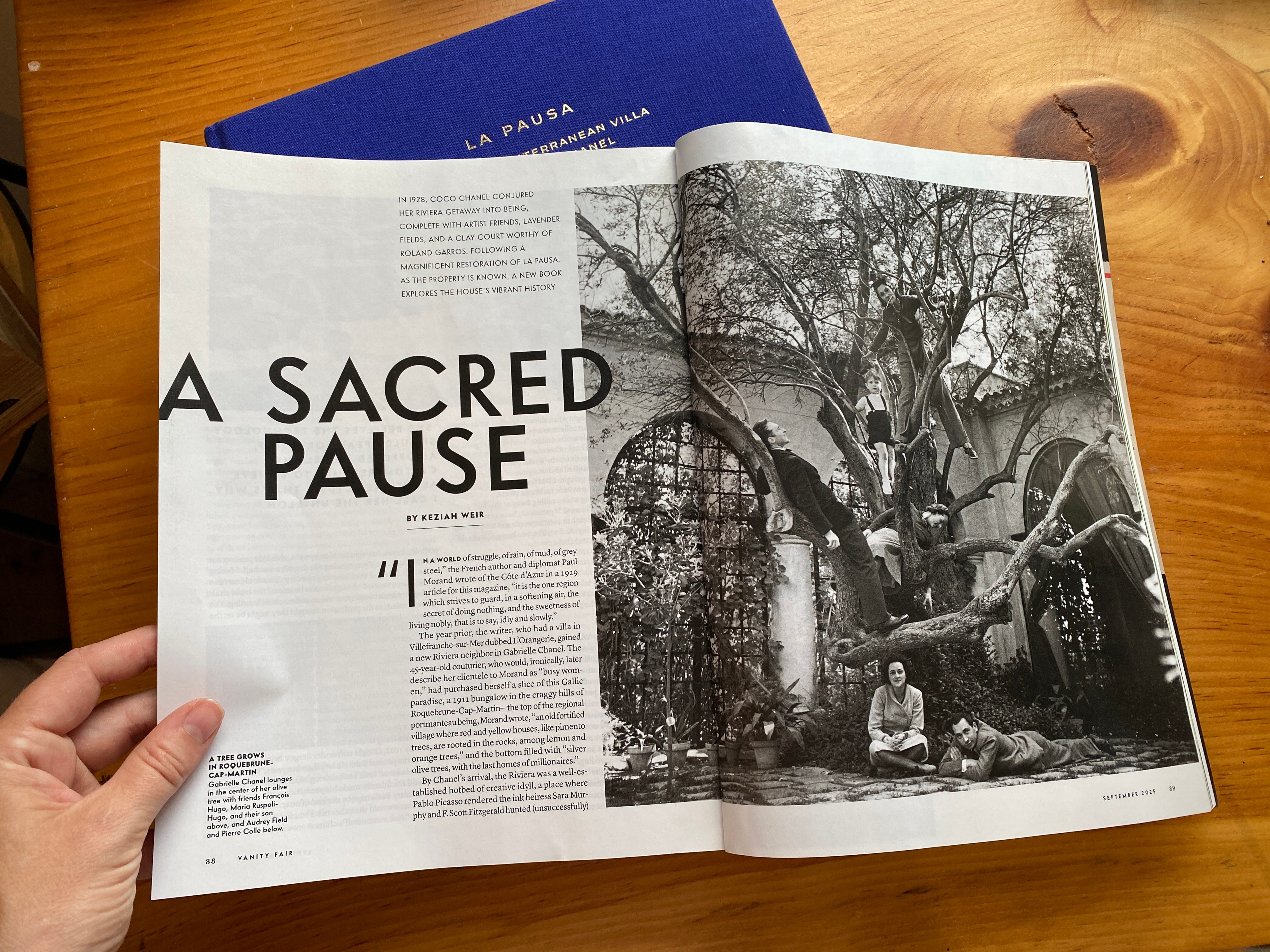
“In a world of struggle, of rain, of mud, of grey steel,” the French author and diplomat Paul Morand wrote of the Côte d’Azur in a 1929 article for this magazine, “it is the one region which strives to guard, in a softening air, the secret of doing nothing, and the sweetness of living nobly, that is to say, idly and slowly.”
The year prior, the writer, who had a villa in Villefranche-sur-Mer dubbed L’Orangerie, gained a new Riviera neighbor in Gabrielle Chanel. The 45-year-old couturier, who would, ironically, later describe her clientele to Morand as “busy women,” had purchased herself a slice of this Gallic paradise, a 1911 bungalow in the craggy hills of Roquebrune-Cap-Martin—the top of the regional portmanteau being, Morand wrote, “an old fortified village where red and yellow houses, like pimento trees, are rooted in the rocks, among lemon and orange trees,” and the bottom filled with “silver olive trees, with the last homes of millionaires.”
The book is a gorgeous coproduction between Chanel (the fashion house) and Flammarion. The endpapers are a shade between sky and periwinkle, a near exact match to the shutters on La Pausa. There are pull-out reproductions of the architectural blueprint and of a letter to Chanel from Salvador Dalí. There are moody black and white photographs of Coco hiding sort of ominously in the lavender. Sad that summer’s coming to an end? It’s a fun place to dwell, for awhile.
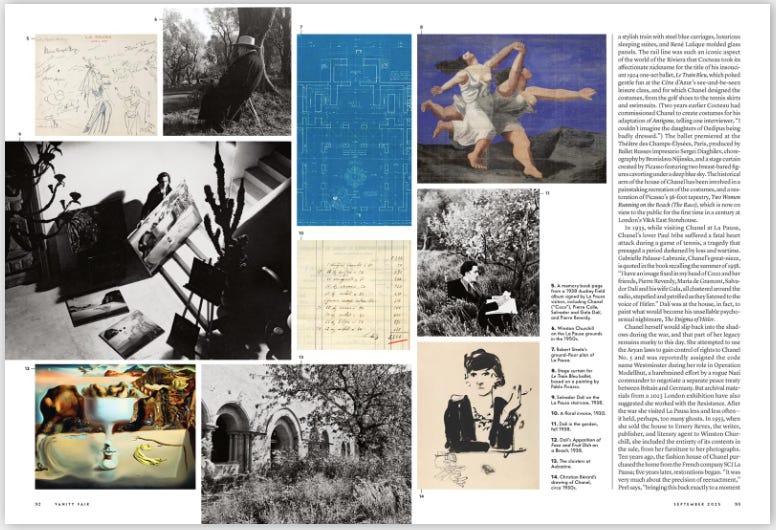
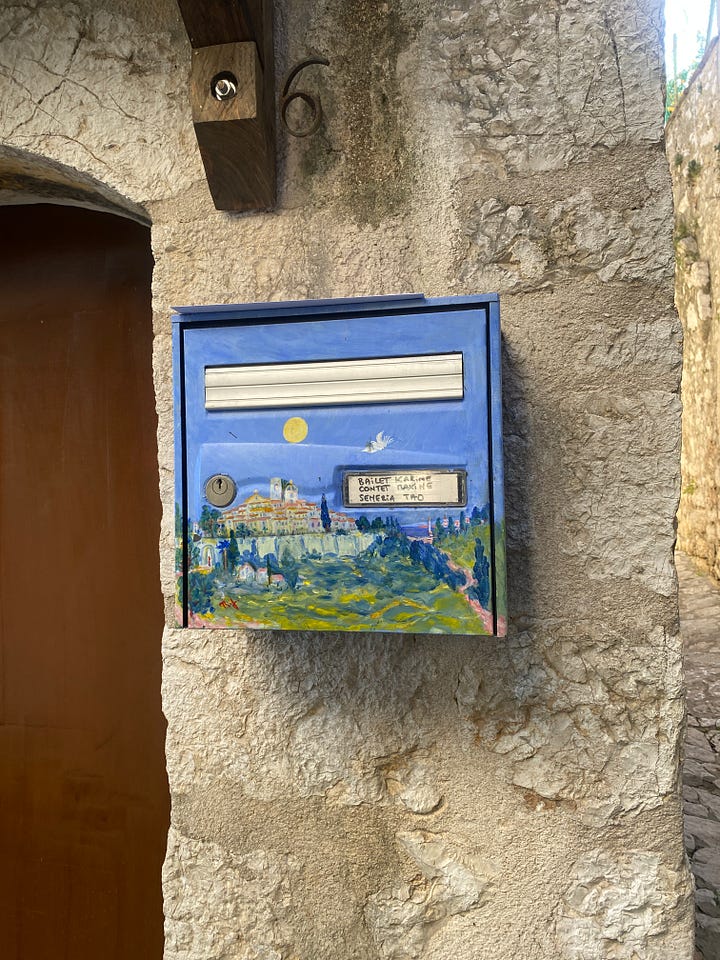
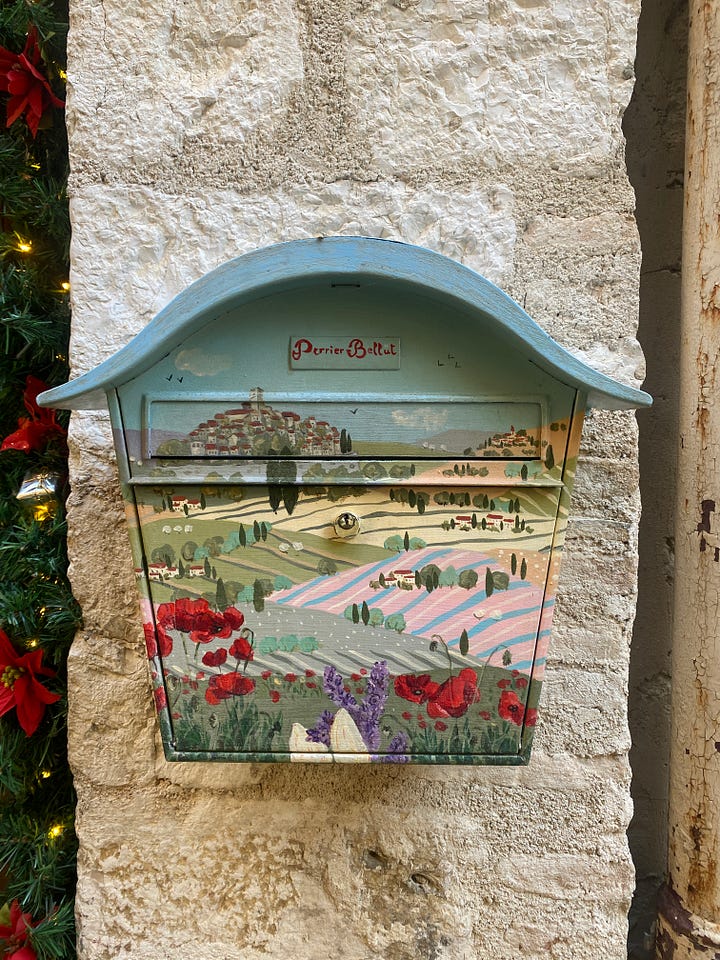
While on the Riviera (dahling) at the end of last year I personally felt very influenced by the mailboxes in Saint Paul de Vence and thought I’d paint mine this summer. Never got around to it.
Instead, I’ve just been planting lavender all over the garden, sticking my late-blooming dahlias in every vase I have, and eating a lot of croissants.
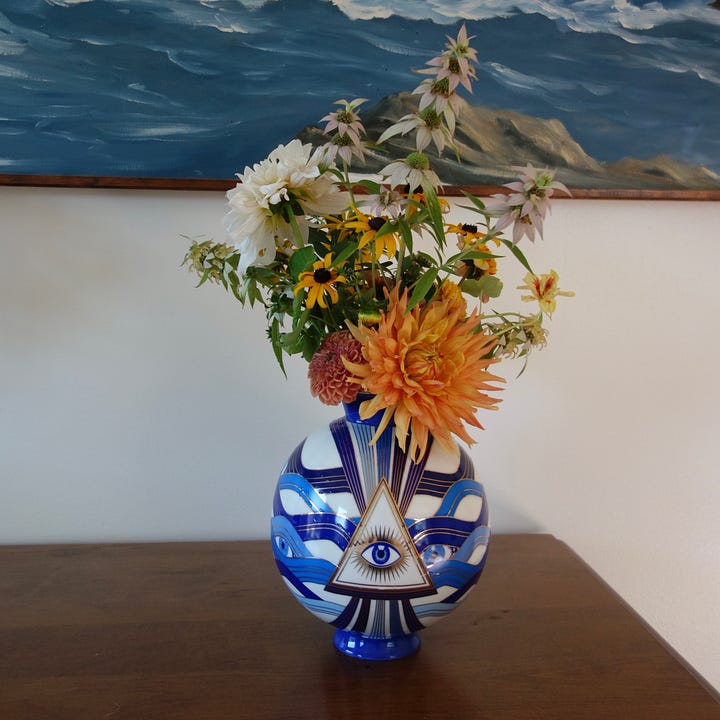
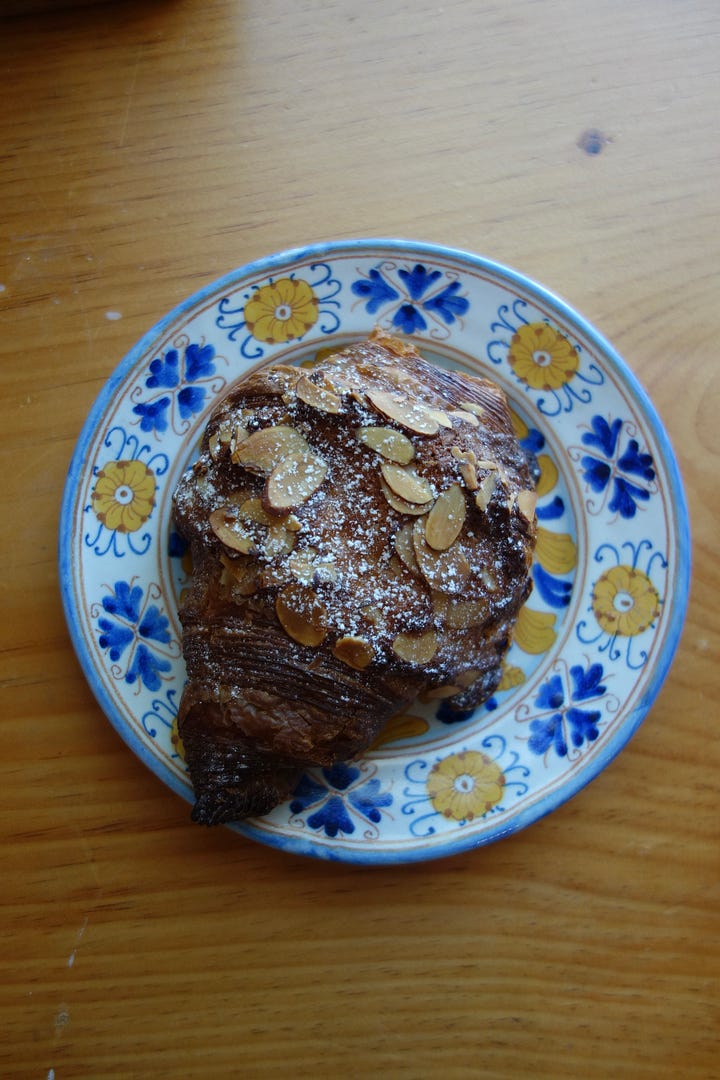
A rabbit hole list for after you read about Chanel’s house and want more more more:
Wes Anderson’s French Dispatch.
The filmmaker’s luxurious, nearly hour-long mosey through his oeuvre.
James Baldwin’s Another Country, and this story about following in the author’s South of France footsteps, and this excerpt from the great new biography about his literary life and loves.
Somerset Maugham interviewed at his villa in Saint-Jean-Cap-Ferrat. (The accents!)
Jonathan Adler on falling in love with Simon Doonan a little bit because of his real estate.
I had a dream last night that Gore Vidal came to stay. As he reclined on a chaise we don’t own and I patted his head, I lied and told him he was my favorite writer, and when he asked me which of his books I loved best I told the truth and said Palimpsest—it contains the best photo caption I’ve ever read, beside two of his nemeses ascending a staircase: “Hell’s Angels: Lee Radziwill and Truman Capote, having just received instructions from the Lord of the Flies, gleefully surface to do his work”—and he said, “Why? It’s but a trifle.” So maybe that’s a sign someone should rent his villa in Ravello.
P.S. Speaking of Doonan, former longtime creative director of Barneys, I had the pleasure of working on this excerpt from the new memoir They All Came To Barneys by the former co-CEO Gene Pressman. It’s a fun read about the store’s heyday amid the excesses of the 80s, and our visuals editor Eric Miles rustled up the best photos.
A new era was beginning in New York, one borne on a raft of new wealth and new interest in the trappings of it: design, art, fashion, excess. The markets were booming. Stocks were up, and corporate raiders were the new antiheroes. The leveraged buyout was invented; so was the junk bond. A new downtown art scene, centered in SoHo, was flush with interest and cash. We were entering the period memorialized in Oliver Stone’s Wall Street, with Gordon Gekko and his decade-defining catchphrase: “Greed is good.” Cash was readily available, and it felt like the bubble would never burst. It was no accident that this was a time of major expansion for Barneys, for which we’d buy up the neighboring buildings on Seventh Avenue for an ambitious enlargement and the creation, for the first time, of a stand-alone women’s store.
Comments
Nothing yet. Say the first thing.
Sign in to join the conversation.