
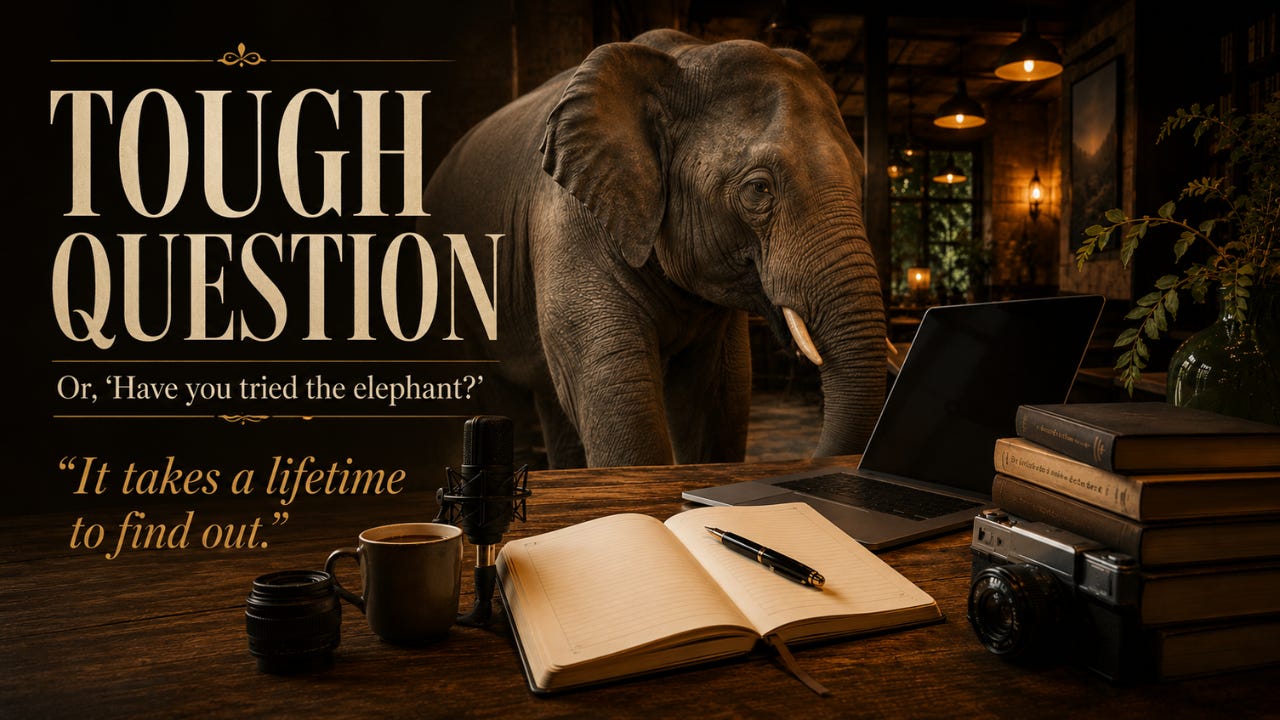
“So what do you do?”
That’s always been a fairly loaded question. Philosophically, people are asking you for an identity. The question might be a bit more ingenuous if it were phrased as, “Can you tell me how to think about you?” Because our work is, really, very often our identity. What we do tends to be how we frame who we are.
That isn’t all bad. In fact, that idea has its roots deep in our history. For centuries, you were what you did. Farmer Brown raised crops and livestock as a family business. The blacksmith was named John Smith, so that you knew exactly what he did for a living when he introduced himself. The local apothecary was run by a man who spent all of his days gathering or negotiating to gather the herbs and ingredients needed to make tooth powder or a cure for upset stomach. Your job was who you were.
This means, of course, that when you tell someone what you do for a living, they run the calculation in their head, deciding on who you are based on that job title. And, since these days a job title means practically nothing about who you really are, they sometimes come away with a false impression.
In my case, as with writers everywhere, when I say “I am a writer” I will learn about all sorts of interesting assumptions. Maybe they’ll share them with me, but more often I pick them up from context clues.
If they glaze over and turn away, I know they think of writing as a boring bit of work, something they probably have to tolerate in their own career, but couldn’t imagine doing for money. These folks usually assume I’m broke, which isn’t always inaccurate.
If they light up and get excited, it means they think writers are rich, live in castles, and spend their days sipping Bordeaux and smoking fine cigars while casually typing on an aged Underwood. They may assume you’re famous. “What’s the name of your book? Is there a movie?”
There are also those who assume you spend your every waking moment hunched over a laptop in a coffeeshop. They may be confused that you are not as unkempt as they expected. You don’t smell like rancid socks, or have the pallor of one who spends all of his or her time indoors during daylight hours, and a fair number of nighttime hours as well.
And let’s be candid here, that last one is fairly accurate when it comes to me. I do spend an inordinate amount of time in coffee shops. I abhor direct sunlight, particularly on humid days. I could use a tan.
I never know how to answer the question what’s the title of your book? How do I break it to them that I have many books? I mean, without sounding like a tool?
“Oh, I have around 70 books in print at the moment, and many more in various stages of completion.”
Bleh. How pretentious can one be? What will I do next, show them my stock portfolio?
So it’s a hard question to answer, especially when you know that it comes preloaded with whatever assumptions and stereotypes they already have embedded in their psyches.
Plus, it isn’t even the total bucket containing all that I do. I also create content for YouTube and Podcasts. I speak at conferences. I help and advise hundreds of thousands of writers. I consult with businesses and represent brands. Also, I like karaoke. Big fan.
The title doesn’t tell the whole tale, in other words.
And yet, that’s the title I’m most proud of. I’ve had all sorts of fancy titles in my career—Engineer, Producer, Creative Director, Marketing Director, CEO. At the time, each one felt pretty special, pretty privileged. But during most of those, if someone asked what I did, I still said, “I’m a writer.” I might end up adding the other title. “I’m a writer… and CEO of Company X.” But really, honestly, from the bottom of my heart, I didn’t care about any words after “writer.” The other person might have, but for me, that was it. That was the whole package.
Actually, I’ve said for years that everything else I ever did spun out of that one thing. Being a writer was what led to everything else. Even before I published. The through line of my career—of my life—was that bit of identity. Heck, even this Substack is called “The Writer_.” Because that, ultimately, is who and what I am.
And yet…
That can’t possibly encapsulate all of me. Right?
Because I’m also a husband (a title I also love). I’m a friend. I’m a brother. I’m a son.
Sometimes I’m a guy who collects comic books. Or a man who journals every morning and every night. Or someone who picks up trash when he sees it, pulls a weed when he notices one, sees a job and does the job. And, sometimes, I’m the guy who just needs a nap in the afternoon, so I can keep going. So I can come back to all that writing and content creation and being all the things.
We’re not our job titles. Which is good news—because it means we don’t lose our identity when a job ends. Something we need to remember.
Instead we’re all these big, gooey, amorphous blobs of everything. All our work, all our hobbies. All our relationships. All our interests. All our experiences. All our beliefs.
Big, gooey, wobbly stuff.
So the question, “What do you do?” That’s not really what anyone’s really asking. But honestly, who has time to hear someone say who they really are?
It takes a lifetime to find out.
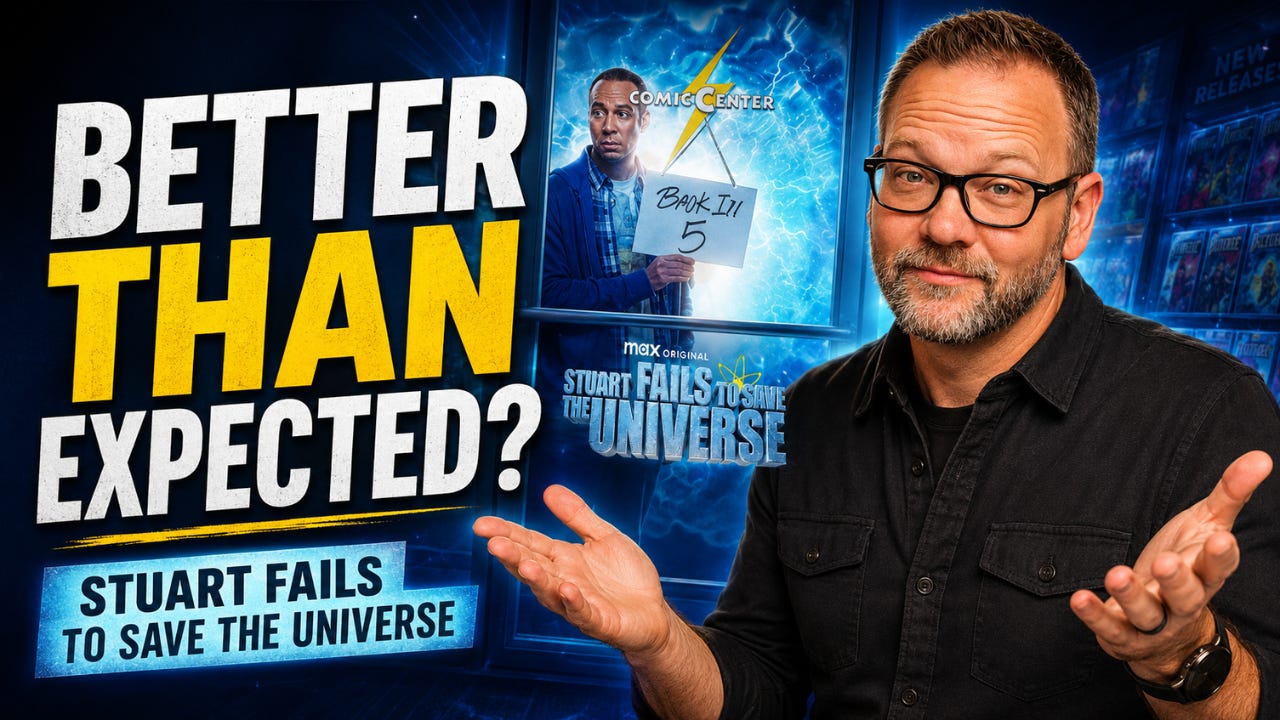
I have a YouTube channel about storytelling. It’s called Wordslinger. Most of my videos are about writing and publishing, or really doing any kind of creative work. But as of TODAY I’m launching a new segment called Wordslinger Story Cuts.
I’m reviewing streaming shows, movies, books, and anything else I think will be a good tool for talking about telling a good story. And I come at them from my perspective as a writer and storyteller with decades of experience and a whole bunch of novels under my belt.
I’d love for you to check out the first video in this new series on the Wordslinger YouTube channel! Find the current episode, and come back for future episodes, when you visit Wordslinger Story Cuts Playlist! And make sure to subscribe while you’re there!
Thanks for reading The Writer_! This post is public so feel free to share it.
Telling people what I do also tends to lead to a followup question: “How do you get all of that done?!?”
I do a lot, it’s true. My days start pretty early, and most of them really are spent at a computer keyboard. Or with a camera and microphone. Or all of the above.
I write, I create videos and podcasts, I crate marketing materials, I build websites, I interview people, I do research. I also nap. That part really is vital.
How do I get it all done?
Like any elephant, I eat it one bit at a time.
My version of chewing, though, involves tools like Apple Calendar and Apple Reminders.
Everything I do goes on one or both of these. Appointments get scheduled (usually using Calendly) to my calendar. I check that each day, and move anything on it to that day’s Reminders. And that list contains all the daily recurring tasks I have (Journal, Record Walking Kev, Record Wordslinger 10-Shot, that sort of thing), and/or any weekly recurring tasks (Record Wordslinger Podcast, Record Writers, Ink Podcast, etc.). It also contains one-off tasks that have to get done (Send invoice to X, Zoom call with J.D., buy deodorant).
Here’s my dirty little secret…
If something can’t be done that day I move it. If it’s something that must be done that day, I move something else.
It’s ok to shuffle your schedule.
I tend to treat my days like buckets. Monday, for example, is the first bucket. Everything new that comes across my plate usually ends up there. And so I spend some time on Mondays moving tasks out of that bucket and into another one. If I need to write a proposal, and I dropped it on Monday because I realized I had this work while I was at the movies with Kara or out taking a walk, I can drop it in on Monday and move that task to a better day in the week, if timing allows.
It’s not procrastination. It’s strategic planning.
I guess the lesson here is that if you have a ton of things to get done every day and every week, the only real way to manage it and still have anything that looks like a life is to build systems, but more importantly to make those systems flexible.
I think of myself as a very responsible and dependable person. I get things done. I may also put things off, but I nearly always get back to it. Very rarely does something get abandoned. If it does, it was with good reason.
So, how do I get it all done? One bite at a time.
Sometimes I don’t even chew before I swallow.
Comments
Nothing yet. Say the first thing.
Sign in to join the conversation.