
I drive into town past the resort, rather than following my typical path along the highway which would deposit me at the eastern edge of downtown. I have a particular place to go, not just my typically vague “going to the Dells,” and the GPS has suggested I take the twisty, bushy path through the trees and switchbacks. On this road, I can see the trucks bringing migrant labor to the kitchens and laundry rooms where they will provide the structure of old white men’s recreation. The resort felt old when it was new. At least, I imagine it did. I wasn’t there then, but I’m here now, imagining Grandpa wheeling and dealing in the steakhouse on the top floor. Immigrant labor provides the comfort of the old guard who build a playground on sacred land.
I don’t stop at the resort, just weaving through the greenery toward town. Town is mostly vacant, which is unsettling, but it is Tuesday, after all. There’s a parking space directly in front of the particular patio I’m seeking. The particular patio, perched on the cliff above the river, breaks my heart and rebuilds it every time I sit there, a process I’ve subjected myself to periodically for the last few years. I can’t remember what was here when I was a child, but it certainly wasn’t this.
The patio is the conflagration of all the weird paradoxes of this paradoxical town. The fake green of the concrete beneath my feet clashes with the real green of the elms and oaks across the river, so dense I can’t imagine how the striated sandstone can hold all the roots. I imagine the underground battle for space and sovereignty. Beneath my feet and the preposterous green concrete is Ho-Chunk land, but you wouldn’t know it unless you knew it. Since the loggers came in the early 19th century, businessmen have built businesses upon the soil, layering commerce over commerce over commerce, lacquering the land. Layers on layers of entertainment staring at the ancient layers of the sandstone cliffs, staring back in judgment. Brothels rebranded as family-friendly attractions, fudge shops resisting time across the street from the Dells version of the club, where I sit wondering when the customers will come. I hope they don’t because this frantic, make-believe town is better when it’s quiet enough to hear the family of ducks slapping their feet against the ancient, sacred water, even as the train passes on the elevated track, its mechanisms interrupting the swaying trees.
Wilson Phillips comes on the sound system because I’m now the old guard, not Grandpa, and if this place knows how to do anything, it knows how to operationalize nostalgia among people with an extra $20 in their pocket. A duckling veers off course, and the whole crew waits as it sorts things out. You got this, buddy. Don’t cha know, things will change, things will go your way, if you just hold on for one more day?
I cooked myself enough in May that my hands are starting to look like Grandpa’s, a strange brown that emerges when we let our Nordic skin connect to the sun. I remember him sinking into the water, and I wonder if he knew about the layers it contained, the layers under the concrete, the sandstone’s weight.
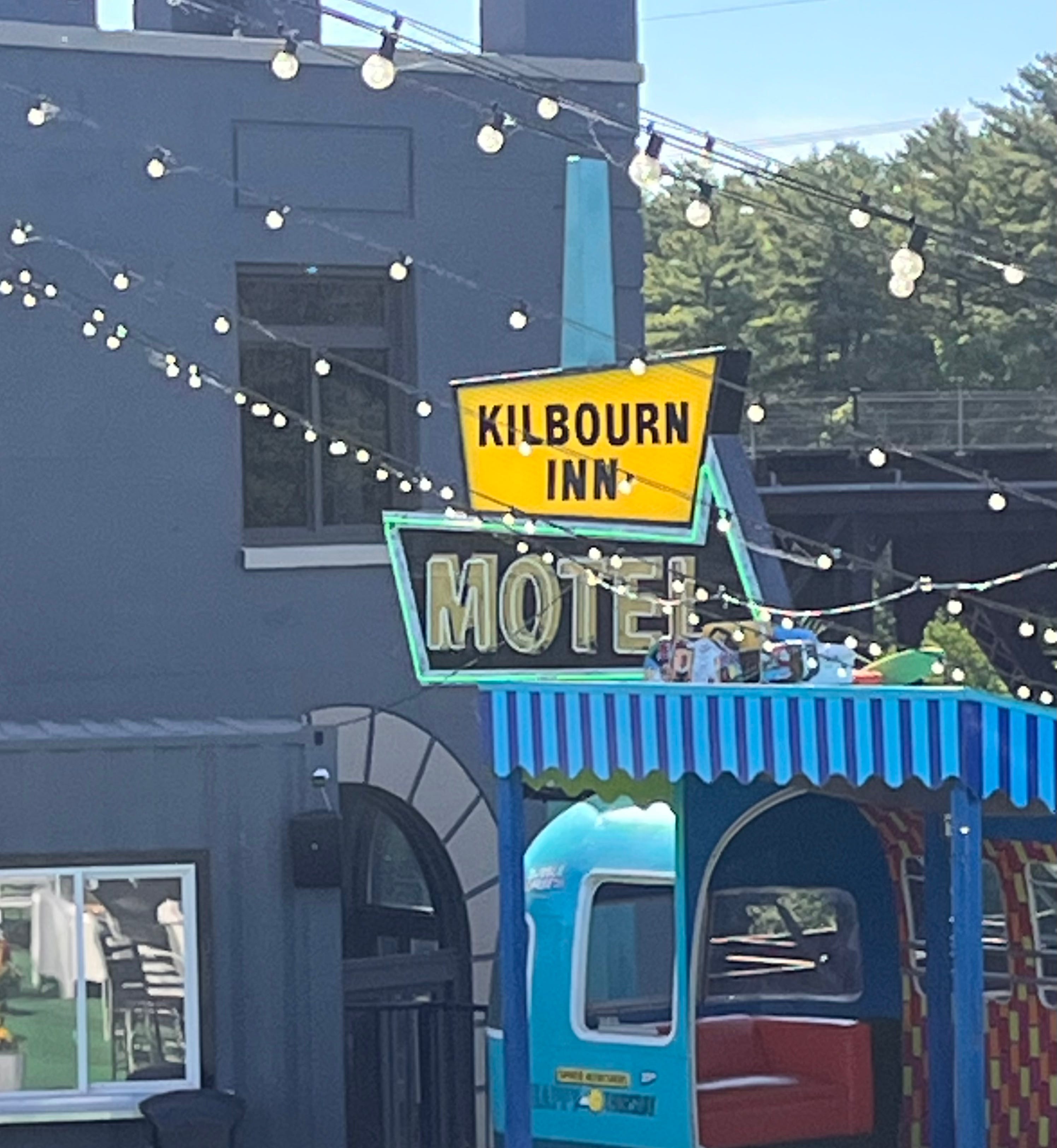
What was here when I was a kid was the Kilbourn Inn, as the sign across the patio reminds me. The Kilbourn Inn is no longer here, but the sign is. The desire for permanency is so strange in this place whose entire identity seems to be unreality. The ducks are gone, so I guess the kid figured it out. They’ve moved onward, down the river. I should close my tab.
Comments
Nothing yet. Say the first thing.
Sign in to join the conversation.