
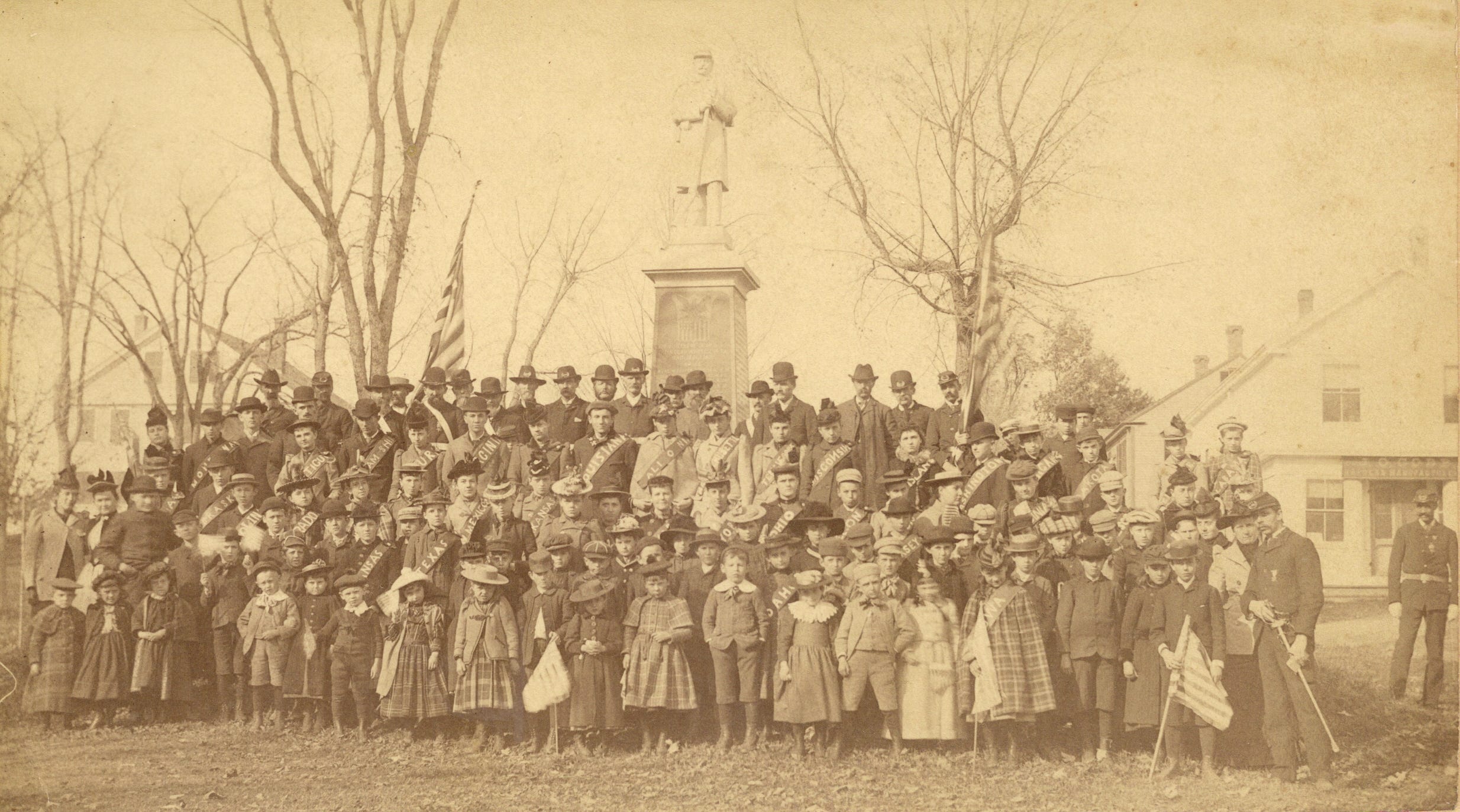
I don’t think it’s a stretch to suggest that, for most people, it has always been relatively easy to understand the appeal of the Lost Cause narrative of the Civil War. The idea of a war to defend hearth and home is grounded in something tangible. There is the appeal of the underdog standing up to an industrial behemoth, all the while relying on a rank and file and officer corps that always seemed to embody the concept of honor more easily than their Northern opponents.
Why would a young farmer in Union, Maine drop everything in the spring of 1861 and volunteer to fight for the United States. Realistically, his home would never be directly threatened by invading Confederates during the war. A war to save representative government and democracy—what historian Barbara Gannon refers to as the “Won Cause”—has always borne a burden that the Lost Cause has never been saddled with.
Historian Gary Gallagher has argued persuasively that Americans have lost an understanding of the importance of Union that animated the vast majority of the loyal citizenry of the United States in the 1860s. Lincoln’s reference to the nation as “the last best hope of earth” has never been more difficult to visualize in this fractured nation.
Such challenges might lead you to believe that the preservation of the Union never needed to be memorialized, at least not on the scale of the Confederacy’s Lost Cause. You would be wrong.
Get off the Freedom Trail in my current hometown of Boston and you will see some of the most impressive Civil War commemorative sites anywhere in the country, including the Robert Gould Shaw/54th Massachusetts Memorial, Harvard’s Memorial Hall, The Boston Public Library’s lions honoring the 20th and 2nd Massachusetts Regiments, as well as rich landscape of smaller statues.

Buildings that once served as gathering places for the Grand Army of the Republic, many of which now serve as local libraries, can be found throughout the commonwealth and beyond.
Other major cities in New England and the midwest boast a similar commitment to honor the Union cause. Look closely at public parks and other prominent spaces in small New England and midwest cities and you will be sure to find a mass produced Union soldier statue.
Perhaps such forms of memorialization strike observers as distant or difficult to personalize. The Union cause, as historian Caroline Janney has observed, was a fact of the matter by the spring of 1865. It did not have to be explained or rendered as a story to be intelligible. The Confederacy had surrendered and the nation survived.
But unlike the Lost Cause, which would always be stuck in the past, the Union cause has had to do much more work. It has had to absorb everything that followed from Reconstruction and the Indian Wars to imperialism and Jim Crow. Depending on your perspective, evaluating the Union cause has always involved having to sift through everything that came after.
At times it can seem a dizzying task. How do you explain to someone unfamiliar with the relevant history how the Republican Party can go from passing the 14th Amendment—arguably the most important constitutional amendment—to working to abolish it?
Of all the Union monuments, I have a soft spot for the iconic soldier statues. Yes, they all look similar, but they reflect what small communities were able to muster financially during the postwar period. My imagination stirs whenever I see one.
I see crowds of people cheering and a line of young men willing to take a chance for their country out of a sense of duty and in the hope of a brighter future.
Comments
Nothing yet. Say the first thing.
Sign in to join the conversation.