
Football fever
One unexpected side effect of living abroad for 10 years?
You stop watching the World Cup as a citizen and start cheering countries.
This week we celebrated nine African nations reaching the round of 32, cheered for Croatia (our current home), appreciated Norway after seeing its incredible fans (just before we ferry over there from Denmark on Monday), and rooted for Japan because of our unforgettable Christmas 2024 trip.
We even found ourselves quietly hoping Bosnia and Herzegovina might pull off a miracle against the USA (shhhh!), because, underdogs.
Turns out we don’t have a favorite team anymore, but are loving this celebration of nations.
— Kevin
💪🏽💛
Three insights
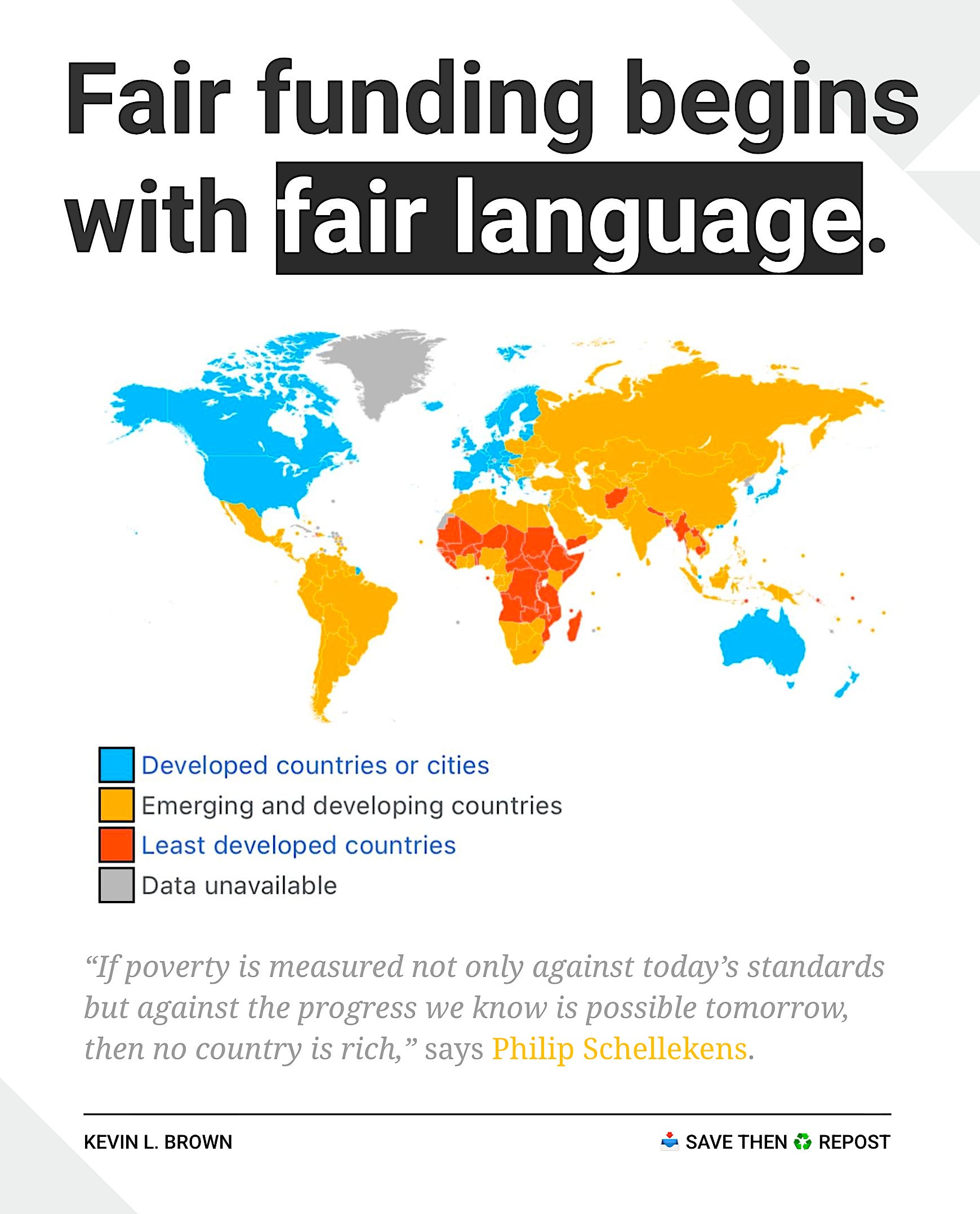
“All countries are developing countries.”
So the terms developed vs. developing are lazy labels.
“It suggests that a handful of nations have ‘arrived’ while the rest are catching up.” I recently applauded this paradigm-shifting insight from Philip Schellekens, because you often hear me say:
Words matter.
That’s why precise language leads to precise fundraising.
After personally living in six countries on four continents, I’ve seen firsthand what Schellekens describes: “every society is still failing its people in different ways whether through hunger and disease, or loneliness, burnout, and inequality.”
And it’s interesting, as I write this newsletter from Denmark right now, one of the world’s most successful countries by many measures. But I’m also reading a great book, The Almost Nearly Perfect People: Behind the Myth of the Scandinavian Utopia — it exposes high cancer rates, alcoholism, mounting personal debt, depression, and countless other issues in regions like the Nordics that seem to “have it all figured out.”
What’s the better term?
What’s the most dignifying language when referring to a group of similar countries and regions collectively?
There’s emerging markets, majority world, low- and mid- and high-income, plus Global South, all with their pros and cons. So, many of our international nonprofit and donor clients struggle with what to call where they work.
But wiser words unlock fairer funding.
So what’s your preferred term?
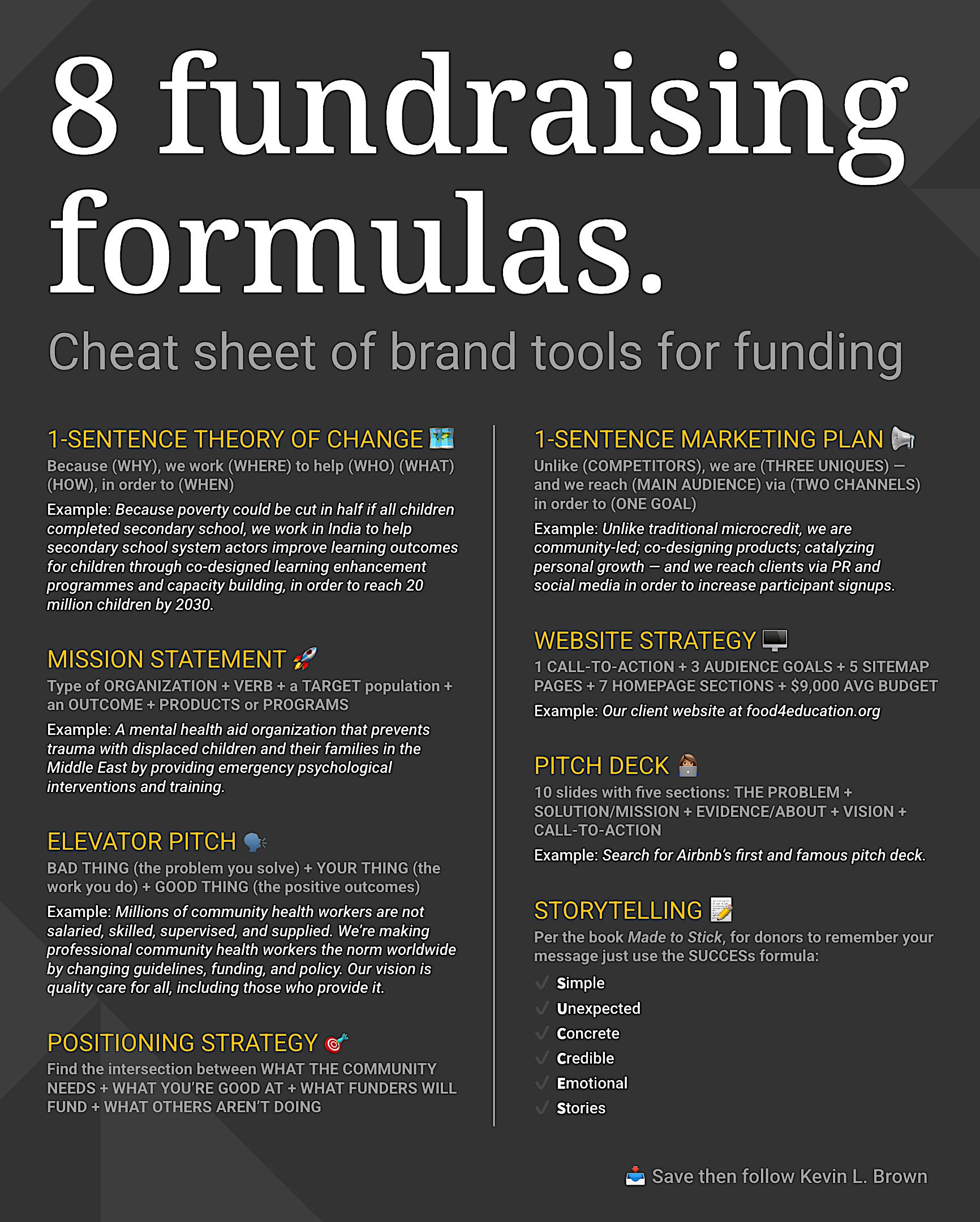
8 formulas to fix your fundraising. ⤵
From mission to marketing.
To help you be:
Fundable.
Findable.
Funded.
P.S. Here’s a bonus fundraising formula for your proposals: NOSE.
(All these formulas and more are included in my book, Fundable & Findable: The Brand-New Way to Fix Your Nonprofit Fundraising)
Need: Show that you understand the key issues or problems faced by your community. Just like other brand materials, never lead with your organization. You could also think of this section as the situation.
Outcomes: Focus on the results that you, your community, your buyer, and/or your funder want to achieve. But don’t yet prescribe exact recommendations. This can also be called the opportunity.
Solution: Highlight the work you do that will deliver the results. You can title this section products and programs. And include the budget options, if applicable.
Evidence: Provide proof that you can deliver that solution. Some proposals call this section our model. Include your experience, case studies, impact, and/or testimonials.
“Focus on their pain to get their attention. Focus on their gain to get their commitment.” — Persuasive Business Proposals
The wrong fundraising advice:
Find a lane and stick to it.
The better advice:
Find the intersection of 2-3 lanes. Like these example niches. ⤵
🥉 Education (good)
🥈 Education + girls (better)
🥇 Education + girls + secondary (best)
🥉 Mental health (good)
🥈 Mental health + refugees (better)
🥇 Mental health + refugees + children (best)
🥉 Smallholder farms (good)
🥈 Smallholder farms + India (better)
🥇 Smallholder farms + India + greenhouses (best)
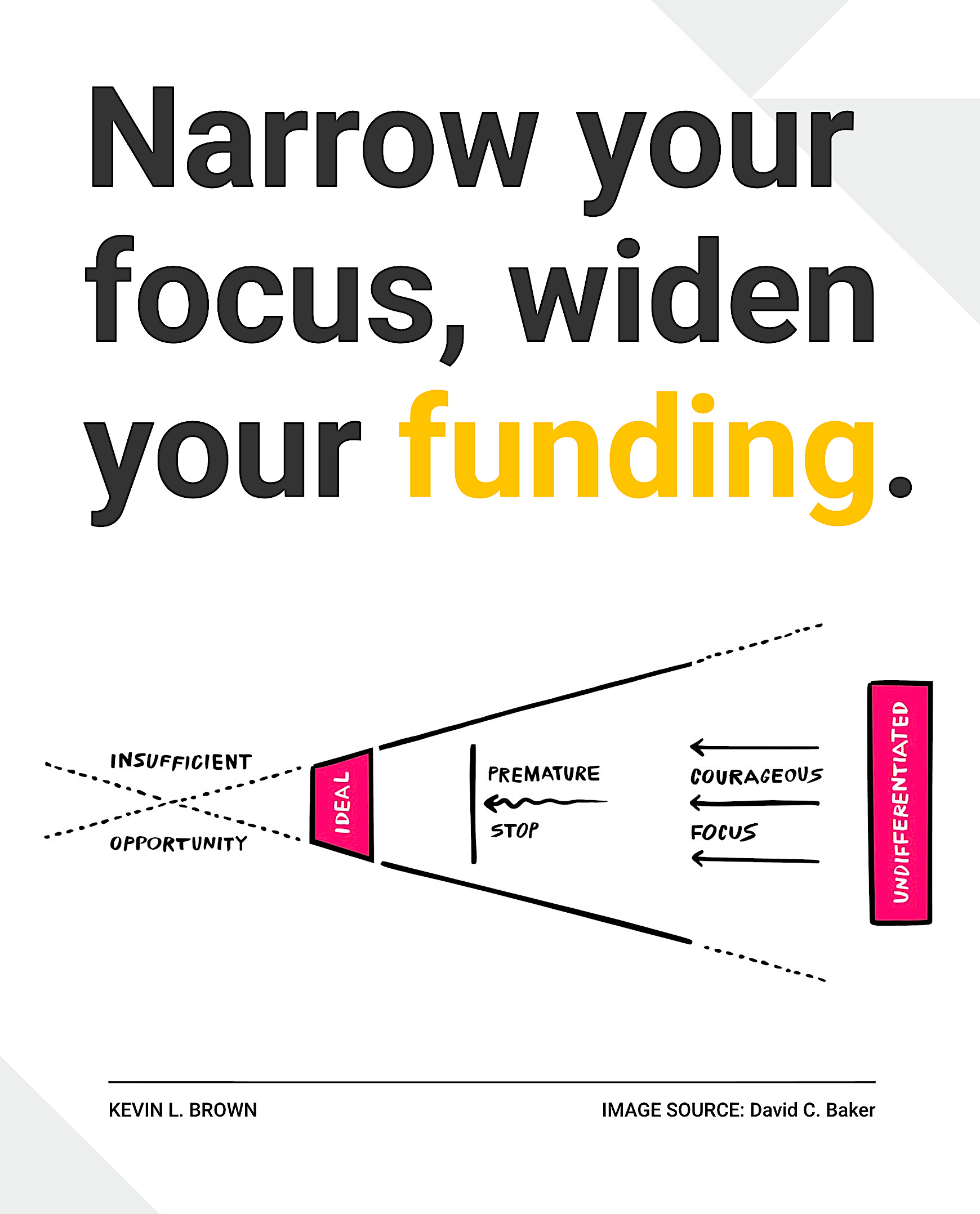
That’s how you move right to left from Undifferentiated to Ideal in this graphic. That’s how you create a category of your own. And that’s how you captivate donors.
Because a single lane makes you think your brand is focused.
And while that’s better than being scattered, you’re probably still just one of many organizations on that one big highway.
Heads up.
There’s a risk in differentiating 𝘵𝘰𝘰 far. Because you’ll find Insufficient Opportunity for funding on the far left, as seen in this illustration.
Like if you focused too narrowly on smallholder farmers + India + greenhouses + girls. But honestly, most nonprofits struggle with the other side of the graphic:
Courageous Focus.
So, don’t be afraid.
To find your ideal positioning, avoid the jammed highways of undifferentiated organizations. Pick the side streets and dare to take the road less traveled.
The riches are in the niches.
Narrow lanes, wider funds.
P.S. This newsletter grows when you share it. It’s quick and free for you, but super helpful for me. Because this content is part of our own nonprofit mission. Thank you.
From the book
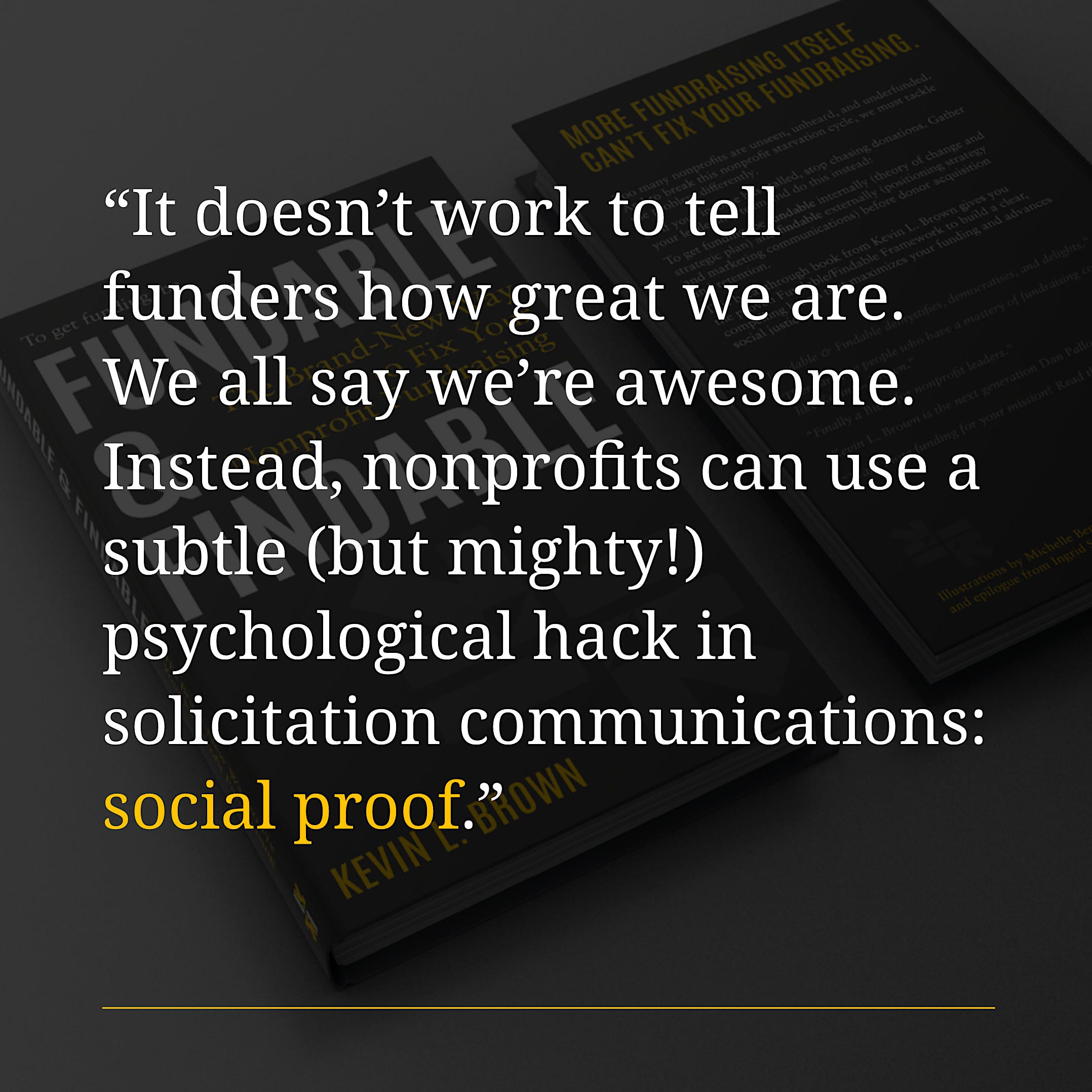
A line worth sitting with, from my four-time bestseller Fundable & Findable: The Brand-New Way to Fix Your Nonprofit Fundraising.
The weekly bonus
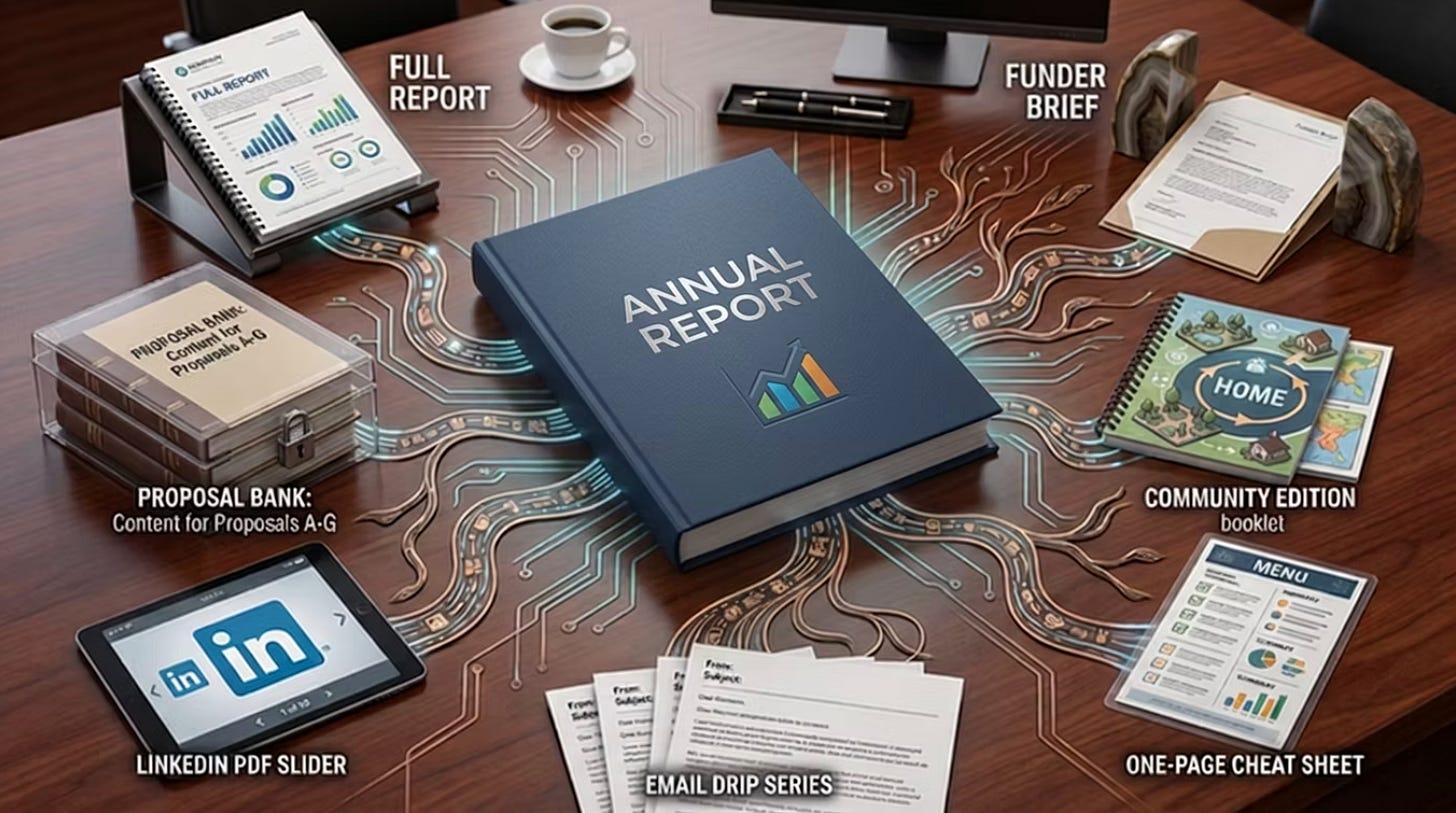
“Nobody reads the annual report twice,” says Steshia Monserrate.
“Next time, alongside ‘When will this be done?’ (the question that drives every report season), I am asking one more from the start: ‘What else can this content do?’” she continues.
Check out her blog, Your annual report deserves more than just one day of attention.
P.S.
I could never compete with this cuteness.
Comments
Nothing yet. Say the first thing.
Sign in to join the conversation.