
Fight or flight?
I’m reading Walden, by Henry David Thoreau.
A great document of social criticism and dissent, they say, as he wrote the book while living alone (miles from any neighbor) for two years, two months, and two days.
“Henry went forth to battle when he took to the woods,” says E.B. White. “And Walden is the report of a man torn by two powerful and opposing drives — the desire to enjoy the world and the urge to set the world straight.”
I’m struggling with that same existential crisis.
A deep desire to escape the ills of modern society and spend our remaining days as a family in the forest and ocean. But an even deeper commitment to use my privilege to fight for all those who suffer (like my daughters once did).
Do you feel this struggle too?
— Kevin
💪🏽💛
Three insights
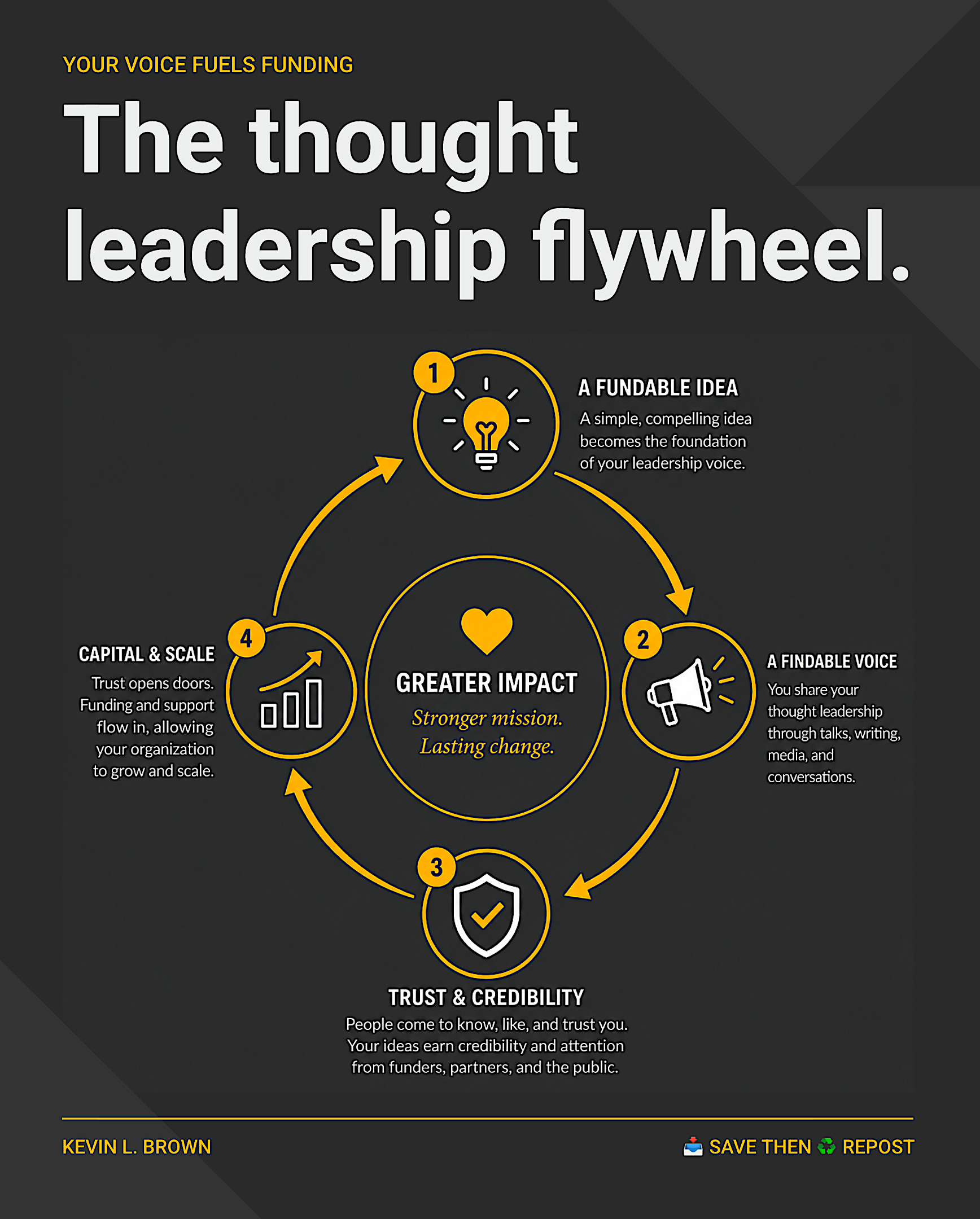
A pattern I can’t unsee:
Most high-growth nonprofits have the same flywheel.
Simple. Moral. Repeatable. Something others can carry forward.
The idea gets shared by a visible leader through talks, writing, and conversations.
Donors begin to recognize the leader. And more importantly, trust how the organization thinks.
That trust unlocks funding. Without it, growth stalls.
Then the cycle compounds…
… round and round again.
Equal Justice Initiative is a great example. Bryan Stevenson built a public voice first, as his TED Talk, relentless speaking, and book Just Mercy all happened while they were just a $3 million charity. The funding and expansion followed the trust; now they’re at $80 million.
Most of you try to shortcut this flywheel and go straight from idea to funding. You focus on grant applications, messaging tweaks, and new donor lists, but skip the harder work of building a visible, trusted voice.
And there is a reason. ⤵
Nonprofit culture taught leaders like you to stay behind the mission. To avoid the limelight. Let the work speak. But that instinct preserves humility, and often mutes visibility.
Today, donors follow people, media quotes people, and social media platforms amplify individual voices not company pages.
You sit in the middle of this strain.
You want the mission to shine, but know that people listen to people, even when the mission is collective. So that’s why I say you must be a fundable, findable organization and a fundable, findable leader.
Idea → voice → trust → funding
Not the other way around.
Yes, building a public voice comes with a cost.
But staying quiet costs more.
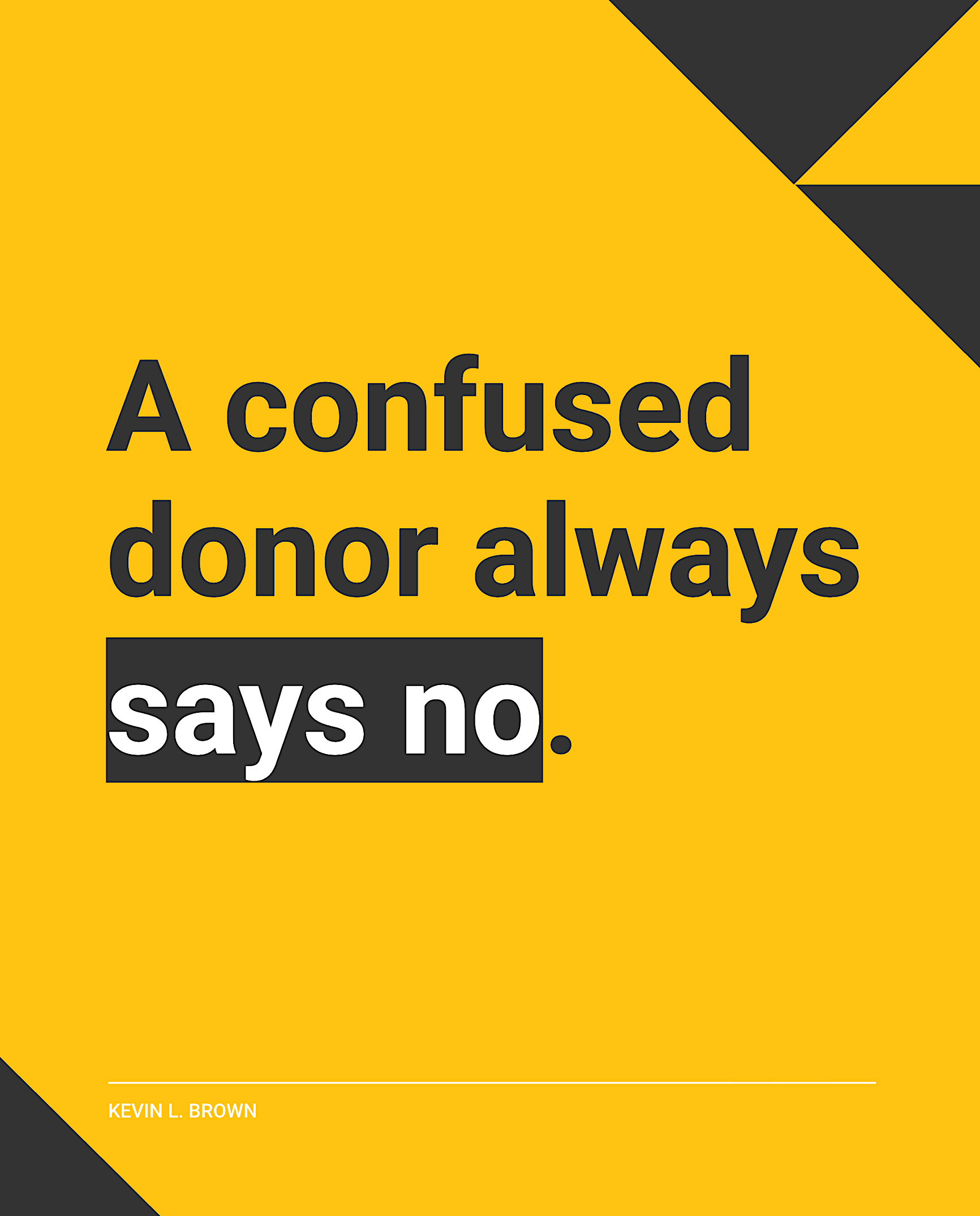
You have 3 seconds.
Lose them, lose the gift.
So here are the two most critical rules in your communications:
Simplicity
Consistency
The average adult reads at a 12-year-old level and it takes seven impressions for people to remember your brand. If you use plain language then repeatedly deliver that same fundraising message, you earn the yes.
Be simple.
Be consistent.
Be funded.
P.S. This newsletter grows when you share it. It’s quick and free for you, but super helpful for me. Because this content is part of our own nonprofit mission. Thank you.

Most of you ignore this fundraising tactic.
Which is wild, given how well it works:
Your proven process.
If you can’t show donors the how… then the why and the what don’t even matter. So learn to raise more cash with less chaos in this quick guide with two nonprofit examples (including our new client, Healthy Learners, that just won the $2 million Skoll Award).
“A strong process drives strong outcomes,” says Spark Microgrants Cofounder Sasha Fisher.
And a strong process beats a strong pitch.
Every time.
From the book
A line worth sitting with, from my four-time bestseller Fundable & Findable: The Brand-New Way to Fix Your Nonprofit Fundraising.

The weekly bonus

“The right constraints can lead to your very best work. My favorite example? Dr. Seuss wrote The Cat in the Hat with only 236 different words, so his editor bet him he couldn’t write a book with only 50 different words.
Dr. Seuss came back and won the bet with Green Eggs and Ham, one of the bestselling children’s books of all time.”
P.S.
Are you this diligent with your fundraising?
Comments
Nothing yet. Say the first thing.
Sign in to join the conversation.