
Worlds colliding
One of my favorite parts of our work is the coaching engagements, where we give nonprofits a month of live feedback as they fix their fundraising.
Last week, two worlds collided.
The nonprofit ECCHO Live helps live-events gig workers with mental health, financial wellbeing, and career growth. And before I left the corporate world, I did brand building and fundraising in this very industry some 20 years ago.
So, how strange it was that last week I coached this nonprofit’s Executive Director and his board, all while he was backstage at the legendary music festival, Lollapalooza.
It took me back to another life. Because I was there once too — long hair, big dreams, and convinced that brands could become better corporate citizens.
Funny how life comes full circle. As I’ve always helped people with a platform make their message unforgettable.
— Kevin
💪🏽💛
Three insights
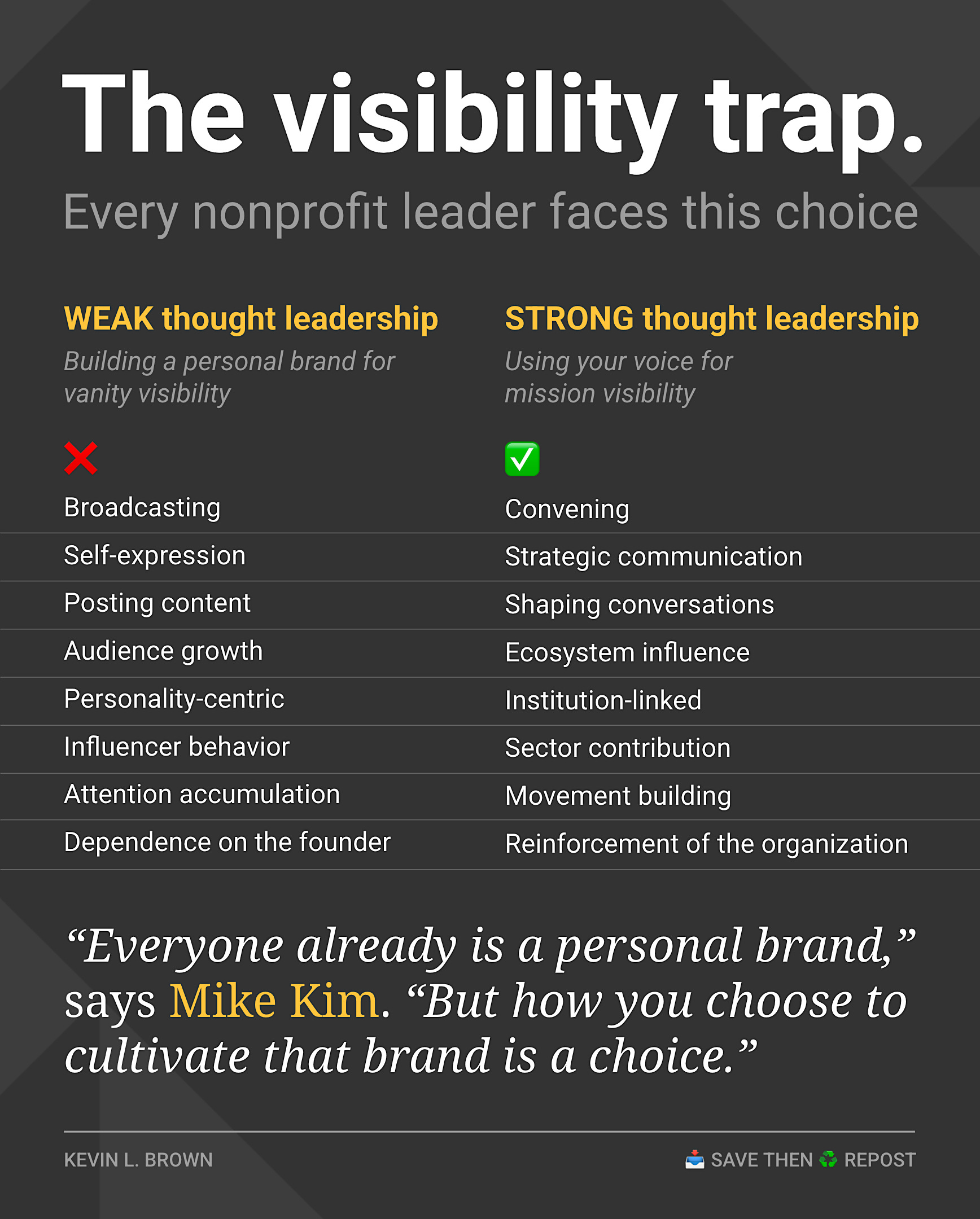
A tension I’m noticing lately:
You want influence.
But you fear looking like an influencer.
Every nonprofit leader we coach says, “I don’t want to make it about me,” yet the modern communication ecosystem increasingly rewards thought leaders who engage publicly.
I get it, because I felt (and still feel!) the exact same way. So in this infographic, I mapped the difference.
Between visibility that serves the ego.
And visibility that serves the mission.
Humble doesn’t mean hidden.
💪🏽💛
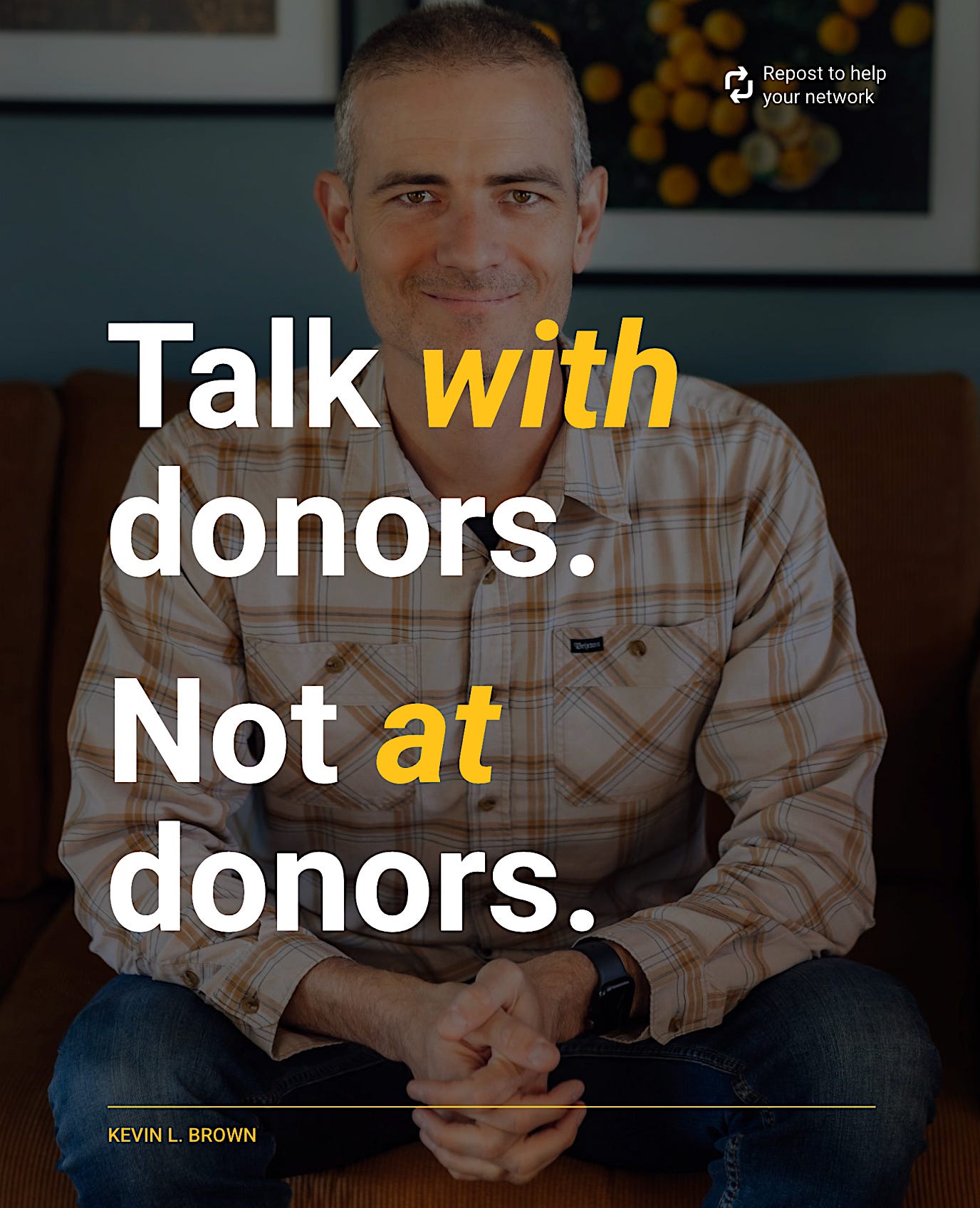
Reject: donor presentations.
Embrace: fundraising conversations.
I’ve used this one mantra more in my own fundraising and sales career, than anything else. Because research found that collaborating with a prospect is the second key behavior to funding success, right after educating them.
Funders can smell desperation.
So you must break the habit of trying to convince. Instead, talk with donors about a potential, mutual fit.
“Having been a donor, I can confirm that those I loved working with were the ones that wanted to collaborate and co-create and with whom there was mutual candour,” says Rashmir Balasubramaniam.
Here’s how in three golden rules:
The better your questions, the better your answers. Because you’ll know how to tailor your side of the chat.
Show your deck only to spark the conversation, then take it off-screen and send it as a follow-up. I do this myself and watch people’s eyes fill with relief.
Even if the prospect asks you to present, getting them to talk is better. Case in point: studies show the highest close rates at a 43/57 talk-to-listen ratio.
Like somebody’s wise mother once said:
We have two ears and one mouth for a reason.
Let’s shut up and listen.
30% of nonprofits fail within 10 years.
The killer isn’t fundraising.
You’re more likely to die from mismanagement, lack of focus, no product/market fit, leadership issues, burnout, and trying to scale too quickly.
To name a few.
I learned this the hard way by building four organizations: one that grew to acquisition, one that failed, and two that achieved solid success.
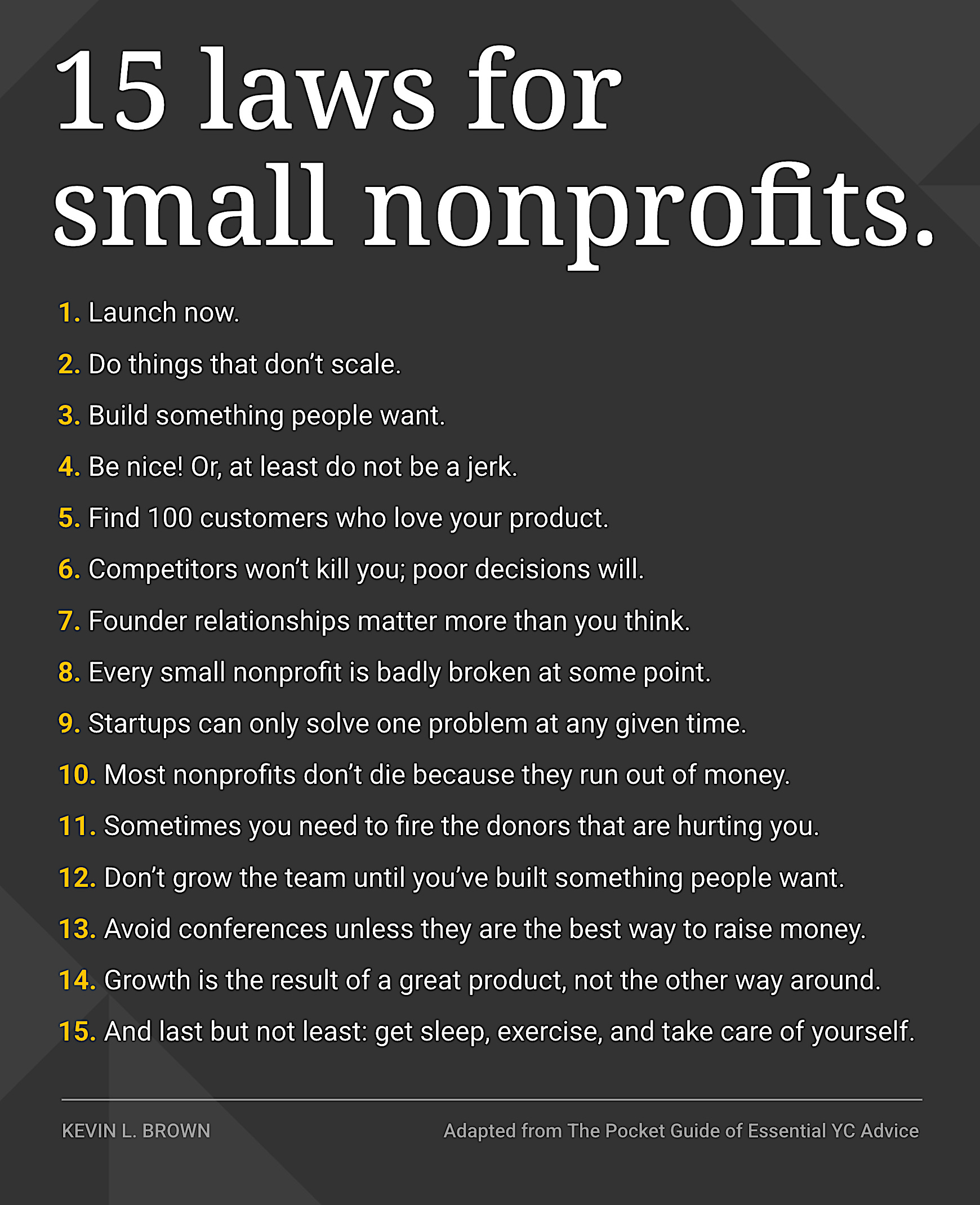
So get 15 laws of startup success (most apply to bigger nonprofits too), adapted from Y Combinator.
What would you add to this list?
What do you question?
P.S. This newsletter grows when you share it. It’s quick and free for you, but super helpful for me. Because this content is part of our own nonprofit mission. Thank you.
From the book
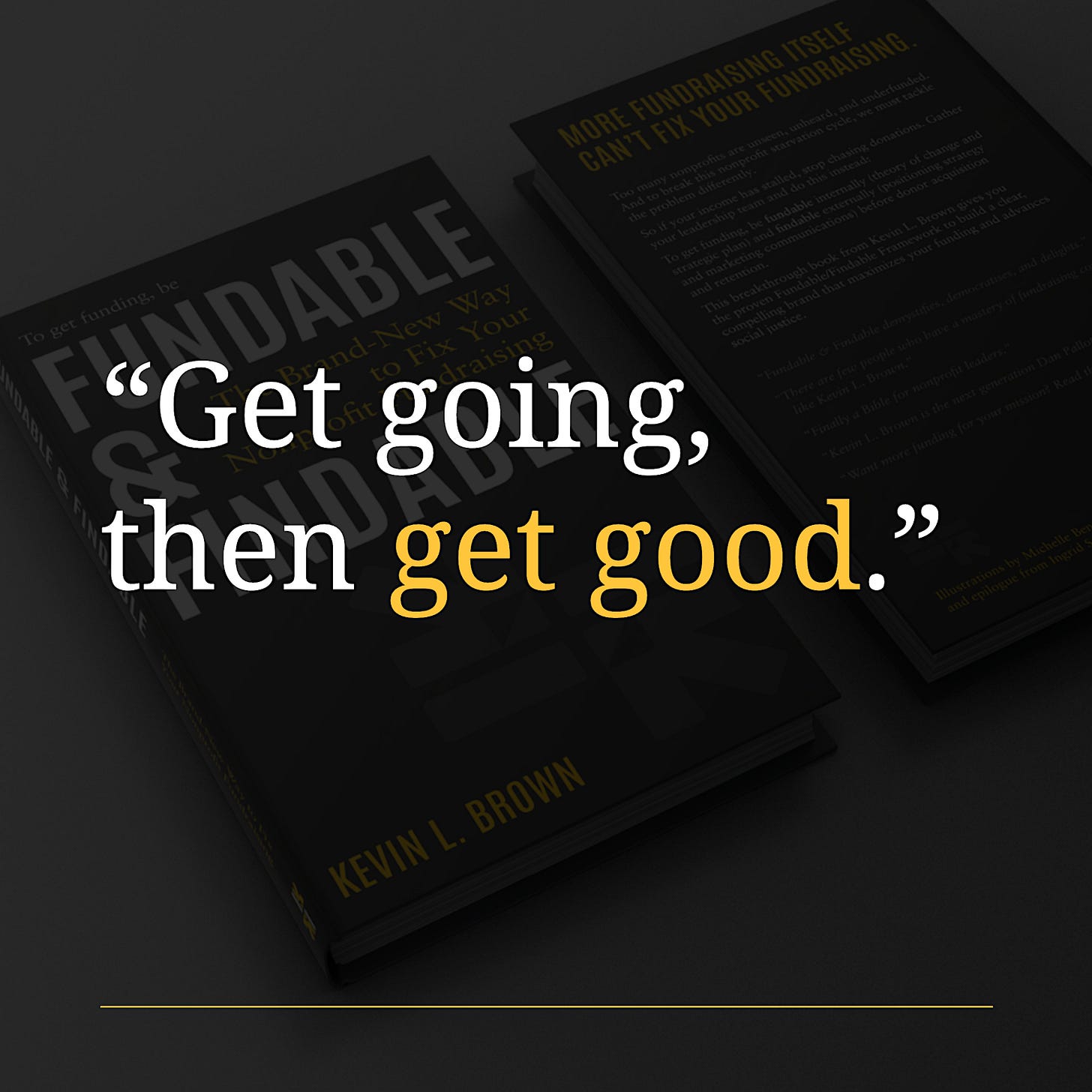
A line worth sitting with, from my four-time bestseller Fundable & Findable: The Brand-New Way to Fix Your Nonprofit Fundraising.
The weekly bonus
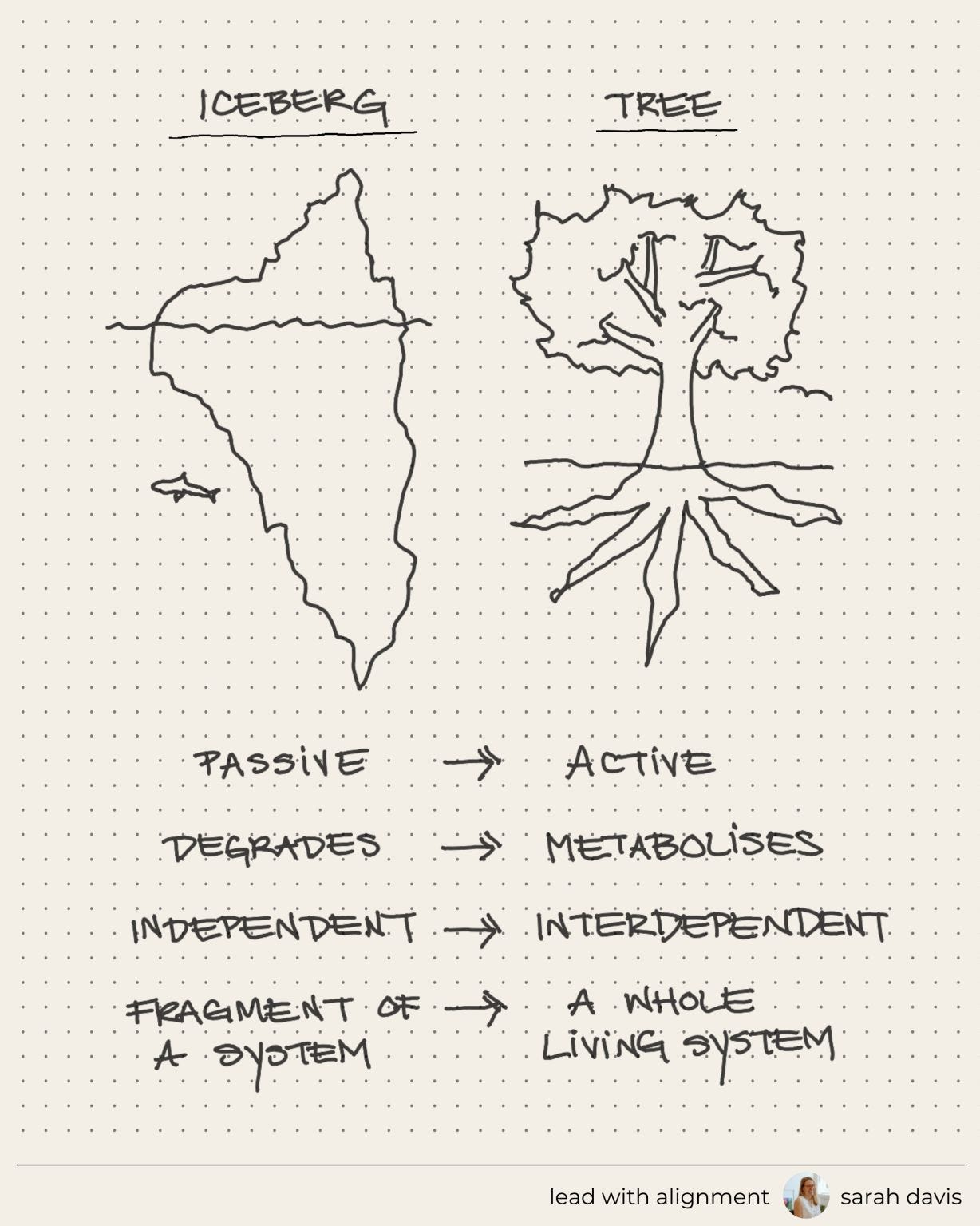
“Have you ever wondered why we use an iceberg model to identify ‘root causes’?”
This thought-provoking question comes from Sarah Davis on LinkedIn recently.
“While this is successful in taking a complex system and giving it a visual, I am curious if it has been a reflection of the linear, industrialised model most organisations and teams are built around, perhaps even reinforcing the model?” she continues.
“If it’s root causes we’re keen to address, let’s use a model with actual roots.”
P.S.
Legacy donations, with no fluff.
Comments
Nothing yet. Say the first thing.
Sign in to join the conversation.