
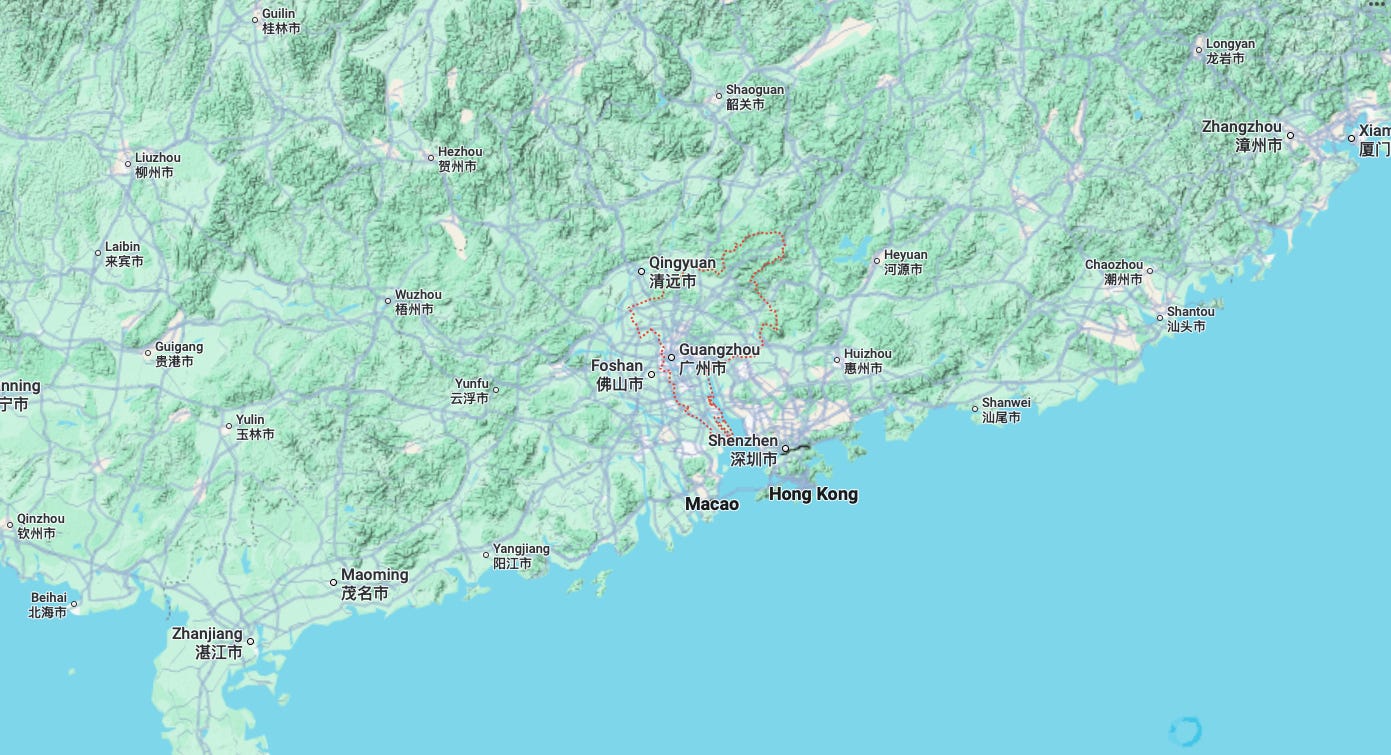
Baiyue (百越), for those unfamiliar with the term, was the name used by ancient Chinese states to describe the vast regions south of the Yangtze River. Today, these areas include parts of Guangdong, Guangxi, Fujian, northern Vietnam, and neighboring regions. Yet in ancient times, this was far from the prosperous and densely populated South China we know today.
The world looked very different then.
Most early Chinese civilizations developed on the northern plains, where the climate was drier, agriculture was more established, and transportation was easier. To people living in the north, the southern frontier appeared wild, humid, and dangerous. Dense forests, unfamiliar diseases, venomous animals, and swamplands created an environment that seemed almost inhospitable.
This gave rise to the concept of “miasma” (瘴气)—a mysterious poisonous fog believed to lurk within the southern wilderness. People observed that travelers, soldiers, and officials often entered these regions healthy and later fell ill or disappeared. Without modern knowledge of malaria, tropical diseases, parasites, and poor sanitation, it was easy to conclude that the land itself was cursed.
As a result, the South became a convenient destination for exile.
Rather than executing certain individuals, imperial governments often sent them far away from the political center. Among those exiled were:
Disgraced officials
Political rivals
Members of defeated noble families
Criminals
Military deserters
Individuals considered troublesome to the state
In effect, the empire used the southern frontier as a pressure-release valve. Those sent there were expected to survive if they could, and perhaps contribute to developing the region along the way.
Ironically, many of these exiles became pioneers.
They brought literacy, administration, farming techniques, engineering knowledge, and trade networks into regions that were still sparsely integrated into the imperial system. Over generations, these frontier settlements evolved into some of China’s most vibrant economic centers.
And yes—the comparison with colonial Australia is surprisingly appropriate.
Just as the British transported convicts and unwanted elements to Australia, the Chinese empires often pushed undesirable populations southward into frontier territories. In both cases, the destination was initially viewed as remote, dangerous, and undesirable. In both cases, many of those sent there eventually helped develop the region into something far more prosperous than anyone originally imagined.
The irony of history is that lands once considered the empire’s dumping ground often became some of its greatest success stories. Today, regions once associated with Baiyue include economic powerhouses such as Guangzhou, Shenzhen, and Hong Kong—places that drive trade, finance, and innovation across Asia.
Sometimes yesterday’s exile colony becomes tomorrow’s center of opportunity.
When discussing Feng Shui, one of the most common misconceptions is the idea that “good Feng Shui makes you rich.” This marketing-driven interpretation often leads people to look at prosperous regions and assume that wealth itself is proof of superior Feng Shui.
History tells a much more interesting story.
Take Guangdong as an example. Today, it is home to some of Asia’s most dynamic economic centers and sits alongside the influence of Hong Kong, one of the world’s most important financial hubs. Yet for much of history, Guangdong was considered a remote frontier that many people actively avoided. It was a destination for exiles, pioneers, and those seeking opportunities far from the political center of the empire.
If prosperity alone defined Feng Shui, Guangdong should have been viewed as a treasure from the beginning. Instead, it took centuries of development before its potential became fully apparent.
From a classical perspective, good Feng Shui is less about instant wealth and more about creating conditions for sustainable growth.
In practical terms, a favorable landscape often means:
Strong natural protection
Reliable access to resources
Relative safety from invasion
Stability that allows communities to develop over generations
This was especially important during periods when dynasties rose and fell rapidly. Throughout Chinese history, wars between competing states could erase decades of progress almost overnight. A region’s ability to avoid constant conflict was often more valuable than immediate access to wealth.
Guangdong benefited greatly from this type of protection.
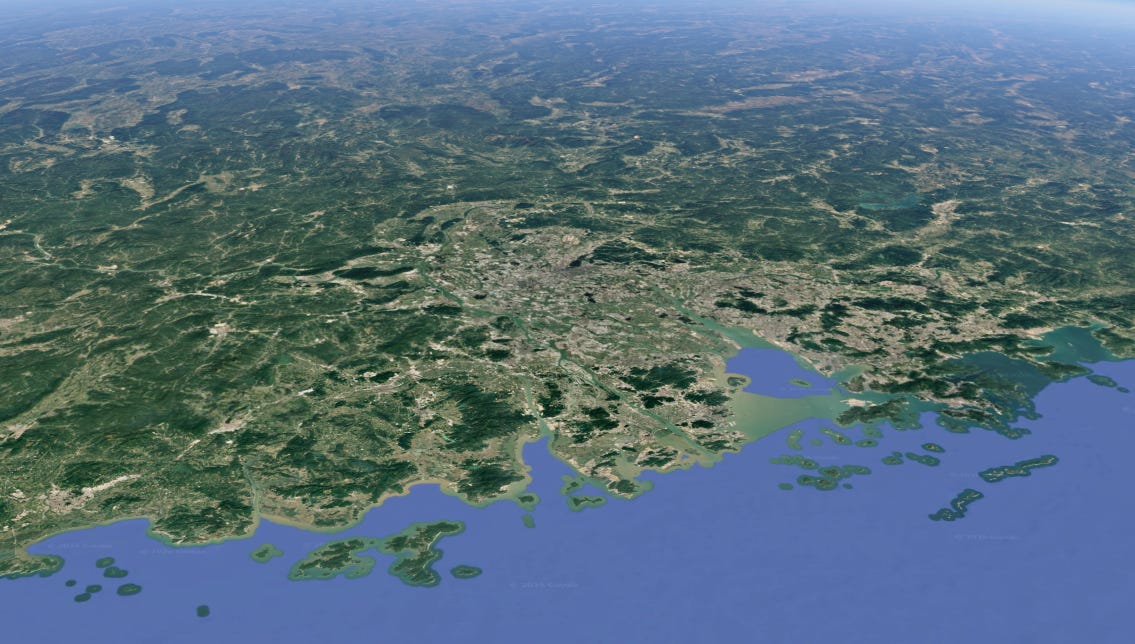
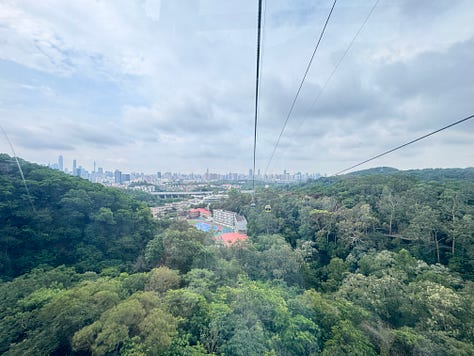
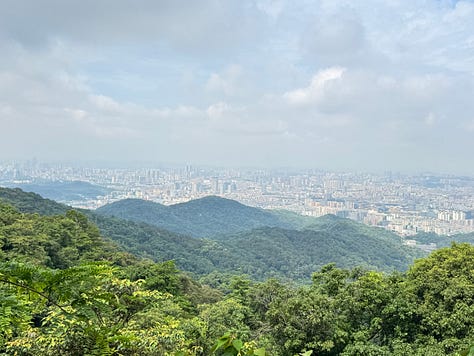
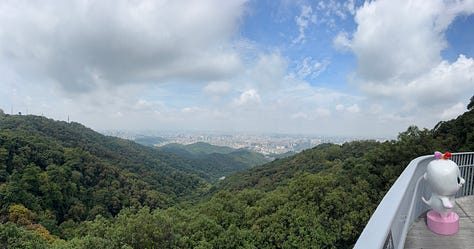
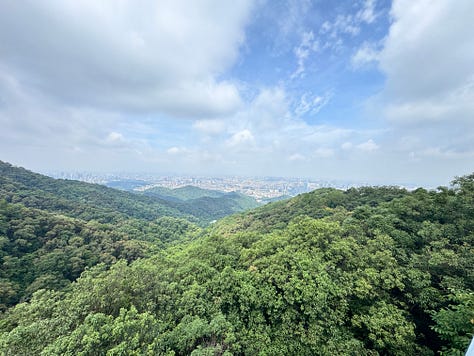
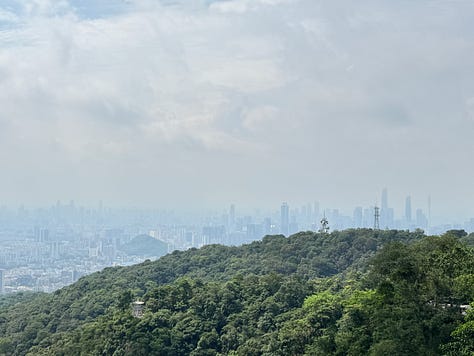
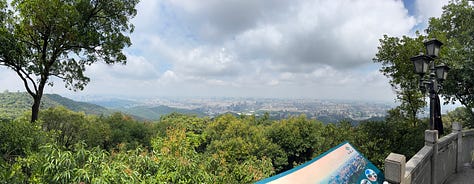
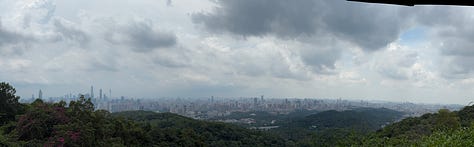
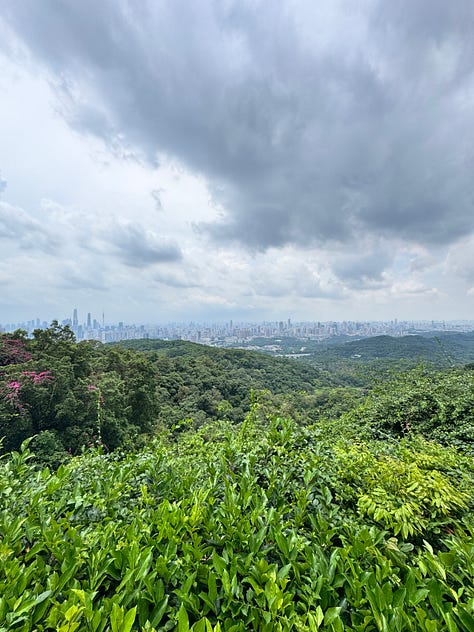
The imposing Nanling Mountains formed a substantial natural barrier between the southern region and the central plains. Moving a large army through the rugged terrain was difficult, expensive, and slow. While northern regions repeatedly became battlefields during periods of political upheaval, much of Guangdong remained comparatively insulated.
From a landform Feng Shui perspective, the region is often described using the classical Four Celestial Animals (四灵山诀) model:
The Black Turtle (玄武) provides support and protection from the rear through the mountain ranges.
The Green Dragon (青龙) and White Tiger (白虎) form protective flanks on either side.
The numerous offshore islands and coastal formations create the appearance of the Red Phoenix (朱雀) in front, opening opportunities toward the sea.
This combination creates a landscape that is both protected and connected—secure enough to preserve growth, yet open enough to engage in trade and expansion.
In essence, classical Feng Shui was never simply about becoming wealthy. It was about creating an environment where people could survive, settle, build families, establish businesses, and accumulate prosperity over time without having everything destroyed by the next wave of conflict.
The wealth came later.
The Feng Shui provided the opportunity for generations of people to develop the region. It was human effort, trade, innovation, and stability that eventually transformed Guangdong from a distant frontier into one of the most economically important regions in Asia.
A useful way to think about it is this: Feng Shui does not grow the tree for you. It provides fertile soil, shelter from storms, and access to water. The actual growth still depends on the people willing to plant, nurture, and cultivate the land.
Thanks for reading! This post is public so feel free to share it.
One of the most significant expansions into southern China occurred during the reign of Qin Shi Huang, when the Qin Empire launched a major campaign against the Baiyue (百越) peoples. Leading part of this southern expansion was Zhao Tuo, a Qin general tasked with securing and governing the newly conquered territories.
An interesting detail often mentioned in historical discussions is that large numbers of Qin soldiers were stationed permanently in the south. Whether through official policy or practical necessity, many were effectively expected to settle there rather than return north. The result was a lasting military and cultural presence that would profoundly influence the development of the region.
When the Qin Empire collapsed shortly after Qin Shi Huang’s death, the southern territories found themselves in a unique position. While the north descended into political turmoil and rebellion, Zhao Tuo retained control of the south and eventually established the Nanyue Kingdom.
In modern business terms, it almost resembles a branch office that suddenly became independent when headquarters fell apart.
Because of its distance from the political struggles of the central plains, the south was able to develop somewhat differently. The region benefited from:
Relative insulation from northern power struggles
A permanent military presence providing security
Access to maritime trade routes
Gradual integration of northern administrative and agricultural knowledge
One could argue that southern China was given the rare opportunity to grow without being constantly disrupted by the factional politics that repeatedly consumed the imperial heartland.
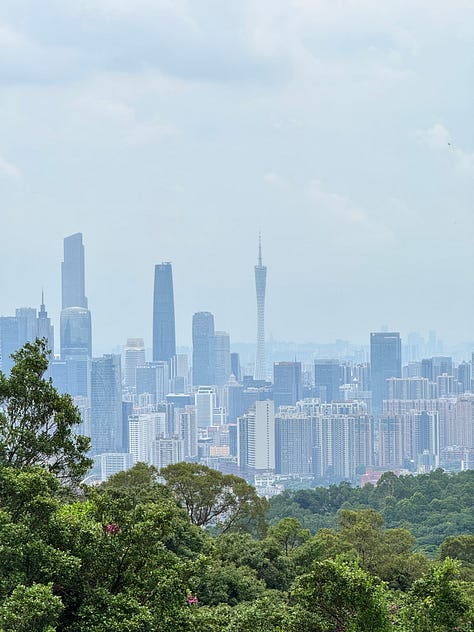
The city that benefited most from this was what would later become modern-day Guangzhou. As the capital of Nanyue and later a major port of successive dynasties, Guangzhou developed into one of China’s longest continuously inhabited and economically significant cities.
While Chang’an remained the political and cultural center of many dynasties, Guangzhou became the empire’s southern gateway to the outside world. For over two thousand years, merchants, diplomats, travelers, and goods flowed through the city, helping transform it from a distant frontier outpost into one of the most important urban centers in East Asia.
The irony is remarkable. What was once viewed as a remote and undesirable frontier became one of the greatest success stories in Chinese history.
The Qin armies may have arrived as conquerors, but the institutions, settlements, and cultural foundations they left behind planted the seeds for a thriving civilization that would continue to flourish long after the Qin Empire itself had disappeared.
Thanks for reading! This post is public so feel free to share it.
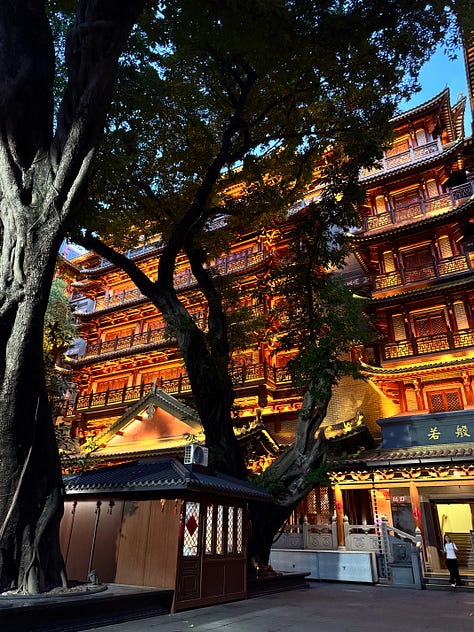
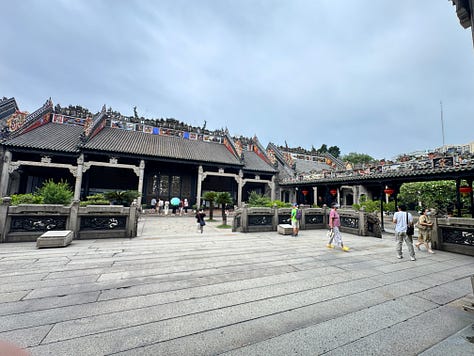
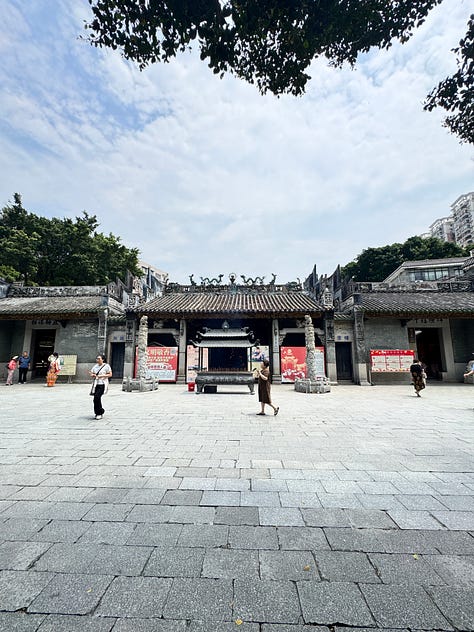
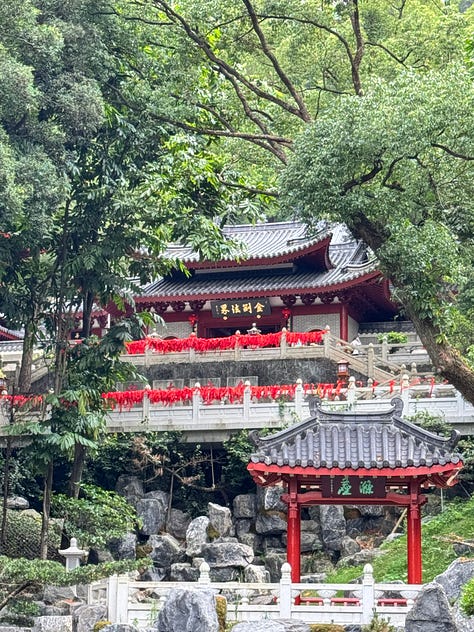
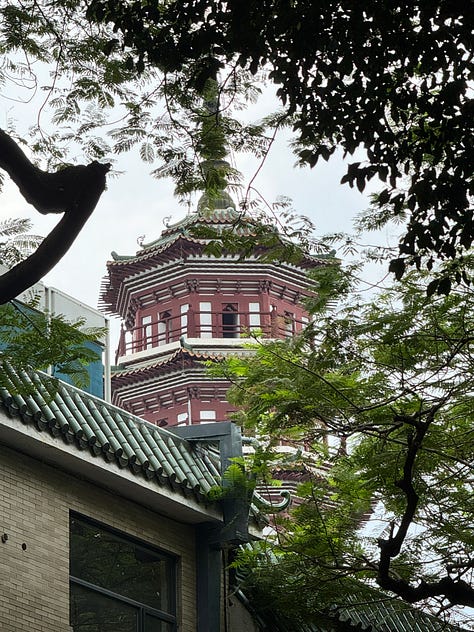
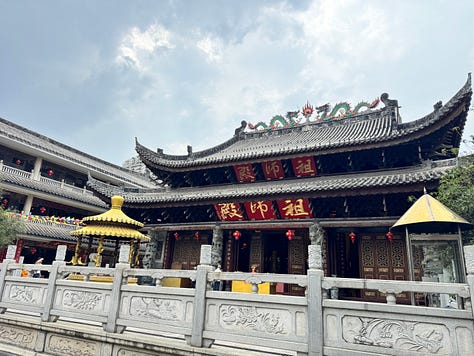
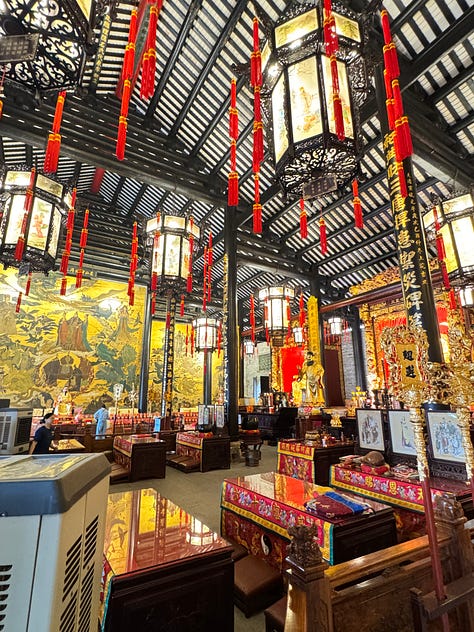
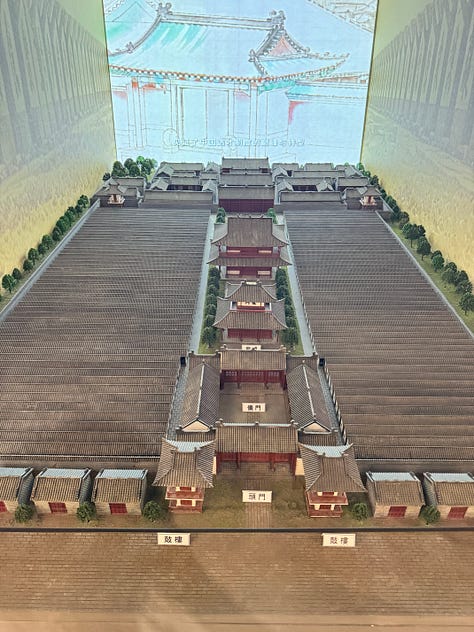
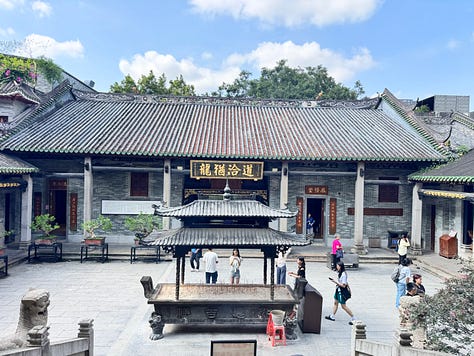
Another fascinating irony of Guangdong’s history is its deep respect for education and scholarship. For centuries, producing a successful scholar was one of the highest achievements a family could hope for.
This was no small undertaking.
A candidate preparing for the imperial examinations often represented the hopes of an entire clan. Families would pool resources, sacrifice comforts, and invest years of effort into a single child’s education. And for those living in Guangdong, the challenge was even greater. The examination centers and political heart of the empire were far to the north, requiring long and often dangerous journeys. Passing the exam was difficult enough; surviving the trip there and back was an achievement in itself.
As a result, Guangdong developed an educational culture that was arguably one of the most competitive in Chinese history. Long before modern tutoring centers existed, entire communities were effectively organized around preparing young men for the imperial examination system.
Even today, that emphasis on academic excellence remains deeply embedded in the region’s culture.
Yet here comes the irony.
Despite producing large numbers of scholars and examination graduates, Guangdong historically produced relatively few high-ranking officials compared to what one might expect. When examining imperial records, many local government positions in the south were actually filled by officials sent from the north rather than by native Guangdong elites.
At first glance, this seems contradictory.
Why invest so heavily in education if the goal is not to dominate government service?
The answer may be far more practical than political.
In many parts of northern China, government service represented one of the most reliable paths to wealth, influence, and social mobility. In Guangdong, however, there was another option: commerce.
The south sat at the center of maritime trade networks. Merchants could accumulate fortunes through shipping, manufacturing, finance, and overseas trade. For many ambitious families, business offered rewards that rivaled—or even exceeded—those available through government office.
Why spend decades navigating political bureaucracy when one could build wealth through trade?
Over time, a distinct cultural balance emerged:
Northern elites often dominated administration and politics.
Southern elites increasingly focused on commerce and wealth creation.
Of course, the reality was never completely separated, but the pattern became noticeable enough to shape regional identities.
One might summarize it as:
“You manage the government, we’ll manage the marketplace.”
This arrangement allowed Guangdong to develop a strong entrepreneurial culture that continues today. It is no coincidence that many of China’s most commercially minded communities, trading networks, and overseas business families trace their roots to Guangdong.
In a way, the imperial examination system taught Guangdong how to produce scholars. Commerce taught Guangdong how to produce wealth.
And when forced to choose between political influence and economic opportunity, many southern families quietly decided that the marketplace offered the more attractive future.
No posts
Comments
Nothing yet. Say the first thing.
Sign in to join the conversation.