
I have a particular fascination with women erased from the arts. It feels like the most egregious of acts to steal, erase, or misattribute someone’s creation.
The literary world is full of these examples.
Perhaps one of the most depressing examples is Zelda Fitzgerald.
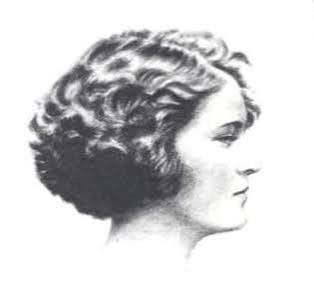
Zelda usually gets the unfair label of “troubled” before her name and always seems to have the “F. Scott’s wife” descriptor attached. But Zelda was complicated, talented, dark, and sensitive. A socialite, a ballerina, a writer.
Like other women in history, her name gets minimized to a caricature. The most scandalous headlines become her identity. Troubled wife of famous novelist and first flapper Zelda Fitzgerald hospitalized for schizophrenia dies in a hospital fire.
It’s fucking tragic.
It’s also a convenient way to erase the layered brilliance of her. She was wildly ambitious—a trait we love to hate in women. She was the heroine in all her husband’s novels who fought for independence and free thinking in a world that wanted her compliant.
She published a novel in 1932. Save Me the Waltz made her husband big mad. She drew on material he had in mind for Tender is the Night, and he claimed she stole his plot idea. He forced her to do massive revisions. 1
Her diary went missing, and to no one’s surprise, excerpts showed up in her husband’s writings. He took from her liberally, without credit. 2
They clashed in ambitious intentions in writing and art, and her multiple hospitalizations for mental health treatment strained their marriage. F. Scott once blamed his writing struggles on her treatments. She never published another novel, though worked hard to find her own voice in ballet, art, and writing.
Ernest Hemingway published A Moveable Feast, where a fictionalized Zelda ruined her husband’s career. While F. Scott descended into alcoholism, Zelda slipped in and out of hospitals, treated with insulin shock therapy, where doctors injected enough insulin to induce a coma that resulted in a seizure. 3 She sadly died in a fire in Highland Hospital in Ashville, NC while she lay sedated in a locked room.
Another literary great used a woman’s work to craft his wildly successful novel. John Steinbeck used Sanora Babb’s meticulous notes to write The Grapes of Wrath. The problem was, Sanora didn’t know about or consent to it, and she intended to use them to write her own novel about Dust Bowl migrants.
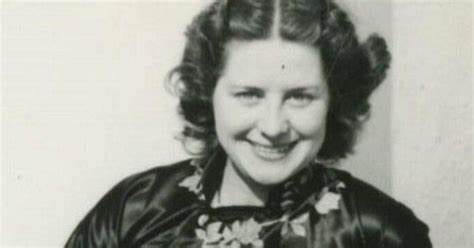
Sanora bounced around as a child. She graduated high school in Oklahoma (as valedictorian) and went in search of her journalism dreams. The stock market crash derailed that, and she lived homeless for a while. She secured a job with the Farm Security Administration, a federal program as part of the New Deal. She traveled California’s Central Valley with her boss, Tom Collins, keeping detailed notes on the migrant workers.
Little did Sanora know that Tom Collins was handing her notes off to a friend of his, John Steinbeck. He used her notes to write The Grapes of Wrath. 4 Though she was under contract with Random House, they pulled out because Steinbeck was already a huge hit.
Steinbeck dedicated the book to Tom Collins.
Sanora led quite a life outside this literary snub. Once she moved to California, she befriended Ray Bradbury and Ralph Ellison. She had an illegal marriage to Chinese Academy Award-winning cinematographer James Wong Howe. Her leftist views and writing led to her being blacklisted by the House Un-American Committee, and they went into exile in Mexico City for a short time. 5 She published a novel and a memoir. Her Dust Bowl novel Whose Names are Unknown finally published in 2004, a year before her death.
Eileen Maud O’Shaughnessy met George Orwell while studying for her M.A. in Educational Psychology at University College London. Early in their marriage they lived in a rundown cottage where George would work by lamplight and Eileen, a typewriter by candlelight. He believed he should live the life of the poor, and their health suffered. 6
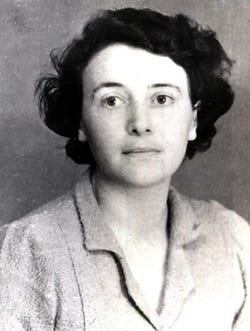
She was intimately involved in his writing. While working on Animal Farm, Eileen provided notes, including the suggestion to turn the story into an allegory, prompted by her studies in psychology. According to the Orwell Society, it is clear Eileen collaborated on this manuscript. 7
In 1934, Eileen wrote a poem for a school’s magazine about a dystopian society titled Century’s End, 1984. Eileen had an interest in the rise of European Fascism. George wrote 1984 a year after Eileen’s untimely death. He never acknowledged her contributions, but did write (in third person) about “a wife” who bothered him with the need for sex and didn’t clean as often as he felt she should. 8
Vivien Eliot was a complicated figure. She suffered significant mental health struggles and underwent extensive treatment, which worsened her husband, T.S. Eliot’s own anxieties. He once wrote that Vivien “has had to do so much thinking for me,” noting her additions/suggestions to his writing. 9
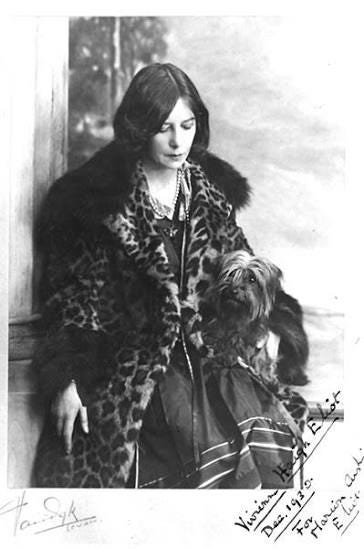
In the 1920’s, she contributed multiple short stories to T.S.’s literary magazine under pseudonyms. It appears he supported his wife’s writing ambitions, but their marriage turned toxic, with both sides affected by mental health. The Waste Land’s original manuscript shows commentary by Vivien.10 She died in a psychiatric hospital, distraught over her failed marriage. Her brother committed her against her will, and T.S. never visited her.
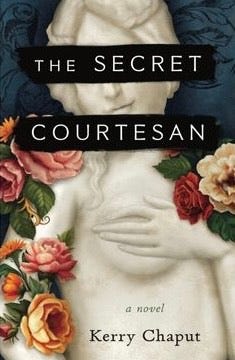
Thank you for reading. I don’t monetize my substack. If you’d like to support me, please buy my book, The Secret Courtesan about a female sculptor erased from art history. Or click the link below for more ways to support my work.
https://americanwritersmuseum.org/american-writer-spotlight-zelda-sayre-fitzgerald/?srsltid=AfmBOooisHZGmo4i116gXsgjzK9LADq9tNk6XAwv6EOgdHKO_lY6p0K-
https://fscottfitzgeraldsociety.org/about-us-2/biography-zelda-fitzgerald/
https://www.ashevillehistory.org/zelda/
https://www.pbs.org/kenburns/the-dust-bowl/sanora-babb
https://www.ucpress.edu/blog-posts/10-facts-about-fearless-writer-sanora-babb
https://www.st-hughs.ox.ac.uk/wp-content/uploads/2021/04/Eileen-OShaughnessy-profile.pdf
https://orwellsociety.com/out-from-the-shadows/
https://www.theguardian.com/books/2023/jul/30/my-hunt-for-eileen-george-orwell-erased-wife-anna-funder
https://tseliot.com/people-in-his-life/vivienne-haigh-eliot
https://latinamericanliteraturetoday.org/2023/03/the-waste-land-one-hundred-years-later/
Comments
Nothing yet. Say the first thing.
Sign in to join the conversation.