
Women’s friendships are a wondrous thing.
There’s a reason society makes girls think they are each other’s competition. Because the truth is far too dangerous—women working together can literally break the world.
Female friendships hold a fierce loyalty and understanding that can heal wounds and build confidence from scraps of insecurity. They see you and honor your struggles. They make you feel as if nothing in the world can take you down, because you have a circle of the most incredible humans beside you.
When women support each other, something superhuman happens.
In one of the most incredible stories of female solidarity, I present to you a the Ravensbrück Nine.
The nine who forged a friendship near the end of WWII all joined the Resistance as young women. They had smuggled arms across Europe, saved parachuting agents, maneuvered escape routes out of France, and hid Jewish children in safe houses. The Gestapo has them arrested, interrogated and tortured. They continued to meet in various French prisons, and in transport to the notorious women’s camp, Ravensbrück. Their bond strengthened while forced to work in a labor camp in Leipzig 1
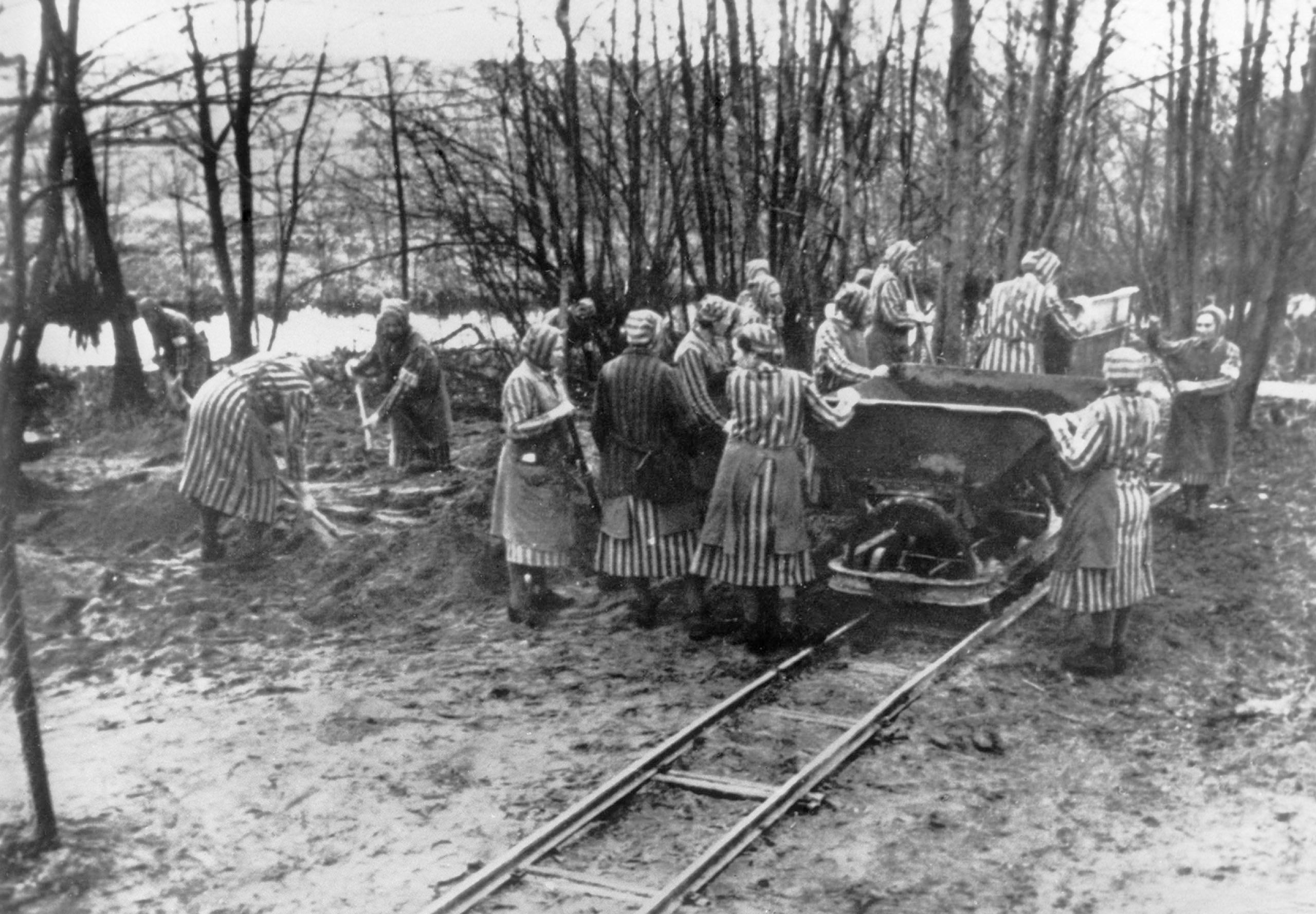
Most of Ravensbrück’s population were political prisoners. Guards starved and tortured the women, stripped them naked, and forced them to stand in the snow. Though the hunger was unmanageable, they had a tradition of donating one spoonful of soup into a bowl, donated to the woman who needed it most that day.2
Over 130,000 prisoners passed through Ravensbrück during the war. The conditions were brutal. They faced widespread disease, starvation, and overcrowding. Some prisoners underwent horrific medical experiments and others forced into work at camp brothels. All were subject to daily beatings and random executions.
While prisoners, these nine women were still resisters. A the labor camp, they assembled shells for Nazi weapons, and secretly sabotaged their work. Their friendship grew through the horror and their tiny moments of rebellion.
In the spring of 1945, officers evacuated thousands from Ravensbrück after pressure from the Allies. They would rather kill them than see them liberated, so they sent prisoners on death marches. Forcing the sick and injured to trek to other camps, they would beat or kill anyone who stumbled.
The nine were among them, barefoot, blistered feet, underweight, in thin clothes, with illnesses worsening by the minute. Led by Hélène Podliasky, an engineer for the Resistance, they made a drastic choice.
They jumped into a pile of corpses, hoping to be left behind.
It worked.
For ten days, the nine women wandered the German countryside with the goal of reaching the front lines and crossing over to the American occupation zone. They were starving and weak. One had diphtheria, and another had tuberculosis. They had hip pain, pneumonia, and broken bones. Yet they made a promise that no one would fall behind.3
After they crossed the Mulde river in Saxony, Germany, they couldn’t go on. Just then, a Jeep approached, carrying two American soldiers. They offered them safety and a cigarette.
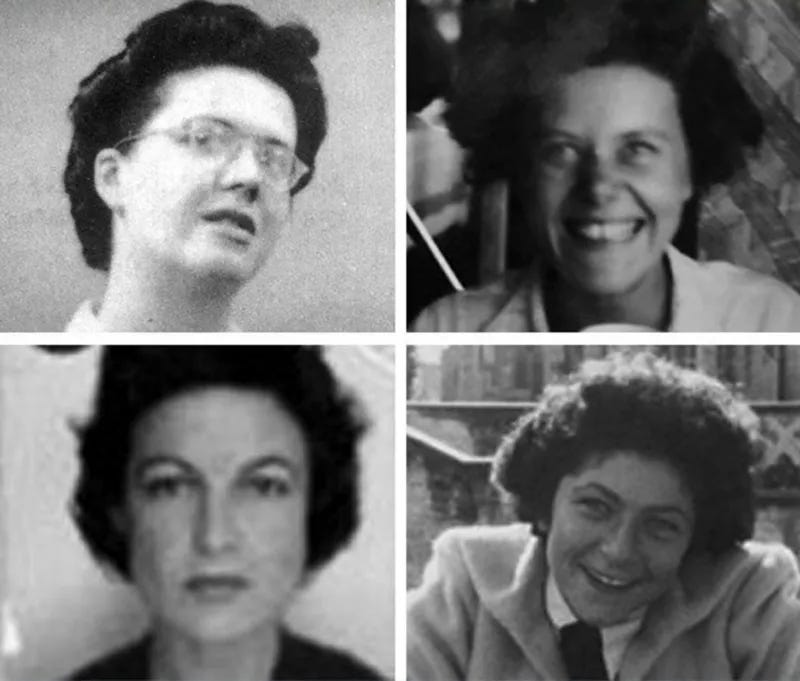
The women all miraculously survived. While a few were friends from childhood, the rest met along the way, forming an unshakeable alliance through their arrests, imprisonment, and escape.
Though they all survived, they carried the shame of their time as prisoners. Women were discouraged from discussing struggles after the war, with people eager to “move on.” This left them isolated and struggling with PTSD. Many, many women were never recognized for their heroic efforts, with stories like this one remaining silent until many years later.
An 83-year-old Hélène Podliasky first told her harrowing story to her grandniece. After decades of silence, she finally spoke of this incredible story of survival. Around this time, the nine came together for a reunion.
Shortly after the war, one of the women, Renée Lebon Châtenay (known as Zinka), was miraculously able to reunite with the baby she had while imprisoned.
The Ravensbruk Nine:
Hélène Podliasky
Nicole Clarence
Suzanne Maudet (Zaza)
Joséphine Bordonuve (Josée)
Jacqueline Aubéry du Boulley (Jacky)
Yvonne Le Guillou (Mena)
Renée Lebon Châtenay (Zinka)
Madelon Verstijnen (Lon)
Guillemette Daendels (Guigui)
Thank you for reading. I don’t monetize my substack. If you’d like to support me, click below for ideas. Or buy my book The Secret Courtesan, about a females sculptor erased from history.
https://www.gwenstrauss.com/the_nine.htm
https://www.bbc.com/news/stories-59566983
https://www.newstribune.com/news/2024/nov/03/biography-tells-story-of-nine-women-who-fled-from/
Comments
Nothing yet. Say the first thing.
Sign in to join the conversation.