
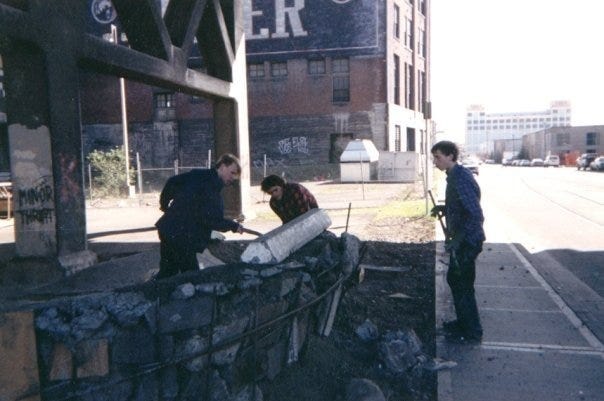
Almost 36 years ago, we started construction on an illegal skateboard park in Portland, Oregon, in what used to be the worst place in town.
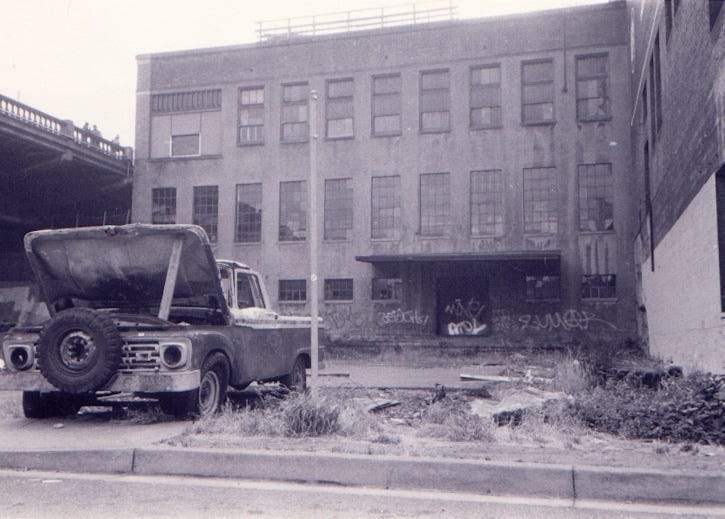
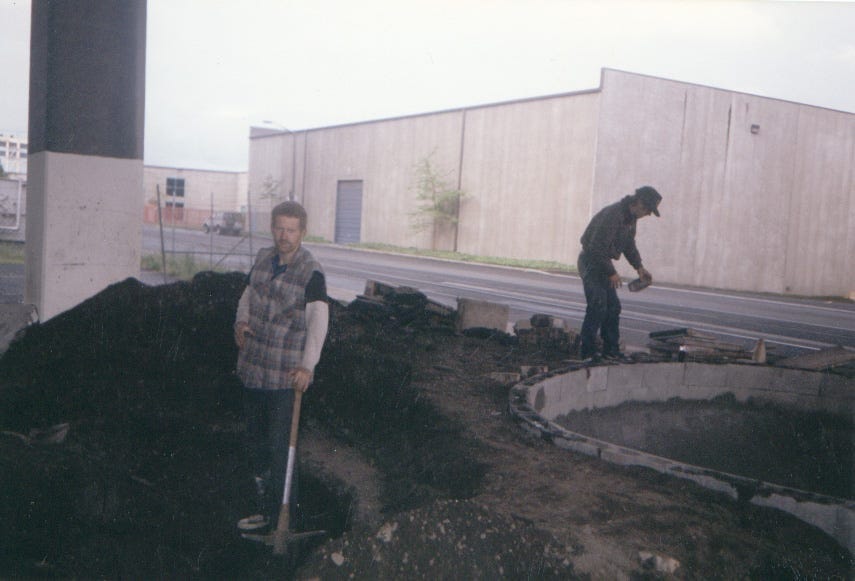
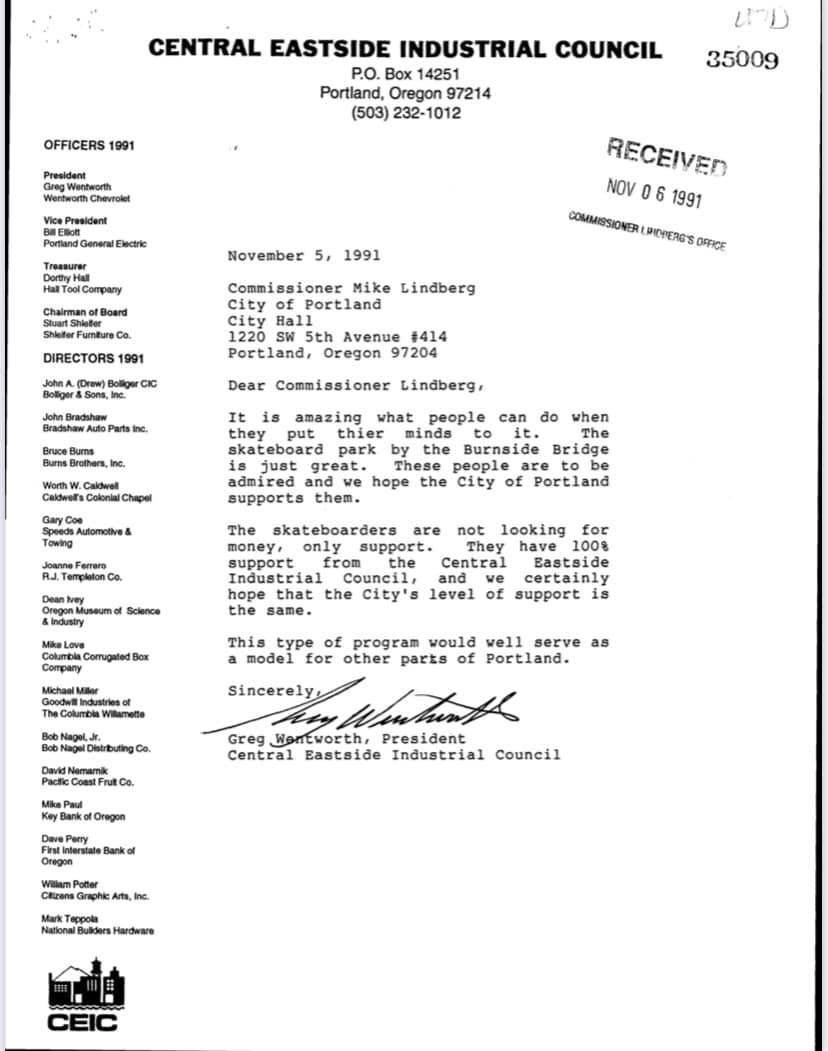
Construction of the “park” began in the early fall 1990, and letters of support began flowing in a year later, this one from the local business district:
At the time, the east end of the Burnside bridge was among one of the worst places in town, in terms of litter and crime. The building to the immediate north had been abandoned in the middle of renovation, and with a soup kitchen next door, the area had become an unsanctioned homeless camp, resulting in skyrocketing crime.
For five years we’d tried and failed to establish a place of our own, each time having our “builds” demolished by law enforcement
In time we realized there’s wisdom in building a skatepark in the worst part of town; our 24/7 presence displaced the homeless, and our regular efforts to be “good neighbors” resulted in the establishment of a collaboration that extended goodwill to others, which leads me to lesson number two:
We recruited homeless to join us, and taught them how to skate as they taught us how to build. We cleaned the area up, and due to 24/7 presence the crime dropped.
Not all homeless wanted to help, and not all of them wanted to transform the area into something new. That’s ok: we ejected them. I don’t feel bad about that.
There were several of us who worked hard to establish professional working collaborations with the key stakeholders (which Red calls “PR”). These investments of time resulted in entry into circles that we had henceforth been denied. In time, we collected a cross-functional cohort of “strange bedfellows” (cops) that were willing to go to bat on our behalf.
The mayor at the time was Bud Clark; many of us skateboarded with his kid, Nick.
Also, I had some “ins” with the chief of police (Tom Potter) due to my grandfather’s role with the railroad. Many of us were one or two degrees separated from the “right people” and we made full use of that access.
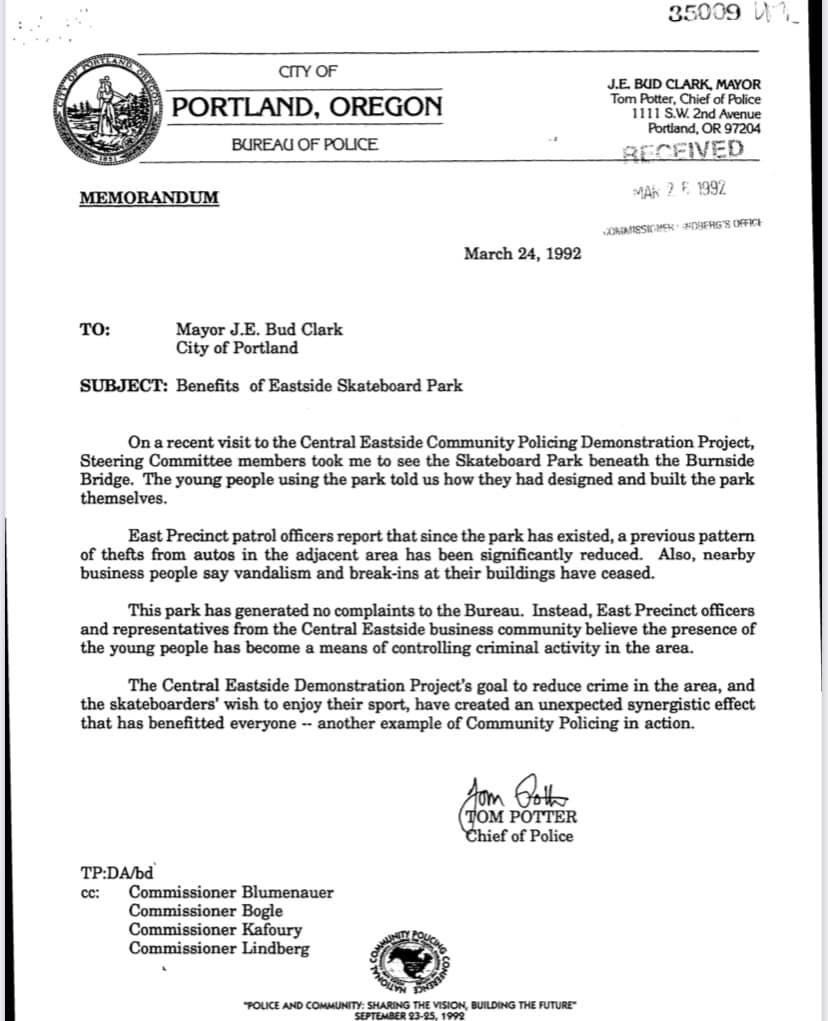
There were a lot of older people who invested untold hours providing counsel and guidance, for the years leading up to the park’s eventual establishment, as well as the years which followed.
In summary, the area became cleaner, safer, and more inclusive because a few well-placed skaters built an illegal concrete structure beneath a bridge.
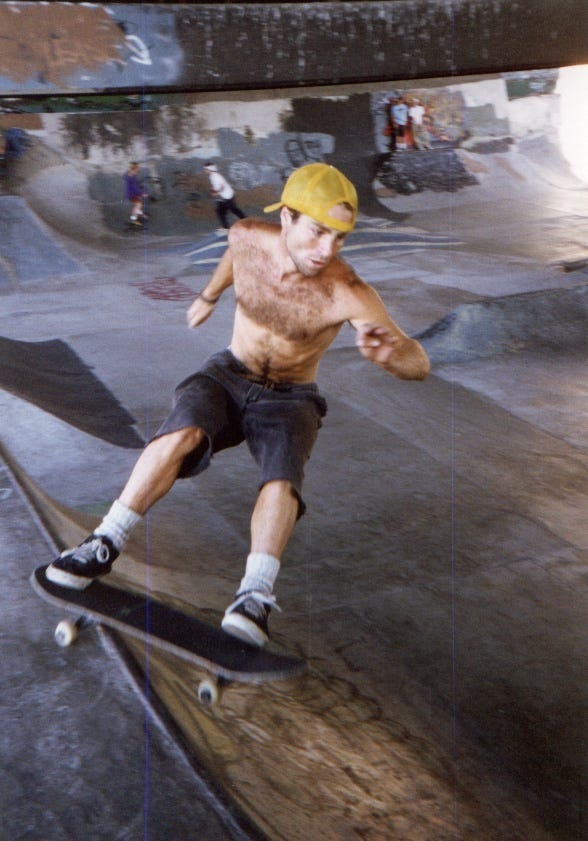
We used our opportunity to secure formal endorsement from the government, and this successful endeavor began deep in the grass roots: the homeless, the business owners, the beat cops, the neighbors, etc.
That was almost 35 years ago; some of us (such as my brother Kevin) are using an updated model working with the homeless today.
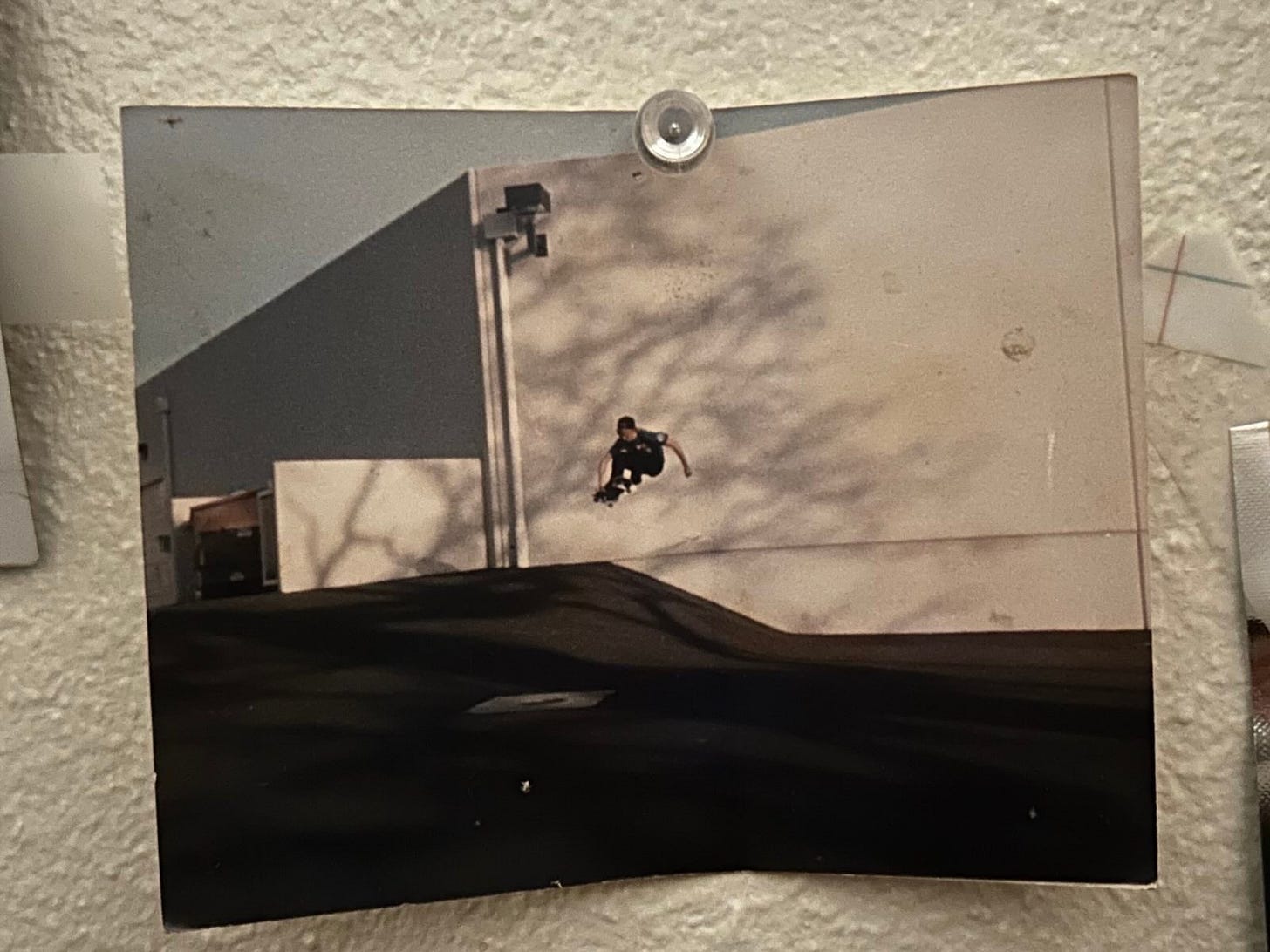
Yes, Kevin was also in the middle of this story. He was a widely-respected skateboarder, and he helped build the park as well.
Turns out all that time playing with skateboards in our youth served as gameplay for a more pressing need which is manifesting just as the status quo regarding homelessness appears to be coming apart at the seams.
We could not have accomplished 35 years of “anarchy in action” without the collective support of countless people, many of whom were born after we poured that first batch of concrete. Many of these stewards are not skaters, and of them have no idea who I am, which is one of my favorite parts of this story.
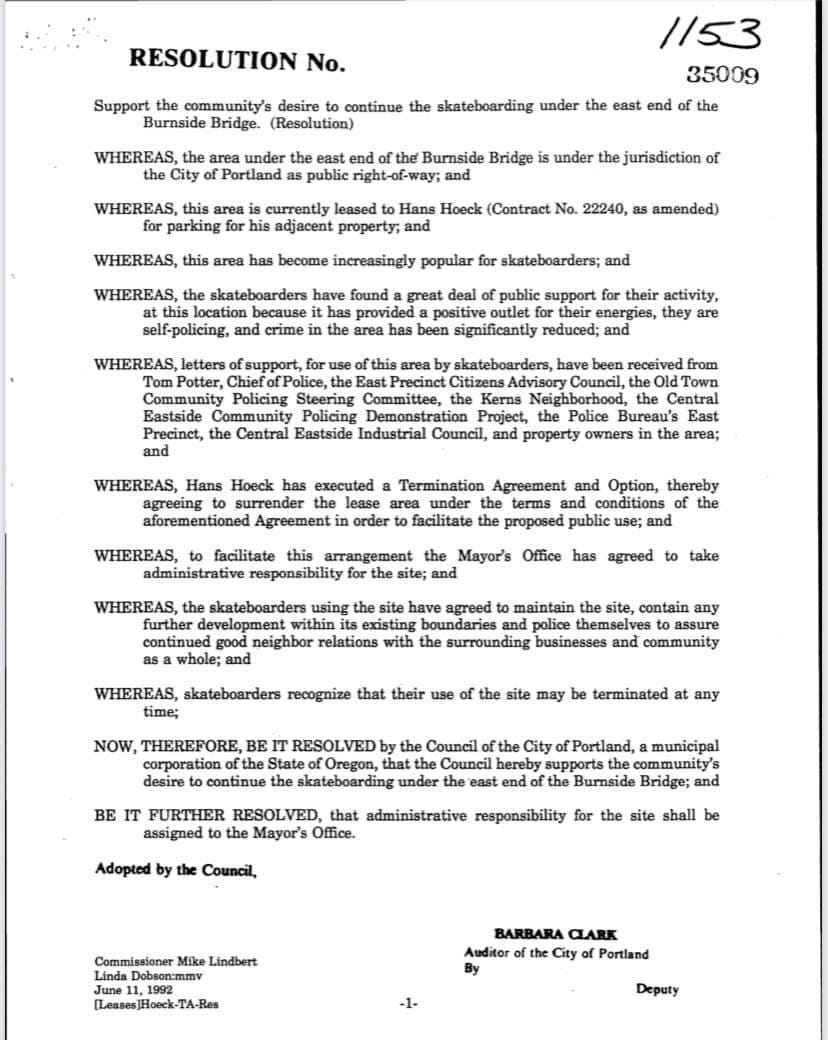
Officially, the park exists under a community policing agreement formalized in 1992 which orchestrated resources, roles, and responsibilities among skaters, business owners, law enforcement, neighbors, parents, etc.
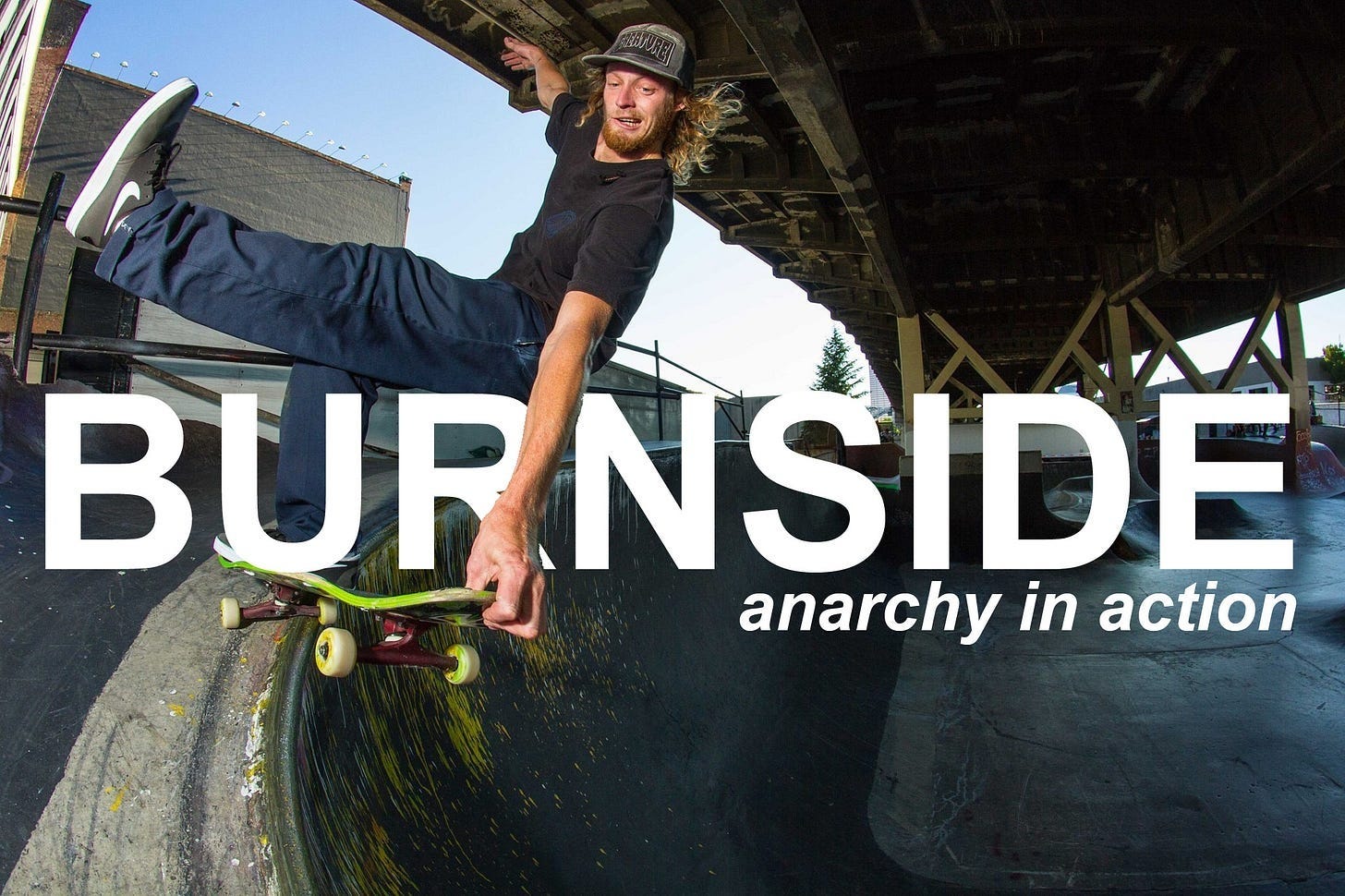
Let’s dig into the word “anarchy,” for it does not always mean “chaos” as is frequently claimed by the media. “
Anarchy is the state of a society being freely constituted without authorities or a governing body. It may also refer to a society or group of people that entirely rejects a set hierarchy.
Anarchy was first used in 1539, meaning “an absence of government.” Absence of centralized authority? That’s skateboarding culture, right there.
In this context, the word “anarchy” implies “self-governance,” and brings to mind much of what’s been written about the concept of liberty.
“Liberty is the power to do everything that does not interfere with the rights of others: thus, the exercise of the natural rights of every individual has no limits save those that assure to other members of society the enjoyment of the same rights.” - Thomas Paine, Plan of a Declaration of Rights, 1792
Here’s a toast to the kind of people disinclined to honor rules when they come to believe said rules no longer make sense, and here’s a toast to the people who invest to improve conditions for all, even if in doing so they break a few eggs along the way.
None of these stories are really about skateparks, or bookshelves, or minivans, or Italian delis and the people who hang out there. They’re really all about the same thing: they’re about ordinary people refusing to let the fire go out when times get tough.
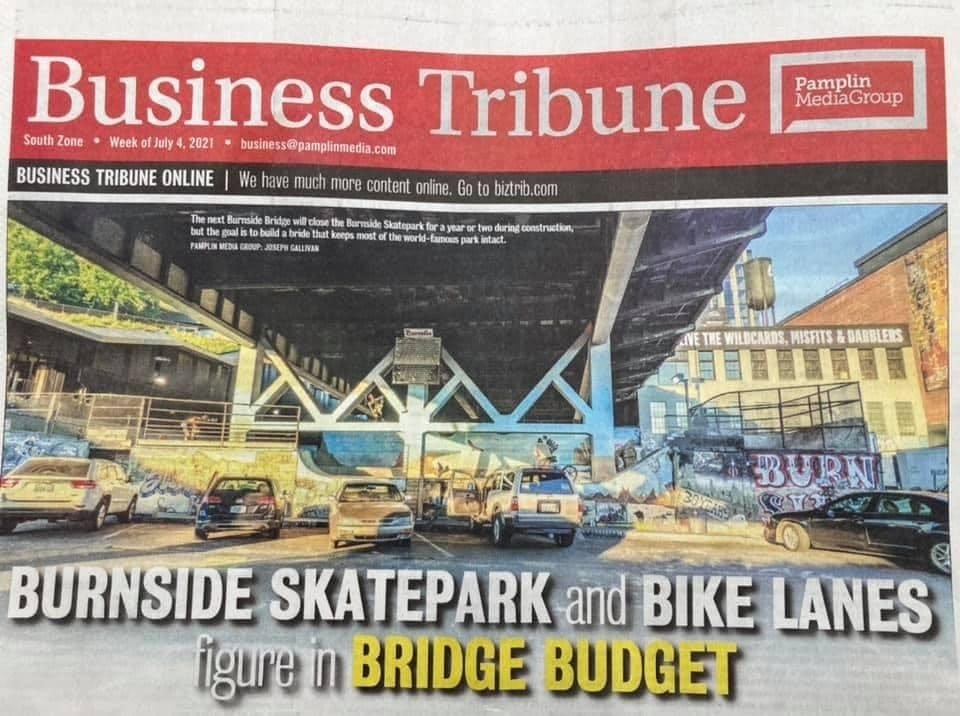
Skateboarding was criminalized when we started building Burnside; the police would take our skateboards, levying big-ticket fines, and it was not uncommon for us to get beat up and left out at Terminal 6.
It was in that context that skaters started building a concrete skatepark in what at the time was one of the dirtiest and most dangerous places in town.
Yes: it was anarchy.
No: it was not chaos.
Alas: We achieved a formalized agreement regarding self-governance because we worked hard to improve the neighboring area for all, NOT because we were throwing bottles through windows, despite legend which suggests otherwise.
It’s for that reason the park has continued to evolve its expression of self-governance in concert with other members of the community with shared common interests.
But building something is only the beginning.
Burnside is still there almost 35 years later because people kept showing up. They learned how to patch what broke, improve what didn’t work, teach the next generation, sweep the concrete, pour another wall, and leave the place a little better than they found it.
Maybe the real inheritance isn’t what Americans have built. Maybe it’s the passionate spirit of practicality that keeps what we’ve built alive.
No posts
Comments
Nothing yet. Say the first thing.
Sign in to join the conversation.