
Last week I was in the Tango region in northern Kyoto Prefecture. Access is remote. I travelled about 5 hours to get there from Tokyo, where I live.
I wanted to understand the decisions of a small silk fabric factory that has practised a type of reverse-industrialisation by scrapping their automated steel looms, reverting to wooden looms and human weavers. It is a fascinating story that breaks in a different direction from our industry as we know it.
I was excited to share this, but some of the responses were curious.
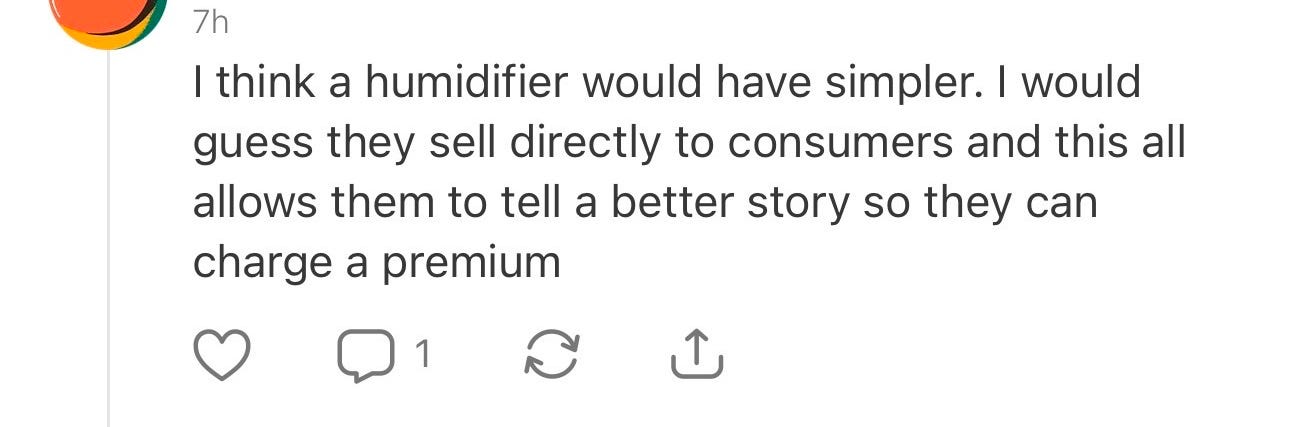
One poster said that that is just a story they use to sell expensive fabric, and another saw their story as a type of failure, that this is the only chess move they had because they had failed at the game of efficiency.
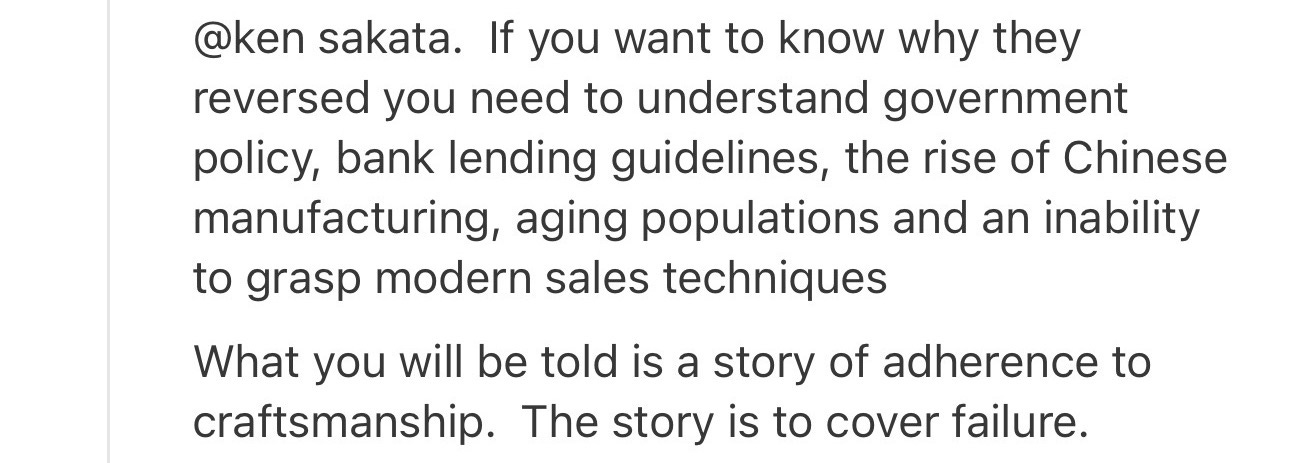
Beyond the intellectual failings of those opinions (how do you know they are dishonest, I didn't even mention who they were etc.), I can’t say the commenters were emotionally wrong. This is the world we live in, where consumers have been taught suspicion by large fashion companies and a generation of dishonest behaviour. A nice story about craftsmanship could potentially be a lie.
This is the fallout from ‘craft-washing’- the separation of the reality of what something is and a detachable, false story of how it was made.
A company can signal the signs of craft, like: hyper-locality, a story of heritage and a beautifully photographed collage of noble local makers but still produce things with extreme industrialisation, completely separate from how it was presented.
(There are many examples of this type of alleged misbehaviour from Loro Piana to Shein, and to be honest, I’m not really interested in rehashing them. I only mention it because people have a right to be cynical.)
What I do want to write about is how this has damaged our overall attitudes to understanding design and the penumbra this casts on smaller companies who make beautiful things.
The damage to the consumer
There is a type of content on the internet that is kind of a ‘take-down pornography’ of sorts, where autopsies are performed on leather bags and shirts.
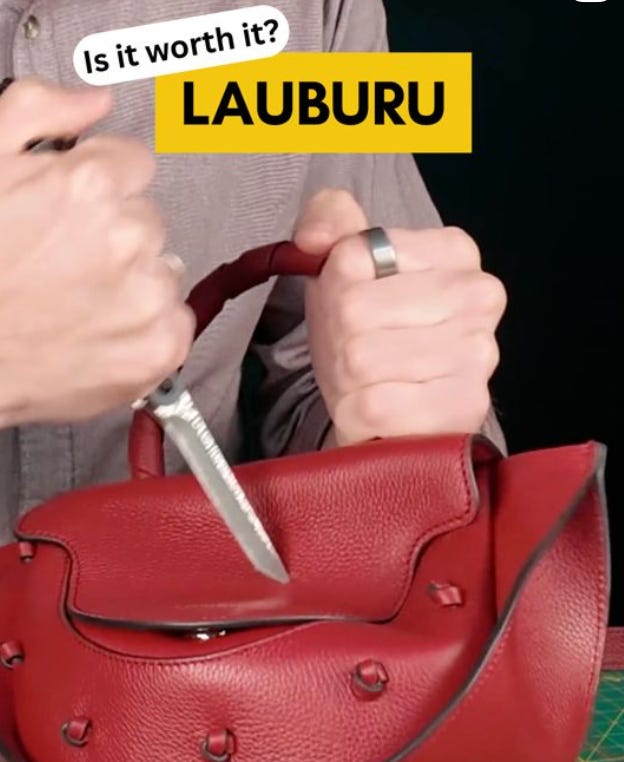
Solvents are applied to the leather to determine its grade, and microscopy is utilised on the stitching on shirts. Lies are exposed, and the viewer feels smarter, wiser, and more equipped to navigate the evils of shopping.
This is a minority opinion, but I see this is a net-negative in our understanding of design.
Whilst the impulse to confirm our suspicion of ‘big fashion’ is titillating (and righteous!), this also trains the consumer to understand the value of a product in purely statistical criteria: stitches per inch, grams per square metre.
Something has value only by the ways in which a consumer can measure it, not by the judgment of the maker, or by how it makes you feel. This is a misunderstanding of the value of these products.
Beyond utility, premium and luxury goods are emotional products, and the true value of them is not measurable in stitches and grams.
The only relevant value is —“is this cool?”
Then there is an issue of a reductionism of thought: that the value of something is either the product (a.k.a its ‘true value’), or the marketing. If two items appear to perform the same function, any additional value must be invented or tacked on like a wrapper on the real item. History, lineage, cultural conditions, a way of making are lumped into ‘hype’ or ‘just marketing’.
We have been traumatised into thinking that the product and the message are separate entities.
Sometimes the cool thing is cool because of the cool way it was made, or the cool person that made it, which is inextricable from the cool thing. And your attempt to split your emotional reaction into if it is 'the product’ or ‘the marketing’ misses the point.
The darkest change is the result of that. People become quite unemotional about emotional products. I should only love a shirt because it has 16 stitches per inch, regardless of what ideas it represents or the environment in which it was made.
Refusing to engage with the emotional story of a product is seen as a sort of sophistication, that you have not been manipulated emotionally. “I just see the product for the product.” This detachment is seen as savvy, instead of an art-less way to appreciate art.
I am not surprised seeing this in LinkedIn marketing types, who have been trained to think in efficiency. They want to split things into ‘the product’ or ‘the marketing’, so they can justifiably spend dollars on ‘the marketing’. I would hate to see this attitude in anyone remotely interested in design.
The damage to the small maker
Small makers now inherit a very strange environment. They now have an onus to prove facts that were simply part of how they made a beautiful product. They now have to justify why their story matters or how their process provides value.
This also creates a trap: if they say too little, consumers will not be educated enough to value the work. If they explain the history, it is ‘marketing’.
Small producers are now incentivised to perform design for the consumers.
Designs will change in order to optimise for what the consumer can see. Many pairs of jeans utilise Japanese selvedge fabric, not because it is the right choice for the design, but because this is playing into the consumer idea of ‘quality’.
The way small brands present their products will also perform the consumer’s idea of craftsmanship: a certain romanticisation of older people and older machines.
I appreciate that there is something impressive about a wooden handloom, but what if the craftsmanship is the ongoing iteration and innovation of newer machines and newer techniques? This will be backgrounded and hidden because it does not fit with the consumer idea of craftsmanship.
As always, I spend a lot of goodwill in these essays with a pessimistic retelling of the conditions of our horrible world and the horrible types within it. But I remain an optimistic person!
For design professionals and lovers of design, I go into possible strategies to communicate our work in the current environment:
Comments
Nothing yet. Say the first thing.
Sign in to join the conversation.