
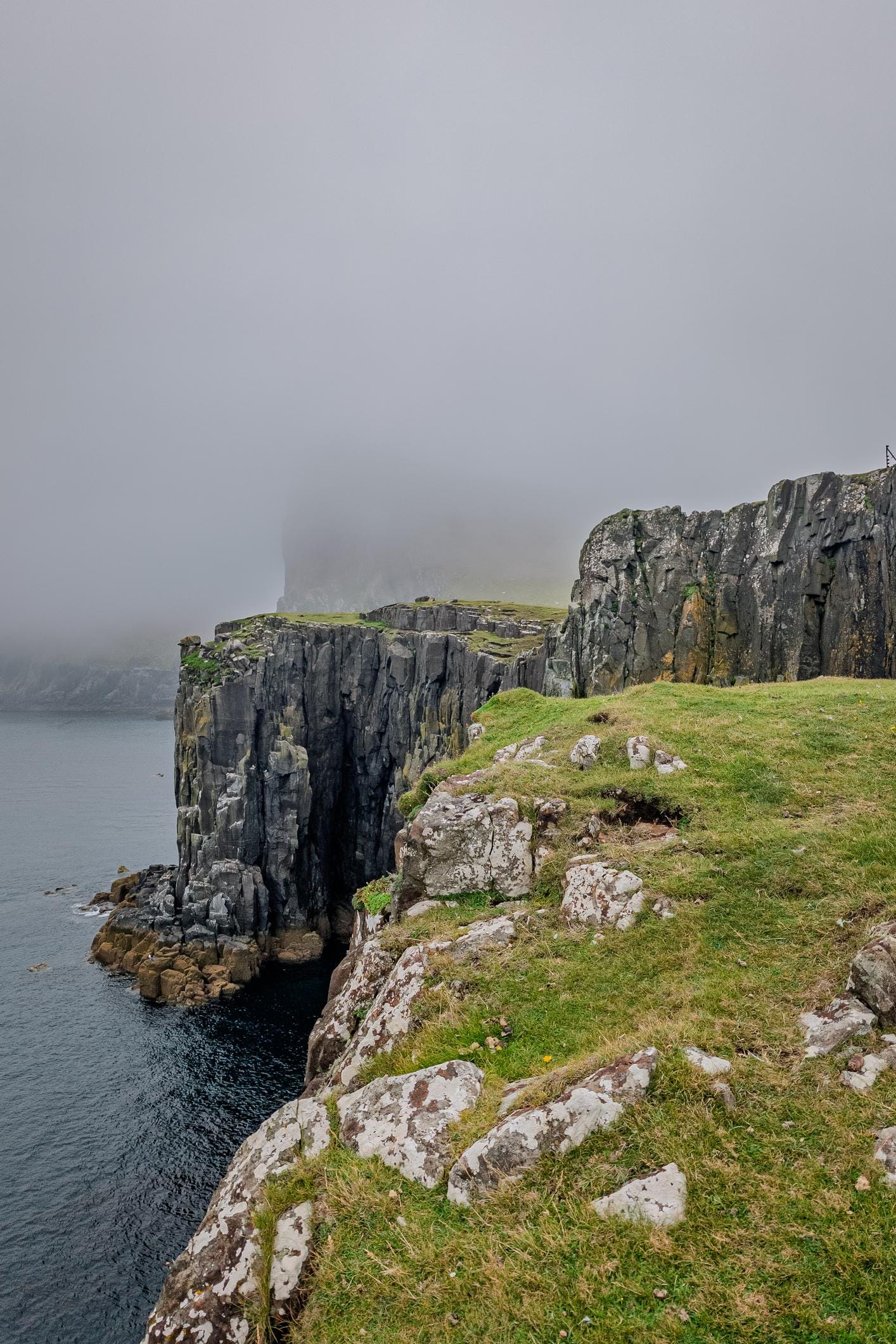
Chapter 5 — The Warning and the Trust
Gran’s hut sat where the tide and the village shared custody of the wind. One step smelled of smoke, the next of salt. I found her grinding nettle into paste, sleeves rolled, hair pinned with a bone comb older than anyone still breathing.
“You’ve come because the land’s gone strange,” she said, before I could speak.
“I felt it,” I answered. “It hums wrong. And…” I hesitated, “Aedan’s been near the sea every day. The men call him lucky.”
Her pestle stopped. “Luck is just a leash the world gives to those it means to drag later.”
Then she looked up fully and found the green in my aura. “You shine of him now, mo chridhe. Threaded through. The vines are climbing the tree.”
“He’s good,” I said. “He’s kind.”
“Kind isn’t safe,” she replied. “You can’t warm your hands on a sun without learning the smell of your own skin.”
When I said nothing, she sighed and softened her tone. “Mind the inland hum. It’s walking wrong these days. Promise me you’ll keep your ear to the ground before your heart to him.”
“I promise to listen,” I said, which was not the same thing.
***
Aedan belonged to the village now.
The sea had gone gray that morning, flat and sulking beneath a wind that couldn’t make up its mind. The fishermen said the nets had caught on something deep, maybe driftwood, maybe worse. None of them wanted to dive after it in that kind of water.
Aedan only smiled. “Show me where,” he said, and before they could protest, he was stripping off his tunic, boots left in a heap on the wet stones.
The men muttered, half impressed, half convinced they were about to watch a stranger drown. But he waded in without hesitation, pale steam rising from his skin where the cold touched him. Then he was gone beneath the surface, swallowed whole.
The waves rolled once, twice. The village boys on the shore craned their necks, the older men shaking their heads. “He’ll freeze before he finds it,” one said.
But before the fourth wave could break, the water erupted. Aedan surfaced, hair plastered to his face, teeth bared in a grin, the frayed rope clutched between his hands. He bit down on it, dove again, and when he came up the second time, the net came with him—half torn, but free.
He hauled it toward shore, laughing, water streaming from his shoulders. The men waded out to help, still cursing, but smiling now, too. When the net finally spread across the sand, glistening with mackerel and herring, even the oldest among them muttered a prayer of thanks.
The women at the boats called him selkie-born. The men called him mad. The children called him lucky.
He just sat there on the shingle, barefoot and dripping, breathing hard, eyes bright with the kind of joy that makes other people want to believe again. He didn’t boast. He listened. And so they began to speak.
I watched from the path above, unseen, the wind tearing at my hood. He looked so alive that for a moment I forgot what he was. Or maybe it simply did not matter.
He taught the boys to tie steadier knots, showed Callum how to splice a rope so it would flex instead of fight. The women whispered that his presence made the fish come closer to shore. The men called him selkie-kin when they thought he couldn’t hear.
When he came back up the path that evening, hands raw from work and salt in his hair, I met him on the ridge. “They’ll worship you next,” I said.
He smiled with only half his mouth. “Then they’ll curse me after. It’s balance.”
He wrapped his arm around me, the warmth of him enough to make the air forget it was evening. “I need to stay in the village tonight,” he said. “There’s a small celebration I’m… required to attend.”
I nodded. I understood. I didn’t own him.
We sat on the stone that listens and shared our bread. The hum under the ridge deepened like a promise. I wanted to believe it was peace.
***
That night, the cold crept back. It didn’t belong to any season I knew.
I woke with the feeling of frost watching me. The air was thick with silence that wasn’t rest but warning. Beneath it came the hum. Bitter, distorted, calling from the hills.
I dressed, leaving the lamp unlit, and took the path inland.
The grove greeted me with the stench of wrong prayer. The chant was familiar in words and ruined in soul. Breath taken from fear, not reverence. The air had that brittle taste before lightning, but there was no storm; only something waiting to happen that shouldn’t.
The altar shone with a wet light that wasn’t milk. The runes had changed. Scratched fast, uneven, their lines trembling as if the stone itself wanted to reject them. The ground around it was dark, soaked through.
There were four bodies already laid out at the grove’s edge, each arranged too neatly to be merciful. Men and women both, eyes open to nothing, faces slack with disbelief. I knew two of them by name.
The fifth still lived. He was bound and gagged beside the altar, head jerking against the rope, trying to speak around the cloth. Not a volunteer. Not a zealot. Just some unlucky soul the druids had taken to feed whatever they’d begun to serve.
The elder woman who had once smiled led them now. Her face was pale, almost luminous, like bone under moonlight. She lifted the knife above the fifth man’s head, and the others’ chanting rose until it scraped the skin from sound itself.
That was when I saw it.
The air just above the altar had torn. A slit no wider than a man’s hand but pulsing like a wound that didn’t want to close. It shimmered with a black light that made the eyes water to look upon it. The world bent inward there, as if gravity had changed its mind.
And something was looking back.
The wrongness rolled through the grove in waves, low and deep, like the growl of the sea beneath stone. My stomach turned; the ley line beneath the hill screamed through my bones, its song fracturing into shards.
When the blade fell, the air split again. Blood hit the slab and was drawn upward instead of down, threads of it vanishing into the tear as if the air were drinking. The thing beyond the rift shuddered in answer, hungry and pleased.
The sound that followed was not a roar, not a word. Just the world remembering how to hate.
I pressed myself to the ground, hands clawing the frozen moss. My body shook with the force of the hum beneath it. The ley line screamed through me like a wire pulled too tight, each beat of its agony matching my own pulse.
I had to leave before it noticed me. Whatever they’d called was looking, and if I stayed, it would see.
I crawled backward, inch by inch, until the birch trunks began to blur. Then I ran.
The bracken tore at my skirts; stones slid underfoot. The air followed me out of the grove. Hot and cold in the same breath, the smell of iron and rot clinging to my hair. I didn’t stop when the heather rose again. I didn’t stop when the wind began to howl. I ran until my lungs felt raw and the blood in my throat was louder than the chanting I’d fled.
When I finally reached the crest above the loch, I fell to my knees and vomited into the grass. The sky above me was the color of bruised bone, and the world tilted as if some hand beneath it had lost its grip.
My little home was empty when I reached it. He was still in the village… probably sleeping there. I stood in the doorway, shaking, the hearth cold and dark. I could almost hear him still there, humming to himself while he worked, the sound of someone who thought the world was a thing that could be mended.
But he wasn’t here. And if I waited, the wrongness in the grove would grow until it reached even this small place.
The village would never open their doors to me; they’d call this storm my fault before believing it belonged to anyone else. Only one door still would, even for a girl they’d thrown to the hills.
Màiri’s hut waited at the edge of the tide path, where seaweed dries to ribbons and gulls speak in curses. I ran toward it as the first cold rain began to fall, each drop heavy as guilt.
By the time I reached her door, my hands were bloodied from the climb and my voice had left me. I pounded on the frame anyway, wood against wood. The door opened before the echo finished. My grandmother’s face appeared in the lamplight. Lines deeper, eyes already knowing.
“I saw it,” I gasped. “They’re calling to something. Not a god we know. It takes them—takes the blood—and feeds on it.”
She stepped back and let me in without a word. The warmth hit like a slap, sharp enough to make me cry. The peat fire glowed steady; two cups waited on the table.
“Sit,” she said quietly. “Tell me what you’ve brought down from the hills.”
And I did. Every sight, every sound, the way the air had torn, the blood that rose instead of fell, the bodies that had stopped being people and become offerings. Rain hammered the roof as if trying to drown the words.
When I finished, she sat still, hands folded, firelight crawling along her knuckles.
“They’re not calling to gods,” she said at last, her voice gone thin. “Something older listens now. Something that wants more than milk or barley.”
I felt the room sway. “What does it want?”
“Us,” she said. “And if it’s to be stopped, it’ll cost what all old bargains do. Life for a life.”
The words landed heavy as stone. For a moment all I could hear was the peat shifting in the fire—small, ordinary sounds pretending the world was still right. My hands had gone cold around the cup.
“I don’t want to die,” I said, and hated how small it sounded. “I’ve just begun to live as myself.”
“No one wants to,” Màiri answered softly. “That’s never the point. The land doesn’t care for wanting, only for balance.”
I looked at her. The woman who’d taught me to weave songs that healed goats and hearts alike, and saw tears beginning in the seams of her eyes. “If it must be paid,” I said, my throat closing around each word, “then it will have mine.”
Her head snapped up. “No. Don’t speak that. The world’s taken enough from you. You’ve already been its offering once, when the village cast you out. Leave this place, Alisa. Let fools pay their own debts.”
“I can’t.” The words came out before I could stop them. “Aedan will go if I don’t. You know he will. He’ll make it his death to stop them.”
She shut her eyes, pain moving through her face like wind through old curtains. “Then the choice isn’t yours alone, mo chridhe. It’s his too.”
“I won’t let it be,” I said. “Not if I can stop him.”
The silence that followed was thick as smoke. The sea wind tried the latch, testing her resolve as much as mine.
Màiri’s hands worked restlessly on the table, folding and unfolding her shawl. “You’d trade one ending for another,” she said. “That’s all you’ll win by staying.”
“I can’t stand by.”
“And what will you do, then? Walk into the grove alone? You’ve seen what’s waiting. They’ll kill you before your first note.”
“I can sing it closed,” I said. The words left me before I could weigh them.
Her head jerked up. “No, child. That song takes more than voice. It asks the singer’s blood to bind the wound.”
“I have blood enough.”
“You don’t understand,” she said, voice breaking. “It would take all of it. The land will listen, but it will keep what it’s given. And Aedan…” She stopped herself, eyes closing. “He’ll know. He’ll come. He always will.”
“Then tell me something else,” I pleaded. “Tell me there’s a way to keep him from it, to make him stay clear.”
She stared into the fire so long I thought she wouldn’t answer. When she did, her voice was so quiet it nearly drowned under the crackle of peat.
“There is one way,” she said. “Old, and cruel, and better left buried.”
I leaned forward. “Tell me.”
Her head shook once. “It’s a song we don’t teach anymore. Three notes braided together. It dulls memory. Softens the edges of what should hurt. It was meant for easing the dying when nothing else could.”
“What would it do to him?”
“It would take the part of you he can’t bear to lose,” she said. “He’ll forget the sharp of your love. The spark that drives him toward you. He may remember your face, maybe your voice, but not the pull that makes a man choose ruin over reason.”
“And me?”
“You’ll forget the warmth that would make you stop. You’ll know you loved him, but it will sit quiet, like a candle left in daylight. Only the land will remember you both as you were.”
I pressed my palms flat to the table, the wood cool and damp beneath them. “That’s monstrous,” I whispered.
“It’s mercy,” she said. “The kind this world allows.”
I looked at her, at the tremor in her jaw, the tears she was refusing to shed. “You don’t want me to do it.”
“No,” she said. “I want you to live. Leave this place. Let the sea keep its monsters. You’ve done enough.”
“But if I go,” I said, “the world breaks. And he’ll die for it.”
Her eyes closed. “Then sing it,” she said, the words coming out like blood from a wound. “Sing it true, if you must—but know what you lose.”
She rose slowly, as if the movement itself hurt, and crossed to the small shelf by the hearth. From behind a jar of honey she drew a charm of bone carved into a spiral fine enough to catch the firelight. Her hands trembled as she held it, the glow catching the wet in her lashes before she brushed it away.
“For a song like that,” she whispered, “there’s no returning. You’ll give the land your life, and it will keep it.”
“I know,” I said.
Her breath caught; for a moment, I thought she might strike the charm from my hand. “You’d die for the same village that cast you out? For the ones who named you cursed?”
“They’re still mine,” I said softly. “The land doesn’t choose who it loves. Neither do I.”
Her face folded with something too old to name—grief, pride, and fury bound into one. “You are your mother’s child,” she said, almost to herself. “Stubborn as the wind that kills and heals in the same hour.”
She pressed the charm into my palm, her fingers cold against mine. “Three notes,” she said at last. “The middle one has to be sung true. Don’t touch him after—not until the day ends—or the memory will rush back and destroy you both.”
I closed my fingers around it. “Thank you,” I said.
“For what?”
“For still loving the girl who won’t listen.”
Her laugh broke halfway, turned wet and small. “I always did,” she said. “That’s the trouble.”
***
When I left Màiri’s hut, the rain had turned to sleet, thin blades stinging my cheeks. By the time I reached my own door, my cloak hung heavy as stone and the wind had stripped the color from my hands. The hearth was dark. The stillness inside felt borrowed, as though the house were listening for a step that had not yet come.
I peeled off my soaked dress and hung it near the hearth to dry, pulled one of Aedan’s rough shirts over my shoulders, and crawled beneath the blankets. The bone charm lay cold in my palm, its carved spiral catching what little light the coals gave.
I turned it over and over, whispering questions to it that had no answers. Was there truly no other way? Could love exist as mercy and still survive what mercy demanded? Outside, the storm argued with the roof, and I told myself it was only weather, not warning. But I knew different.
Sometime before dawn, the latch lifted. I caught my breath, heart beating like a trapped bird.
Aedan slipped inside, rain-slick and shivering. “The village celebration ran long,” he murmured, half a smile in his voice. “I thought you’d be asleep.”
“I was,” I lied.
He stripped off his cloak, hung it by the door, and slid into the bed beside me. His skin smelled of sea and smoke. He wrapped an arm around my waist, already drifting toward sleep, trusting the world to stay mended a little longer.
I waited until his breathing found its rhythm, slow and certain. Then I sat up, the charm cool again in my hand.
Three notes. Braid them. Hold the middle true.
I hummed into the quiet, the sound smaller than a breath. The emerald light beneath his skin dimmed and went still. The warmth between us folded itself shut. Something unhooked behind my ribs. Like releasing a bird I’d raised too long in the dark.
When it was done, I pressed my lips near his temple and whispered, “Forgive me, love. The land remembers. That will be enough.”
***
He woke a few hours later. I was stirring the fire as if mornings were still made of peace. He stretched, blinking, easy as any traveler. “Didn’t mean to overstay,” he said. “I’ll take the goats to the trade road. Promised the lads I’d lend a hand.”
He smiled, grateful and polite, a stranger returning a borrowed kindness.
“Safe travels,” I said, keeping my voice where it wouldn’t break.
He nodded, slung the rope over his shoulder, and left humming a fisher’s tune he couldn’t know I’d taught him.
When he disappeared into the mist, the house exhaled and folded in on itself. The cup he had used still held a thumbprint. The air still carried his warmth, but it no longer remembered why.
***
I lived the day as though the world hadn’t tilted.
Fed the goats. Gathered herbs. Sang to the bread. Each song landed flat, but I sang anyway. The hum beneath the soil stayed low, a pulse like waiting.
Gran came at dusk, her eyes rimmed in ash. “Three days,” she said quietly. “The traders keep them overnight and the roads are long. He won’t be back before then.”
“I know.”
“You’ll have to be ready before he is.”
“I am,” I said, and the wind chose not to argue.
When she left, the wind rose once, then stilled. I sat by the door and watched the heather bend, every stalk bowing east, the way things do before a storm they can already taste.
By dusk, Aedan and the goats would reach the trade road. By dawn, the sky would remember how to break. The land had stopped warning. It had begun to call.
Continue to Chapter 6:
No posts
Comments
Nothing yet. Say the first thing.
Sign in to join the conversation.