
I appreciate Aldous Huxley’s advice to an aspiring young writer who was pestering him. “If you want to . . . write about human beings, the best thing you can do is to keep a pair of cats.”1
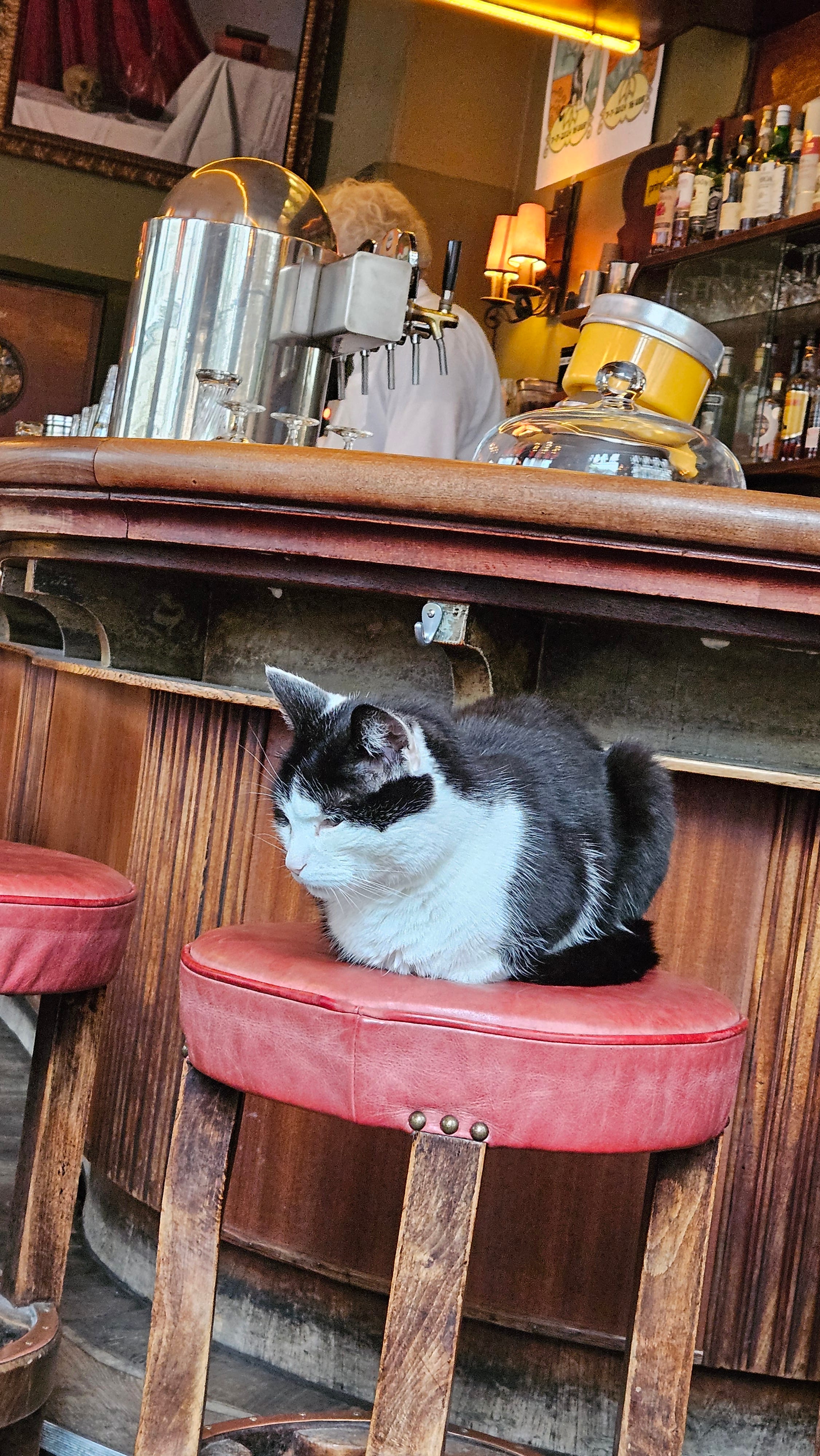
There’s a cat named Arie who presides over the Café Krom^ on Utrechtsestraat in Amsterdam, where I find myself again.
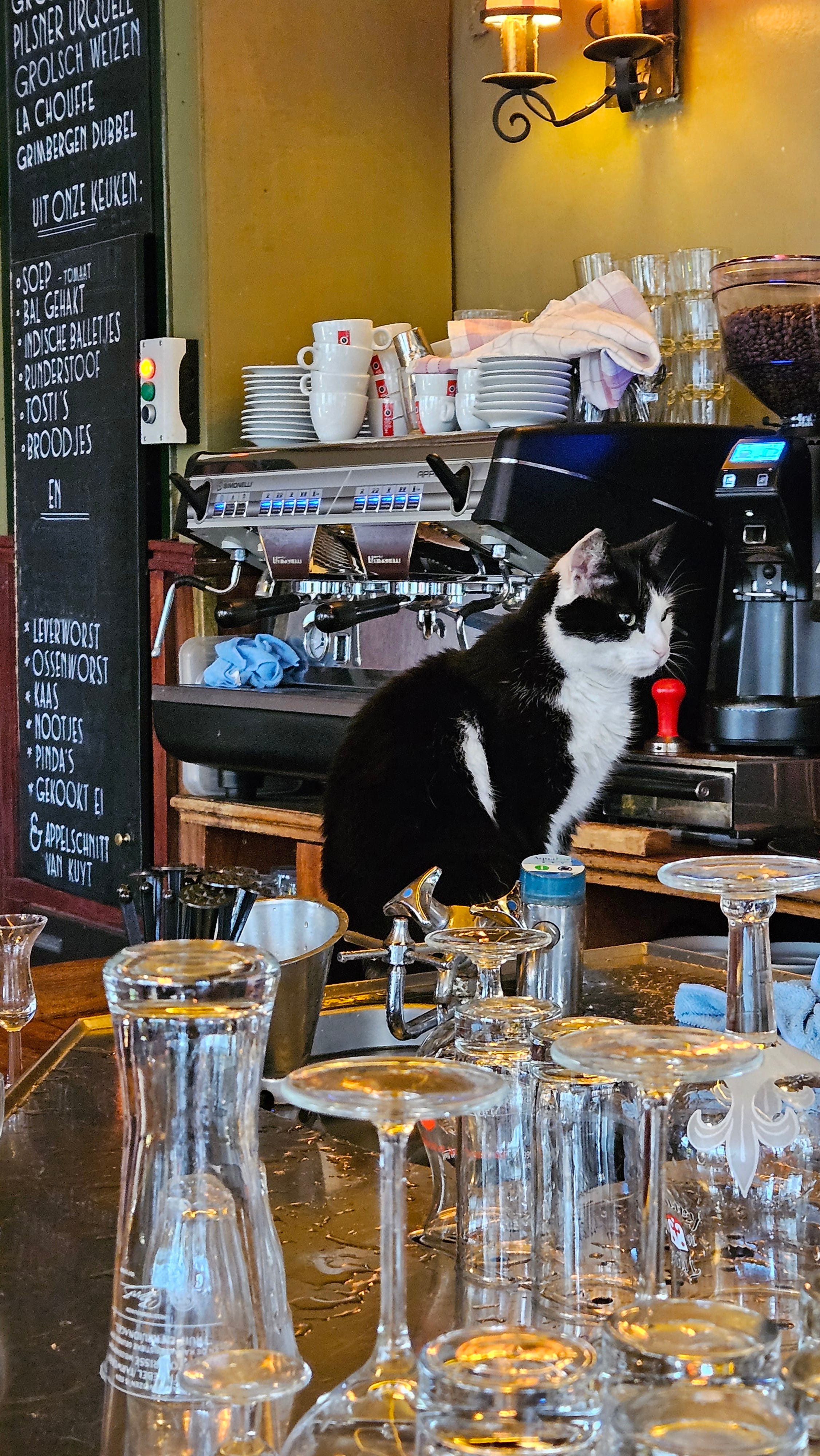
I could watch and learn from Arie forever.
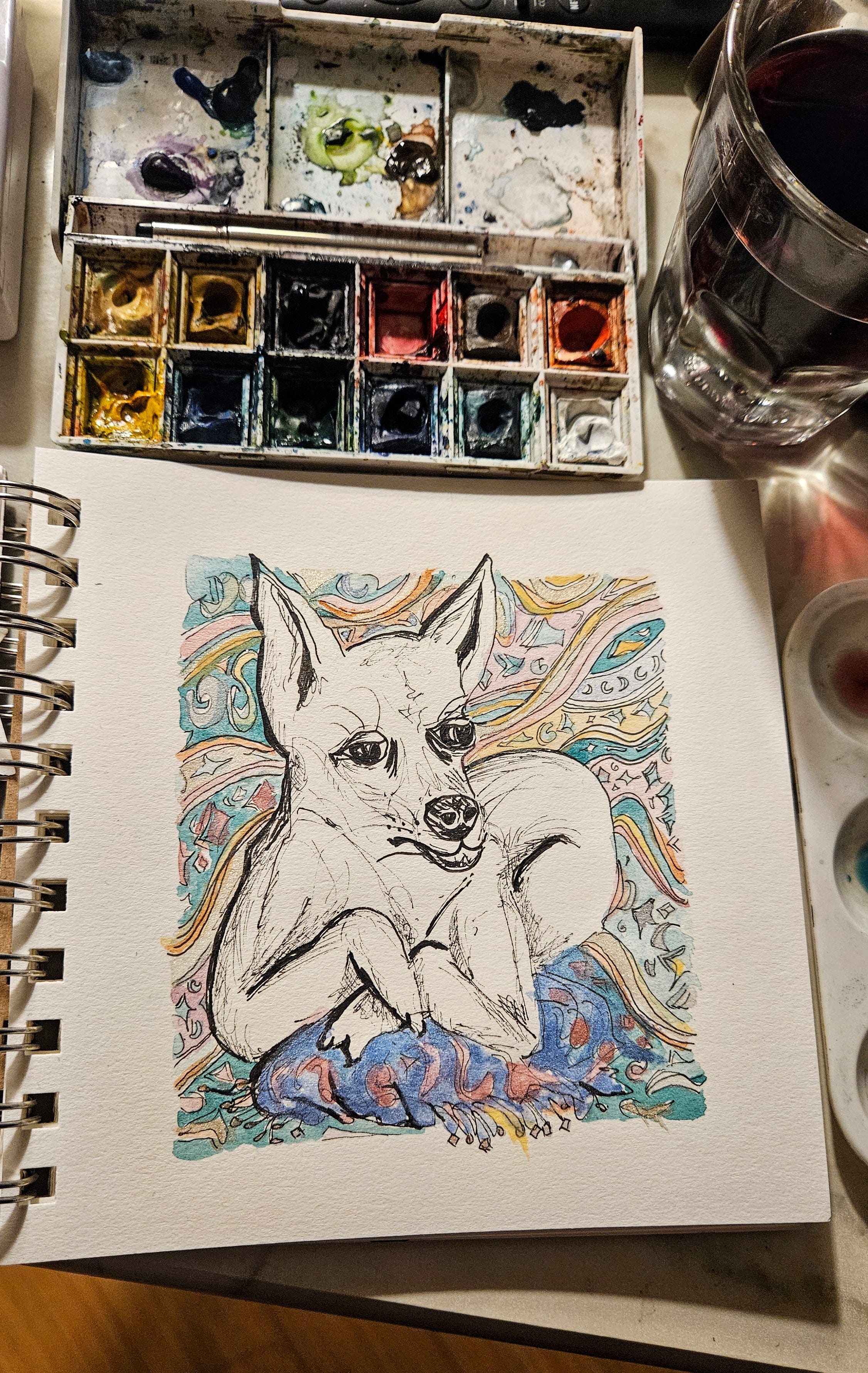
The same might be said of dogs too, of course. You can learn a lot from an irascible chihuahua.
Or my eldest son Felix's marvellous Henry.
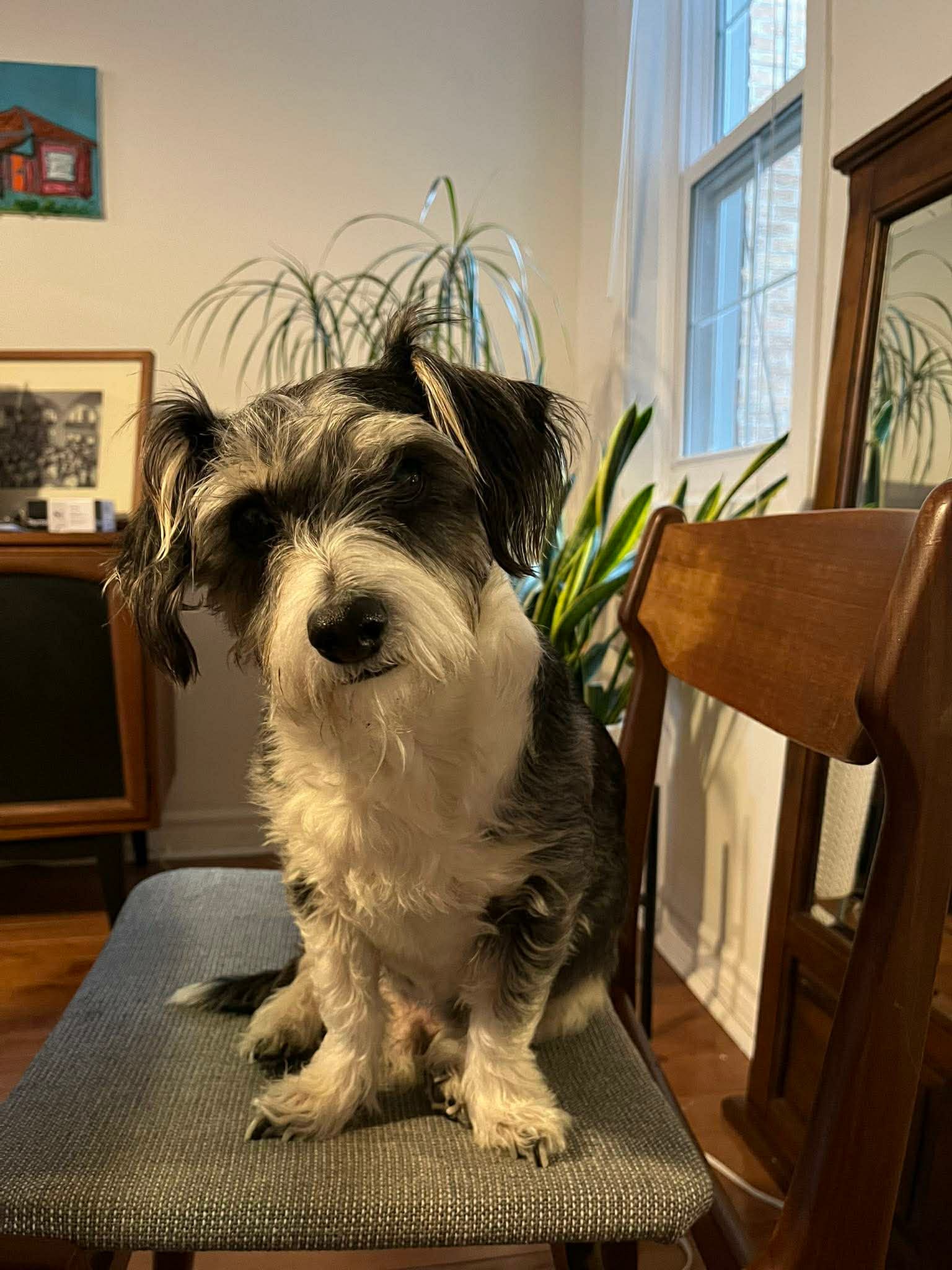
My granddog.
If anthropomorphism is unavoidable, fundamental to how humans struggle to understand almost anything, anthropocentrism —the smug assertion of human significance over all other beings and things— soon undermines itself. Nature has ways of reminding that “it” doesn’t exist to serve human interests, or to maximise profits. Consider the latest set of tech bros, who, when informed of devastating ramifications from those data centres in Slough or Mumbai or Ypsilanti, look the other way. Or the coal mining interests finding champions in the eastern slopes of the Rocky Mountains in this day and age. Think of all the hard-won environmental protections being reversed by short-sighted politicians and their voters in the dying days of fossil fuel dependence. Comeuppance taps her foot, biding time.
And yet there’s at least one anthropos-related project on which —for me at least— it’s harder to call time, harder to just say, “the perils are evident, enough is enough.”
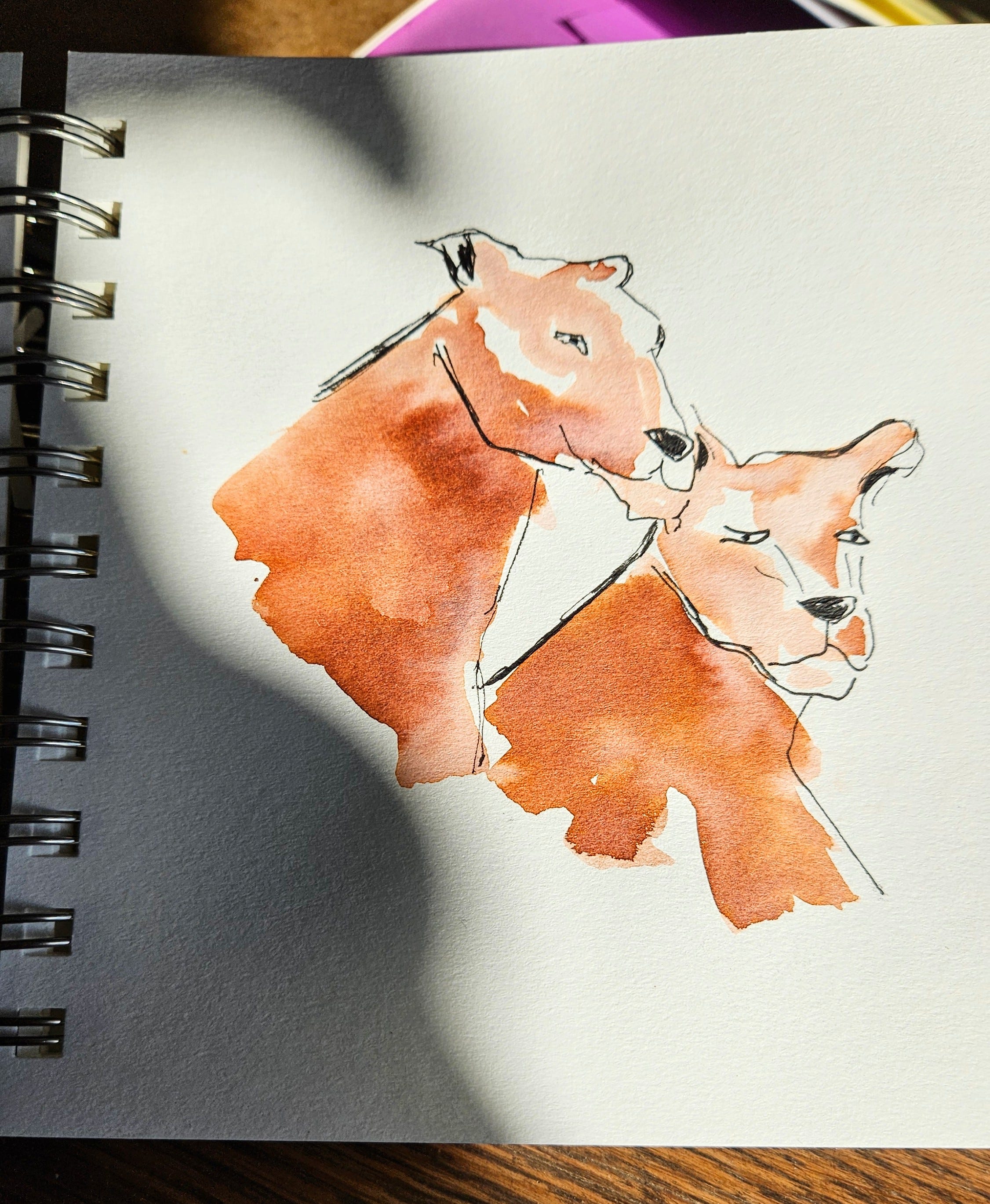
This returns us to Huxley, to our inclination to anthropomorphise. To think of animals —especially animals— but also landscapes and aspects of nature, clearings, mountains, rivers, and the like, as if they were human.
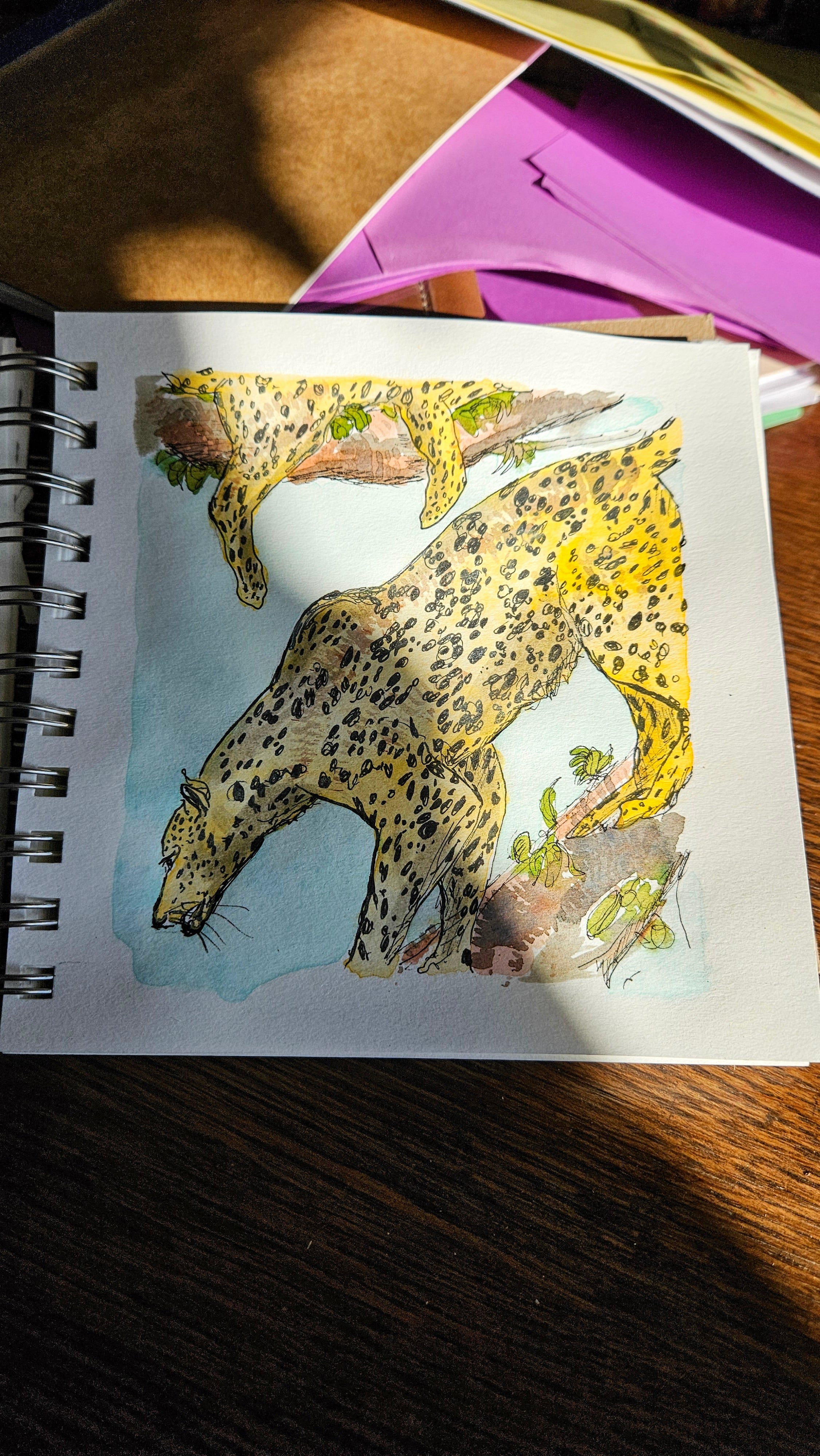
Our anthropomorphising tendencies distort other realities, making them more comfortable or compelling. For us. We imperil, when we don’t utterly obliterate, the opportunity to understand a bird’s motivation, a tree’s decision-making, or a river’s transformation in something like their own terms. Most people recoil from unknowing, from the possibility of vast difference from us.
It’s more soothing to give in to our emotions, cave to our desire for ultra-species connection. And amidst the long row of inevitabilities about human beings, maybe anthropomorphism isn’t so bad. Surely it enables us to notice things too, not to mention how it fires our storytelling impulses. And it slides into one of my pastimes, misanthropy, which I choose to define as a healthy distrust of humanity. Especially some people.
I was thinking about these things as Heidi and I watched David Attenborough’s BBC “documentary” series “Kingdom” (2025) on our couches in Detroit and Northampton. (The man is gloriously indefatigable. His “Secret Garden” [2026] is next, eagerly awaited by all who toil away from British shores and first-viewing restrictions!)
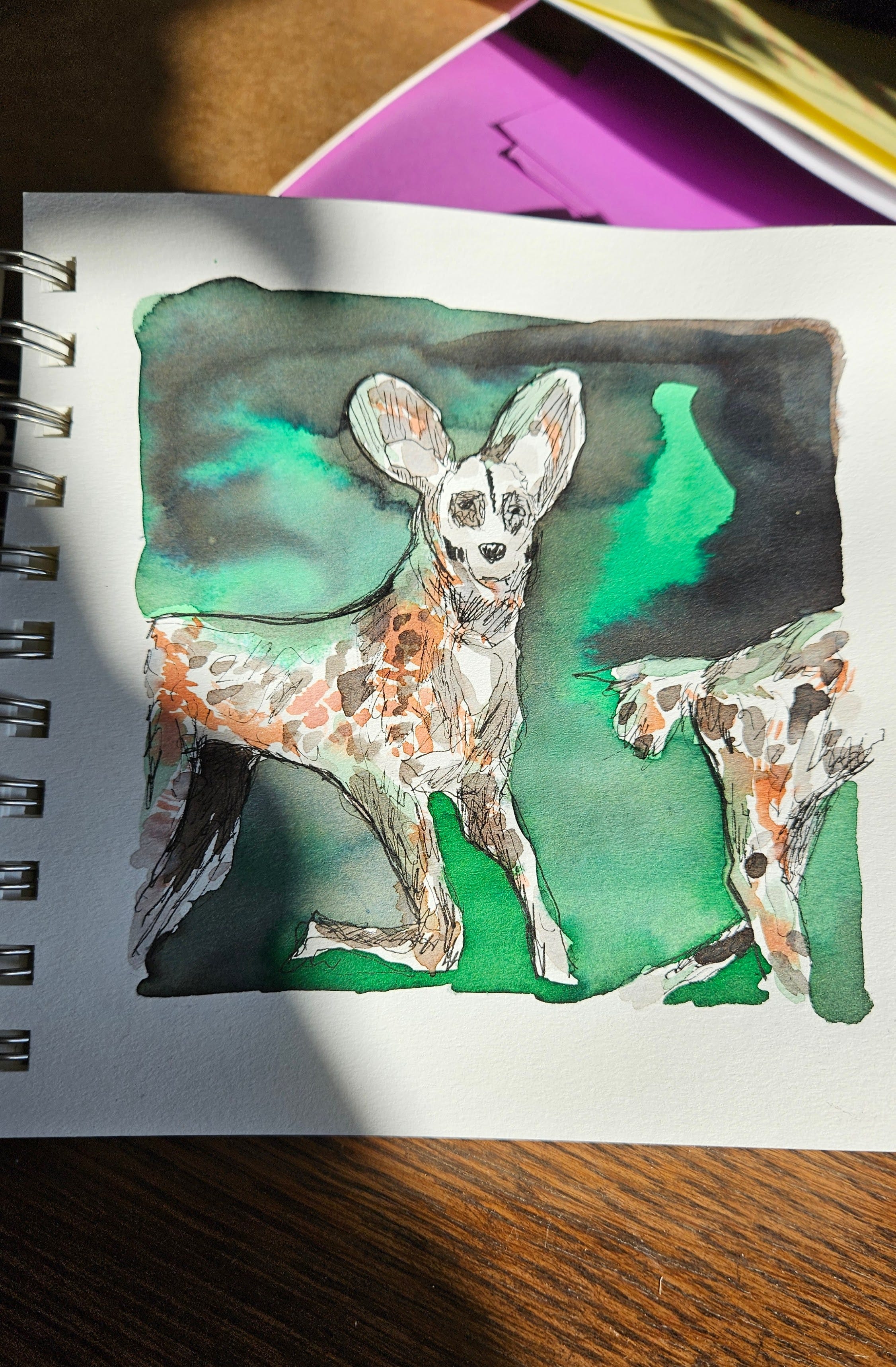
“Four rival families” —some leopards, hyenas, amazing wild dogs, and, of course, a pride of lions— all of whom are given names and biographical heft, as they “try to claim a rich corner of Zambian paradise as their home,” gushes the promotional blurb. “Who will succeed in ruling this precious kingdom?”
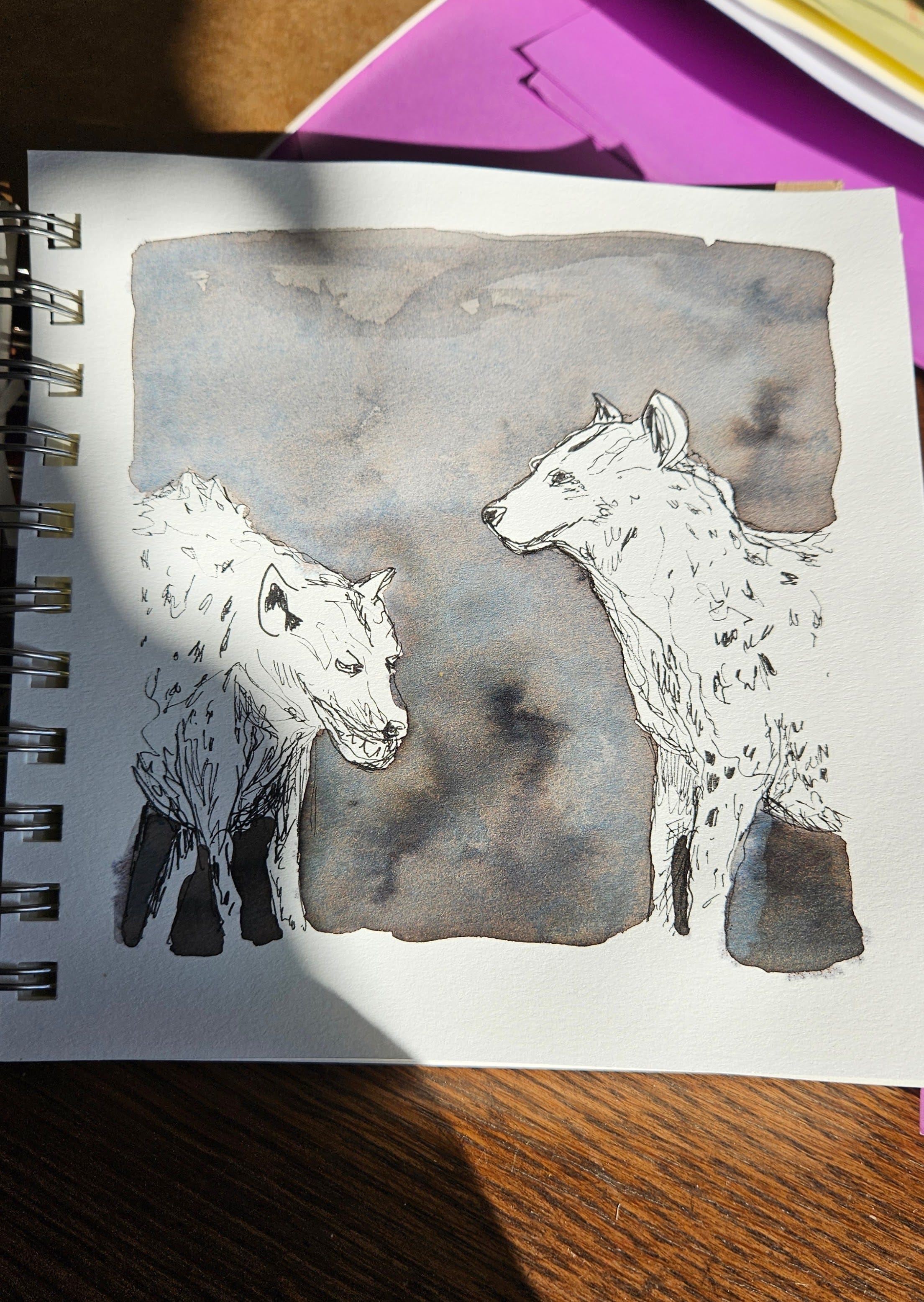
Who indeed. Of course, similar dilemmas have long come up, hounding “wildlife” documentary films and series. What are the effects of the undeniably gripping ways the chimpanzees are portrayed in “Chimp Empire” (2023)? The list of such questions and effects is soon long.
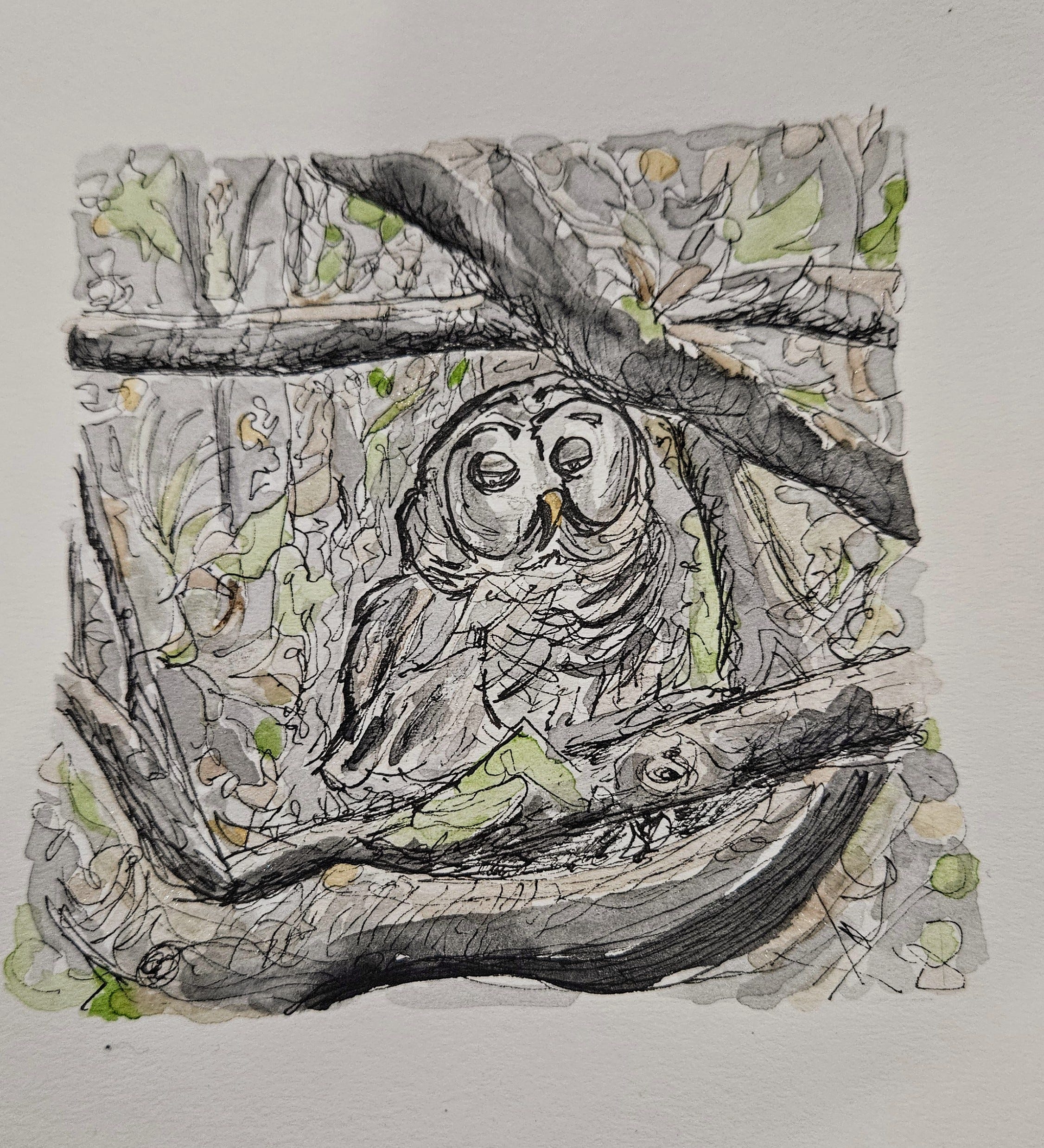
With respect to Attenborough’s “Kingdom” I’m only just resisting some spoilers, here, in the interests of anyone who hasn’t seen it and wants to consider for themselves. But I will punctuate this little essay with a few drawings and paintings of the programme’s protagonists, along with a few other things.
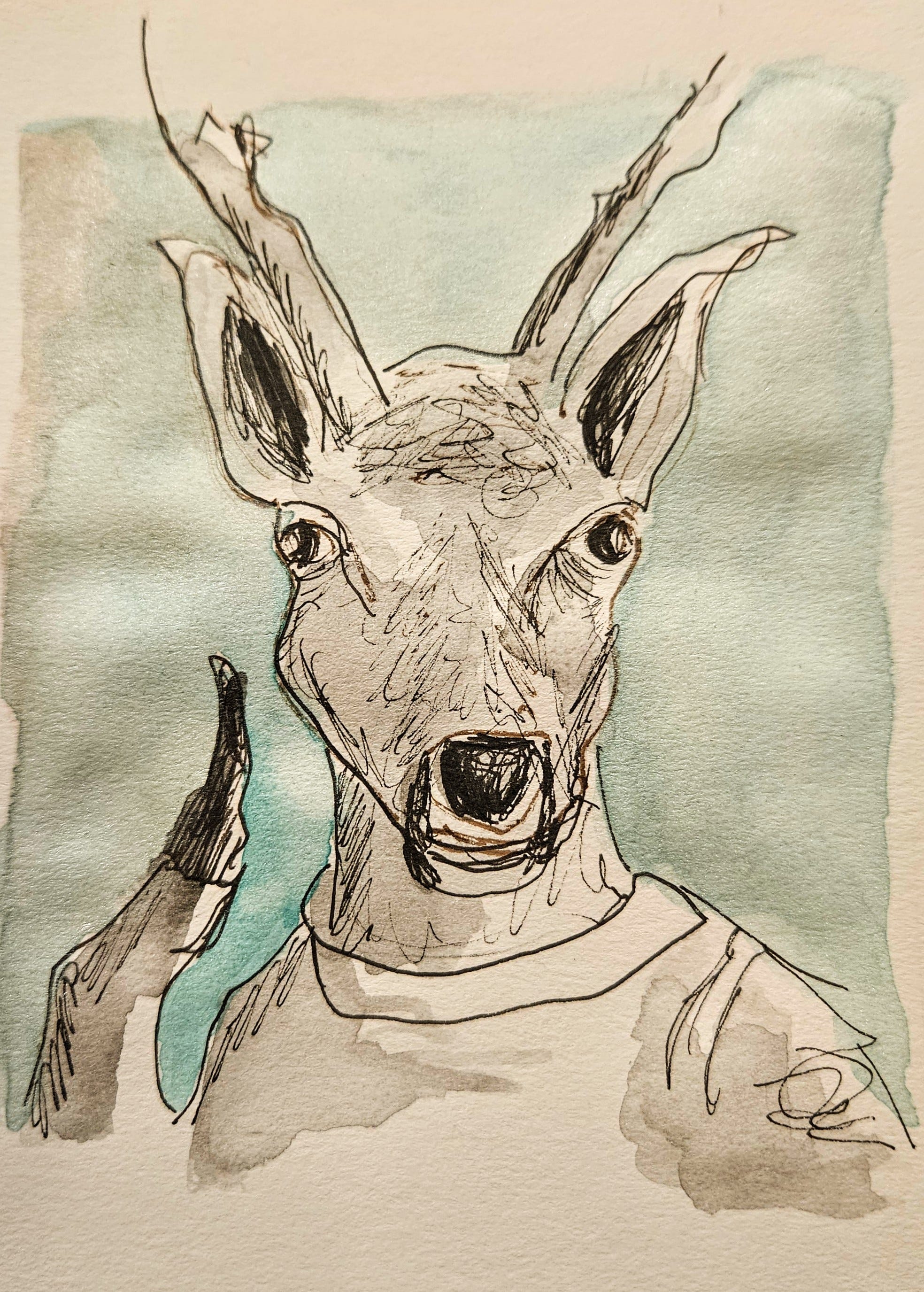
My “Kingdom” protagonists soon blur with other beings I was imagining and sketching too, which blur with what I was seeing and reading and thinking.
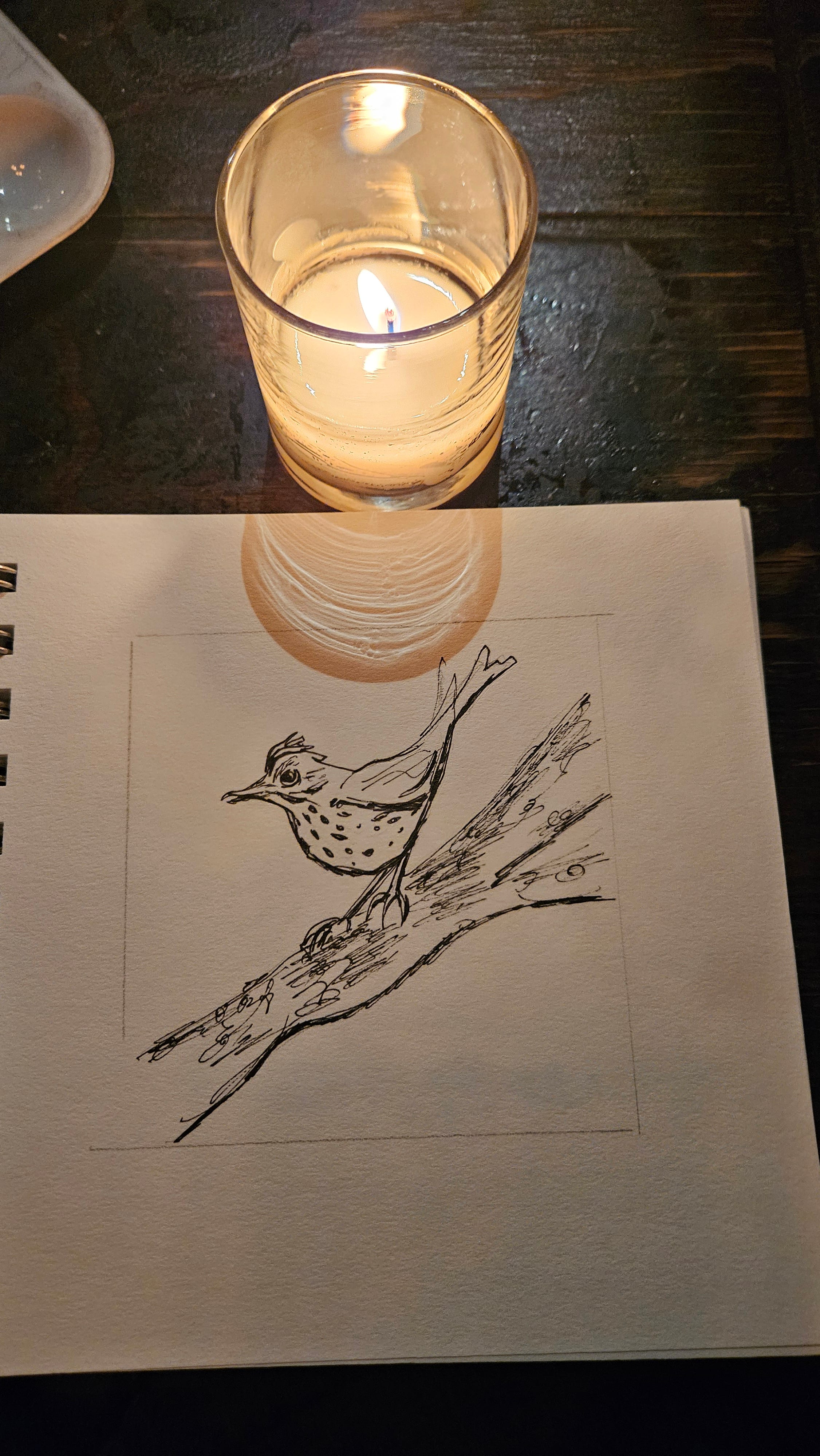
“What about drawing the real animals?,” Heidi asks me at one point. . . . We have —well, let’s call it— a joke, a tease about how all “my animals” come off a little too human in appearance . . . .
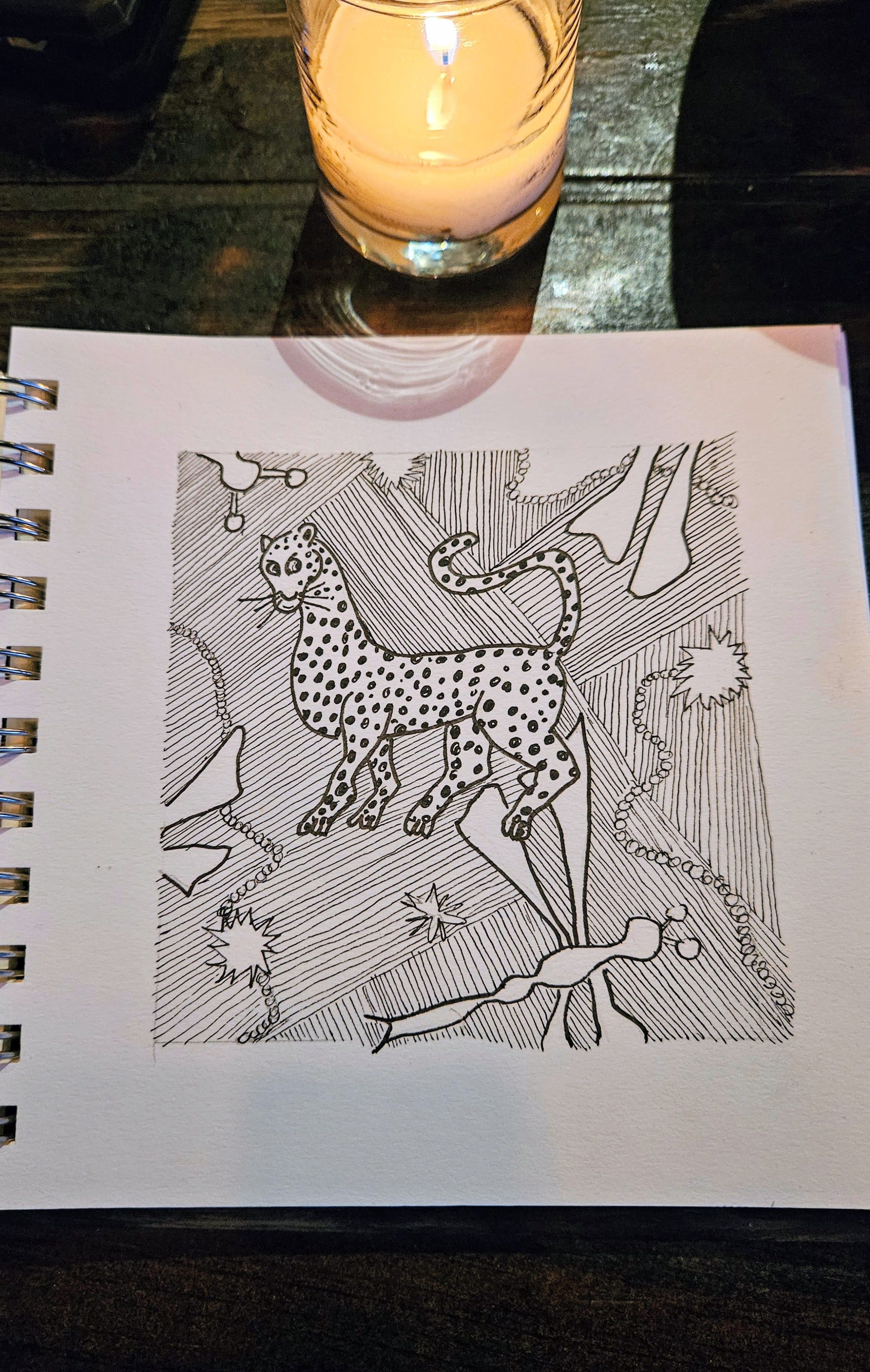
“I’m not sure I’m able,” I say.
* drawings, watercolours, and photographs by Kenneth Mills, except for the one of “Henry,” by Felix Mills.
^ my thanks to Peter Mason (an occasional sufferer of these Dispatches) for adding the Café Krom to my haunts.
“Sermon in Cats” appeared in his Music at Night and other essays (1931).
Comments
Nothing yet. Say the first thing.
Sign in to join the conversation.