

There are some things you come to expect in life, things that occur with such regularity you can practically set your alarm by them:
Paying taxes
Football fans blaming the referees when their team loses
Your internet suddenly slowing down, or the router needing to be unplugged and plugged back in
A politician promising to fix everything
The list is practically endless. As one grows older, it seems rather easy to predict what will happen based on the same things happening over and over, as though we are all Bill Murray reliving the same Groundhog Day over and over.
As an Orthodox Christian, or at least as a catechist such as myself who assist people who are inquiring into the faith, rarely does a week or two go by without some variation of the question, “Do Orthodox Christians worship Mary?”
Often, it is young men or women who still live at home with their parents who ask me, “What do I say to my parents who think we worship Mary?”
Usually, I just tell them to say, “Invite your parents to our church to worship Mary. Perhaps they will enjoy it!”
At which point they roll their eyes at me, saying, “No, I’m being serious!”
“So am I!” I say with a twinkle in my eye.
I have long given up arguing with people.
Convincing people that Orthodox Christians don’t worship Mary, or any saints for that matter, in the sense that is reserved for God and God alone, is not something I find to be a pressing matter when I talk with people from other faith traditions.
I don’t wake up in the morning with the thought, “How can I convert people to Orthodox Christianity?” Rather, I wake up remembering what a sinner I am, how much I need the grace of God, and when I do interact with others from different threads of Christianity, I believe the most important thing I can do is to simply be present with them, to love them, to truly hear them, and let me tell you, I find myself listening far more than speaking.
People aren’t looking for someone to argue with them about matters of theology; they are looking for someone who cares enough to put their own concerns and life aside and simply sit with them for a spell (notice the Old English way I used “spell”!).
Perhaps another reason this topic regarding the term “worship” doesn’t scandalize me the way it seems to do to others, is due to the fact that I was married into the Anglican Church nearly 30 years ago, and so I didn’t have the common modern misunderstanding regarding worship that so many people seem to have these days.
In the Anglican marriage service, the bride and groom both say to each other, “With my body I thee worship.”
And when a bride and groom speak those words during the service, neither believe they are committing some kind of act of worship that was reserved only for God.
It also probably helped me that I grew up reading literature that spanned centuries, and in Old English, the word “worship” had a far greater meaning than the limited usage that so many modern people confine it to.
In Old English:
Worship could mean honor.
Judges were called “Your Worship.”
Civic officials received “worship.”
One could “worship” a king without considering him divine.
Many Elizabethan period-piece films use the term “worship” in this context. Those films where Hollywood actors dress up in the clothing and regalia of old and try to use their best British accents, sometimes in a cringe worthy manner.
What I find fascinating about so much of the non-Orthodox world that grumbles over any type of veneration toward the Blessed Virgin or other saints is that, more often than not, these are the same people who spend copious amounts of time venerating the men and women of this world.
For instance, in the Evangelical conservative culture that I grew up around during childhood, the Founding Fathers of America were not merely venerated; they were treated with such awe and reverence that both the public schools and Evangelical Christian schools in my community made yearly pilgrimages to the holy land, aka Washington, D.C., in order for the students to visit the white neoclassical memorial shrines devoted to the various presidents and heroes of America’s past.
Walking into the temple memorial built to Abraham Lincoln is in many ways, a more religious experience, than most Americans experience during their Sunday church service.
The shrine in which Lincoln’s statue sits is built to create a sense of silence, reverence, and awe as one approaches it, and the words from his famous Gettysburg Address are etched into the white stone as if they were carved by a deity Himself. As though God Himself spoke these words. And then once you arrive into the inner temple, there Lincoln sits, like a Greek god towering over the crowd.
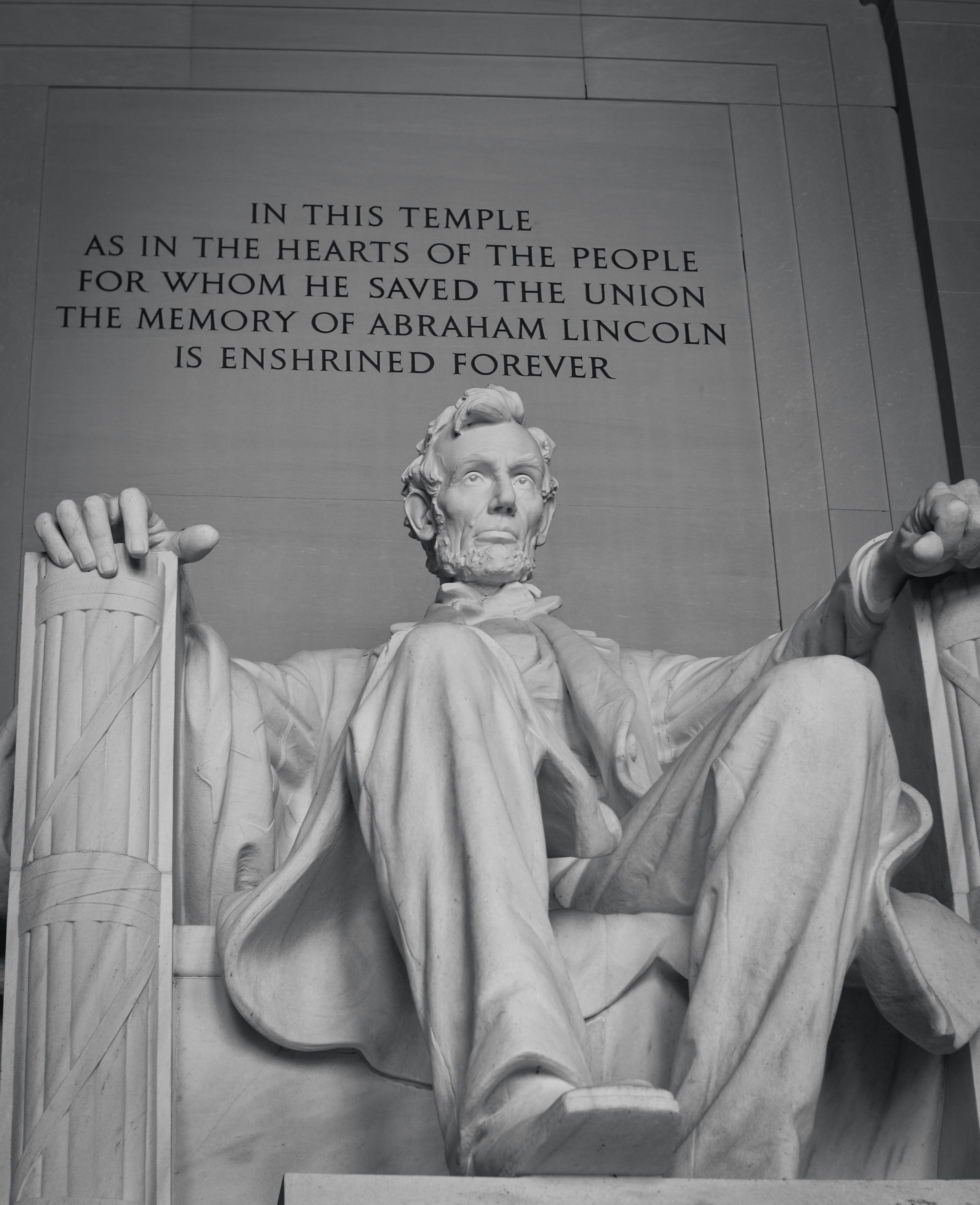
One can only imagine this is exactly how it felt walking into the temple of Zeus or Athena, and yet nobody seems to bat an eye over this very religious and awe invoking experience.
Neither does anyone seem to grumble when a 75,000-seat football stadium is called to stand up and venerate the American flag each Sunday morning before football games.
The first time I attended a baseball game as a child, I was very confused.
“Dad, why is everyone placing their hand over their heart?” I asked, as everyone stood and a hymn was sung unto the flag.
“It’s a type of reverence,” he said.
“What’s reverence?” I asked, my four-year-old vocabulary was not very expansive yet.
“It’s a type of worship,” my dad said, “like we do on Sunday, except not the same worship for God.”
So no, Orthodox Christians do not worship Mary. If we worshipped Mary in the sense that many people seem to think, I suspect our prayers and hymnography would look quite different than it does, and our clergy would spend far less time talking about Jesus Christ.
Ultimately, I have found that the objections regarding the manner in which we venerate Mary has far less to do with theological questions, and is more rooted in modern misunderstandings over words, terminology, and intent. And nowhere is this more true than when it comes to the word “worship”.
Once we immerse ourself in the ancient world, in a more historically accurate manner, the misunderstandings of modernity tend to fall away like a bad dream.
~ Kenneth
Many people seem to think that any Christian writer who posts publicly should flood their essays with Bible verses to ‘prove’ their points. As though quoting Scripture to back up one’s thoughts is some kind of mandatory clause in being a public writer.
That is not my style, as I’m not here to convince anyone to become Orthodox Christians.
I feel that I could do more harm in trying to intellectually convince people to become Orthodox, as I do not know what spiritual journey each person is on. That is between them and God.
I have spent nearly a half century on this earth studying Holy Scripture, and just like anyone else who has read the Old and New Testament hundreds of times over, there are various verses that I think of when it comes to certain topics, and yes, in an essay such as today’s I could write ten thousand words couched in Biblical references to support my thesis.
But that is where I think much of modern Christianity has gone wrong. There are a myriad of men and women who can quote scripture till they are blue in the face, and yet there is as much division today on theological issues as there was during the Reformations era.
Quoting scripture to proof text arguments has not helped heal the fractures between the various protestant and evangelical traditions; it only seems to worsen it and contribute to people getting really mad at each other.
I am okay with you not agreeing with me on theological points. It’s okay. I’m not here to convince you that I am right and you are wrong.
I’m sure I'm wrong about a great many things. I thank God that my salvation isn’t connected to me being right about every theological subject, if that were the case I wouldn’t be posting essays every week, I would probably be in great distress and not go to church at all.
What I find in the Orthodox tradition is the opportunity to learn how to pray more, how to meditate on Christ more, how to love others more, and to basically become a better person through the power of the Holy Spirit.
And thus, if that is occurring with you in your own thread of Christianity, then all I have to say is, “Thank God!”
Thank you to each of you who “like” these essays, share them with your friends, and thank you to those who have the means to support this little ministry financially.
These essays and the work connected to Becoming Orthodox have become a second job, and while I love interacting with the thousands of people who reach out to me, it has been the greatest blessing of my life to have received help from so many of you that I am able to specifically set time aside for this, unencumbered by the financial obligations of life.
Thank God for each of you.

No posts
Comments
Nothing yet. Say the first thing.
Sign in to join the conversation.