
July 29, 2026
Dewpoints in the 60s. An overcast sky. The morning is cool and damp, clouded with mosquitoes. The bug zapper snaps and crackles with electricity coursing through tiny, winged bodies. I sit in my DEET-shimmering skin, surrounded by a pond full of Bti larvicide and potted hummingbird mint and lemon grass, and yet the insects still manage to syringe my precious B+ into their expanding guts. The females, that is—male mosquitoes only feed on nectar.
With the wells pumping and tanks filling, I could shower more often, wash off the lactic acid, ammonia, and uric acid the mosquitoes find so attractive. But I might as well stop breathing. (And eliminate the CO2 they can smell from a hundred feet away.) Either way, there’s no hope for it. I’m a “secretor.” I advertise my succulent blood type with B antigens in my sweat.
When the wife joins me on the porch, I ask her to pick up one of those badminton-like electric swatters. “It won’t put a dent in the mosquito population,” I say, “but turning them into smoking birdies will be so satisfying.”
“We need bat houses,” she says.
Not that she cares. The mosquitoes won’t touch her as long as I’m nearby.
Years ago, I wrote a poem about this, which the literary journal Rattle published, and I’d share here if I could find it. But the title says it all—I called it, “Her Bug Repellent.”
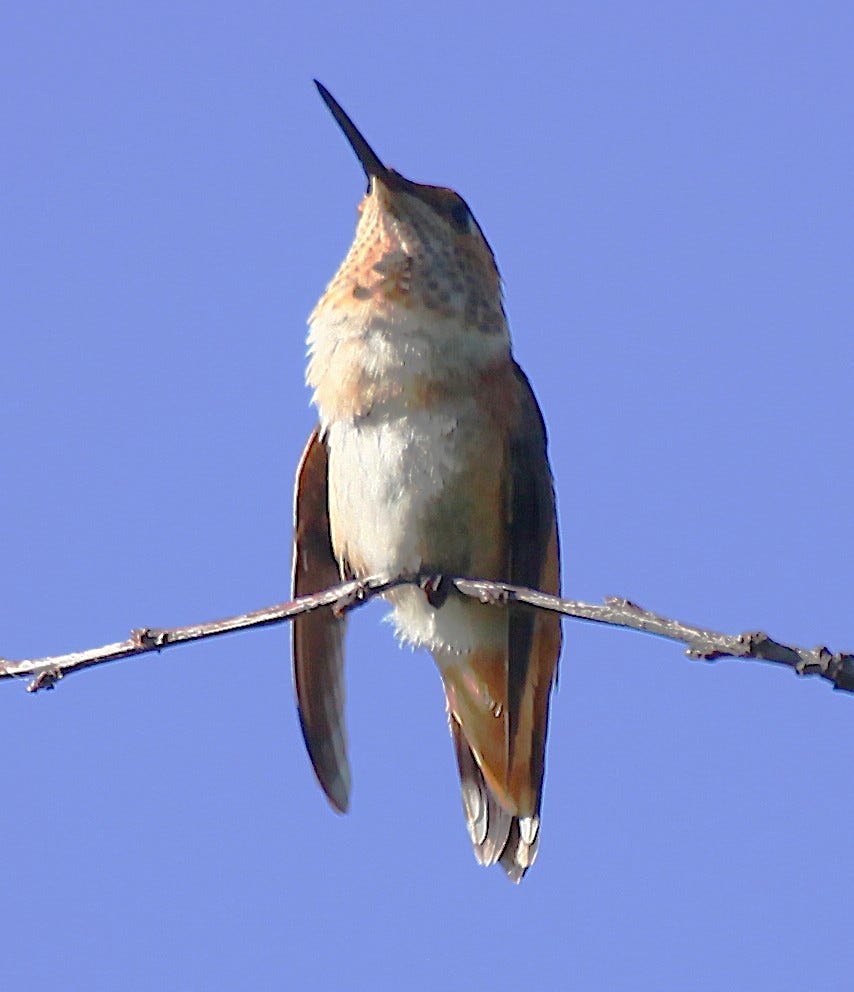
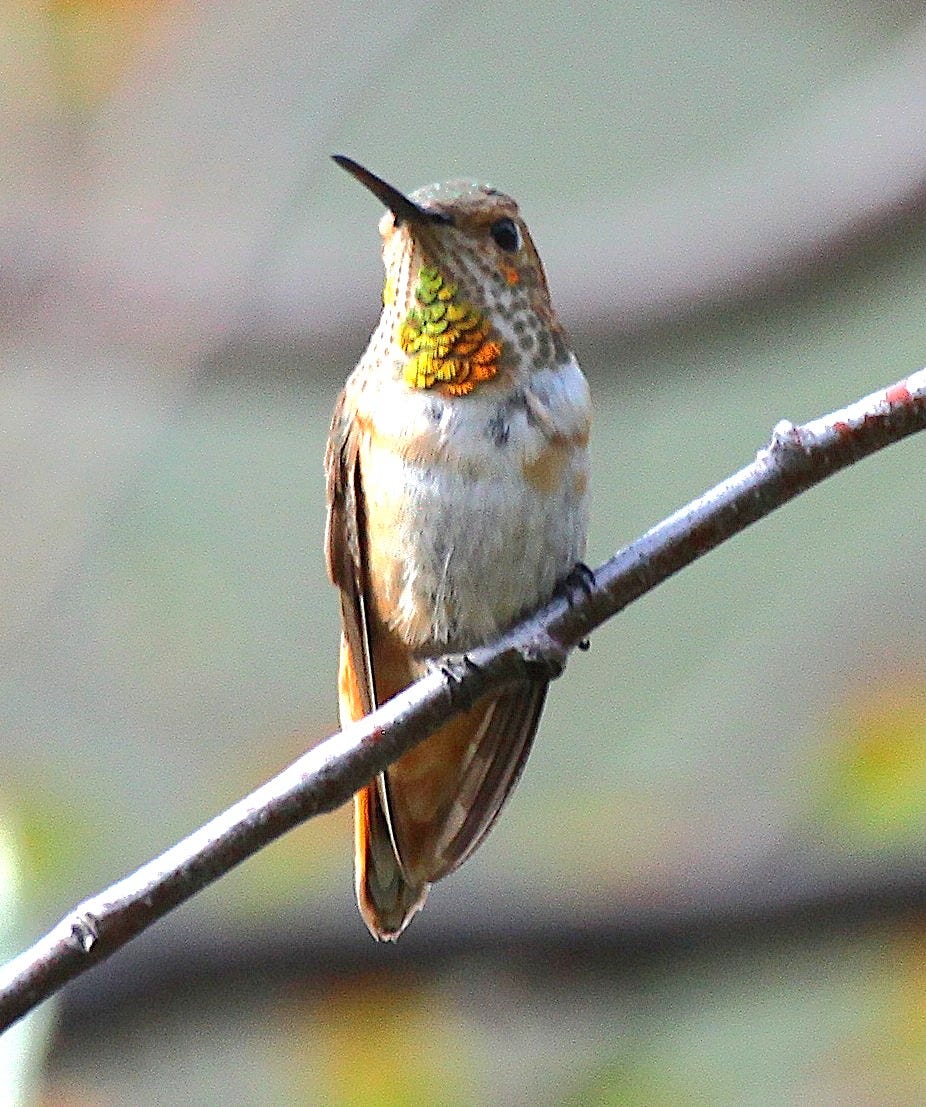
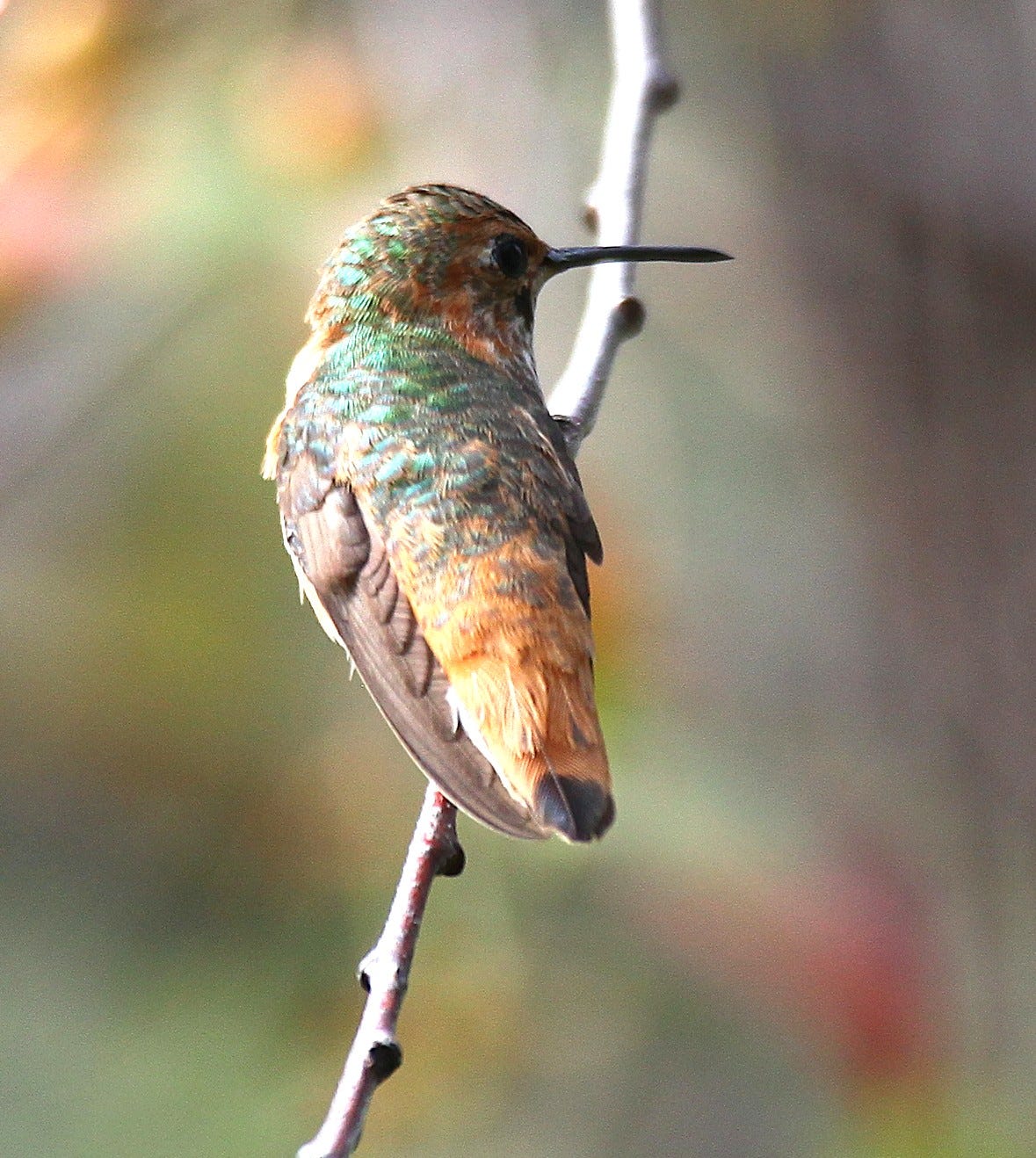
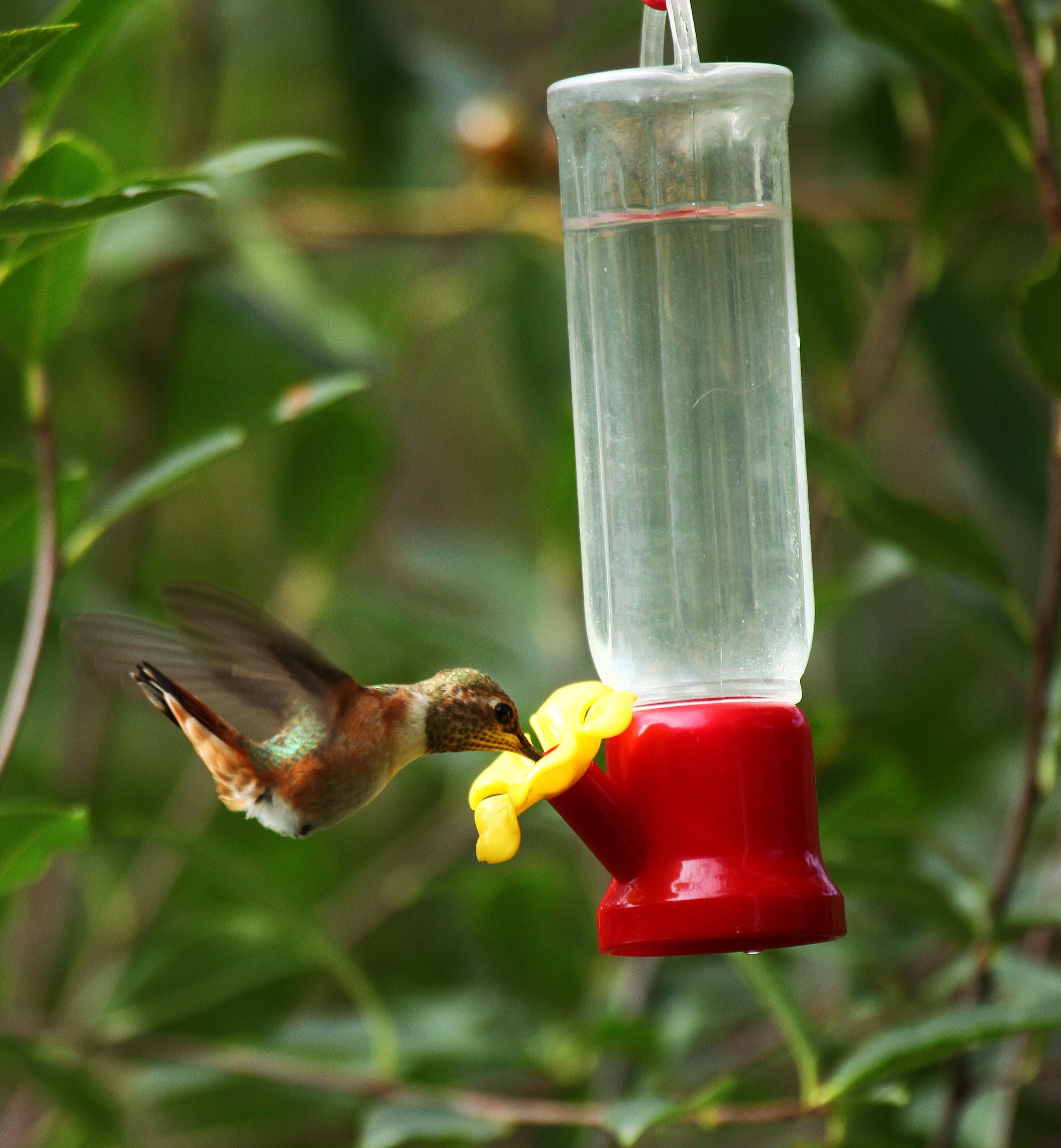
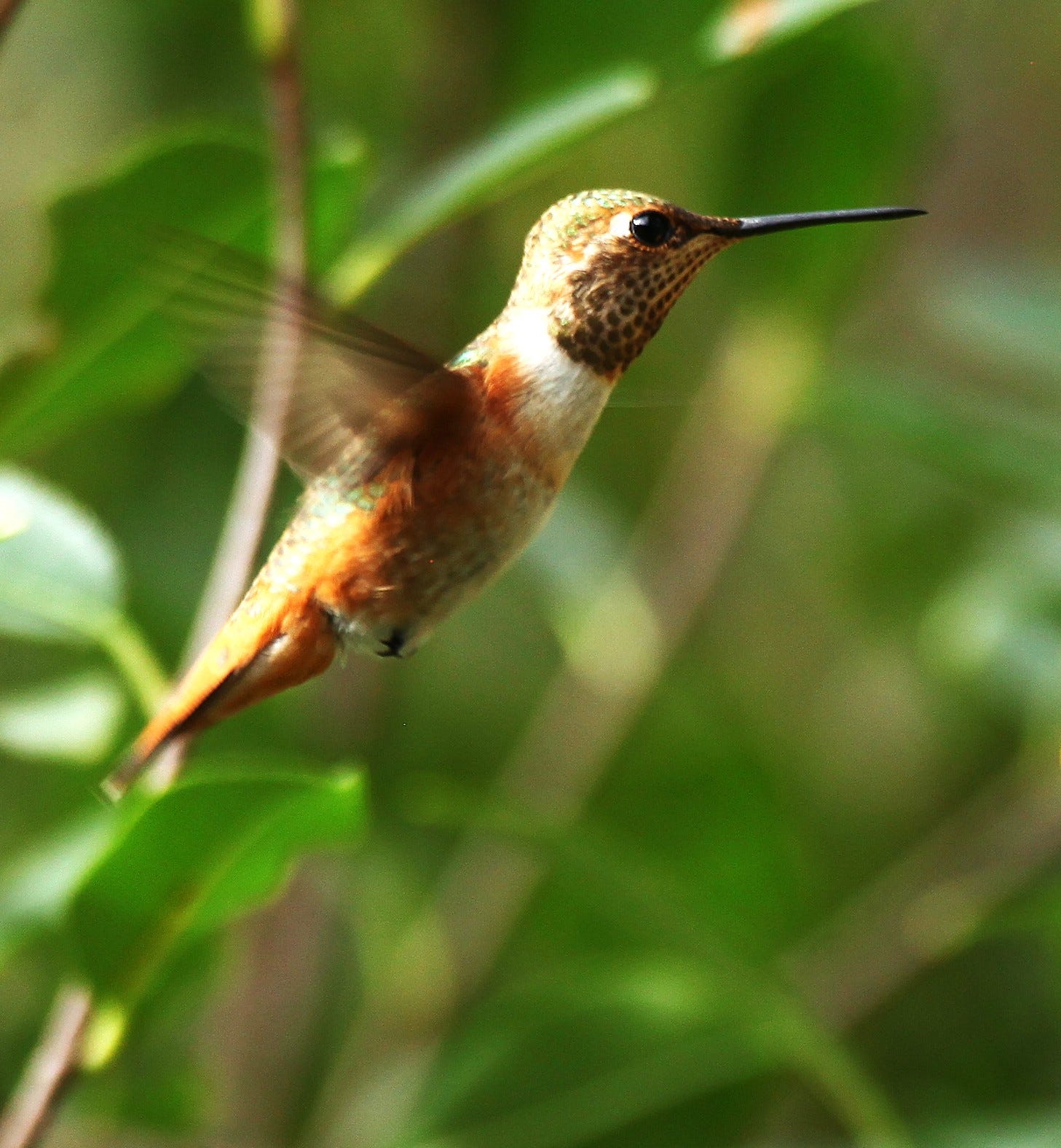
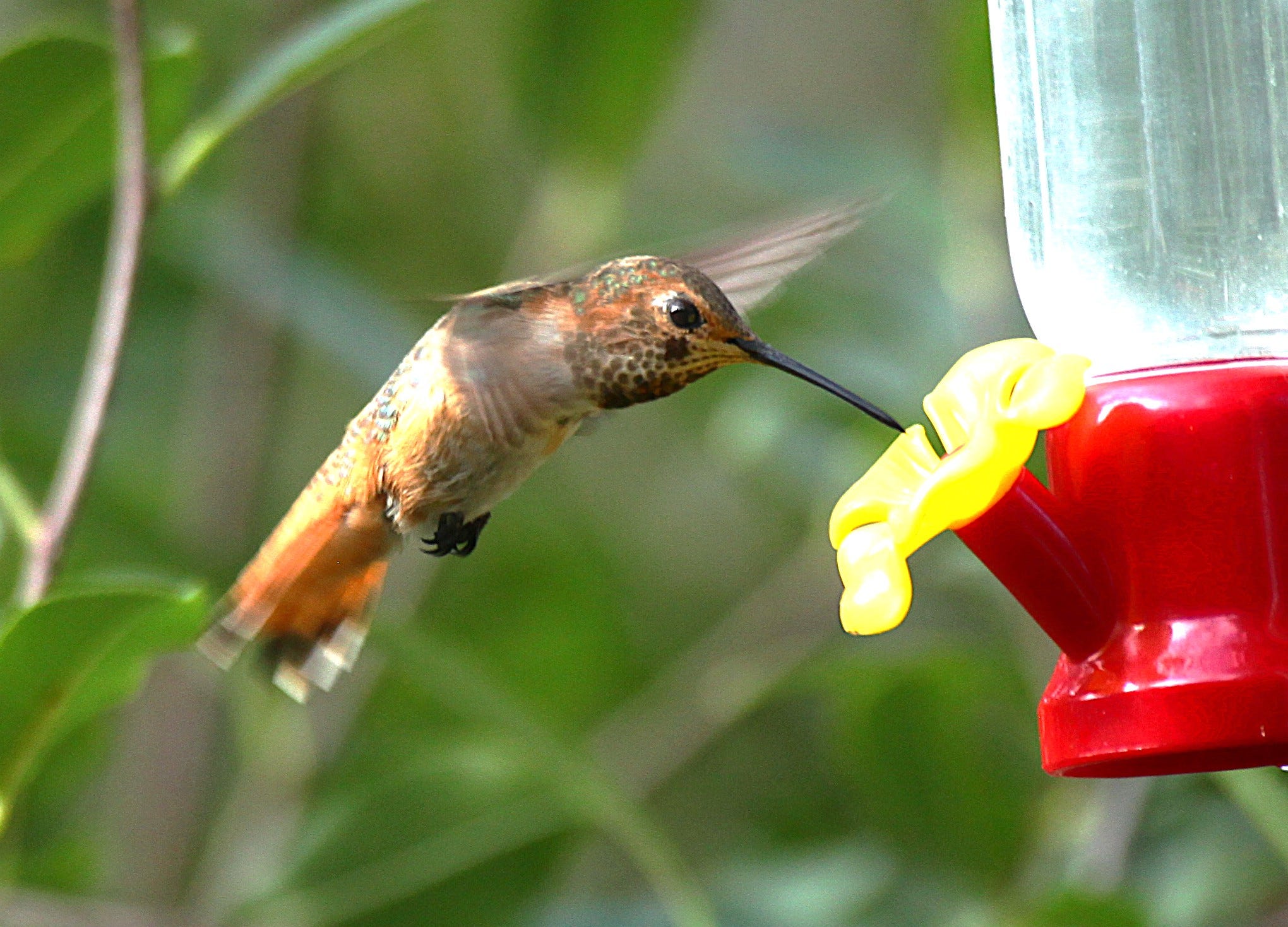
I would retreat inside except the first migrating rufous hummingbirds are flushing the feeders. At least I think they’re rufous hummingbirds. This time of year, the nearly identical immature Allen’s hummingbirds join the young rufous on their way from nests in the coastal forests of Oregon and northern California to winter in central Mexico.
Which means I take hundreds of photos of tails.
At least to begin with.
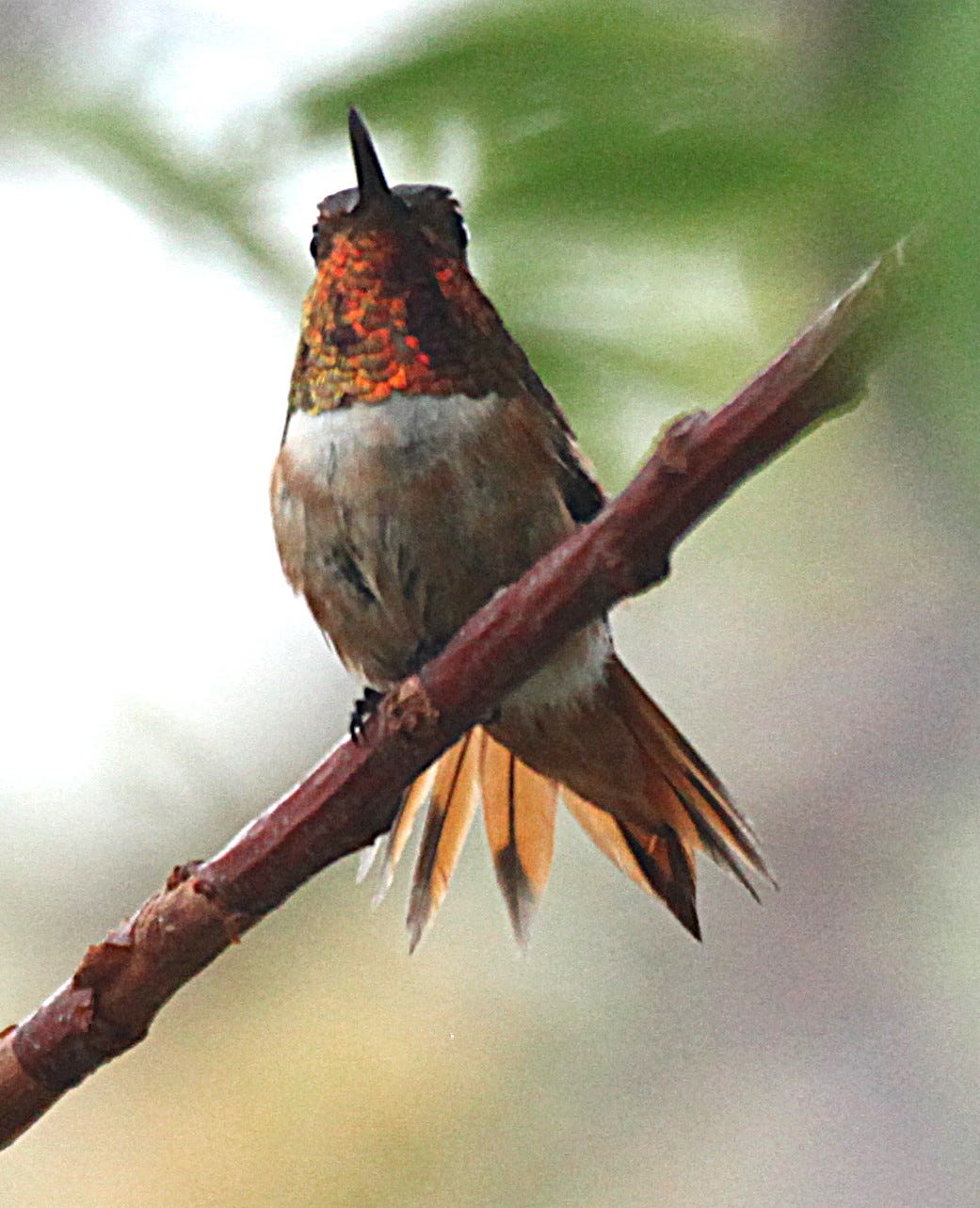
Tail feathers are the most reliable difference between the two species. In Allen’s, the outer tail feathers are very narrow. The second tail feather from the center, the so-called R2, has a smooth, tapered shape. The rufous R2 has a distinct notch in it. And, as if that isn’t wonky enough…
Except for immature birds. Which have differences more subtle. Making it nearly impossible to distinguish the two without taking measurements in hand.
So, I take more photos and scratch at bites.
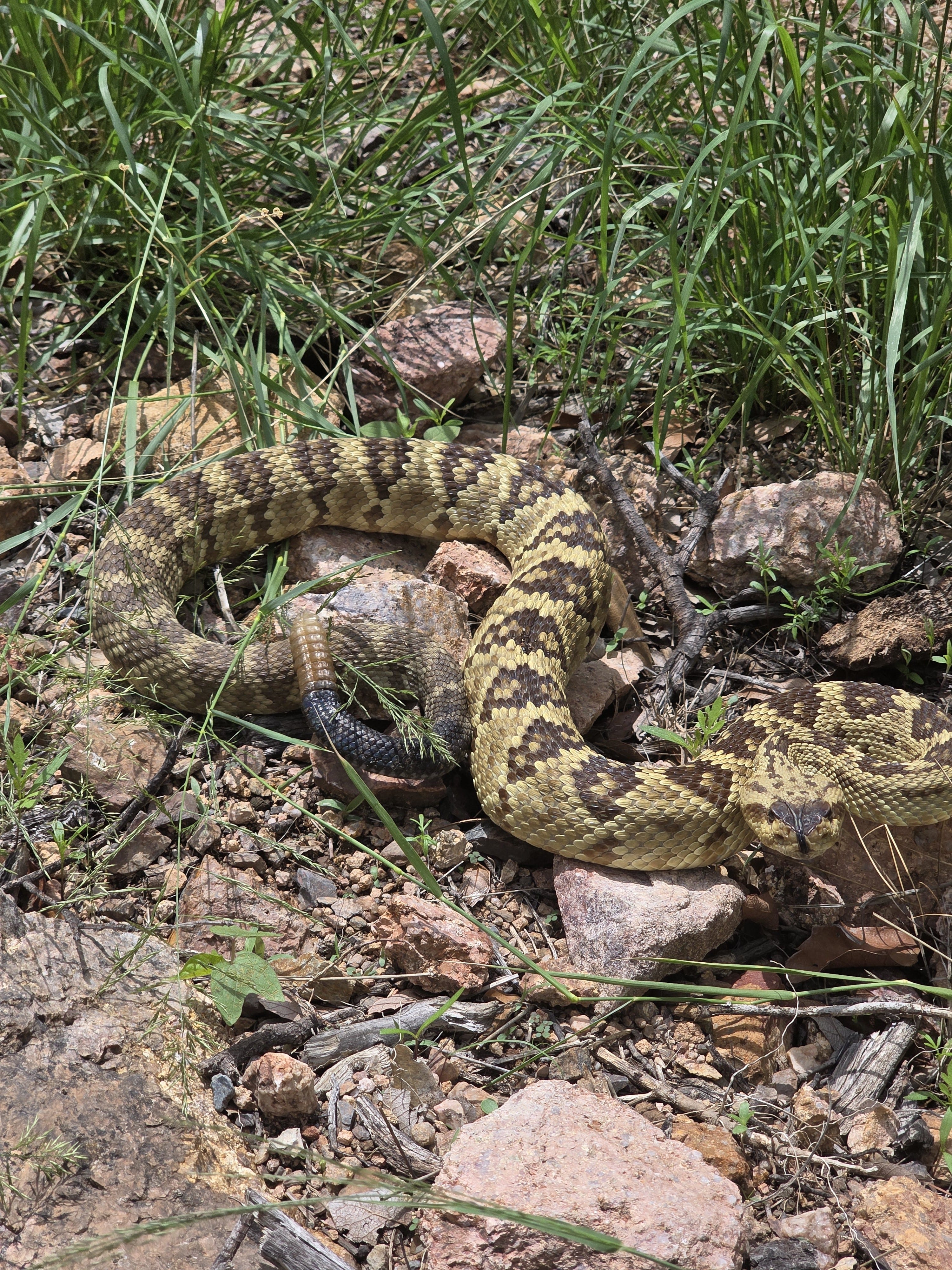
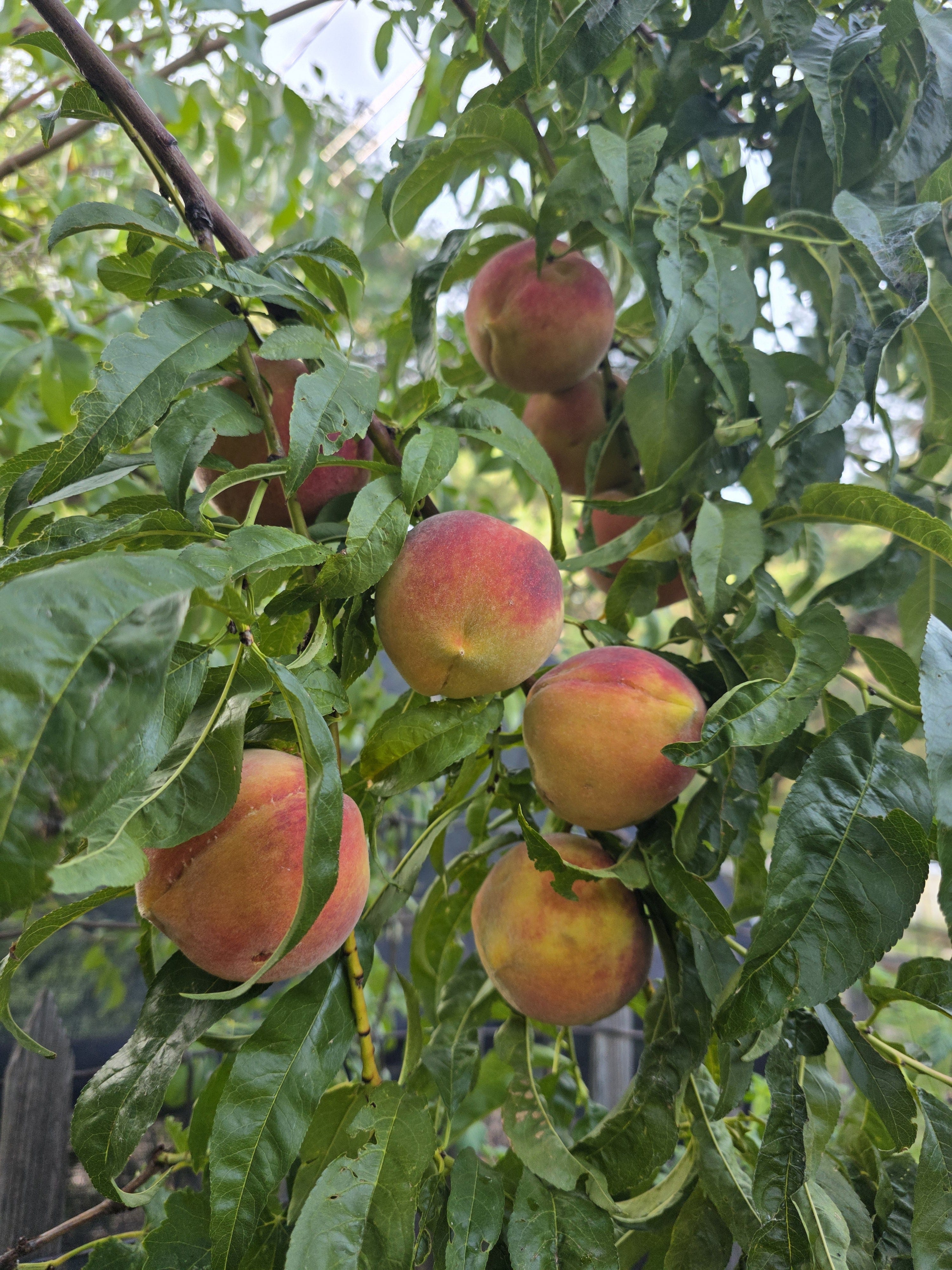
Thanks for joining me in the Big Yard! We’re gearing up for the first “Bioblitz” this September in the Mule Mountains—30 researchers and scientists and volunteers combing the canyons and peaks to document and list every species of plant and animal in search for a rare Ditmar’s horned lizard. Watch for posts about it in the coming weeks and follow me on iNaturalist!
No posts
Comments
Nothing yet. Say the first thing.
Sign in to join the conversation.