
Sometimes I am overwhelmed by the number of words I encounter in a day.
I realize that my total number is far less than the average person, at least the number I hear spoken: I live alone and work from home, which means that I often experience long stretches of silence. Most days I must seek out human interaction if I want to have it.
But with a short scroll through Substack, or Instagram, or even my inbox, I am inundated with them:
Words trying to sell me things.
Words trying to offer me hope.
Words trying to make me afraid.
Words trying to make sense of another person’s words.
Words trying to sound smart without saying anything at all.
Humans have, of course, always been immersed in spoken words, but it’s only been in the last 500 years that the average human has had easy access to the written version too. And only in the last decade have we been immersed in so many words, from so many different people, every single day.
Some of the words that flood my inbox and my Substack and Instagram feeds were written by ChatGPT. Others are words about the dangers and the challenges and the values of large language models. These models create more content to add to the volume of words we all must encounter in a day. And then these models synthesize that volume since we don’t actually have the capacity to process the number of words around us on our own.
I’m told that some people think in images rather than words, that they can sit or walk or run or even read without a string of words running through their mind. I’m jealous of these people, because my brain never stops producing them—words that are welcome and words that I wish would burrow themselves away, because the words unearth emotions I would rather not feel. Emotions I can’t discard by bottling them back up in simple language (maybe I should try running my feelings through ChatGPT).
This essay is neither a screed against AI nor a celebration of it. But it is a recognition of one gift LLMs have offered us: they’ve forced us to accept the limits of what words can do.
And I believe that is a good thing.
I first realized the irony of trying to write about bread in divinity school.
In my master’s thesis, I aimed to capture the fact that bread is an element by which God becomes known to us in a manner that cannot be articulated through words. And yet, somehow, words were the medium by which I was supposed to communicate this reality.
To help my cause, I argued that Jesus himself played with language in the desert after his baptism. “One does not live by bread alone,” Jesus says to the tempter after his prodding to turn stones to bread. “But by every word that proceeds from the mouth of God.”
The trick here, though, is that Jesus himself is both the Word that proceeds from the mouth of God—the Word that was with God in the beginning, the Word that is God—as well as the Bread that we put into our own mouths, a way to know God on our tongues and in our bellies when the reality of God cannot be fully grasped in our minds.
It’s a sensual kind of knowing, one that evades words. This bread is God’s tangible presence when neither our feelings nor our cognitive ability to understand can make sense of its reality. God comes to us in bread because God desires intimacy with us that is too physical to be limited by language.1
When given the option to pursue a PhD (to continue studying and teaching this reality within a structure that operates entirely through words), or to build Bake & Pray (to teach with both my hands and yours in dough), I knew that the bread itself demanded I go the non-academic way.

A couple weeks ago, one of my Eucharist pilgrims from this past May told me that she is still trying to figure out why she felt so compelled to join us for the trip.
“I hope you’re not offended by that,” she said.
I smiled when I read her message. It’s a sentiment I hear often about my programs, one that affirms my decision to build Bake & Pray, and now Bake & Rest, rather than pursue a PhD. The bread calls to us, it compels us, it ignites our hunger even when we can’t make sense of the reason why. It’s an honor to be tasked with the job of stewarding this profound mystery.
I told the pilgrims at the beginning of our trip that I would lecture, sure. And we would read and speak the liturgy each morning for morning prayer. And we would dialogue each evening after compline. And I would pass around the books that had most informed my thinking, for those who wanted to keep digging deeper into such things.
But ultimately my research had led me to the recognition that my own words can do little to encompass the truth of how God works through elements like bread and wine.
Instead my vocation is to offer a bunch of disparate ingredients, along with tips for how to mix them, then to step aside and trust that God will do the rest.
The most beautiful part of this work is that I can offer you these ingredients and these tips for how to mix whether or not we share the same language for God, or the same understanding of how God is present with us. My work is not threatened by those who believe differently than me, whether fellow Christians or those of no faith. Instead, we are each liberated to bake and then to observe how we, and everyone else around us, all experience this same reality.
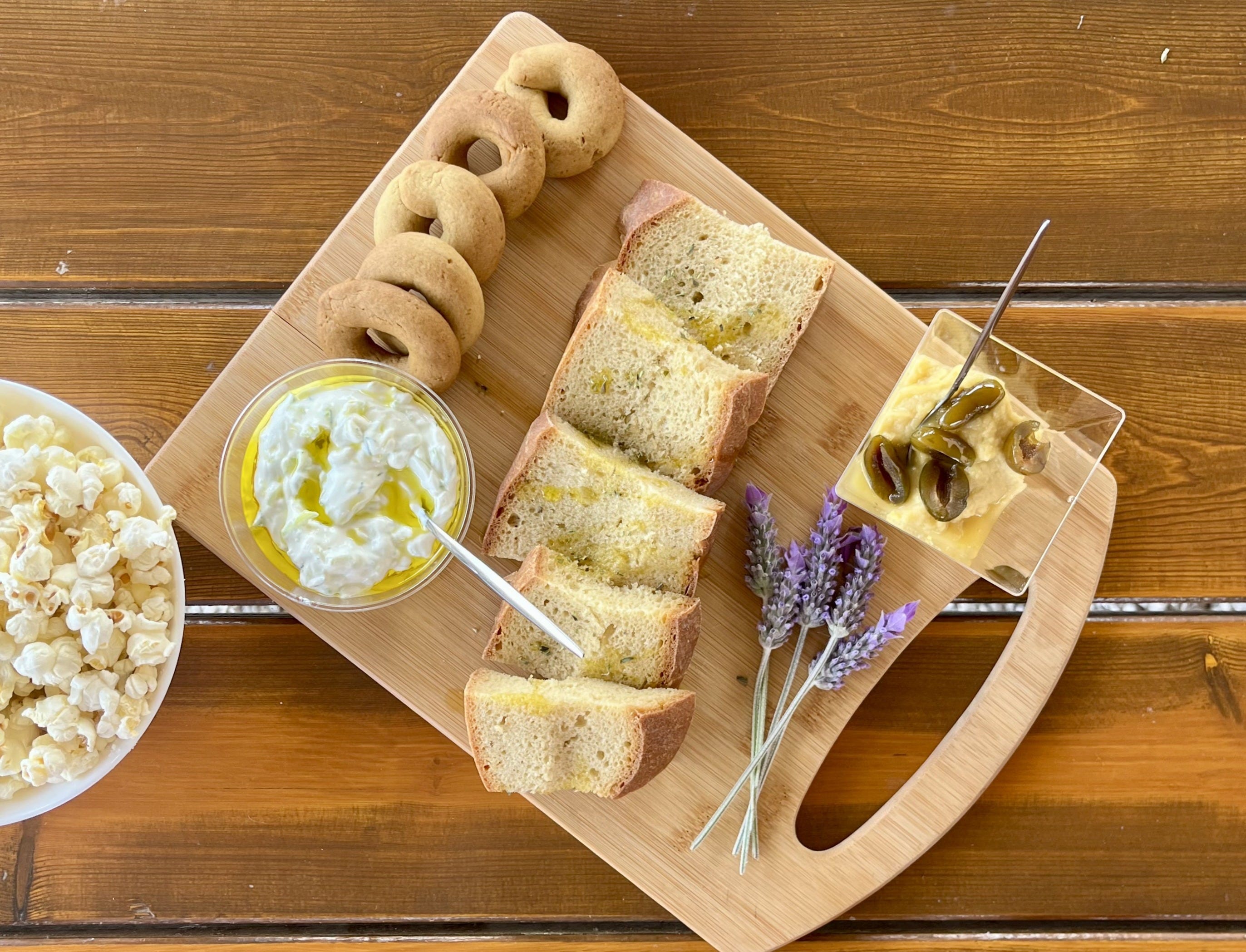
When I first began imagining the reformation of my work, I thought that I was itching to write about both God and bread a little less. I felt constrained by the niche I’d carved out for myself with Edible Theology, and I worried that I was limiting myself and my potential readership.
Much to my surprise, I’ve written more about each in the last four weeks than in the two years prior.
What had actually been constraining me was the pressure to add to the cacophony of words trying to sell, trying to ignite anger, trying to add to whatever public conversation was taking place on any given day. It was the pressure to provide scholarly explanation for the cultural and historical realities that I research. It was the pressure to help you understand why we should all relate to food and faith in a different way than dominant culture teaches us to.
What I wanted instead was to bring you along in my process of thinking, observing, and living. I wanted to invite you to bake with me, and to trust that you would encounter the goodness of God, and of food, and of your body in your own unique way.
As it turns out, now that I’ve made that invitation the center of my work, I have a lot more words about bread and God than I ever realized.
I hope that through these words of mine, you are noticing the places you encounter the limits of language in your own life—as well as places you encounter the Divine in tangible form. Maybe it’s gardening or making pottery, woodworking or crocheting. Maybe you find both joy and irony in trying to articulate your experience of these crafts in words.
If that’s the case, I’d love to hear about your experience in the comments below. What activities get you into your body and out of your mind?

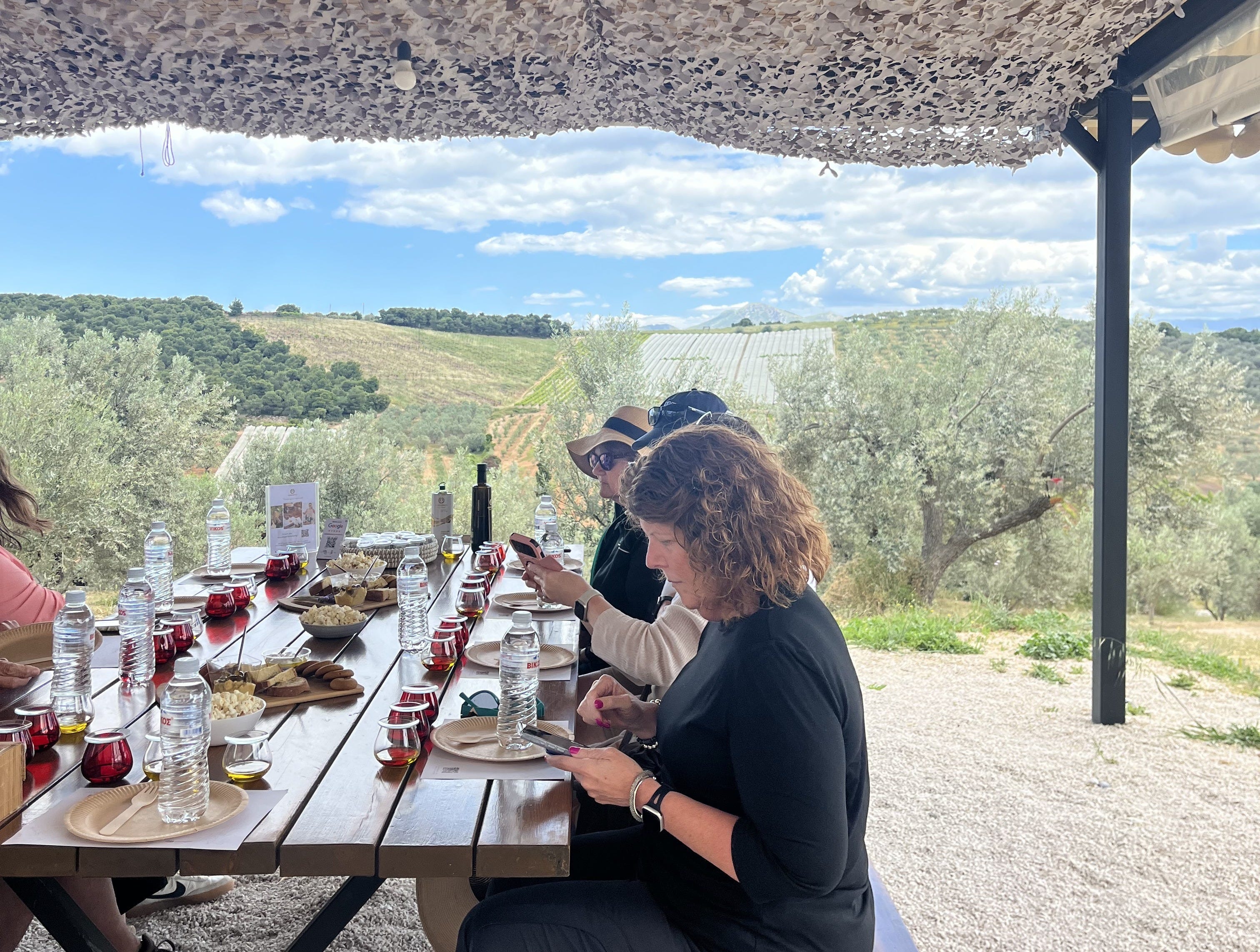
If you are interested in exploring more of the history of Eucharistic theology through experiential, embodied learning—I’d love to have you join me on my Eucharist pilgrimage next year. Our next trip is September 17-28, 2027.
We’ll be returning to Greece and Italy with a small group of pilgrims to bake, eat, meditate, and walk through the places where our Eucharistic theology took form. I hope that through this journey, you will experience the vastness of God in both the bread of Communion and your daily bread.
Click below to learn more and save your spot
This is why I am a strong advocate for serving communion to children as soon as they can chew it, before they can even attempt to comprehend it. I also believe communion is especially vital for those with cognitive disabilities.
Thanks for reading Companion! This post is public so feel free to share it.
Comments
Nothing yet. Say the first thing.
Sign in to join the conversation.