
This all began swirling around in my head about one hour ago (many hours later upon publishing) when I scrolled across this note posted by Tasnim Ahmed:
I think a lot about the state of fashion and it’s audaciously sinister (and yet simultaneous insidious permeation throughout the last few decades) integration into the tech world. Or vice versa? There is a whole growing industry centered around AI and fashion, and we the consumer can do very little to stop it. AI can’t be shut off, but it can’t be avoided. It’s been shoved down our throats and we’ve been told to say thank you for the little robot that can think for me! And now, fashion tech startups are leading the charge towards AI. AI shopping tools, AI e-comm models, AI closet organizers, AI paper doll softwares, AI personal shoppers. Fashion has become a vessel for tech, and companies will only continue to push this narrative. (Also, secondhand and AI don’t mix. I said what I said.)
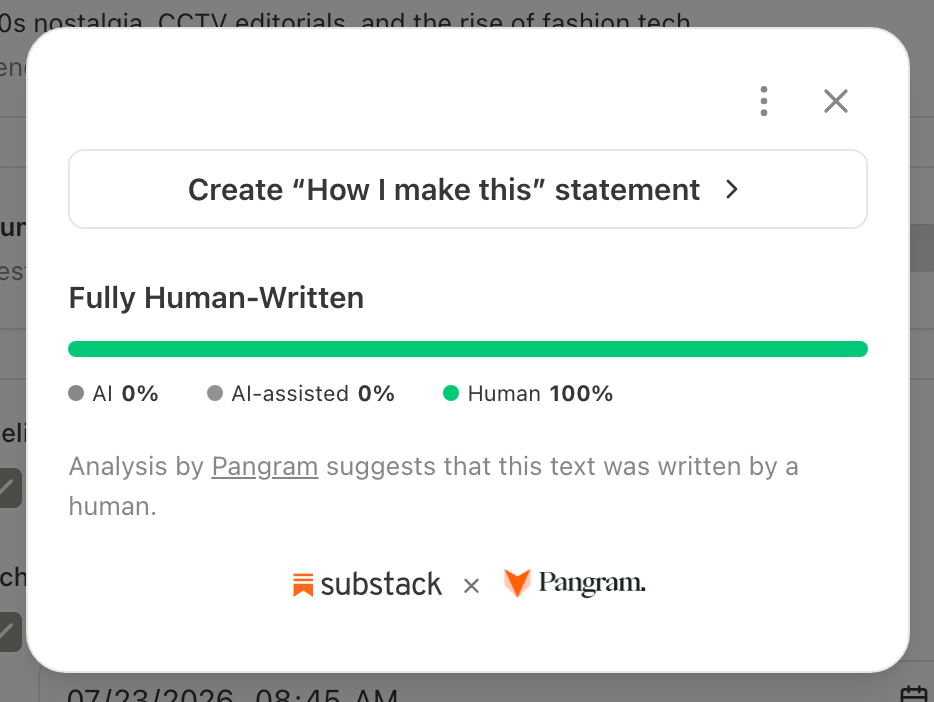
But I digress, I just have a personal vendetta against AI. (let’s see what the new Substack AI detector has to say about this article. I tried to avoid my best friend, the em-dash.) The bottom line is: fashion has a long history of surveillance imagery which has only compounded and come to the forefront of our collective experience and discourse by the recent release of Kylie’s Meta glasses (which I won’t be discussing because everyone ever - myself included - has already given their opinion on the situation) and Alexa Chung’s ring camera fit check series. Dare I say, it’s always been a feature of fashion rather than a bug. We might have to blame fashion, at least partially, for the normalization of the surveillance state. What was once used as a subversive medium for editorials and lo-fi photography has grown into a Black Mirror episode, but we the unwitting actors and all the world our stage.
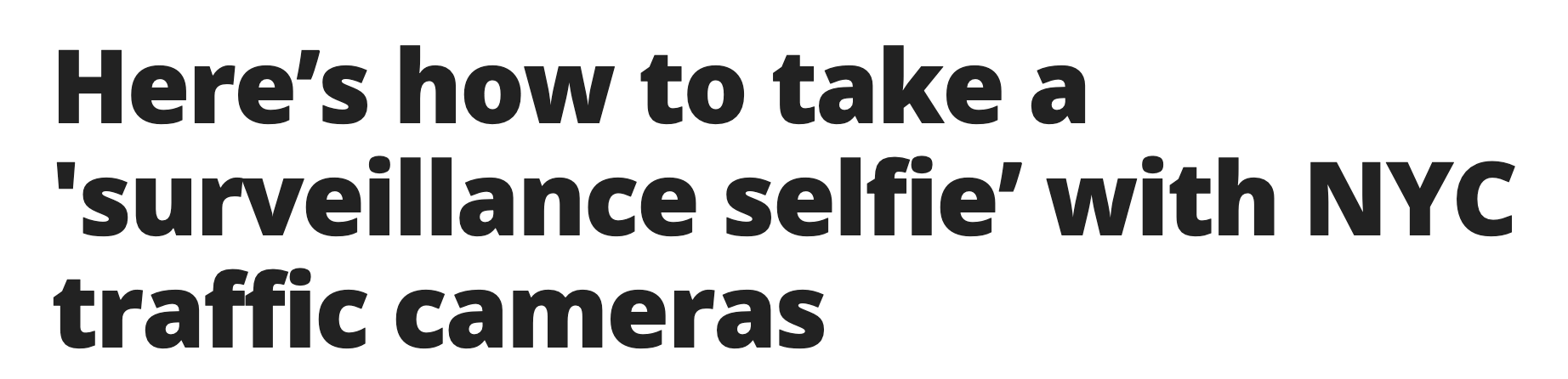
Back in 2024 traffic camera fit checks flooded our feeds. We can thank Traffic Cam Photobooth for this. Framed as more of a social experiment and described as “a project by WTTDOTM,” the “about” page explains it as:
“Traffic Cam Photobooth is a website that allows anybody to locate their nearest publicly available traffic camera and use it to take pictures of themselves. While these cameras are ostensibly intended for traffic, they also serve to acclimate us to the idea that constant monitoring is an everyday part life in the city. […] People can use their feeds, which their tax dollars help fund, to take pictures of themselves, spreading the knowledge of this sprawling surveillance apparatus through fun self-portraits designed to be sharable online.”
Unfortunately, social media compresses concepts into fleeting viral trends, so I am almost certain that the vast majority of those tuning in to their local feeds are doing so without social commentary in mind.
Captioning her videos, “she’s always watching,” Liv Darcey told CNN, “I don’t think it’s making surveillance aspirational, it’s more about playing with frames and angles that feel less curated.” However, it’s hard to separate the art project from the data collection in our current reality. Judith Donath wrote, “Most readers of this book live under nearly constant government surveillance in public spaces. Security cameras, with increasing ability to recognize faces, monitor stores, parks, and streets. Private phone conversations may be recorded, and shopping, web-browsing and travel records may also be analyzed. This surveillance is meant to combat terrorism and crime; many citizens support it, especially at times and in places where fear of attack is high. It is benign to the extent that the government’s laws and actions are just. Yet even a just government can have corrupt or over-zealous departments and individuals. And governments change, while databases last forever.” What may seem innocuous one day can be used against you the next, and it’s easy to forget that. So by willingly engaging with these technologies in ways that seem harmless, we normalize the entire concept. In a world of online over saturation, embracing the so-called “future” is the easiest way to make a buck and get a view (or millions.) Why bother resisting when you’re only one person?
But this is nothing new. In an era of 90s nostalgia and screen fatigue, it only makes sense that the grainy feeds of CCTV footage would elicit something we yearn for - a time when our cameras weren’t also computers. However, we do not exist in a vacuum and must acknowledge from whence we came. It’s hard to recreate that feeling now with the same technology that is being implemented to track our every movement. Our cameras are computers, and said computers are funneling data to companies that capitalize off our lifestyles and needs. You may say, eh, what’s a girl to do, capitalism. Well, as this official government document explains, an entire network of eighty-three thousand Flock cameras were used to track a woman who crossed state lines to receive an abortion.
“As part of this search, Texas law enforcement appears to have reviewed footage from more than 83,000 automatic license plate reader cameras, including cameras in Washington and Illinois, where abortion is lawfully protected as a basic right.2”
We can choose to ignore the dark side of technology, but then how would we go viral? Trading our autonomy for likes on Instagram is the cool thing to do!
Alexa Chung, the fashion cool girl who has transcended influencer/socialite/model status to solidify herself as a tastemaker and genuine, dare I say legend, within the industry, has become the latest subject of discussion.
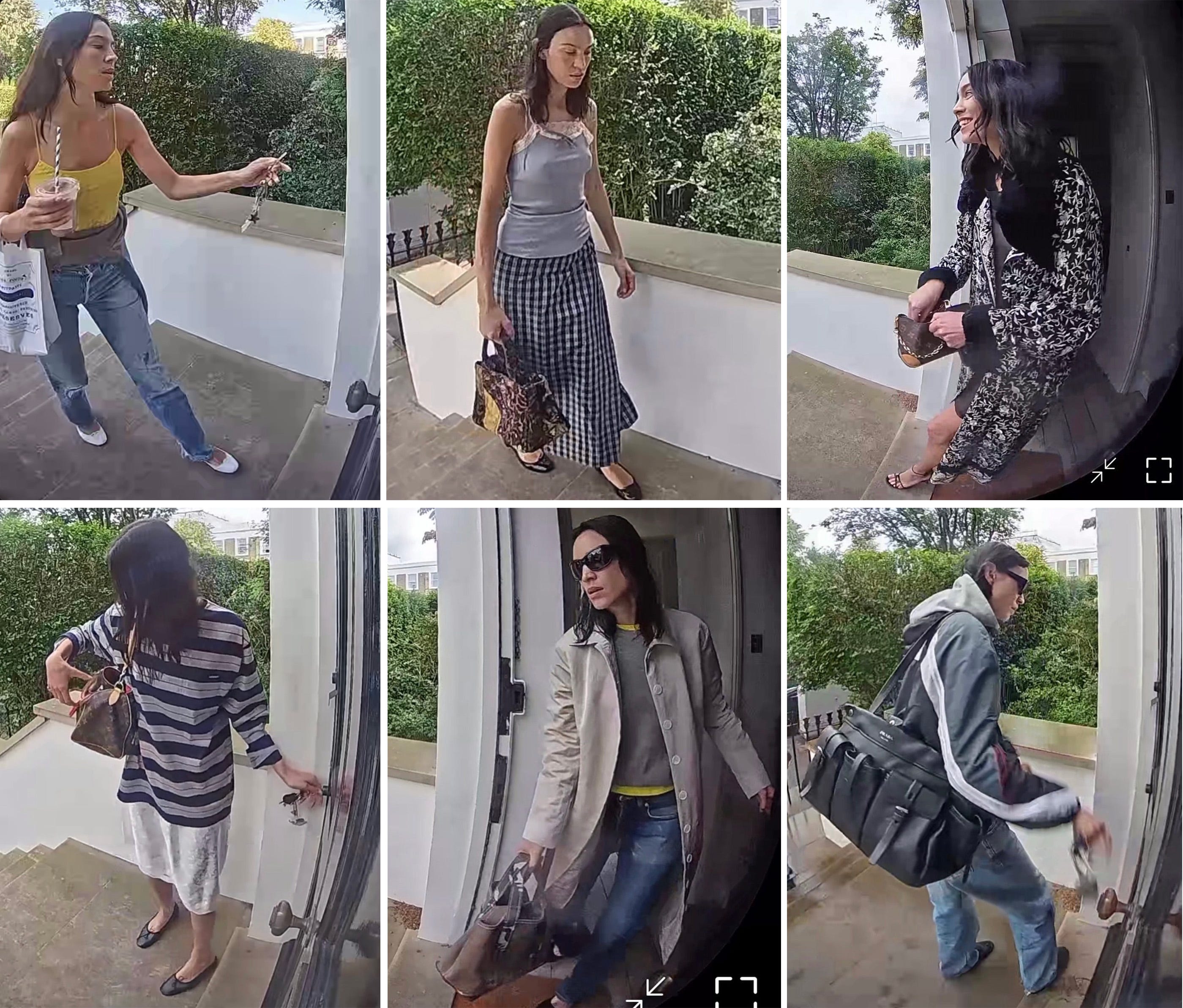
Rather than taking a regular ol’ mirror selfie, she’s taken to posting her fit checks via her front door Ring camera (also under scrutiny after their Super Bowl ad, intended to depict their connected network of cameras as a community effort, exposed the dystopian reality of mass surveillance that relies on and compiles our biometric data.) I have investigated and found no partnership between the two, which I guess is a win. Or is it worse? NOT even getting paid to promote spying and self-reporting on yourself?
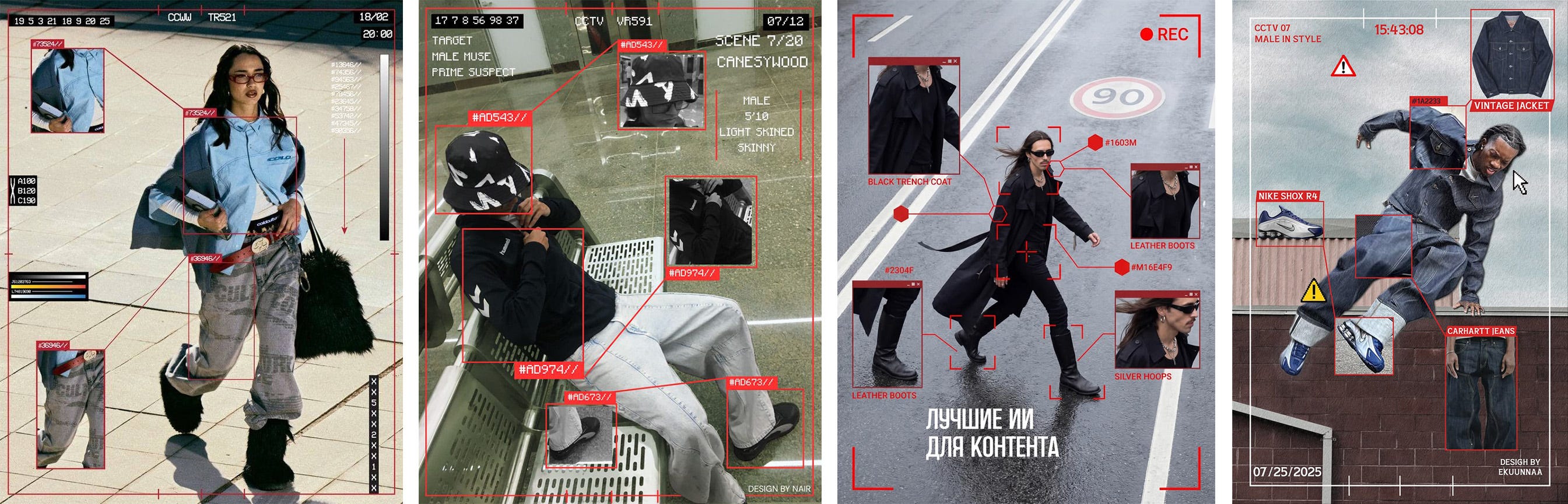
Entire ad campaigns have embraced this imagery.
But, fashion has a history of glamorizing surveillance culture. My first thought, and sorry it took so long to get here, was the Kate Moss 1995 editorial, shot by Nick Knight and literally titled “Surveillance.”
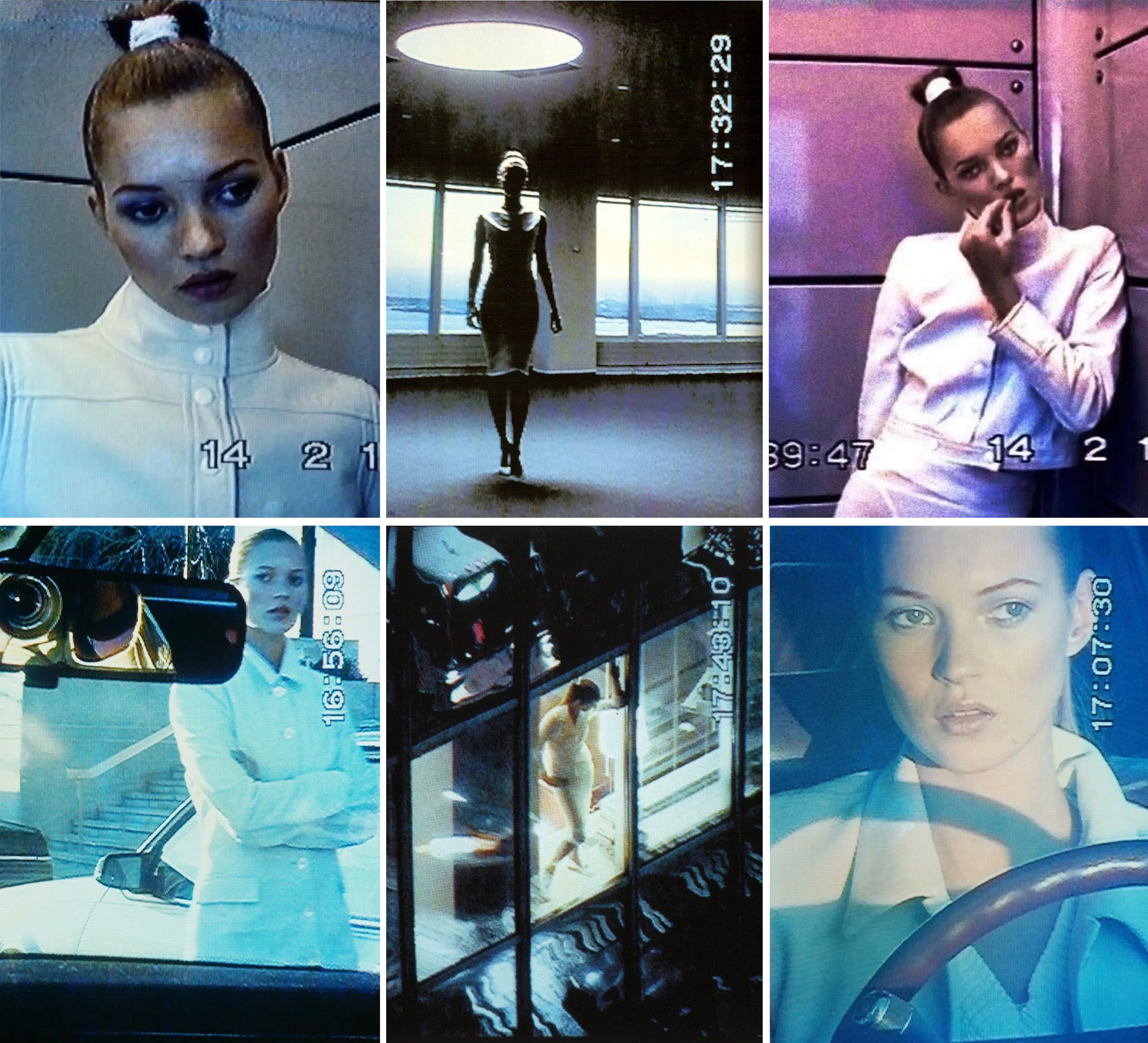
This is what I imagine Joe Goldberg’s camera roll would look like if he was an artist rather than a professor/bookstore manager. Oh, this very remote Williamsburg warehouse photo studio? Don’t worry, I won’t kill you. (Me, imagining the scenario.) He then does in fact kill her. We feel almost like we are witnessing something we shouldn’t be. It’s supposed to feel sexy. But now, looking back on this as a 29 year old in today’s society, it comes off as invasive and a little bit grimey. Kate Moss was only 21 at the time of this editorial, being shot by a man fifteen years her senior, through the lens of what feels like stalking. But it was the 90s! It’s fine! She should feel flattered.
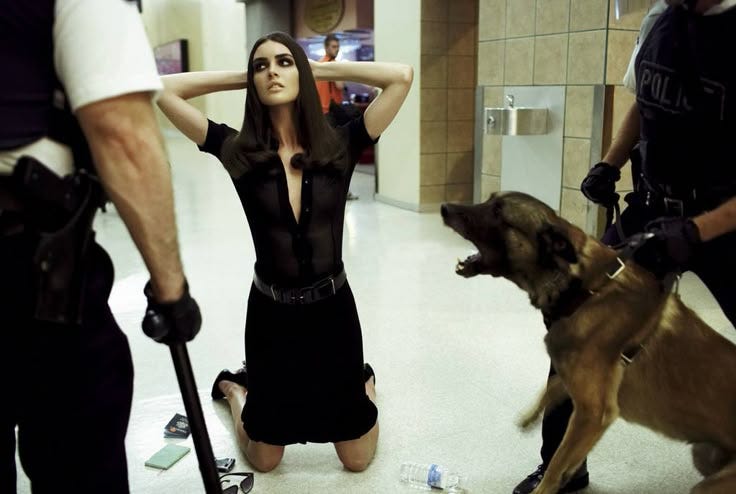
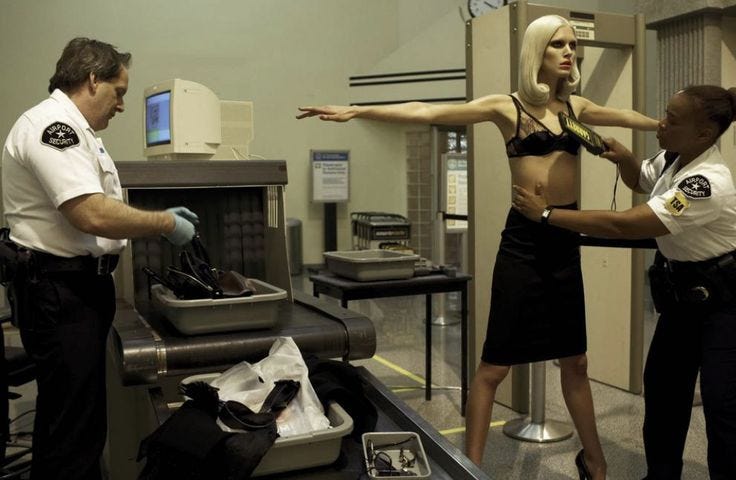
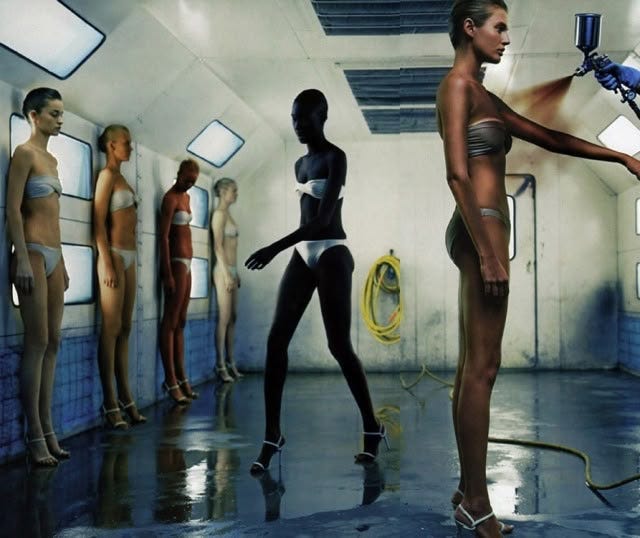
Fashion loves to turn women into props, staging her (sexy) arrest or being patted down going through security. Fashion is absolutely an art medium and reflects the state of the world, but it’s also incredibly easy to disregard said situations when they are viewed through the glamorous lens of couture and depicted using the waif-like figures of millionaire models. It’s subversive the creative team says, while the average consumer simply sees the overly staged and probably tone deaf final product.
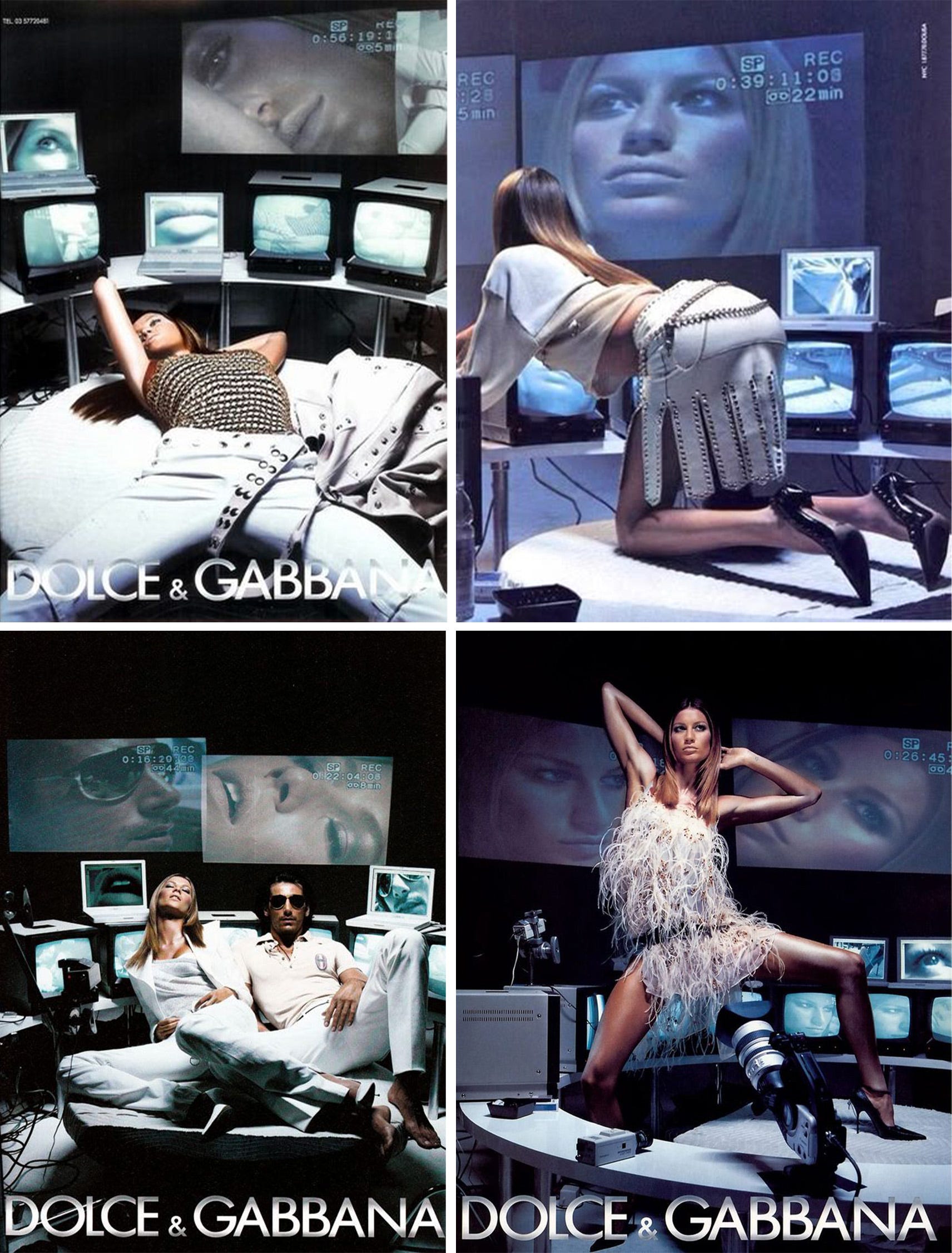
Ever-sleazy Dolce & Gabbana took it even further for their 2003 campaign, offering up crotch and ass shots in the foreground and collaged shots of the models’ faces stitched together through tv screens mounted around the room. (90s super models were strong.) Not a necessary combination, but novel at the time. Sex sells, so make the surveillance an afterthought.
Fashion and tech have always been intertwined, but it’s not so fun for us anymore. We no longer have the agency, so the format doesn’t have the same edgy & subversive undertone; We are no longer the voyeurs. Instead, the lens has been turned back on us.
We no longer have the glitz and glamour of good taste clouding the lens. Fashion has become tech. Zuckerberg and the like are paying their way into fashion weeks, Law Roach is dressing Jeff Bezos’s wife, the Met Gala is now fully sponsored by the aforementioned couple, and Amazon Fashion is now the official presenting partner of the Council of Fashion Designers of America (CFDA) Fashion Awards. A program initially designed by the people for the people being coopted and colonized by the world’s largest citizen surveillance network (Amazon owns Ring) and the man at the very top who can’t just leave well enough alone. The illusion has shattered, and while many are trying to reframe technology to fit within the aestheticized versions of their lives depicted on tiny screens, it’s becoming increasingly difficult to capture the 90s nostalgia without acknowledging our reality - that world no longer exists. (Signing off with an em-dash.)
Edit: I am in fact human!
Comments
Nothing yet. Say the first thing.
Sign in to join the conversation.