
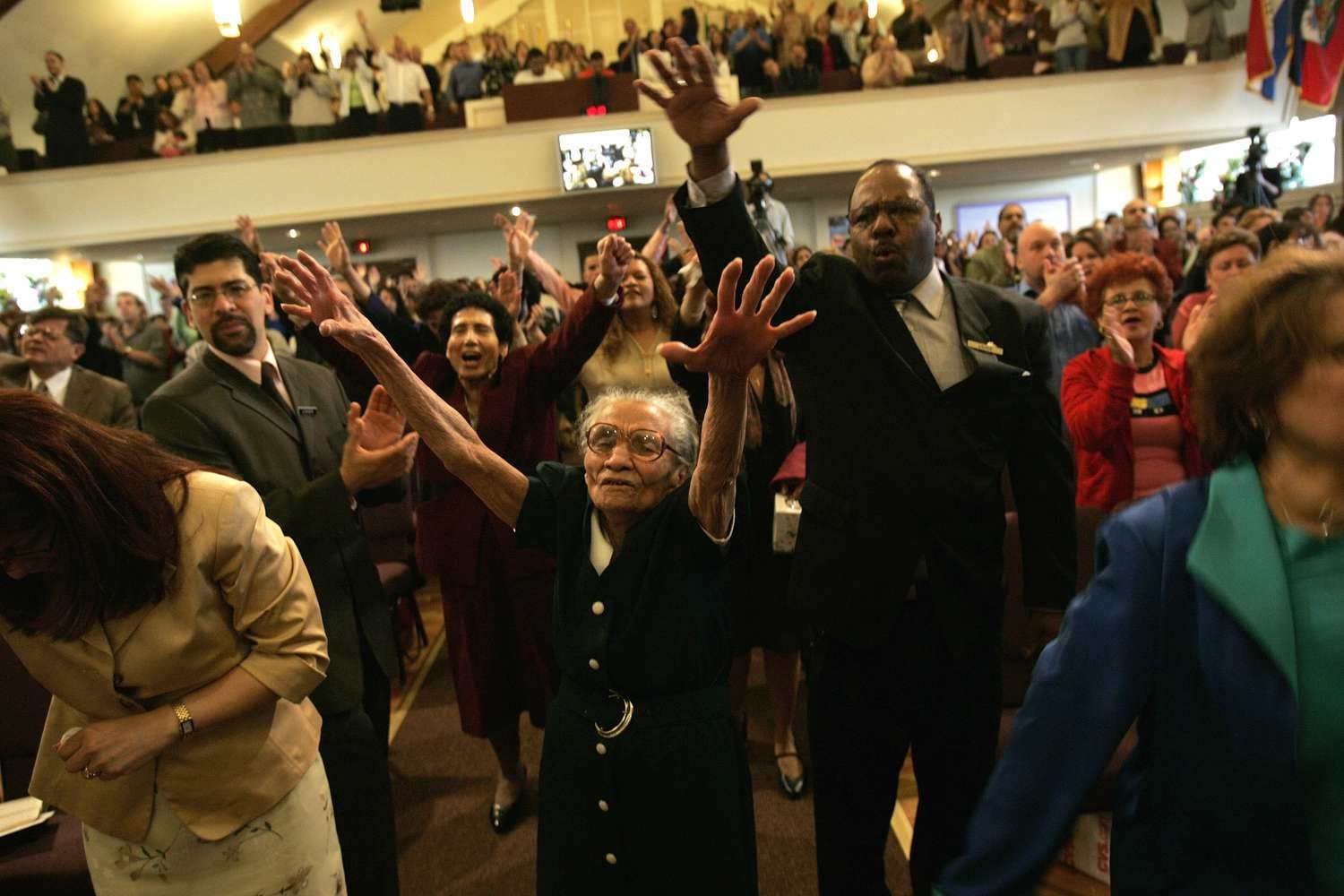
We are going to be looking at the very controversial topic, in some circles, of the baptism in and filling with the Holy Spirit. We are going to be describing the traditional Pentecostal understanding of that and the Charismatic understanding of that and look at how that fits with the Biblical picture. We can argue that millions of people have been profoundly blessed by the what is often called a ‘second experience’ of grace, and we have to ask ourselves what does that look like and what does that mean, and what relevance does it have to our lives, as well.
Let me describe what I mean by Pentecostal: Any denomination or group that traces its historical origin back to the original Pentecostal revival that took place in 1901 in the United States. In that position, the Assemblies of God would be the most prominent denomination. They believe, number one, that the baptism in the Holy Spirit is an event that takes place subsequent to salvation, not with salvation, but later on. They claim, as well, that that baptism of the Holy Spirit is made evident by the sign of speaking in tongues and, third, that all spiritual gifts mentioned in the New Testament ought to be sought and used today. That is the idea, and everybody should have that, subsequent to salvation, and the evidence of that is speaking in tongues.
The difference, later on, with the Charismatic movement, is that this movement, which I’ll define as a group of people who trace their origin back to the movements of the 60s and 70s, often took place in mainline denominations—Protestant denominations as well as the Catholic Church. Charismatic renewal was what some people, like John Wimber and C. Fuller Wagner at Fuller Seminary, called the ‘second wave’ of the Holy Spirit, and the ‘first wave’ was the Pentecostal movement. The difference is that, while the Pentecostal movement formed new denominations, the Charismatic movement did not but saw itself as a renewal movement within existing denominations as well as in the Catholic Church.
They have different views on whether the baptism in the Holy Spirit is subsequent to conversion and whether speaking in tongues is actually a sign. The ‘third wave’ of the Holy Spirit, and the late John Wimber was a major proponent of this, was that the baptism in the Holy Spirit was actually something that took place with conversion and their claim is that what others call the baptism ought to be called simply the filling of the Spirit. But they do hold to the uniform gifting of the Church, in terms of the sign gifting as well as the gifts we would normally hear about: teaching, edification, and mercy.
So, that gives you a feel and a short overview of these three major movements. It is important for us to have a grasp of this because if we are to unpack it, we must understand the arguments for this. How do we understand these so-called ‘second experiences’ that people sometimes will have? This has happened to millions and millions of people after their conversion. As you well know, Pentecostal and Charismatic churches are the fastest growing churches in the Third world. There is a reality that must be affecting people’s lives in very personal and powerful ways.
A brief view of the Pentecostal understanding of the New Testament includes that Jesus’ disciples were born-again believers long before the day of Pentecost and, consequently, when they experienced the gift of the Holy Spirit, it was something that was subsequent to their salvation. Also, Jesus commanded His disciples that they would, before many days, be baptized with the Holy Spirit. We see that in Acts 1:5. When that occurred, in Acts 2, it describes how they were filled with the Holy Spirit and began to speak in other tongues, hence the speaking in tongues in connection with the baptism experience. They will also claim that Christians today, just like the apostles then, ought to ask Jesus for the same baptism of the Holy Spirit. They will say that this is a pattern in which people who were first born again are later to be baptized with the Holy Spirit. That is the terminology that might be used.
So, we need to ask ourselves, what does this baptism in the Holy Spirit mean in the New Testament? How do we understand these ‘second experiences’ that other people obviously have been having; and are there any other Biblical expressions that we ought to look at as well to understand what has been happening?
Comments
Nothing yet. Say the first thing.
Sign in to join the conversation.