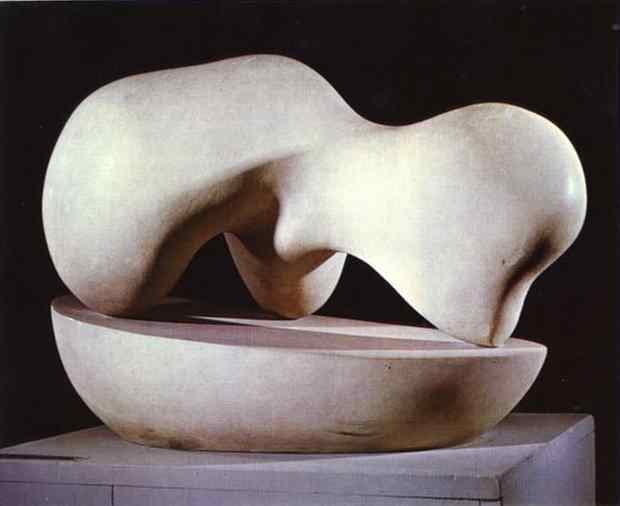
When I first set out to write this “A” entry of the dictionary, I planned to write only about Jean (Hans) Arp. Right away, I typed the title: “The undulating bodies of Jean Arp’s sculptures”—but when I started to brainstorm where I wanted to hone in on Arp’s art practice and life, I kept coming back to his radiant wife, artist Sophie Taeuber-Arp.
The dictionary anticipating Arp!
If you’re an Absolument reader, you’ll know that I somehow always find my way back to women artists—maybe because their lives are one thousand times more fascinating to me, or maybe because I daydream about morphing into them someday. When I’m older and wiser and more well-formulated! Or maybe tomorrow. My paint brushes could always use some movement!
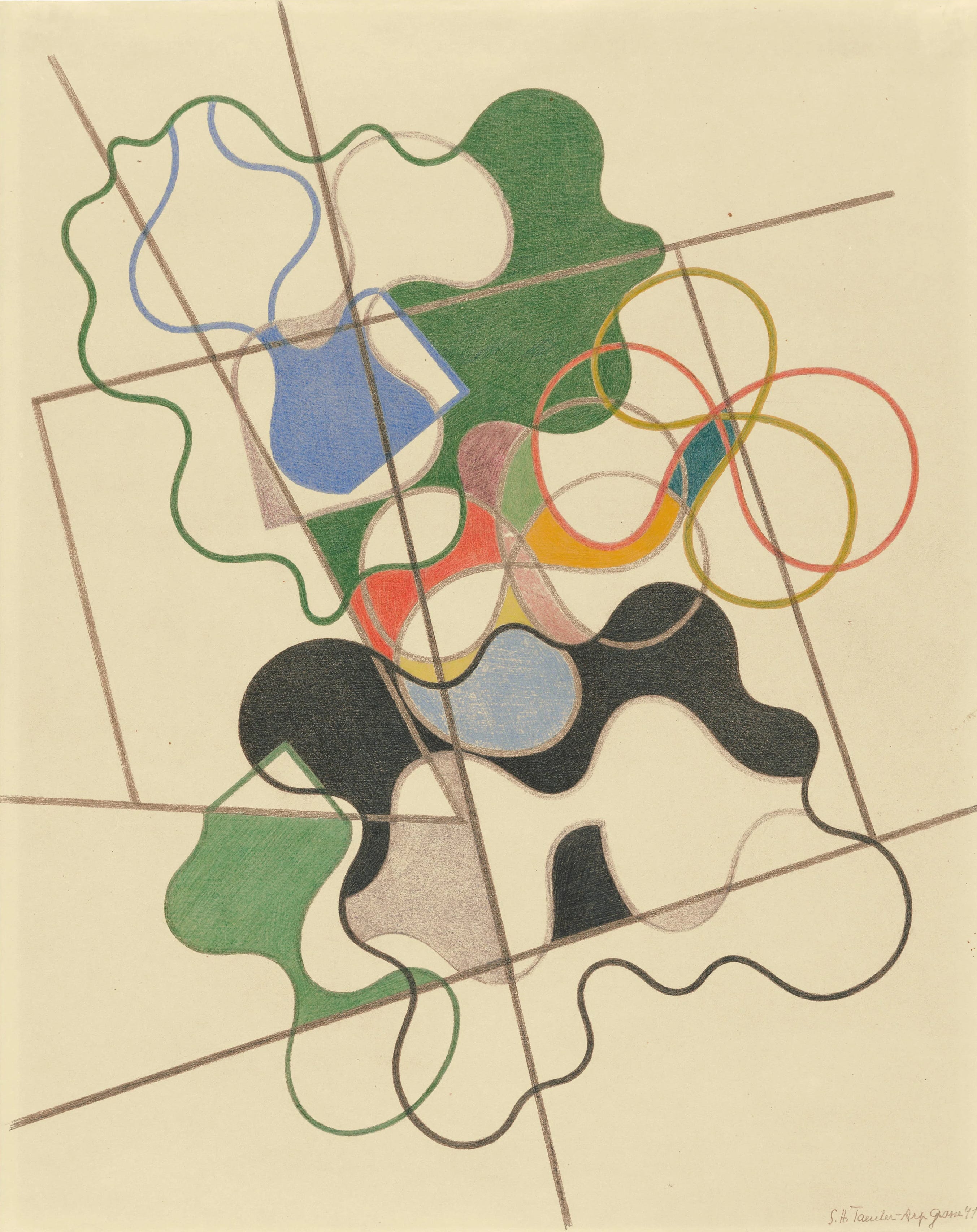
While looking at Sophie’s work this month, I came across her crayon and graphite drawing called Geometric and Undulating from 1941. Undulating! That word really did fit the Arp legacy in more ways than I had originally thought. So, here’s a little undulating and geometric road, led by Jean and Sophie.
b. 16 September 1886 in Strasbourg, Alsace | d. 7 June 1966 in Basel, Switzerland
“His nationality was complicated,” wrote Surrealist artist Desmond Morris about Jean Arp in The Lives of the Surrealists. “He was born in Strasbourg, Alsace, on the border between Germany and France, a city whose complex history saw it switching back and forth between German, French, and Alsatian. As a child, he had two names and spoke three languages. His German name was Hans Peter Wilhelm Arp and his French name was Jean-Pierre Guillaume Arp. He spoke French with his mother, German with his father, and Alsatian in daily life.”
Jean Arp was shaping and morphing himself from his earliest days!
And in this period of youth, Arp became extremely sick (at the age of six) and took up drawing during his recovery. When he was healthier—during his teenage years—he spent as much time as possible inside artist studios. At eighteen, he visited Paris for the first time and fell completely in love with the city. His German father didn’t want him living on the French side of Alsace, so Arp signed up for courses at the Academy of Arts in Weimar, Germany. Three years later, Arp and his family moved to Switzerland, where he became busy co-founding Der Moderne Bund, a Swiss group promoting modern art. Still, he couldn’t resist frequent trips to Paris.
It was Paris that introduced him to post-Impressionism and Abstraction; Cubism caught his eye the most. He was busy at work painting, painting, painting! Drawing, too. In 1911, Arp exhibited some of his work in Lucerne, France, with other artists like Picasso, Klee, Matisse, and Gauguin. At the show, Morris claims that someone spat tobacco juice at one of Jean Arp’s drawings.
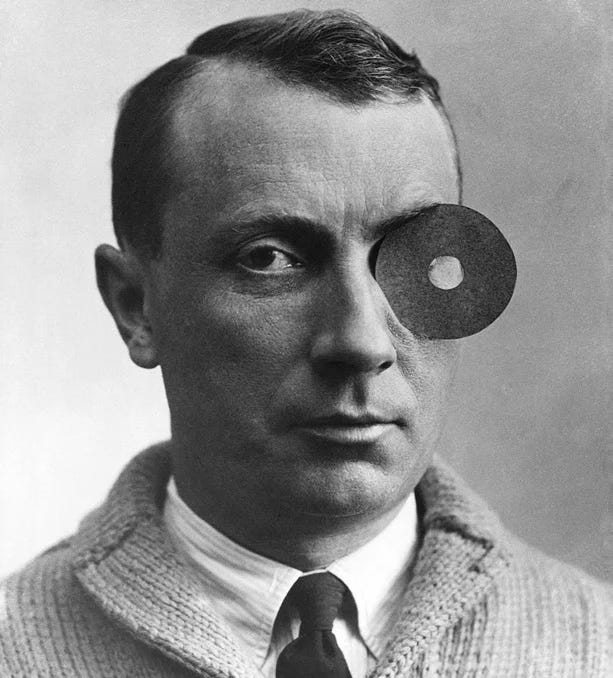
Portrait of Jean (Hans) Arp, ca. 1926. Photo courtesy Stiftung Arp e.V., Berlin/Rolandswerth
3 friends —> a 1-month subscription to all paywalled posts, like this one!
In 1912, Arp group exhibited in Zurich with Robert Delaunay, Wassily Kandinsky (whom he visited often in Munich), and others. His art was in exhibitions hosted by Der Blaue Reiter group. He showed more art in Berlin, and became dear friends with Surrealist Max Ernst. Arp spent a little extra time in Paris in the days leading up to the First World War, and even had his portrait painted by Modigliani there.
When WWI officially arrived, Morris said Arp booked one of the last tickets on the very last train from Paris to Germany. From Germany, he planned to move into the pacified Switzerland, but the French thought he was a German spy. “To avoid being drafted, Arp pretended to be mad.”1
While settling into Zurich in 1915, Arp had a little love affair with Baroness Hilla von Rebay.2 Immediately after, he met Sophie Taeuber, also an artist. He wrote of their meeting:
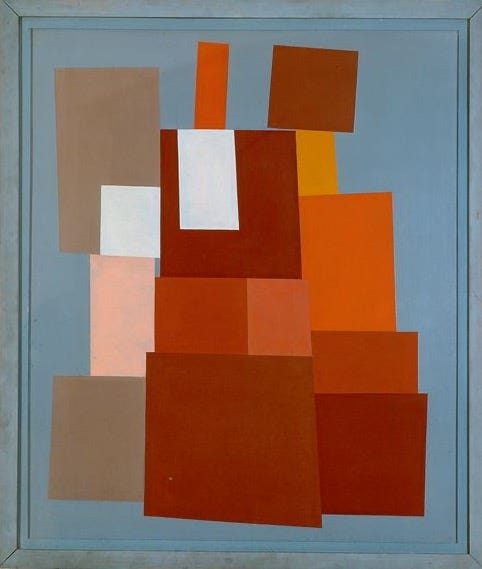
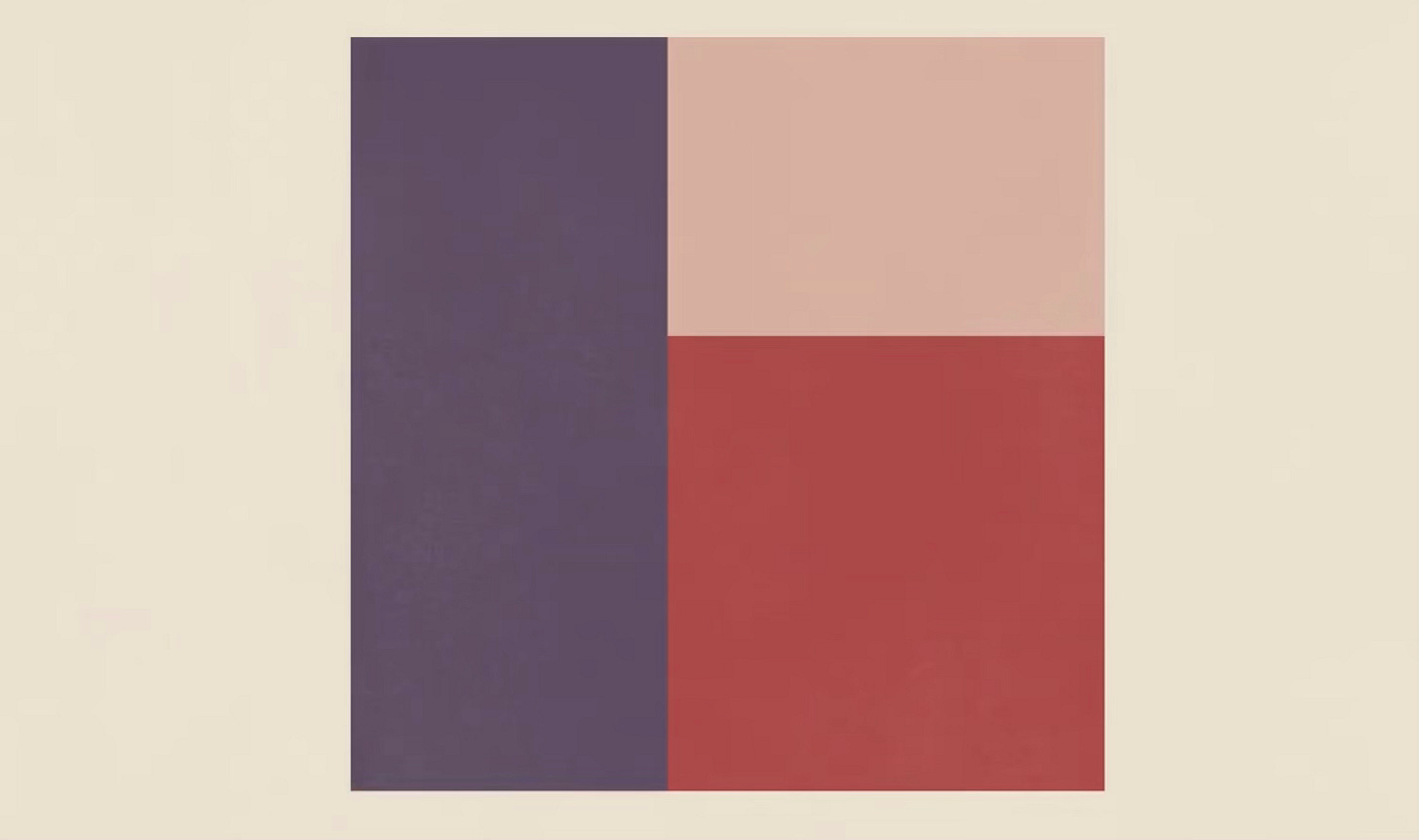
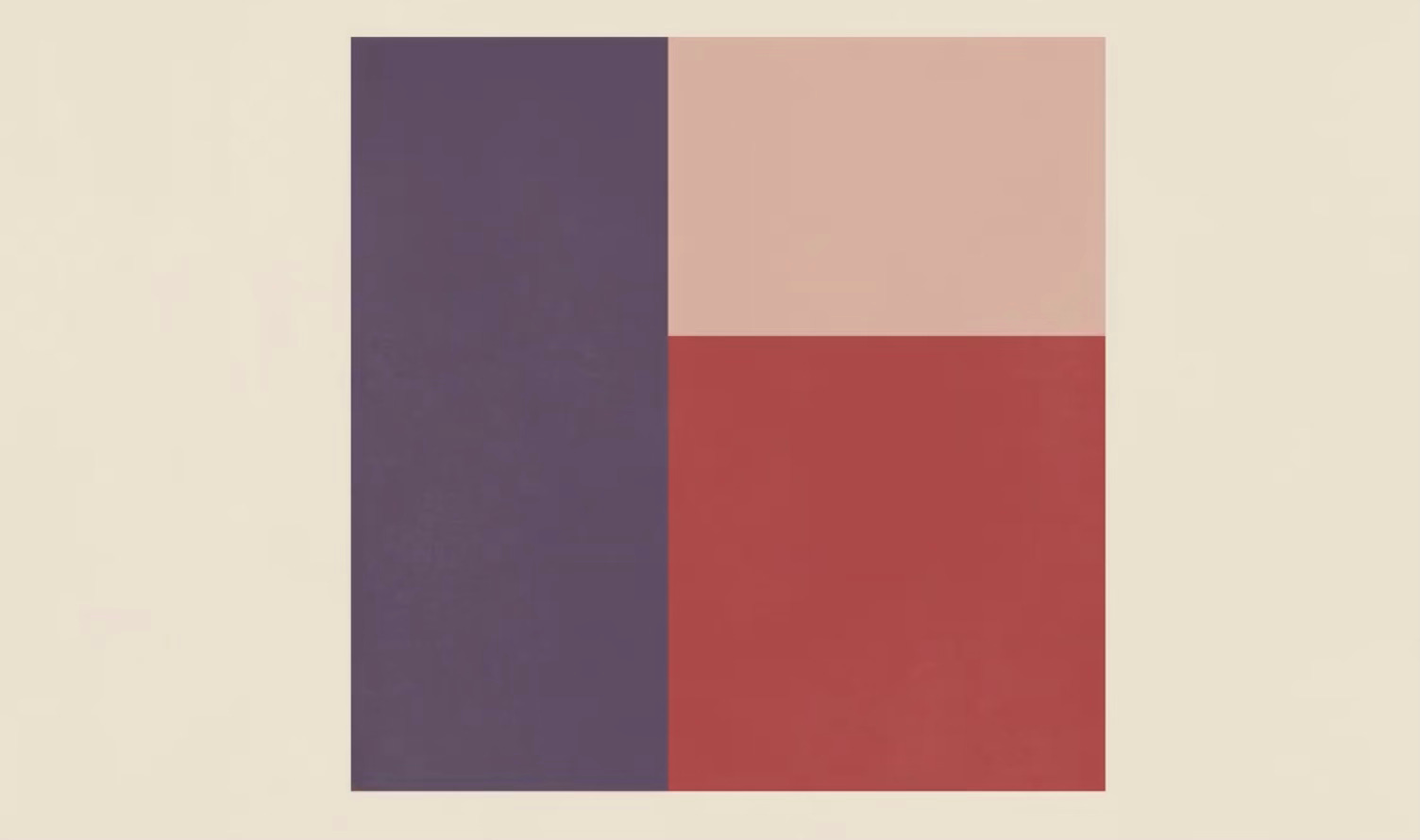
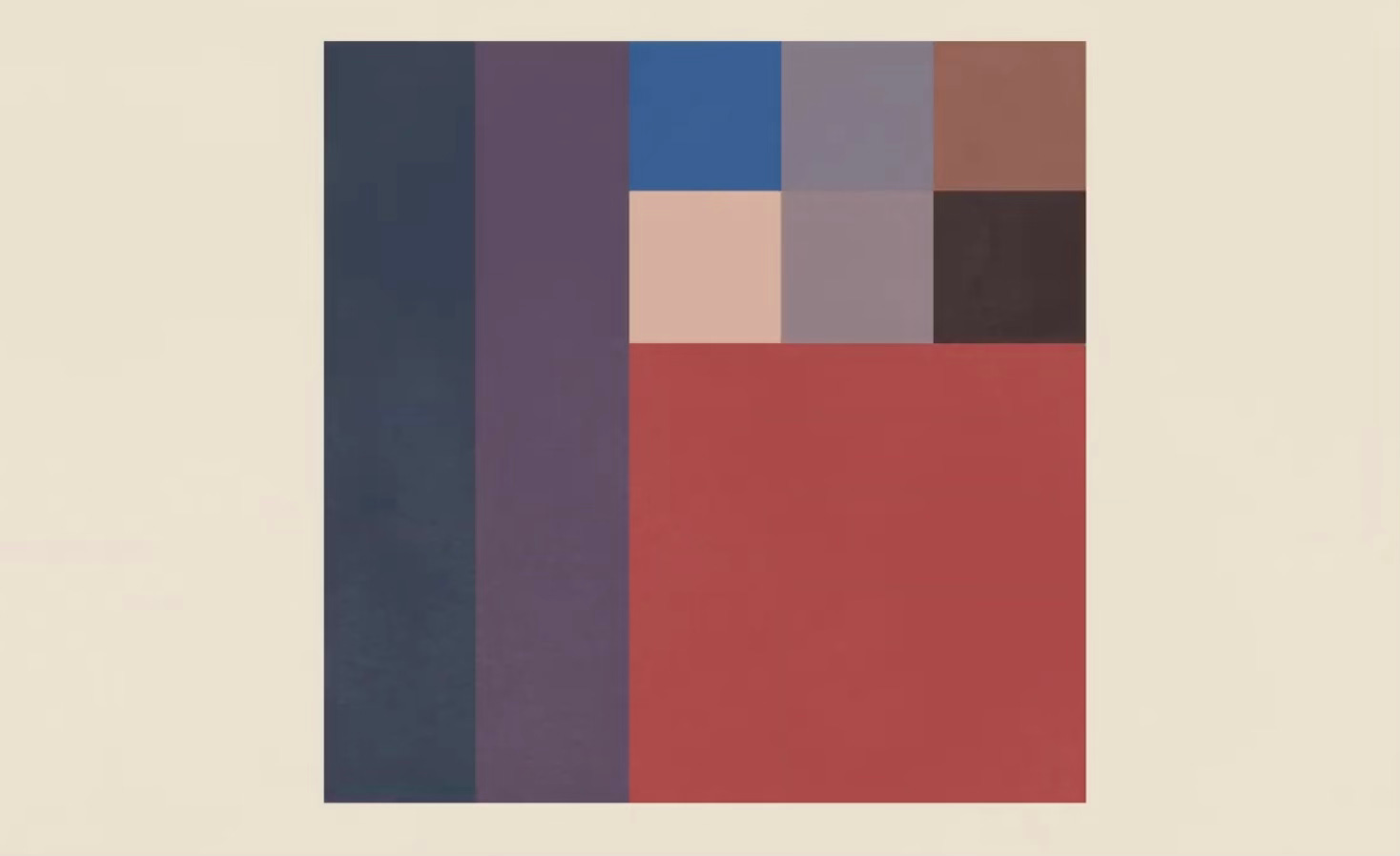
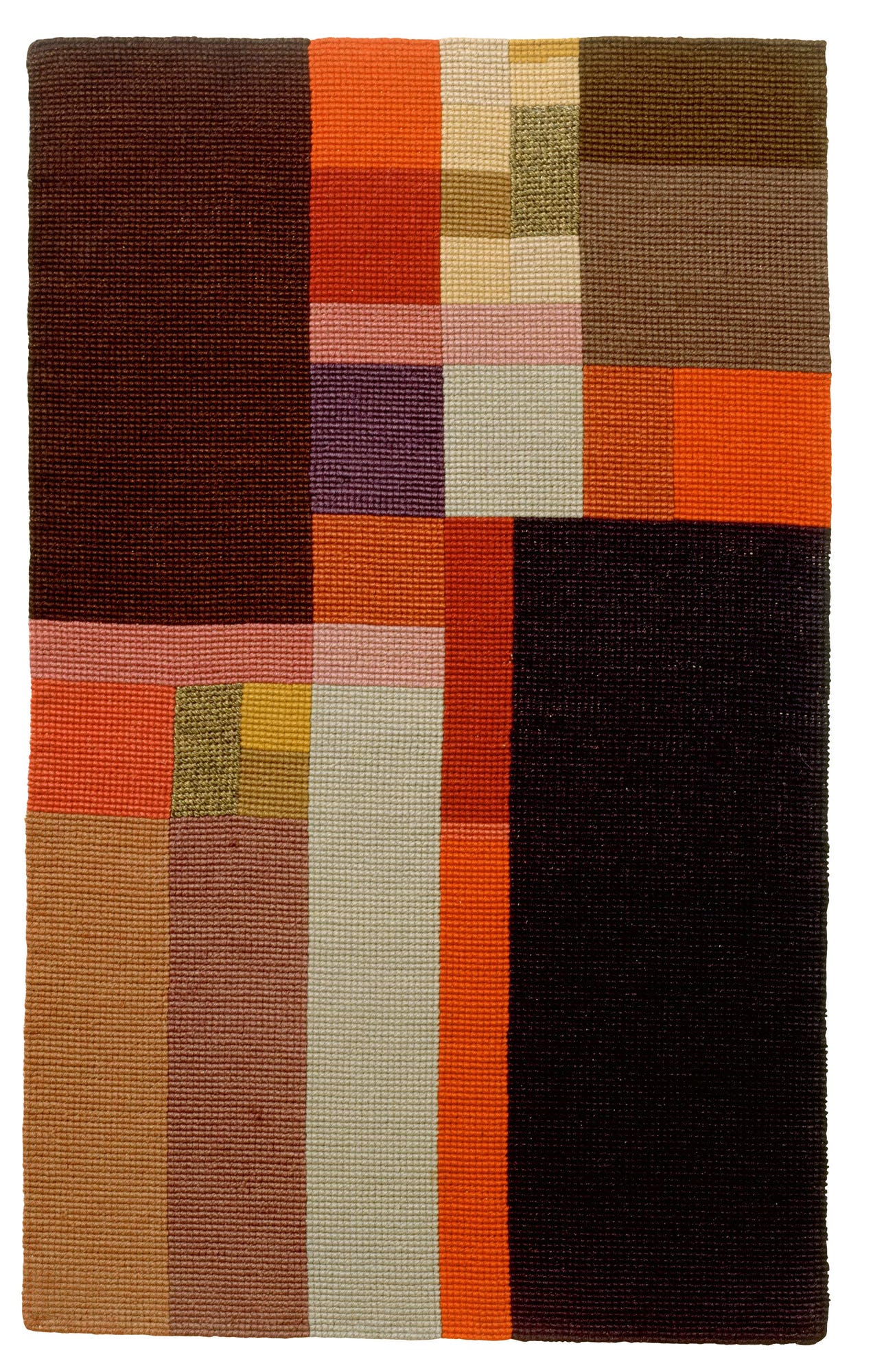
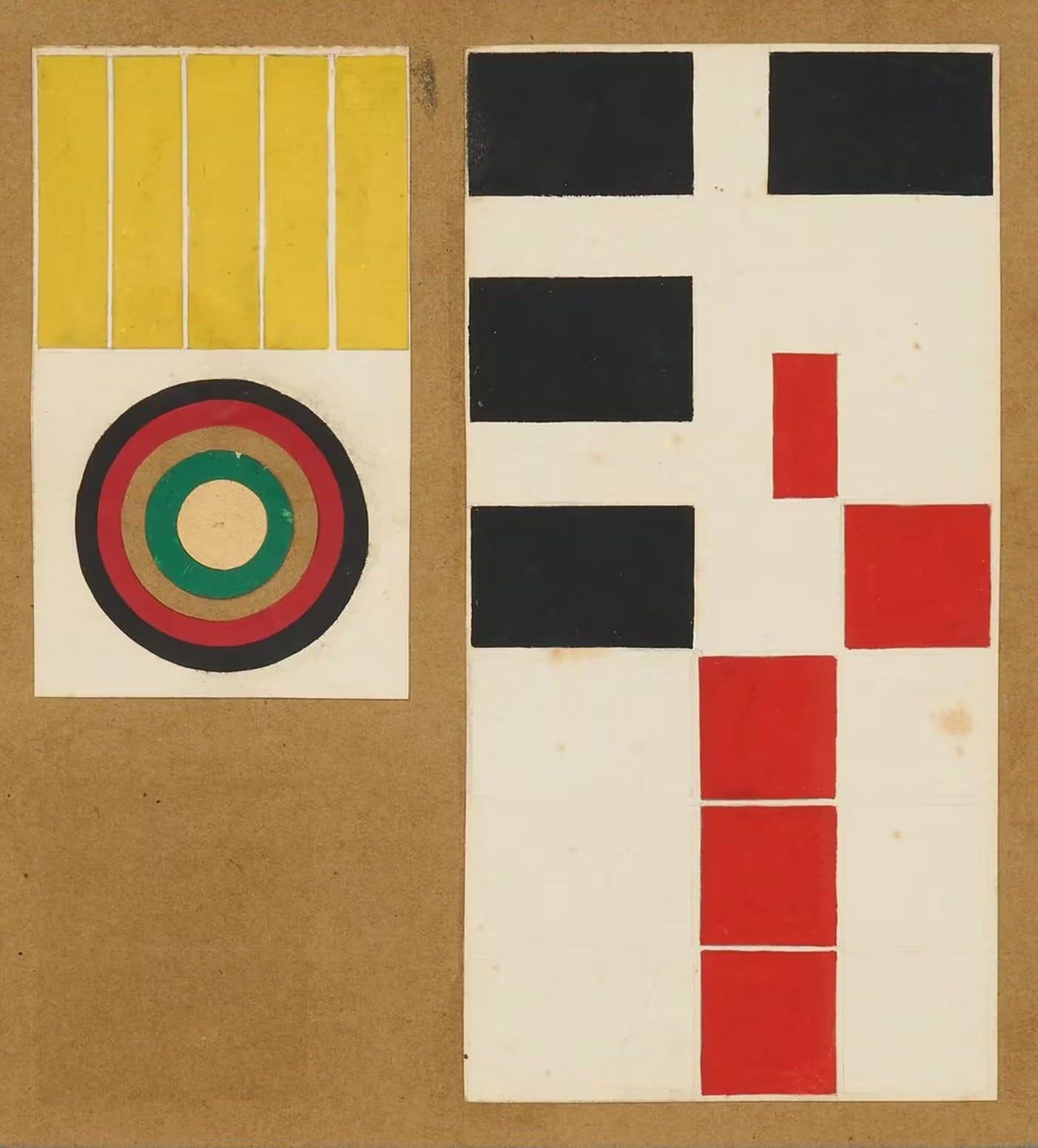
“Even then, [Sophie] already knew how to give direct and probably shape to her inner reality. In those days, this kind of art was called ‘abstract art.’ Not it is known as ‘concrete art’ for nothing is more concrete than the psychic reality it expresses. Like music this art is tangible inner reality…she was already dividing the surface of a watercolor into squares and rectangles, which she juxtaposed horizontally and perpendicularly. She constructed her paintings like a work of masonry. The colors are luminous, going from rawest yellow to deep red or blue. In some of her compositions, she introduces, at different planes, stocky and massive figures which are reminiscent of those which she would later shape into turned wood.”3
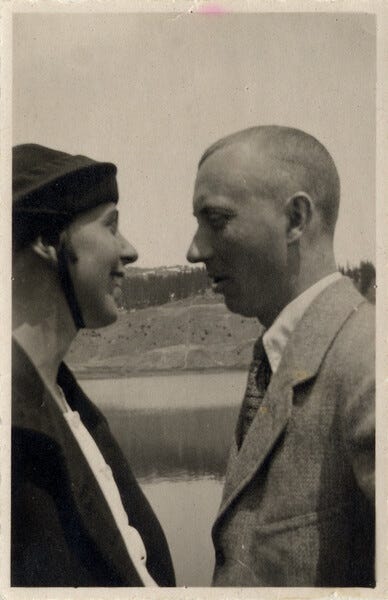
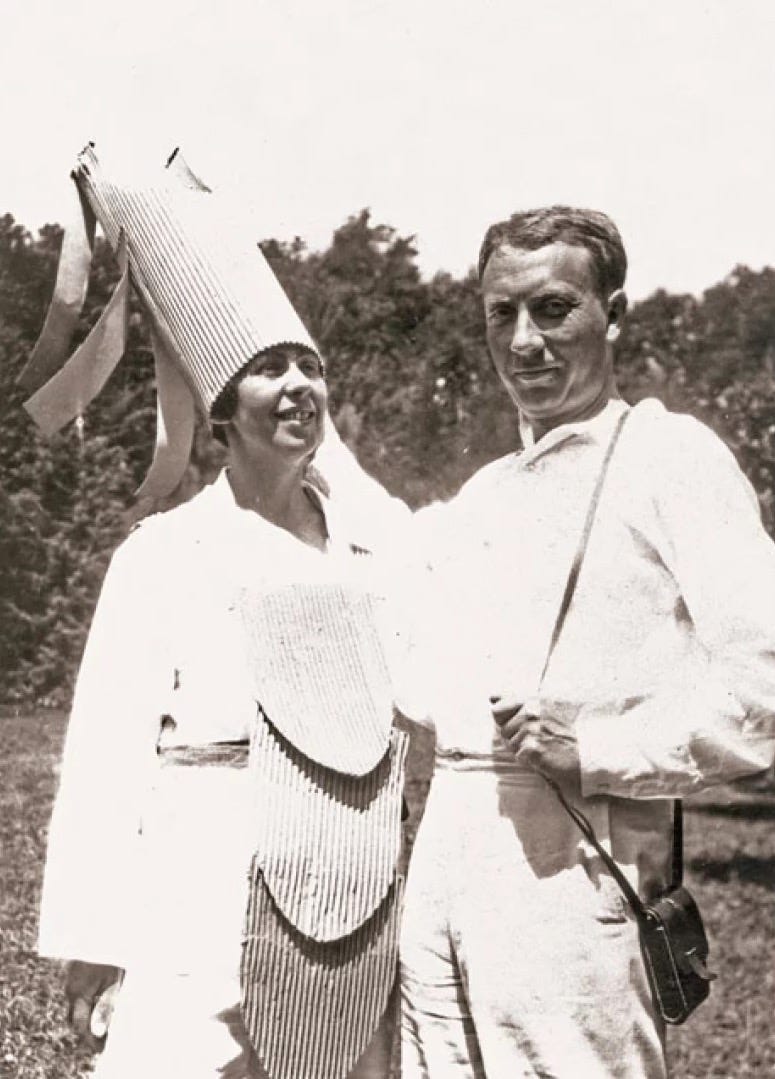
Jean recognized her talent and was able to beautifully describe it right away. Sophie soon became his wife and artistic collaborator. Just after the war ended, they quickly found their way to Paris together.
b. 19 January 1889 in Davos-Platz, Switzerland | d. 13 January 1943 in Zurich, Switzerland
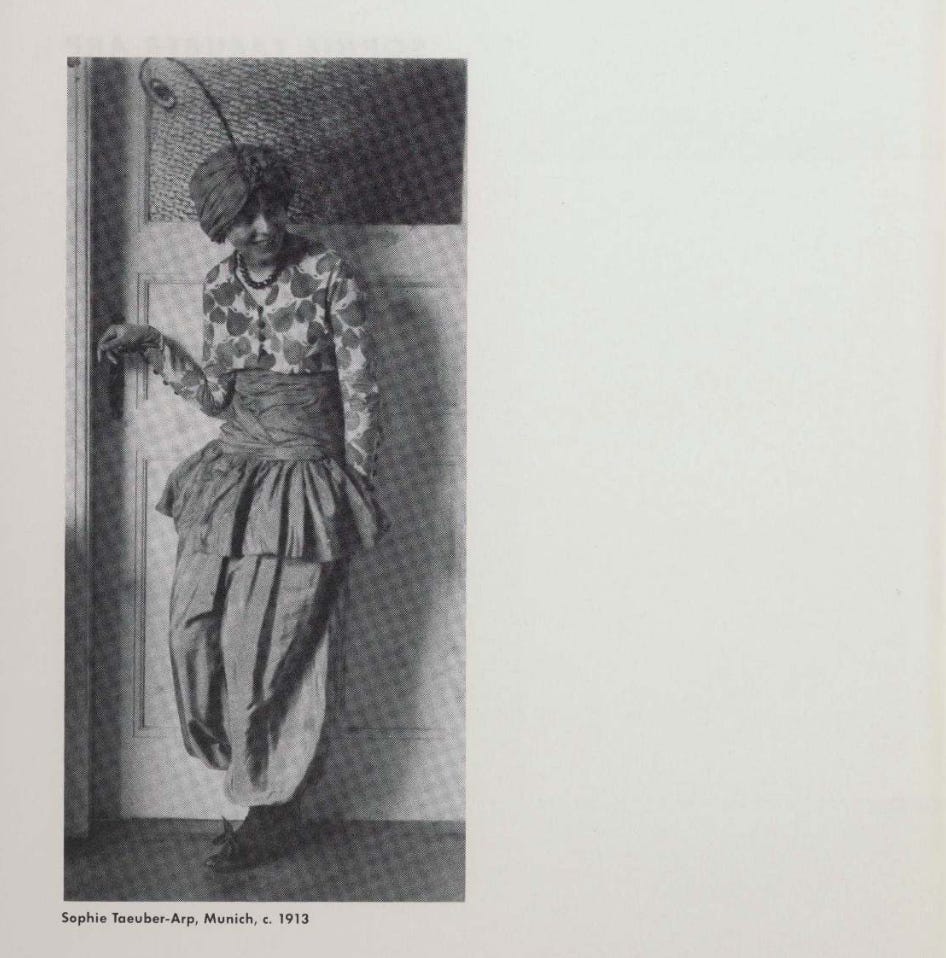
Sophie in Munich, 1913. c/o Sophie Taeuber-Arp exhibition catalog by Carolyn Lanchner for the Museum of Modern Art, 1981.
Le Centre Pompidou biographied Sophie as growing up in a family “very open to art” with an artist mother and “a feminist education.” She trained in applied arts and textiles. She moved to Zurich and began teaching weaving and embroidery, and provided training for art students at the School of Arts and Crafts in St. Gallen, in Munich, and in Hamburg at the School of Applied Arts. While teaching, she encouraged her students to radically take apart everything they were making and urged them to strip their art works back down to the basics.
Then, as a further exercise, make somewhat more complicated divisions and fill in the various fields with two of three pure colors.
You might start with a line, attempt to discover what expression you can obtain by means of different wavy or zig-zagged lines.”
Fondation Arp, responsible for upholding the legacy of the couple, writes about Sophie’s life in 1914, upon taking up her own applied arts practice and just after moving to Zurich:
[She] “paints portraits and still lives, produces artifacts (candlesticks, scarves, toys). But from the following year on, she renounces figurative subjects and makes a solitary breakthrough toward abstraction, in parallel to the movements that spring up in Russia (Malevitch), in the Netherlands (De Stijl group with Doesburg, Mondrian, and Rietveld) and in Germany (Johanes Itten).
The vertical-horizontal compositions which she starts painting during this period greatly impressed Jean Arp.”
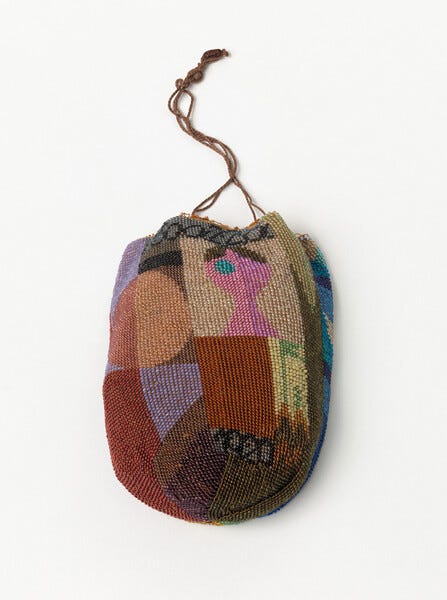
“When she began her career, she had the intent of making a name for herself as an applied artist and as a craftsperson,” shared Anne Umland, Senior Curator of MoMA’s 2022 retrospective: Sophie Taeuber-Arp: Living Abstraction. “Abstraction was always connected to an every day lived reality. [Sophie] was making objects, or designs for things to be handled and touched and manipulated. She was creating spaces for people to move about in.” What Sophie began to realize during the earliest years of her practice was that her textile weaving and embroidery could be widened into a visual language across other media.
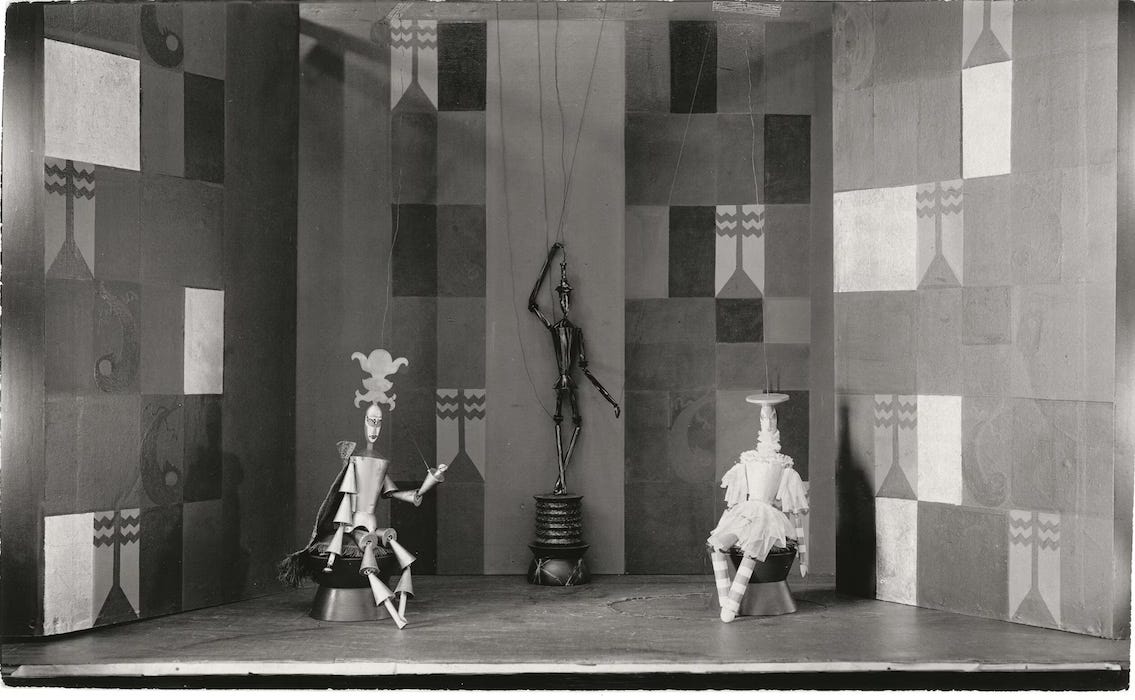
Then, she met Jean Arp—then called Hans, given that they were in Zurich—in 1915. Thanks to him, the same year, she adopted the Dada movement and her artist philosophies and methods exploded. She carved and crafted toy marionettes, costumes, and unconstrained dance performances. The rest of the decade was busied with exhibitions with the Association of Radical Artists, founding “the new life” (Das Neue Leben) group alongside Arp, and teaching.
All of this punctuated by “discreetly”—as the Centre Pompidou described it—marrying Arp in 1921.
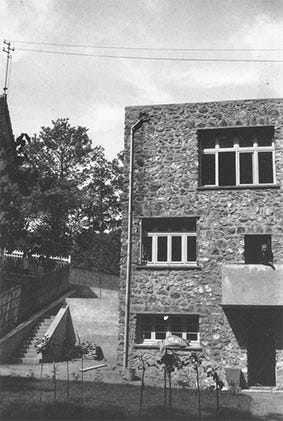
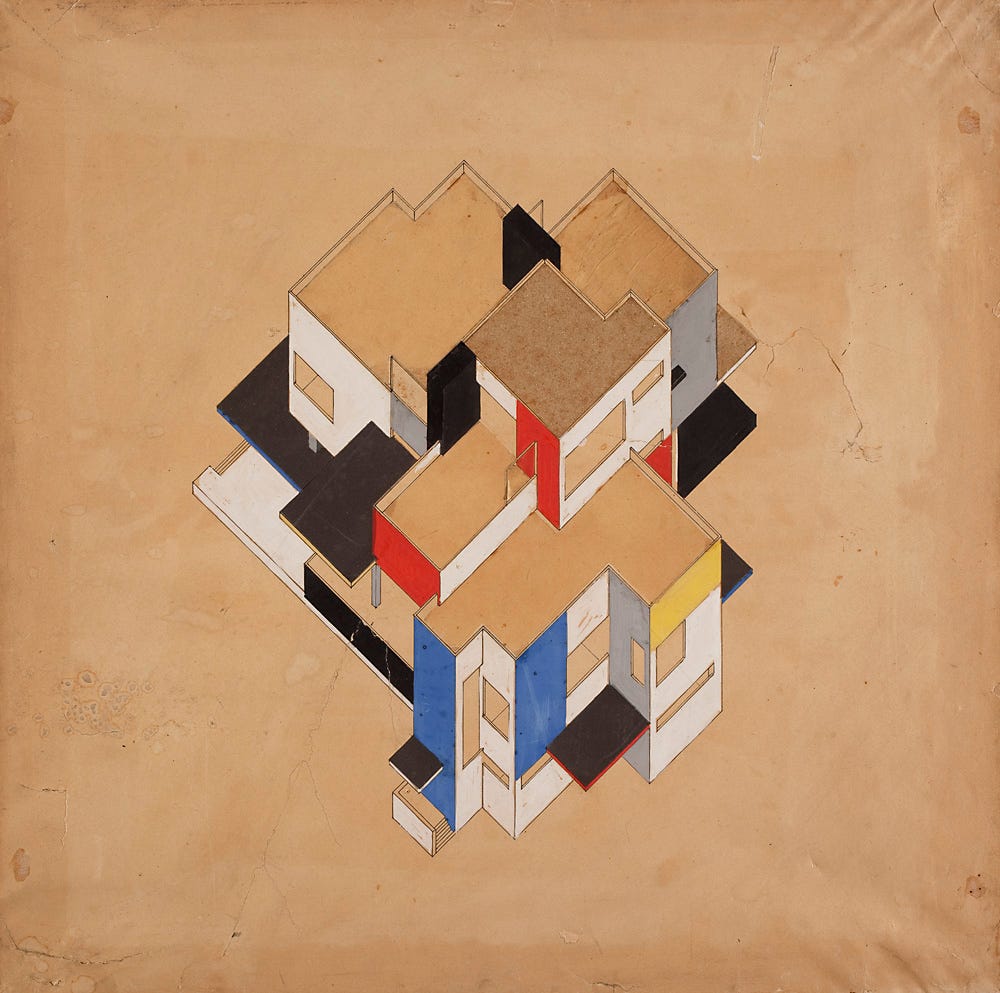
By the end of the 1920s, the Arps had taken on architectural projects, such as a home for themselves in Clamart, France, and a collaboration with Theo van Doesburg. “In 1929, Taeuber-Arp left Zurich for Paris,” MoMA claimed, “where she turned her attention to abstract paintings and painted wood reliefs that employ a reduced geometric vocabulary; these works display a tension between precision and playfulness that is characteristic of her artistic production.”
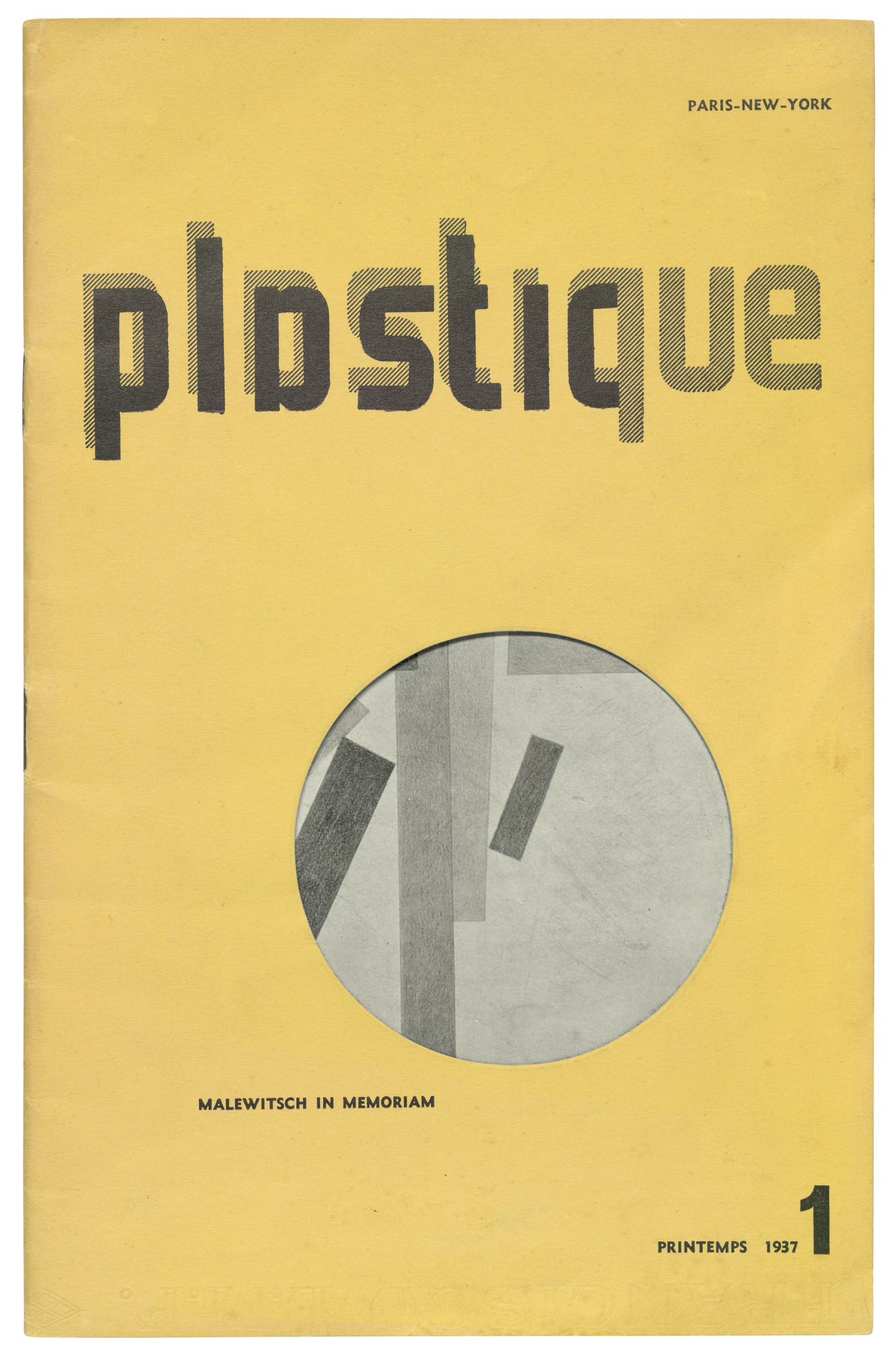
The next year, Sophie showed art in the Cercle et Carré (Circle and Square) group exhbition at Galerie 23 in Paris, in April 1930—alongside Kandinsky, Arp, Mondrian, Leger, Gropius, Le Corbusier, and others. She was featured and wrote for a magazine for the group Abstraction-Création, and helped found Plastique magazine, which was only in print from 1937-1939.
In my opinion, one of the best modern publications to ever exist!!! Plastique, c/o MoMA.
When World War II arrived, Sophie shared: “The ever more difficult struggle for survival in Europe has also caused the opponents of new art to fight ever more fiercely against us.” She lived her final years in Nazi-occupied France, still creating abstracted works for printed portfolios.
Sophie passed away suddenly at fifty-four years old from carbon monoxide poisoning while staying alone in a vacation home of her friend Max Bill—sending shock waves to all, especially her Jean.
Sophie Taeuber-Arp, Vertical-Horizontal Composition, c. 1917, c/o MoMA
Sophie Taeuber-Arp's set design for König Hirsch (The Stag King), 1918. Photography by E.Linck. All rights reserved. Fondation Arp photographic archives
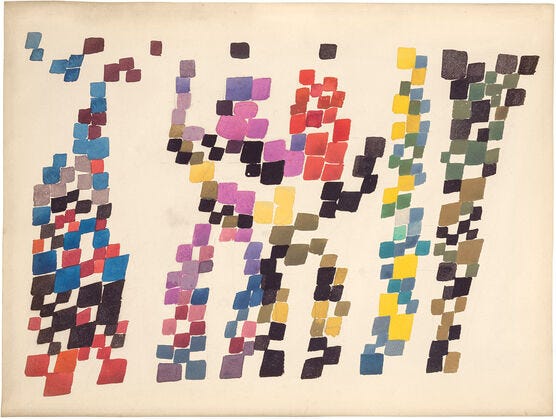
Sophie Taeuber-Arp, Quadrangular Strokes Evoking Group of Figures, 1920
Untitled (Pompadour), 1920. c/o Hauser & Wirth
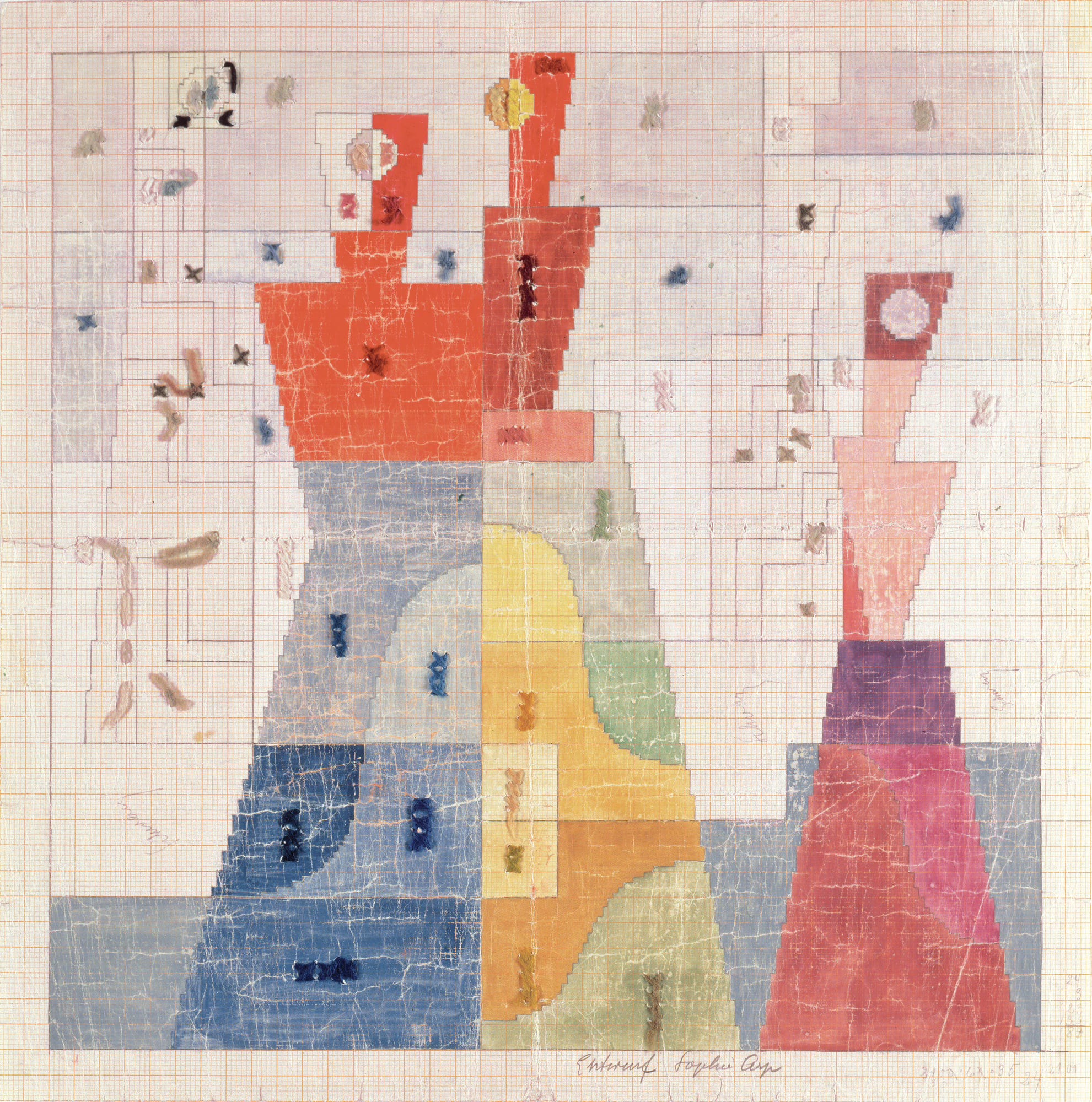
Sophie Taeuber-Arp, Design for an Embroidery, 1926. c/o MoMA
Jean Arp recalled his and Sophie’s early Zurich days together: “We humbly tried to approach the pure radiance of reality. I would like to call these works the art of silence. It (the joint work) rejects the exterior world and turns toward stillness, inner being, and reality. We wanted our works to simplify and transmute the world and make it beautiful.”5
“Well, even at the very beginning of their acquaintance, when [Jean and Sophie] met in 1915 at the Galerie Tanner in Zurich where [Jean] Arp was exhibiting drawings, tapestries and embroideries with Otto van Rees and his wife, Adya, they started working together soon thereafter. And this is evidenced by the change in [Jean] Arp’s art.
If you look at how abstractly Sophie was already working at this time, you notice how symmetries and the play with horizontals and verticals come from textile design in her work. In weaving, you have to work with the horizontal and vertical structure of the threads. Strictly geometric and abstract.
[Jean] Arp, however, had produced quite different drawings in the period between 1912 and 1915. For example, these pen-and-ink drawings he made for an edition of the Bhagavad Gita, but also the pieces he exhibited at the Moderne Bund (Modern League)—these were figurative works!
He then moved on to amorphous forms—while Sophie continued to work with these horizontal, vertical structures for quite some time. So they presumably operated as a duo right from the start.”
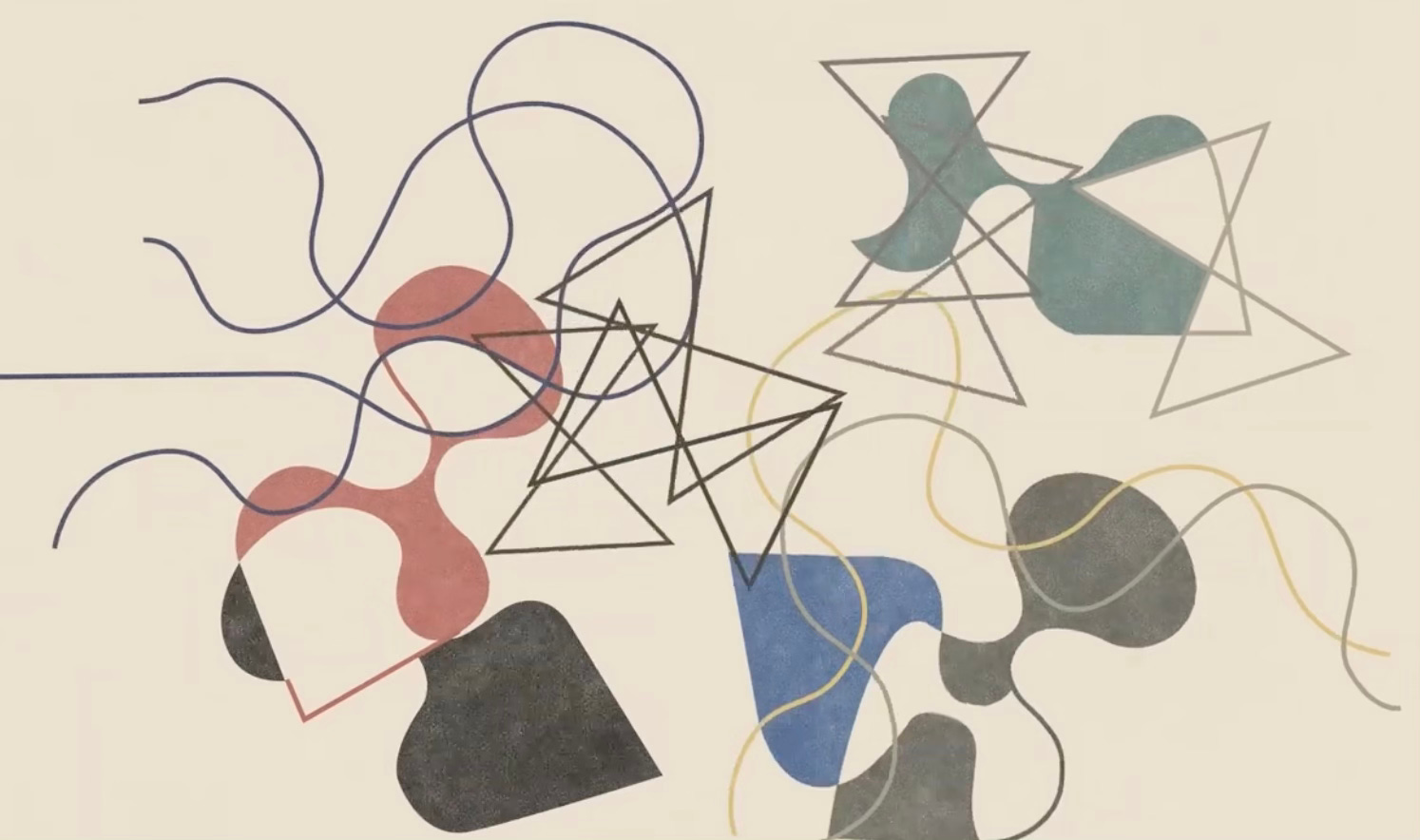
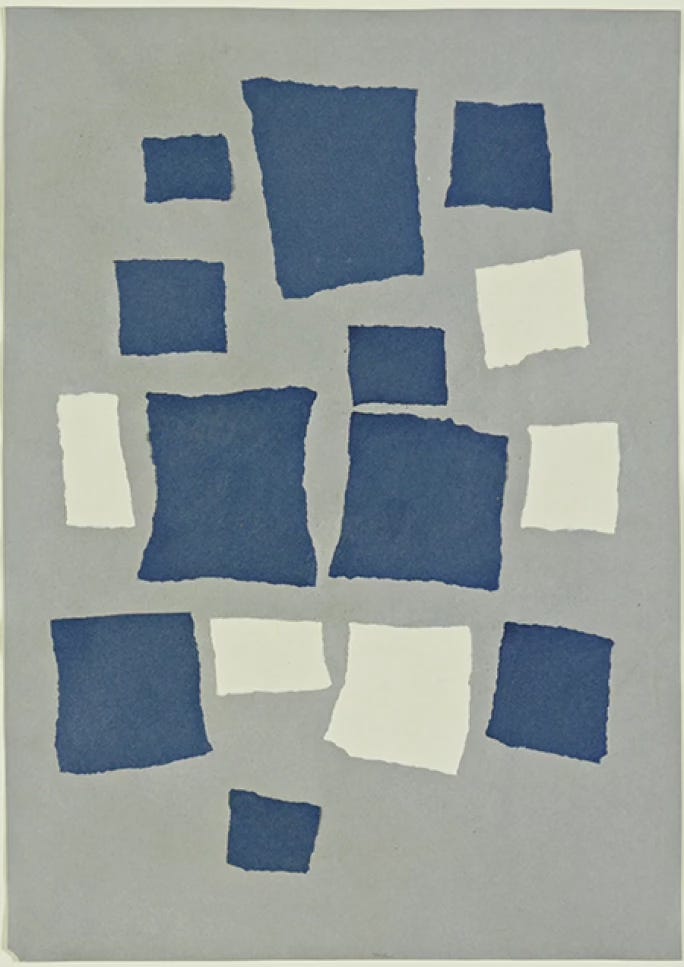
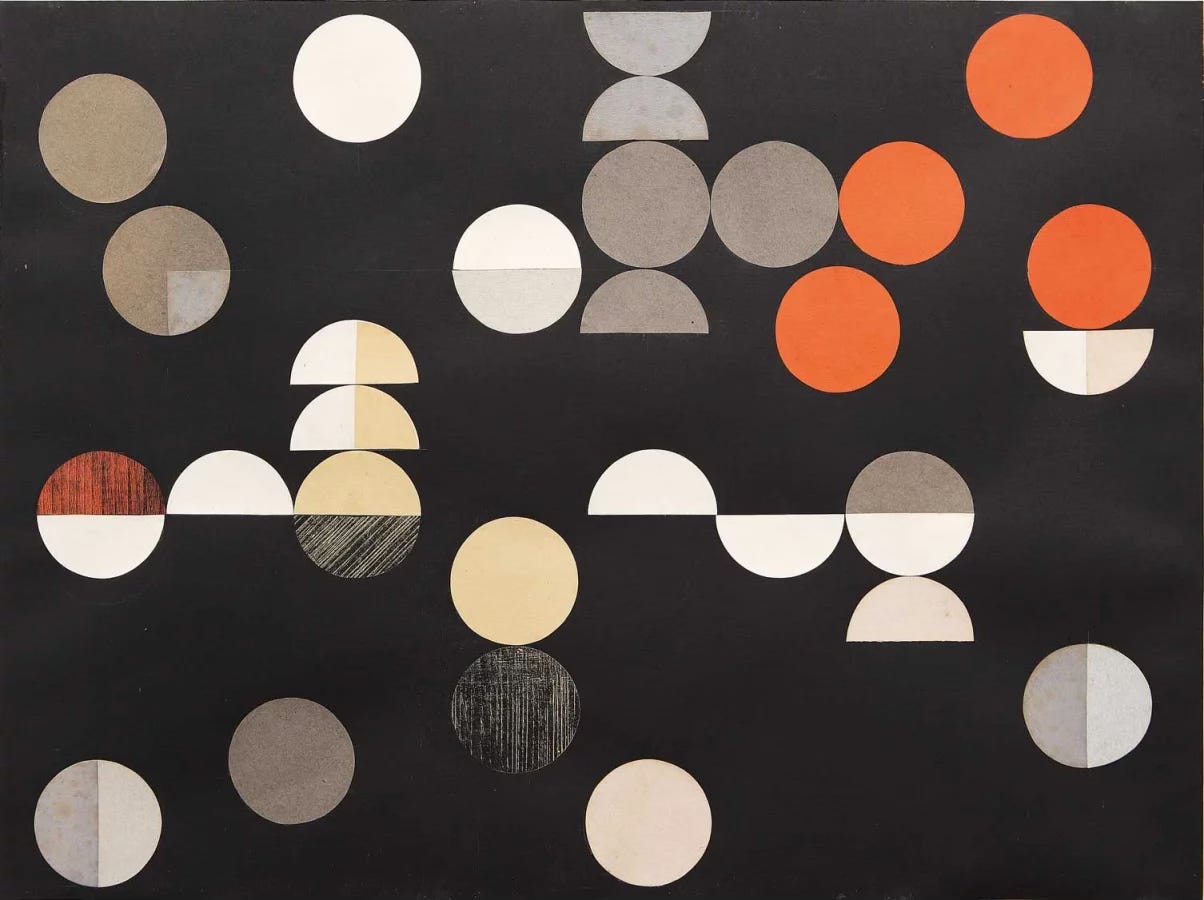
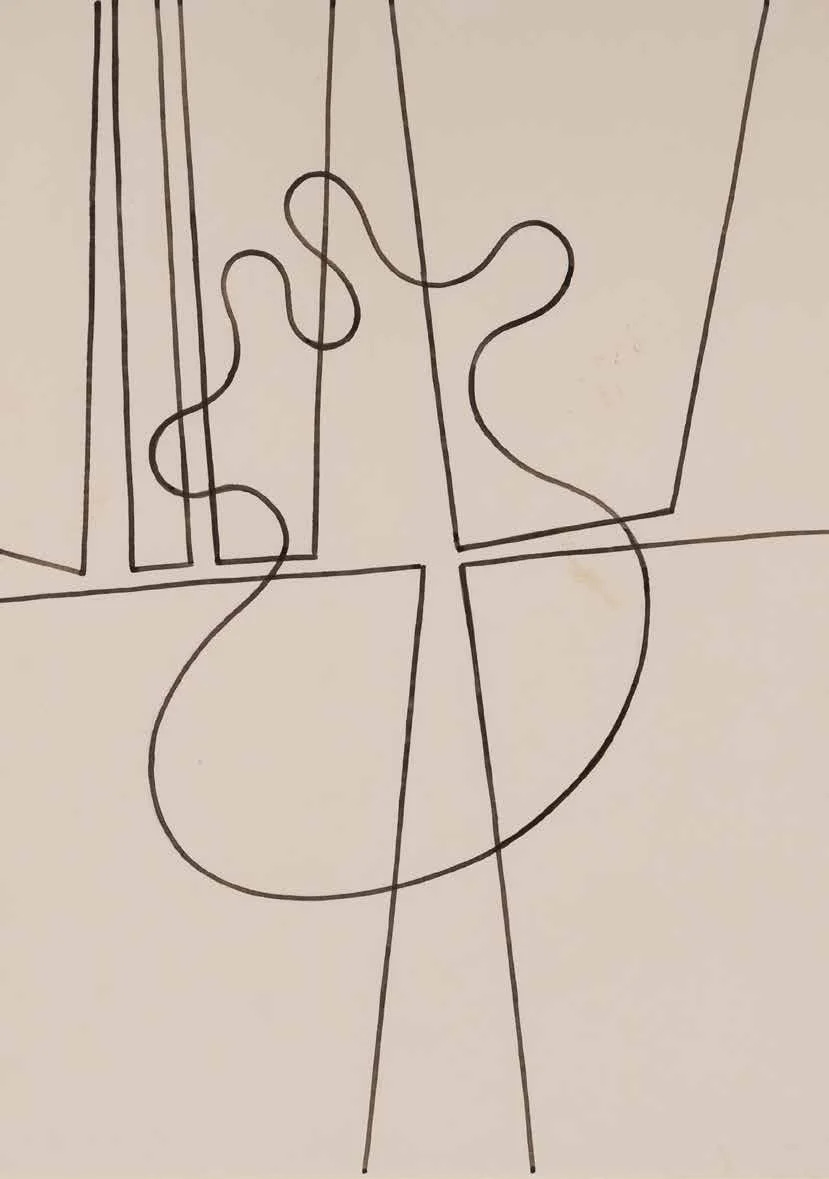
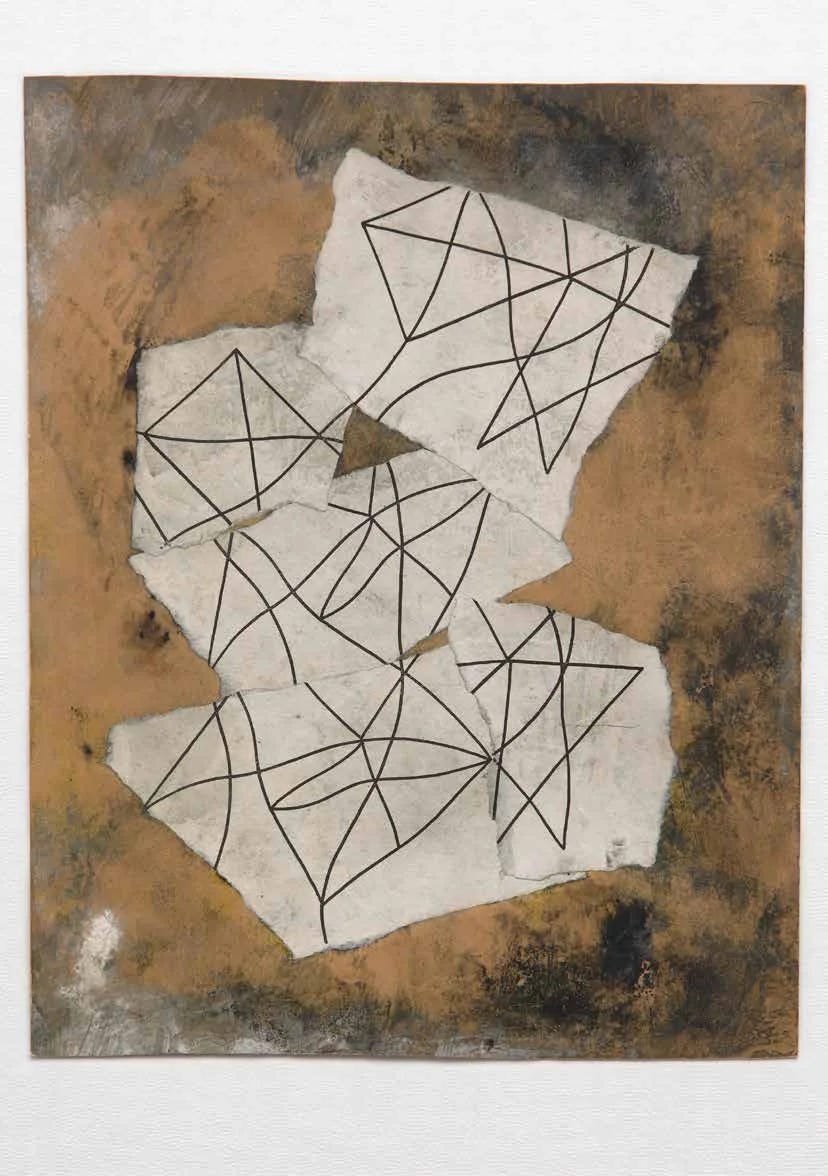
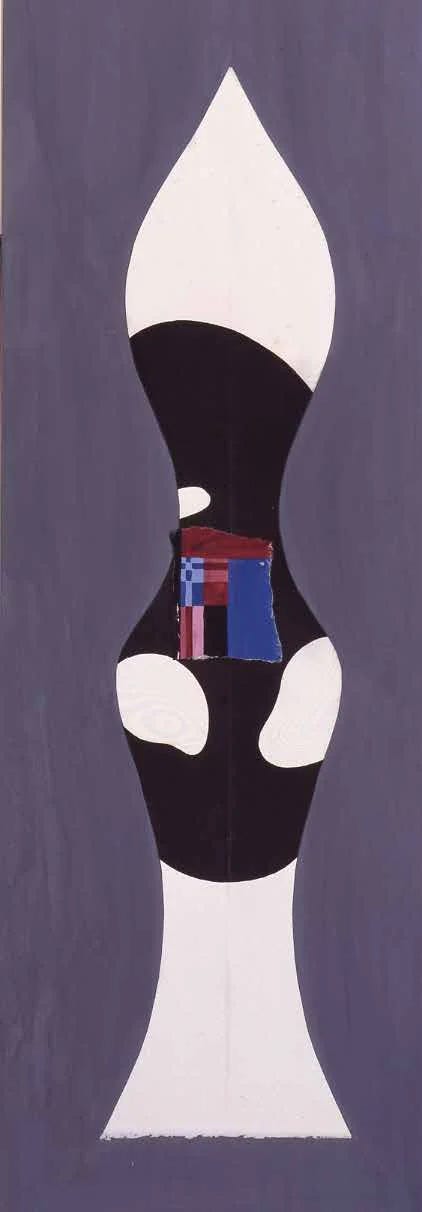
After Sophie’s loss, Jean continued to create art. What was most remarkable is that he also created works that included some of her pieces; so, their constant, entwined, beautiful, artistic collaboration never stopped. In 1939, the pair created the below line drawing together, and after Sophie passed, Jean made more drawings with collaged bits of her watercolors. What’s clear from those who admire(d) their work, is that Sophie’s art was often viewed most clearly as “geometric” and Jean more “undulating.” But, thanks to their love and partnership, they were able to become equally as geometric and undulating, together.
Baroness Hilla von Rebay became the first director of NYC’s Guggenheim Museum from 1939-1952. I’ve read she was a little nutty, but we’ll save the gossip for another time.






Comments
Nothing yet. Say the first thing.
Sign in to join the conversation.