
Sign up for workshops in Chicago, or schedule a virtual session to start or sustain your creative, meditative writing practice together. If you enjoy these pieces, consider supporting this work: shop journals and more at Odette Press, share these essays, attend a class, or upgrade to paid.

Eyes everywhere speak to green of the seeing leaves. Green, thick, waxy, steady leaves formed to the shape of mouths. Tendrils grow; a succulent stretches out across humid air, growing steadily along the wall by the window, draped as if arms in midair, reaching. A plant is a silent conversation, speaking the language of time, showing us the story of root, stem, form, increment, shape, and I watch as light pink flowers form, eager in their budding ready.
From the bell of their umbel, in the coming days, the flowers, from within their promising space will emerge, formed to stars, radiant clusters of pink expanding out. For now they rest, growing wider, coalescing into five sided-petals, deepening in blush pink with each wave of humidity. Grown often from points that constellate across the southern hemisphere, these vines speak of ease, and I watch the slow, steady increments of a wax plant as it emerges in the growing heat of this Chicago apartment. Time stretches flowers from stubs of stem into the delicate stem and blush tendrils; touch them, when brittle and dry, with too much emphasis, and they may cascade down, a whole cluster of pink flowers strewn out across the ground like sky’s firework, or last waves of autumn leaves.
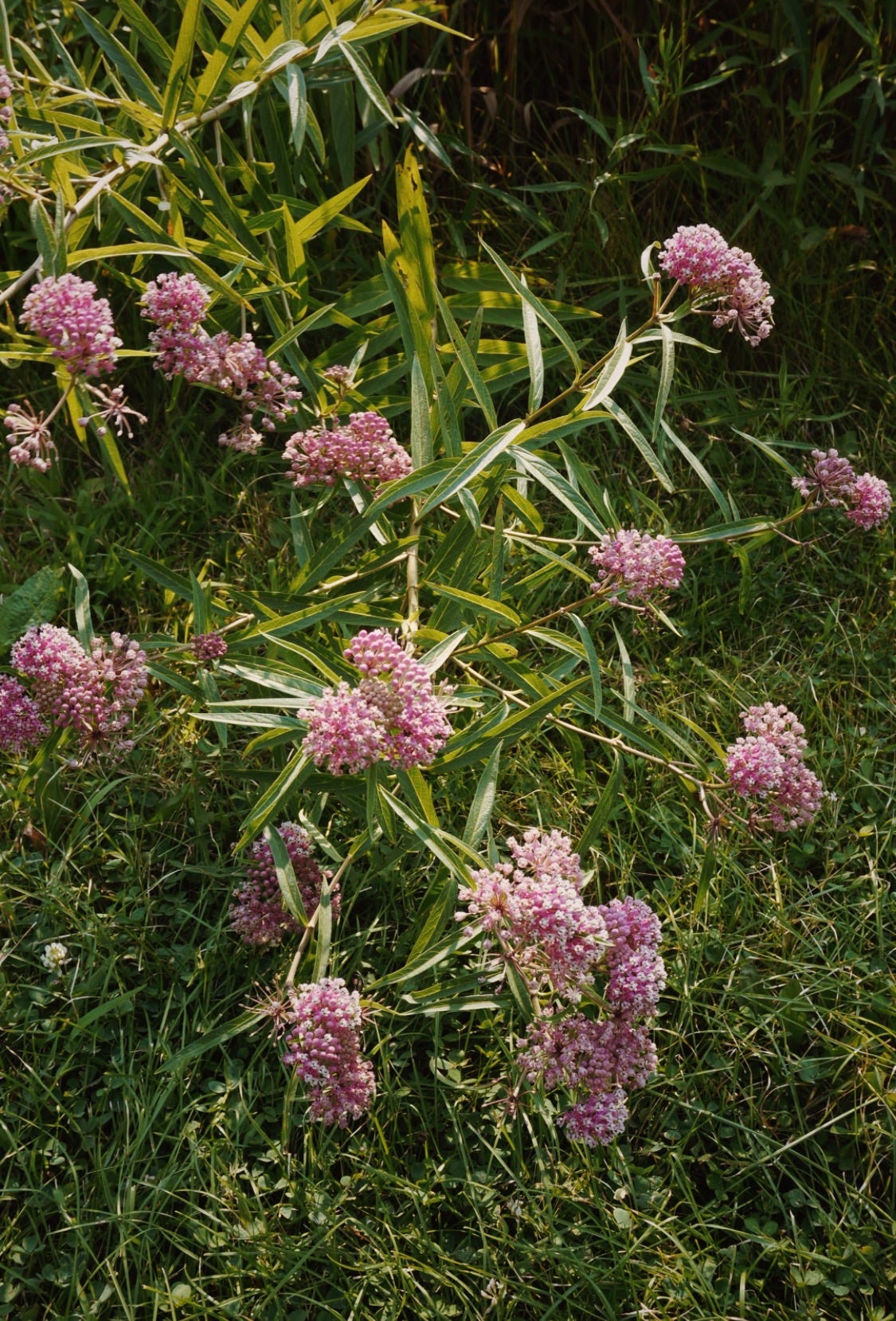
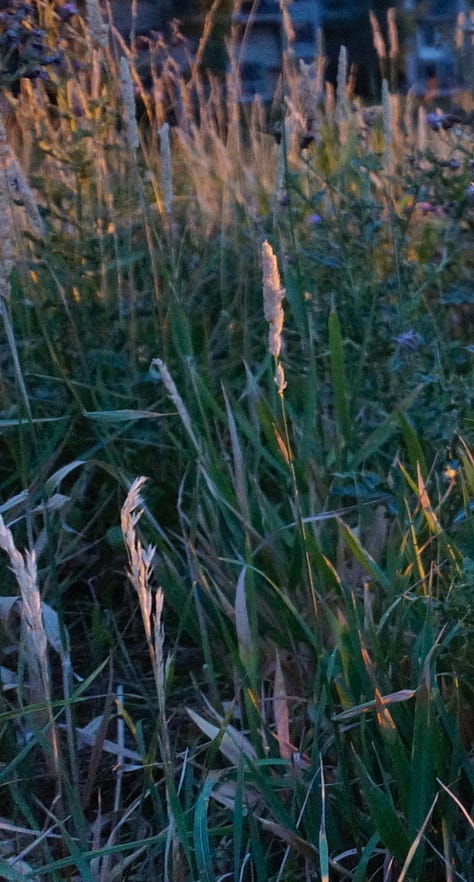
Eventually the shock of flowers come. Eventually the hand of thought opens1, and you, like the flower, may spill out from your home. In Chicago, you follow the train, converse in converging of streets, follow along contours of trails tucked beside sand dunes and lake waves of Montrose Beach. There, you greet the compression of earth, trailing sights and sounds, and move slow along the looped, paved path. Hear the quick wing of barn swallows confer among oak, walnut, deciduous alongside calls of cardinals, and the whole canopied song of the red-winged blackbirds, and you will find—there, along the edges of the grass-lined path, where smooth bromegrass sway in gusts of wind—another start of wonder: the pink star forms of milkweed in bloom, vital to the bright tangerine of the monarch, who sail, like boats seen far off in the lakeshore’s distance, coasting their wings on gusts of wind.
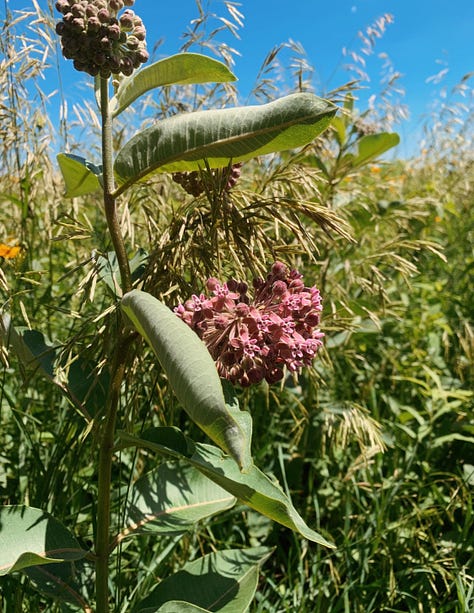
Asclepias, or milkweed, like hoya carnosa or the vining wax plant, procures clusters of five petaled flowers in deep roses, reds, and pinks, as if their own starlight. Converging out and up and down from the stem bloom this inflorescence, and as the flowers mature, they emerge, extending a central floral up through the five petals, the first flush bending back to open as if hands or arms reaching up and back. Here I wonder: are they not marvels of earth, same as stars, flashes of light, clusters of gases that make up nights overhead?
To see milkweed is a sign of possibility, and a glimpse of their tender orange wings is a signal of monarch’s endurance and survival; that each arrive here, alive, and sway on milkweed in this June in Chicago means the monarch survived and emerged from its chrysalis state. Heat, over time, may encourage a monarch to metamorphosis faster, may drive caterpillars to devour more intensely from the thick of milkweed leaves, and maybe the agitation of heat and sun that come thick in the summer months dissolve us out of our own rigidity and into opening in each season that follows. Later, the monarch may fly, either the shorter distance to California, or take the longer, astonishing flight, traveling three thousand miles south to Mexico.
Land your eyes and gaze lightly, and come to gaze now as if arriving to the swaying grass, your body breathing, pushed by itself, and the wind. Astonishing: all starlight and eyelash thin wind of a monarch’s wing, and the tendrils of flowers like stars, and your heartbeat. This, and the distance across which monarchs will make their way, later, past the humid summer, throughout the migrating season. How long a monarch lives depends on how late it is born in the year; some live only two to six weeks, while those who survive, and emerge to live in late summer, may live exponentially longer It is this wave of monarchs—the later summer generation, those tasked with overwintering—that will embody the journey of migrating, taking to the span of time and skies stretching out across the sometimes three thousand-mile long task of migration across their six to nine month lifespan.
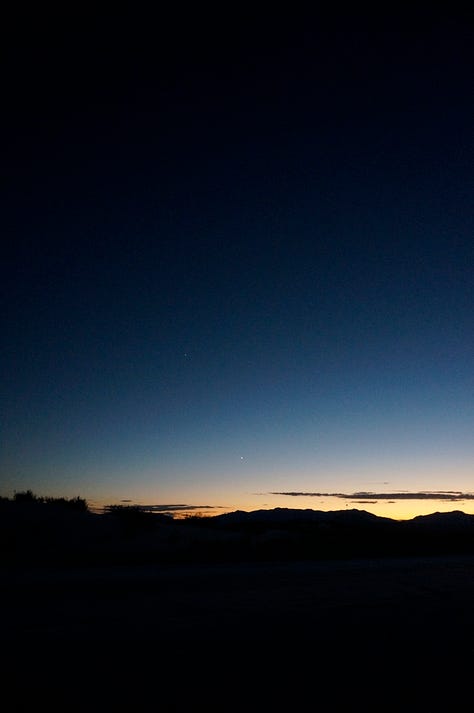
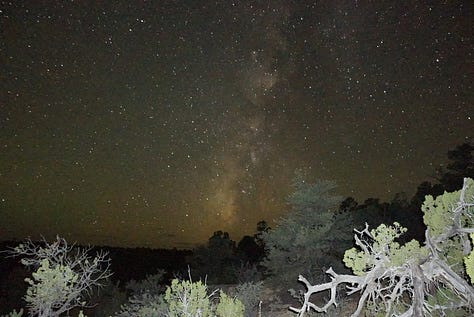
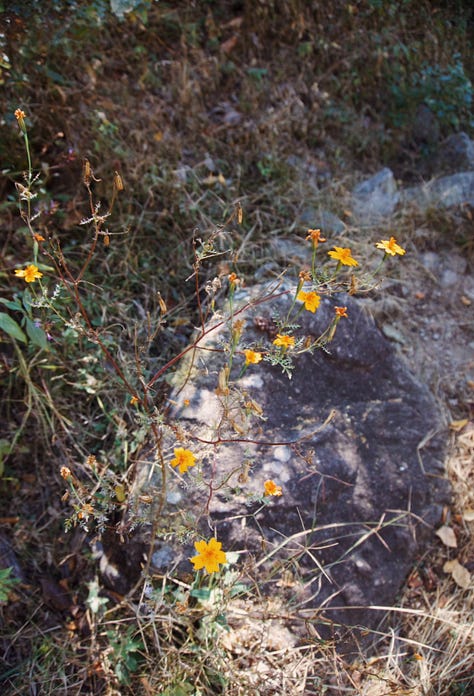
Where do you travel, and what do you see, hear, and feel as you look up, look out, down, or feel your way out across brighter nights, into the earth of you or life, or the deep night of time? The distance of starlight travels to our late night eyes, infusing deep nights with wonder, same as the sight of a great distance, a seed formed to bloom from stem, or the bright spark of a marigold monarch wing.
To glimpse stars in the night sky we extend our gazes up, and the chest opens, a radiant flower, heart of the front body, bringing us to converse with our spines, making a landscape terrain of our converging shoulder blades. To go beyond earth is to expand to consider sky, or else return into the intricate landscape that is this life. Yet it is this planet, this moment, this environment that has yielded, encouraged, and provided for life: people, hands, and streets, flowers in the ground and our growing foods, the pulsing matter of our living and breathing bodies, all green stems up from earth, or the subtle wind of a monarch wings, and the spectacle of night sky. To glimpse milkweed, monarch, or flower, is a way of both tuning, and turning in to a tethering closeness, and the deep night of distance.
Consider the shape of life: flowers, bodies, minds, or eons of stars’ light, or the wind of wings. Note the glimpse of yellow and the way the squash grow nearby, or how flower heads avail to us their color form, offering the peach white soft, or deep red-orange opening of the lilies, their hues textures shaped to cups, ringing out in sight like a bell. Or the hydrangea as they ready themselves green, first, then white, the thick shape of their cloud-like forms. Absent any sound, all provide the explosive quiet spark of time, matter, and landscape, arriving us to now, bringing forth in sight a burst of astonishment, more enduring and sustaining than the sight and sound of firework, all sulfur, disturbance, and atmosphere of urgency. Instead, from the ground of life, silence and light and shape form.
Trace the breath in body as if it is a shoreline, and you notice the terrain of thinking. A gripped thought is a knot or a hand, or a plant, maybe, on the verge of expanding. And as we breathe and move, or slow to notice and still, we watch as time and the coax of warmth encourage the hand to open. Tune in, and notice the now of living. See how your own spine is a stem tucked in to the ground of living. Bend back, and open the front of you to quiet astonishment of city, idea, each other, starlight.
Reading Memories, Dreams, Reflections by Carl Jung. Last week, I spoke with Dylan Michael Julian about the nature of journaling, that showing up for writing becomes a way for tending to the earth yourself. Watch the replay here, and bring a journal, and a pen. Nourishing backbends; drinking cooled infusions of hibiscus.
A bow here to Kōshō Uchiyama Roshi, and Opening the Hand of Thought
No posts
Comments
Nothing yet. Say the first thing.
Sign in to join the conversation.