
You might recognize “On the Nature of Daylight” by Max Richter from the closing scene of Hamnet.
I love deconstructing fiction to analyze how the different parts of the narrative — POV, character, setting, narrative mode, etc. — work in concert to tell a story, but I do not have the chops to do this with music. I enjoy music, but I rarely think deeply about it.
However, I have been obsessed with “On the Nature of Daylight” since I took a class on Sunday with Alina Stefanescu at CWC. So much so that I decided to delve into the mechanics. What is so compelling about this piece? After all, for the first two minutes, not much happens.
The chords, I learned from Chris at Implied Music, are quite conventional, and perhaps that’s the main reason it appeals to nonmusicians like me—this composition is as easily accessible and moving as a Mary Oliver poem; probably one of the reasons it has been featured in so many films: Than Fiction (2006), Shutter Island (2010), Jiro Dreams of Sushi (2011), Disconnect (2012), Sherpa (2015), Arrival (2016), Togo (2019), Eastenders (2020), The Handmaid’s Tale (2021), The Last of Us (2023).
Listening to it, I was reminded of Aram Saroyan’s famous poem Lighght, and at first I couldn’t figure out why it had come to mind.
Here it is:

What an irritating poem. It makes no sense. It’s silly.
But then again, who decided light was the right word? How arbitrary language is! And how can any word convey the concept of light? Perhaps the silent consonants ghgh actually embody the illusion of light spreading.
Back to “On the Nature of Daylight.”
The repetition in the first two minutes is risky, and patience is required. If you are still on board at the two-minute mark, you are invested. You clearly believe something will happen soon. Or at least I do.
Staying on location as we engage with art requires either getting something out of the experience from the get-go or believing we soon will. And if we are required to steep too long in anticipation, we might have to beat back the irritation or unease.
After all, what if, after all that time, the artist lets us down?
In the official video of “On the Nature of Daylight,” Elisabeth Moss from The Handmaid’s Tale simply walks around a city looking disgruntled.
That’s it. She walks.
And as she walked, I grew increasingly disconcerted. She must be headed somewhere!
And then, at the end of the video, Moss faces a staircase. Impossible! A staircase at the end of an epic six-minute journey. It feels like she has been walking for eons because of the shifts in the lighght.
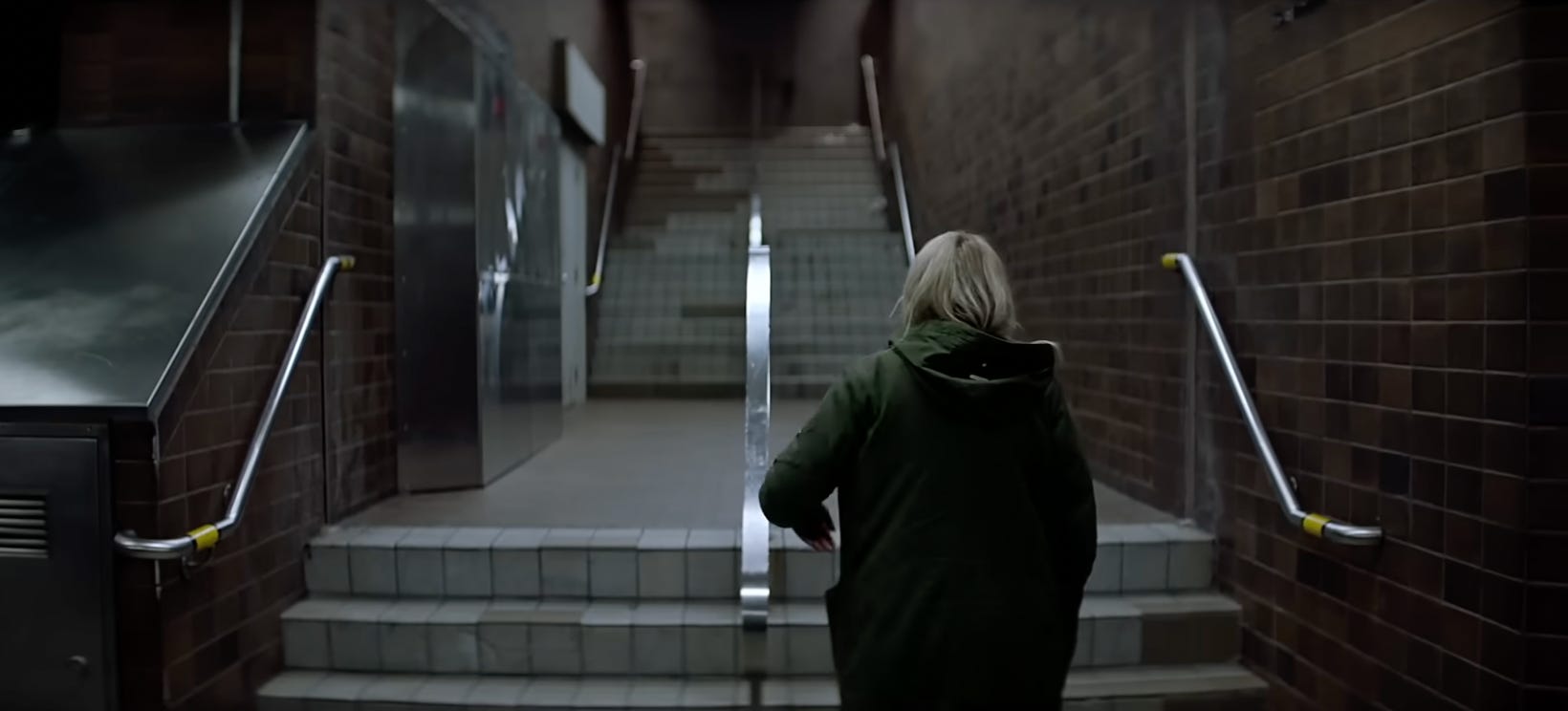
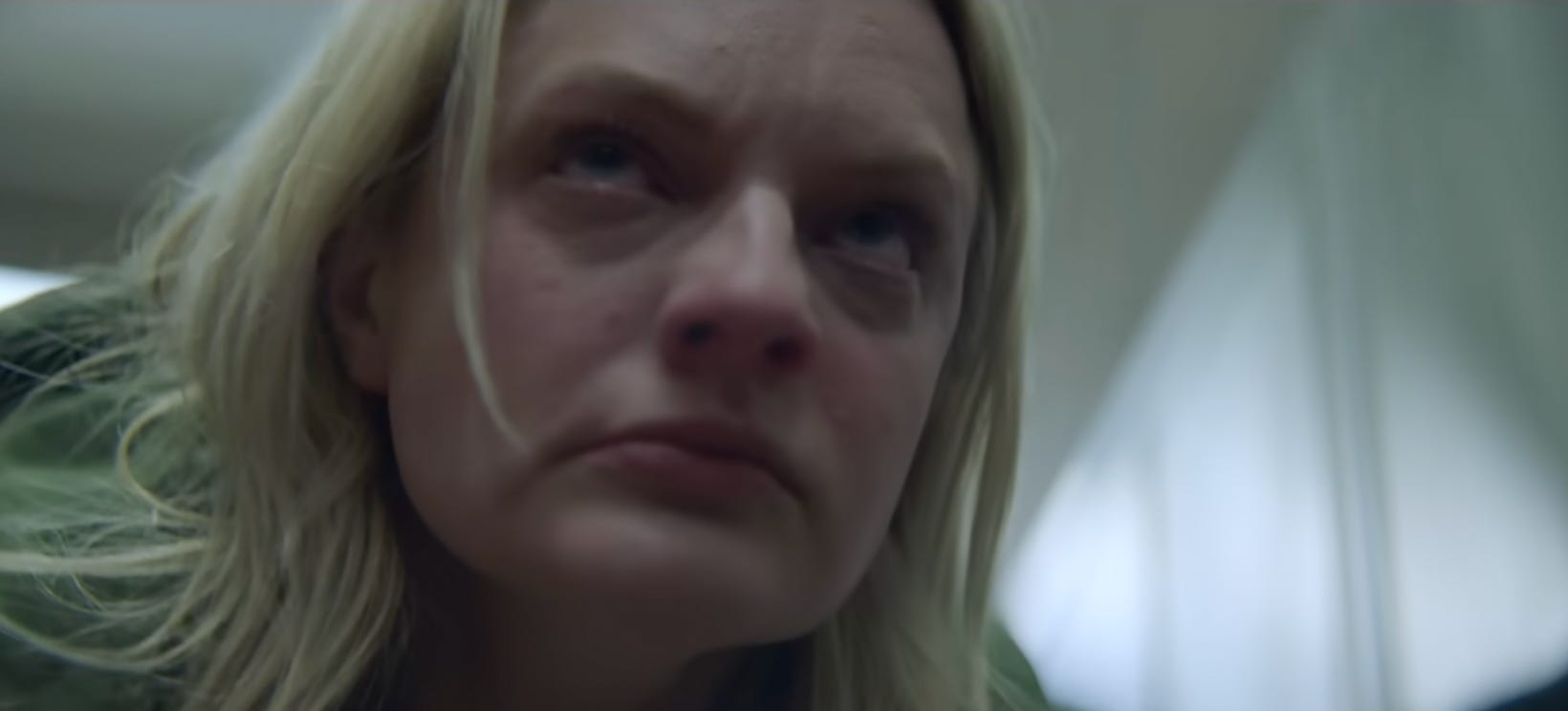
How can someone who has traveled so far possibly make it up the stairs? She cries when she sees it. But then she stops crying, and she gets that determined look you have likely seen if you are a fan of The Handmaid’s Tale.
Grimly, she ascends. One step at a time.
As writers, we rarely have the opportunity to produce anything that feels symphonic. We are in our rooms, hitting the same note over and over. But we, too, are trying to create tension and produce a feeling that resonates.
Sometimes it feels like there is no audience; no reason for it.
And now I’m thinking of Virginia Giuffre and her testimony and the testimony of all the other Epstein survivors. How they have been sending their words out into the world for decades, and how, because of that long, never-ending slog, they have formed a chorus. I would be hard-pressed to name any of the survivors except for Virginia Giuffre. They are The Epstein Survivors. They are in sync. They are telling the same story over and over again; the chords are repeating, the tension is rising.
Something is coming.
Each testimony is part of the accrual, the accumulation. Their voices are mounting, creating a powerful but simple exhortation, and that feeling couldn’t be created without each and every one of them.
In “On the Nature of Daylight,” the notes hold on and sustain us through the downbeat, so we get a sense of the propulsion even as we are plunged into some dark moments, and if we think about that as writers (or perhaps as survivors), perhaps we will not just “realize” but actually “feel” that our own individual note is essential.
After I watched the “On the Nature of Daylight” video, I checked out some of the comments below it and read this one:
5/3/2026
“I’m listening to this sad music now while I’m on duty at the hospital in Iraq. The security situation is unstable at the moment, and I expect the coming days may be worse amid the war involving Iran and the region. I hope these difficult days will end soon.” @hmarz3272
***
lighghghghghghghghghghghghghghghghght
***
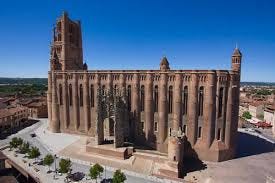
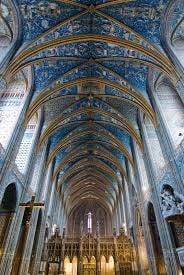
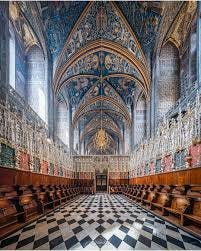
We journeyed to Albi over the weekend and visited the Cathedral of Saint Cecilia, a massive brick structure that resembles a fortress on the outside but is actually one of the most beautiful churches I have ever seen. Construction began in 1282 and took 200 years. It is a UNESCO World Heritage Site and claims to be the largest brick building in the world. My pictures didn’t do it justice, so I am dropping in a few official ones below.
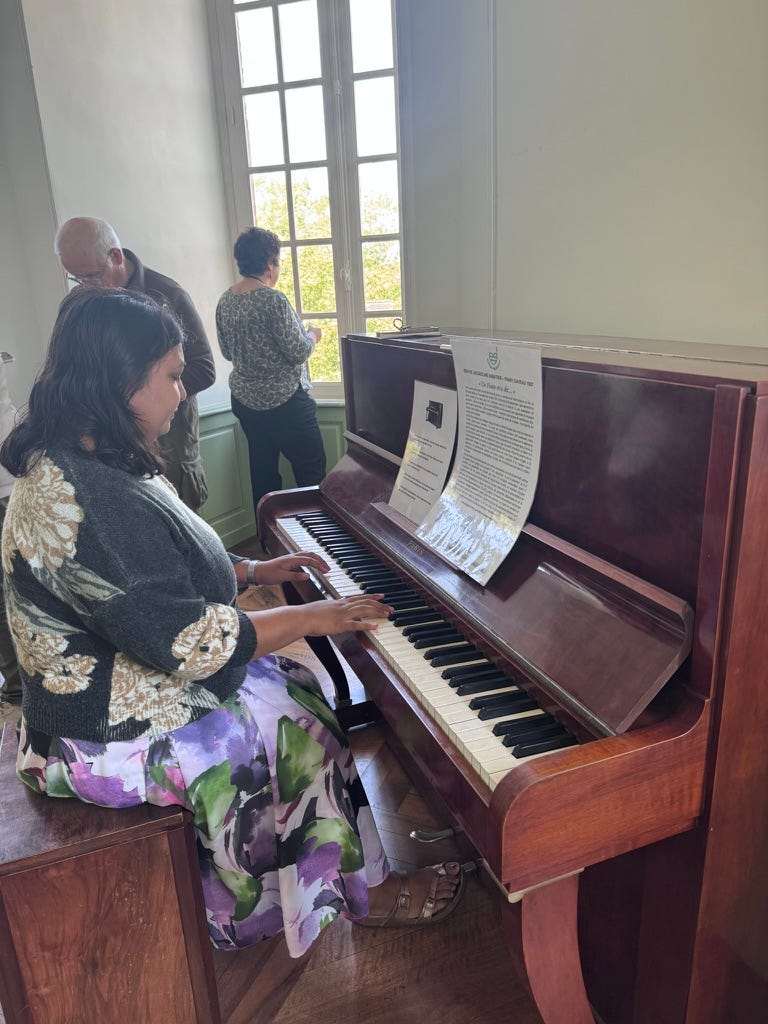
The Toulouse-Latrec Museum was less inspiring, mostly because the famous posters were all facsimiles of his work. Apparently, the posters are too delicate to display, but Moulin a Nef fellow, Pritha Bhattacharyya did get to play the piano while we were there.
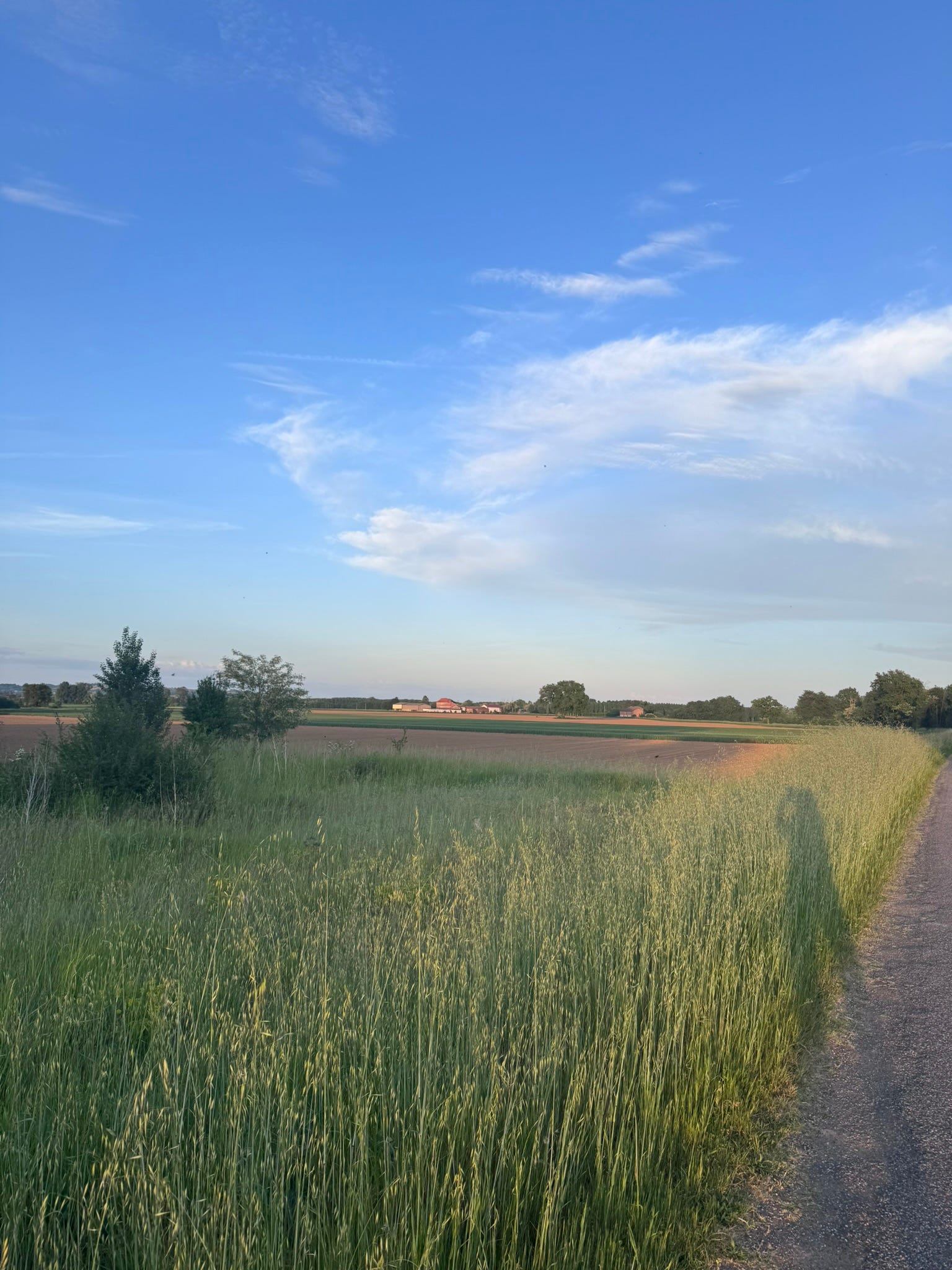
Aside from that, we have just been writing here in France. Writing and writing.
Le temps est magnifique et parfait pour la marche.
Comments
Nothing yet. Say the first thing.
Sign in to join the conversation.