
Hello dear reader:
I find the idea of nature journaling pretty intimidating. Nature journals tend to be filled with beautifully and accurately drawn flowers and bird species—often accompanied by elegantly lettered dates, locations, latinate terminology, serious scientific information, and deep thoughts.
So when I was invited to give a workshop on “nature notebooks” for a local park district a while back, I was excited but I was also concerned. My so-called nature notebooks tend to feature inaccurate drawings of birds, usually in the act of attacking me. And my accompanying text is mostly a narration of said attacks:
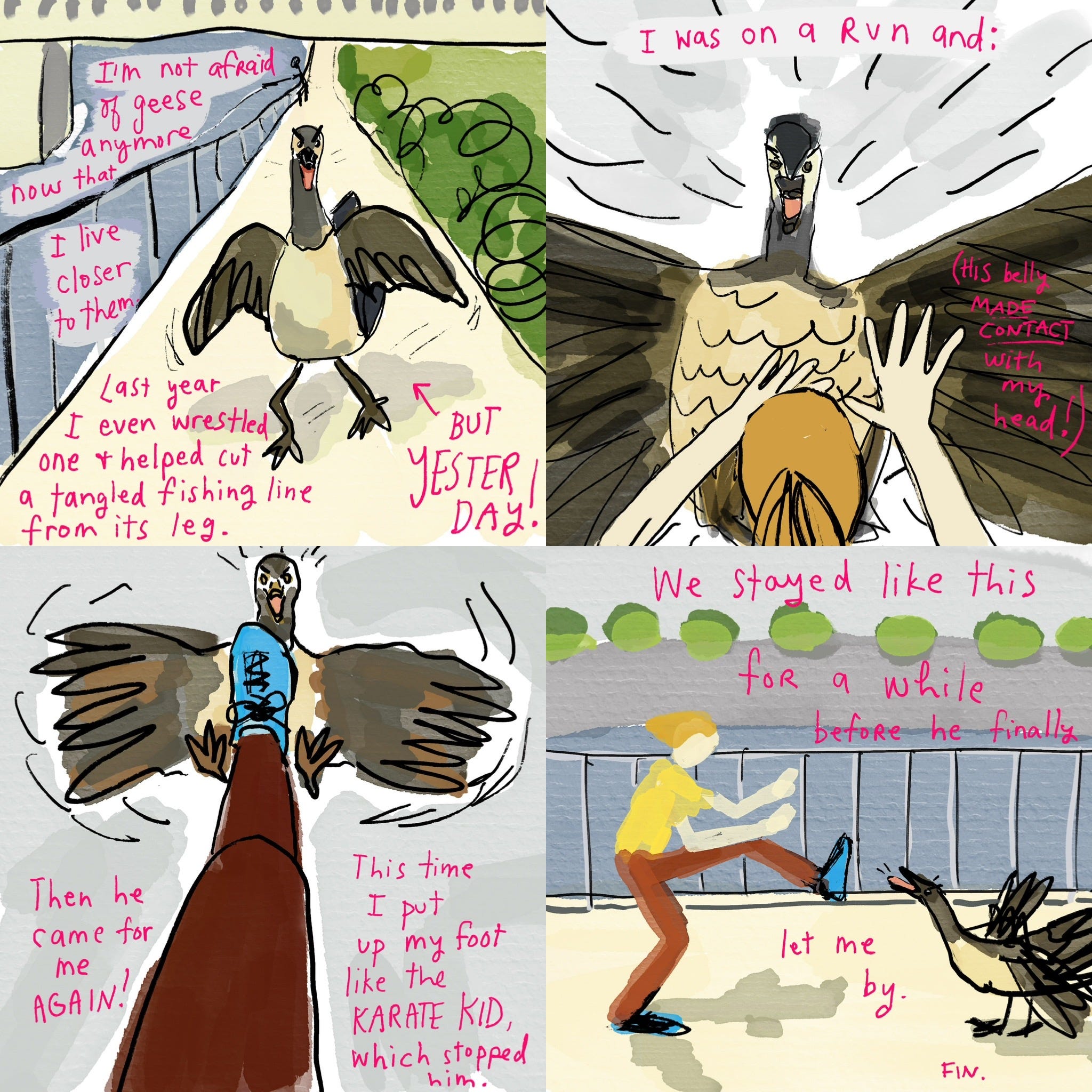
In other words, my nature journals are . . . comics.
Which means they are less about information gathering and more about storytelling.
And they are are created for an audience, not for my personal reference or my scientific investigation, as many nature journals seem to be.
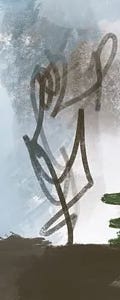
Nature journals are often very serious and reverent about nature, while I just want to tell you about the time a bird shat on me in Prague. And nature journal illustrations are so technical and detailed, whereas here is a tree I drew:
But I LOVE writing and drawing about nature.
In my last post I wrote about making single-panel diary comics based on something I saw, heard, did, or thought that day. And I realized how many of my daily life comics are focused on nature. (And that not all of them are single-panel.) So I decided to make this separate post about them.
So if you’re like me and have a love-hate relationship with either nature or drawing, here are some approaches I’ve taken to writing and drawing about nature with the tools of comics—and without the intimidation of nature journaling.
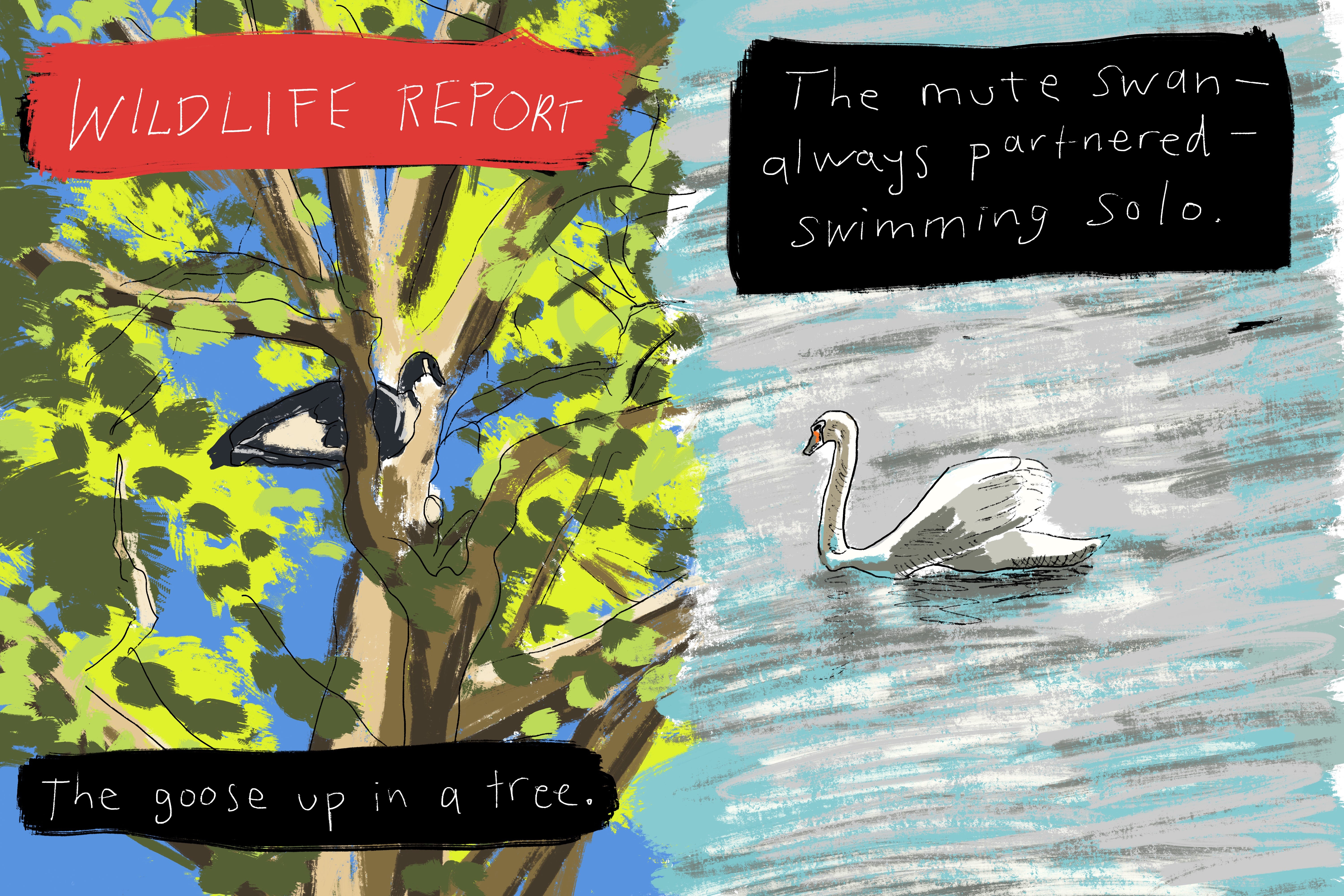
Starting with the principle of paying attention, I document what I see:
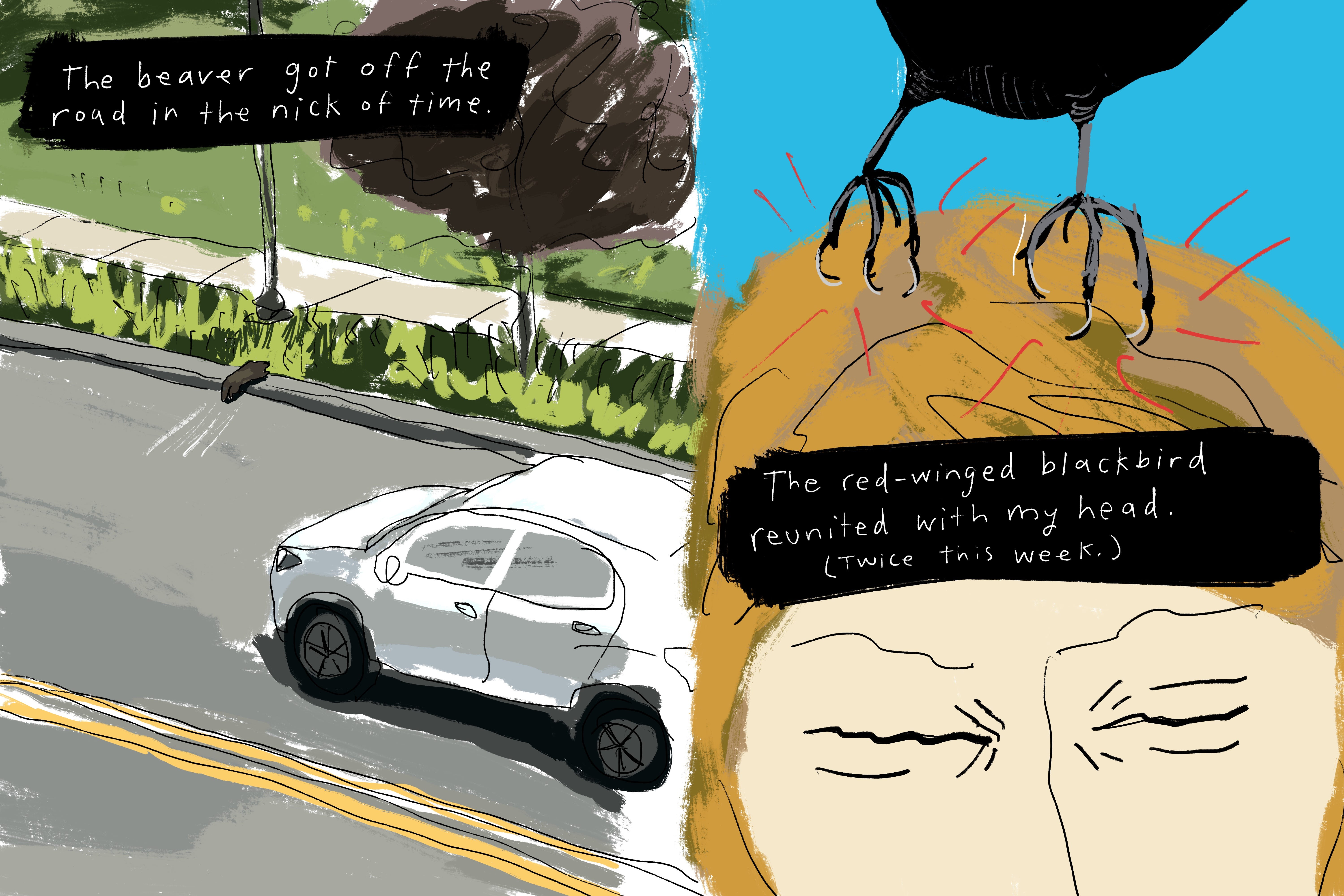
And what I’d rather not see:
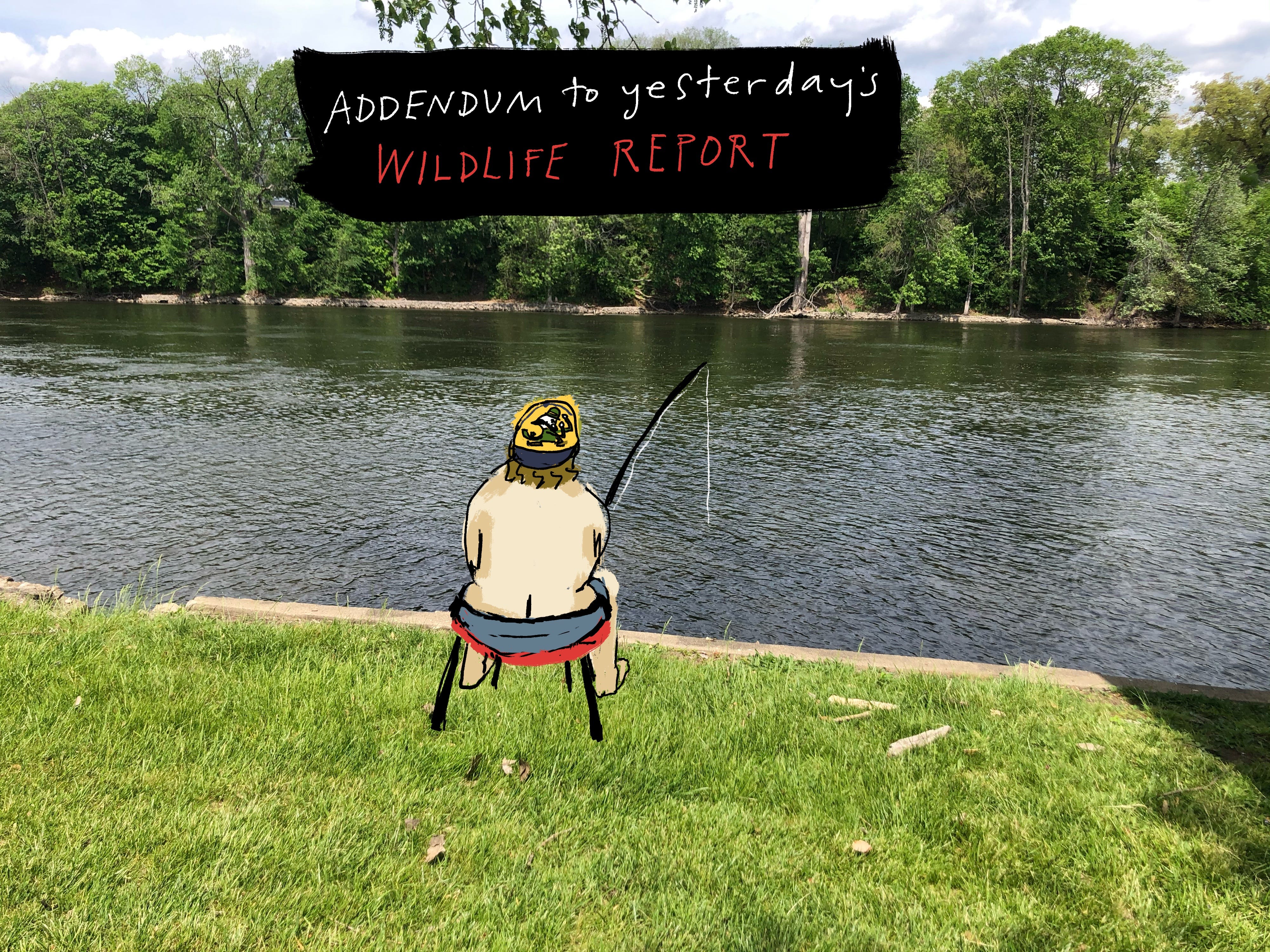
I have some recurring characters:
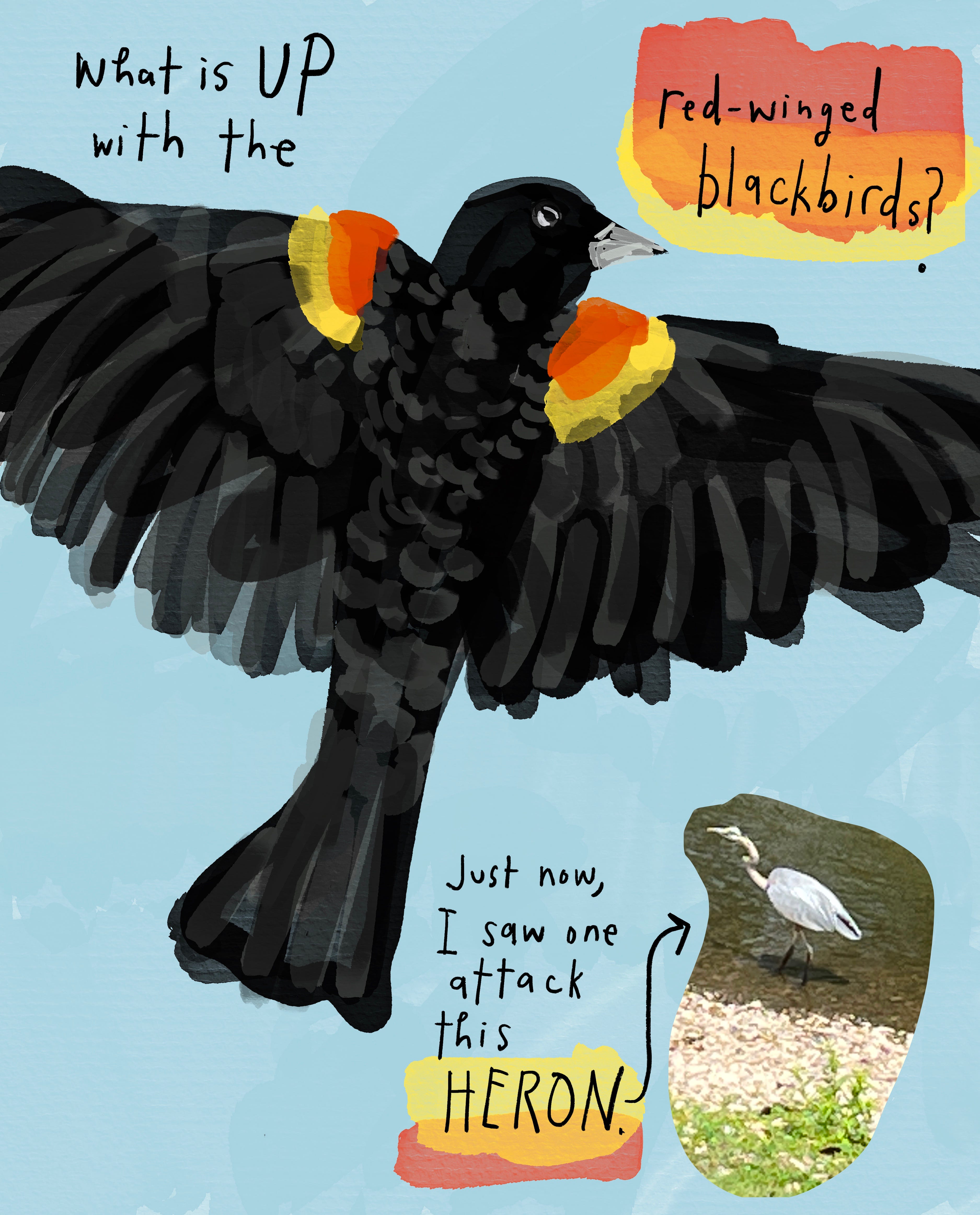
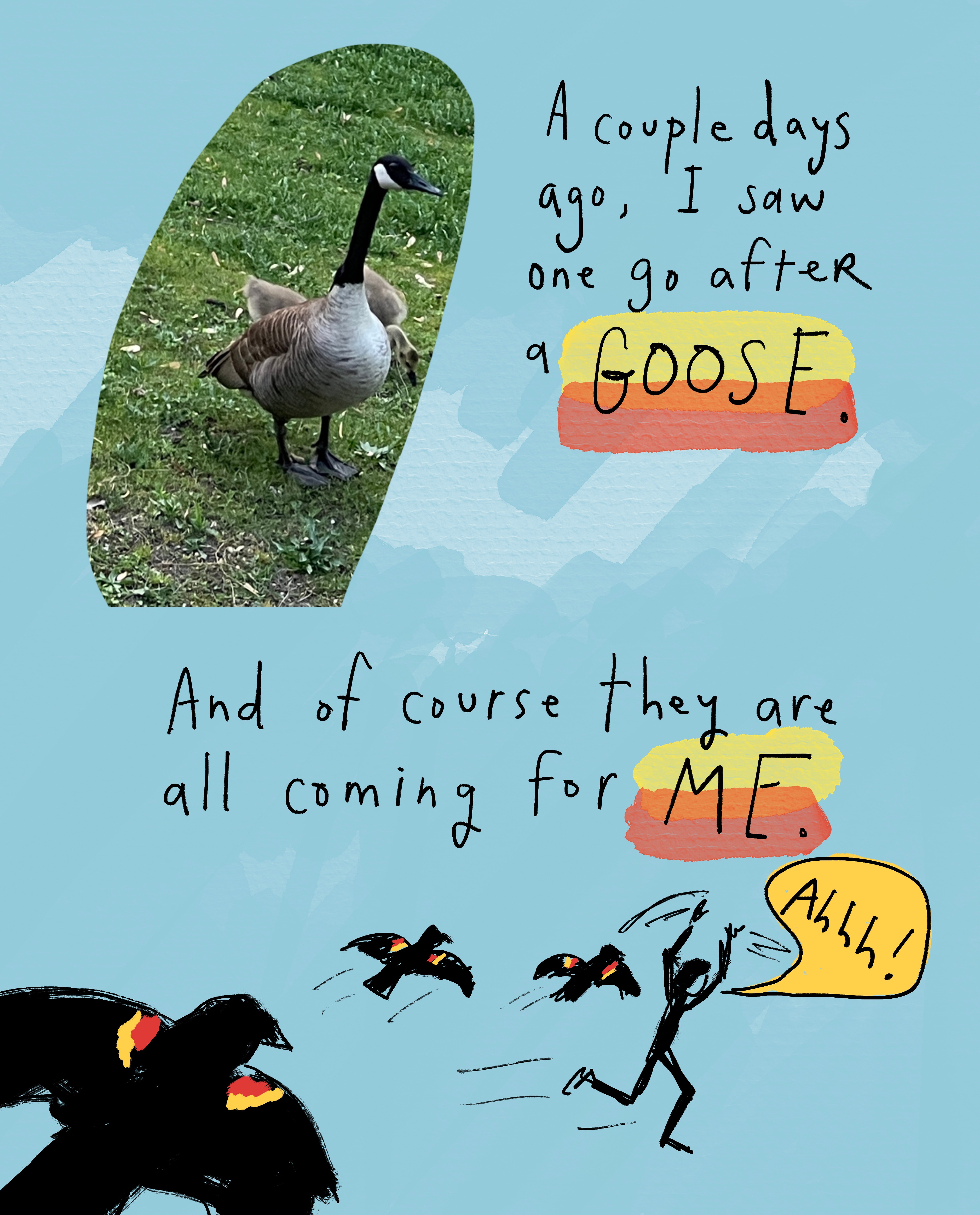
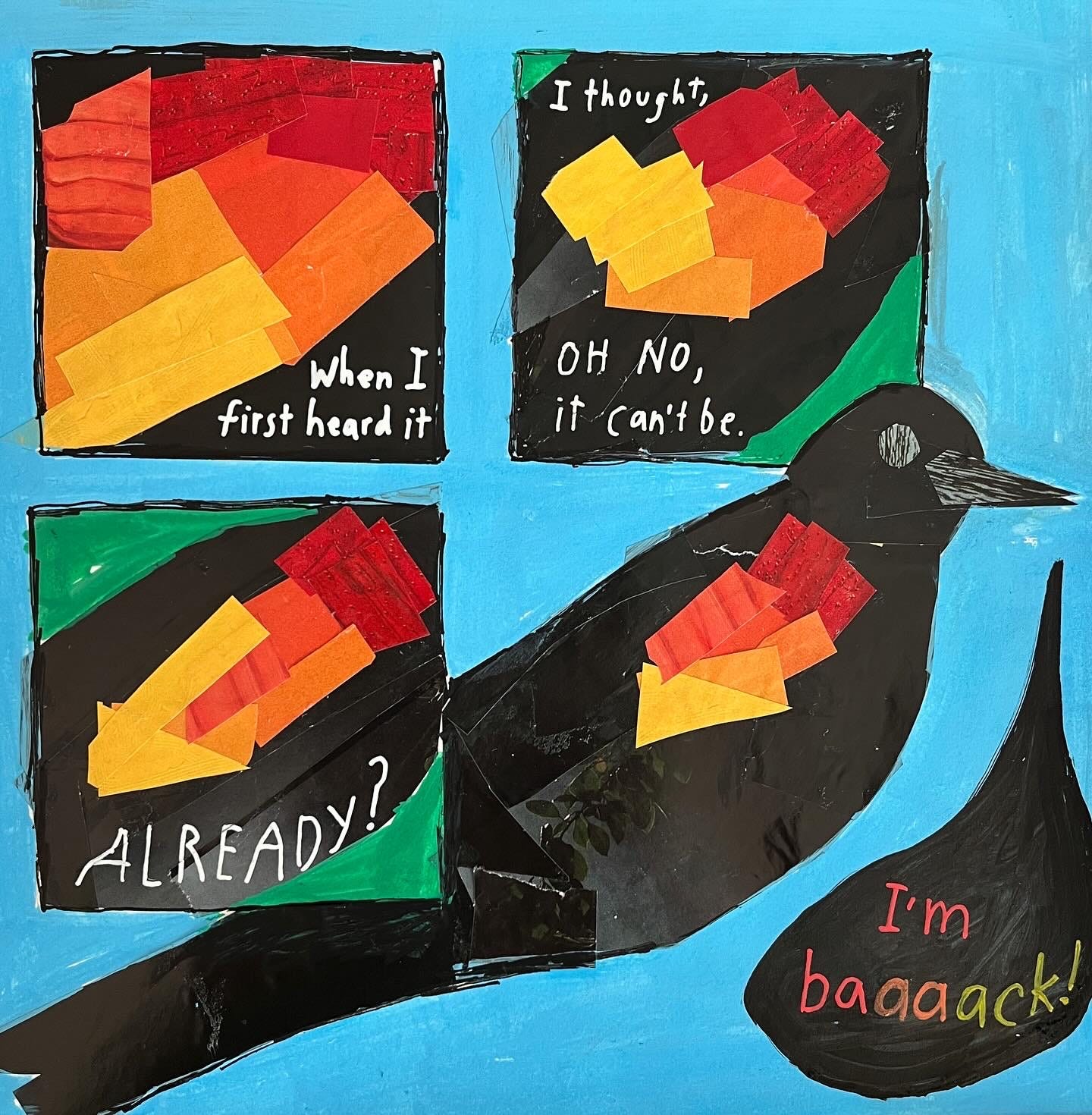
In comics the three main ways of using words are narrative captions, speech bubbles, thought bubbles. I use all three of them in the next few examples. (Plus onomatopoeia!)
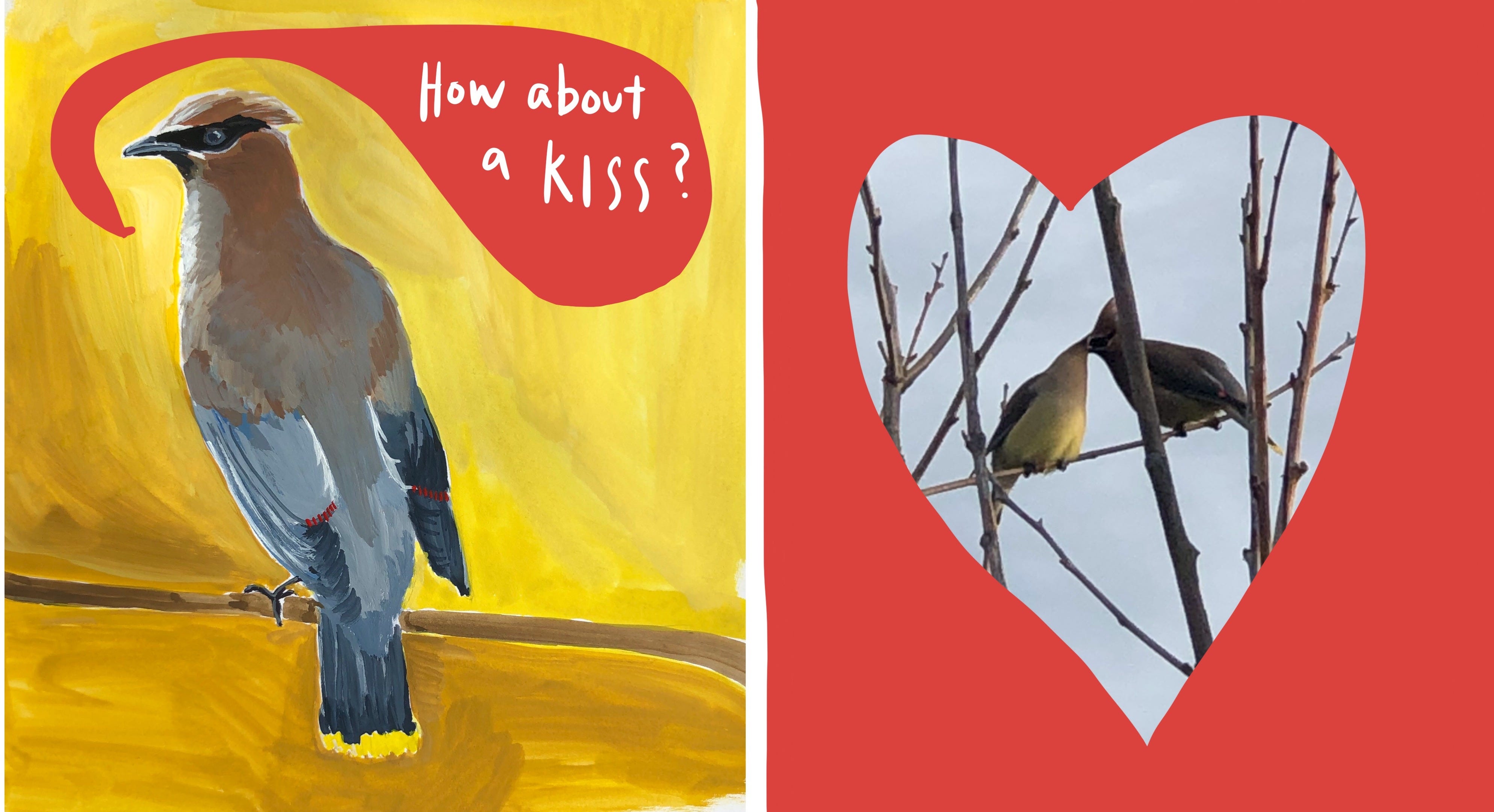
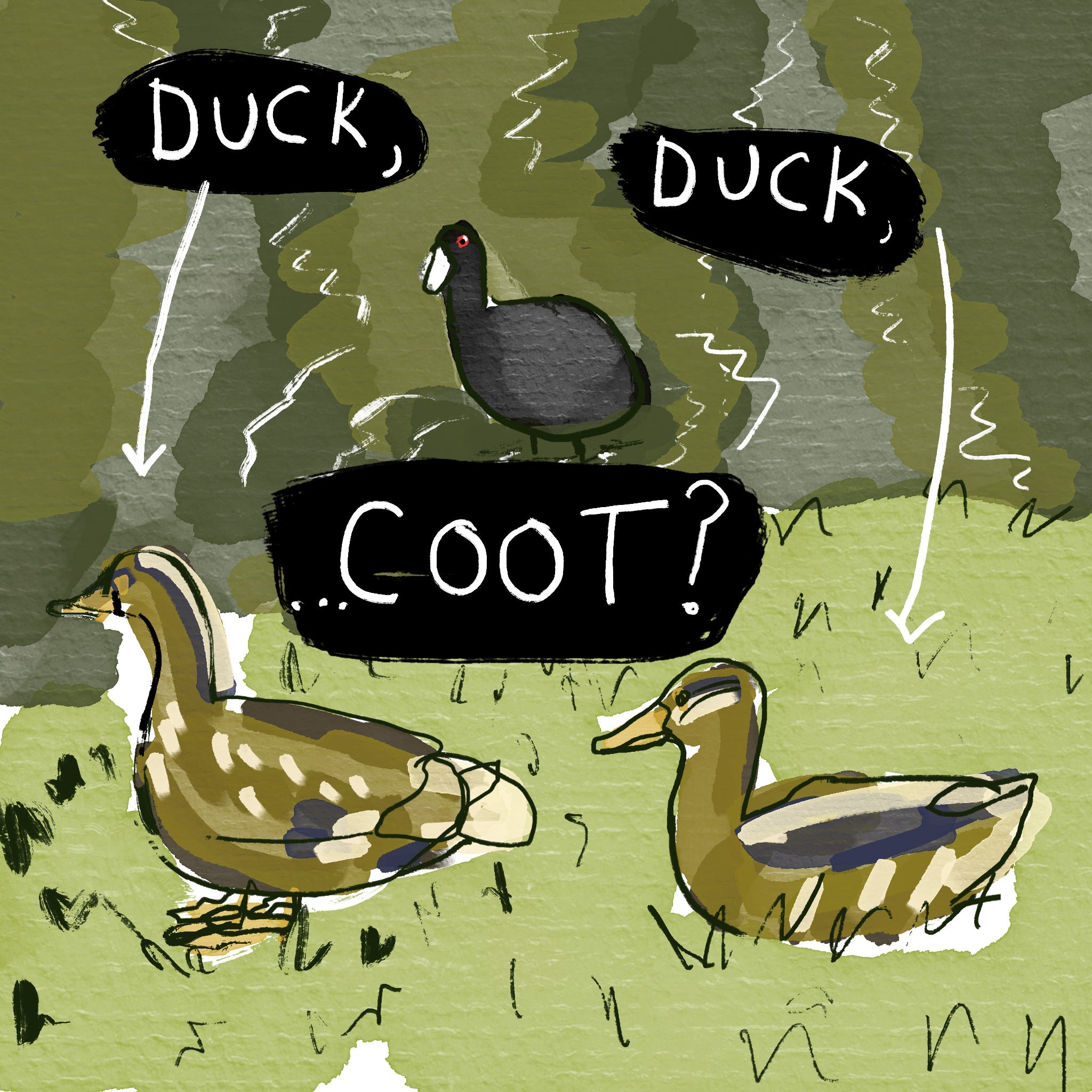
I record what I hear the birds saying:
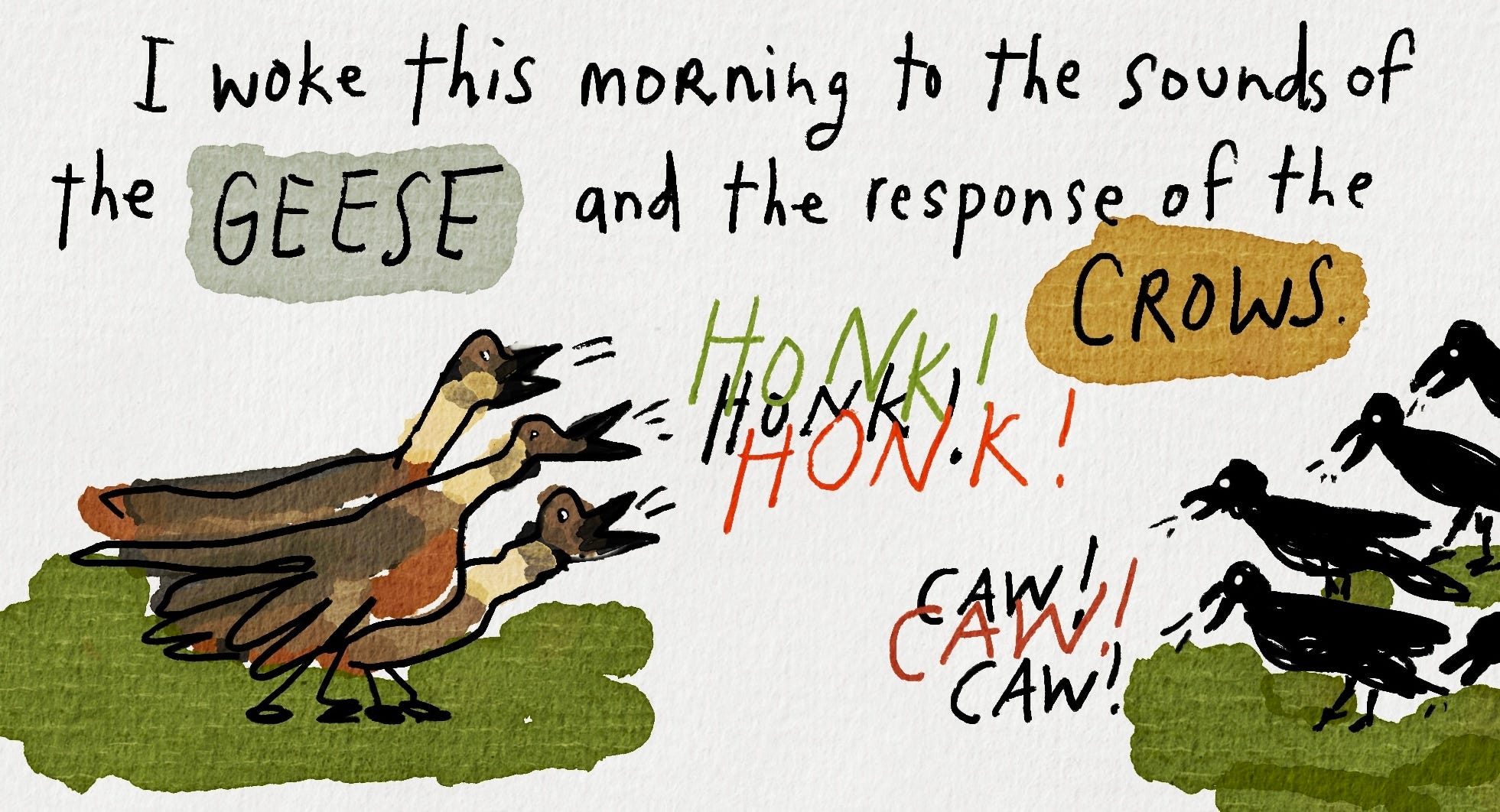
And what I imagine them saying:
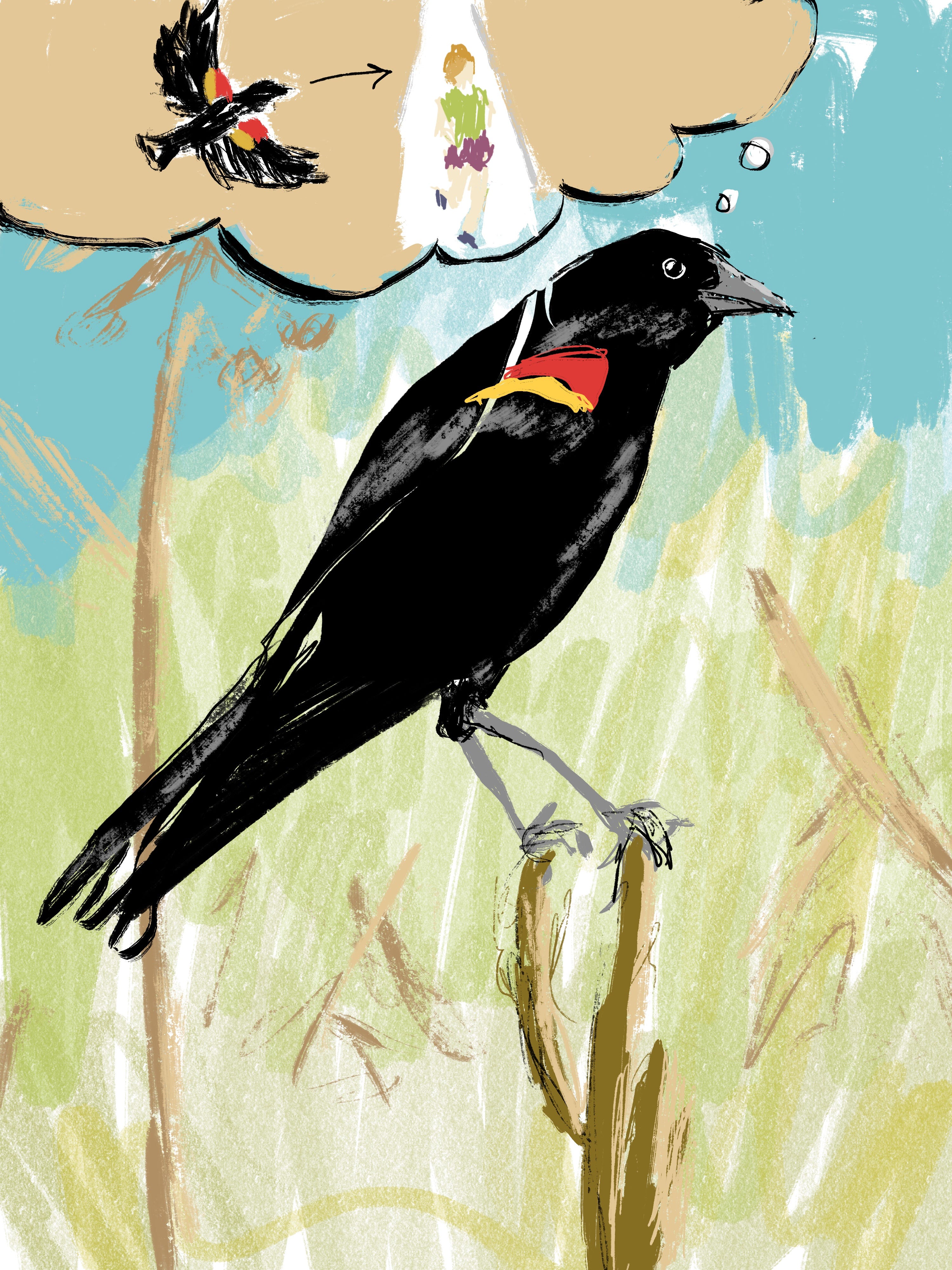
And even what they are (surely) thinking:
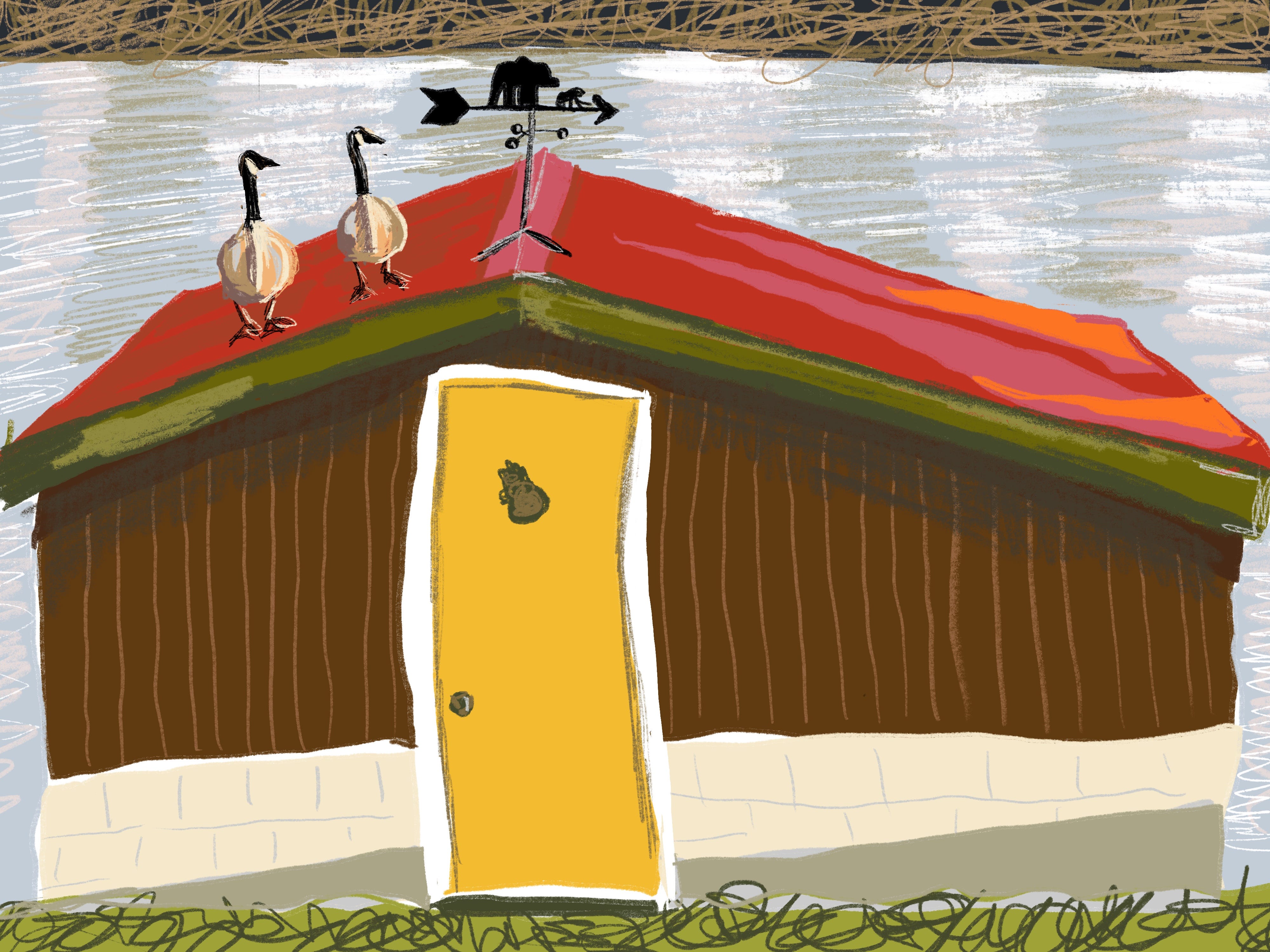
Sometimes I don’t bother with words. I just draw what I see:
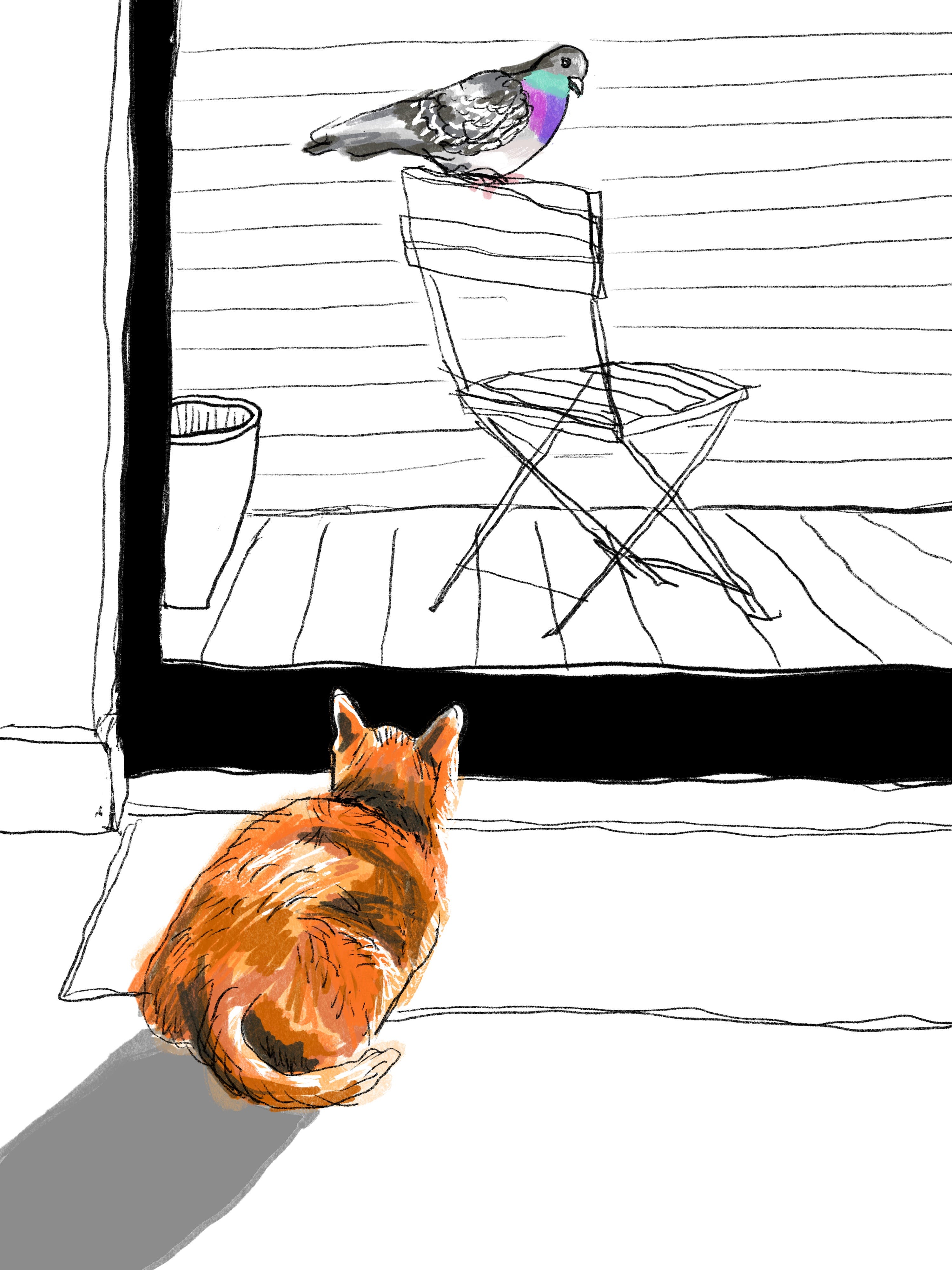
Or what I imagine:
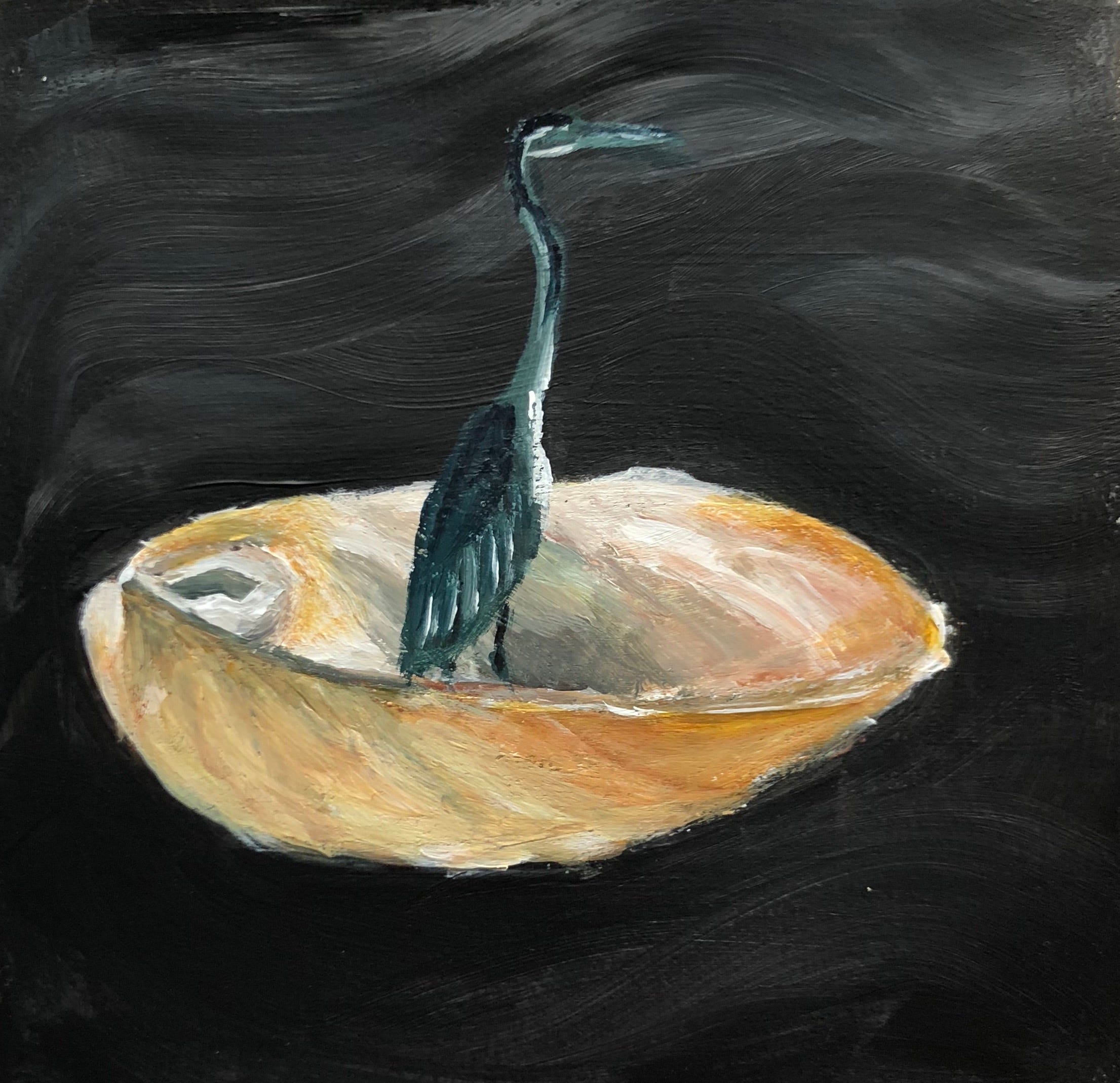
As Scott McCloud and others have noted, juxtaposition is at the heart of comics. Usually the tension is between words and pictures, but notice that in each of those previous wordless images, two things were juxtaposed to create an implied story: geese and roof; bird and cat; heron and shell.
In my nature journal/comics, I might turn an unexpected discovery…
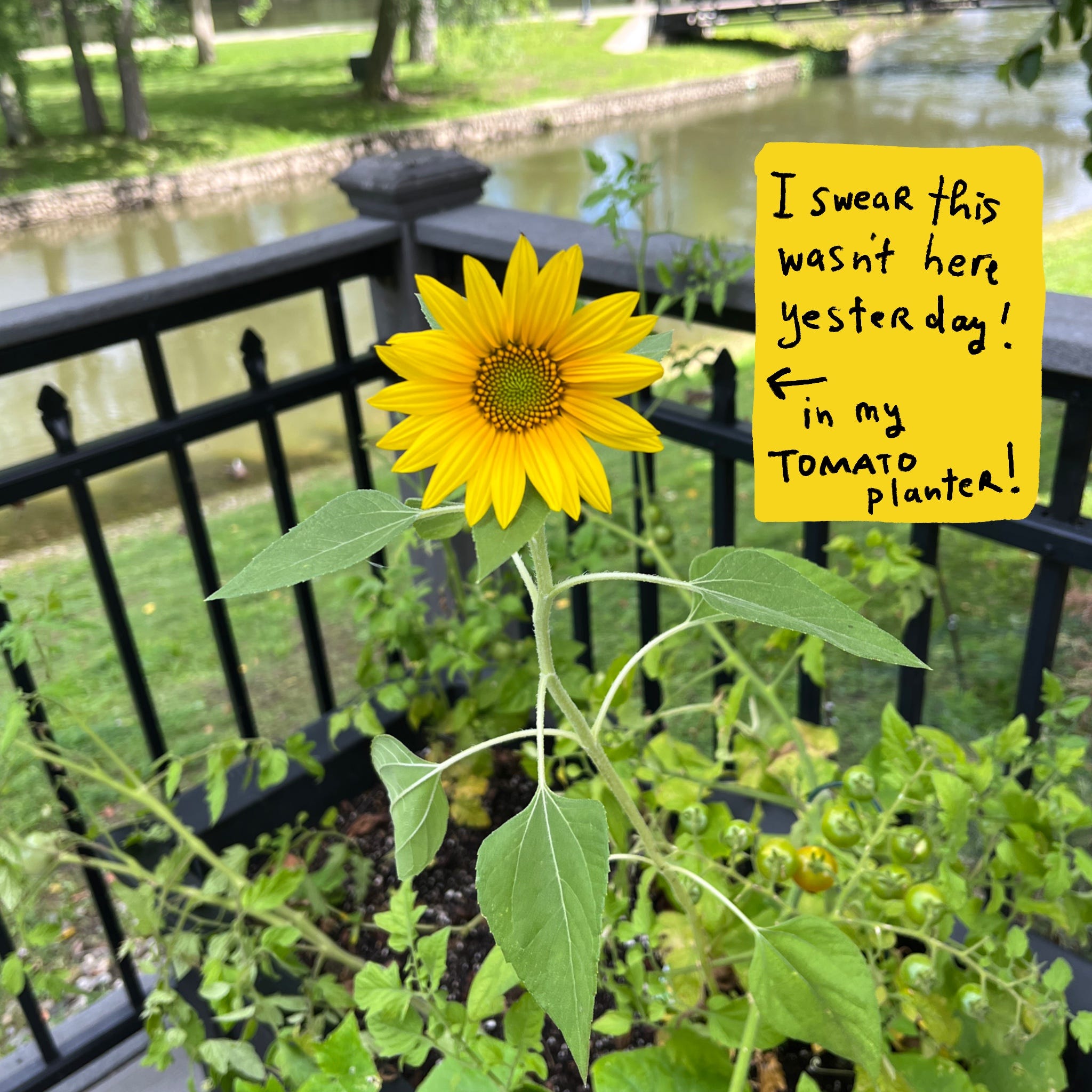
…into a poetry comic:
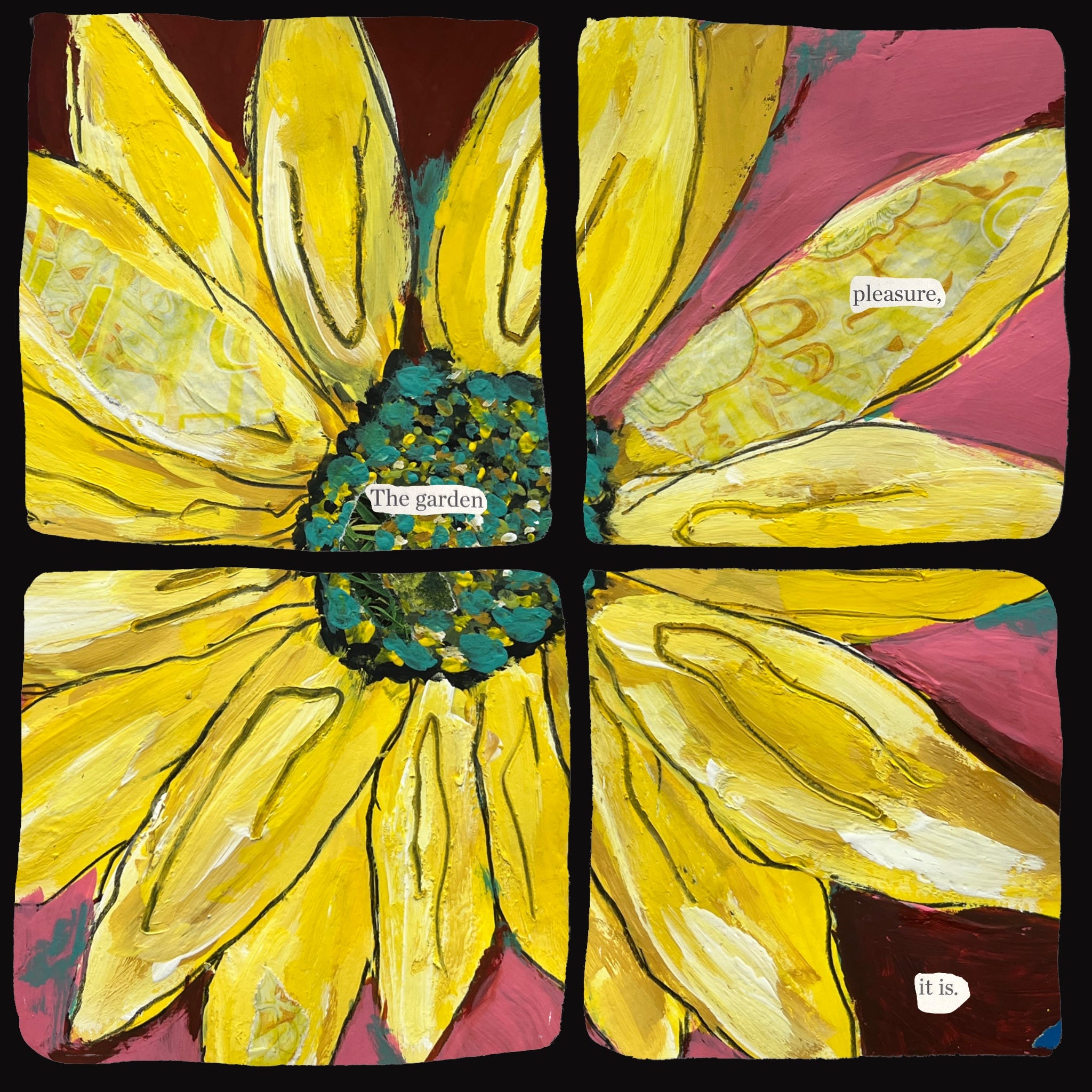
Or into a new child’s game:
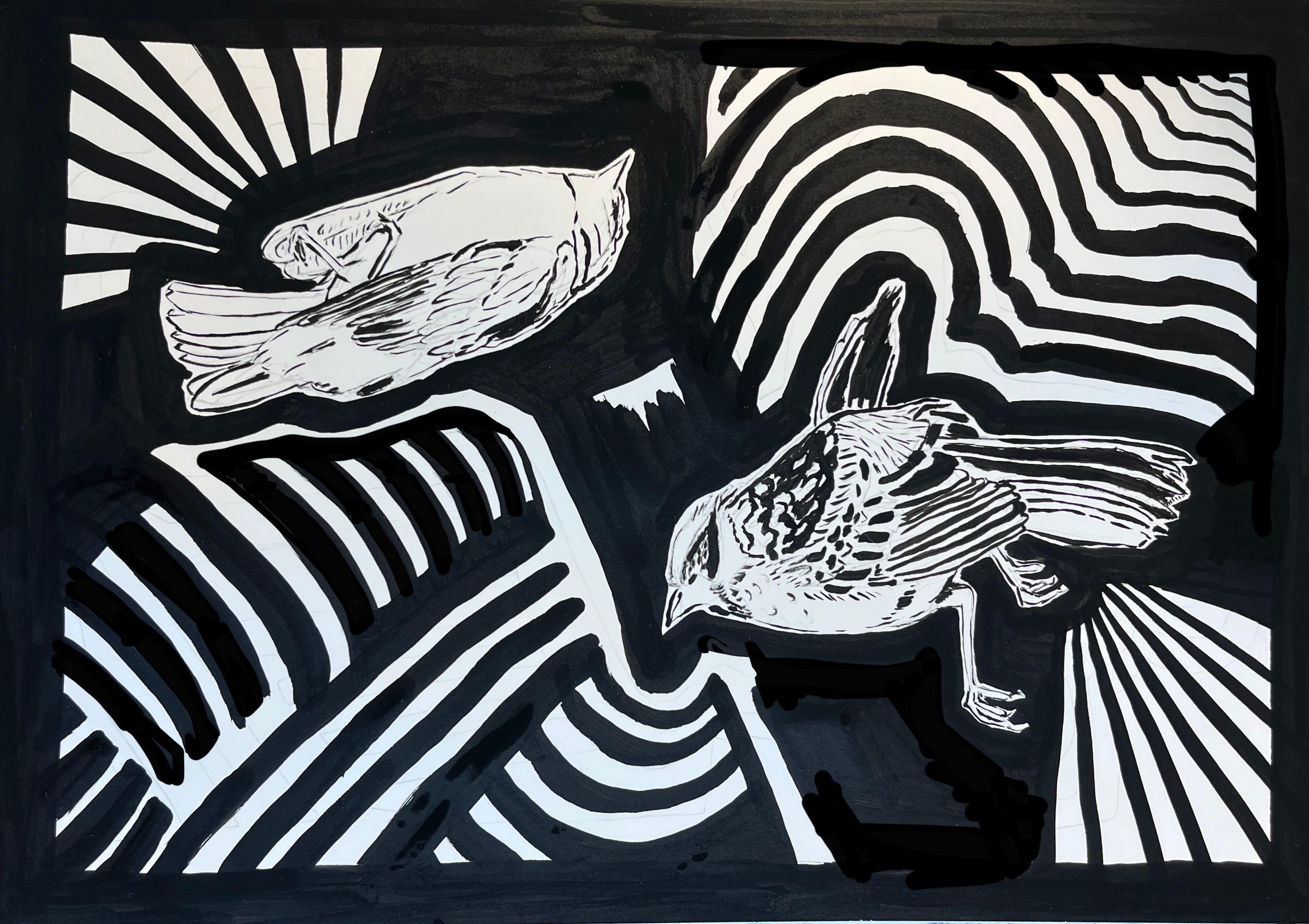
Sometimes I see dead things. Like these two birds:
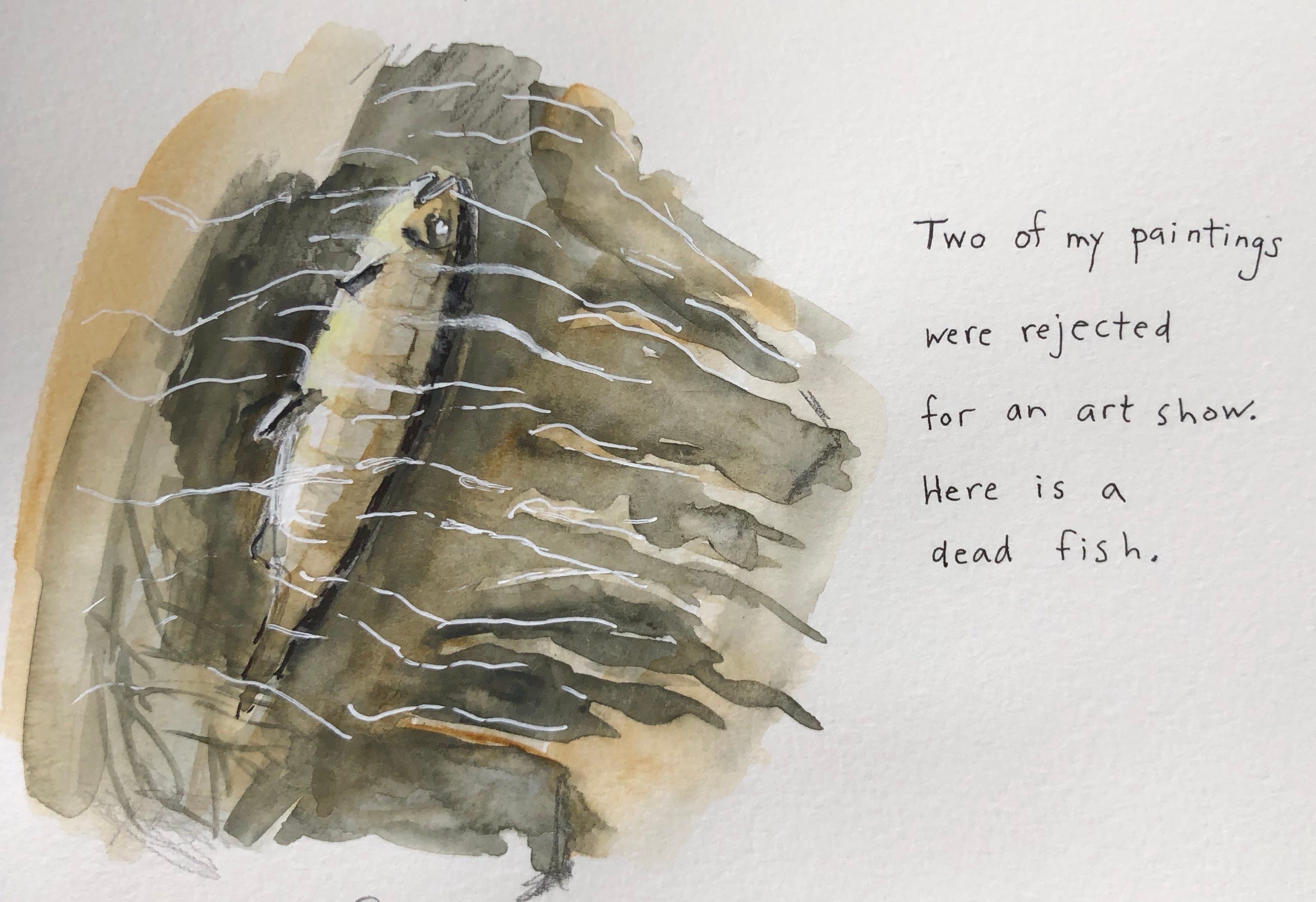
Or this dead fish:
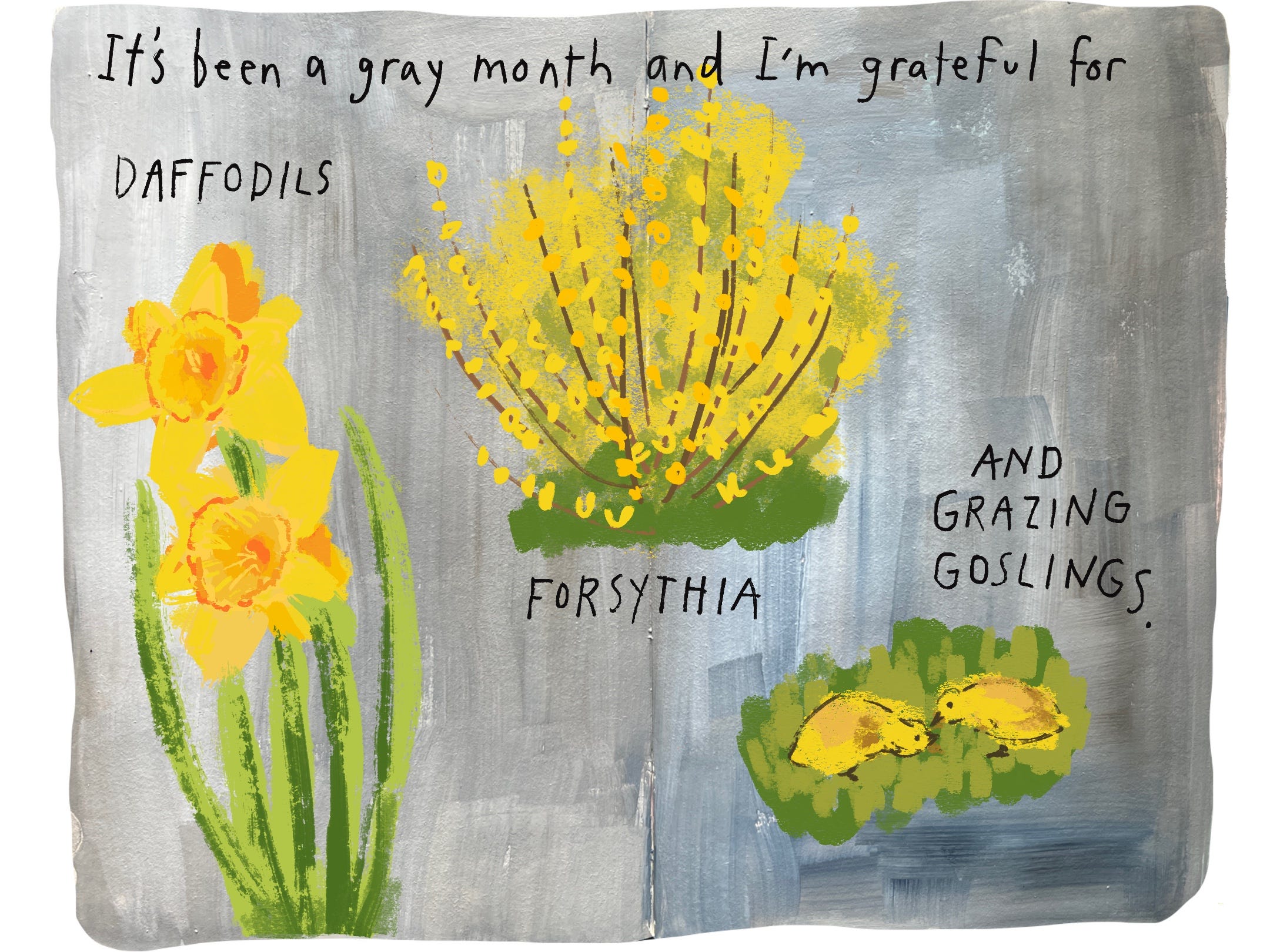
I can’t identify the species or genus, but I know the pleasure of yellow:
And orange and red too:
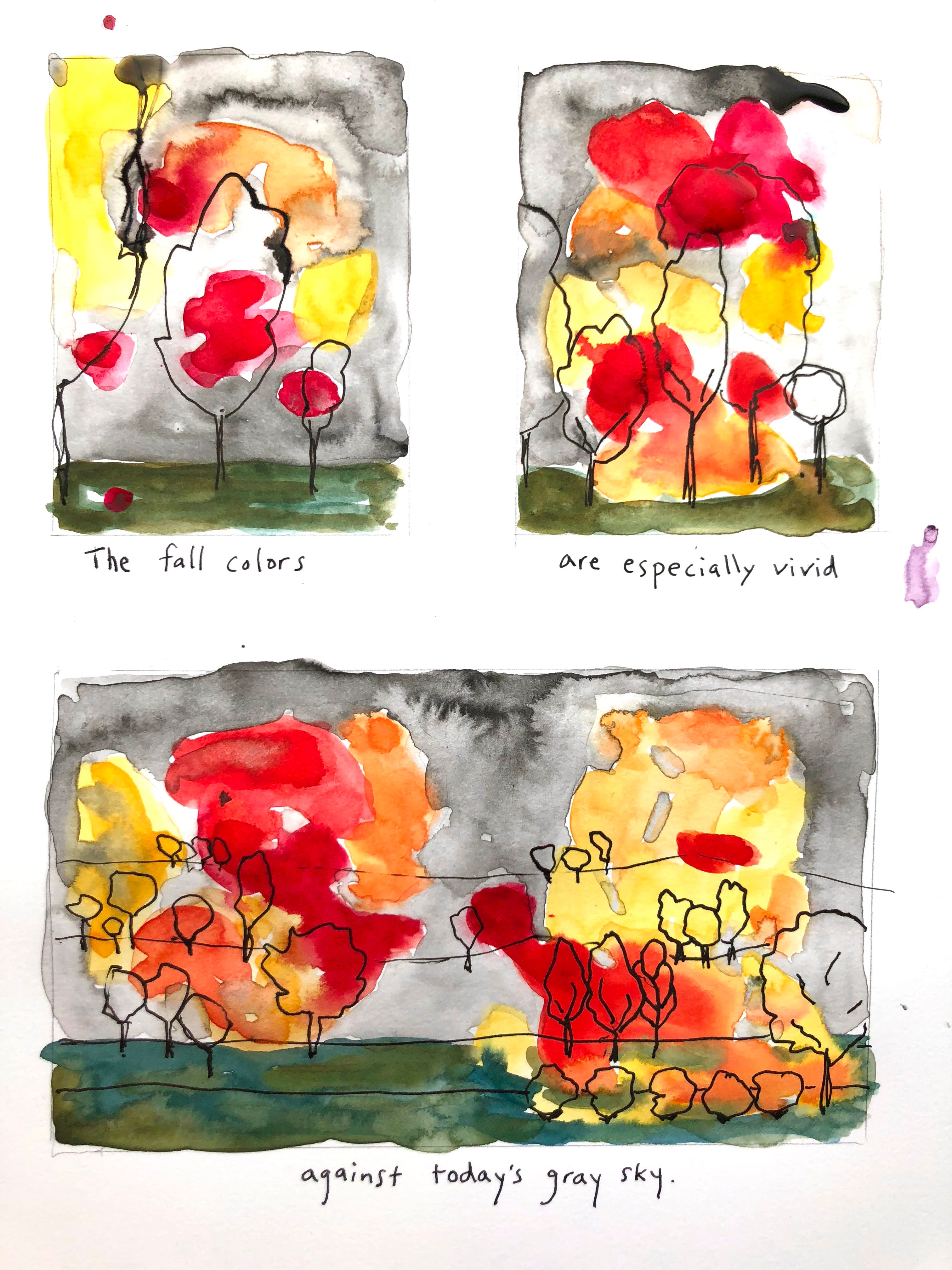
There are so many possibilities—and impossibilities.
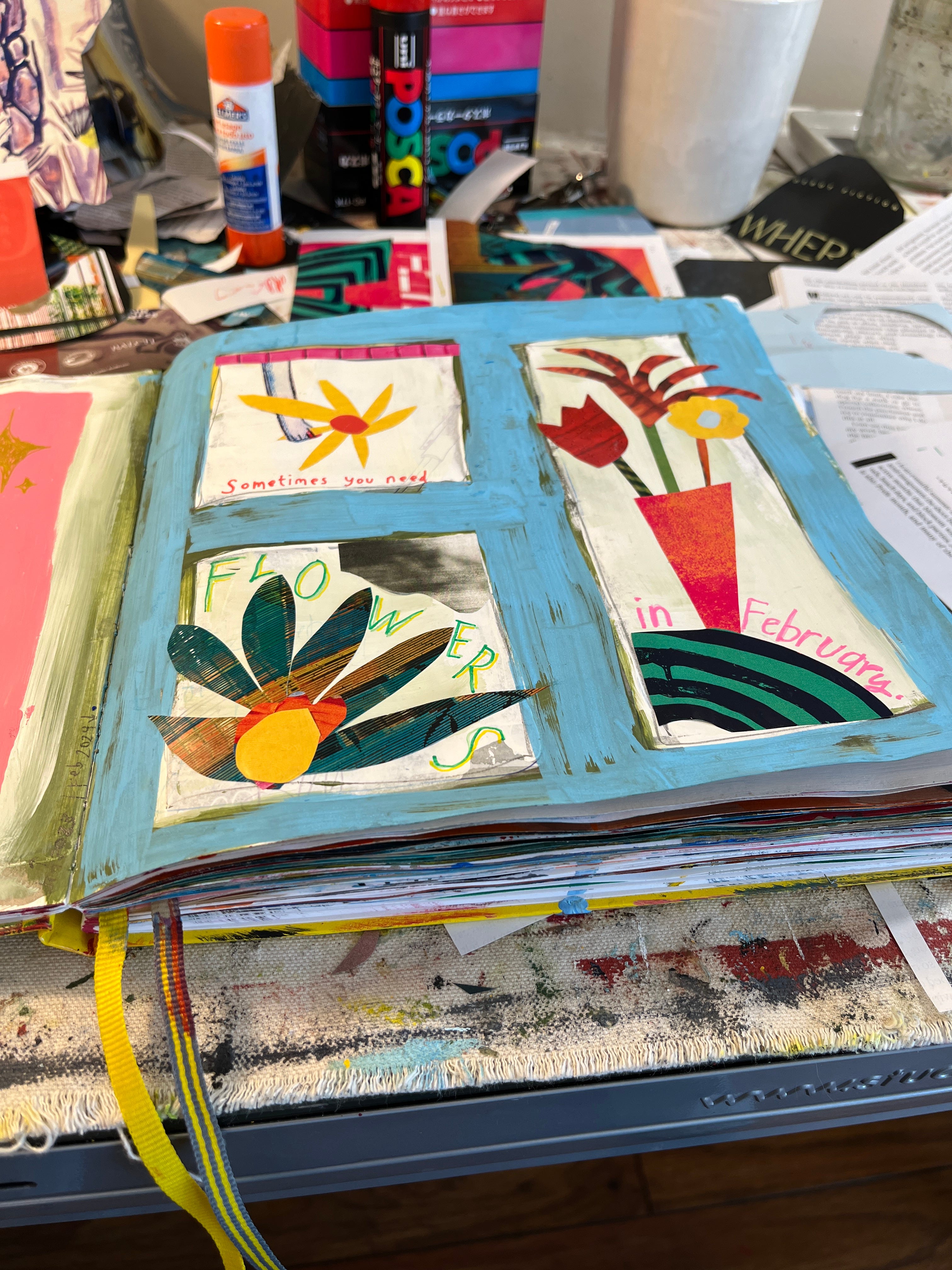
I can use comics panels to give myself flowers in February:
Or turn a weather report into a haiku comic:
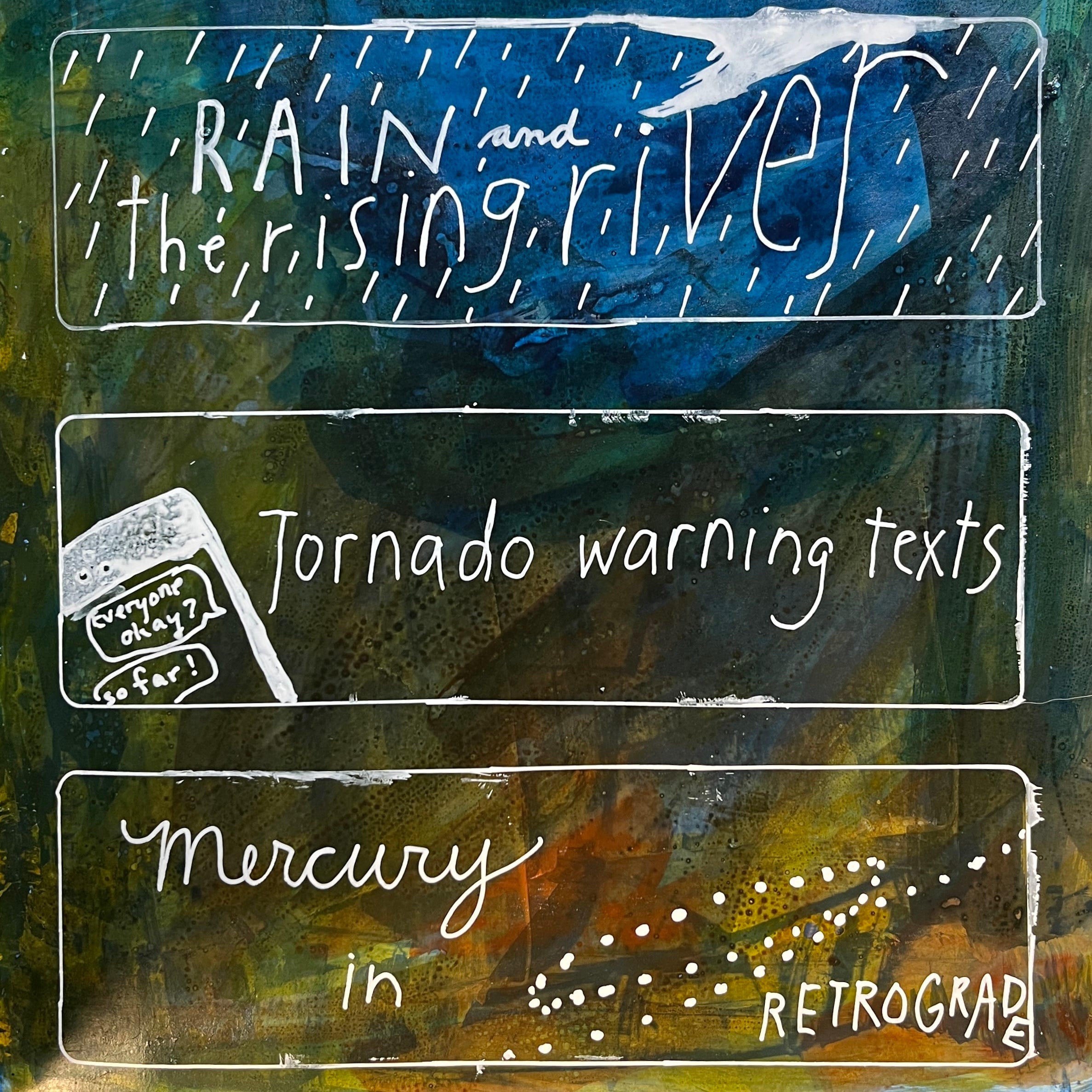
For me, the pleasure of nature journaling is not in identifying the parts of the scapular on a pintail feather (as seen in John Muir Laws’s The Laws Guide to Nature Drawing and Journaling), but in creating my own unexpected observations and playful juxtapositions: Birds and speech bubbles. Weather reports and haiku.
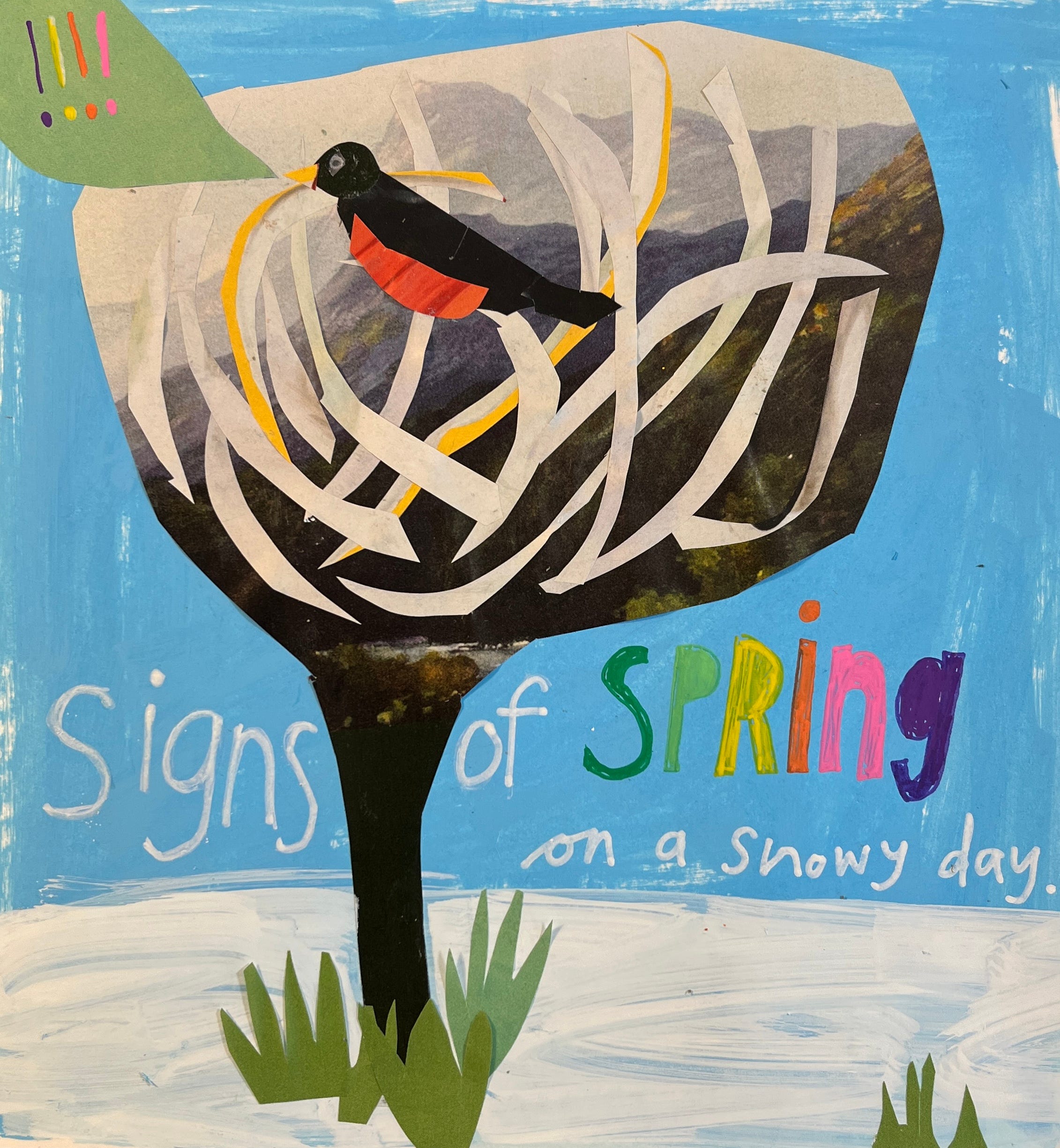
And a comics nature journal can be a great place to embrace nature’s own inherent contractions, such as the changing of the seasons:
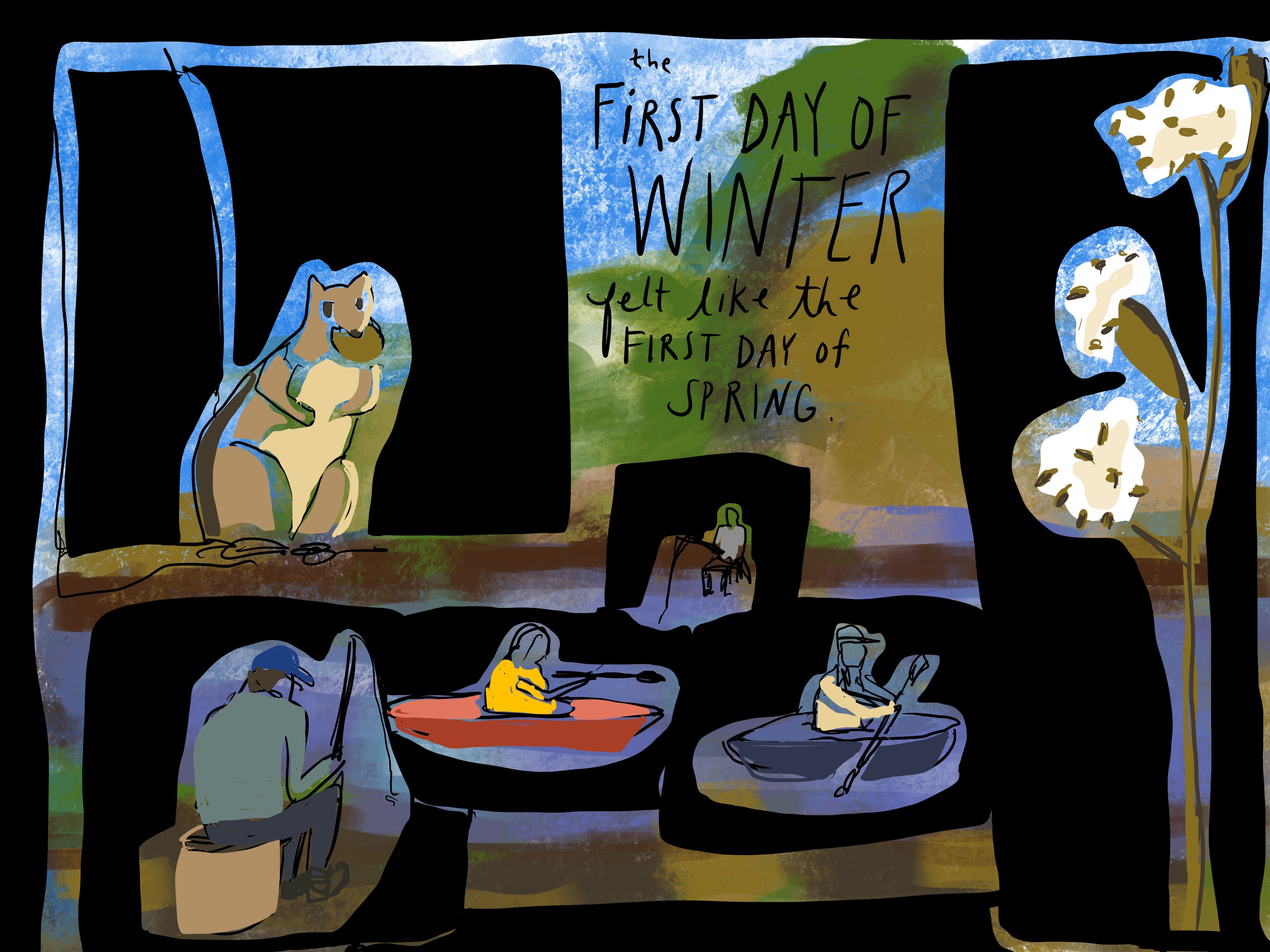
But even I have to admit that sometimes the best part of nature journaling is simply noticing and documenting a moment you want to hold and remember:
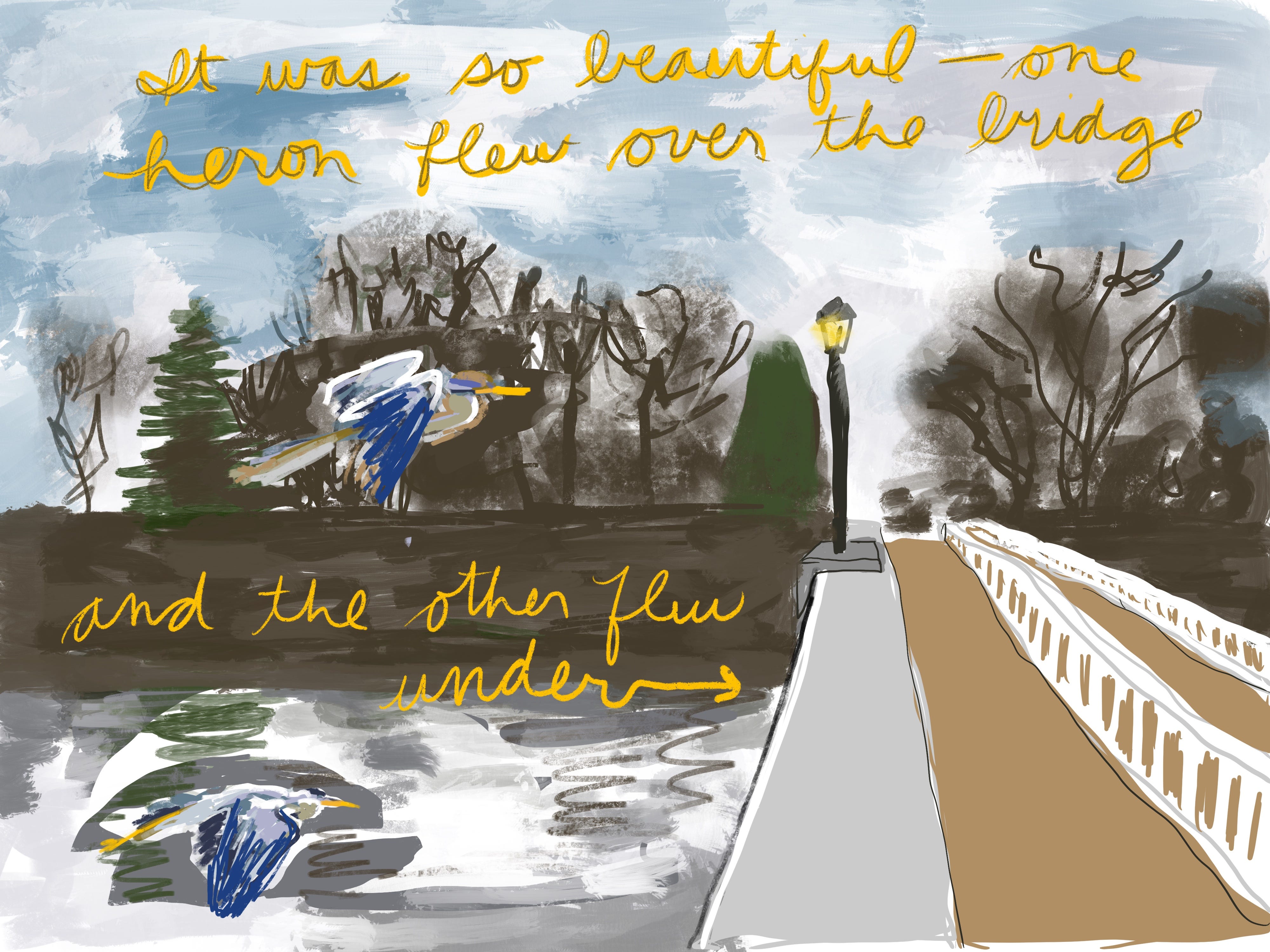
I have so many more thoughts about using comics in/as nature journals, but I’ll stop here for now! Thanks for reading!
I’ll be on Substack Live this Thursday, May 28 with Sheri Handel for her Writers Inspired by the Arts series.
Next weekend is the workshop I signed up to take with (Her Majesty) Lynda Barry and John Porcellino! Stay tuned for my report!
The next zoom hangout for paid subscribers is Saturday, June 13, 2026 at 11am ET. We are going to revisit the idea of Thinking Small for our Big Projects. Click here to learn more and register.
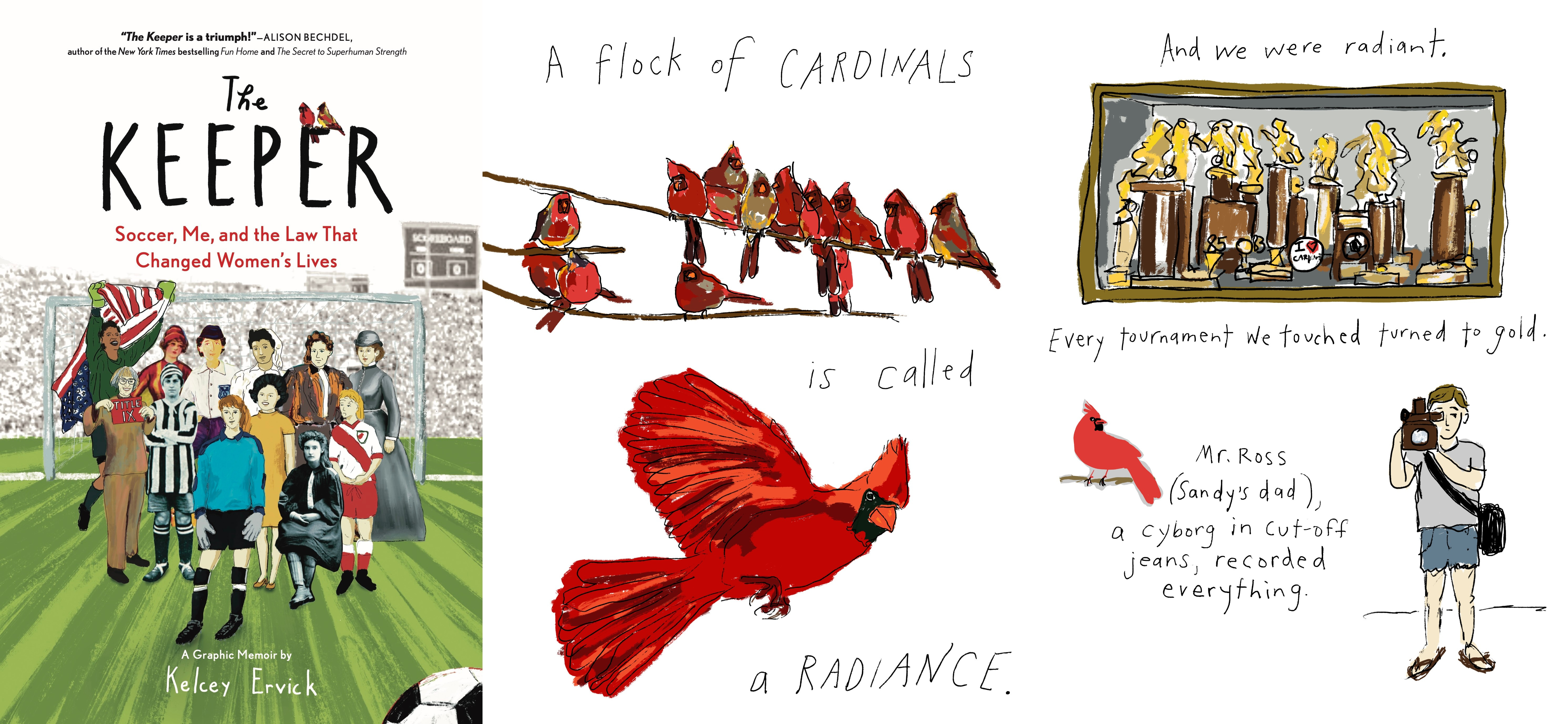
Thanks for reading The Habit of Art by Kelcey Ervick, a Substack Featured Publication (twice!). I love writing and drawing these posts and am grateful to everyone who follows along. I’m the author of four award-winning books, including the graphic memoir The Keeper, which has LOTS OF BIRD DRAWINGS (my club soccer team was the Cardinals and I used it as an excuse to draw cardinals):
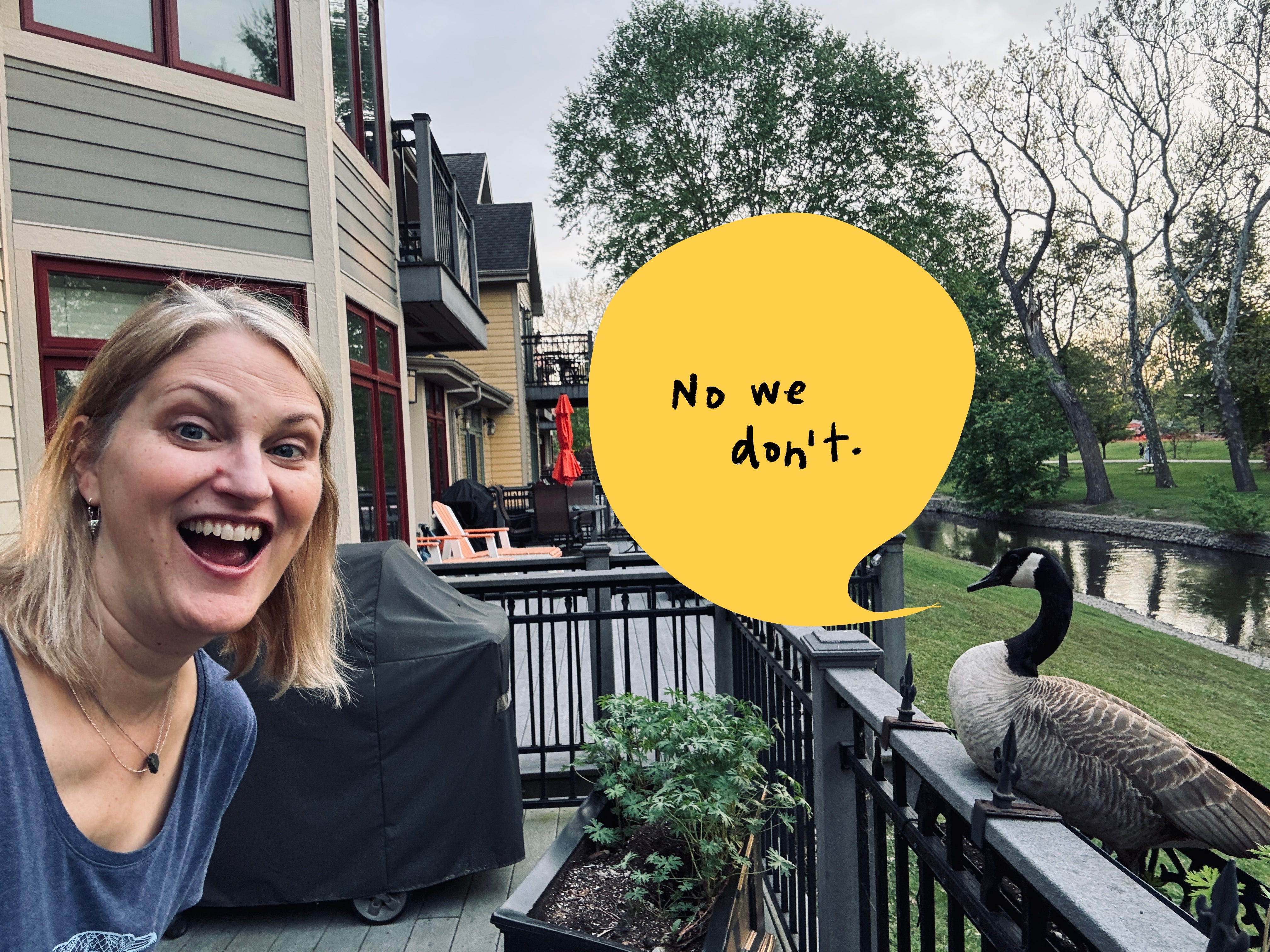
I’m a professor of creative writing in Indiana, and I live on the banks of the St. Joseph River, where the geese like to pose with me for selfies:
Comments
Nothing yet. Say the first thing.
Sign in to join the conversation.