
Flow is a state of deep engagement when a person is fully absorbed in an activity. Flow is associated with peak performance in athletes and chess players, and musicians and artists in flow demonstrate greater creativity.
Flow is usually thought of as a subjective and internal mindset, a very solitary moment. However, many of the most fulfilling human experiences are deeply and fundamentally collaborative. You are not alone; you are not looking inward. In these moments, you are connected to the world and you are focusing outward. This is group flow.
I study these group flow experiences in jazz and theater improvisation. The musicians and actors I interviewed described being in the standard flow state, to be sure. But they described something more. They talked about the group as if it was something separate from themselves. They felt they were collectively creating something distinct from them. They talked as if they had a responsibility to this collective creation. A responsibility to help that thing realize its potential. To help it grow and develop.
The best improvisers seemed to be the ones who were trying to focus less on themselves. These were the ones who had the peak group experiences. But flow theory would predict just the opposite—that you should be fully focused on yourself to have an optimal experience. And instead of the canonical flow quality of concentrating on a task without outside distractions, good improvisers were highly aware, from moment to moment, of what was going on around them. They were active listeners. Many of them seemed to know more about what the other performers were doing than what they themselves wanted to do. Instead of thinking ahead about what they were going to do next, they spent their energy anticipating what the other musicians were going to do next.
Good improvisers shift their creative focus from themselves to the group.
Creative musicians and actors are in a state of individual flow. I could tell from the way they talked. But something more was going on. The group, as a whole, was forming its own identity, its own experience as a creative force, distinct from the performers. I call this creative force group flow.
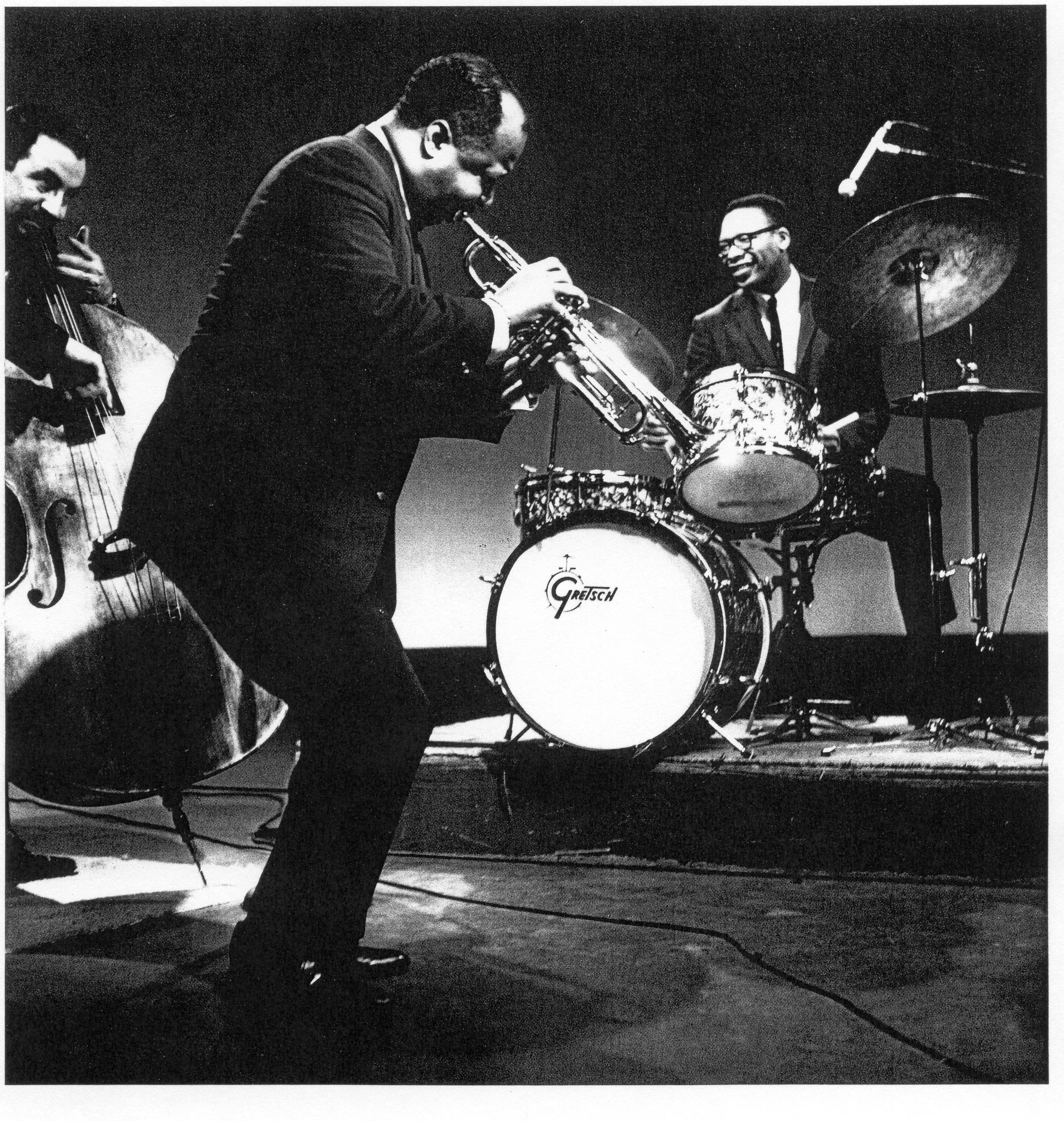
My first research project was an interview study of jazz musicians in Chicago. Jazz musicians perform without a score, building their performance moment by moment. Each player is improvising, but none of the players can improvise whatever they want; they aren’t solitary creators. They’re creating a collective performance, and every player needs the others to realize their own best abilities. Each musician listens closely to the others. They want to know what the group is collectively doing and where the flow is moving. They then take a way forward that follows that same journey, but it’s their own movement, their own path. They respond to what the others are doing, and at the same time, the others are responding to them. They collectively create music that emerges over time.
In jazz groups, musicians are highly focused—a defining feature of the flow state. But unlike the standard individual flow state, their attention isn’t directed inward. They’re instead focused on the group. Each player is both contributing and listening, shaping the music while being shaped by it. Ideas build on one another. The performance develops in ways that no single musician plans. It doesn’t always happen, and it can’t be predicted. But when it happens, it’s a peak collective performance in which a group becomes a single, coordinated system.
If you’re focused on your own individual flow, if your goal is to reach your own peak experience, it will derail the group’s flow. Years ago, I was a pretty good solo piano player but I was not a good ensemble player. I was trying hard to learn how to play in a group. For a long time with the group, I wasn’t in flow. The challenges of the task exceeded my skills. Gradually, I got better and better. Finally, I got to a point where I was really feeling the flow! My skills had increased enough to match the challenges of the task, and I was in the classic flow channel! This went on for several weeks. I was in the flow channel and I was having a wonderful time. But at one night’s rehearsal, I was in for a letdown. During the break, the other musicians took me aside and gave me a talk. They said I was too self-absorbed. They pointed out that I never looked up from the piano keyboard. I was missing musical cues because I wasn’t listening. I missed gestural signals because I never looked up.
I had been in flow, no question about that. They weren’t trying to deny my own subjective experience. But that didn’t matter to the group. What mattered was that my own flow experience was blocking the group’s flow.
(This actually happens a lot in team sports. It’s a cliche that a hot young star will do everything to run up his stats, or get recognized by the scouts, and in the process kill the team’s energy and success. Write a comment if you think I should write another post about group flow in team sports.)
Psychologists today understand quite a bit about the flow experience and how to attain it. But this research tends to focus on the solo, isolated individual. Yet much of what we do—especially in modern organizations—depends on interaction with others. We solve problems in teams. We generate ideas in conversation. We innovate through collaboration. This raises an important question:
What happens when flow emerges not in an individual, but in a group?
Group flow can happen anywhere people come together: business teams working on complex problems, classrooms engaged in discussion, creative collaborations of all kinds. When a group is in flow, members are fully engaged, but they’re not focused only on their own contributions. They’re responding to one another in real time. Ideas aren’t simply exchanged; they’re built and transformed through interaction. Action and awareness merge, but not just within an individual mind, across and between minds.
A possessiveness mindset and a focus on your own mental state will block group flow. In fact, paradoxically, one individual’s attempt to attain psychological flow can interfere with group flow. That’s what happened to me when I was trying so hard to learn how to play jazz in a group with other musicians.
Group flow is much more likely to happen in informal settings, like in hobbies, or in arts activities or community groups. Group flow is relatively rare in the workplace. Most work groups don’t function this way. Meetings are structured around agendas and hierarchies. Incentive systems reward individual focus and achievement. As a result, people focus on their own contributions rather than on the group, and groups underperform. We’ve all experienced situations where a group seemed to make worse decisions than any of its members would have made individually. Why does this happen? And what distinguishes groups that achieve group flow from those that do not?
Groups that achieve group flow tend to share the ten conditions of group flow—conditions that support improvisational interaction, distributed activity, and the emergence of new ideas.
One of the most important is close listening. In group flow, participants must be fully attentive to one another. They can’t plan ahead or fixate on their own ideas. Instead, they respond to what’s actually happening. Stage improvisers sometimes describe this as avoiding the mistake of “writing the script in your head.” When you decide in advance what you’re going to do, you stop listening—and group flow breaks down.
Another key condition is shared understanding. Jazz musicians spend years learning the conventions of their art—scales, chord progressions, song forms, and stylistic norms. This shared knowledge allows them to coordinate without explicit communication. Psychologists refer to this as tacit knowledge: knowledge that is not spoken but is nonetheless essential for effective interaction.
A third condition is balanced participation. Group flow is blocked when one person dominates or when others withdraw. Each participant must contribute, but no one can control the interaction. This creates a paradox: individuals must feel confident enough to contribute, but flexible enough to adapt to the group.
Group flow happens when a group is fully in sync, when each person’s contributions build on those of others, and when the interaction itself becomes the source of creativity. Some stage improvisers talk about the “group mind.” There’s a truth to that, but it can be misleading, because individual people still retain their own creative identity. Each actor is still the creator of the individual lines of dialogue. But no single line of dialogue stands on its own. Every line takes it meaning from the verbal and dramatic context.
Group flow emerges from the tension between structure and improvisation. It’s a constant balance of constraint and freedom. Improvisation doesn’t mean that anything goes. That would be complete chaos. Without some guiding constraints, some shared understandings, there could be no improvisation. Jazz musicians share many musical understandings, from the fundamentals of harmony, scales, and basic song forms like 12-bar blues and 32-bar choruses, to chord sequences like 2-5-1 and song structures like turnarounds and codas, heads and bridges. Musicians don’t think of these as constraints that limit their creativity. They know that without structure, there can be no creativity.
Group flow emerges at the border between structure and improvisation.
The creative process is improvisational, whether in art, design, writing, science, or any creative field. That process doesn’t always happen on a stage, but it still is following the uncertain path of discovery. In any creative process, even if it happens alone in a studio, you find the same iterative path, the tension between structure and improvisation, and the tension between constraint and ambiguity.
Individual flow happens when challenges and skills are carefully balanced. In the same way, group flow happens when several tensions are in balance.
Guiding structure in tension with ambiguity and openness.
Shared understanding in tension with cognitive diversity.
A common view of shared goals, but also with a openness to reframing those goals in a “problem finding” way.
Individual creative contributions in tension with collective coherence.
There’s no simple or cookbook way to resolve these tensions. The necessary balance of each of the tensions is always in flux, throughout a performance. But when the balance is right, the results can be extraordinary.
People often describe group flow as the most meaningful experience of their working lives. It’s not just that the group produces better ideas; it’s that the process itself is intrinsically motivating.
Understanding group flow helps us see creativity more clearly. It shifts our attention from individuals to interactions, from solitary insight to collaborative emergence.
If we want to foster creativity, we should focus less on finding brilliant individuals and more on creating the conditions that allow groups to think and create together.
In group flow, ideas emerge when people think together.
Paid subscribers can read below for my developing thinking on this. I tell the story of the start of my career, when I first realized that no one was studying group improvisation—and how I had to “problem find” before I could even begin the research.
I’ll also share my first conversation with Mihaly Csikszentmihalyi about my idea, and his advice for my initial study, and an unresolved question about group flow that I’m still thinking through.
Comments
Nothing yet. Say the first thing.
Sign in to join the conversation.