
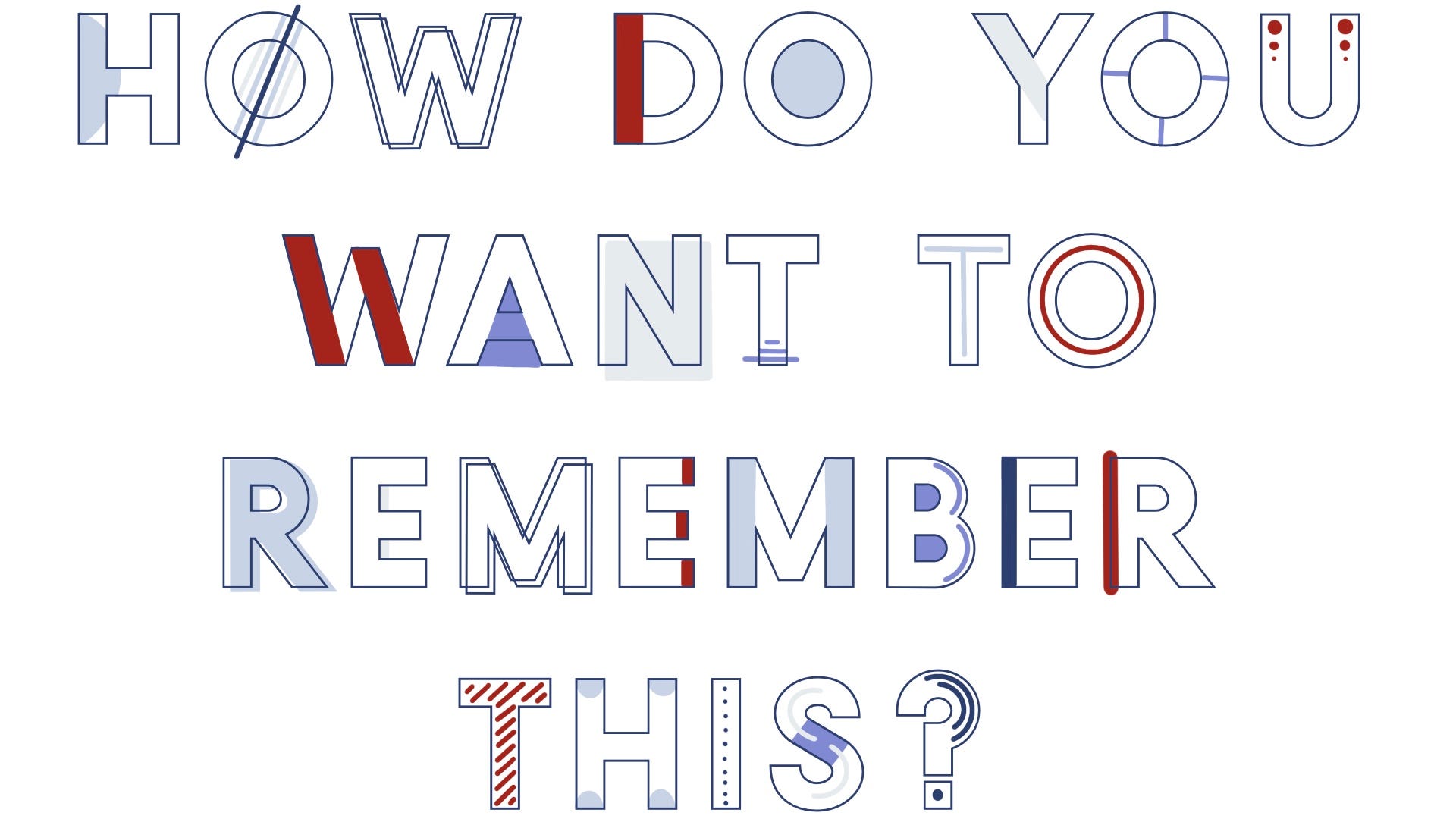
What’s the most important word in the English language?
You could make a case for words like love, hope, truth, or why.
But, how about this one:
We are the sum of what we remember.
Our memories shape our identities. Families are built on shared memories. Cultures are collective memories passed from one generation to the next. Every recipe, tradition, language, law, and religion exists because someone found a way to help another person remember.
With our recent move and our annual cousin camp, I’ve been thinking about this question:
I love this question because of its layers. There are three specific lenses I look at this question through: medium, mechanism, meaning
The best time to ask this question isn’t after something memorable happens. It’s while you’re living it.
Every summer our extended family gets together for Cousin Camp. Every year, my brother puts together a short video to help us remember. They’re only a few minutes long, but months later they become a time machine. Suddenly we remember the jokes we’d forgotten, the little moments no one thought to mention, and just how young everyone looked.
(check out the videos from 2025, 2024, and 2023)
Watching them reminds me that memories rarely preserve themselves.
Photos. Videos. Voice memos. Journals. Scrapbooks. Even a note scribbled on the back of a napkin.
There’s no single right way to remember.
But I do think the old saying is worth remembering: A dull pencil is better than a sharp mind.
Our minds are incredible AND unreliable.
So don't trust the memory to keep itself. Give it a form while you still can.
The second thing this question changes is the mechanism.
A photo captures a memory. A ritual brings you back to it. The first is a medium. The second is a mechanism.
Think about holidays. They’re really systems for remembering. Christmas, Memorial Day, birthdays—each one exists because someone decided certain things were too important to leave to chance.
For me, attending church each week serves the same purpose. It’s a recurring opportunity to remember who I am, what I believe, and what matters most.
Cousin Camp has become that for our family. The trip itself is wonderful, but the tradition is what keeps pulling us back together year after year.
A couple of years ago, Leah started a simple ritual that’s become one of my favorites.
Each night, one person says our family prayer. When they’re finished, everyone else takes turns sharing something they love or admire about that person. Over the course of a week, each of us gets a turn.
Knowing my turn is coming changes the way I pay attention.
I find myself looking for moments throughout the week that I’ll want to mention later. Small acts of kindness. Funny moments. Quiet examples of courage or generosity.
The ritual has taught me to notice things that otherwise would’ve disappeared.
More importantly, I hope it’s becoming one of the ways our kids will remember what it felt like to belong to this family.
A medium saves the moment once. A mechanism keeps handing it back to you. Build the ritual, and remembering stops being something you hope for and becomes something you can count on.
We often think of memory like replaying an old video.
But memory doesn’t really work that way.
Each time we remember something, we reconstruct it.
It’s less like pressing play on a recording and more like a DJ remixing the original track. We don’t usually change the facts, but we often change the meaning. We add gratitude. We add perspective. Sometimes we even add forgiveness.
Twelve years ago, we were robbed. I won’t tell the whole story here. But I’ve noticed that each time I retell it, the story changes—not the facts, but the meaning. It becomes less about what we lost and more about the sense that God knows us, and gives us the experiences we actually need.
Over time, the story we tell ourselves about an experience becomes just as important as the experience itself.
Which means we have more influence over our memories than we sometimes realize.
You're not just recalling your life. You're constantly retelling it—and every retelling is a chance to tell it in a way that helps you write the story you need.
So this week, don’t wait until the vacation is over.
Or until your kids are older.
Or until the season has passed.
Ask the question while you’re still living it.
How do you want to remember this?
Find a medium.
Build a mechanism.
Be intentional about the meaning.
You have more say than you think in what your life will have meant. You get to decide what gets remembered—and how. The way you choose to remember today becomes the story you’ll live inside tomorrow.
Keep Asking,
Kyle
P.S. If someone came to mind while you read this—a partner, a parent, one of your kids—send it to them. That's the whole point.
Comments
Nothing yet. Say the first thing.
Sign in to join the conversation.