
Lately I’ve thinking about how algorithms are determining the sources of inspiration I see. I’m wondering about the effects of that on my art practice, and what I can do instead.
I first started thinking about this question of de-algorithmizing inspiration while reading How to Do Nothing by Jenny Odell, a really good book about the pervasive effects of the attention economy. (Just had to quickly google “pervasive” to make sure I actually know what it means, and I do haha).
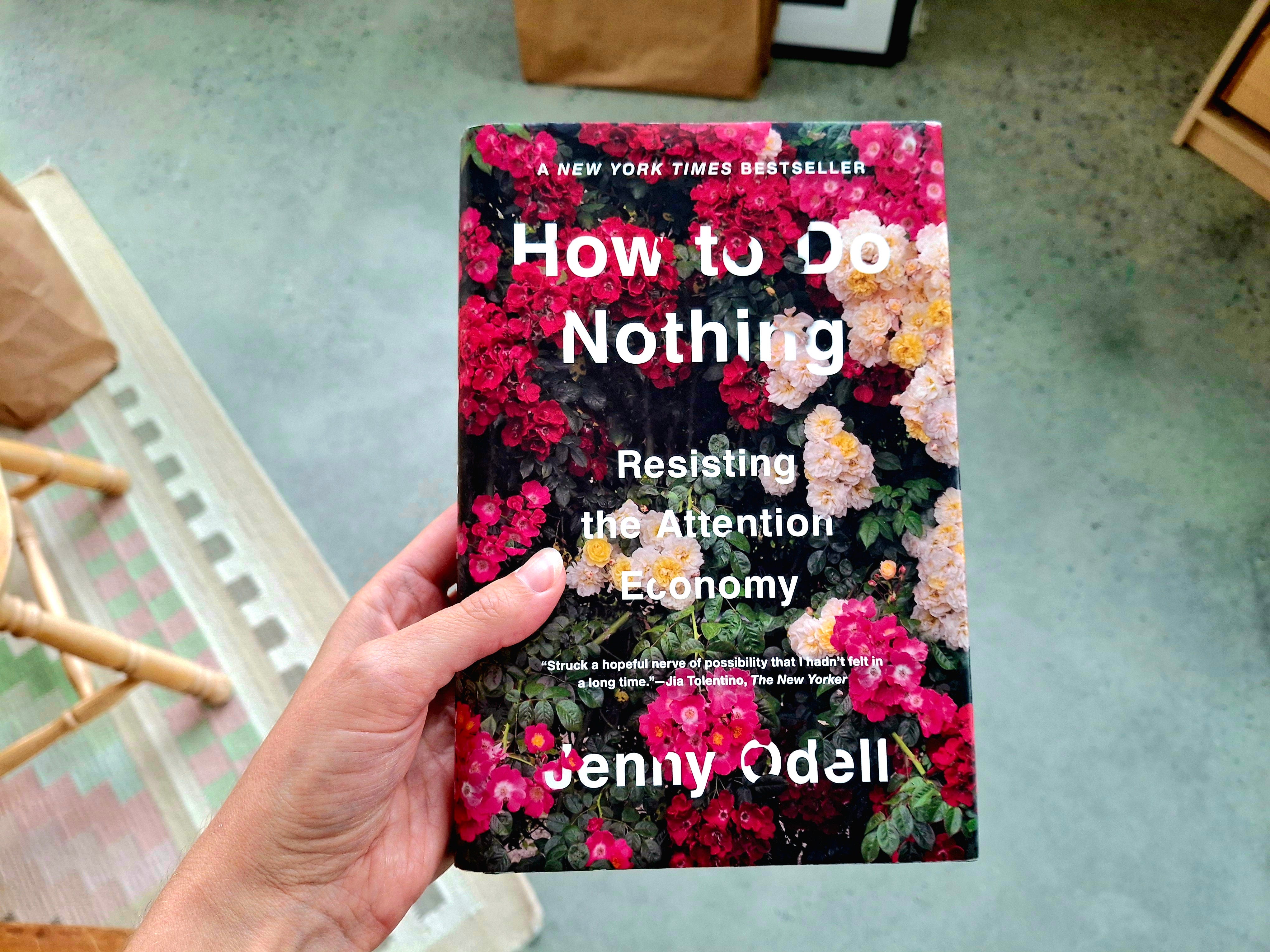
In a chapter caller “Ecology of Strangers,” Jenny Odell makes a case for getting to know and care about the people who live physically near us, not just people who are similar to us. She uses the metaphor of Spotify algorithms, writing about how her Spotify account correctly identified that she likes a certain kind of chill music, and then recommends more and more of the same. She contrasts this to listening to music in her car on the radio:
“None of these stations ever play anything like ‘the Jenny mix.’ Instead they will occasionally play a song that I like even more than my archetypal song, in a different way and for reasons I can’t pinpoint. The songs fall into genres I normally dislike, including Top 40. […] Especially with something as intuitively appealing or unappealing as music, to acknowledge that there’s something I didn’t know I liked is to be surprised not only by the song but by myself.”
She goes on to write about the value in expanding our attention to strangers and people outside of our normal bubble or filter. I like this idea a lot, and it got me thinking about other places algorithms shape what and who I am exposed to, especially in my art practice.
Experiencing work by other artists can be incredibly expansive, and a major way I learn what kind of art I want to make (not just visual art but other forms too), so this isn’t an issue with the overall practice of finding inspiration from other people’s work. For example, I have EXTENSIVE Pinterest boards for various topics, projects, etc. When I’m working on a project, one of my first impulses is often to type related terms into Pinterest to look for inspiration.
But…what I see on Pinterest (and other online platforms I might use for inspiration) is determined by an algorithm, which has learned “my taste.” In terms of creative inspiration, this can lead to being stuck in an aesthetically pleasing echo chamber, where it starts to feel like everyone’s art looks the same, and everyone’s art looks like what I wish my art looked like. As Jenny Odell points out in How to Do Nothing: “At it’s most successful, an algorithmic ‘honing in’ would seem to incrementally entomb me as an ever-more stable image of what I like and why.”
And spending too much time looking at platforms like this kind of makes me start to feel like: what’s even the point? Every beautiful and creative thing I could think of has already been done.
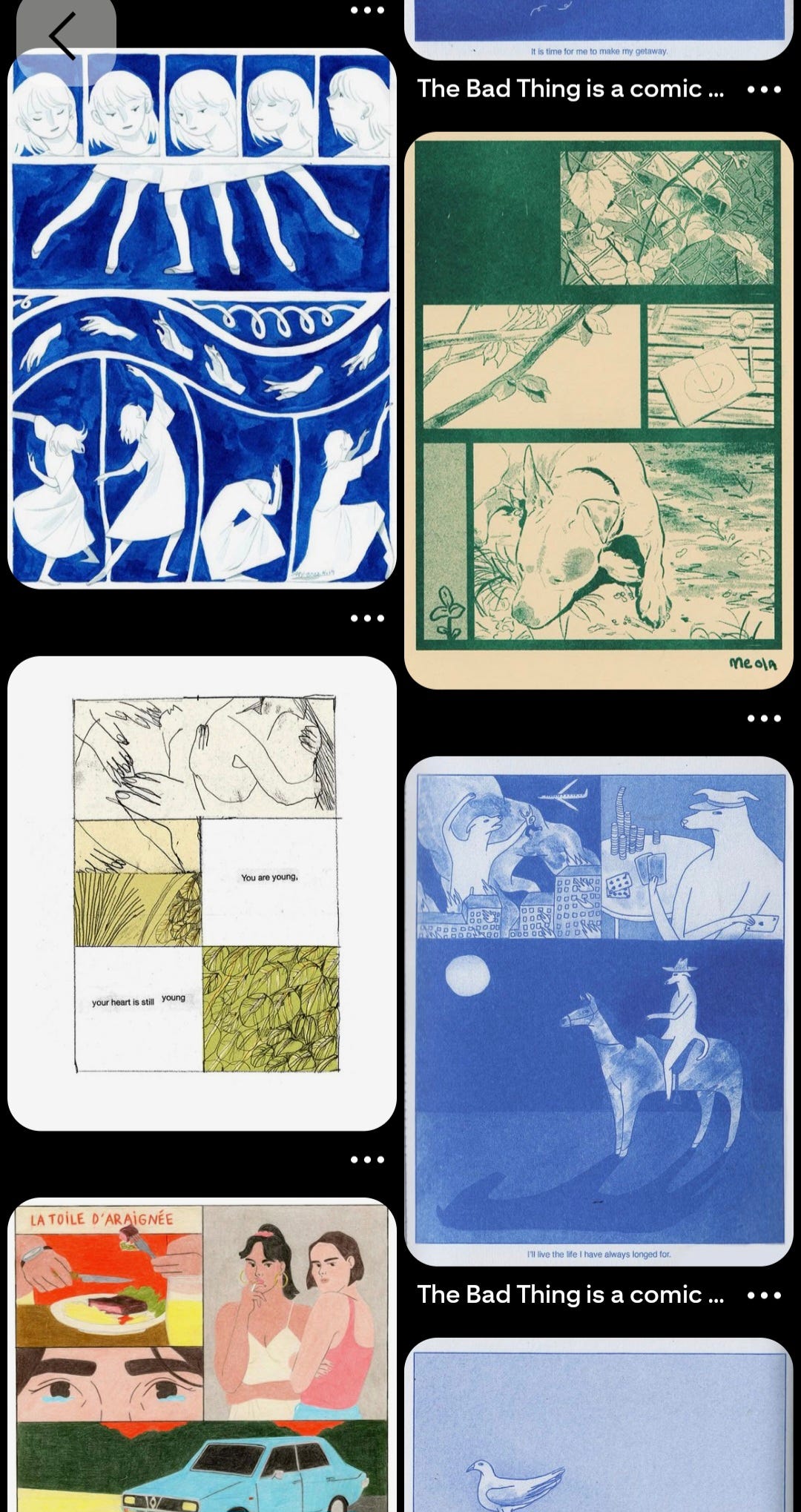
So here’s the question … how can I de-algorithmize my inspiration?
I’m not gonna lie, I will keep using Pinterest. I used it this morning. But I’m thinking about how I can ADD de-algorithmized (woah I am inventing words left and right) inspiration sources to mix. Lately, one way I’m trying to do this is:
In How To Do Nothing, Jenny Odell has a beautiful passage contrasting looking at a screen to looking at the world around her:
“I sit in the deep bowl on the Rose Garden, surrounded by various human and nonhuman bodies, inhabiting a reality interwoven by myriad bodily sensitivities besides my own—indeed, the very smell of jasmine and just-ripening blackberry—I look down at my phone and wonder if it isn’t it’s own kind of sensory-deprivation chamber. That tiny, glowing world of metrics cannot compare to this one, which speaks to me instead in breezes, light and shadow, and the unruly, indescribable detail of the real world.”
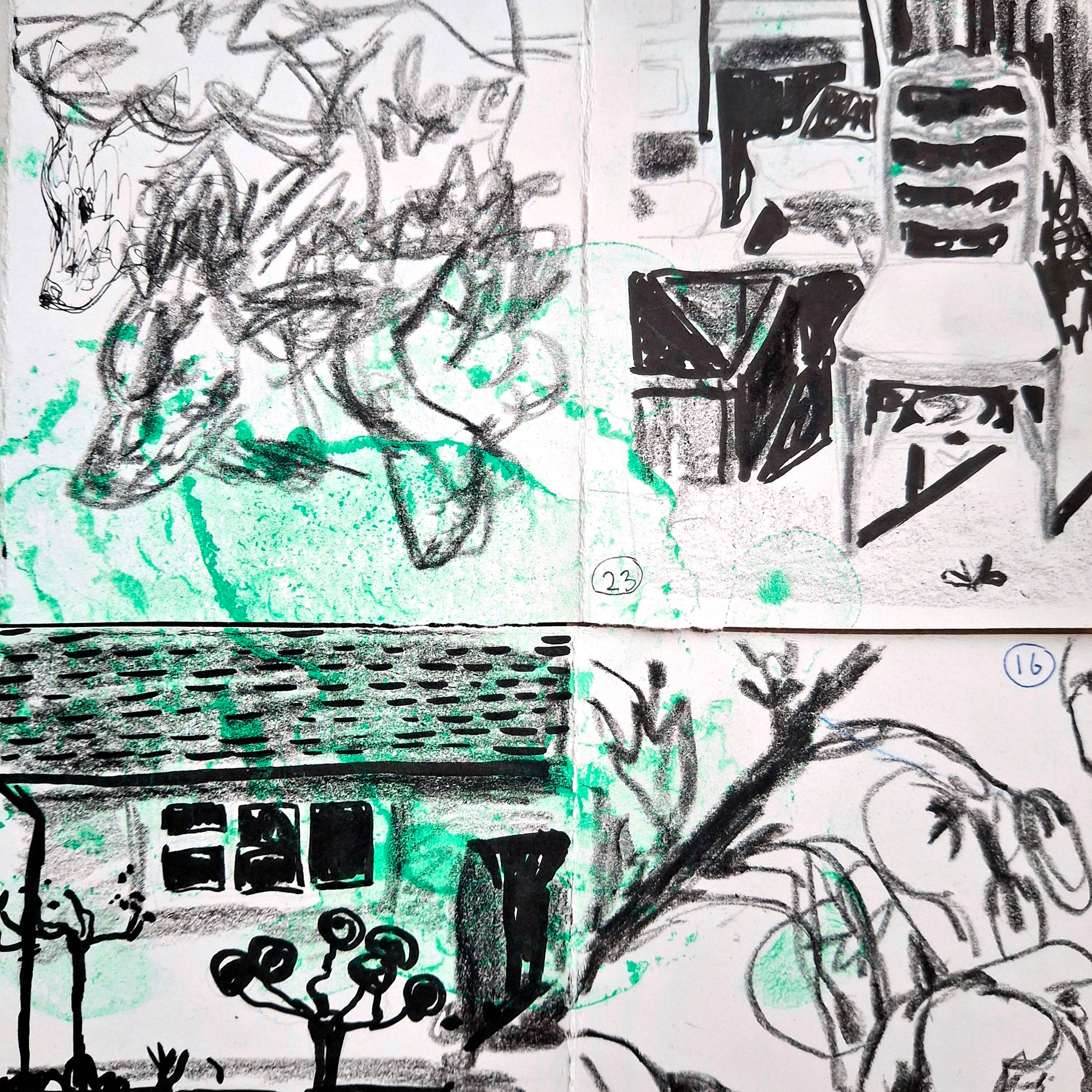
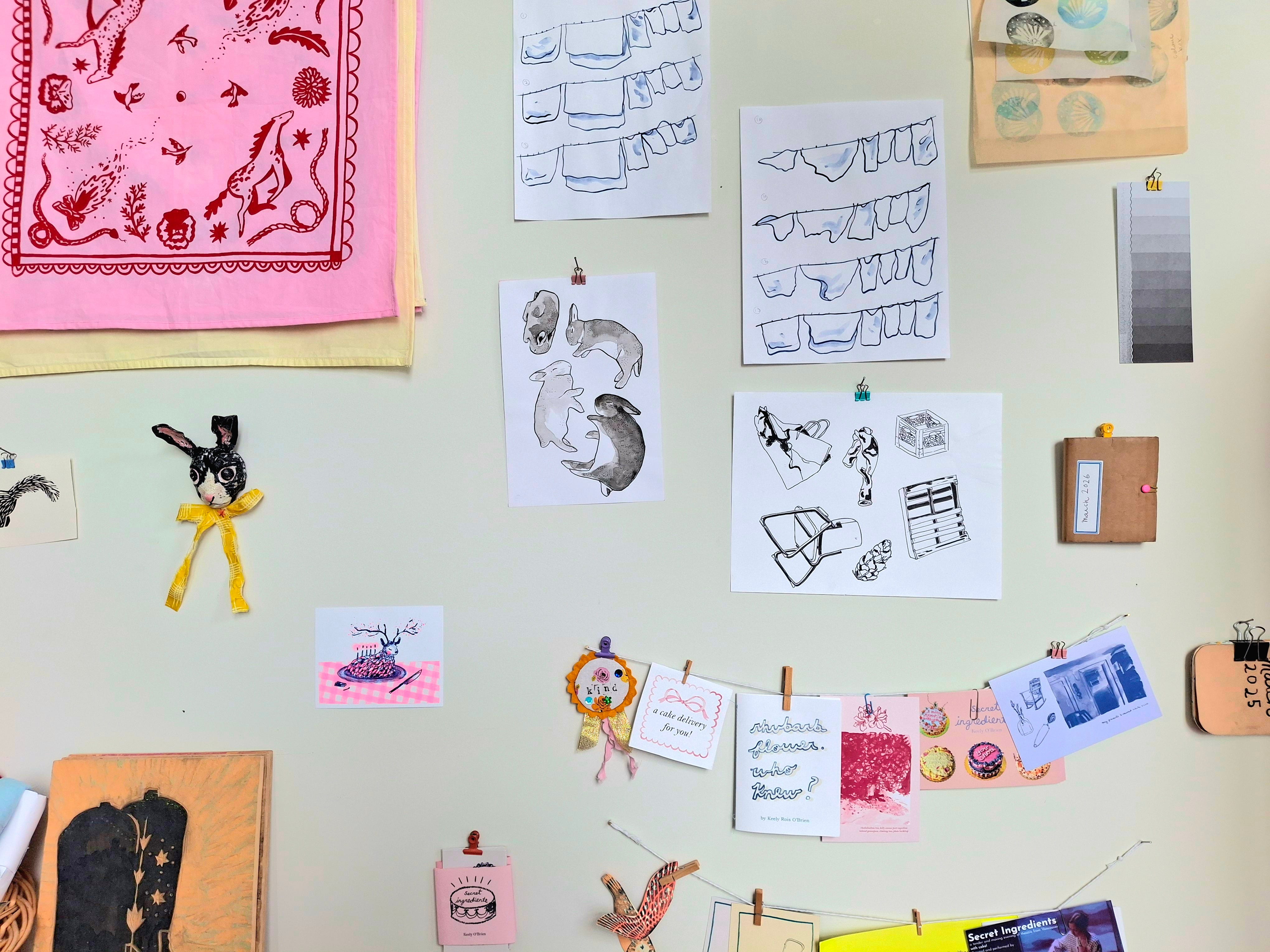
Bringing all these ideas together, I have been trying to find creative inspiration in “the unruly, indescribable detail of the real world”: drawing from observation, drawing what I see in front of me, tuning into the overwhelming, entrancing detail there is in everything, and the time and attention it takes to draw even something small.
Last month I gave myself the challenge of drawing from observation every day, in this funny little unfolding book I made:
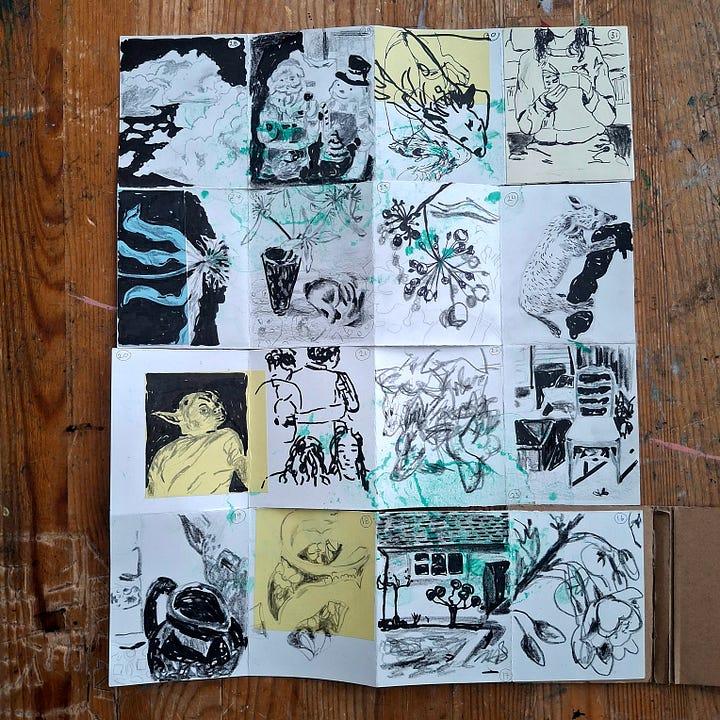
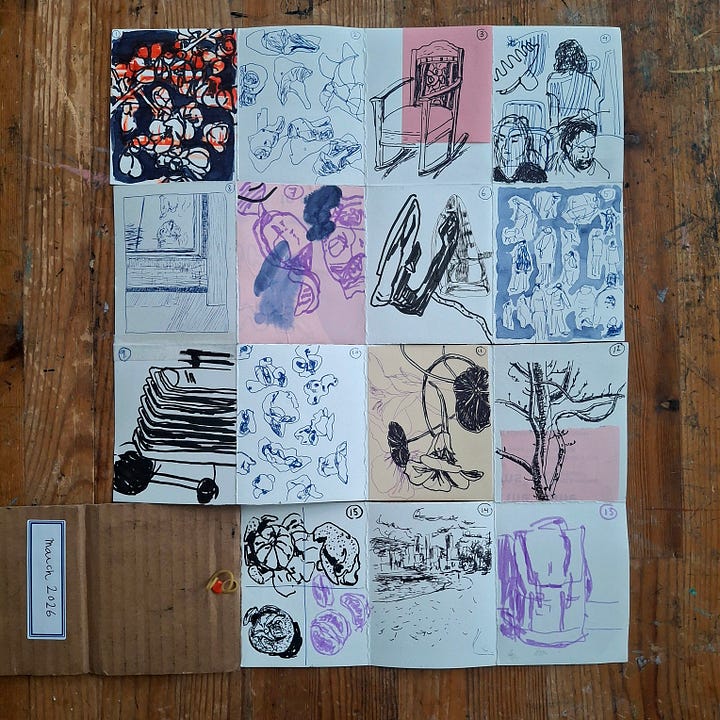
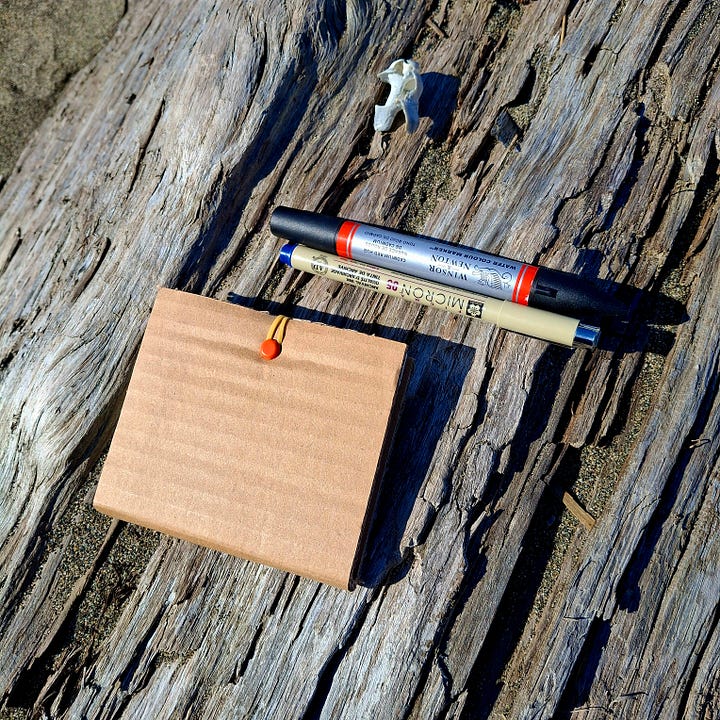
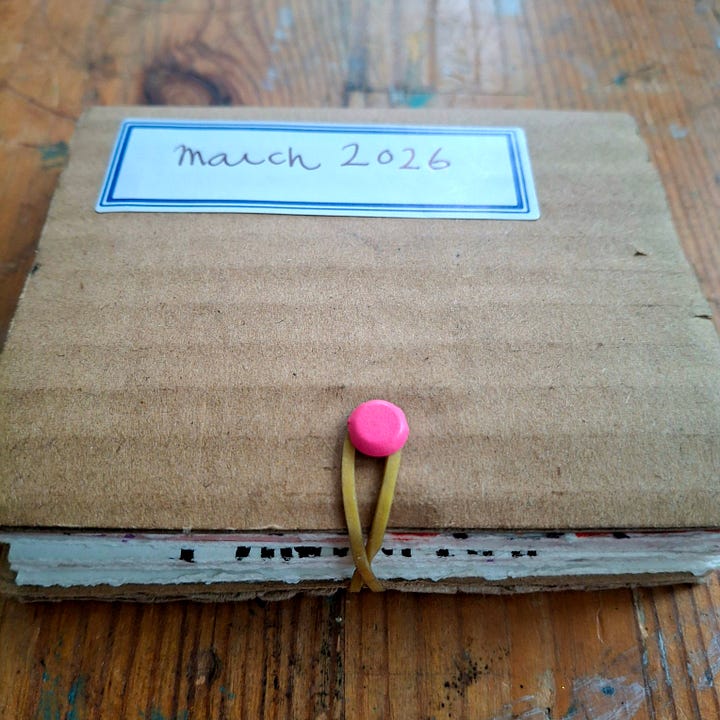
Some of these drawings I like, and some I don’t. Some days I forgot to draw until I was already going to bed, and just made a quick scribble, other days I prioritized it an spent a chunk of time. I carried my little book with me and drew at restaurants, on park benches, in the car, at the beach, at the hospital, at my desk. I experimented with variables like sketching with pencil first or just jumping in with a marker or crayon, working with lines versus focusing on shapes, working carefully or loosely.
Maybe it is a cliche, but this project really did pull me into the “breezes, light and shadow” of the real world.
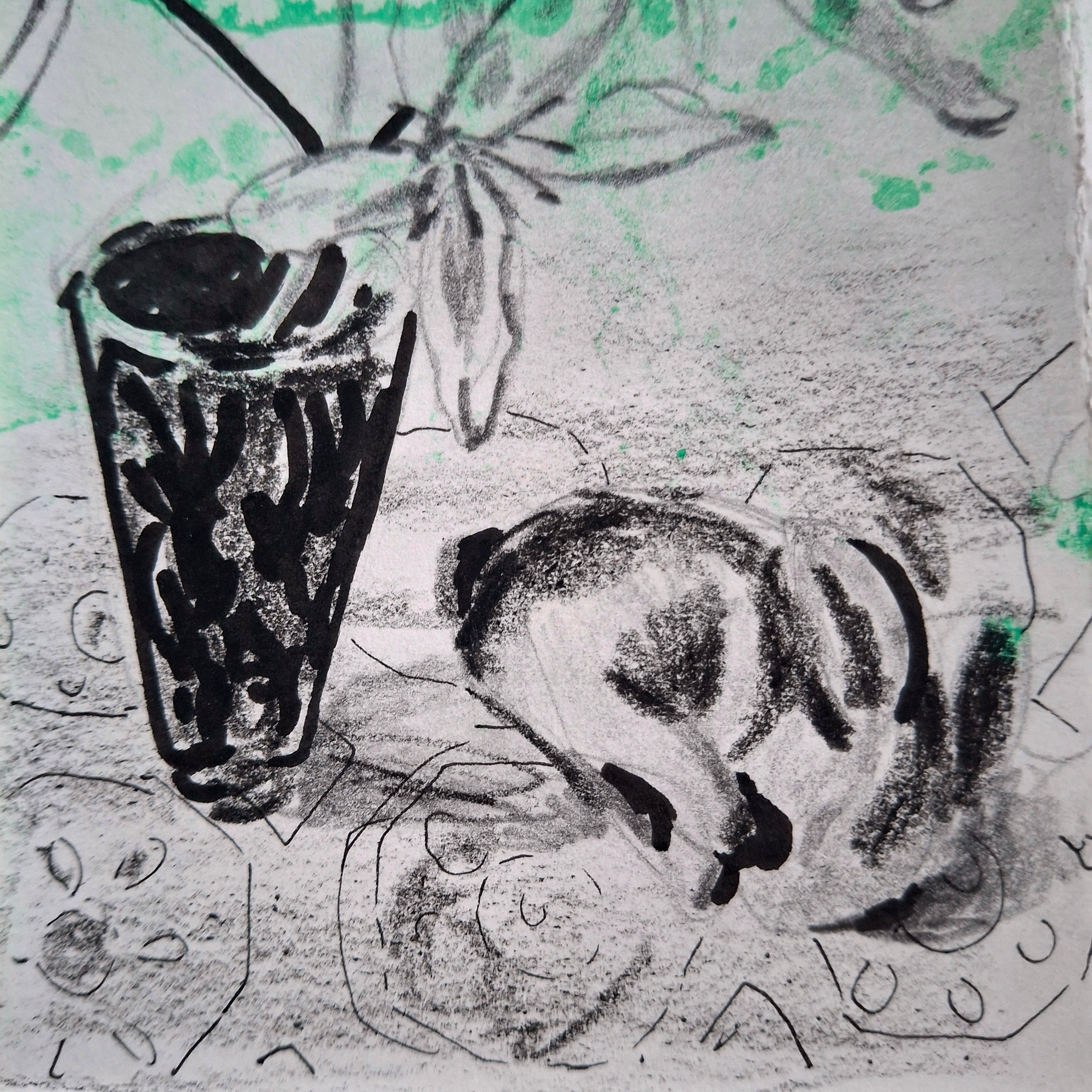
Maybe there is something to say here about style versus content: this practice of drawing from observation of reality is a way to de-algorithmize the content of a drawing. It actually might be even more helpful for me to think about ways I can de-algorithmize where I find inspiration for drawing style. A few thoughts that jumps to mind:
-going to the library without a plan and wandering in the art section
-seeing shows of artists whose work I don’t already know
-expanding the timeline: looking at less contemporary references
-this might sounds weird, but referring back to my own work as a style inspiration
Okay, that’s it for now!
No posts
Comments
Nothing yet. Say the first thing.
Sign in to join the conversation.