
Over the course of February and March, I’ve had the immense pleasure of watching all of Guillermo del Toro’s filmography. From his debut feature Cronos(1992) to his recent masterpiece Frankenstein (2025), there have been countless lessons I’ve learnt from the great master - how he moves the camera, how he defines a visual aesthetic and how he selects actors for roles. I’ve come to understand his rhythm, style and patois through his works and interviews.
There’s not many people you find in life to whom you could spend hours listening to and never bore. For me personally, del Toro stands tall amongst them.
There are spoilers ahead for the following movies: del Toro’s Frankenstein, del Toro’s Pinocchio, Hellboy, Pan’s Labyrinth, The Shape of Water and Crimson Peak.
I’ve got a theory!1 If Archimedes would say, “Give me a lever long enough and a fulcrum on which to place it, and I shall move the world”, I believe that del Toro would say, “Give me a camera and a crane on which to place it, and I shall build a world”.
Not many directors have a knack for world-building. It is more art than science, after all. And the best world-builders don’t use dialogue to explore their worlds.2 They string bits and pieces together throughout the story. A sound here. Some colour there. A dash and zing elsewhere. Before you know it, they’ve woven a tapestry.
World-building is not only about making people believe the world but also about setting a tone and mood i.e hinting at how the characters feel in certain moments. Dialogue only gets you to the starting line here. In Pan’s Labyrinth, for example, whenever we are taking Ofelia’s perspective, the “real” world is always cold and austere. Harsh and alien. Whereas, in her fantasy realm, there’s warmth. It invites you in.
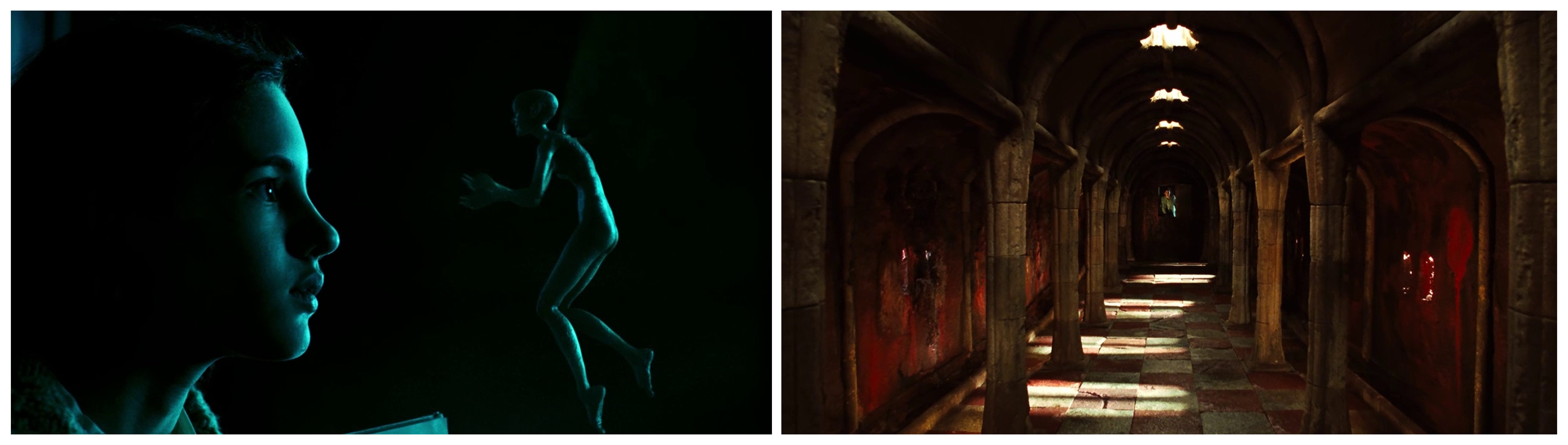
This is one of countless examples where a world is revealed pas-a-pas.
Most directors like to sit near the production office. But I’m a pest; I stay near the art department.
- Guillermo del Toro
His method is that of collaboration between departments. Art department, wardrobe, production design, lighting, cinematography. Each of these parts informs and accentuates the other. And since every part of the world is connected, every part of the production that goes into constructing it needs to inform the other. Lighting dictates cinematography; production design informs lighting; wardrobe complements production design; art highlights wardrobe, and cinematography brings out art.
Another example of this is in Frankenstein. Cinematographer Dan Laustsen built a specialised lighting setup for the wardrobe department so they could test out their designs with a replica of what the set lighting would look like. It is quiet collaborations like these that are in film solely because they come from the mind of the director.
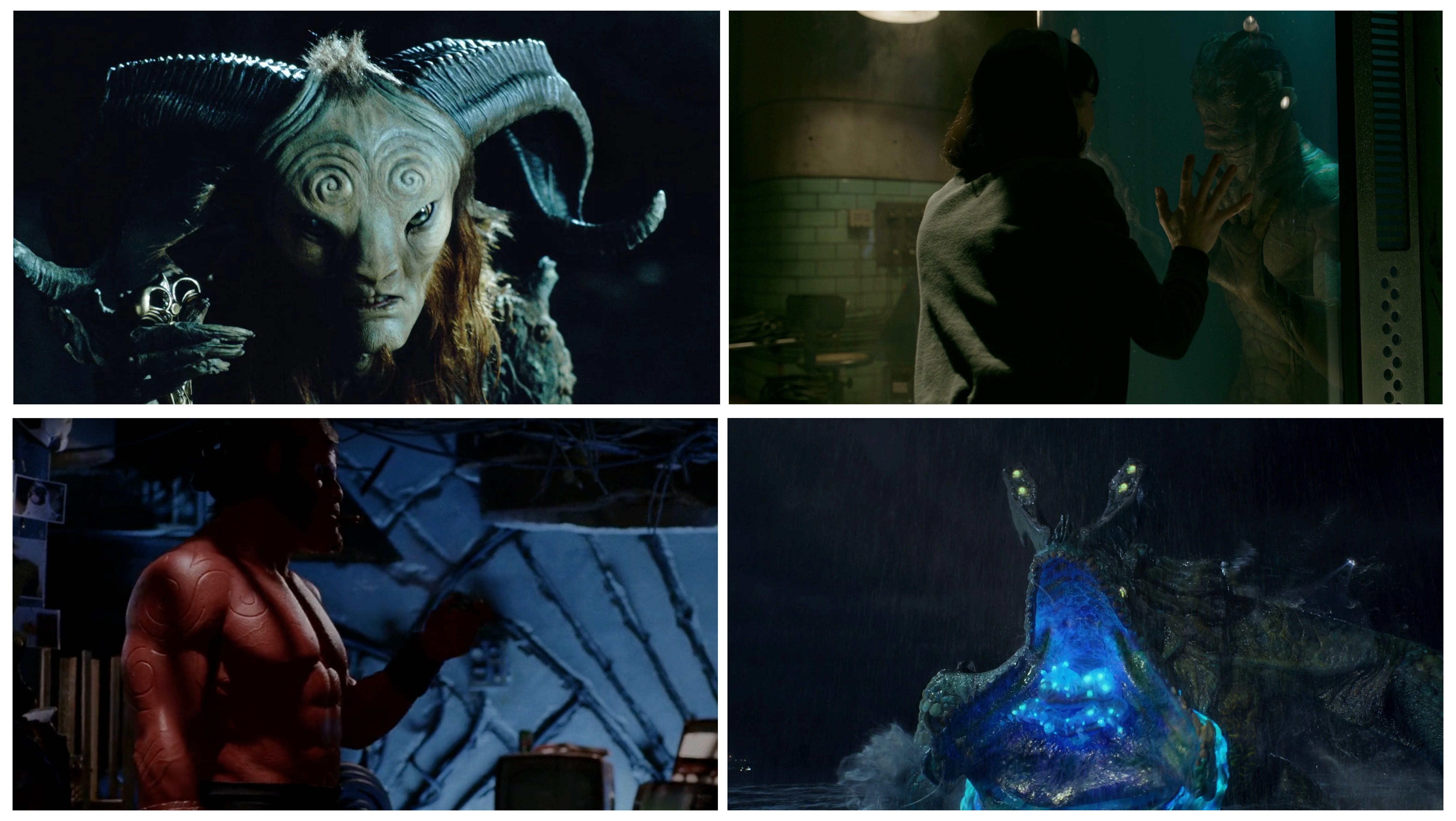
An aside on monsters in his worlds. Notice how all of del Toro’s monsters are uniquely crafted. They don’t look like “accident victims”. None of them are maimed or gnarly. Scary yes. But not ghastly to look at. There’s a unique aesthetic quality to all of them. You could even say, crafted. The Faun in Pan’s Labyrinth has markings and engravings. Also it maintains somewhat of a tree-bark sturdiness. Hellboy has runes tattooed onto him. The Kaijus in Pacific Rim look individually “designed”. The Creature in Frankenstein looks newly minted.3
The worlds that we see from del Toro’s imagination are meticulously wrought, tactile, and alive with intention. But these worlds are not simply built—they are revealed. And the instrument of that revelation is movement and style.
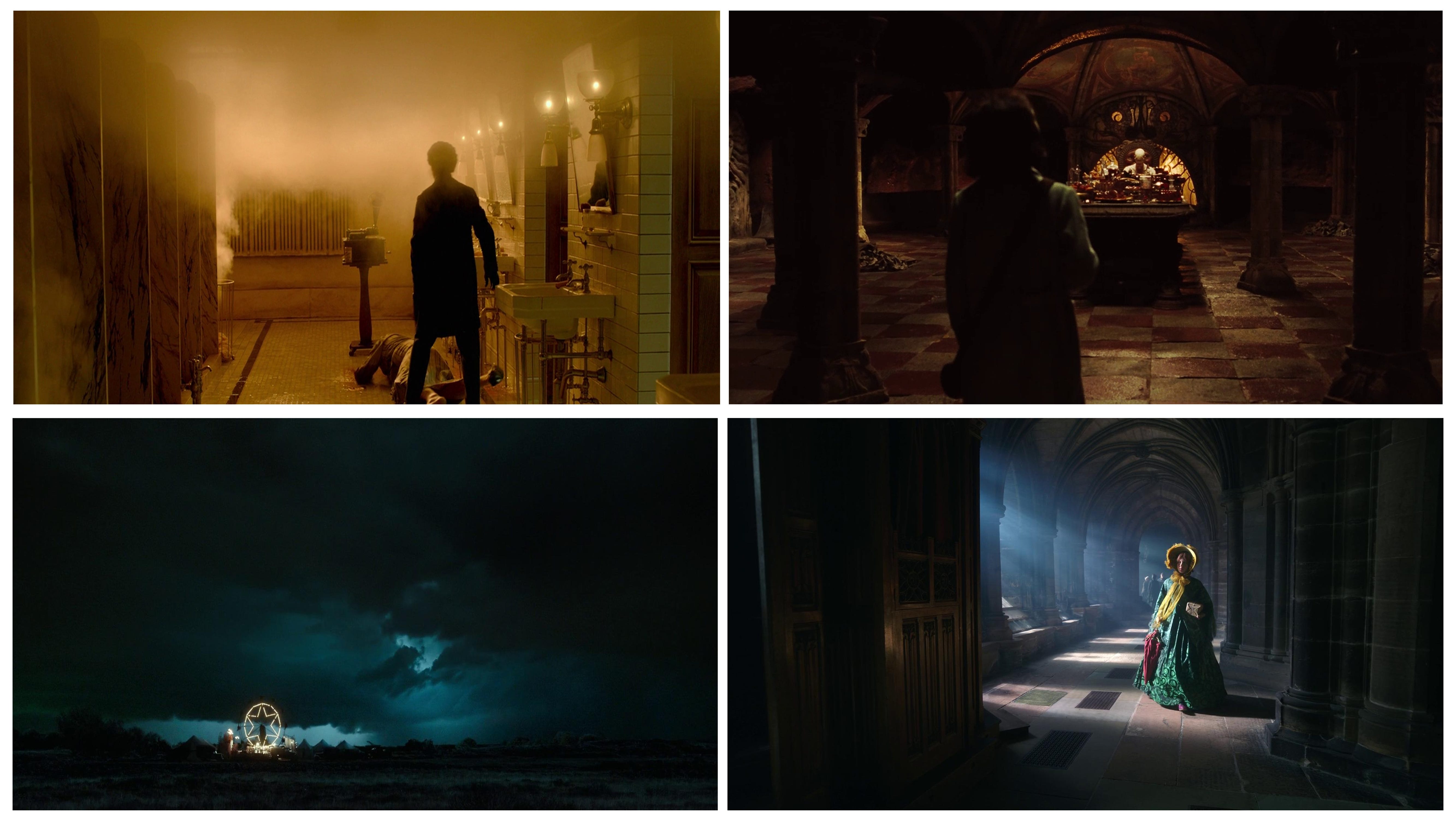
I would be amiss if I didn’t speak of his fluid, poetic camera style. The crane and dolly are anchors in any del Toro movie set. He. Adores. Them. Like LOVES THEM. As in “Frankenstein-does-not-have-a-single-static-shot” type love. He says in interviews “every scene must be filled with emotion”. Not just in the performances in the scene but also how the camera moves. For e.g. if a character is agitated, the camera moves faster; if the character is deliberating, we track their movement, etc.
If there was a phrase I would use to classify his style, I would call it “modern operatic”. The worlds he paints are uniquely baroque and ornate with strong religious and political themes. The camera moves delicately because his desire for emotion mingles with his special method of depicting it. The master fills his movies with flourishes that move you.
On the topic of emotion, del Toro also approaches adaptation more subjectively than most. Frankenstein, for example, was almost a biography of himself mixed with Shelley’s work. He tries to replicate how the book makes him feel instead of simply sticking to the book’s narrative. Instead of trying to stay true to the material, he aims to stay true to the intention and themes that inspired it.
The reaches opened before us and closed behind, as if the forest had stepped leisurely across the water to bar the way for our return. We penetrated deeper and deeper into the heart of darkness. It was very quiet there.
- Joseph Conrad, Heart of Darkness
Two men meet in a story. A creature born out of nature and a genteel man born into an aristocracy. One exacts a cruelty that the other suffers. One attempts to kill the other. One calls the other Monster. The other replies Maker. Frankenstein is an examination of obsession, fathers, trauma and the miracle of creation. We see an obsessive Victor Frankenstein. A man who goes to the ends of the earth to craft his ‘perfect being’.
But in the process of achieving the ‘birth’ of his new creature, he reveals he cannot take the responsibility of creation.4 All that repression from his sterile childhood lashes out onto this new creature. And it sours Victor. He cannot see more than what he projects onto the Creature. Just like how his father could not see more than what he wanted for Victor.
That’s the point here. For del Toro, monsters are rarely born; they are revealed, shaped, or forced into being by systems that claim to civilise or ‘cultivate’.
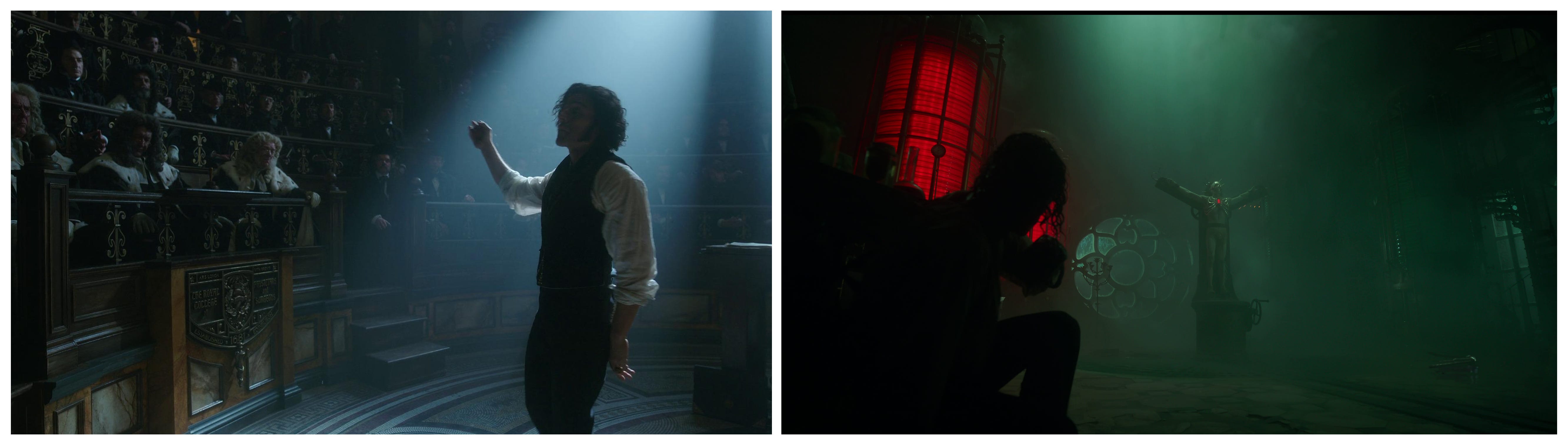
A ‘civilising’ force is that of a lid. Bottling the human parts it deems brash or unrefined. Inevitably, the pressure builds under the surface. And just like how the prerequisite for violence is pressure, the prerequisite for monsters is repression. When the lid’s covered, and there’s nowhere to go, the contents will explode.5
In del Toro’s dark fantasy, Pan’s Labyrinth, we see a political force as the lid6. A force more sinister and more potent. The man running point is Captain Vidal, the remorseless leader of Franco’s forces trying to snuff out the last of the rebellion in the mountains.
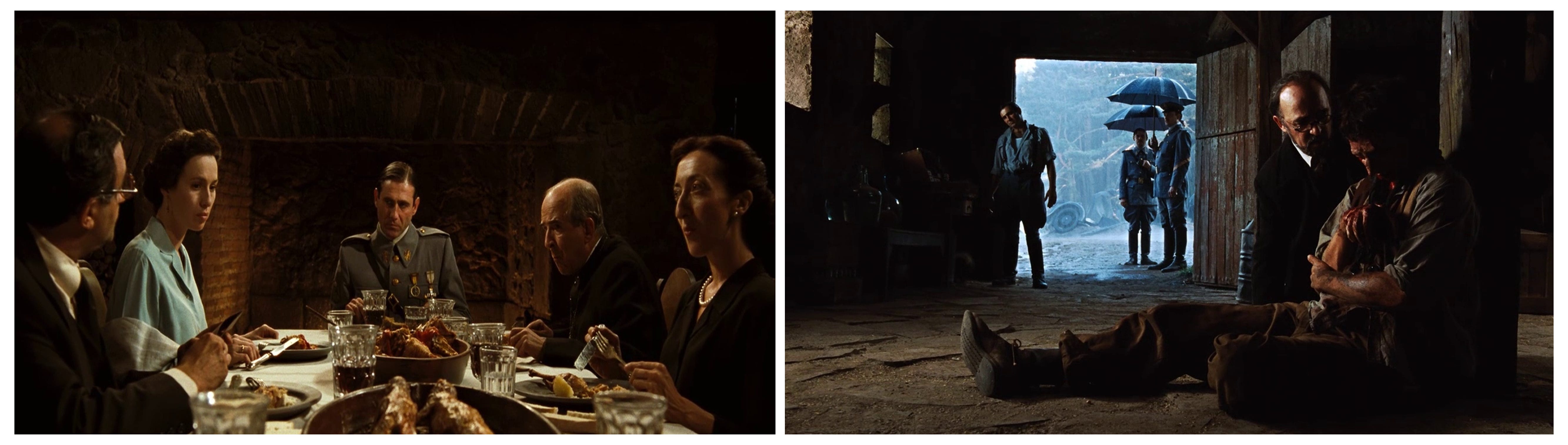
In this movie, we see a “civilising” force exacting horrors and bringing about untold suffering onto fellow humans. Ofelia, the protagonist, attempts to escape this harsh social reality through the game that the Faun gives her. An escape or a game, whichever you call it, was Ofelia’s return to nature.
There is an argument that has been made for centuries about whether “civilisation” acts as a force for “good” or perpetrates greater and greater evils.7 These modes of repression - courtesy, norms and judicial systems constitute a girding of select aspects of our “human nature” and inevitably explode into violence. A lot of del Toro’s filmography shows how civilisation, insofar as it is a quest to exchange animal impulse for transaction, is a Faustian bargain.8 “White Man’s Burden” is more lie than fallacy.
I have another theory.9 I call this the del Toro Conjecture™.
Our humanity is marked by what we sacrifice for the ones we love.
Lo que sacrificamos, nos dan humanidad. This is true north in the moral compass del Toro imparts to his characters. To ask the question about what makes us human, ask what we are willing to give up.
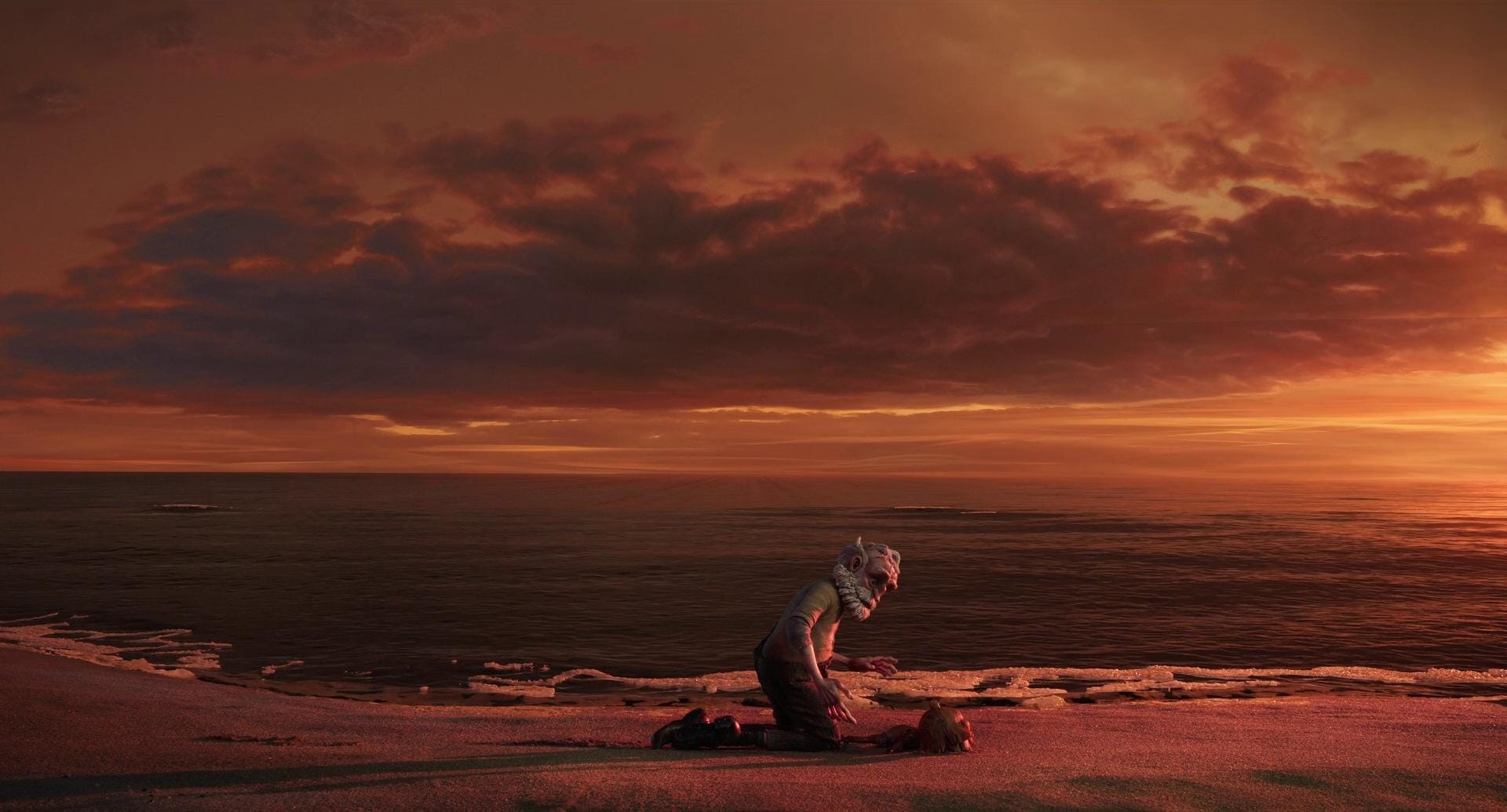
In del Toro’s Pinocchio, Pinocchio sacrifices his life for Gepetto. The quest to become a real boy was about the choice of sacrifice. Pinocchio chose to give up immortality to save his father. The Creature in Frankenstein learns to forgive his tormentor even after enduring a lifetime of pain and abuse.10 He chooses not to act on his vengeance and let it pass him by.
If I could distil a single lesson from these movies, it is this - one does not need to be a Homo sapien to be human, just like one does not have to be an alien to be a monster. We carry within ourselves the capacity for both good and evil. And it is a decision we take day in and day out to stave off the evil and act on the good.
Usually I do some takeaways from the filmmaker and their works, but this time there’s no point. The love is too grand, the lessons too metaphorical and the oeuvre too rich. One thing I will say however, is that there is a unique joy and love latent within del Toro’s filmography. A joy and love that comes from truly being passionate about your craft.
Cinema, I believe, lies on a spectrum. Spectacle on one end and reflection on the other.11 A filmmaker’s work should stand somewhere along the line. But a filmmaker’s goal must be to constantly move.
To me, del Toro has achieved unique blends of the two through each new movie that he does. And whatever he comes out with next, I’ll be waiting.
After a long hiatus on this series, I’ve finally gotten time to write and publish. This inspiration series will continue along with my monthly viewing of different directors’ and cinematographers’ works. I’ve also endeavoured to watch Roger Ebert’s The Great Movies List. There’s so much amazing stuff out there and I can’t wait to share it with you all.
Cronos (1992)
The Devil’s Backbone (2001)
Hellboy (2004)
Pan’s Labyrinth (2006)
Pacific Rim (2013)
Crimson Peak (2015)
The Shape of Water (2017)
Pinocchio (2022)
Frankenstein (2025)
Guillermo del Toro on Creating a ‘Frankenstein’ Monster Unlike Any Before
Guillermo del Toro - Mis películas tratan de sanar dolores que no podemos nombrar
El laberinto del fauno la fantasía negra de Guillermo del Toro - Cine con Ñ
Martin Scorsese on Frankenstein with Guillermo del Toro, Jacob Elordi & Oscar Isaac - Netflix
People around me would not be surprised to hear these words muttered on a semi-regular basis.
s/o my goat Denis Villeneuve
This is in sharp contrast to other Frankenstein’s monster interpretations where they make him look scarred and abominable.
I have a theory that if Victor Frankenstein was a woman, this story would have a very different way.
Every 100 years or so, we see this explosion take place. The 20th century gave us multiple explosions.
As it happens, so very often in history.
Rousseau and Hobbes and their contemporaries have had this debate over and over again.
I’m opting for the Kantian definition - civilisation concerning the individual’s external behaviour as an entity in a political machine. Courtesy, politeness, and legal order all constitute being “civilised”. But even Kant acknowledges that this is merely the appearance of good.
Which, importantly, was not part of Shelley’s book.
A future article will encompass cinema, documentary, the ethics of photography and Sontag’s On Photography.
Comments
Nothing yet. Say the first thing.
Sign in to join the conversation.