
One question I get asked a lot, whether that is at panels or just when generally chatting about my books, is: why naval fiction? And when I’m neck deep in resources about celestial navigation and watching video upon video about tacking and scouring ship and rigging plans, I often ask myself the same thing.
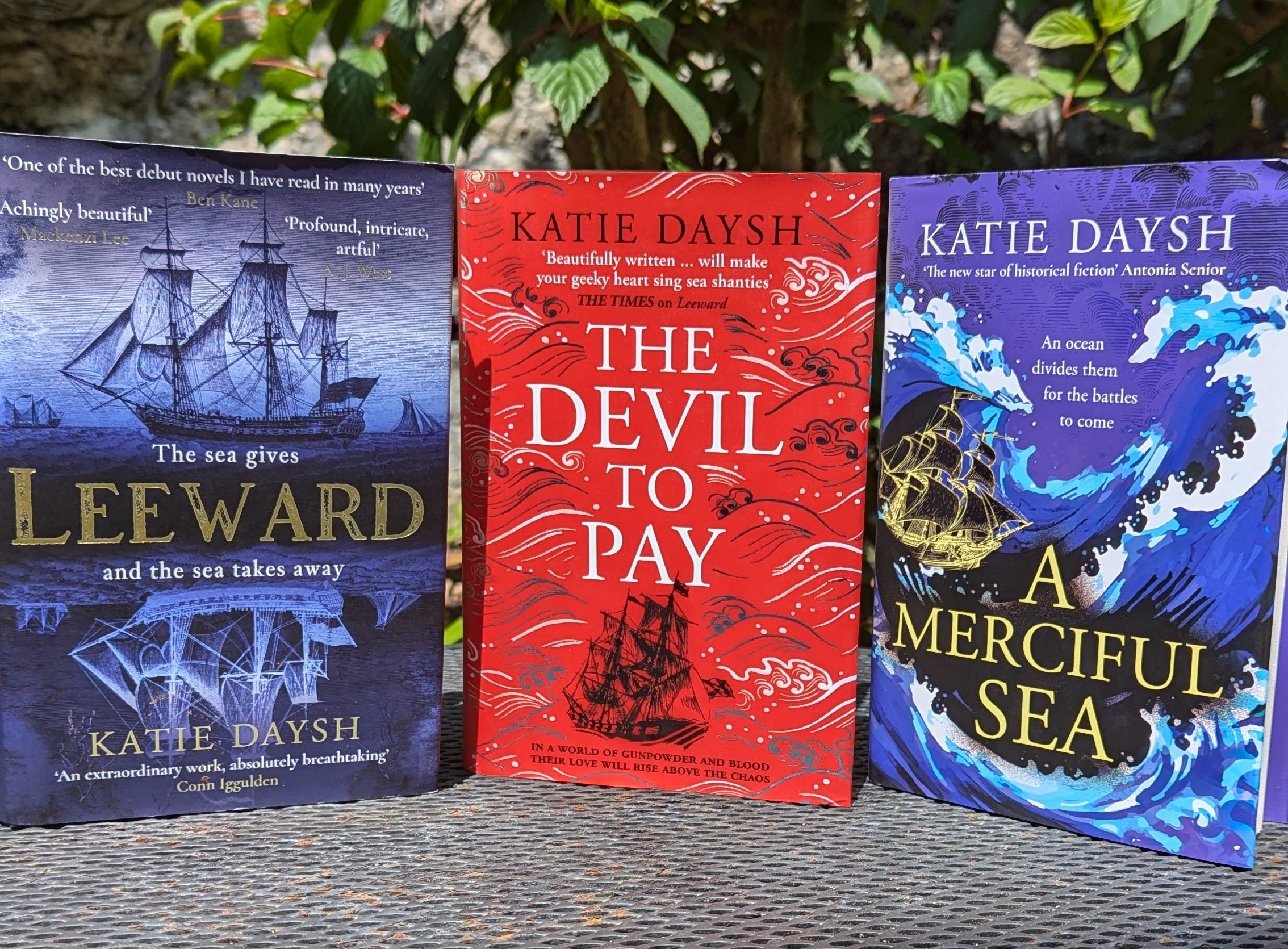
The truth is, there is no one reason. It was somewhat accidental that I stumbled into this genre and found a place I really resonated with. I have no great connection to being on the sea. Many other naval fiction authors are, or have been, sailors, but I have never sailed beyond a weekend stay at a sailing centre in primary school and frequent trips on the Isle of Wight ferry. I live by the sea, and have always done, but there is nothing in my blood that says that I was destined to write stories set there.
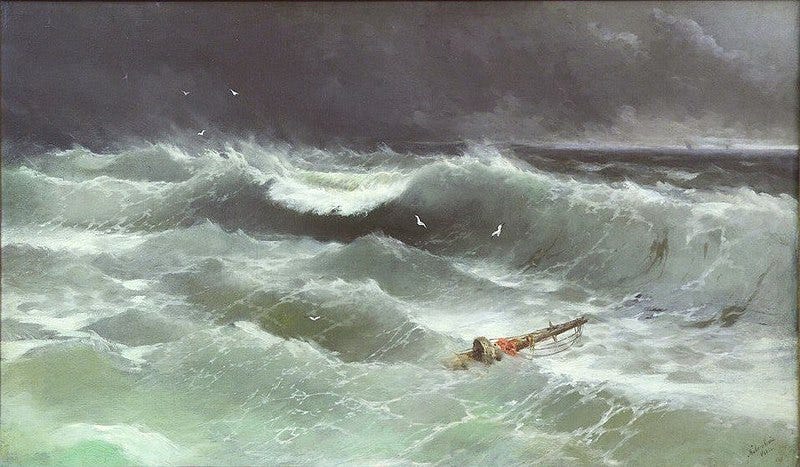
For me, the attraction is like a sci-fi writer’s fascination with space. As far as I’m aware, sci-fi writers don’t get asked if they are astronauts or when was the last time they went to Mars. The sea is like space. It is huge, dangerous, and often frightening. It puts into perspective the smallness of humanity and it truly is another world, ruled by something other than people.
Not a small degree of my interest in the sea comes from a fear of it. It is awesome (in the oldest sense of the word, not AWESOME!! But that too) and unconquerable, as much as the men of my characters’ generations would say they ruled the waves. And it is the perfect setting for the stories I like to tell.
Having said all that, though, I will also say that from a young age I have loved stories set on the sea. I frequently rented out the video of Peter Pan from the library because I adored Captain Hook (my love for troubled sea captains goes deep). I watched and re-watched Ray Harryhausen movies like Clash of the Titans, Jason and the Argonauts, and Sinbad and the Eye of the Tiger which are all significantly connected with the sea. In fact, I used to get my granddad to pretend to be the Kraken when we went swimming. My other favourite film as a kid was The Poseidon Adventure and any eagle-eyed readers with a knowledge of 1970s disaster films will see my books have subtle references to that film (it started off unintentional but now it’s very intentional).
But the thing I believe that really kicked off my fascination with sea stories was Moby-Dick. I read this book in 2012 and was instantly in love. I can’t quite articulate why but it grabbed me from the start and has shaped the narratives and themes I explore in my writing: obsession; communities of outsiders; the cosmic terror of the ocean; the battle between duty and what is right; and the queer-coded protagonists who go to sea.
My favourite character is, and always will be, Starbuck, the honourable first mate of the Pequod who fights with his sense of ethics and is torn between his loyalty to Captain Ahab and his work and the safety of the crew as they are plunged more and more into megalomaniacal danger. Starbuck is the subconscious basis for nearly all of my characters. If you’re not Starbuck, then you’re Ahab. And sometimes, you’re both. That conflict of honour and duty and morality is something I find so intriguing to explore.
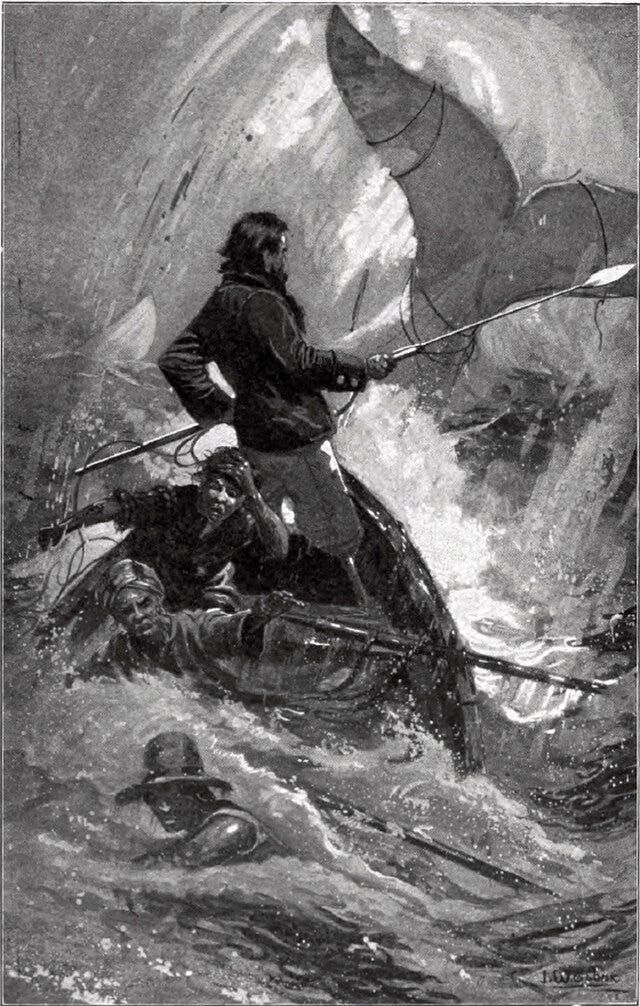
The sea, therefore, has an intrinsically dramatic quality to it. It throws characters into isolation and forces them to confront themselves and their own journeys. There is nowhere to hide on the sea; it strips you of everything. That is increased by the confinement of ships: claustrophobic, ruled by strict hierarchy, where only a few inches of wood and the skill of the crews, as well as the competency of their officers, separate people from disaster.
What better setting could there be to explore characters? Every single person will have a different reaction to this extreme environment and writing about how personalities clash or come together is such an incredibly exciting part of the naval fiction genre.
Both Hiram Nightingale and Arthur Courtney have their flaws, as well as their triumphs. These qualities get hugely amplified by their homes amongst the wooden walls. This leads me to another slightly tangential point, but one which came up when I attended the recent Bowlines Maritime Festival in Exeter. Much of naval fiction is told from the point of view of the officers. There is a historical reason for this: although there are journals from men of the ‘lower decks’, much of the material comes from the officers, and with naval series, books tend to follow the career progression of officers. But for me, there is a narrative-level reason too.
One of my favourite things to explore in any genre, with any character, is the burden of expectations, whether that is societal, personal, or professional. Both Nightingale and Courtney are men who feel they do not fit into the world. Nightingale thinks he no longer has the strength to lead, whereas Courtney does not have the connections and background of other successful men. Added to this, they are both queer men (I shall explore queer historical fiction in another post as there is a lot more to say about this!). These are interesting tensions to explore, but put them in an officer who is meant to rise above his own foibles and be responsible for many other men, then I find them extra interesting. Whether Nightingale and Courtney succeed in this is up to the reader!
Another point is that it isn’t simply all naval fiction I find engaging (although it is a lot of it). It is historical naval fiction and specifically from the late eighteenth century into the nineteenth (with a burst of fascination in the early twentieth in the so-called Golden Age of Antarctic exploration). This period of history looms extremely large in the British conscience and there are a lot of misconceptions around it. It has a certain presence, in the ideas of ‘rum, sodomy and the lash’, the gorgeous oil paintings of battles, and the mythos of Nelson. I don’t have enough space to go into all that here, but those notions come with their own expectations which have impacted the genre. I like to look beyond that.
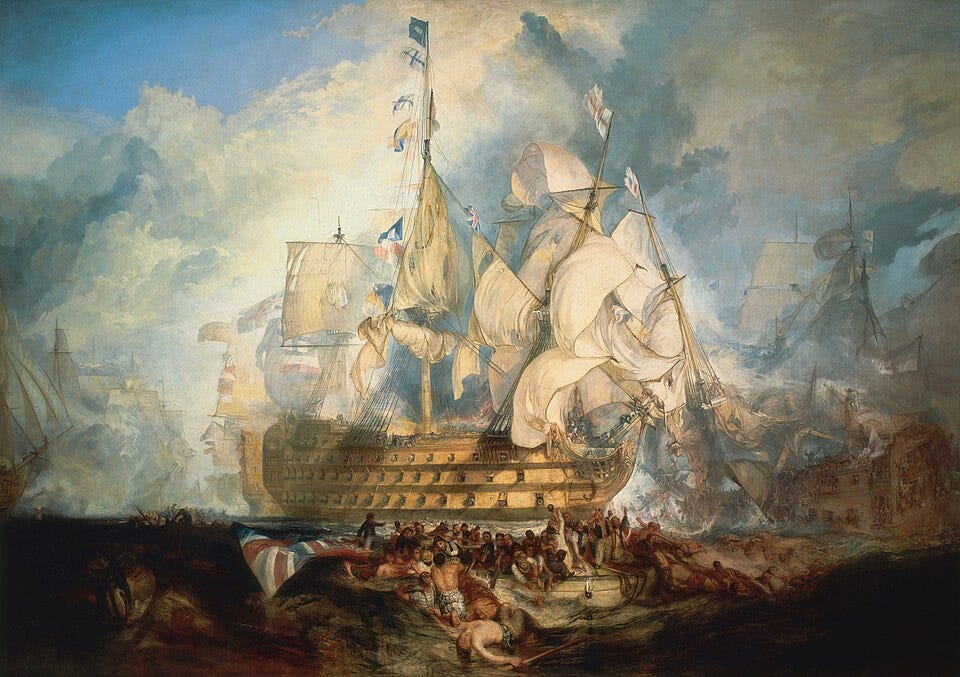
In ways, my series is a very typical Age of Sail series. It has the standard tropes of mutiny, seafaring, cannons, politics, bad and good officers, bad and good shipmates… But, even in a genre that has been going since the time of Nelson himself, there have not been many other voices telling these stories. In terms of the character casts and the authors, it is quite an older straight male-dominated world.
The navy of the time I write was not all straight, white, and male. No period of history is, despite what some might say. This is another answer to the question ‘why naval fiction’? Historical queer stories and sea stories overlap beautifully. They are both about people who feel they do not fit in. Intense bonds bloom in extreme environments and over shared emotional experiences. The sea is a fantastic stage for these narratives.
Historical fiction is an extremely rewarding genre, both to write and read. I love to research both big and small details, and bring what is essentially another world to life. History provides a brilliant framework to tell stories; every character must be grounded in their time but there is such a scope for creating connections across the ages. At its heart, historical naval fiction is about people and although times change, fundamentally people do not.
Why naval fiction?
I sometimes wonder, if I wrote a different genre (say, contemporary romance), whether people would still question my genre choice. I do think that a lot of the curiosity behind that question is because I am not the type of person you would typically think would write historical naval fiction. That is fine, and I always love explaining why, but the most basic answer is: why NOT naval fiction? It is a challenging genre (perhaps I will do a post on the pitfalls and difficulties of it!) but one which offers such a huge scope to examine characters and what makes people who they are.
The sea is a setting, a theme, and a character itself. What more can I ask for?
Images:
The Nightingale/Courtney trilogy (my image)
No posts
Comments
Nothing yet. Say the first thing.
Sign in to join the conversation.