
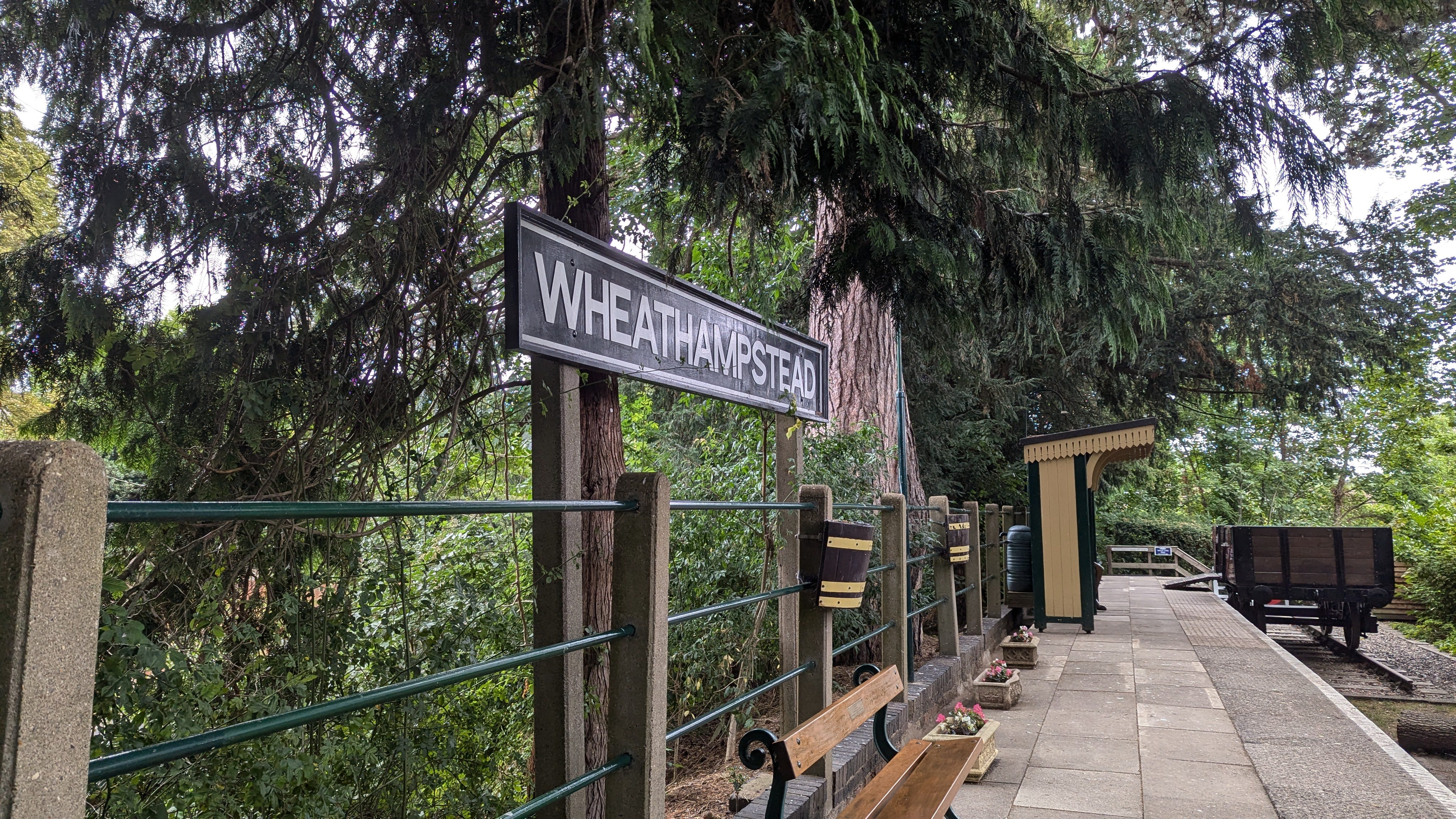
Recently, I made a polar pilgrimage up to the lovely town of Wheathampstead, just north of St Albans in Hertfordshire. For a person who isn’t keen on travelling, this was quite a trek from my home on the Isle of Wight: one train, one ferry, five buses over the course of the weekend (including the sole one which runs from St Albans to Wheathampstead on a Sunday), and a lot of trekking around and planning. Despite getting lost a couple of times, and completely underestimating the length of a walk, it was completely worth it.
Any historian or just anyone who has an interest in the past will be able to pick out a historical figure who they connect with for some reason or another.
My realm of history, and historical fiction, is naval history, but my true historical obsession is anything polar. There is something I find so intriguing and moving about the subject: the limits of endurance, the merciless wildernesses that people put themselves amongst, and mostly, the bonds that grow amongst the ice. Everything that is the human spirit – the good and the bad – is encapsulated in polar history. It is absolutely full of fascinating stories, from the ‘mystery’ of the Franklin expedition to Scott’s fateful trip to the South Pole to Shackleton and his insane survival exploits.
Some polar explorers are beloved by the narrative. Some are doomed by it.
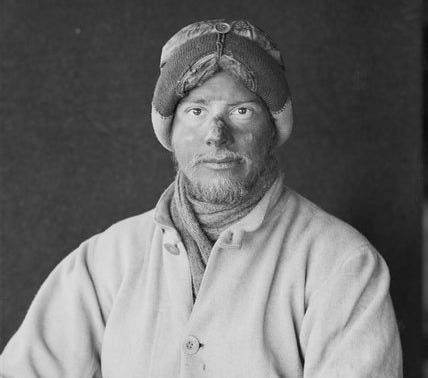
Apsley Cherry-Garrard, known as ‘Cherry’, was both of these kinds of explorers. He was one of the youngest (not the youngest as some sources say) of Robert Falcon Scott’s British Antarctic Expedition, travelling south to continue scientific research in Antarctica and be the first to reach the geographical South Pole. Cherry initially was rejected by Scott as he had no experience in the polar regions, but when he offered for Scott to keep the £1000 he had donated, Scott allowed him to come along as an ‘assistant to the zoologist’ (Edward Wilson).
Cherry was described by the others in the expedition as always cheerful (earning him the other nickname ‘Cheery’) and always willing to join in with the hard work, despite having no background in much of it. He performed various tasks when they reached the Antarctic continent and became particularly close with ‘Bill’ Wilson and Henry ‘Birdie’ Bowers (the Terra Nova folks gave nicknames to anything that moved). It was with these two that he was involved in one of the most insane episodes of polar history: the Cape Crozier winter journey.
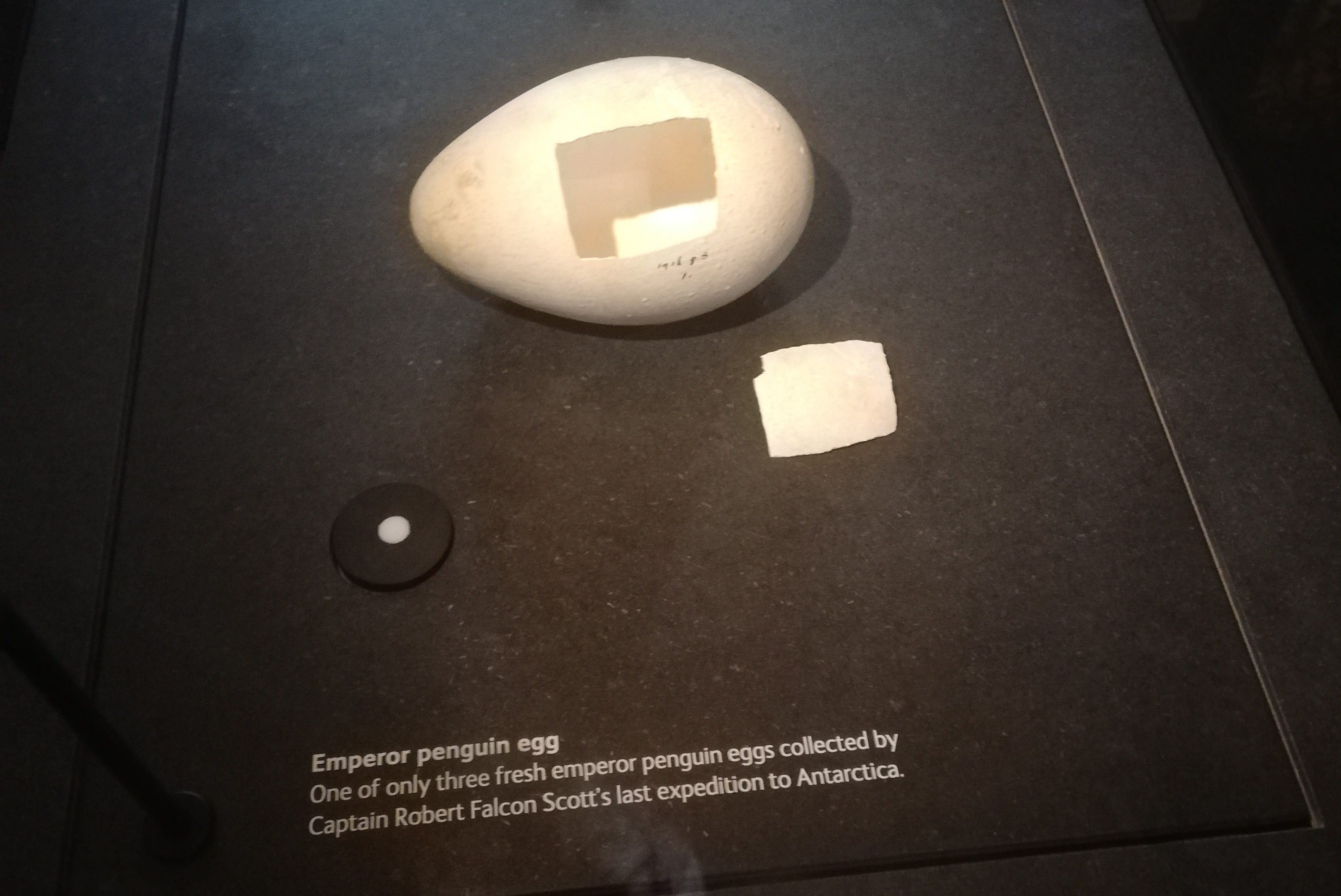
This little innocuous-looking egg, now displayed in the Natural History Museum in London, hides an amazing story of survival and a brotherhood forged in fire (or, in this case, ice).
It is one of three collected by Cherry, Bill, and Birdie whilst suffering through permanent darkness, hurricane-force winds, and temperatures that dropped to -60 degrees. The idea behind the expedition was to collect unhatched eggs from the emperor penguin colony to try and prove the link between reptiles and birds. The theory was later disproved and in any case, the eggs turned out to be insufficient to draw any conclusions from.
Throughout this time, the trio’s tent blew away, leaving them vulnerable to the elements, and Cherry’s teeth shattered due to the cold. Later, Cherry was to write an account of the expedition called ‘The Worst Journey in the World’; this was the titular ‘worst journey’.
But the narrative loved Cherry then. He, Birdie, and Bill survived. The next year, Birdie and Bill were to die with Scott on the return journey from the South Pole.
Now, I could go on and on about this entire expedition, and the various pockets of fascinating stories it includes (Tom Crean and killer whales, all I’m saying), but I shall leave it by describing the events which would follow Cherry to the end of his long life. Yes, Cherry survived but at a great cost to his physical and mental health.
Due to a line of unfortunate circumstances, Cherry ended up in charge of the dog teams which were to go to One Ton Depot, the last depot laid before the approach to the South Pole and the first place Scott and his five-man polar party would be seen on their return. There, Cherry was to wait for them and potentially (and this is one of the many historical debates around Scott’s expedition) to meet them on the way. Cherry, by his own estimation, could not navigate soundly and was inexperienced in dog-driving and also had been thrust into this sudden position of command. After a week with no sign from Scott, Cherry turned back.
Unbeknownst to him, the polar party were dying a mere 11 miles away from the depot. Cherry was one of the search team who found the men eight months later.
The assumed guilt over the deaths of the polar party, which included Cherry’s closest friends Birdie and Bill, haunted Cherry. He lived a long life, but one marked by periods of mental illness and physical troubles, becoming bedridden at times. Until his later years, he lived in the family estate in Wheathampstead, Lamer. This, part of the Garrard estate, had been inherited by his father, leading to his double-barrelled surname: Cherry became Cherry-Garrard. Cherry himself became the head of this household when his father died in 1907; Cherry was 21.
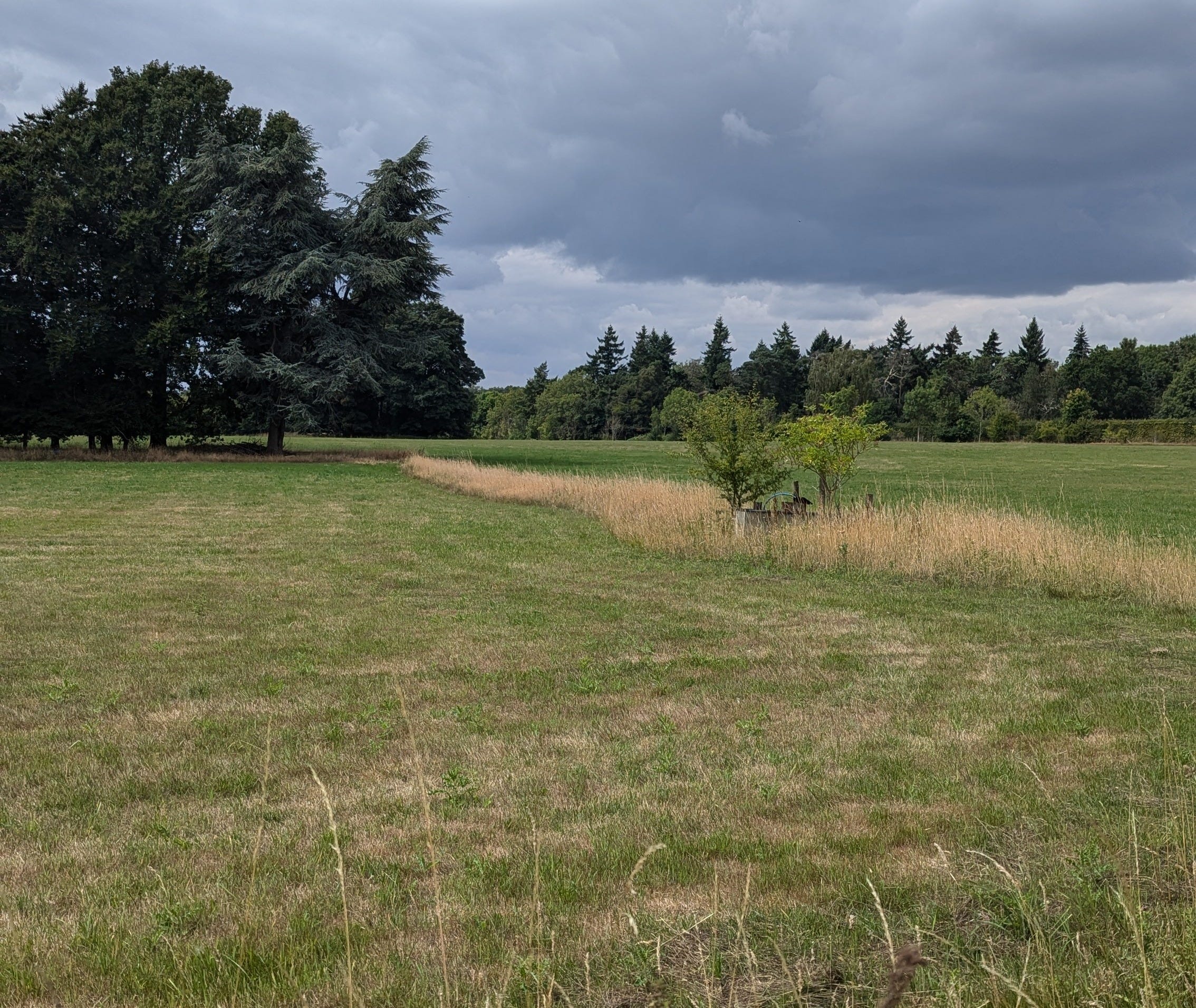
There is little left of Lamer House now, but there are echoes of Cherry in the landscape. In the interwar years, he planted many trees around the estate. He later banned hunting there, and was involved with the management of the many farms on the parkland.

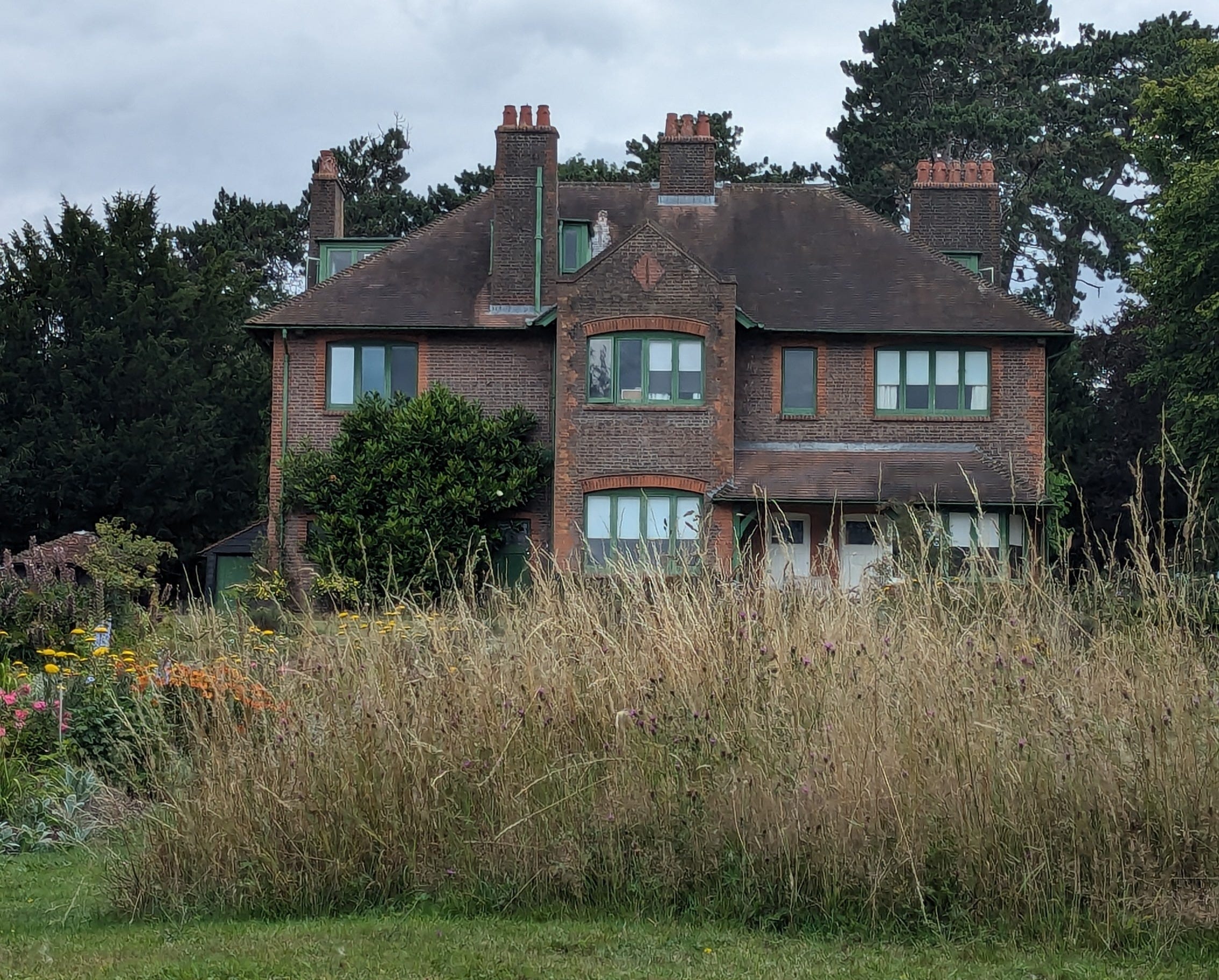
Between Lamer House and George Bernard Shaw’s nearby abode (Shaw was a dear friend of Cherry’s and aided him with the editing of The Worst Journey in the World), there is a long avenue of lime trees stretching through the fields. This was the only point in my walk from the River Lea, which runs through the village of Wheathampstead, to the National Trust property of Shaw’s Corner that I encountered another person. It was the quietest, most serene place, perhaps ironic considering the darkness that followed Cherry after the Antarctic.
(Side note: In a very Cherry way, I completely underestimated this walk from the village to Shaw’s Corner, wholeheartedly believing in the National Trust advice that it would take about an hour. It didn’t. I got lost a few times. I could have been walking in the direction back to St Albans for all I knew. But I made it, as evidenced by this photo of Shaw’s Corner itself haha)
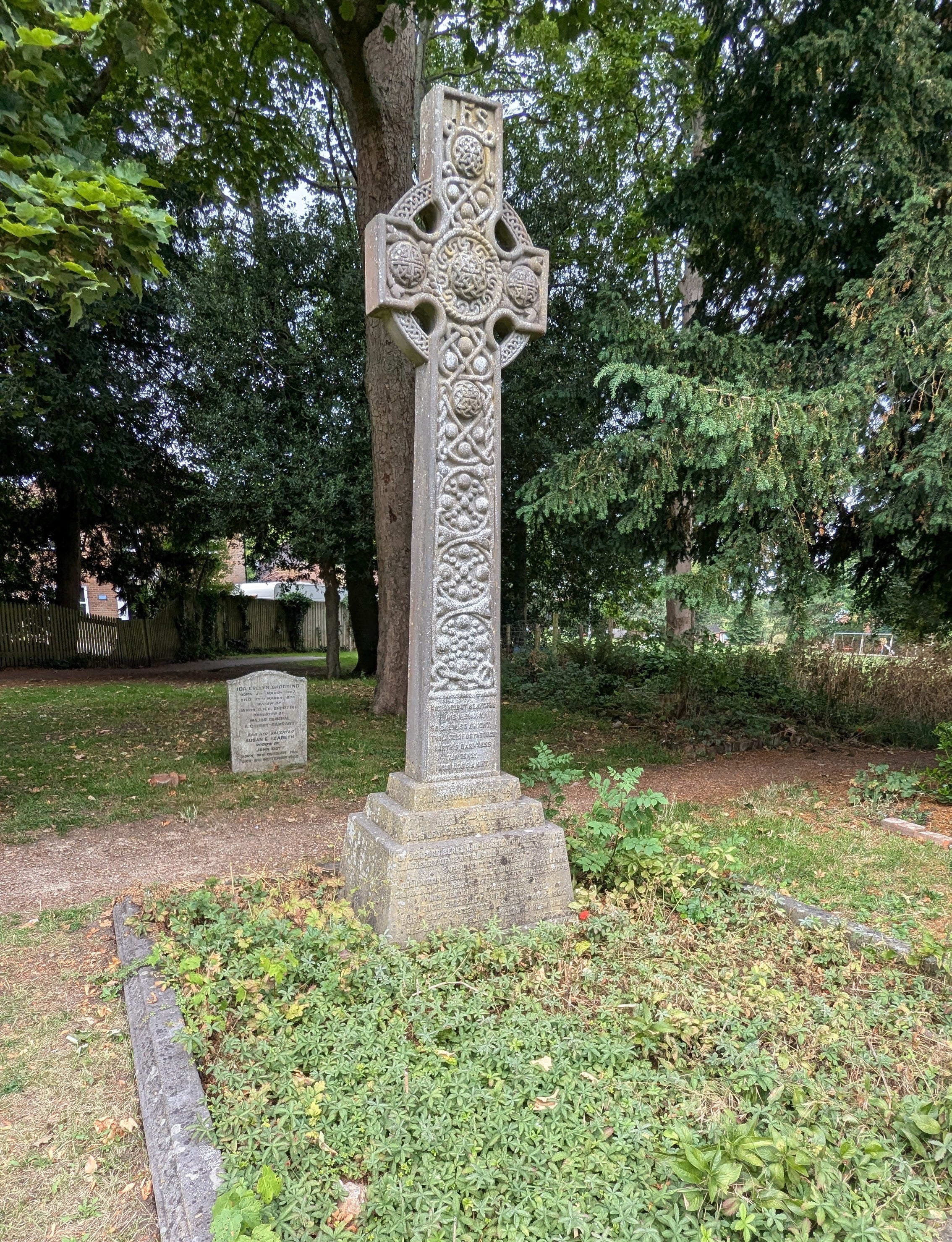
In the village itself, there are a few understated memories of Cherry. The church of St Helen’s is where he is buried, alongside his father, sister, and wife (a younger woman who he married later in life and she became very much his nurse as well as his partner). The grave is found in the north-west corner of the cemetery; I intended to lay flowers there but my trek went off plan (see above).
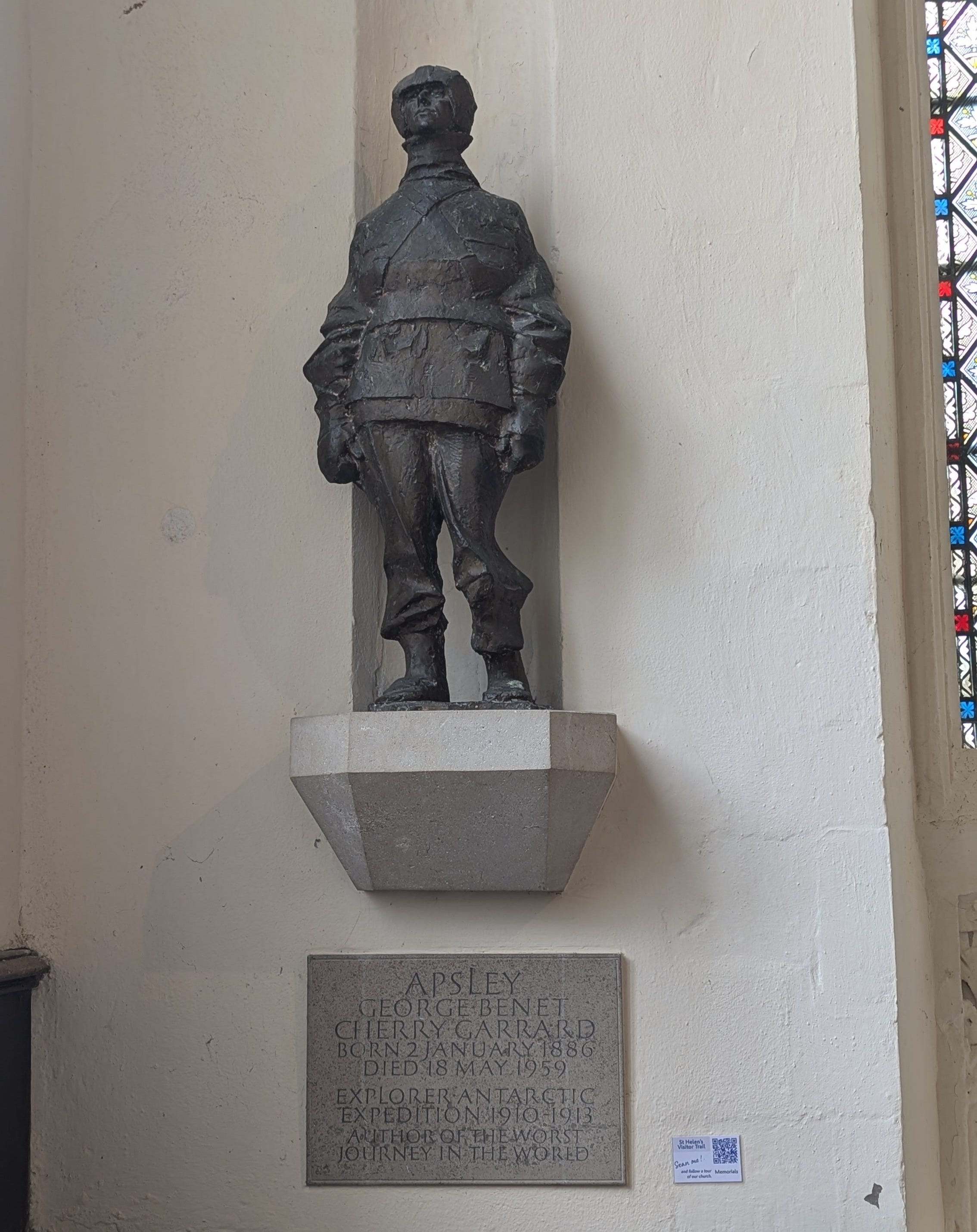
Inside the church, there are many stunning memorials to the Garrard family, stretching back centuries. Across from a particularly striking one, there is a small solitary statue of Cherry, bedecked in his polar sledging outfit.
Cherry, Cherry, Cherry
I apologise to anyone who knows me for giving them updates on this long-dead polar explorer. It shall happen again.
I loved my little pilgrimage up to Wheathampstead. It was quiet, solitary, and peaceful. Cherry’s presence there is not shouted about, but is just as still as the surrounding landscape. I enjoyed that.
I gave my explanations for why I am fascinated with polar history. My fascination with Cherry is all of that, but with a slightly different note. It is hard to relate to explorers such as the efficient and bloody-minded Amundsen and perhaps the historically pulled-and-twisted mythos of Scott (that’s a rant for another time). But Cherry, despite his wealth and privileged background, is very…normal. He had no experience and he was overall quite unremarkable. He experienced something which changed him completely.
No matter what we think of ourselves, we would not be Amundsens or Scotts or Shackletons or any of the famous men in these situations.
We are more likely to be a Cherry.
Images:
Train station at Wheathampstead - my image
Apsley Cherry-Garrard, taken by Herbert Ponting 1912
Emperor penguin egg at the NHM, London - my image
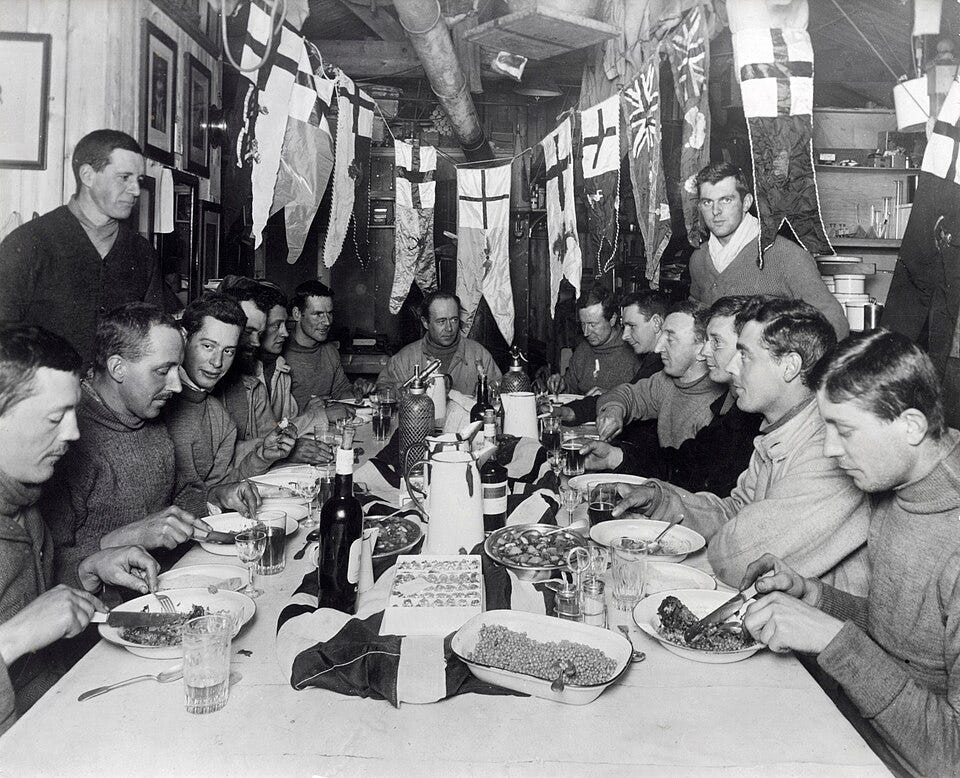
Robert Falcon Scott’s birthday dinner, June 1911
Near to the former Lamer House - my image
Shaw’s Corner - my image
Cherry’s grave in the churchyard at St Helen’s Church - my image
Statue Cherry in St Helen’s Church - my image
Further reading:
The Worst Journey in the World, Apsley Cherry-Garrard
Cherry, Sara Wheeler
No posts
Comments
Nothing yet. Say the first thing.
Sign in to join the conversation.